 MANZANAR RINGO-EN MANZANAR RINGO-EN
|
See USE NOTICE on Home Page. |
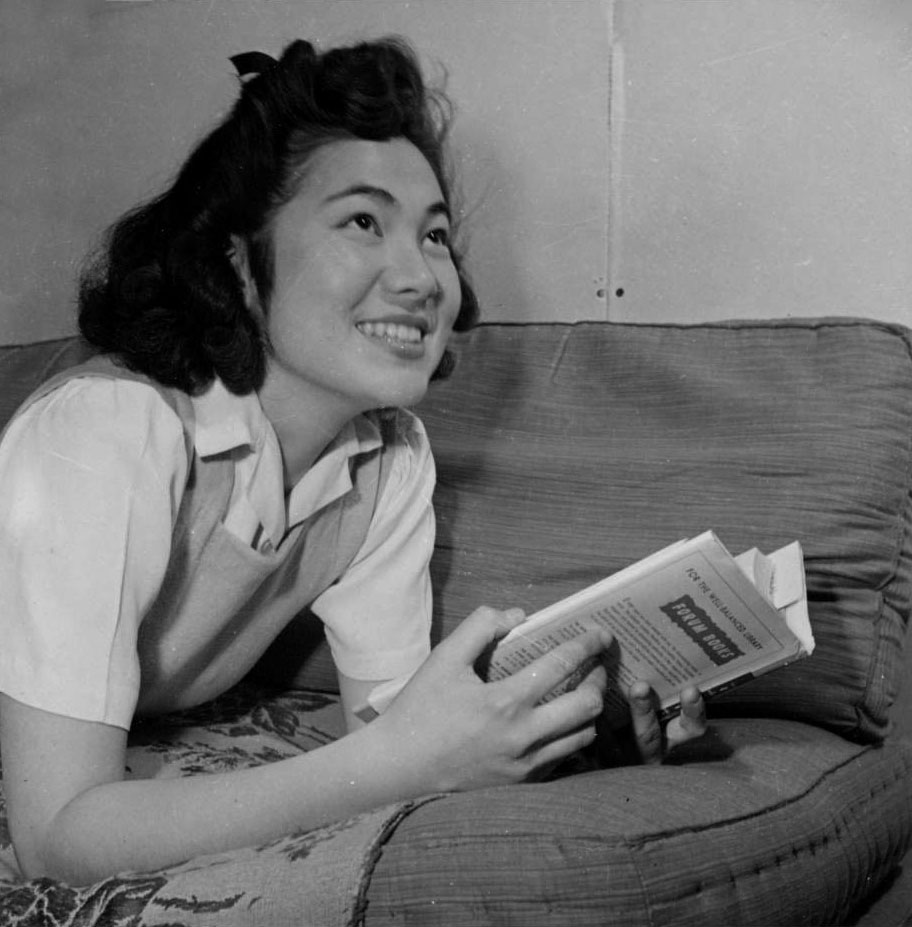
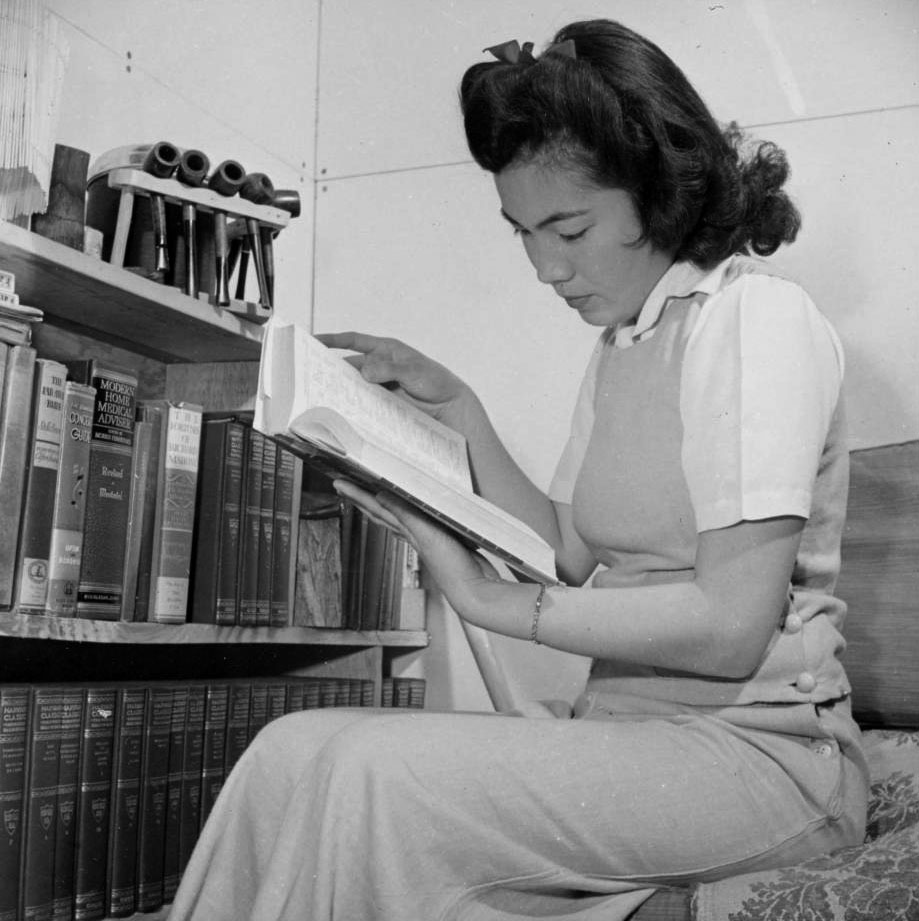
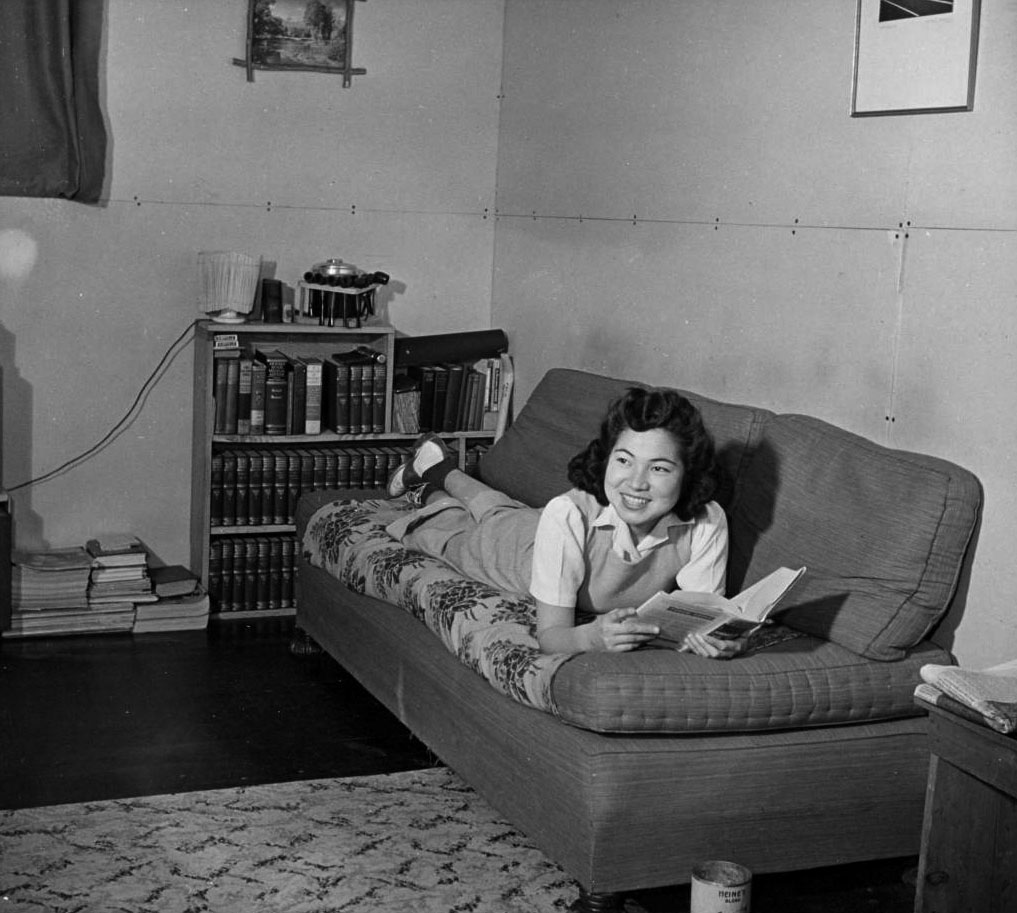
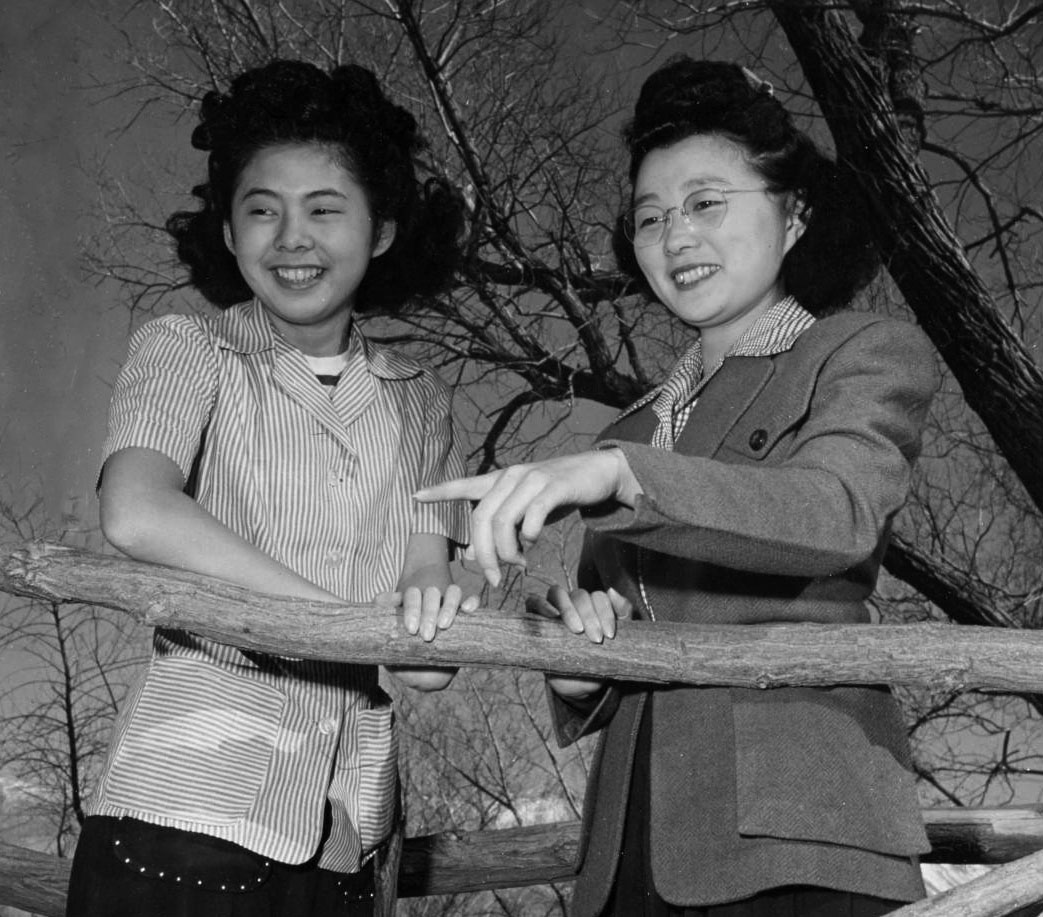
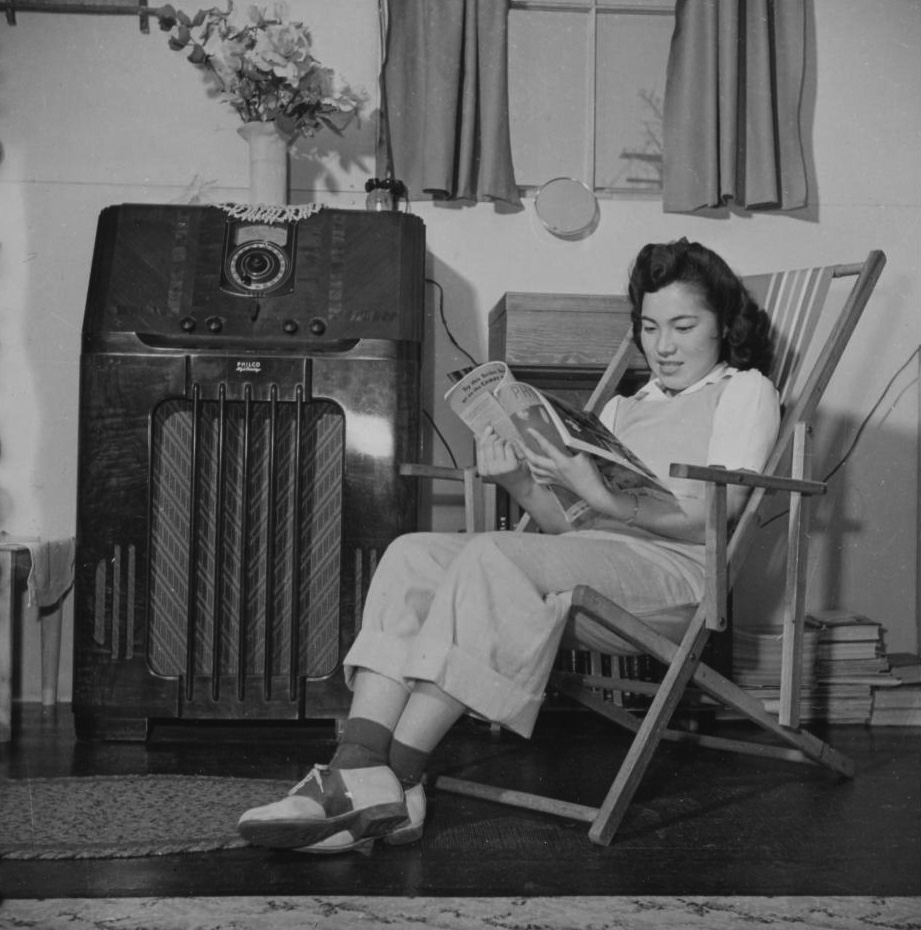
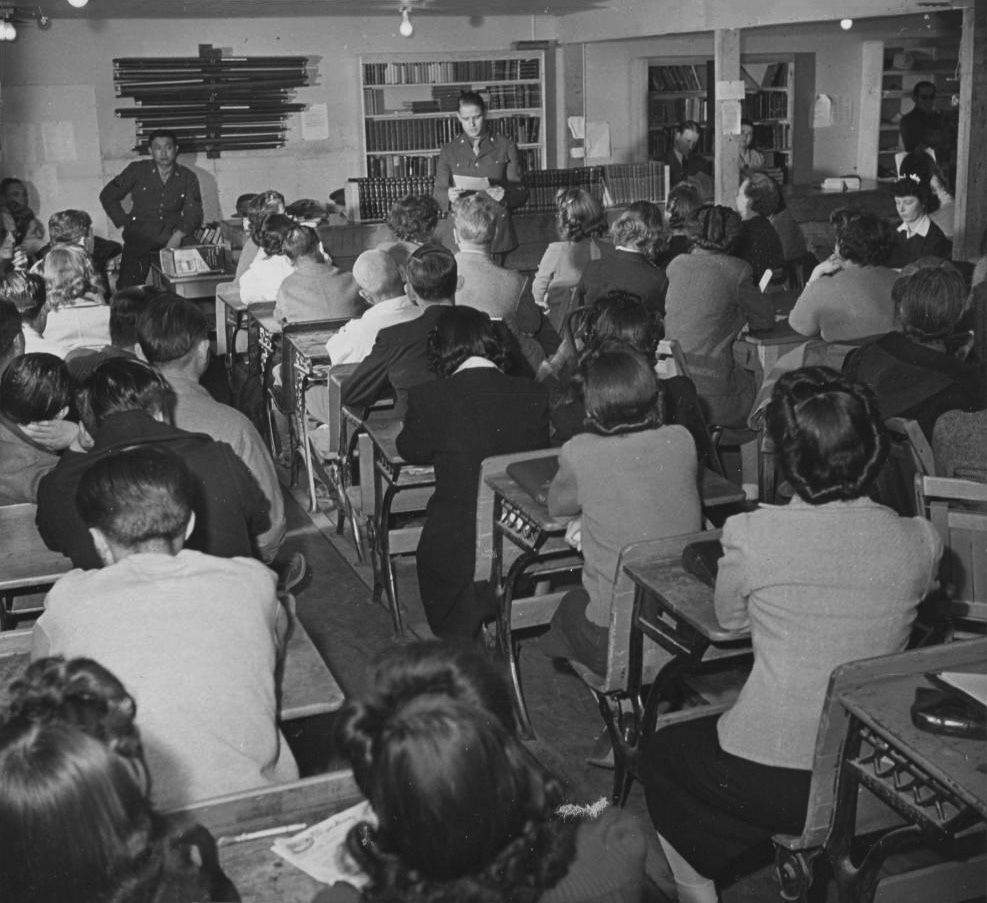
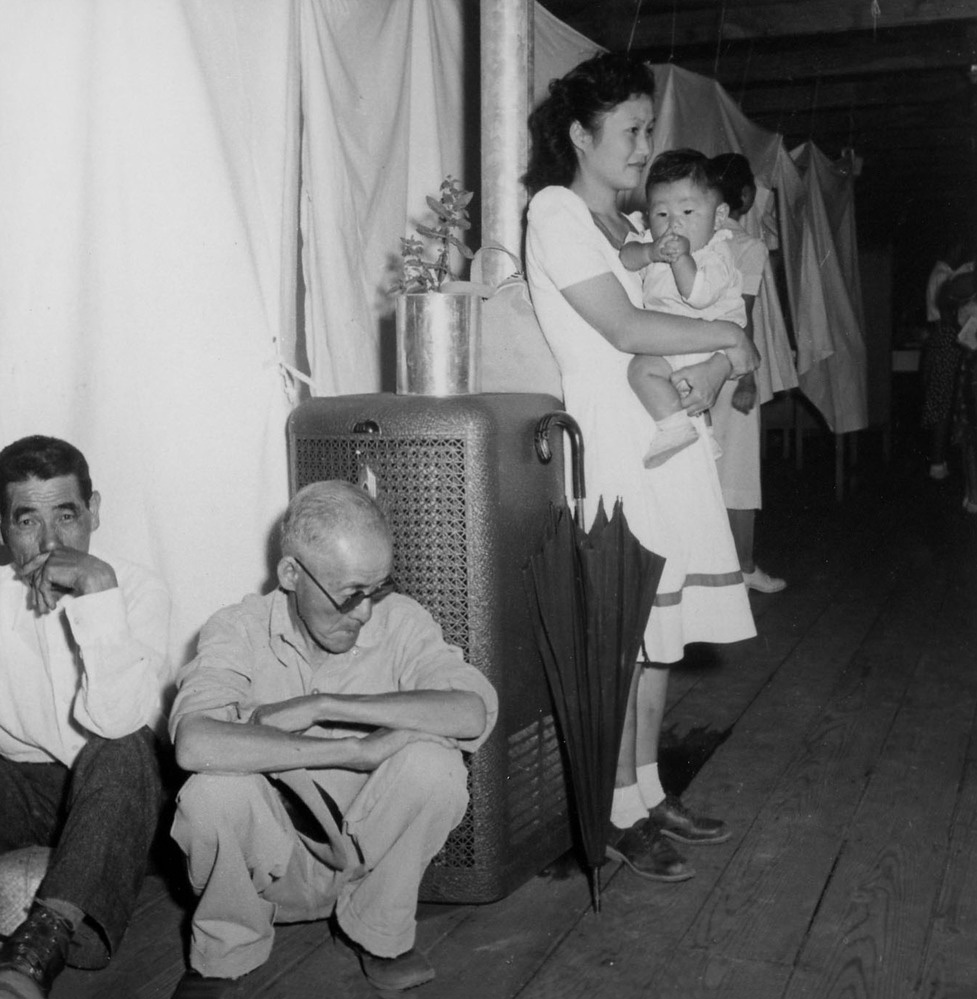
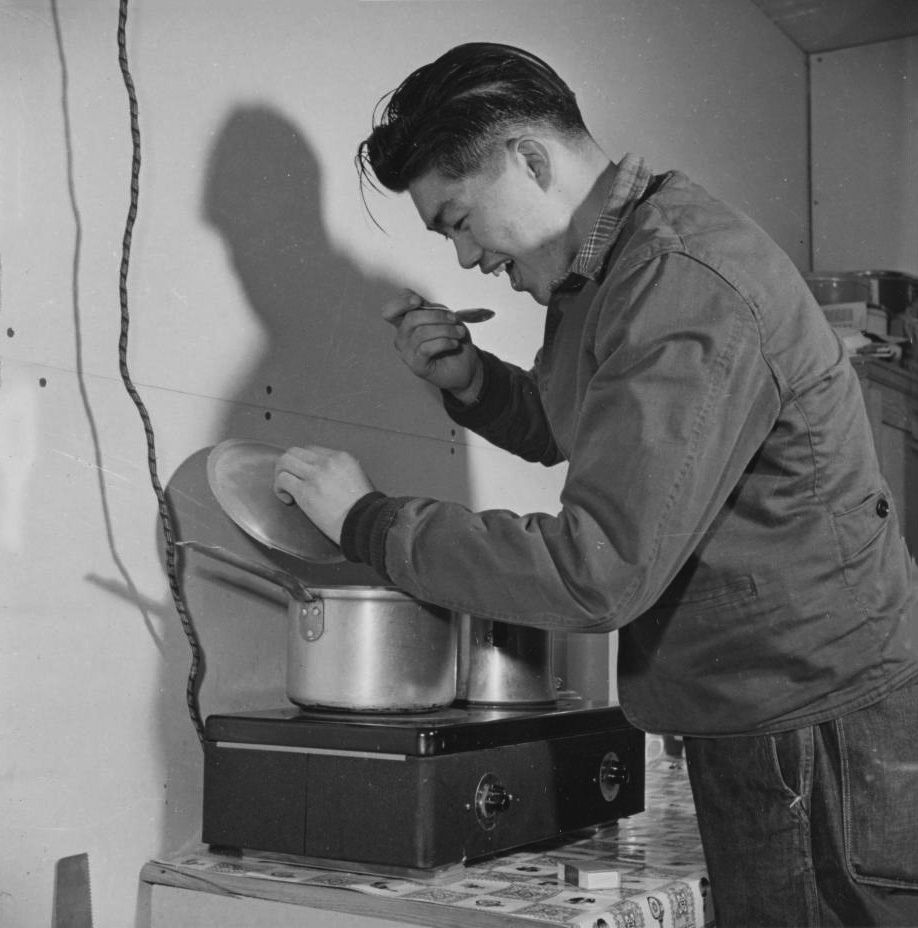
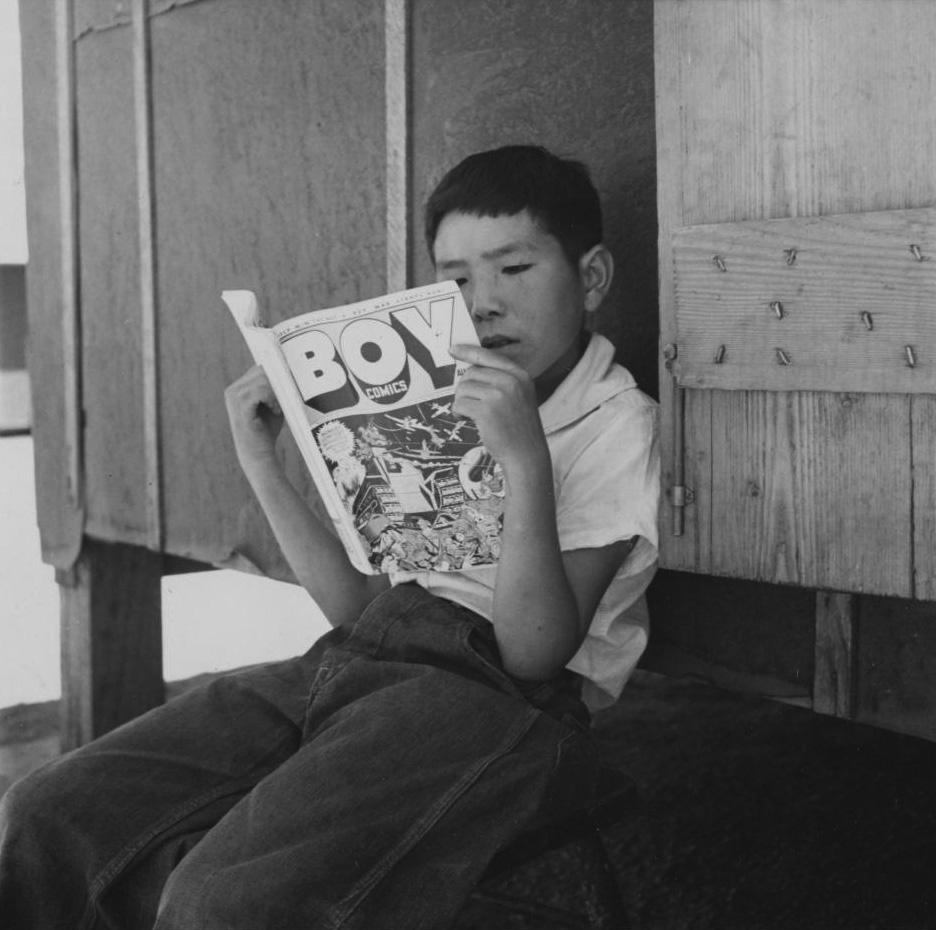
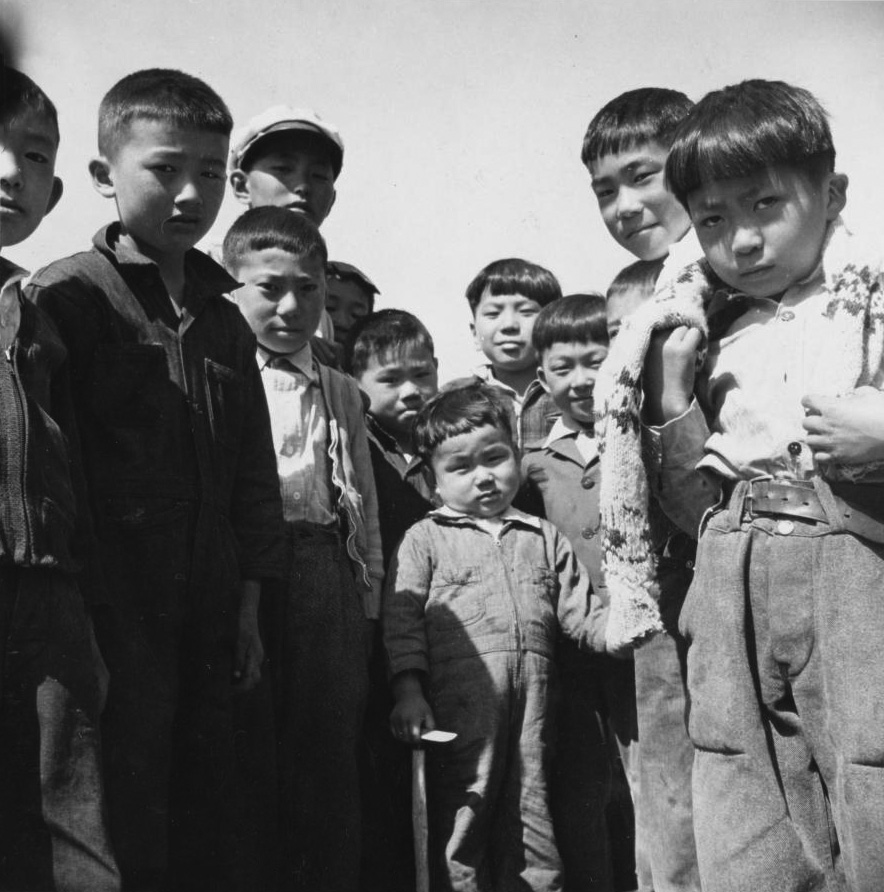
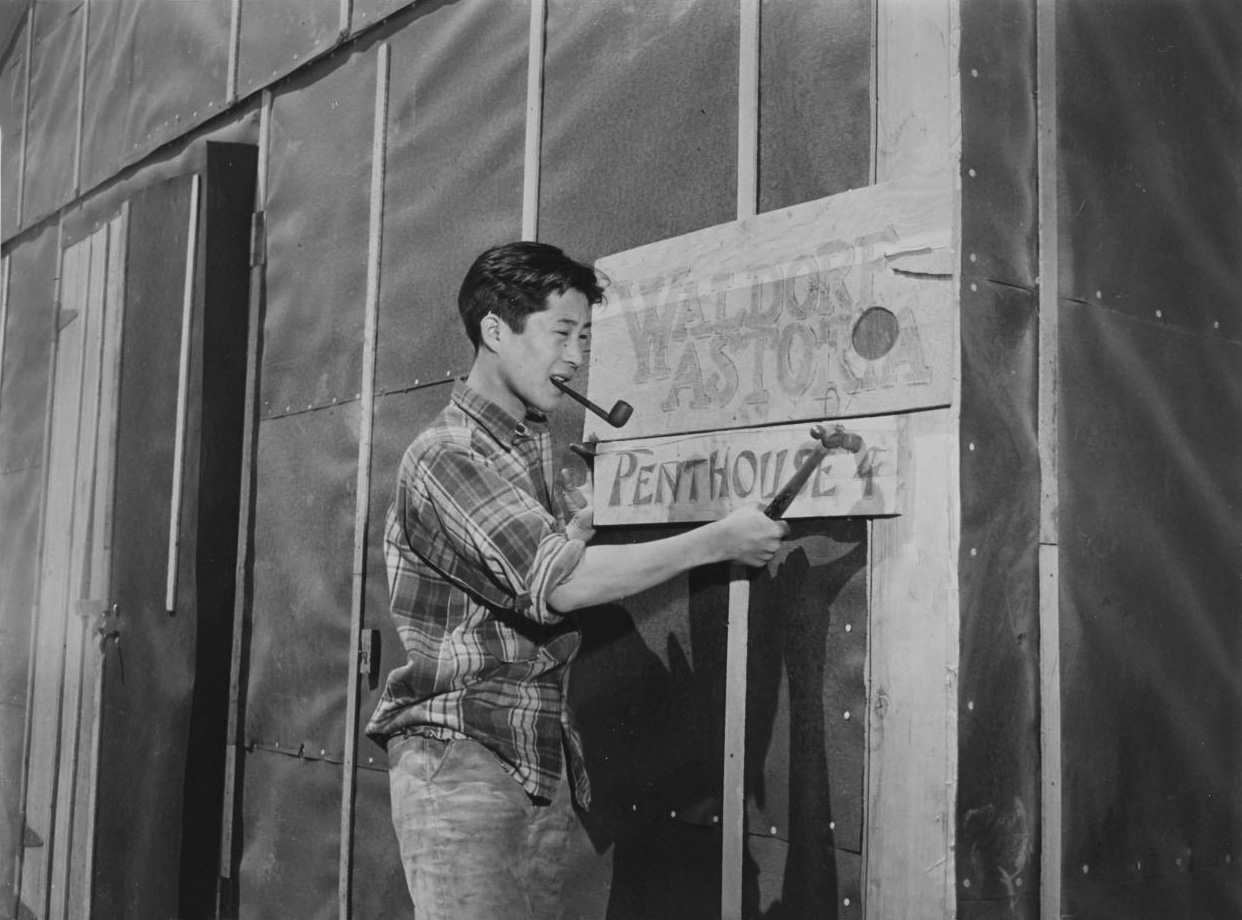
 These images are some of my favorite. There nearly 500 Manzanar internment images in the National Archives files. I encourage you to visit the archives and peruse the many photographs. Once you click on the icon above and are taken to the archives, type in "Manzanar" and then press "Display Results" and the images will be displayed in sets of nine. You might observe, as I did, that the internees appear rather unnaturally joyous in these pictures. I don't think that having been dislocated from their homes and businesses, forced to live in a harsh desert environment and confined to barracks with no insulation would have made them this happy. But as Jeanne Wakatsuki points out in her book, Farewell to Manzanar, Japanese Americans told each other very quietly to "Shikata ga nai" ("It must be done", or, as my Japanese friend says, "Suck it up [and get on with life]." Perhaps this is what encouraged them to put a smile on their face. Unless otherwise noted all photographs are from Dorothea Lange. Text excerpts followed by a "JWH" are from Jeanne Wakatsuki Houston & James D. Houston's book "Farewell to Manzanar" |

Manzanar Session of the Inyo and Mono Counties - October 1, 1943
Manzanar Charter
Making Ready the Former Apple Orchards of the Town of Manzanar
Dorothea Lange Photographs from the Library of Congress |
|
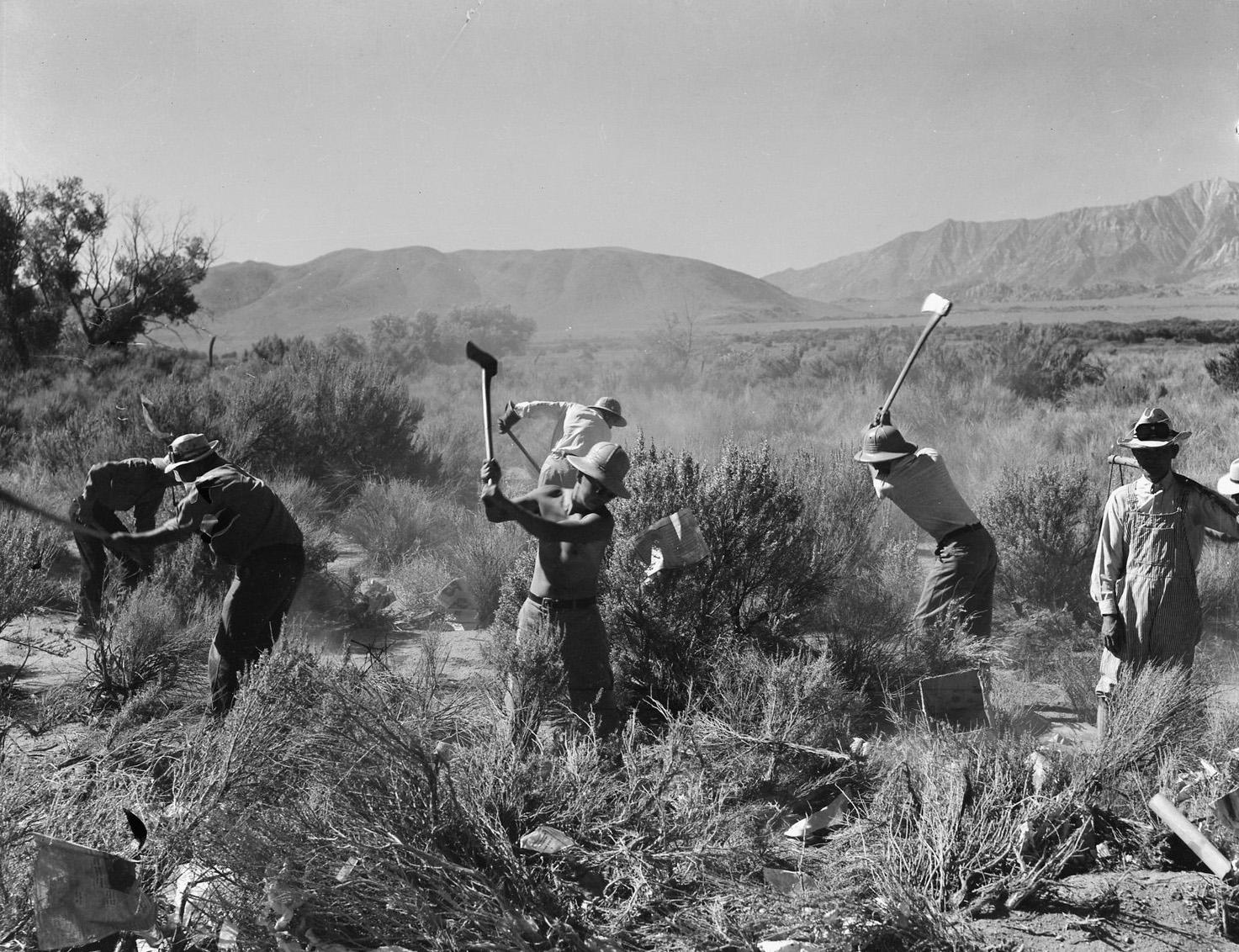 More land being cleared on the southern side of the relocation center at Manzanar . |
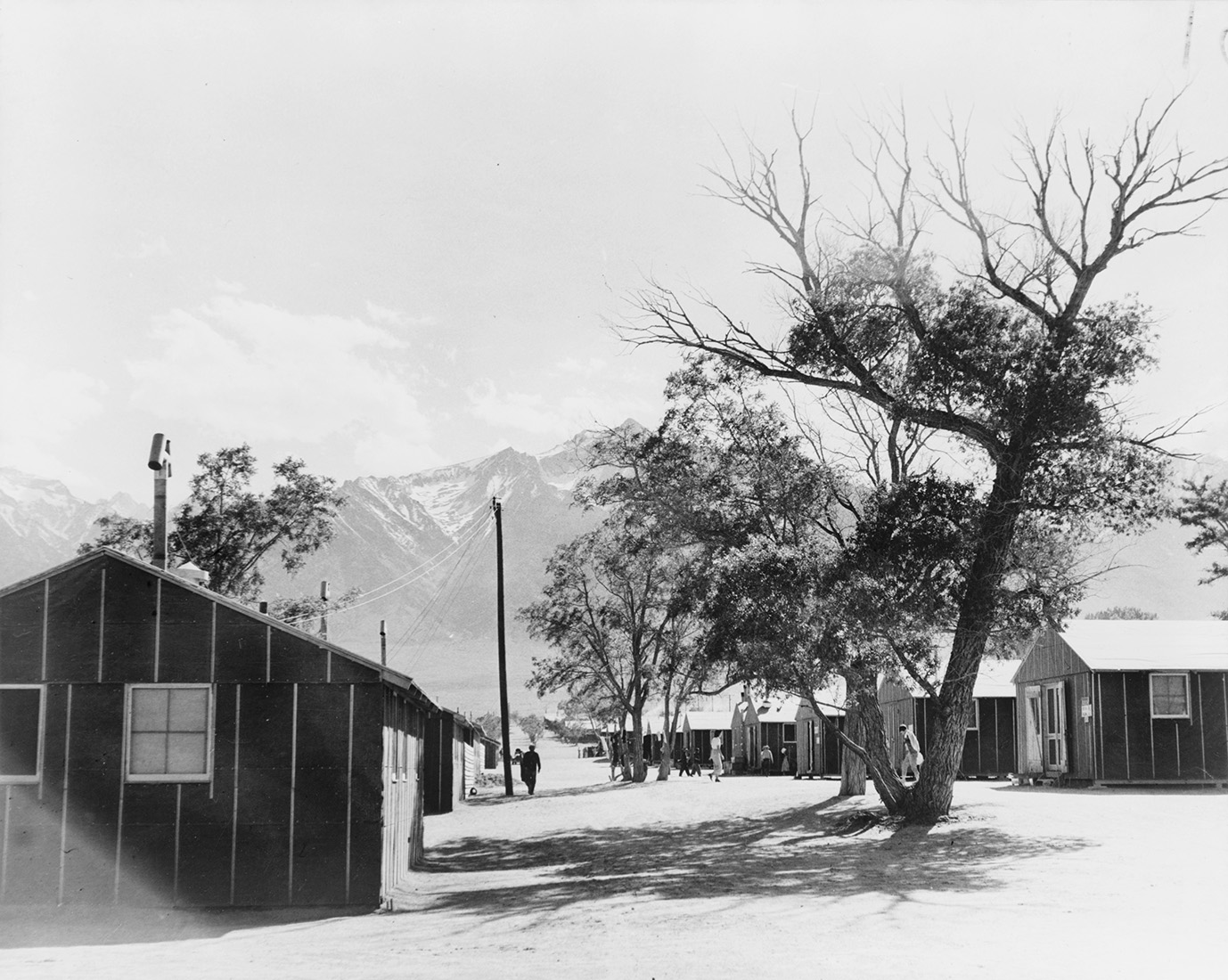 Newcomers moving into Manzanar - 1942 (Photograph courtesy of Calisphere) |
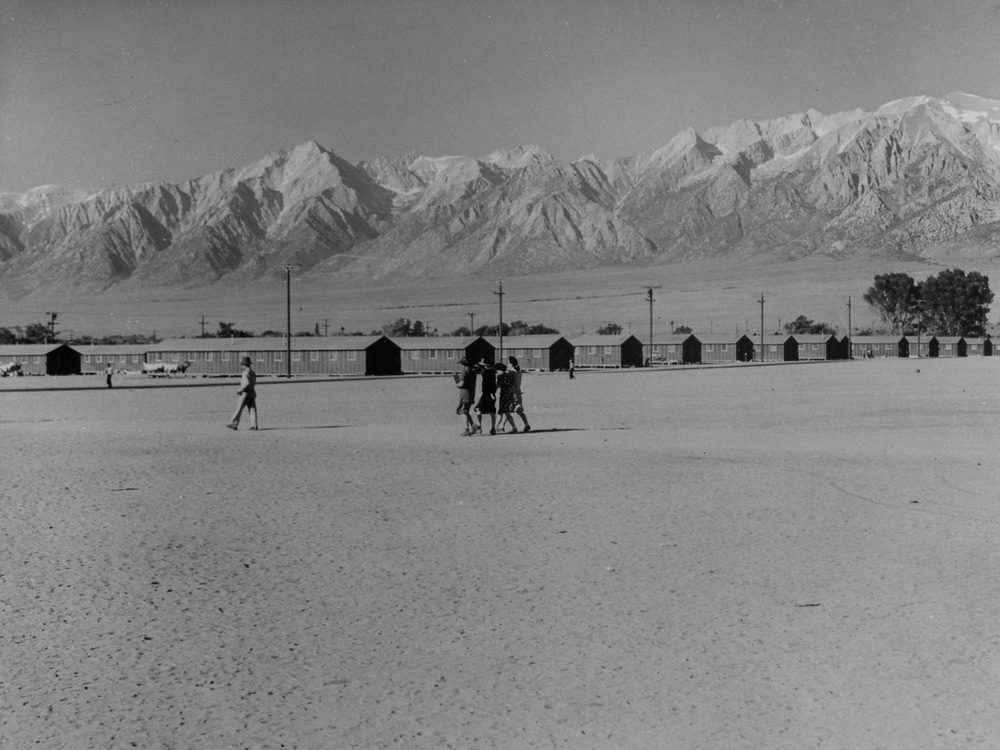 Manzanar War Relocation Authority housing 10,000 - 1942 (Photograph courtesy of Calisphere) (Photographer Dorothea Lange) |
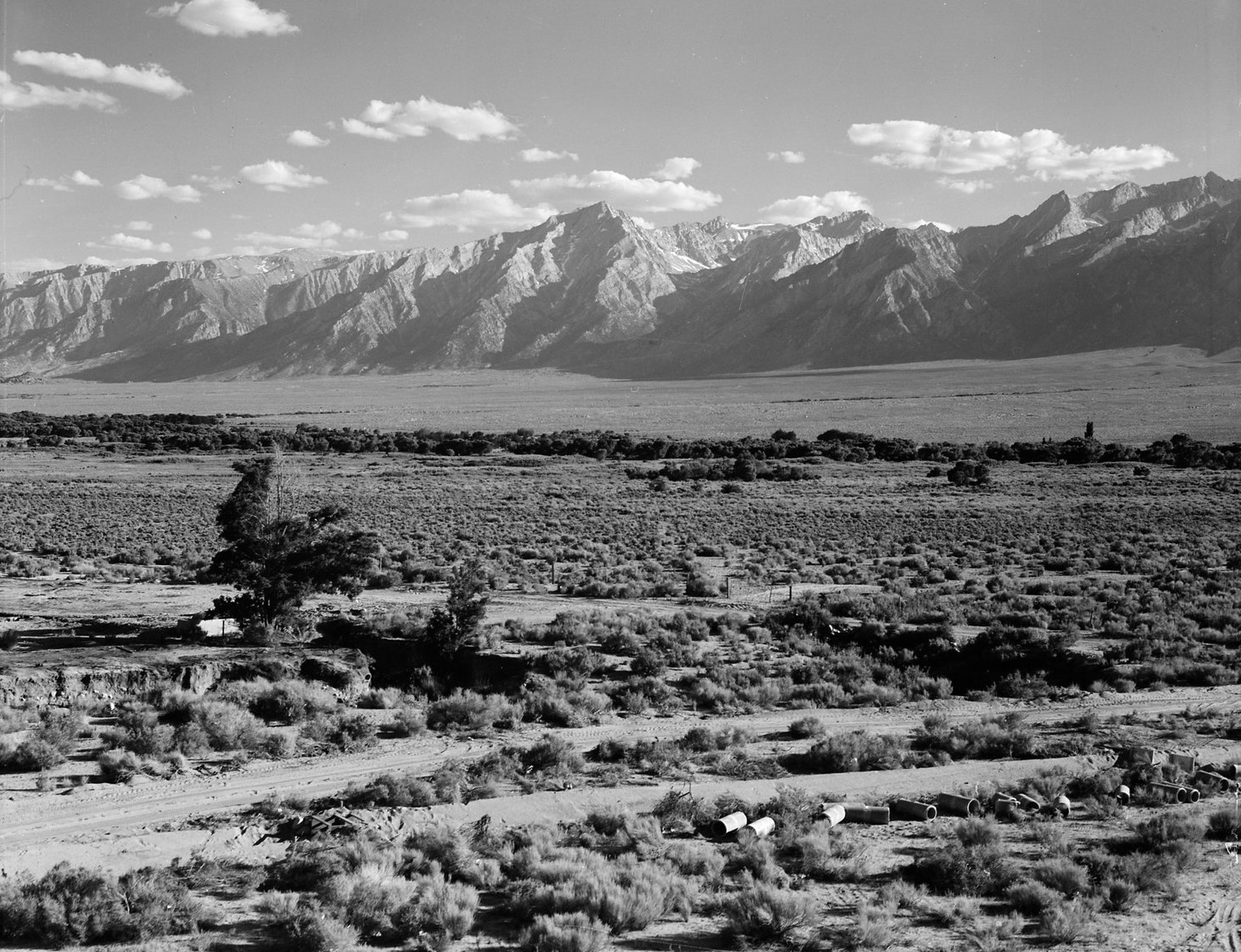 Owens Valley desert around Manzanar (Photograph courtesy of Calisphere) |
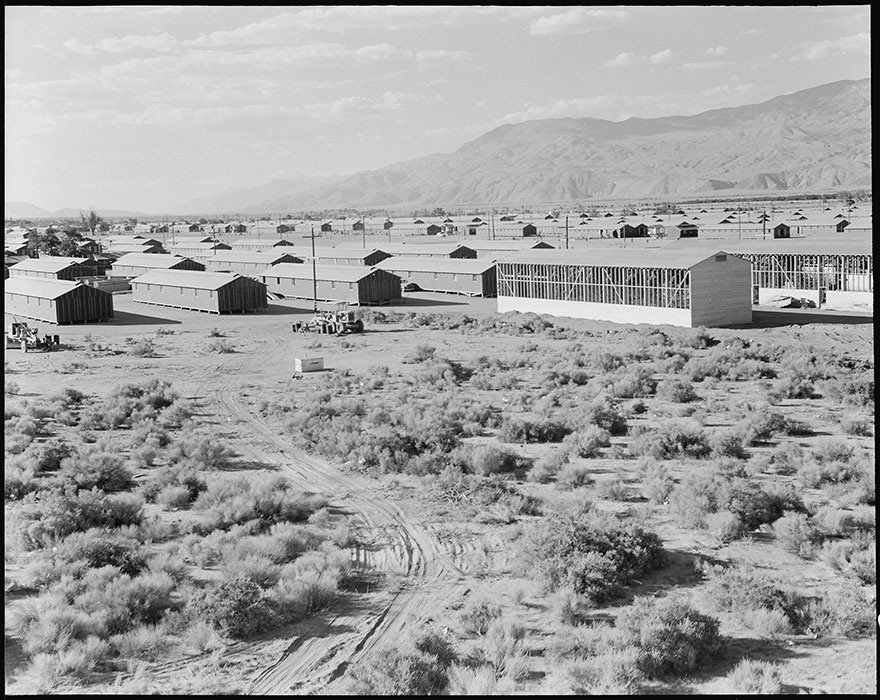 Manzanar Barracks (Photograph courtesy of Calisphere) (Photographer Ansel Adams) |
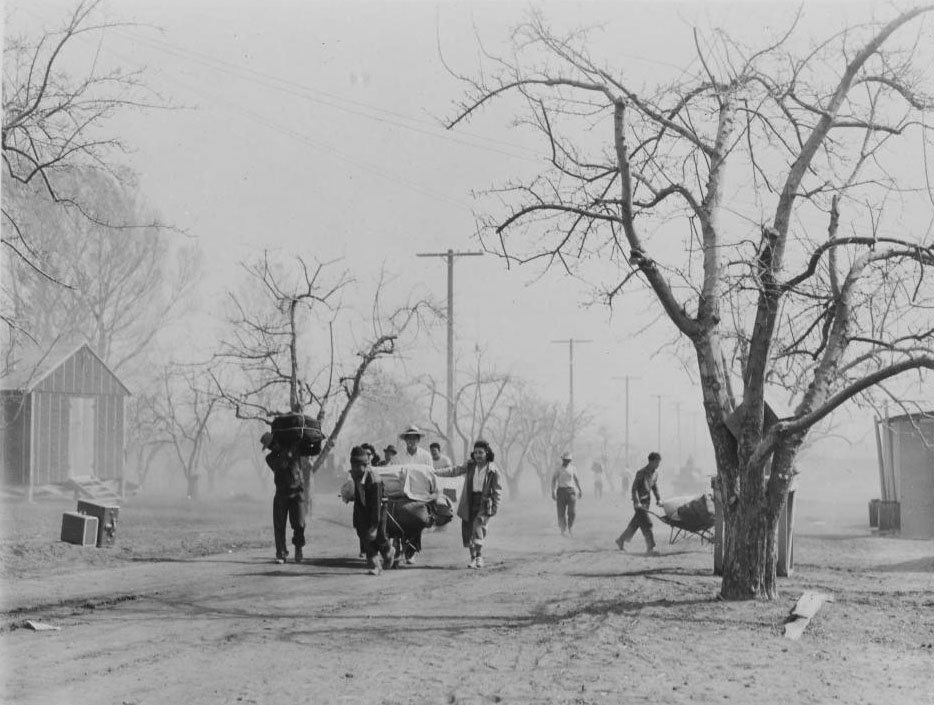 Newcomers moving into Manzanar - 1942 (Photograph courtesy of Calisphere) (Photographer Clem Albers) |
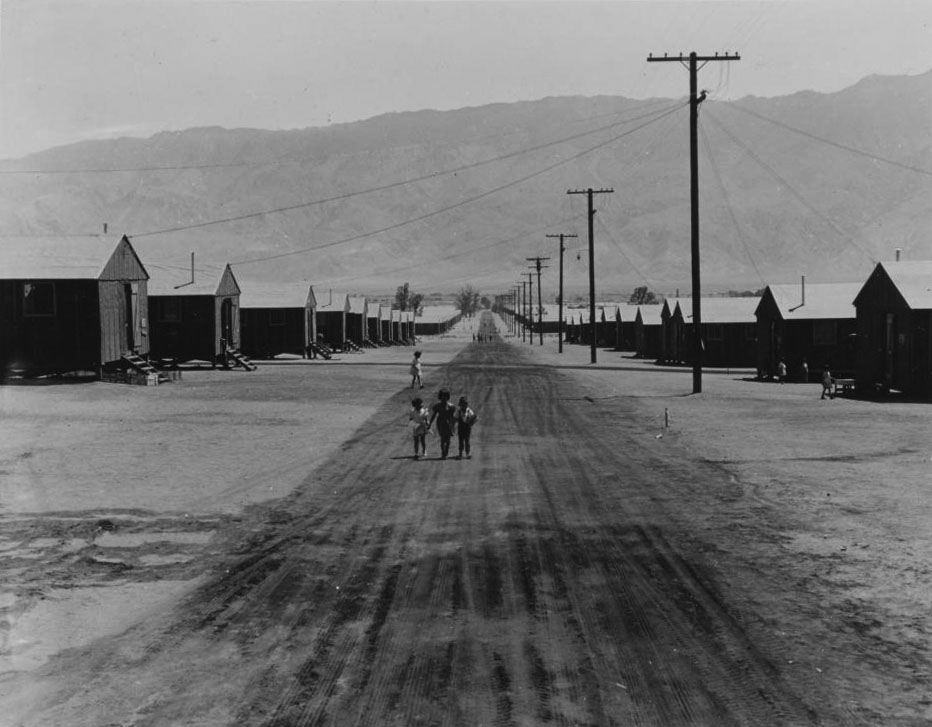 Street scene looking east towards the Inyo Mountains - 1942 Each family has one room to live in. There is no running water. All the families in one block us a central bath house. Barracks are heated by wood burning stoves. (Photograph courtesy of Calisphere) (Photographer Dorothea Lange) |
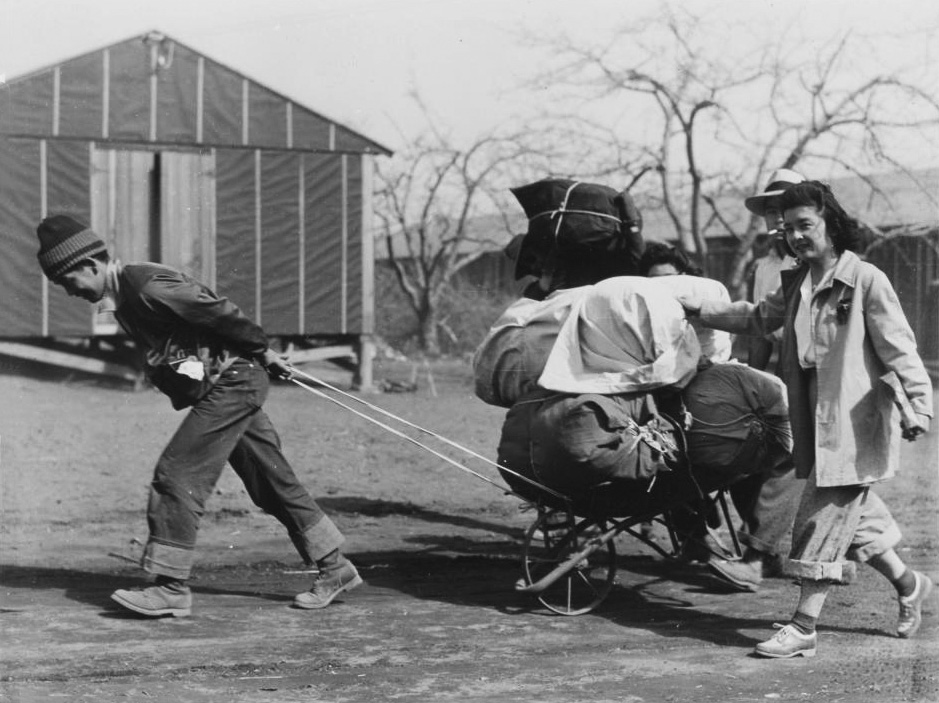 Newcomers moving into Manzanar - 1942 (Photograph courtesy of Calisphere) (Photographer Clem Albers) |
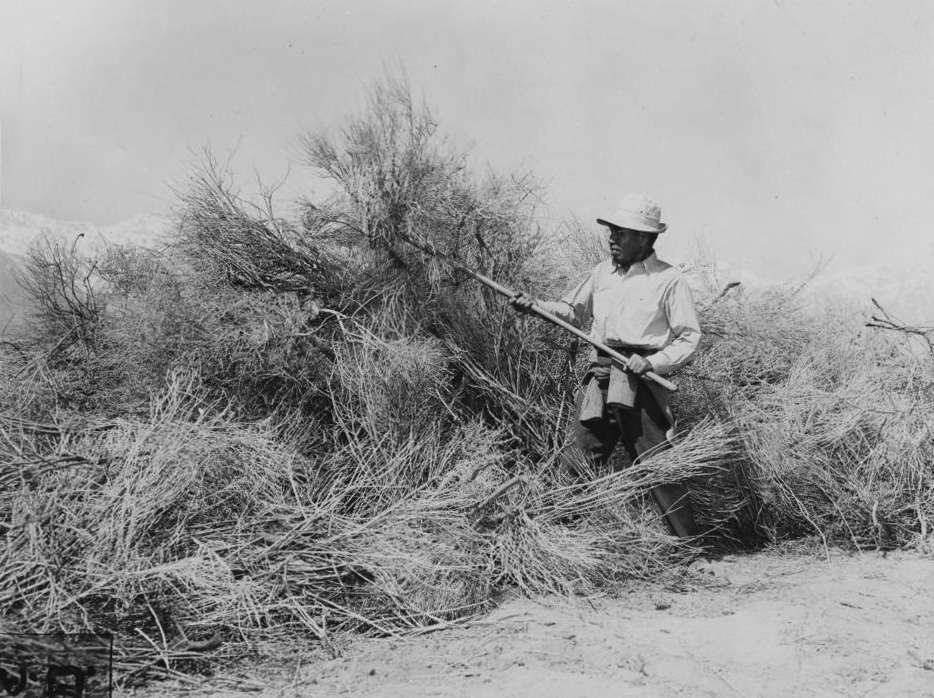 Clearing brush near the reception center - 1942 (Photograph courtesy of Calisphere) (Photographer Clem Albers) |
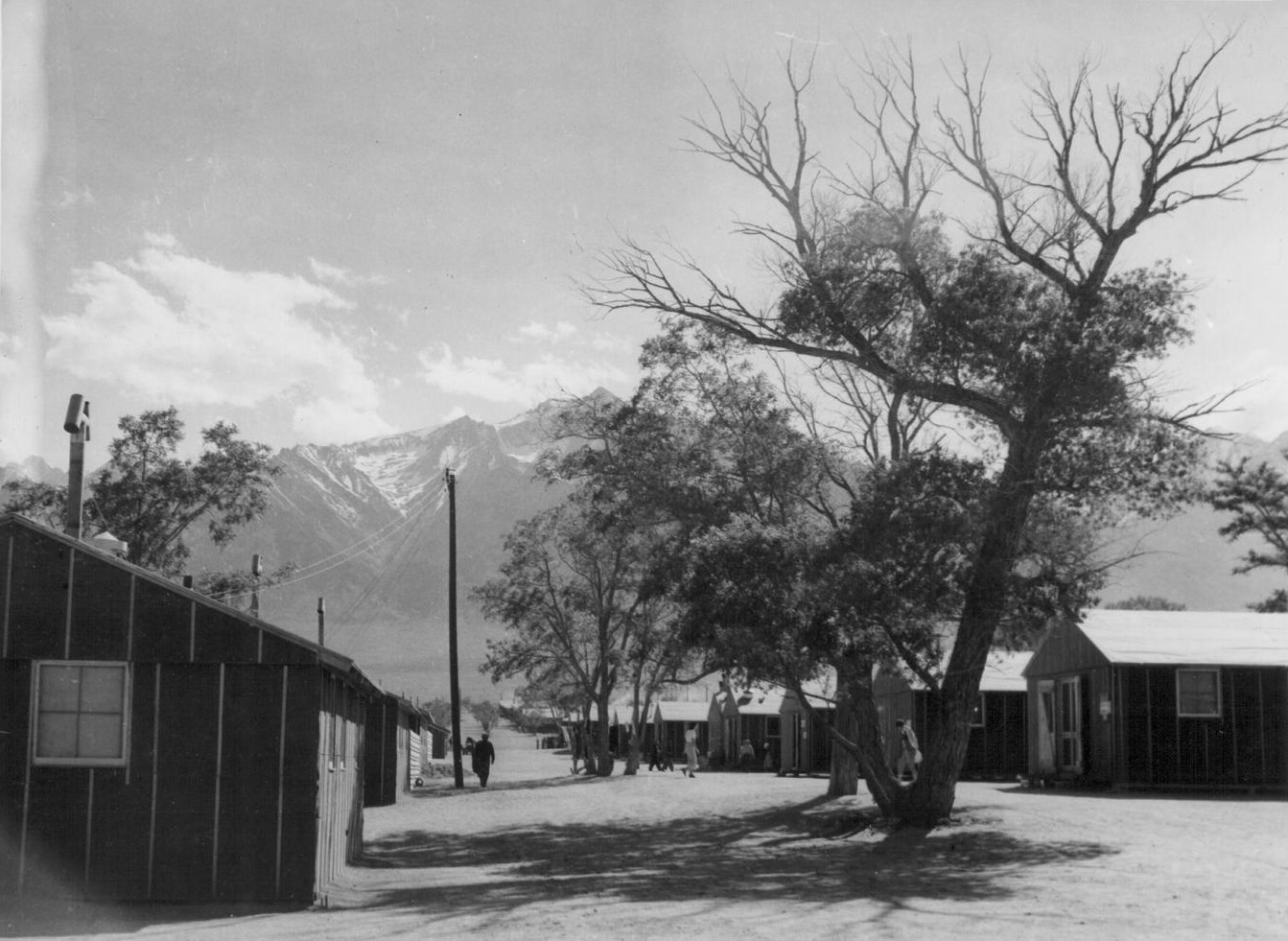 Newcomers moving into Manzanar - 1942 (Photograph courtesy of Calisphere) |
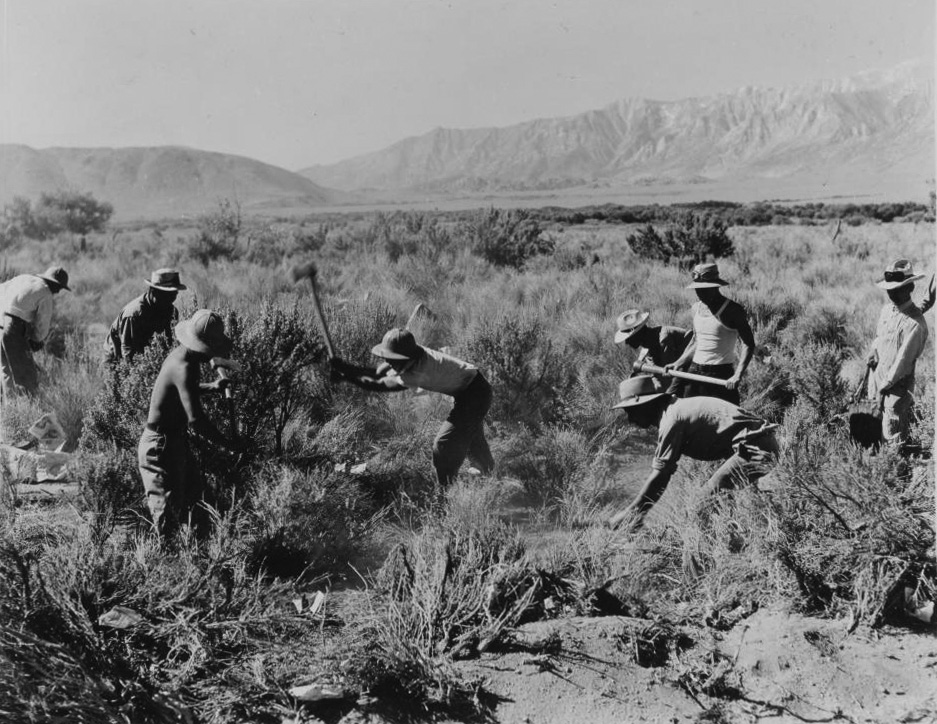 Clearing brush near the reception center - 1942 (Photograph courtesy of Calisphere) (Photographer Dorothea Lange) |
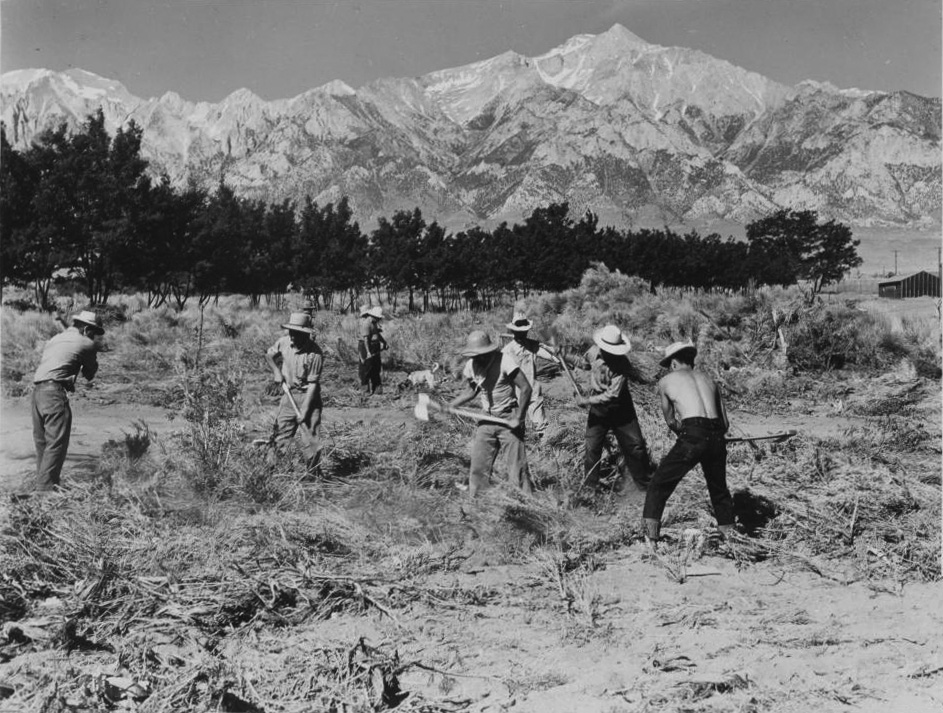 Clearing brush near the reception center - 1942 (Photograph courtesy of Calisphere) (Photographer Dorothea Lange) |
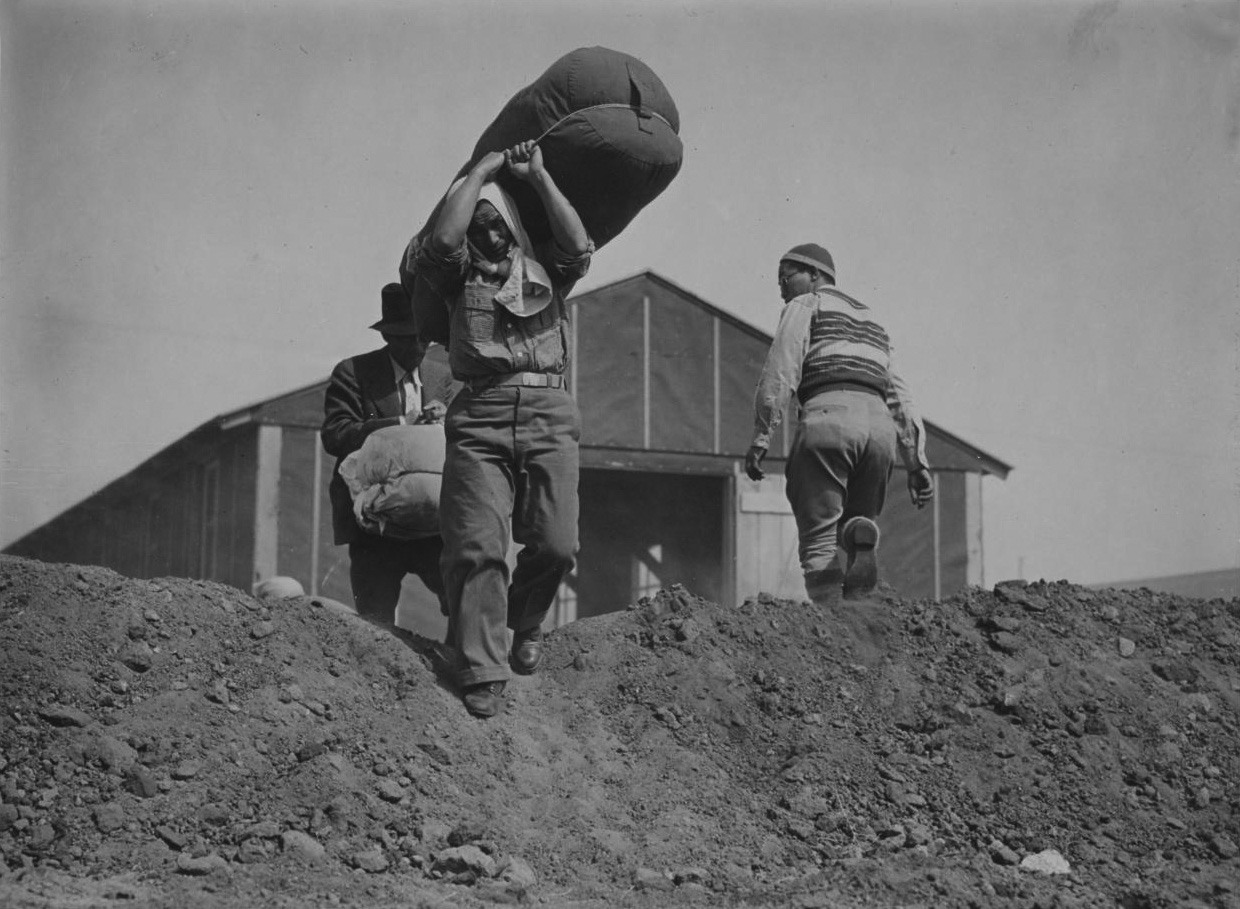 Heading to the barracks at Manzanar - 1942 (Photograph courtesy of Calisphere) (Photographer Clem Albers) |
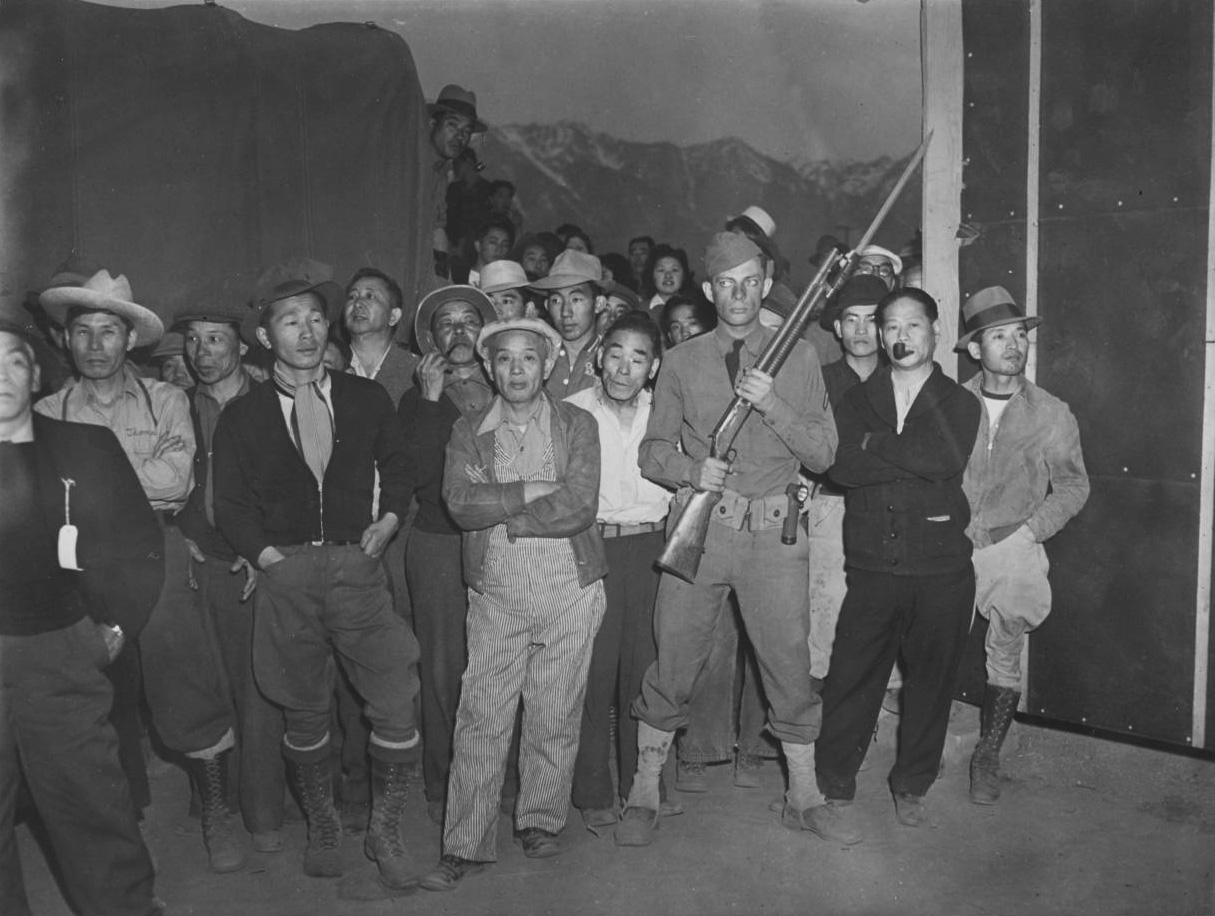 Evacuees arriving at Manzanar - 1942 (Photograph courtesy of Calisphere) (Photographer Clem Albers) |
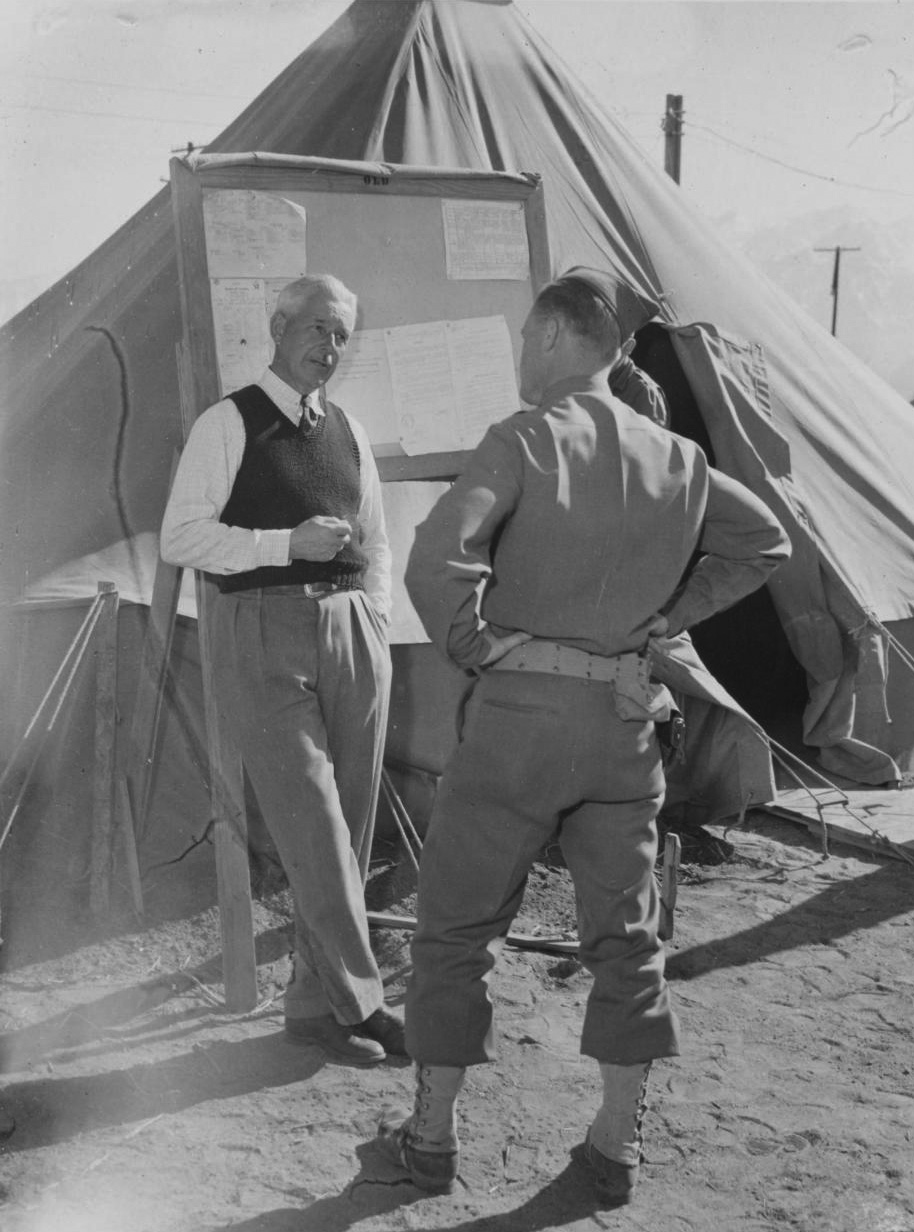 Lt. Harvey H. Severson (R) of military police and Dr. Charles W. Anderson (L) of Bishop discuss procedures at Manzanar - 1942 (Photograph courtesy of Calisphere) (Photographer Clem Albers) |
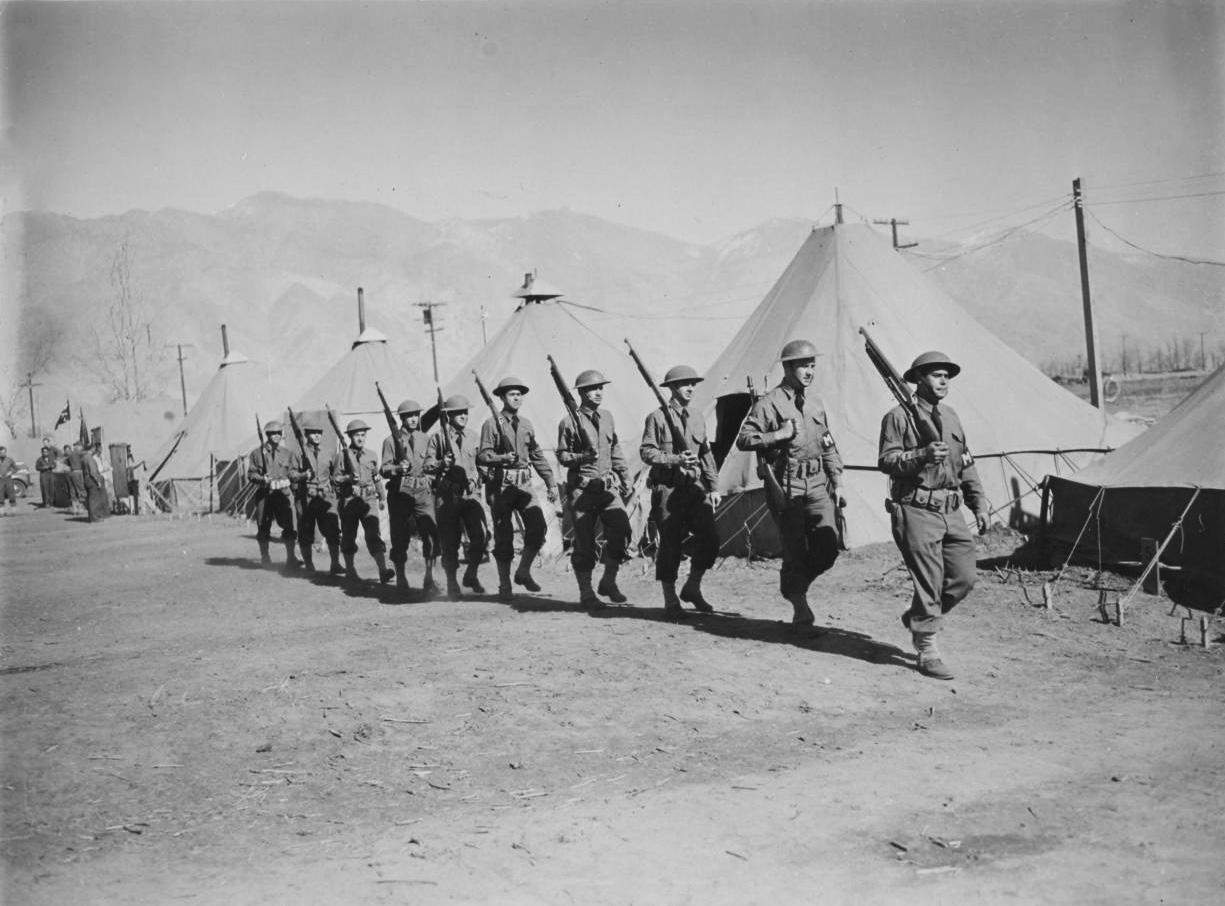 Army military guard on duty at Manzanar - 1942 (Photograph courtesy of Calisphere) (Photographer Clem Albers) |
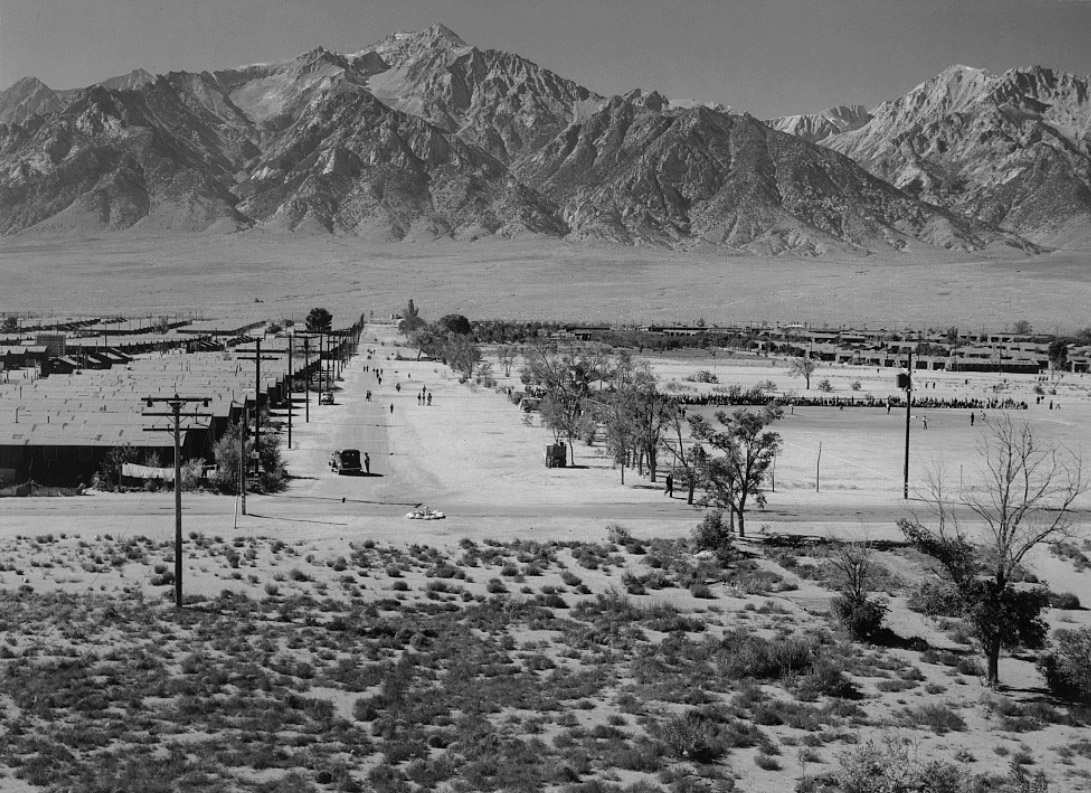 Manzanar - City in the Desert (Photograph courtesy of Library of Congress) (Photographer Ansel Adams) |
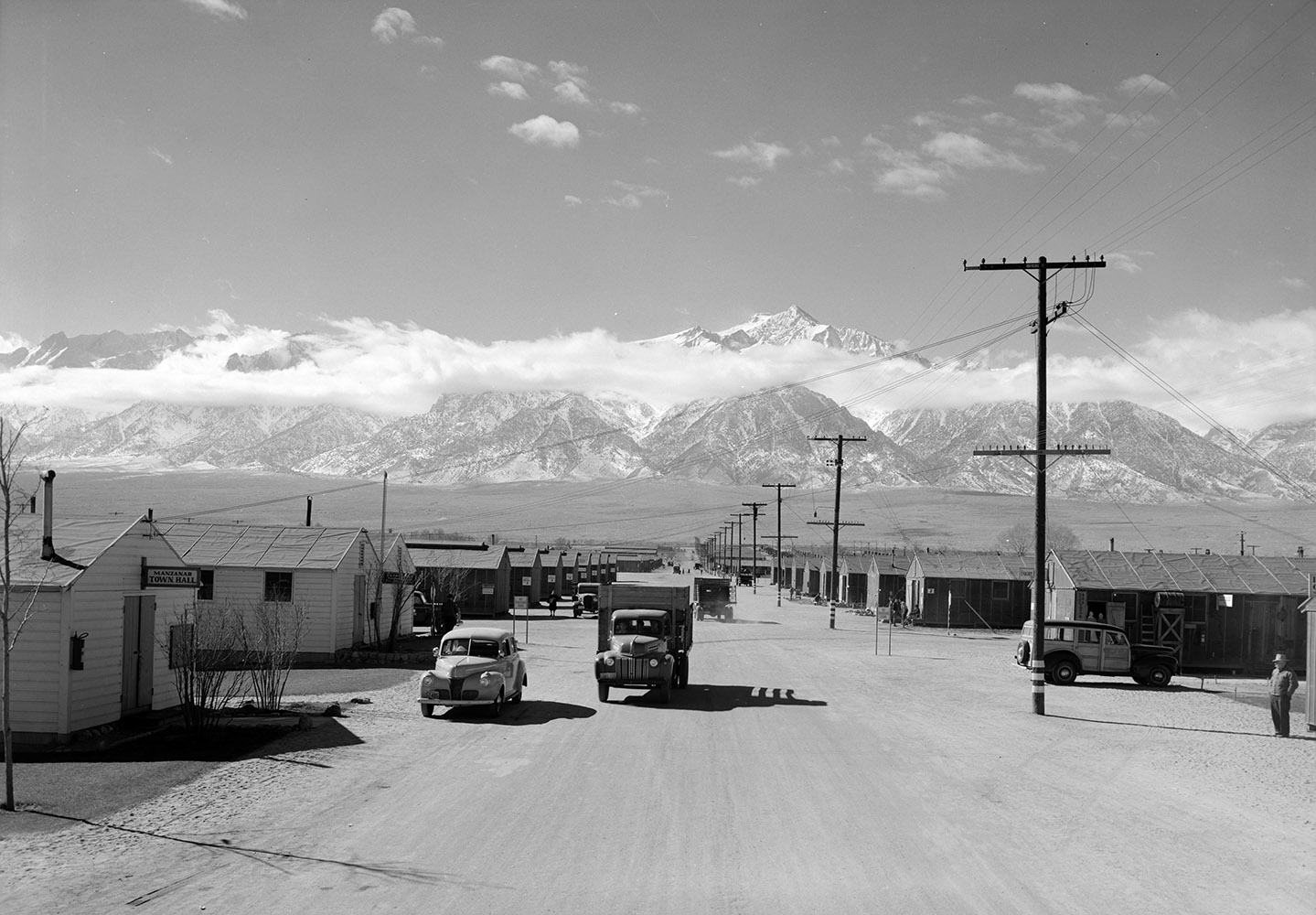 Manzanar - City in the Desert (Photograph courtesy of Library of Congress) (Photographer Ansel Adams) |
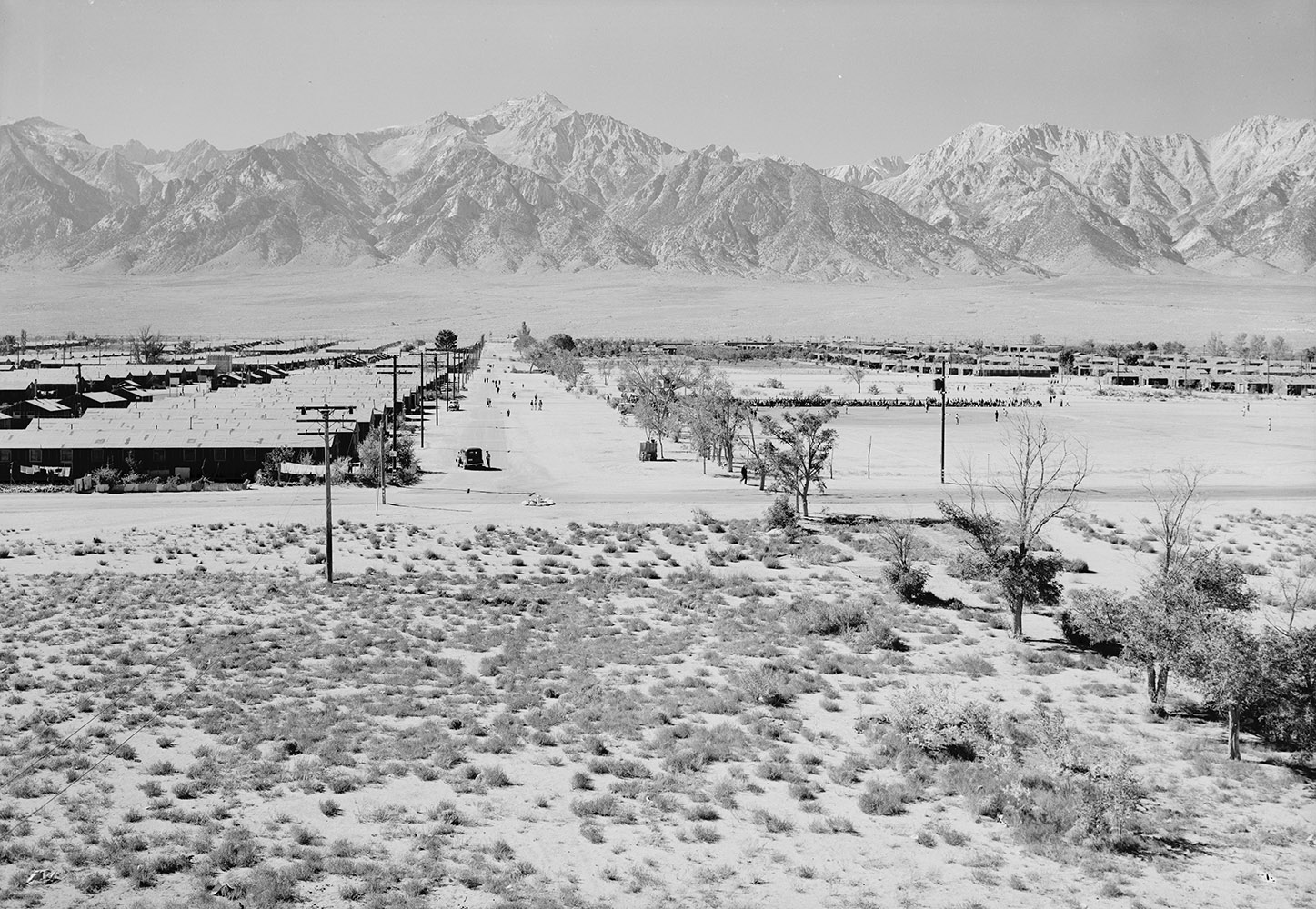 Manzanar - City in the Desert (Photograph courtesy of Library of Congress) (Photographer Ansel Adams) |
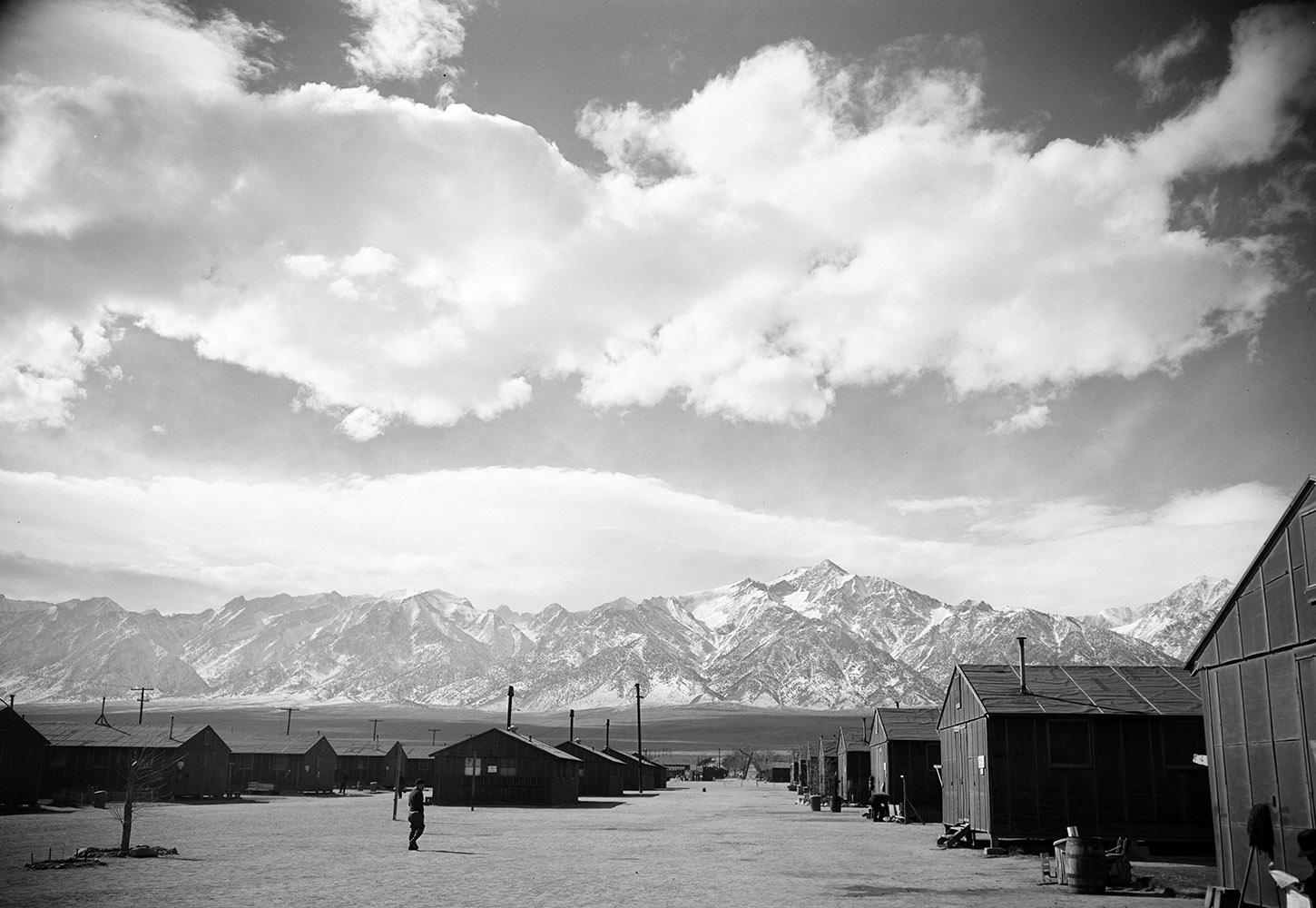 Manzanar - City in the Desert (Photograph courtesy of Library of Congress) (Photographer Ansel Adams) |
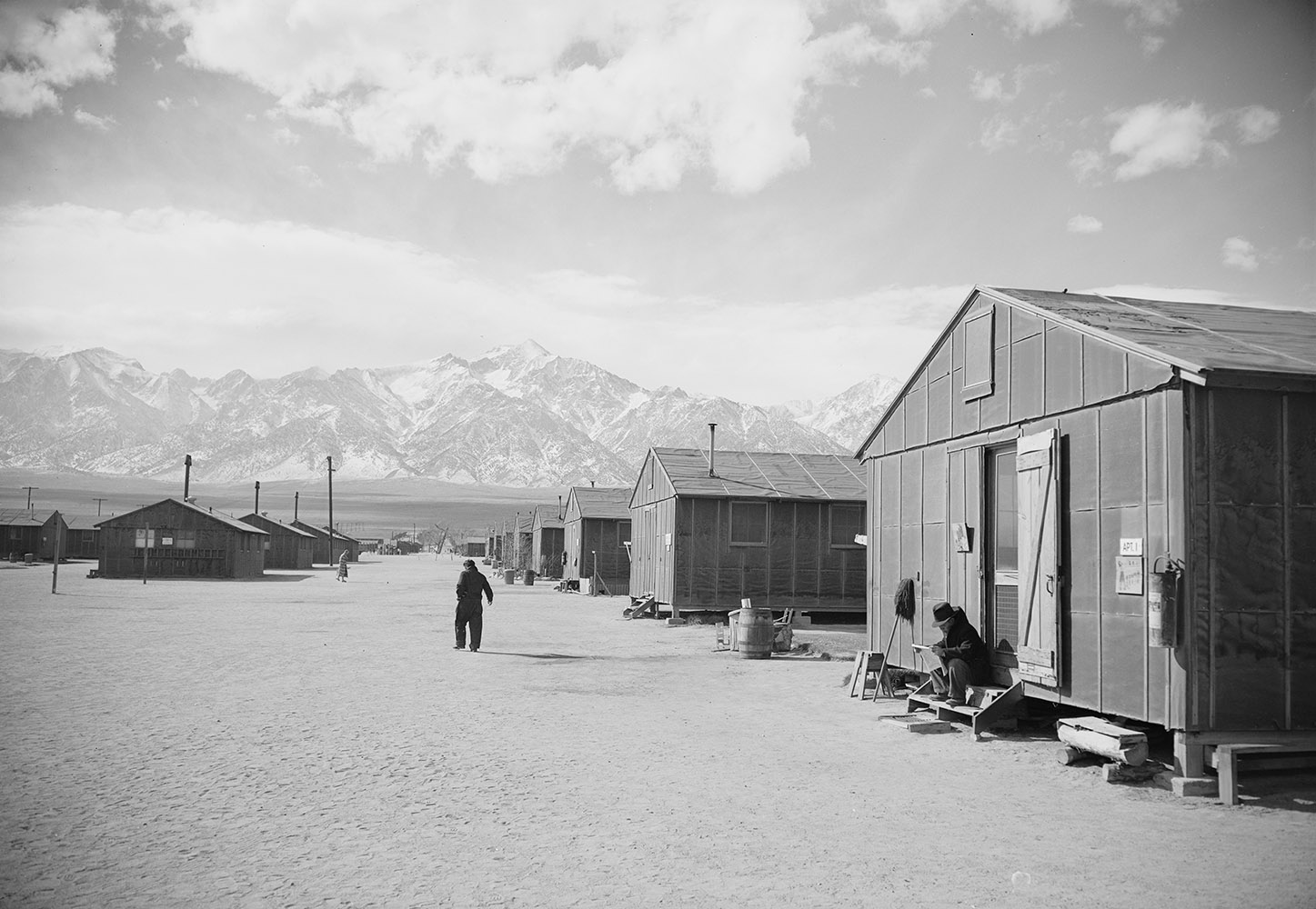 Manzanar - City in the Desert (Photograph courtesy of Library of Congress) (Photographer Ansel Adams) |
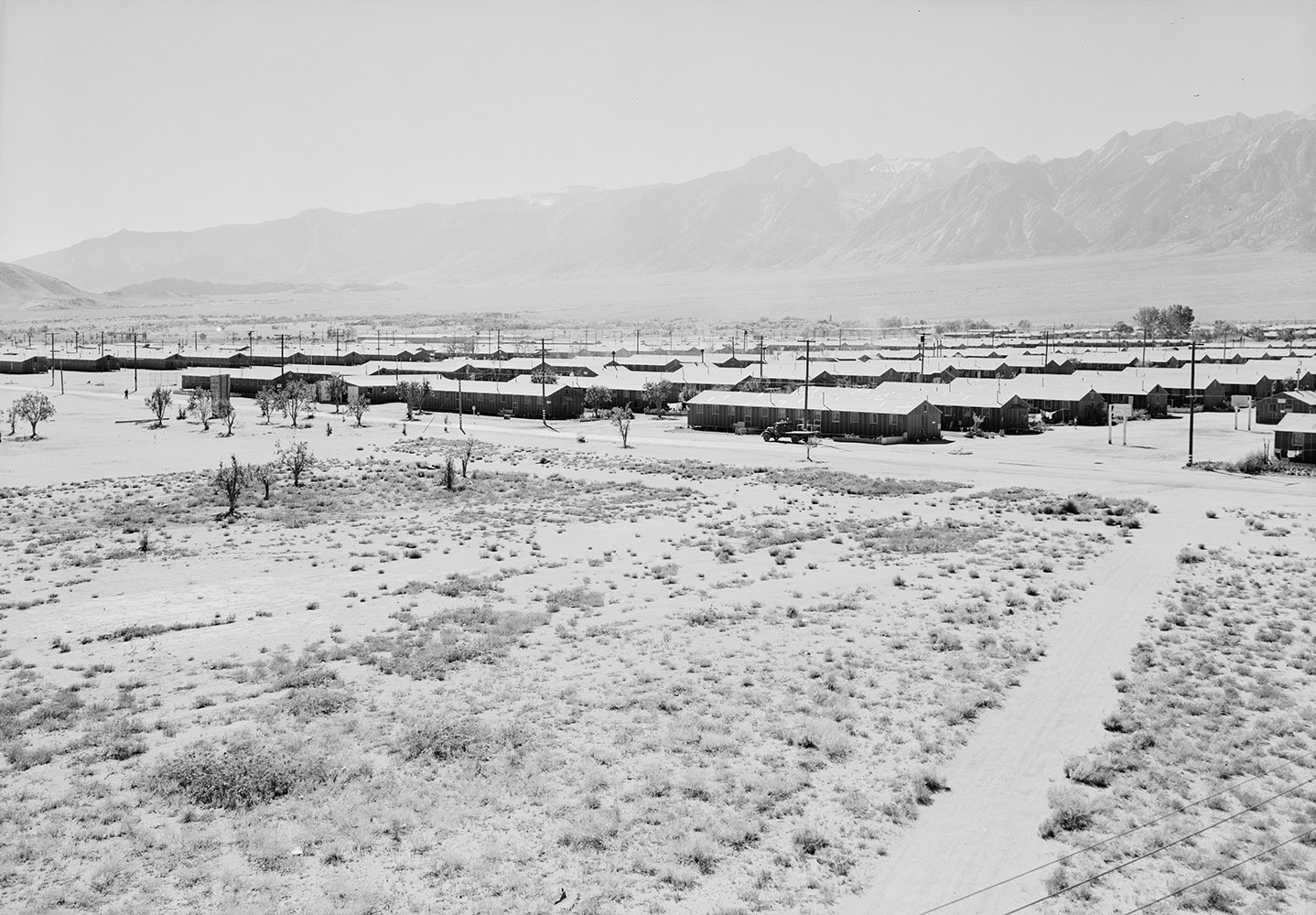 Manzanar - City in the Desert (Photograph courtesy of Library of Congress) (Photographer Ansel Adams) |
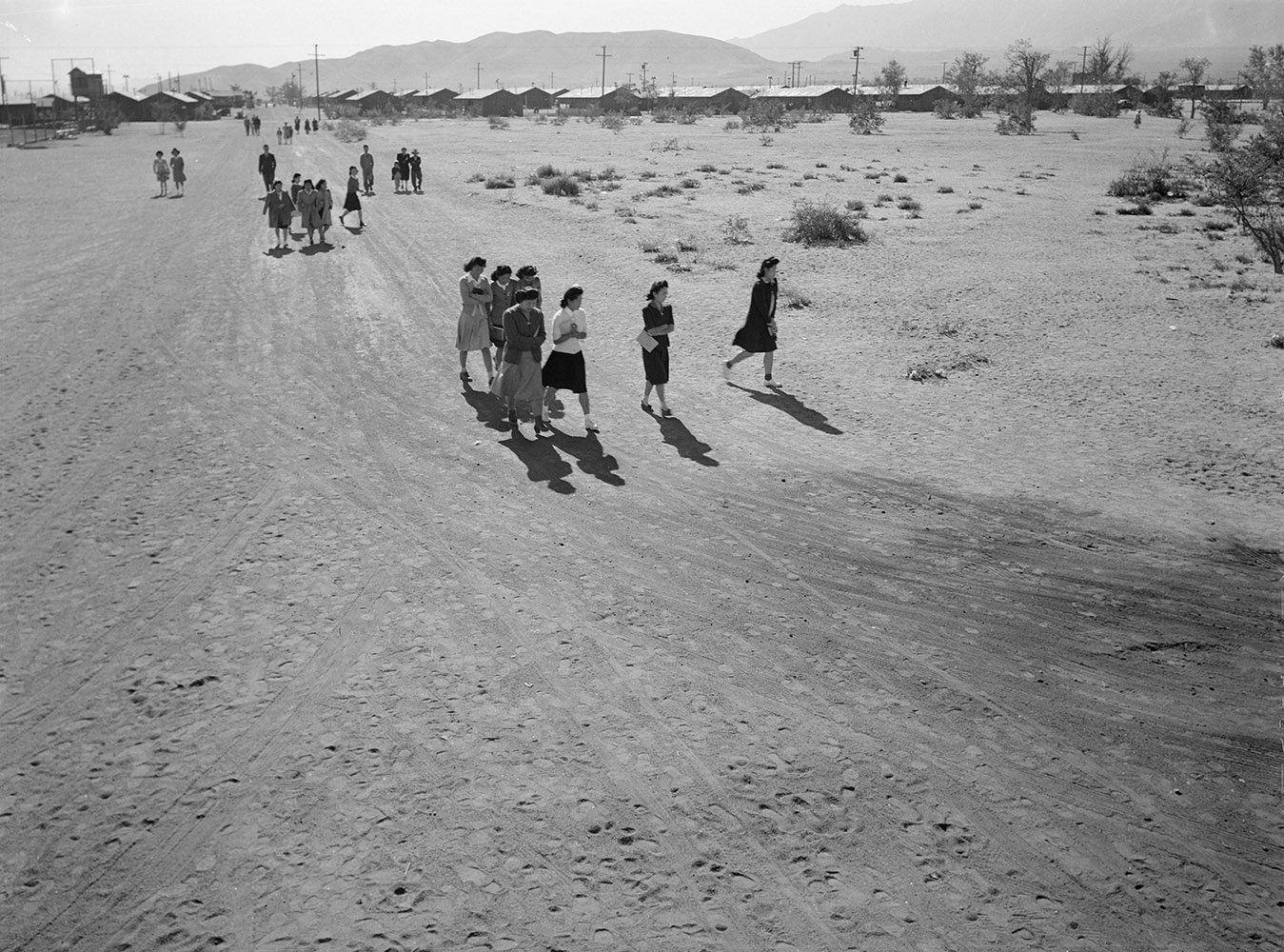 People walking on the Manzanar grounds (Photograph courtesy of Library of Congress) (Photographer Ansel Adams) |
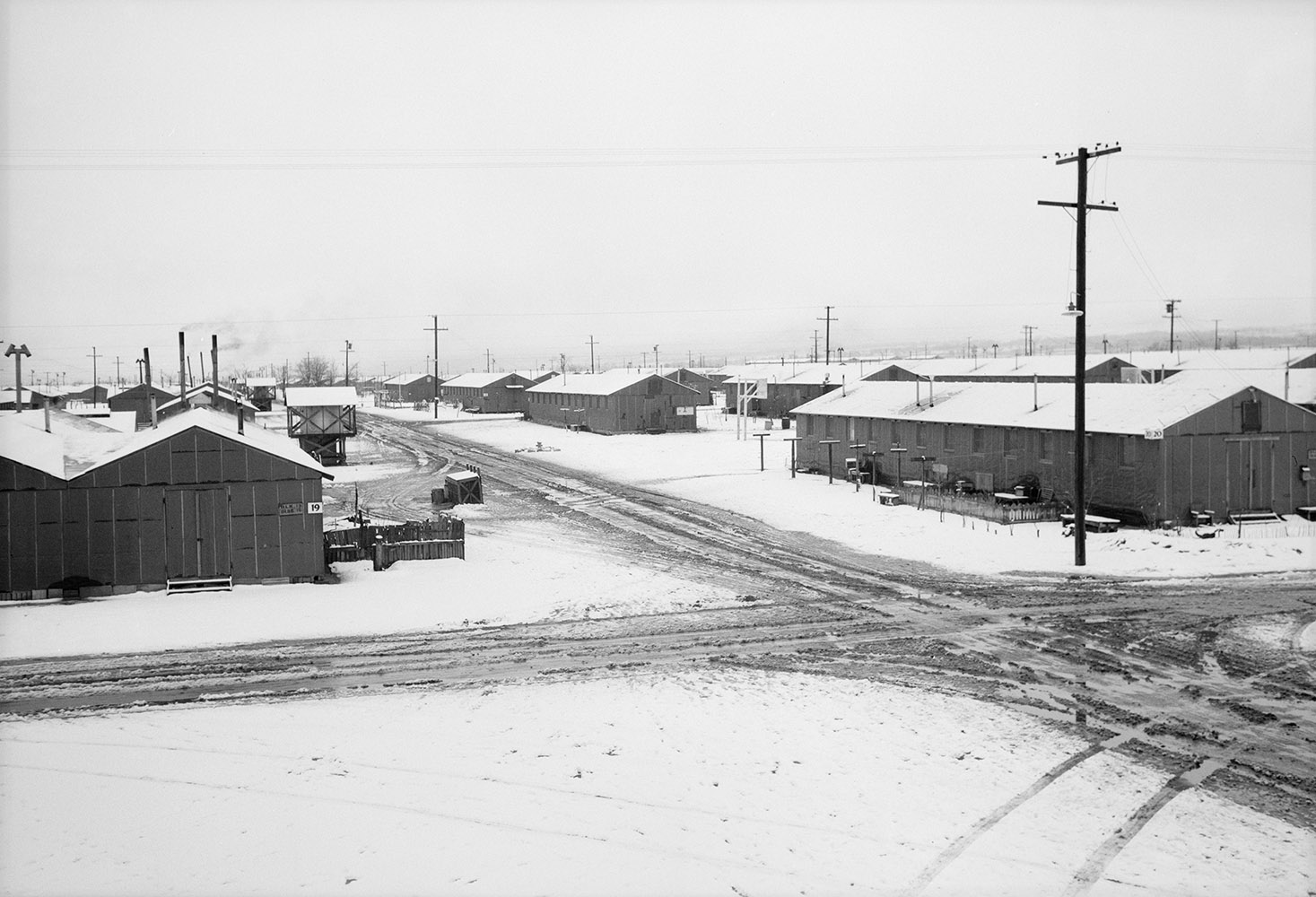 Manzanar - Snowed in (Photograph courtesy of Library of Congress) (Photographer Ansel Adams) |
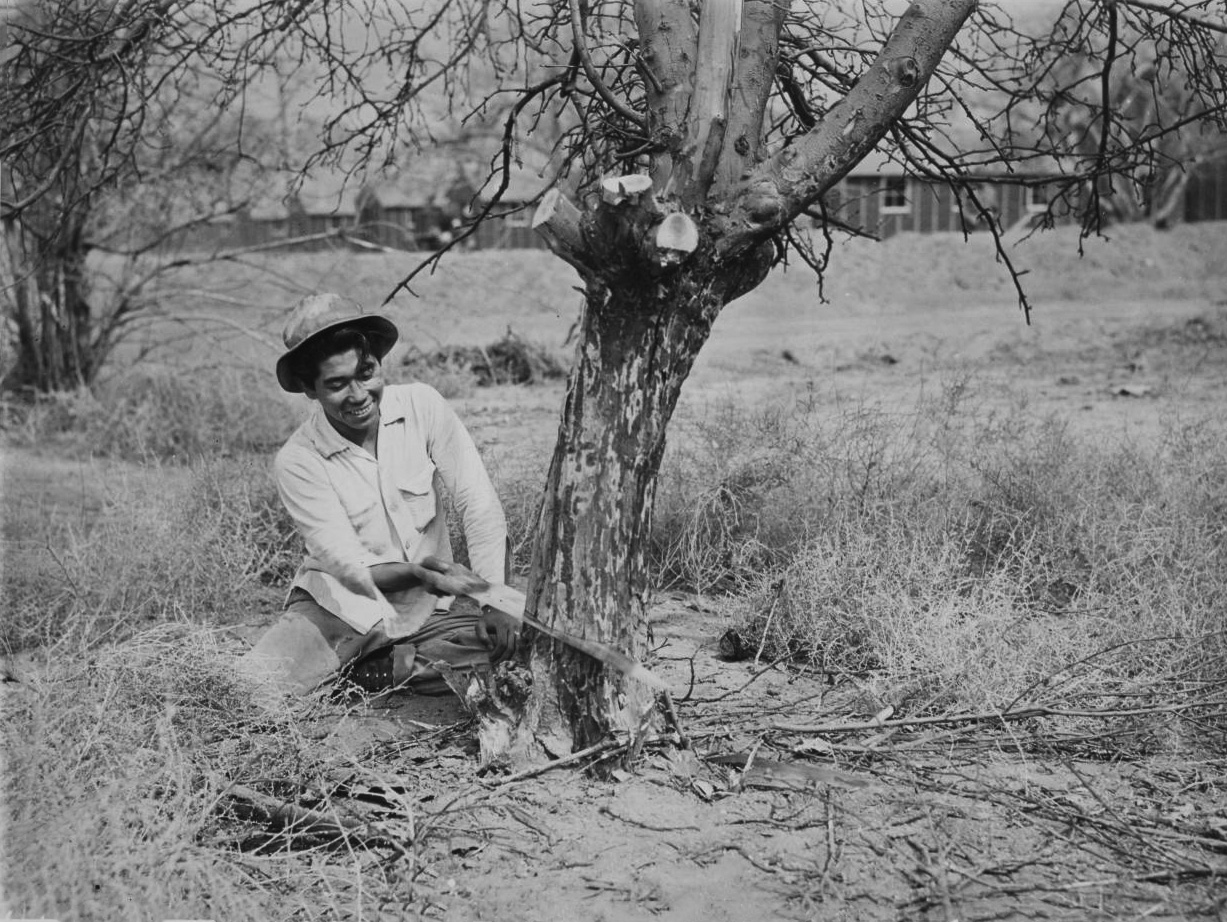 Clearing the grounds of long dead apple orchard trees from the time when Owens Valley was a rich agricultural area. - 1942 (Photograph courtesy of Calisphere) (Photographer Dorothea Lange) |
 12/24 12/24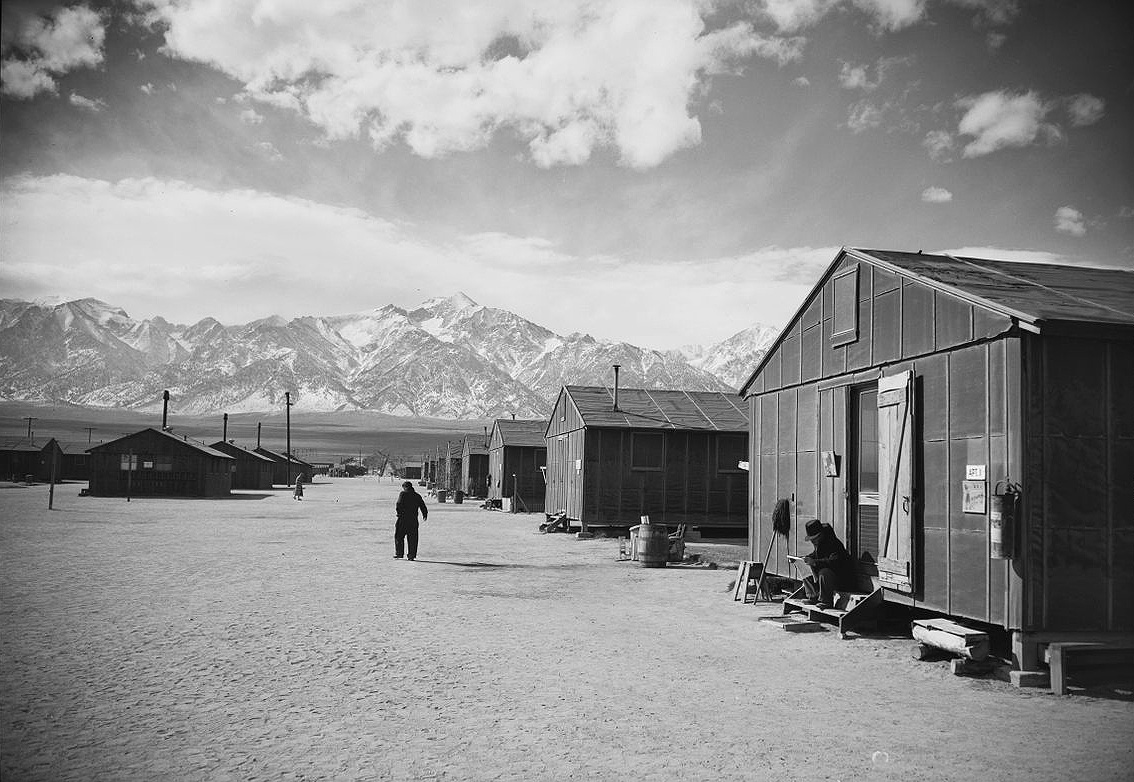 Owens Valley, CA - 1943 (Photo courtesy of the Japanese American Digitization Project) (Ansel Adams photo ) |
(excerpts from Farewell to Manzanar) "In addition to the regular school sessions and the recreation program, classes of every kind were being offered all over camp: singing, acting, trumpet playing, tap-dancing, plus traditional Japanese arts like needlework, judo, and kendo. The first class I attended was in baton twirling, taught by a chubby girl about fourteen named Nancy. In the beginning I used a sawed-off broomstick with an old tennis ball stuck on one end. When it looked like I was going to keep at this, Mama ordered me one like Nancy's from the Sear, Roebuck catalog. Nancy was a very good twirler and taught us younger kids all her tricks. For months I practiced, joined the baton club at school, and even entered contests. Since then I have often wondered what drew me to it at that age. I wonder, because of all the activities I tried out in camp, this was the one I stayed with, in fact returned to almost obsessively when I entered high school in southern California a few years later. By that time I was desperate to be 'accepted,' and baton twirling was one trick I could perform that was thoroughly, unmistakably American - putting on the boots and a dress crisscrossed with braid, spinning the silver stick and tossing it high to the tune of a John Philip Sousa march." (JWH) "In the months to come they [my family] would draw together even more closely, just as I would hold to them - my moment of separateness a foreshadowing, but not yet a reality. Our family had begun to dwindle, along with the entire camp population. By the end of 1944 about 6,000 people remained, and those, for the most part, where the aging and the young. Whoever had prospects on the outside, and the energy to go, was leaving, relocating, or entering military service. No one could blame them. To most of the Nisei, anything looked better than remaining in camp. For many of their parents, just the opposite was true." (JWH) "...it was announced that all the camps would be closed within the coming twelve months and that internees now had the right to return to their former homes. In our family the response to this news was hardly joyful. For one thing we had no home to return to. Worse, the very thought of going back to the west coast filled us with dread. What will they think of us, those who sent us here? How will they look at us? Three years of wartime propaganda - racist headlines, atrocity movies, hate slogans, and fright-mask posters - had turned the Japanese face into something despicable and grotesque. Mama and Papa knew this. They had been reading the papers. Even I knew this, although it was not until many years later that I realized how bad things actually were. In addition to the traditionally racist organizations like The American Legion and The Native Sons of The GoldenWest, who had been agitating against the west-coast Japanese for decades, new groups had sprung up during the war, with the specific purpose of preventing anyone of Japanese descent from returning to the coast - groups like No Japs Incorporated in San Diego, The Home Front Commandos in Sacramento, and The Pacific Coast Japanese Problem League in Los Angeles. Also, some growers' associations, threatened by the return of interned farmers, had been using the war as a way to foment hostile feelings in the major farming areas. What's more, our years of isolation at Manzanar had widened the already spacious gap between the races, and it is not hard to understand why so many preferred to stay where they were. Before the war one of the standard charges made against the Japanese was their clannishness, their standoffishness, their refusal to assimilate. The camps had made this a reality in the extreme. After three years in our desert ghetto, at least we knew where we stood with our neighbors, could live more or less at ease with them. Yet now the government was saying we not only were free to go; like the move out of Terminal Island, and the move to Owens Valley, we had to go. Definite dates were being fixed for the closing of the camp." (JWH) |
Education
|
|
|
|
|
|
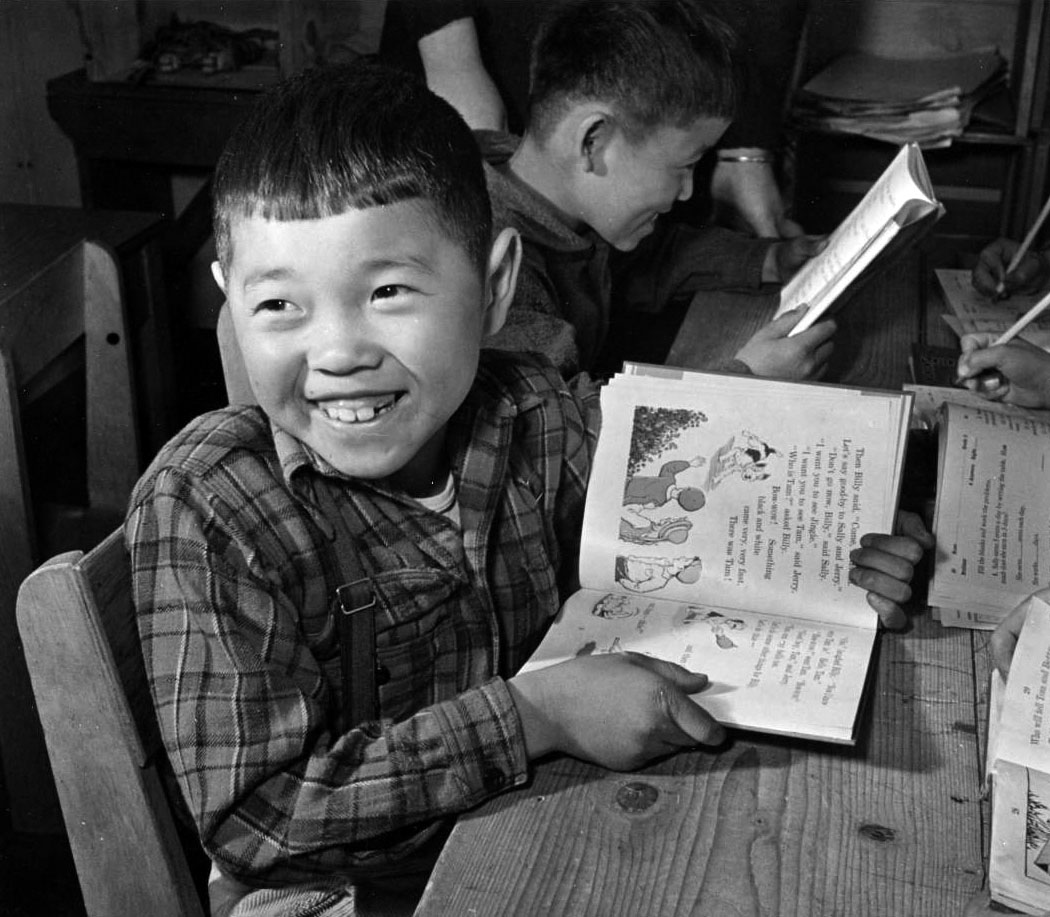
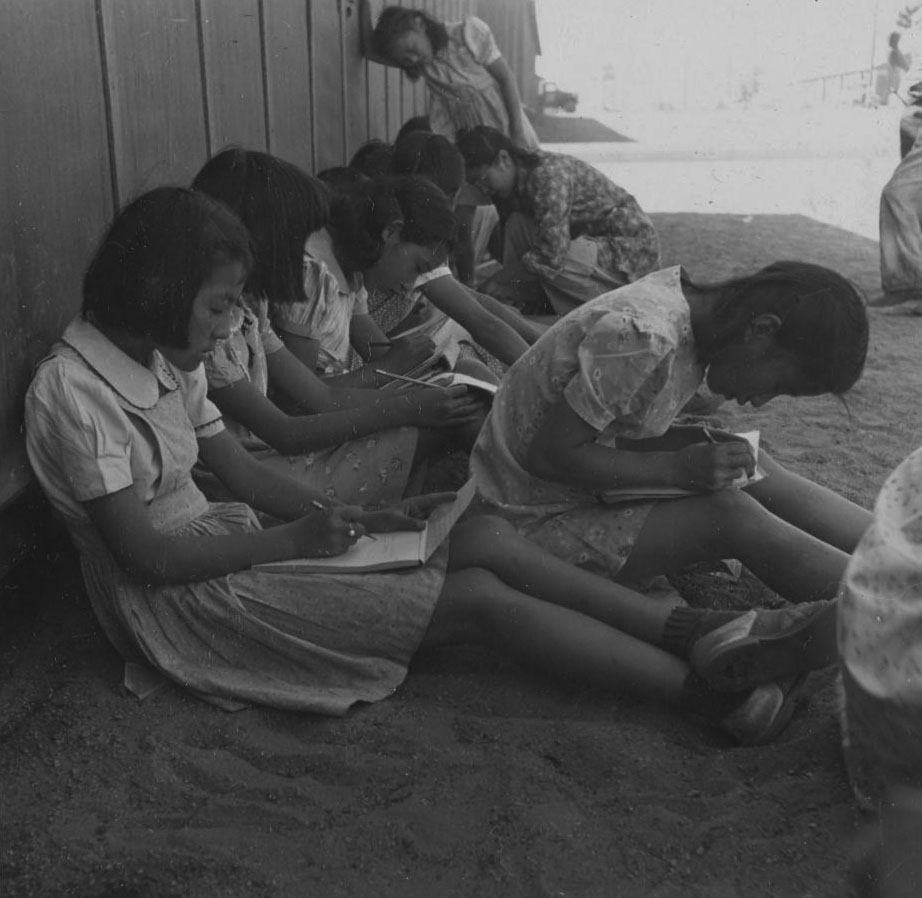 Elementary school children at Manzanar - 1942 (Photograph courtesy of Calisphere) (Photographer Dorothea Lange) |
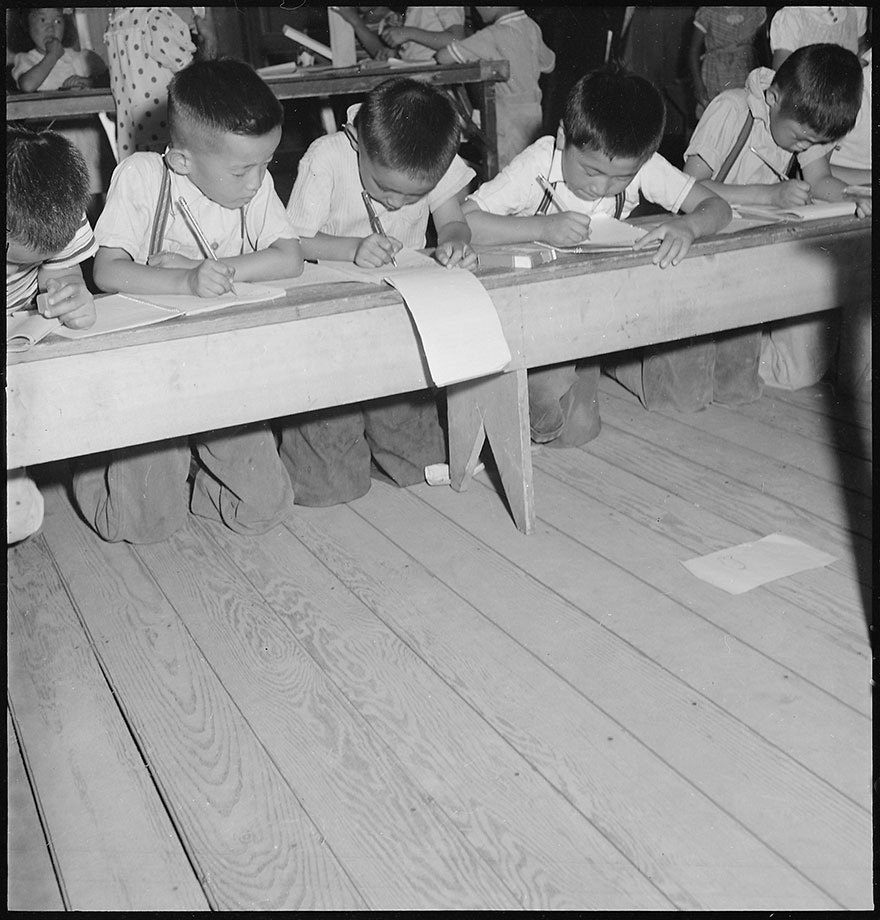 |
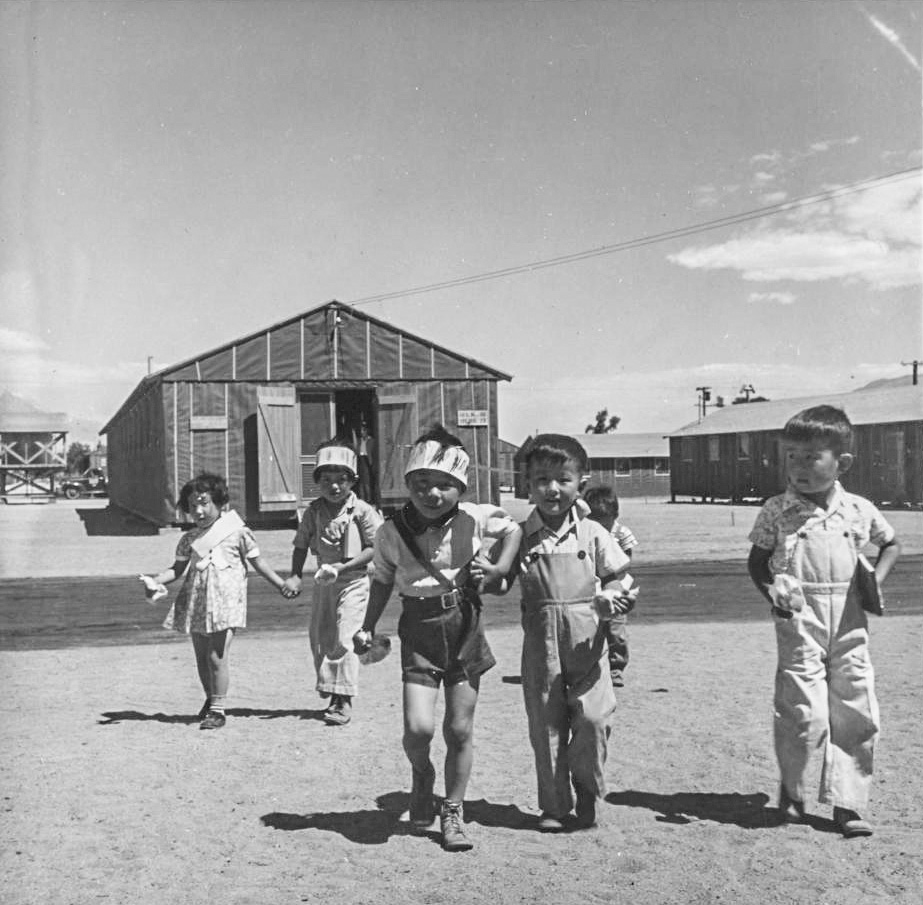 Pre-school children on their way home from class- 1942 (Photograph courtesy of Calisphere) (Photographer Dorothea Lange) |
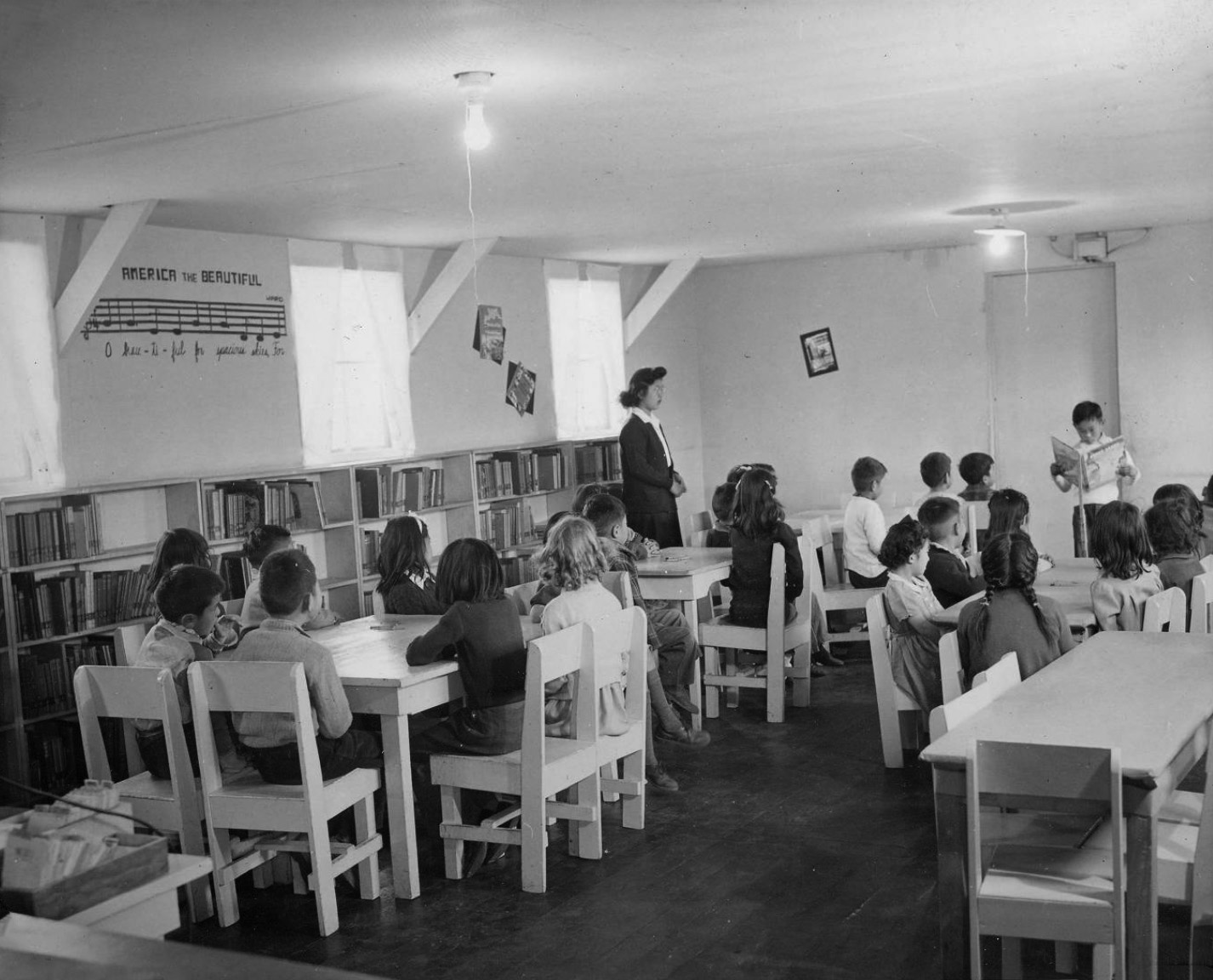 Seiko Ishida's primary school class in session (Photograph courtesy of Calisphere) |
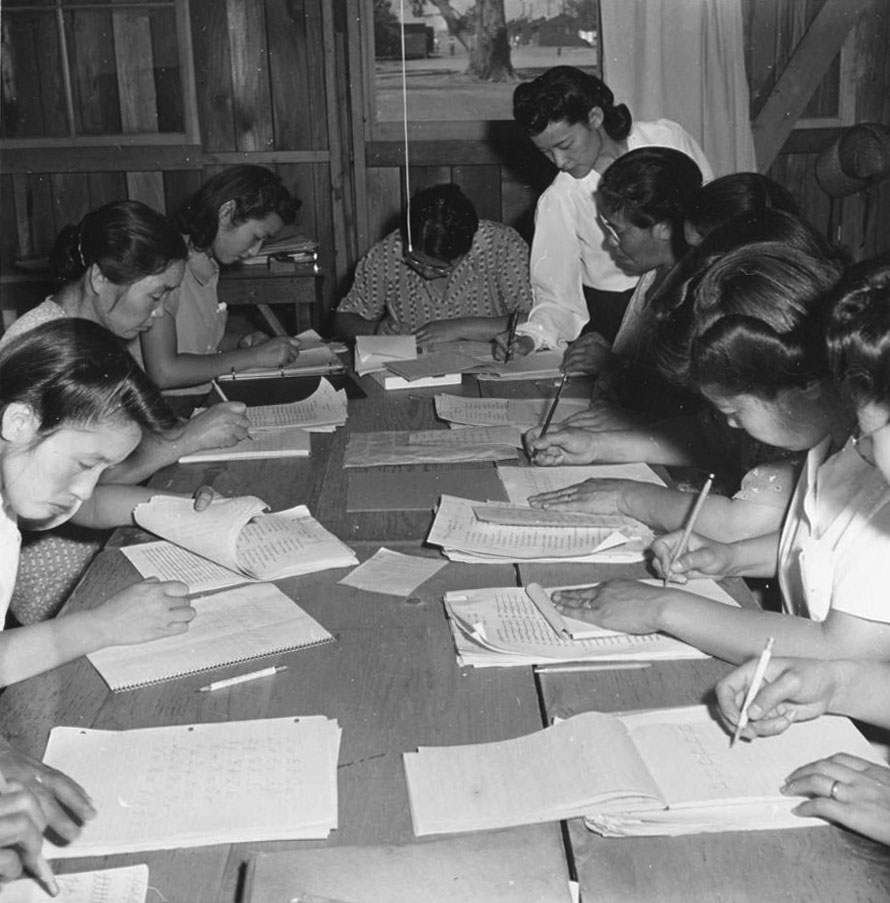
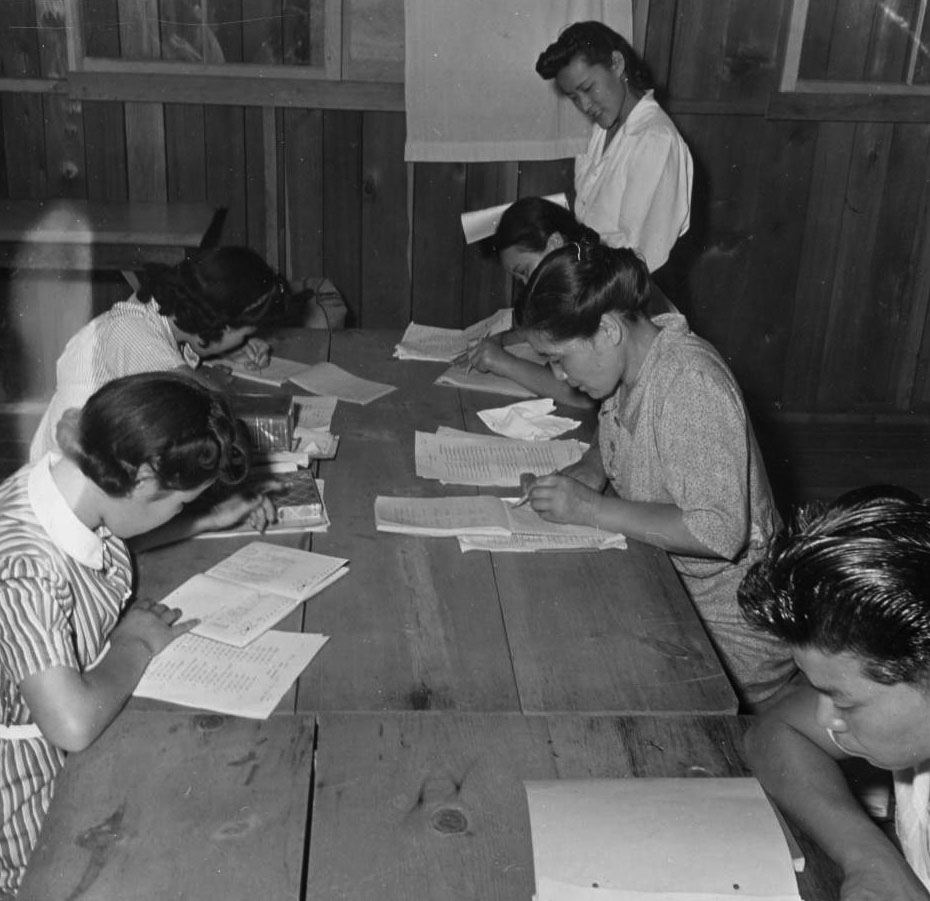
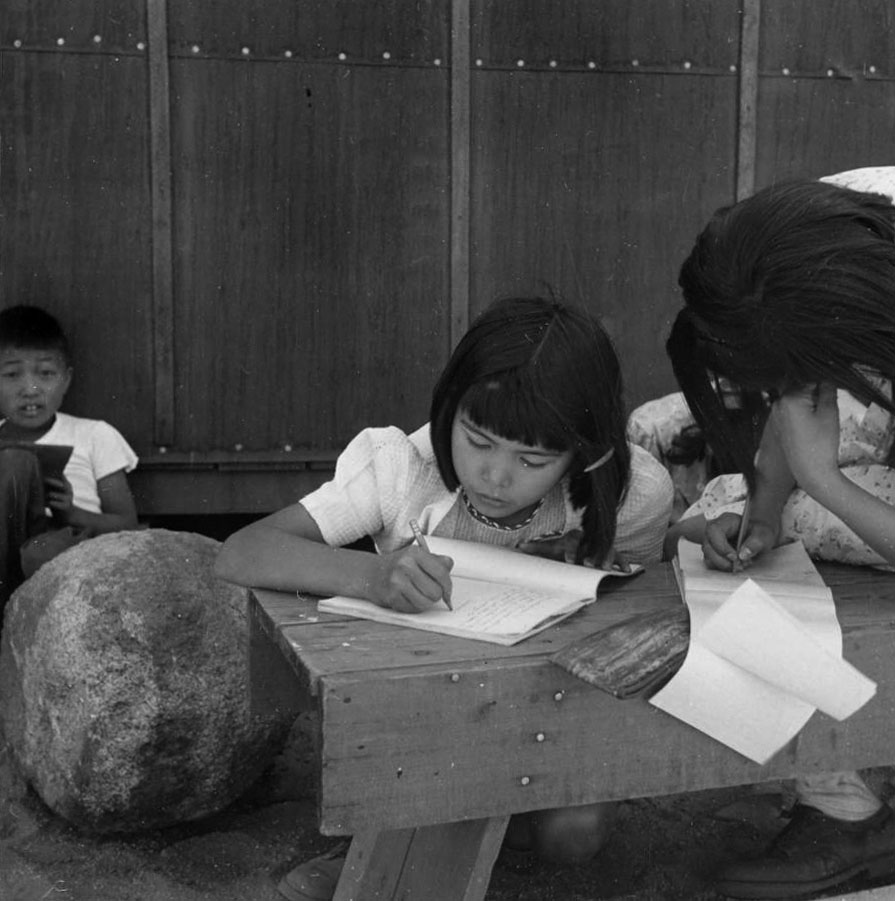 5th grade children in composition class - 1942 (Photograph courtesy of Calisphere) (Photographer Dorothea Lange) |
|
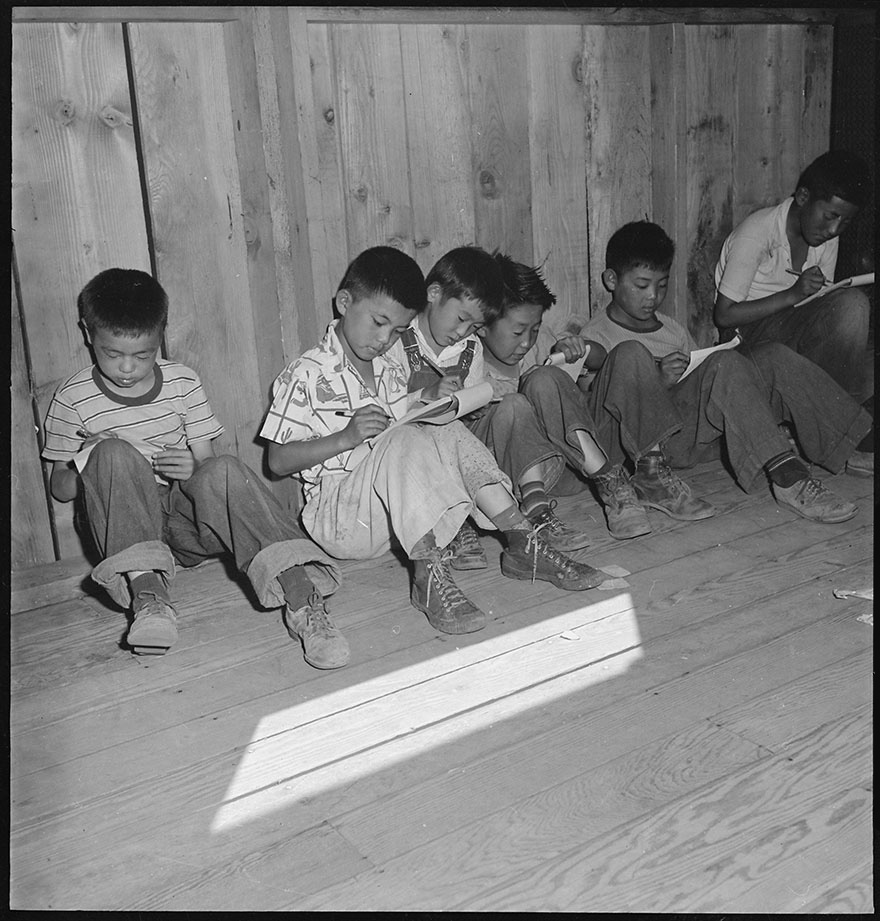
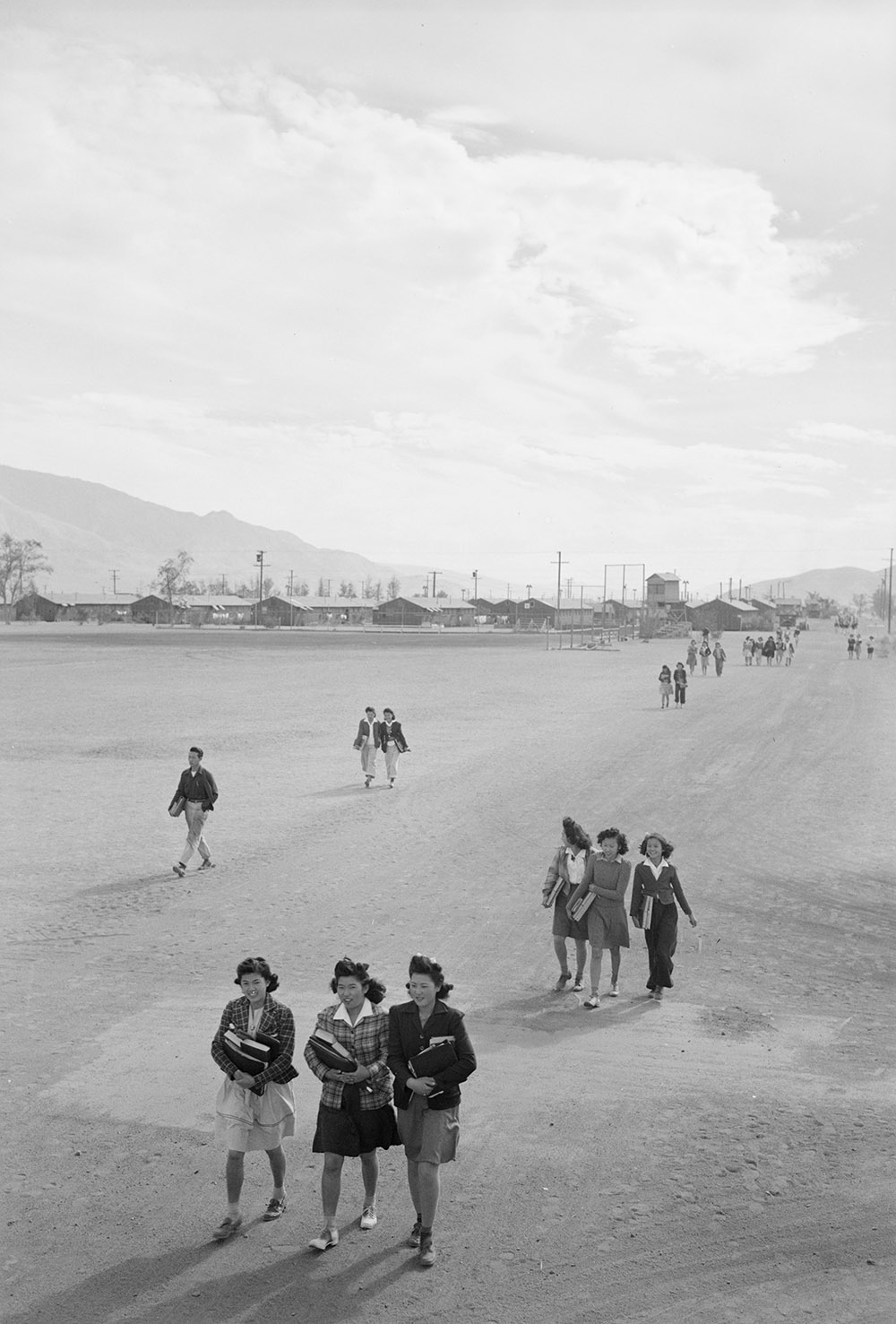
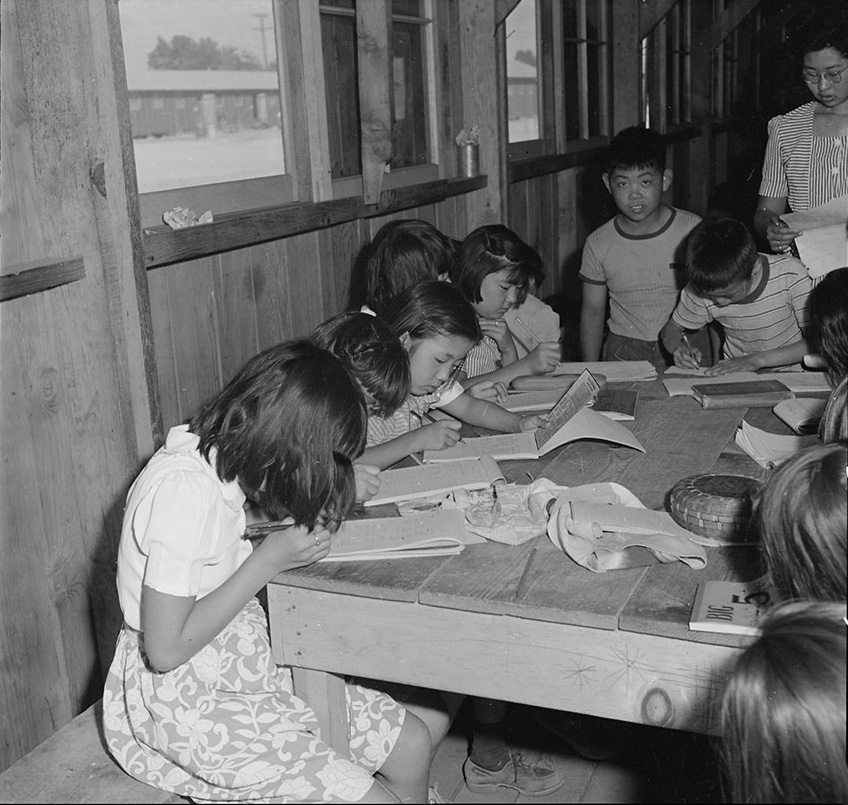
Toy Loan Library at Manzanar
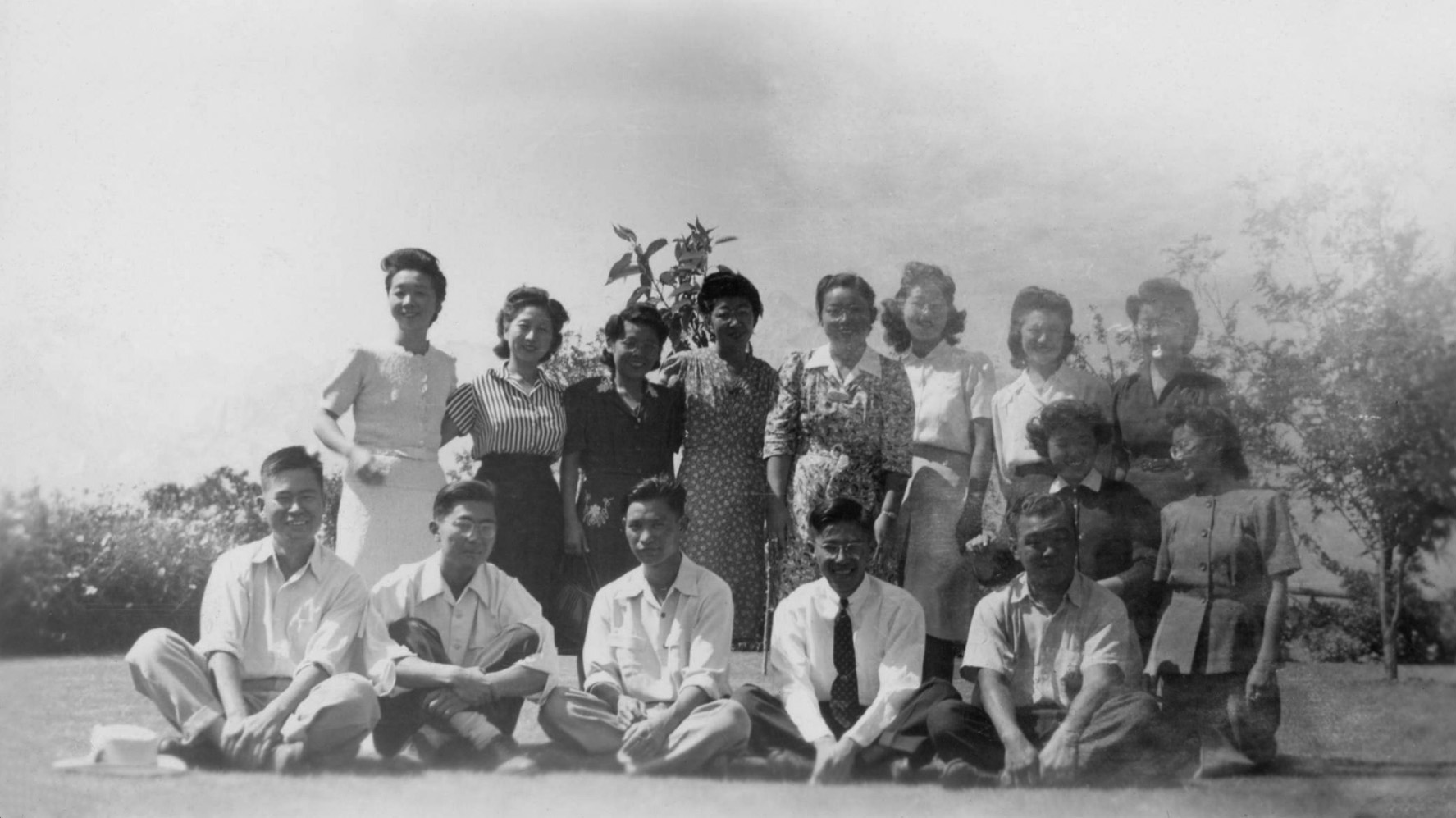 Group photograph of the teachers at Manzanar - 1943 Note above photograph in album reads, "A.E.T. (Associated Evacuee Teachers) Back row: HS [illegible] Mrs. Yae Nakamura, 2nd. Miss Helen Ban, 3rd me [Seiko Ishida], 4th. Mrs. Micky Funn, Hospital Miss Kiyo Fukasawa, 5th. Miss Meriko Hoshiyama, 6th Miss Toshiko Nakamura, 2nd. Miss Betty Hochizuka. Front Row: H.S. Mr. Elbert Nagashima, H.S. Mr. Masao, H.S. Mr. Tadashi Kishi, Office Mr. Yozzo Kurokawa, Gym Mr. Tom Higa, Music Miss Lily Fukuhara, 2nd. Miss Chiko Sakaguchi, 1943 summer." (Photograph courtesy of Calisphere) |
|
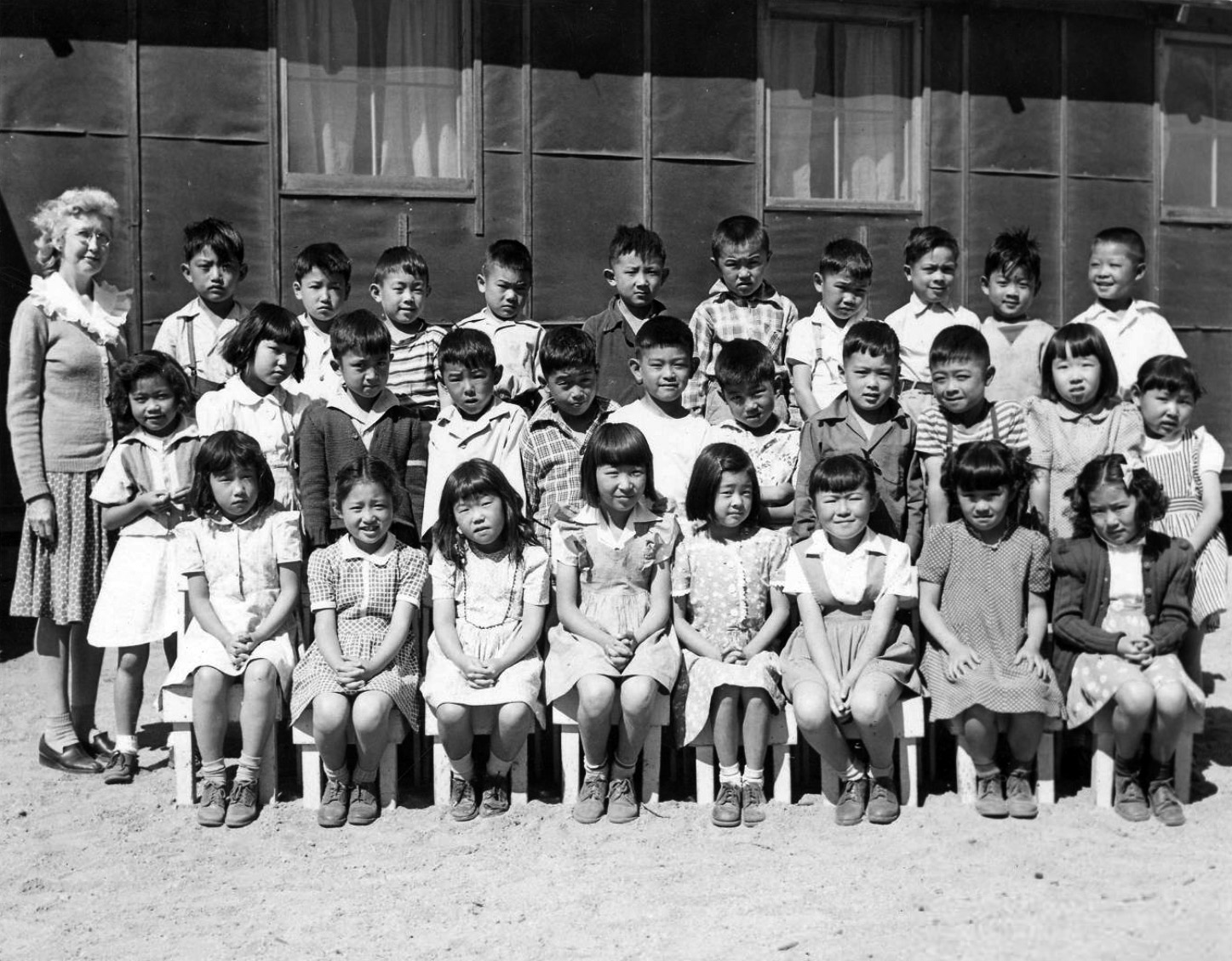 Miss Van Zangt's 2nd grade class group photograph - 1944-1945 (Photograph courtesy of Calisphere) |
|
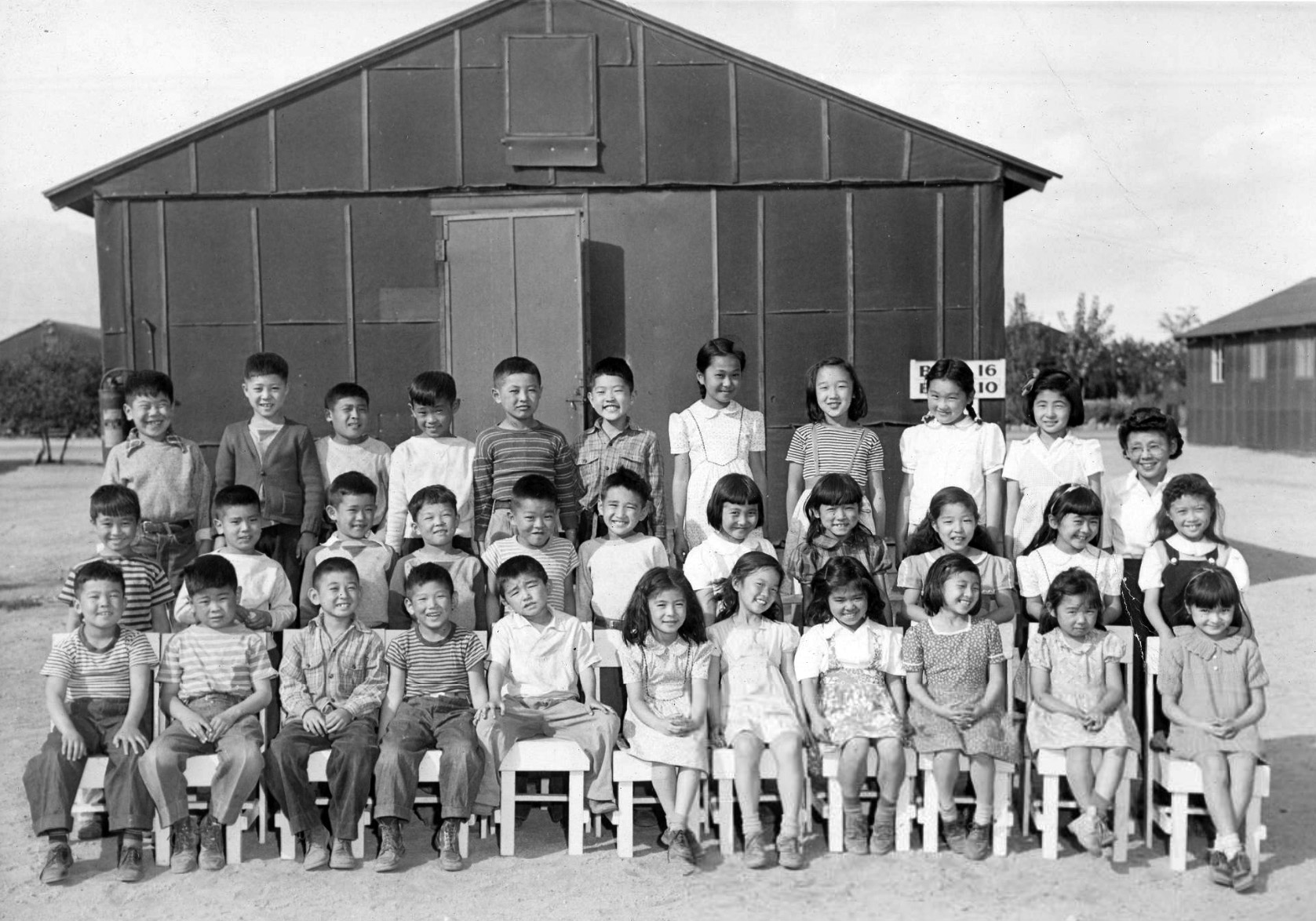 Seiko Ishida's 3rd grade class group photograph - 1944-1945 (Photograph courtesy of Calisphere) |
|
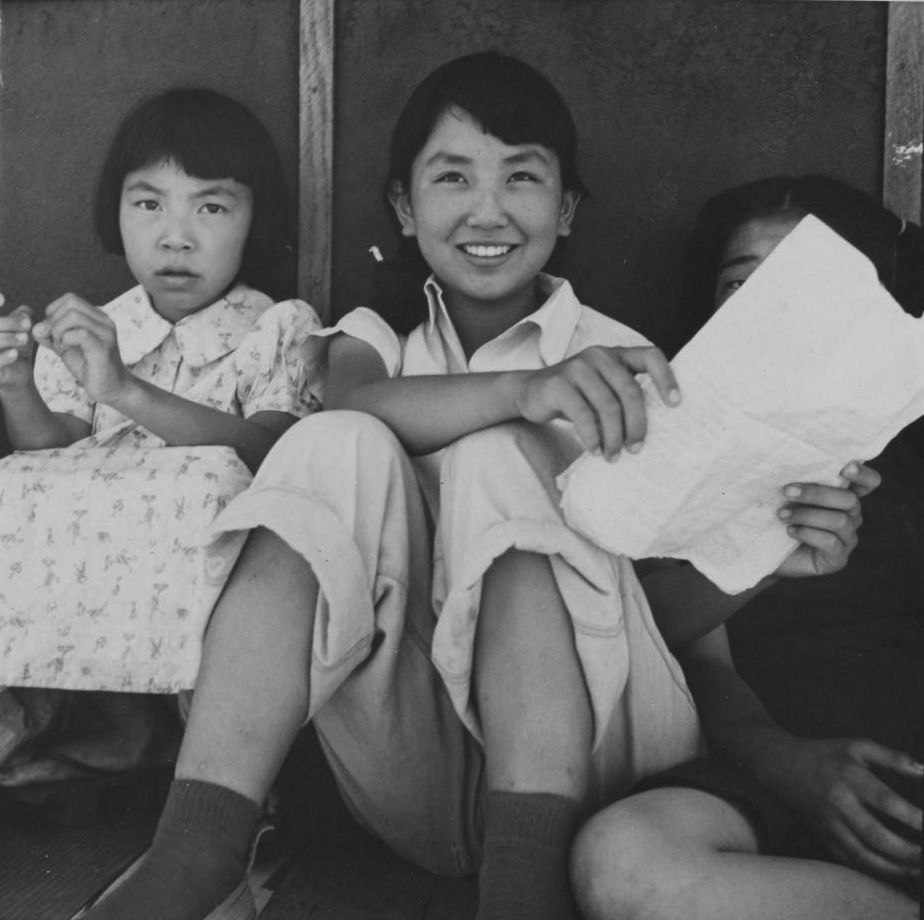 Young Japanese American girls practicing school songs. |
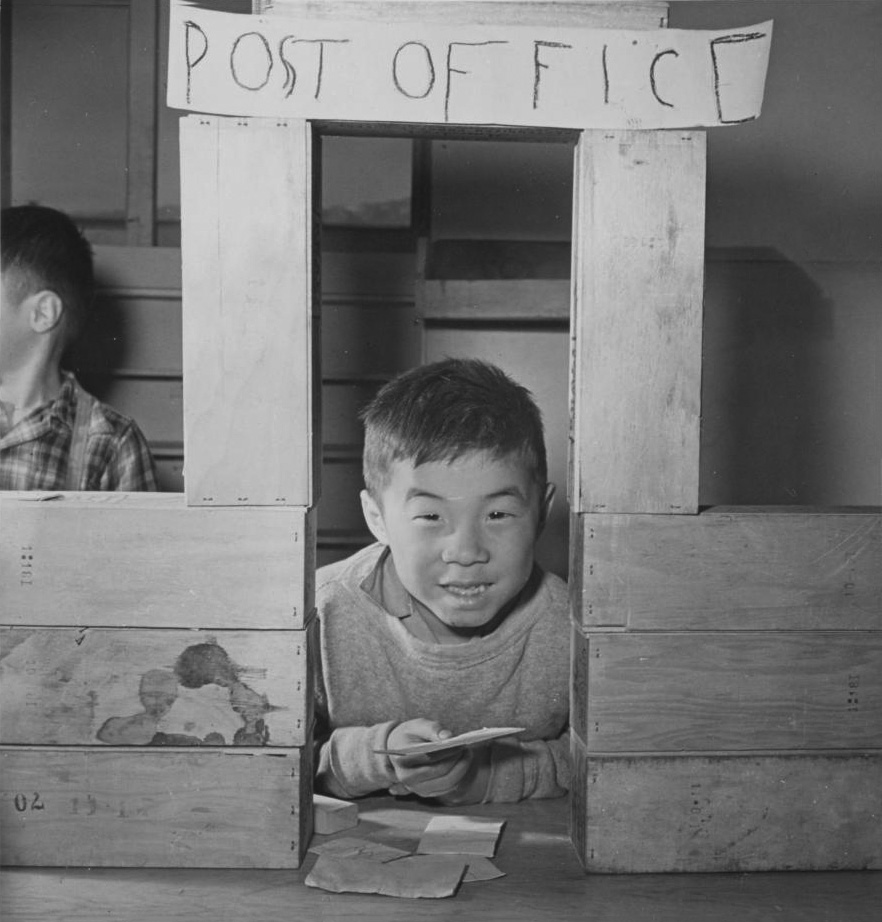 First Grade student in Miss Martha Job's class - 1942 (Photograph courtesy of Calisphere) |
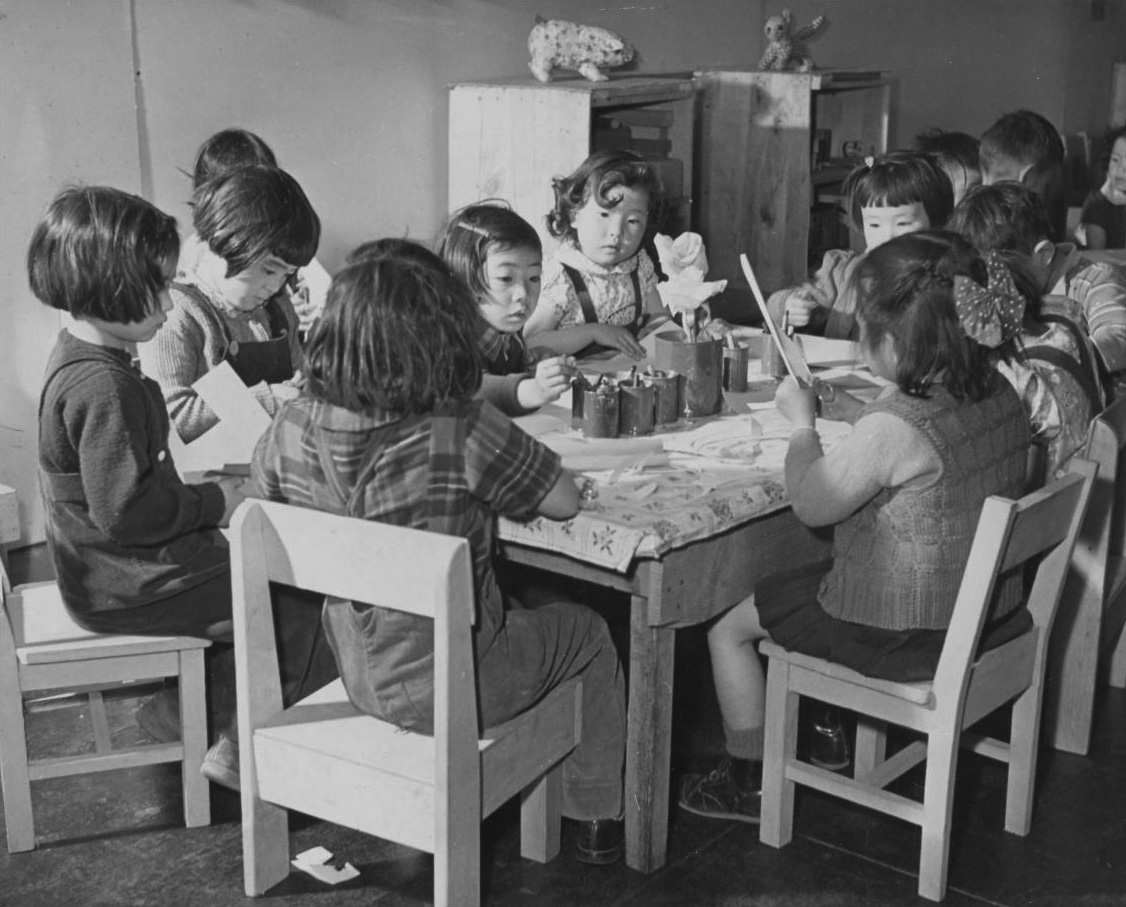 Nursery school children at Manzanar - 1943 (Photograph courtesy of Calisphere) (Photographer Francis Stewart) |
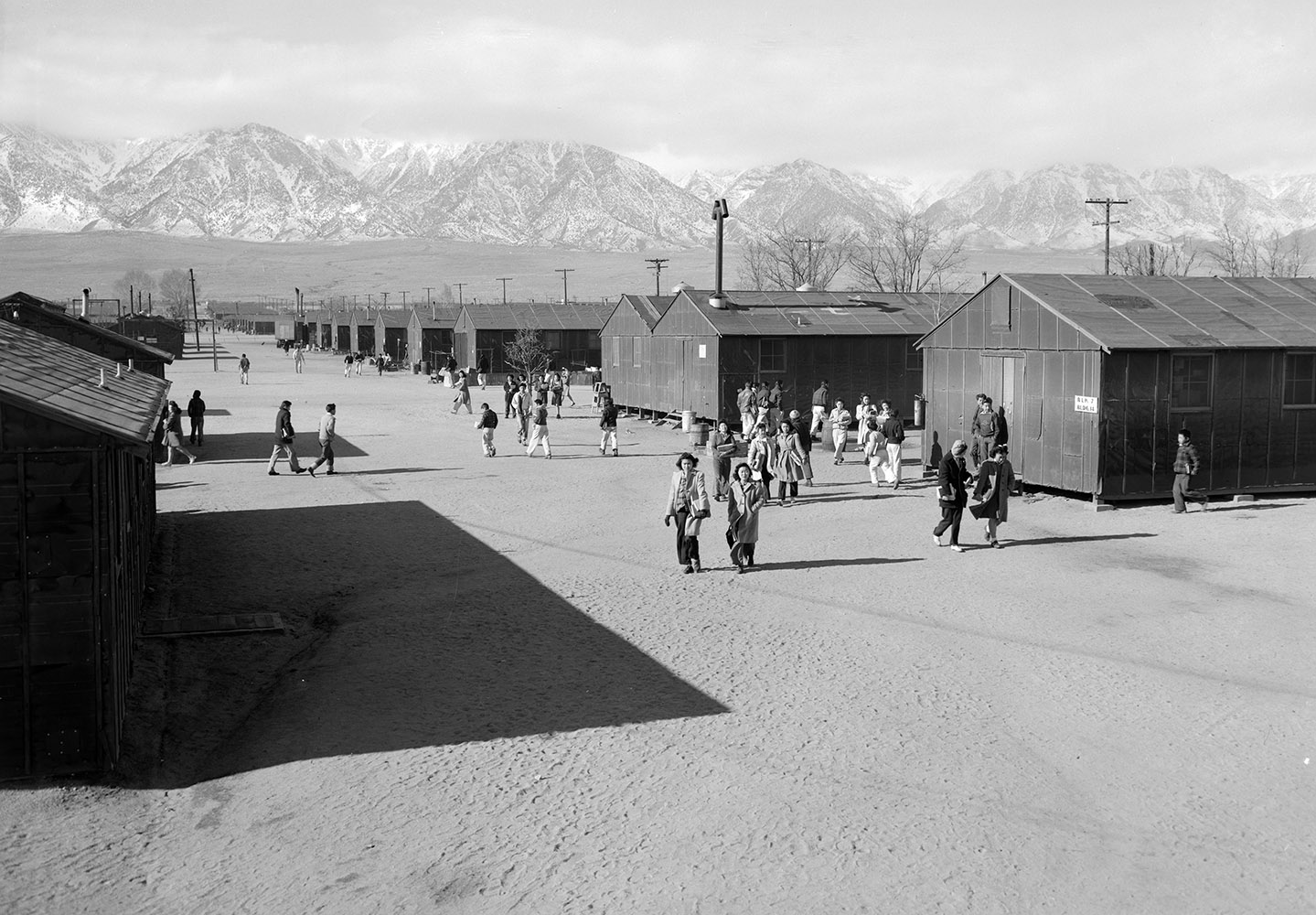 High School recess period (Photograph courtesy of Library of Congress) (Photographer Ansel Adams) |
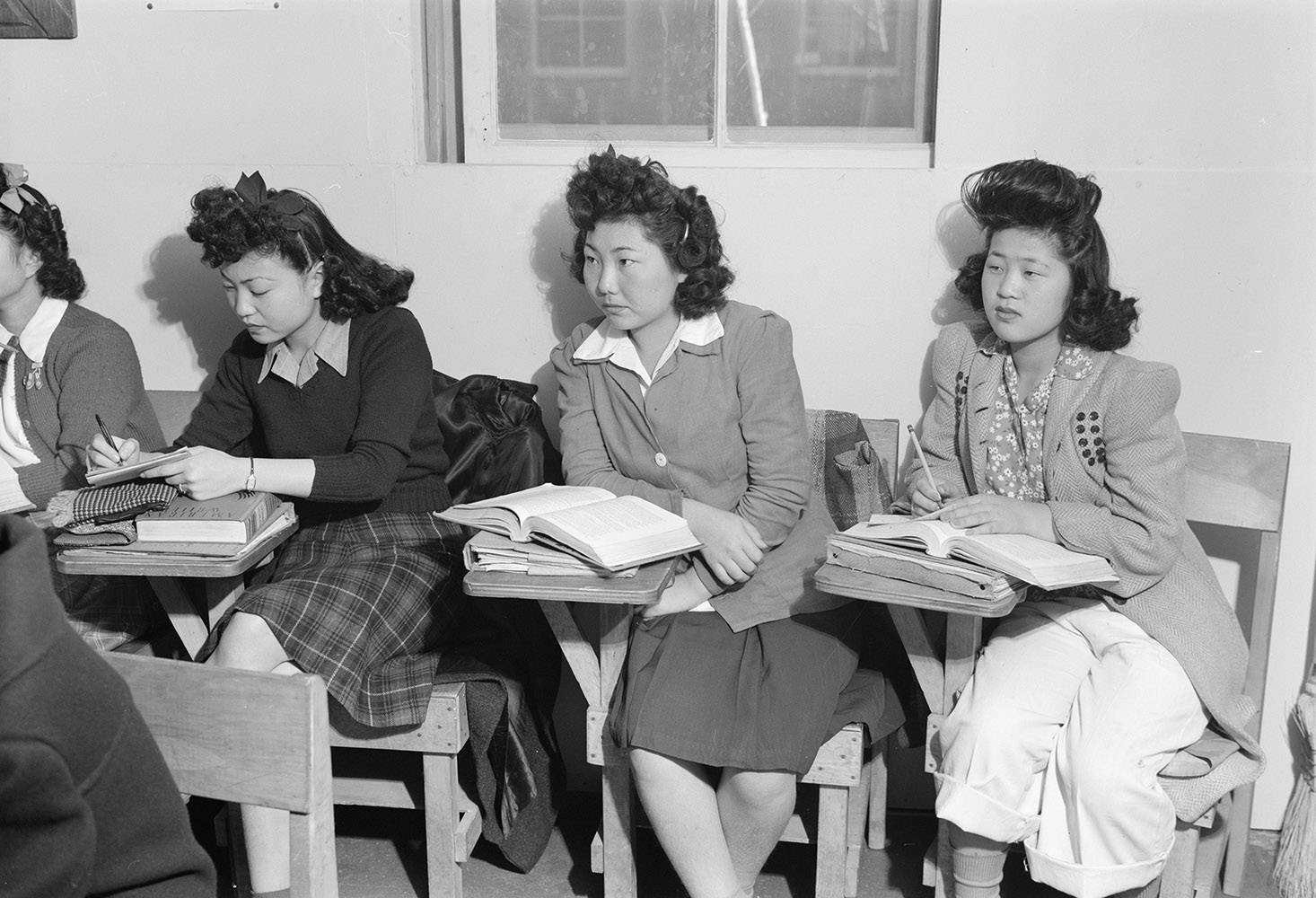 High School biology class L/R: Niyo Yoshida, Lillian Nakatoshi, Yoshiko Yamazaki (Photograph courtesy of Library of Congress) (Photographer Ansel Adams) |
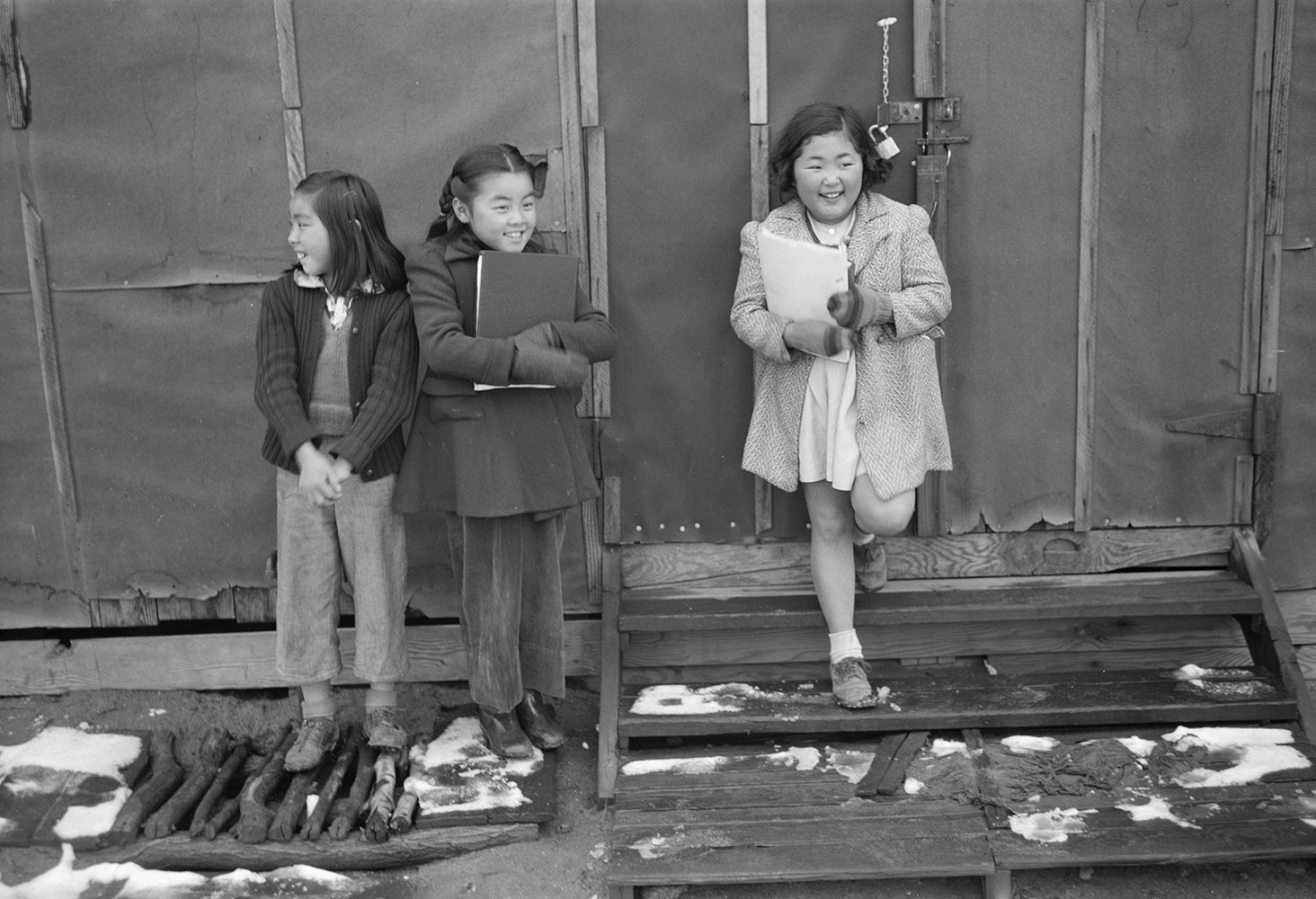 School children L/R: Niyo Yoshida, Lillian Nakatoshi, Yoshiko Yamazaki (Photograph courtesy of Library of Congress) (Photographer Ansel Adams) |
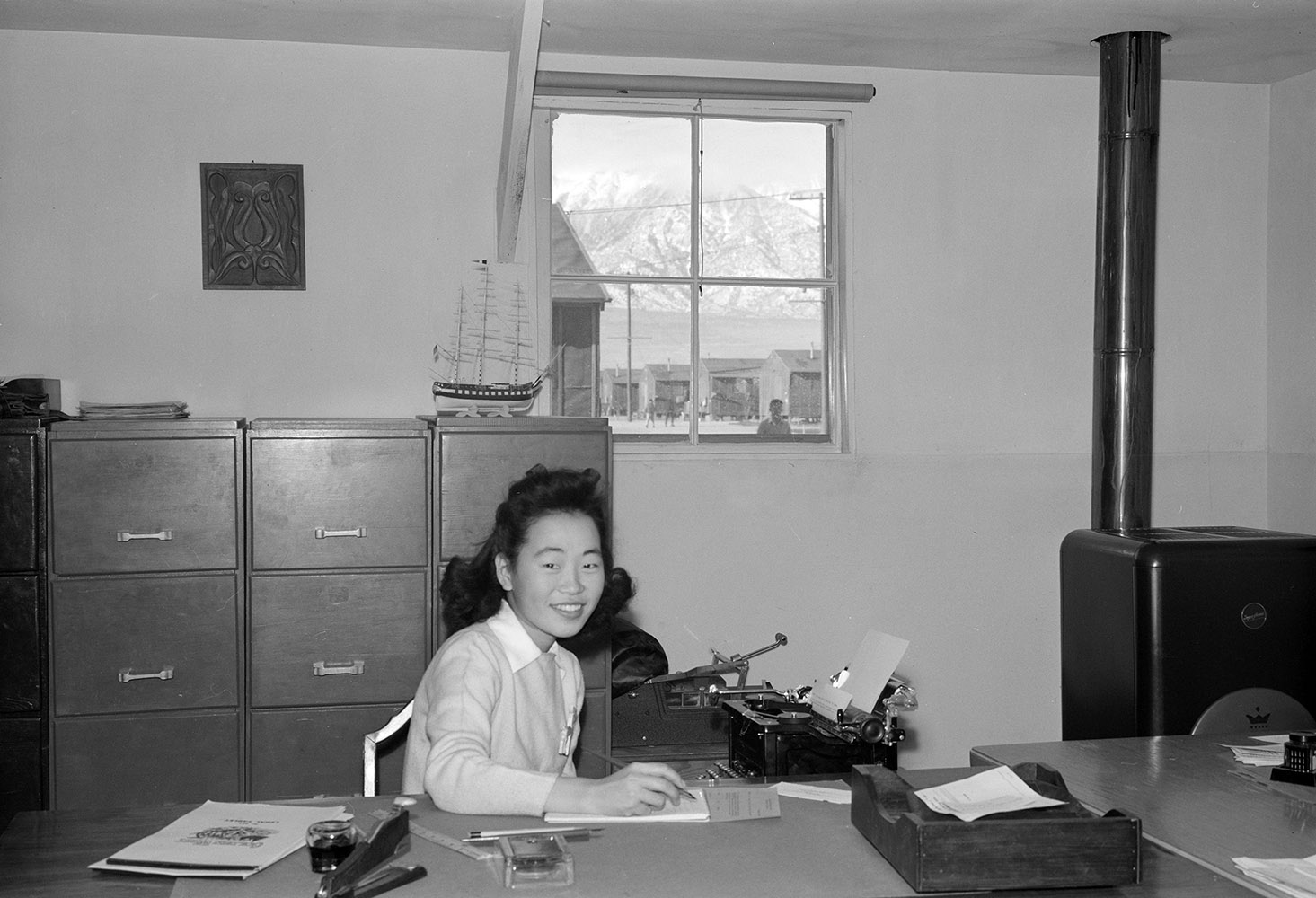 Yoshiko Joan Mori - stenographer in Education Office (Photograph courtesy of Library of Congress) (Photographer Ansel Adams) |
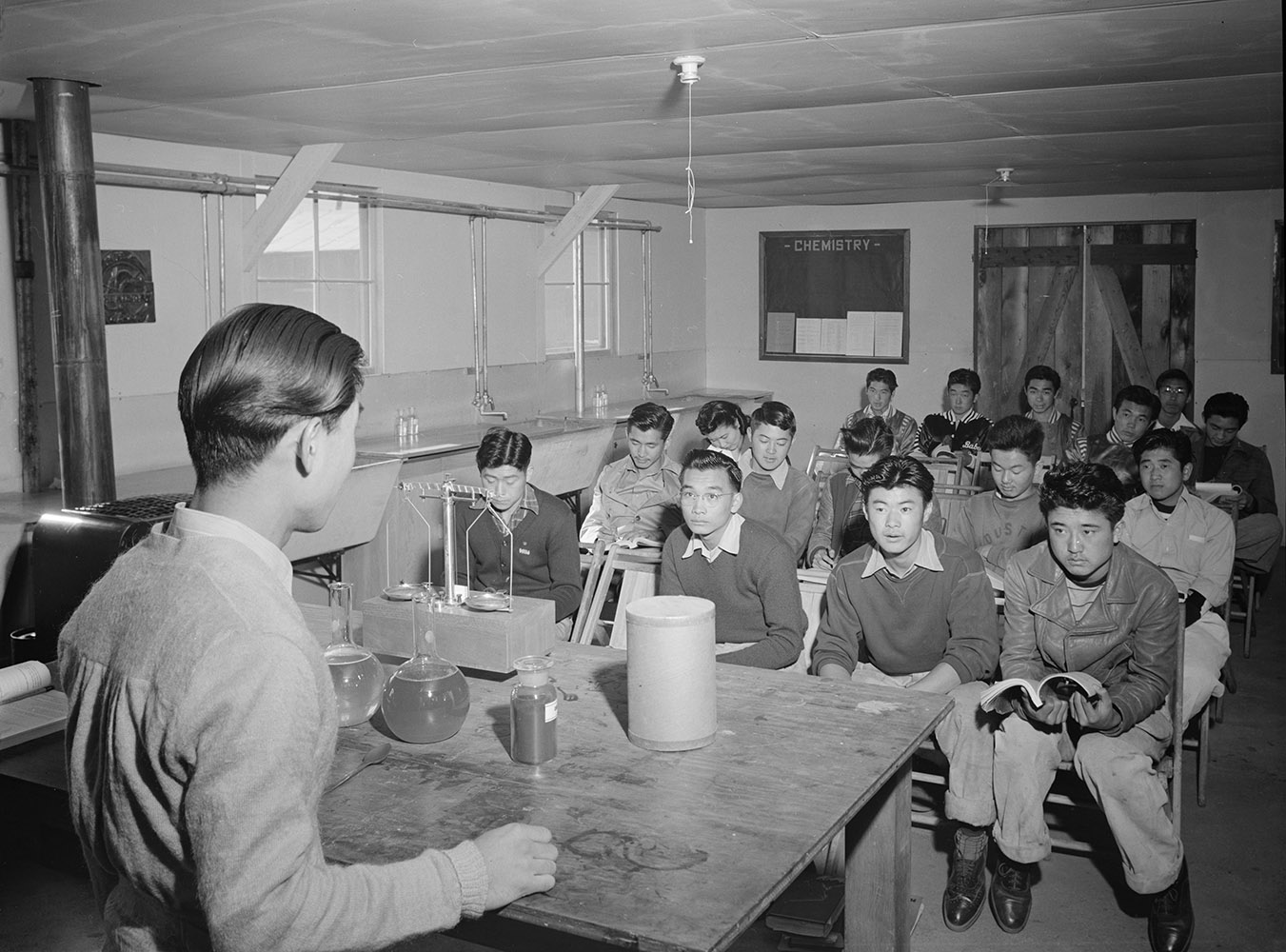 Science lecture. (Photograph courtesy of Library of Congress) (Photographer Ansel Adams) |
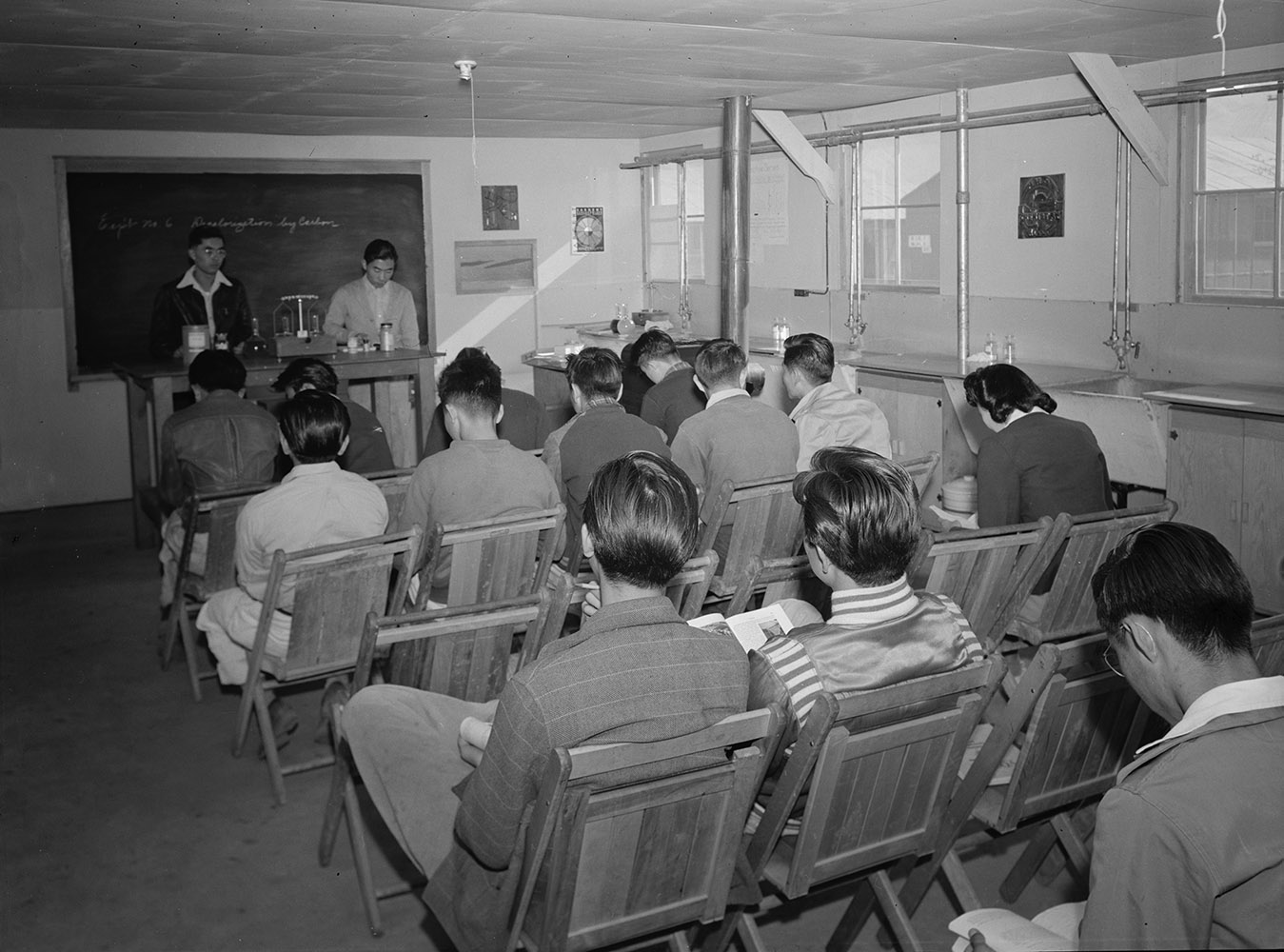 Science lecture (Photograph courtesy of Library of Congress) (Photographer Ansel Adams) |
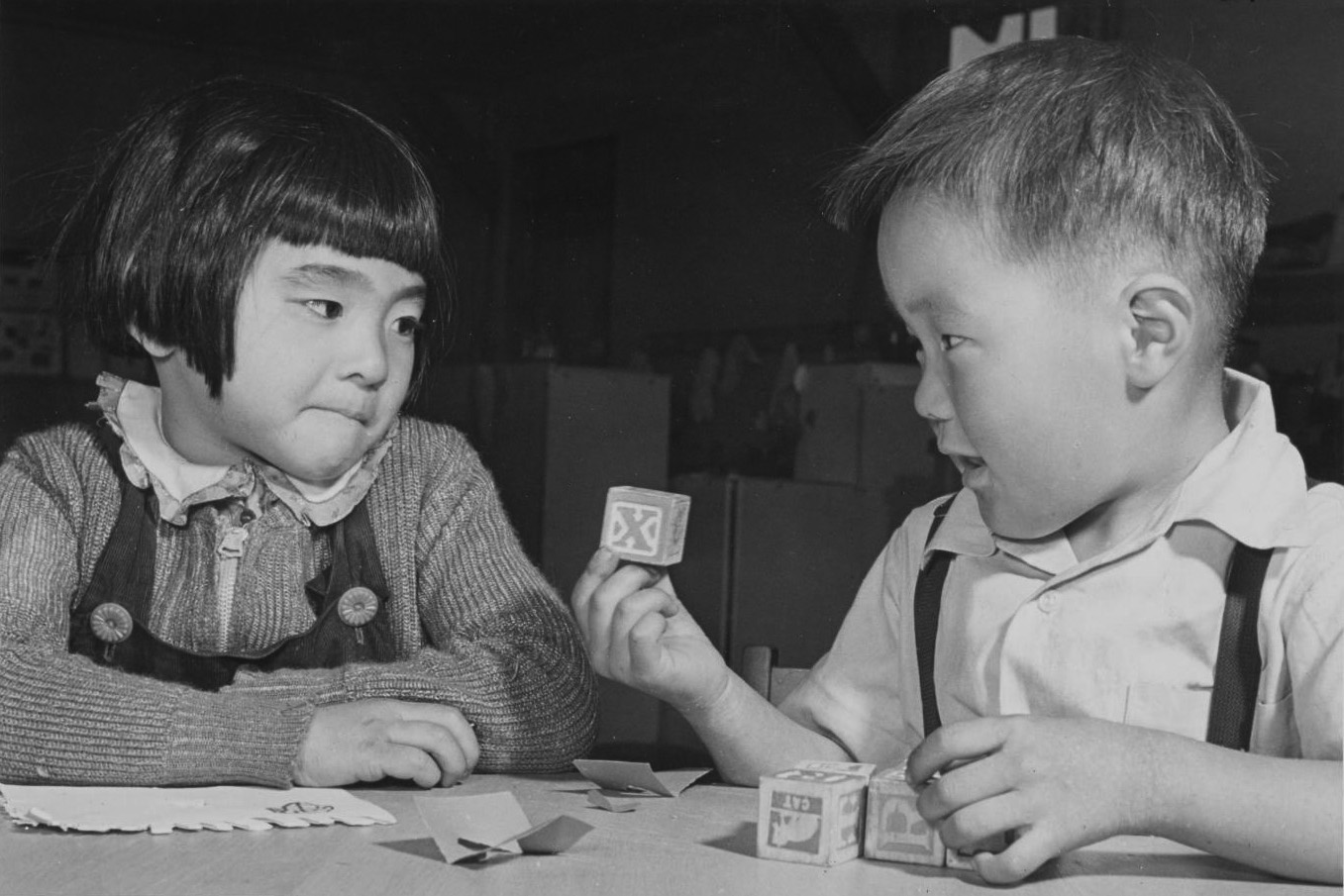 Children in 3rd grade at Manzanar. (Photograph courtesy of Calisphere) (Photographer Dorothea Lange) |
11/23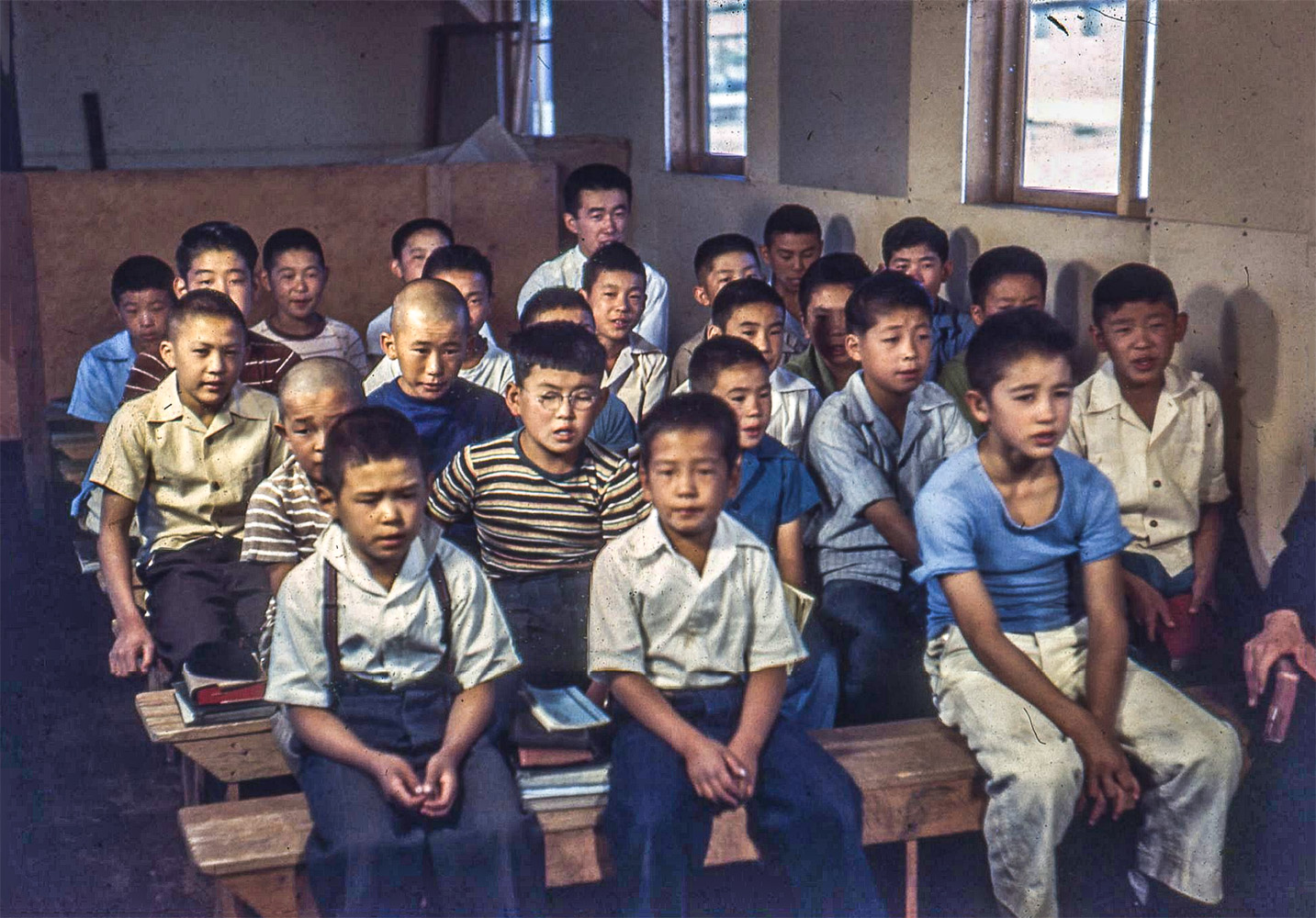 Children at Manzanar internment camp - 1942 (Photograph courtesy of Presbyterian Historical Society) |
11/23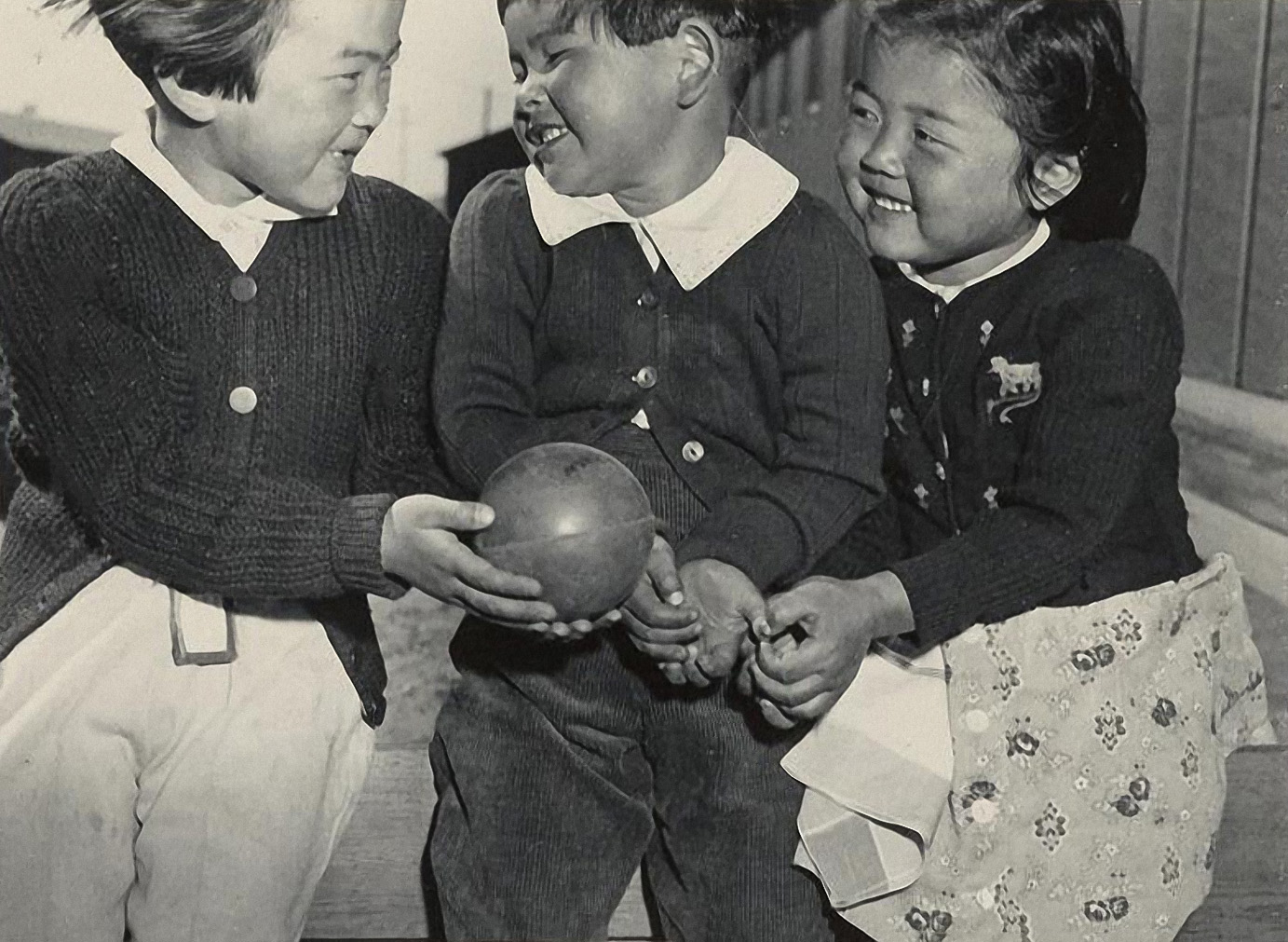 Japanese girls at nursery school - 1942 (Photograph Francis Stewart courtesy of Online Archive of California) |
Sophomore Installation at Manzanar
Commencement Exercises for Manzanar High School - July 3, 1943
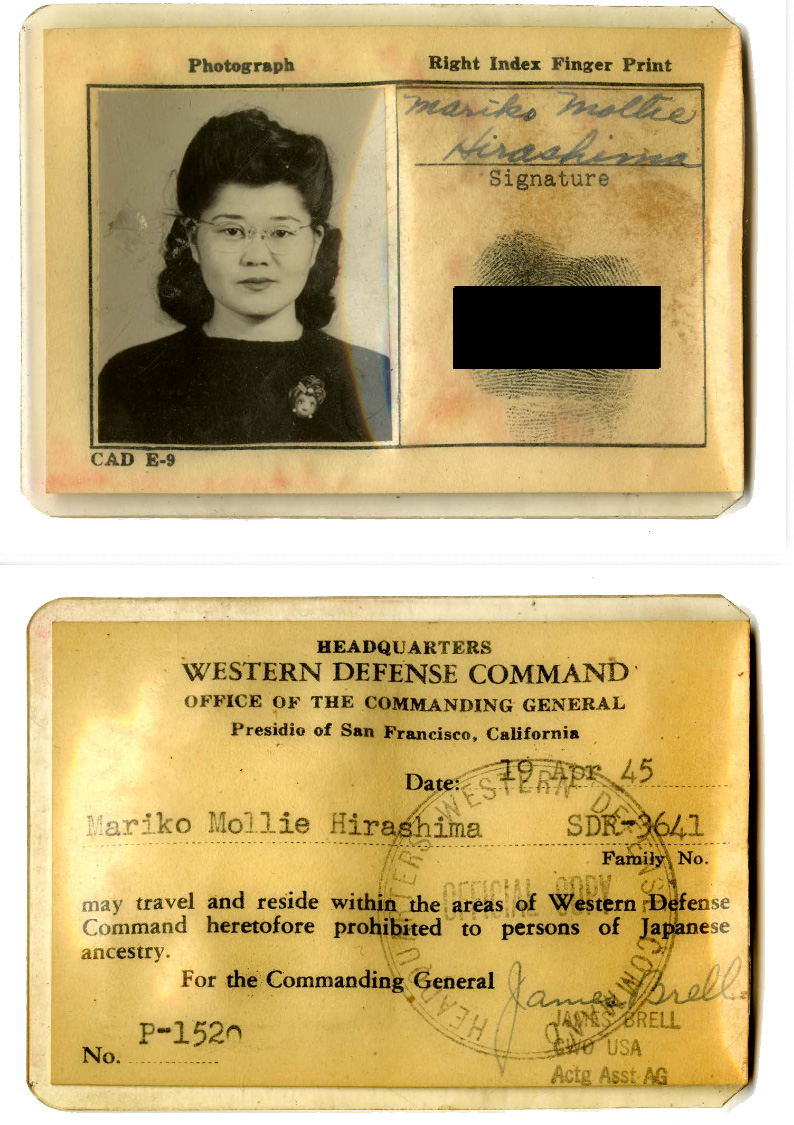 Leave permit issued for Mariko Mollie Hirashima - April 19, 1945 Mariko is one of the daughters of Itsuhei and Tomoye Takano (Photograph courtesy of Calisphere) |
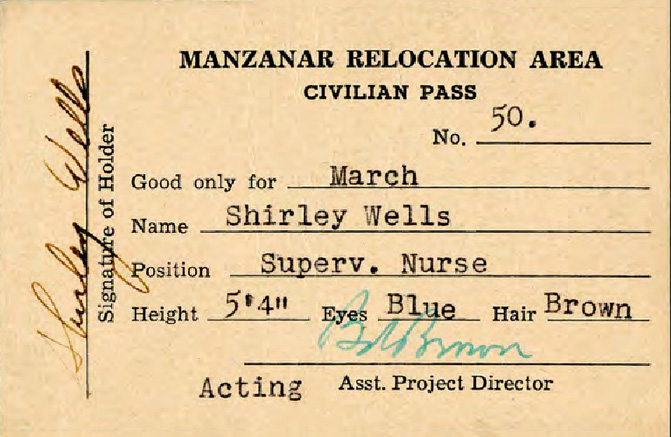 Civilian Pass (Photograph courtesy of Calisphere) |
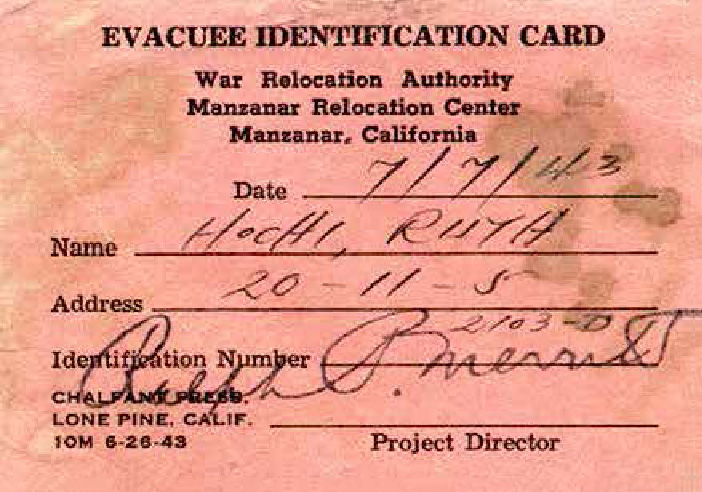 Evacuee Identification Card (Photograph courtesy of Calisphere) |
|
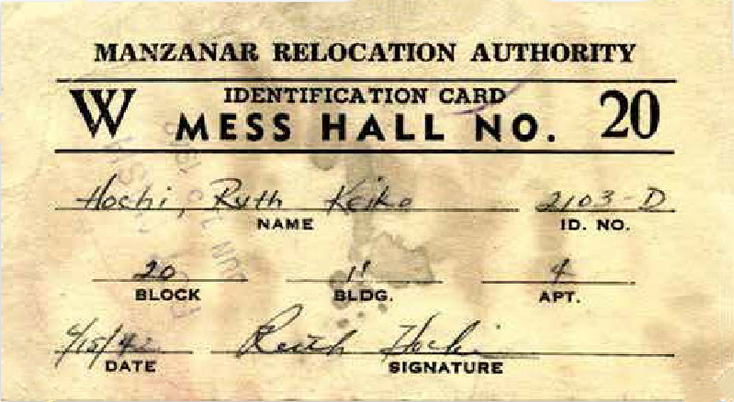 Mess Hall identification card (Photograph courtesy of Calisphere) |
|
Daily Life - In and Outside the Barracks
.
|
|
|
|
|
|
|
|
|
|
|
|
|
|
|
|
|
|
|
|
|
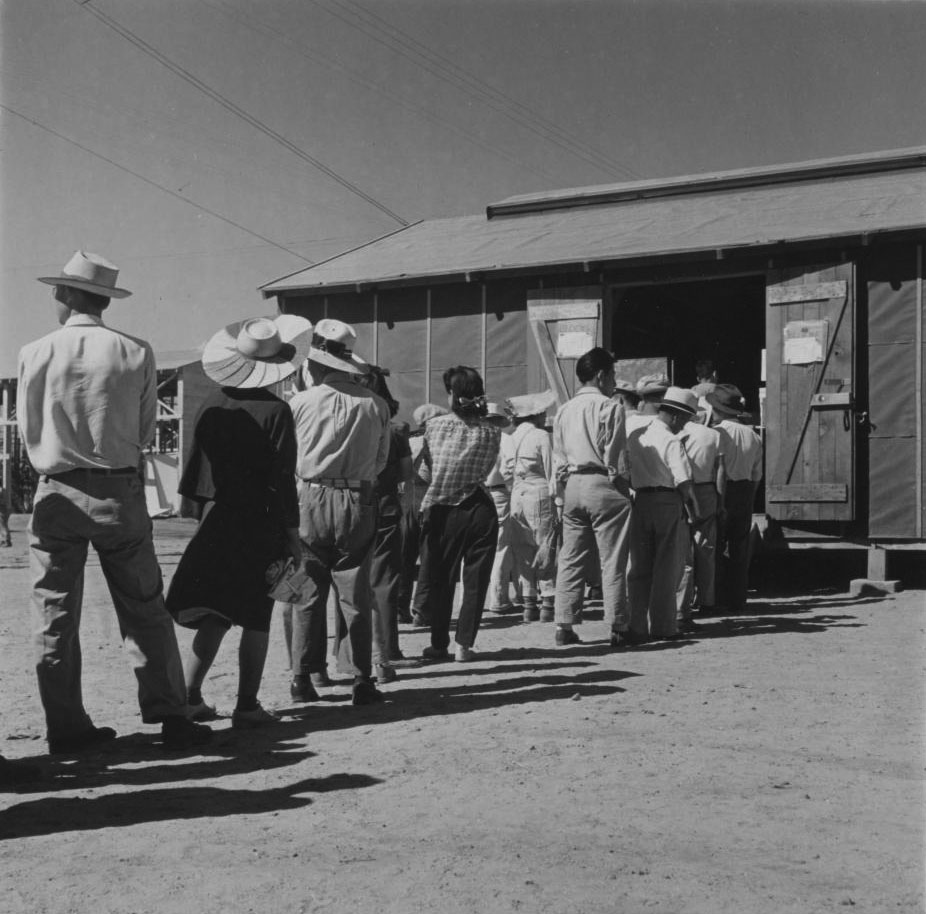 Lining up at Warehouse #26 for soap allotment (Photograph courtesy of Calisphere) (Photographer Dorothe Lange) |
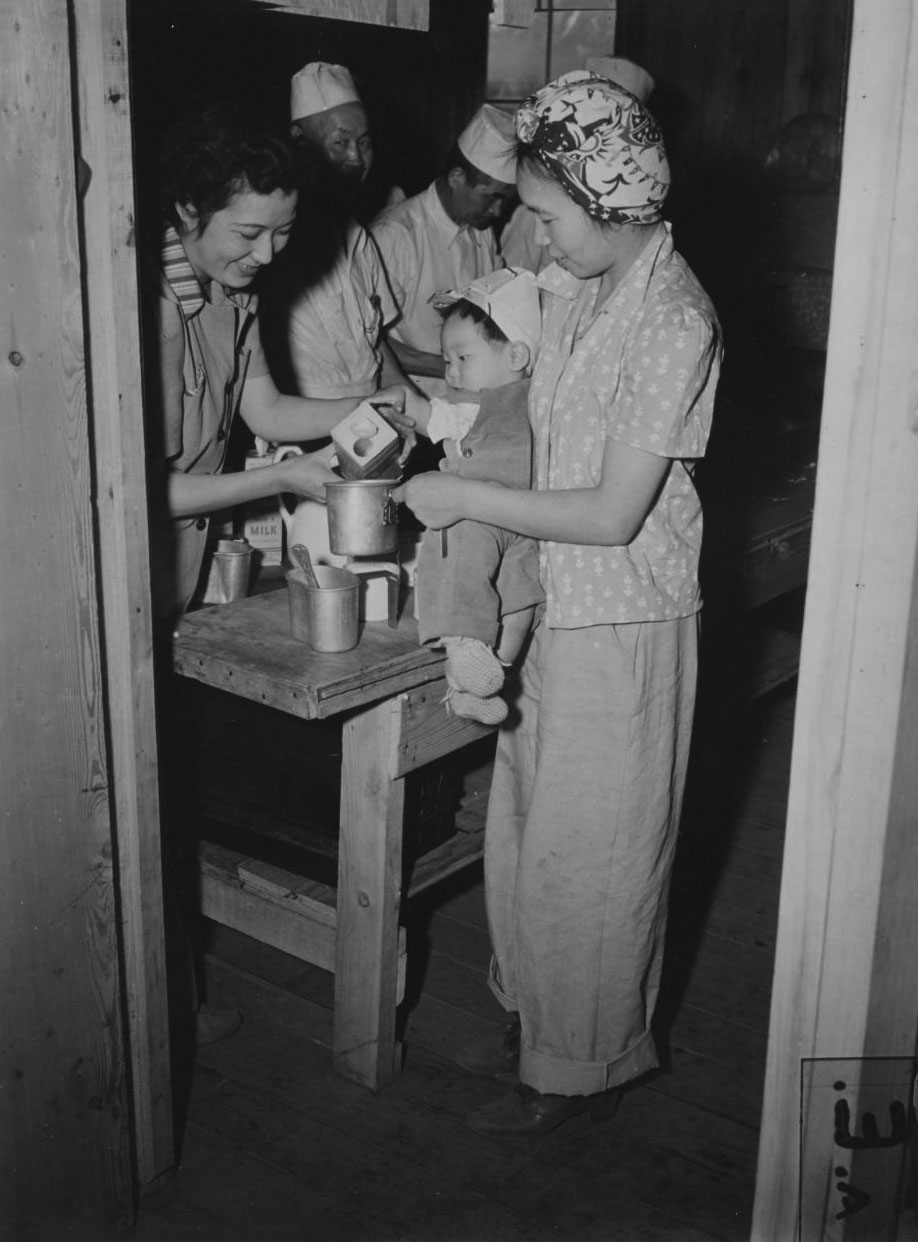 Preparing baby formula - 1942 (Photograph courtesy of Calisphere) (Photographer Clem Albers) |
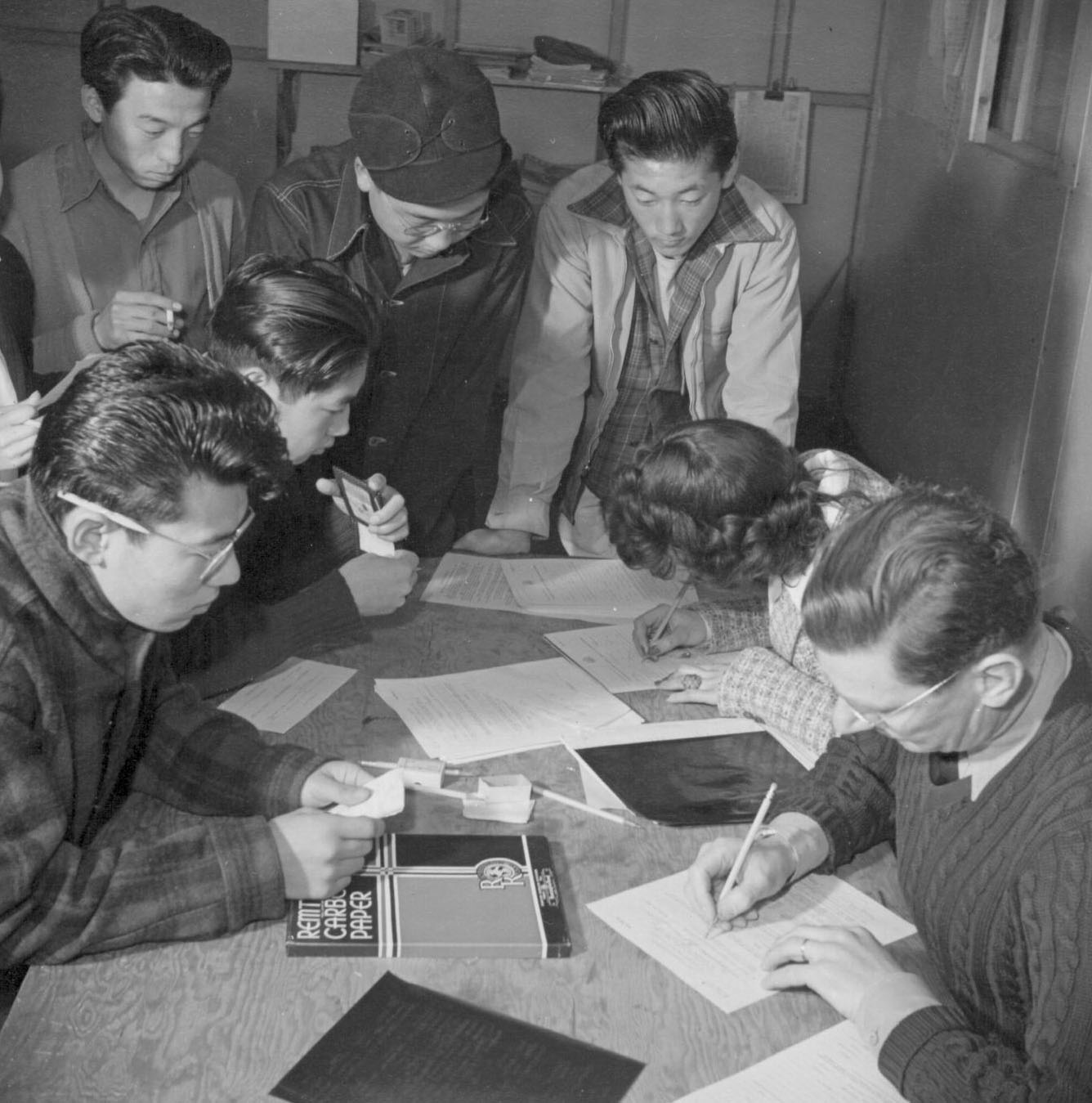 Block manager's office |
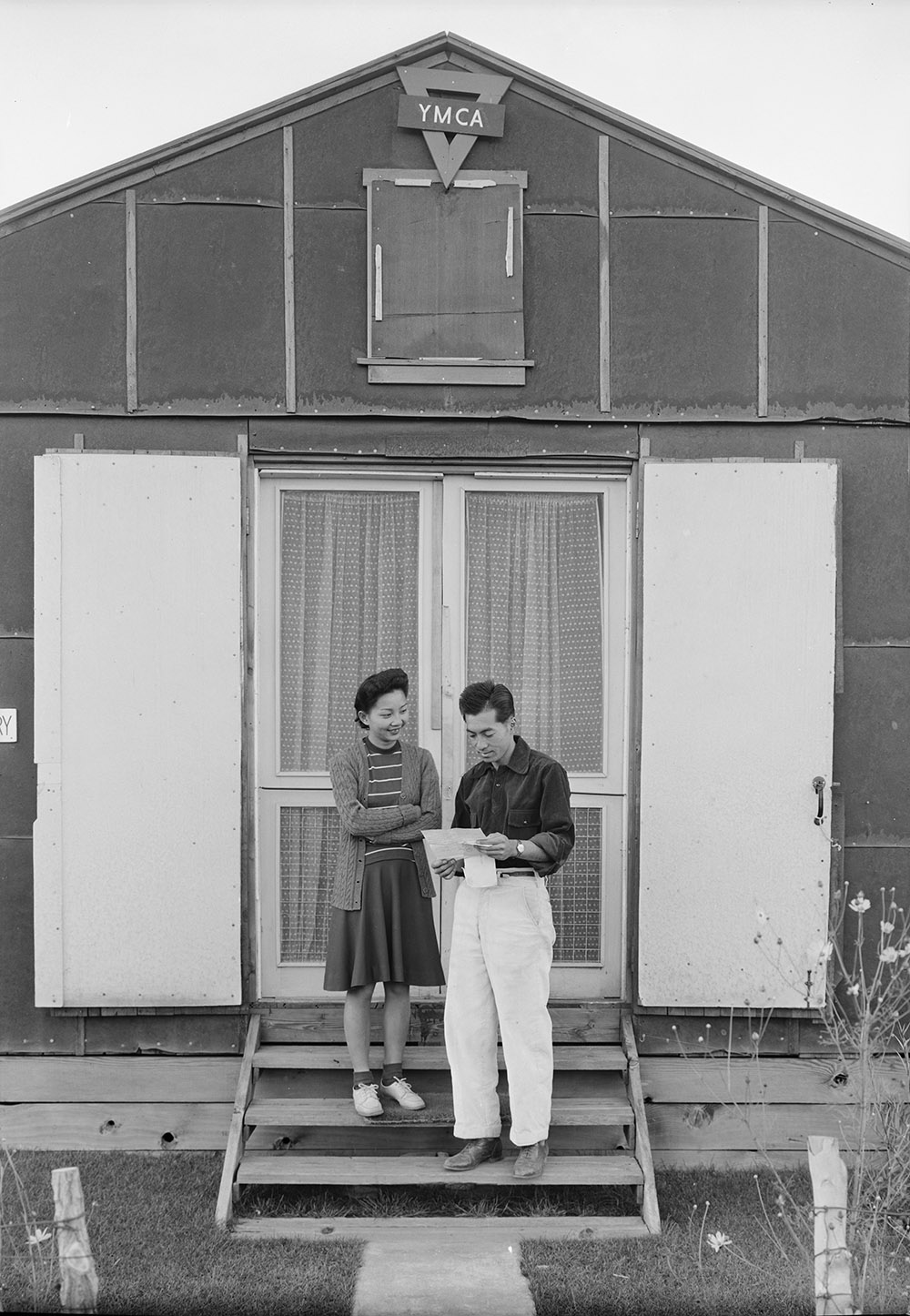 Mr. & Mrs. Hirata at the YMCA building (Photograph courtesy of Library of Congress) (Photographer Ansel Adams) |
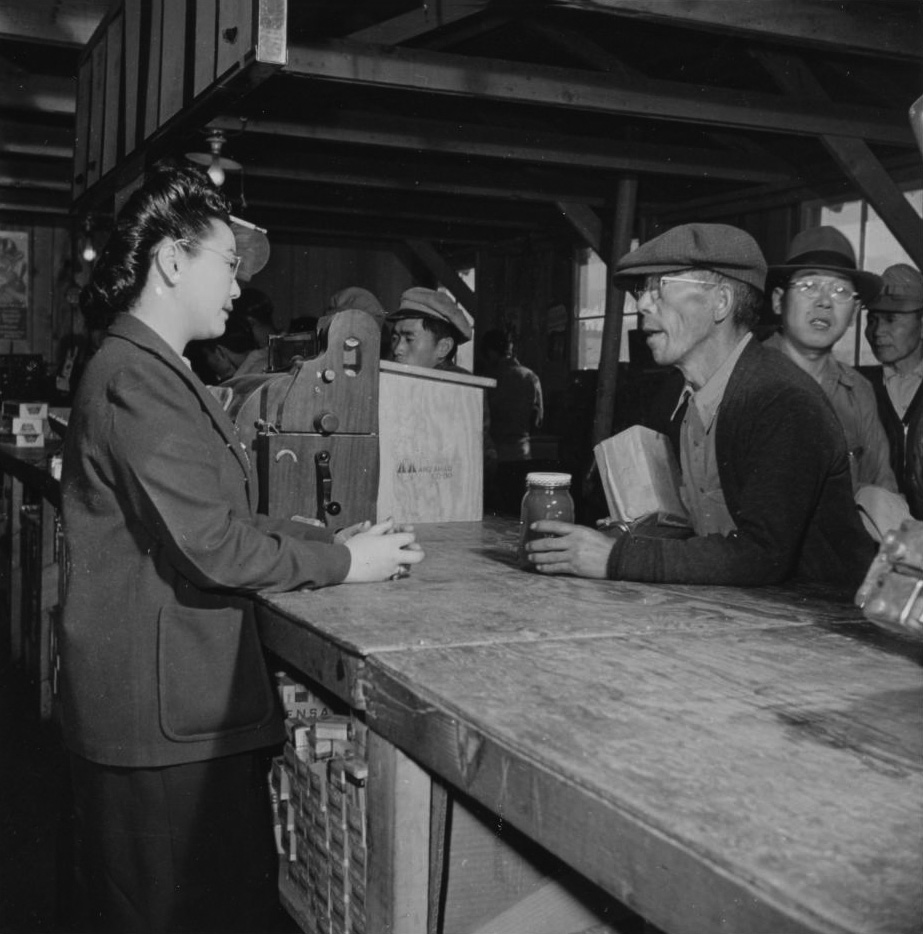 Evacuee buying peanut butter in barracks store - 1942 (Photograph courtesy of Calisphere) (Photographer Francis Stewart) |
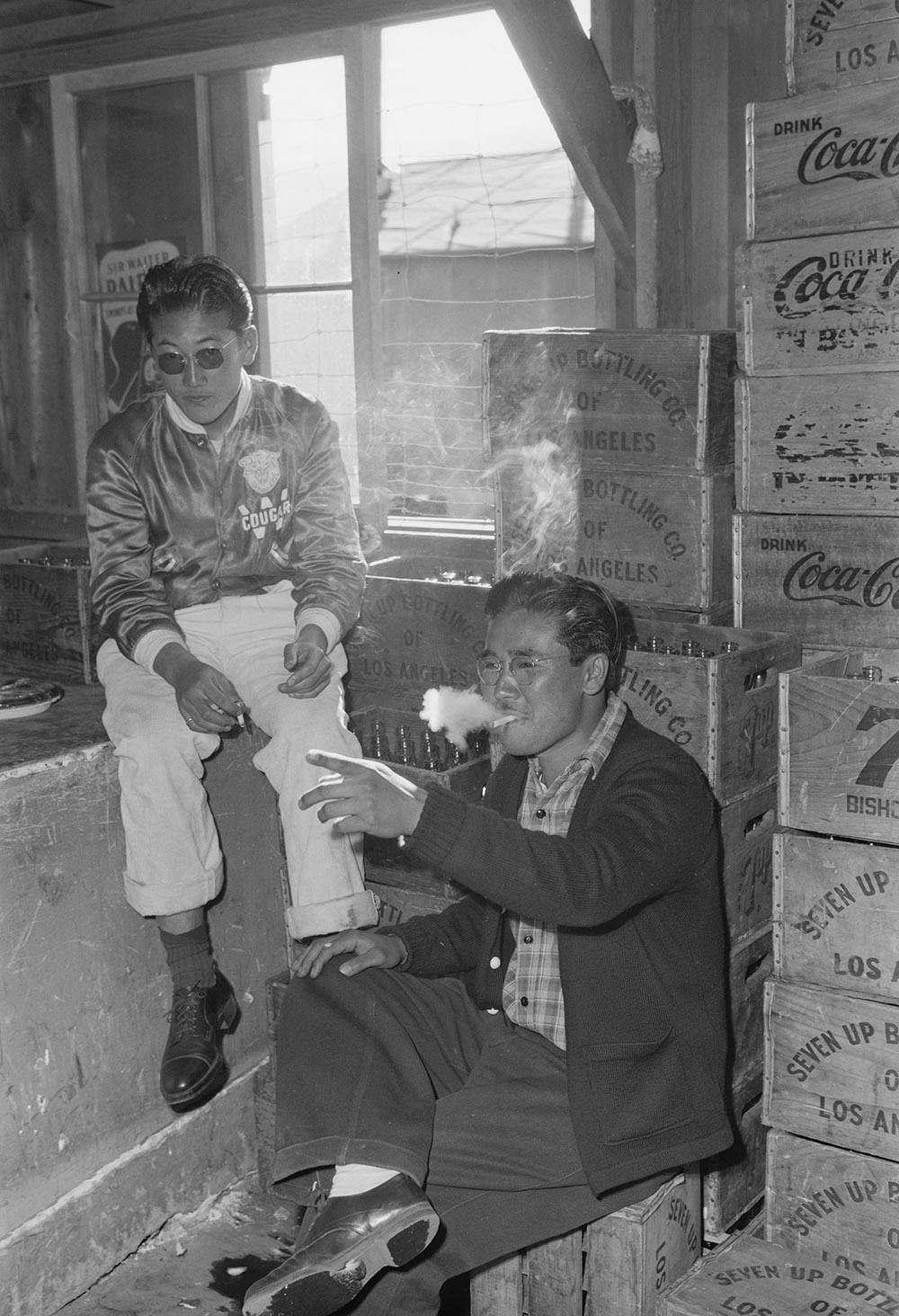 Two men smoking cigarettes in the co-op store (Photograph courtesy of Library of Congress) (Photographer Ansel Adams) |
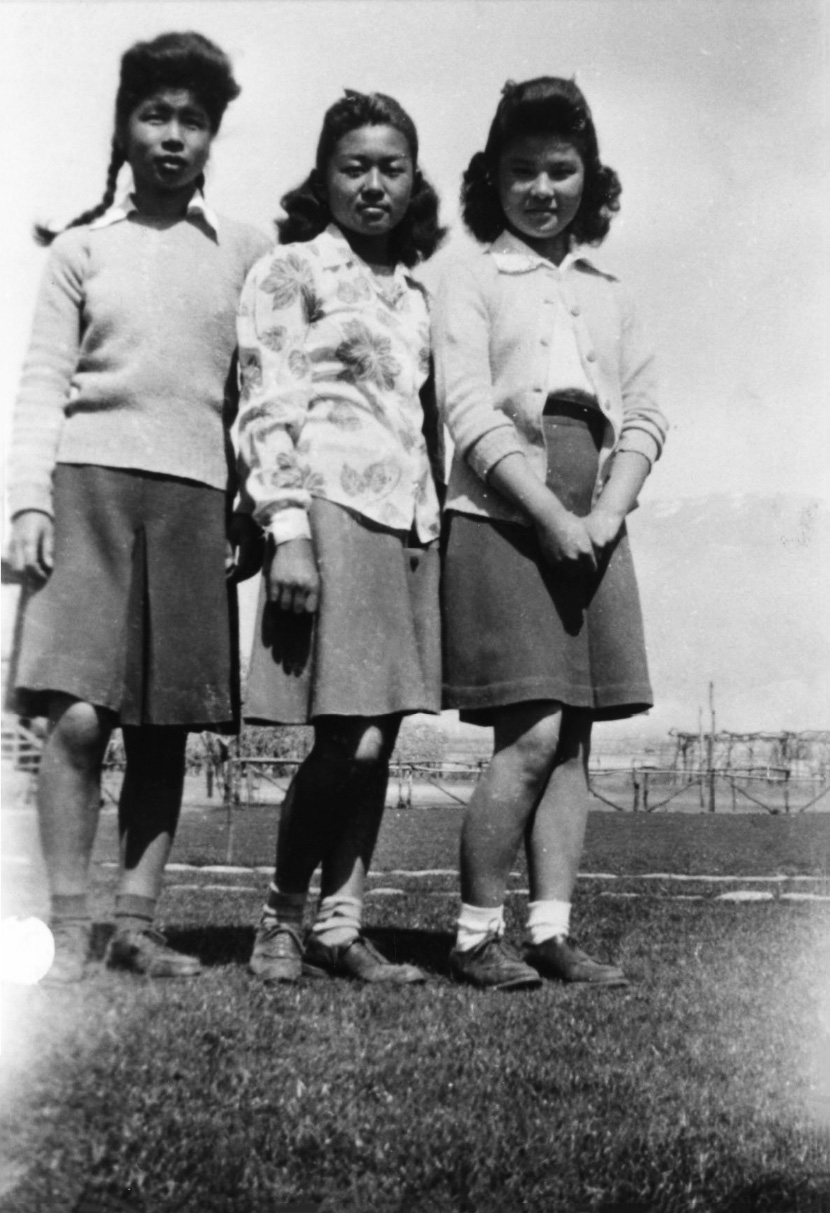 L/R: Sue Tanaka, Miss Yamada, Jane Honda at the Manzanar Children's Village. (Photograph courtesy of Calisphere) |
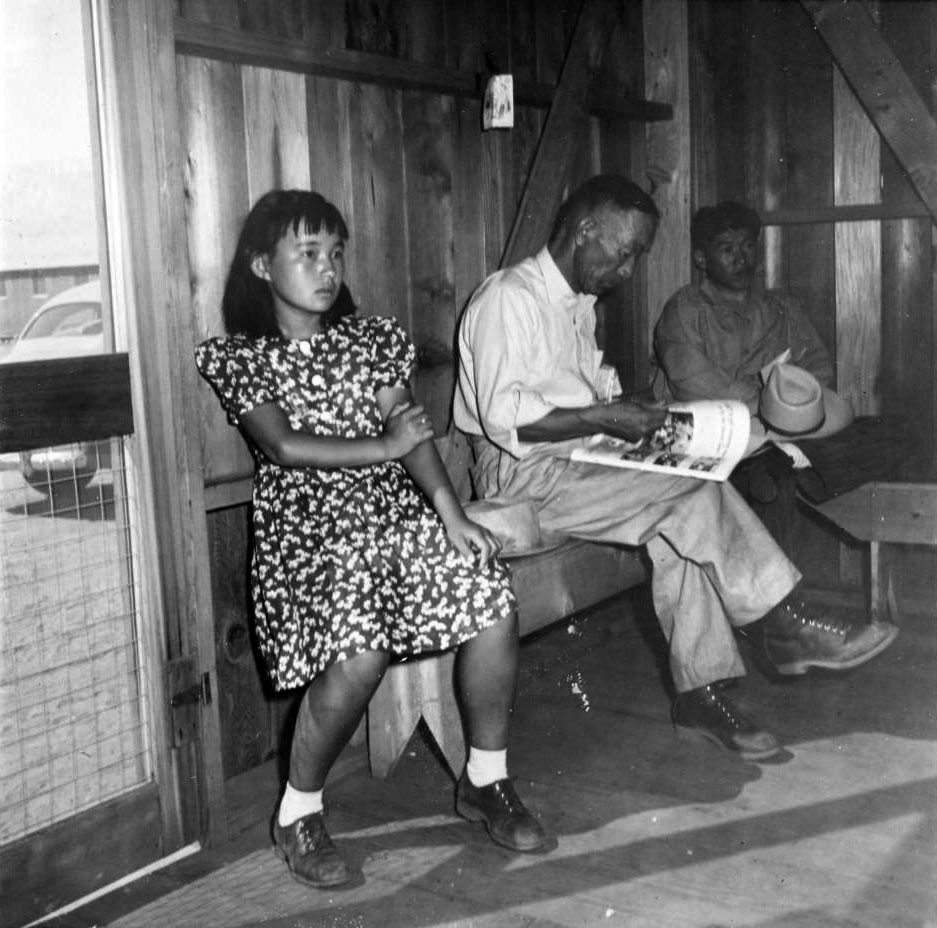 Waiting for the nurse (Photograph courtesy of Calisphere) (Photographer Dorothea Lange) |
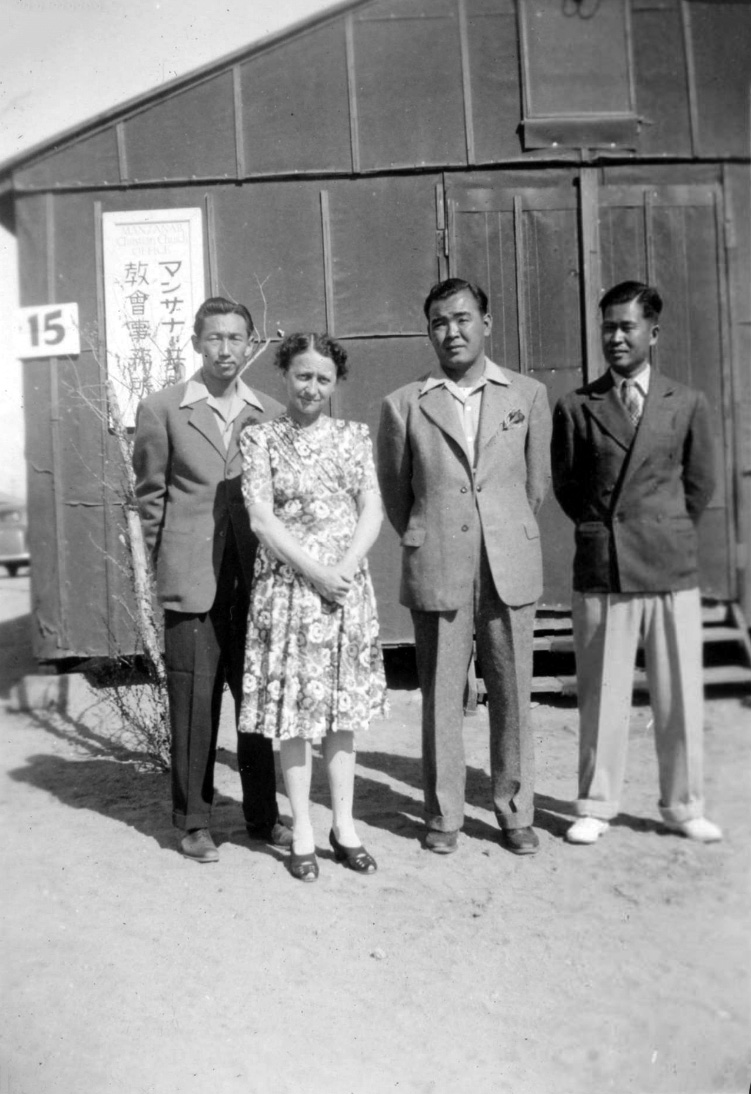 Tom Higa with two Japanese American men and Miss Carrie Knipp who was an elementary school teacher at Manzanar. (Photograph courtesy of Calisphere) |
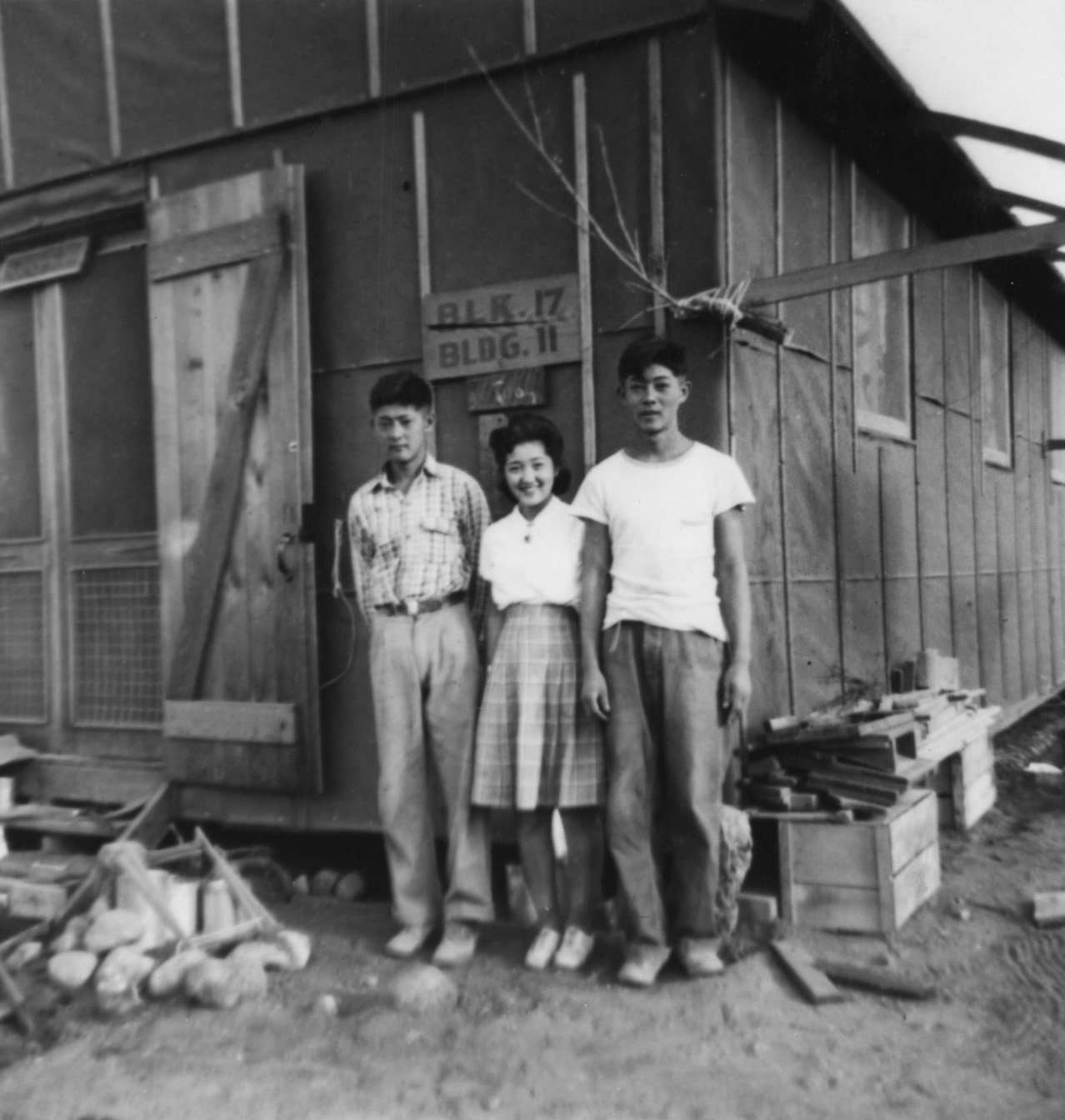 L/R: Roy Toda, Honey Toda, Akira Toda - 1942 (Photograph courtesy of Calisphere) |
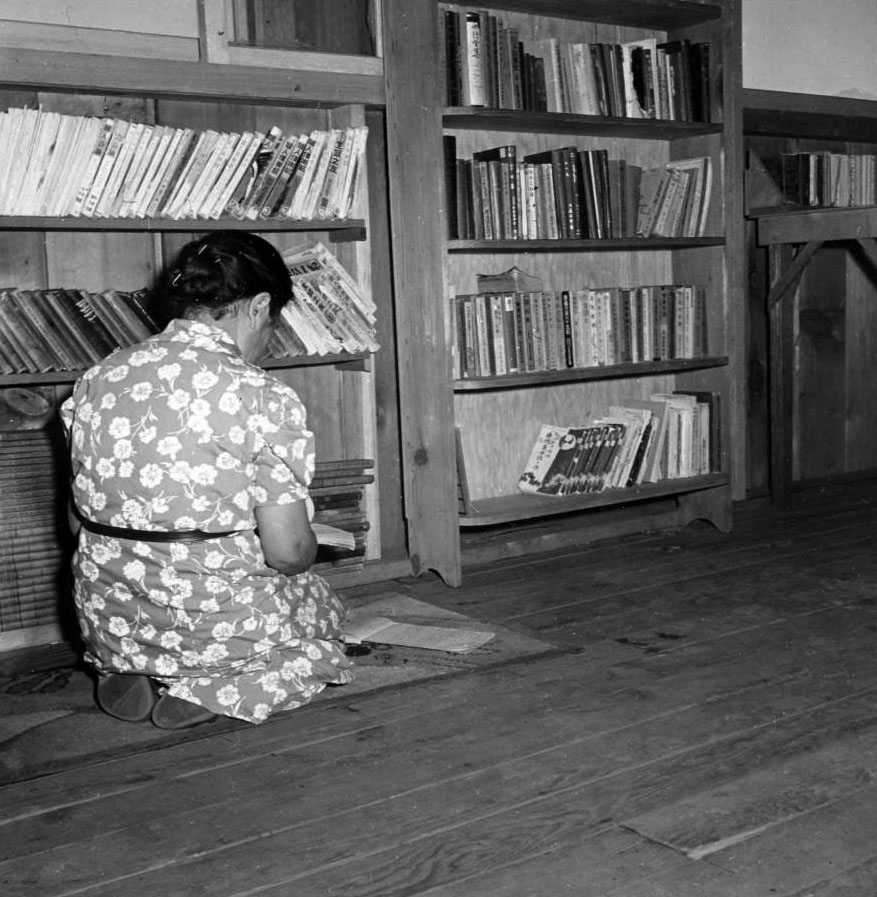 Manzanar Library. (Photograph courtesy of Calisphere) (Photographer Dorothea Lange) |
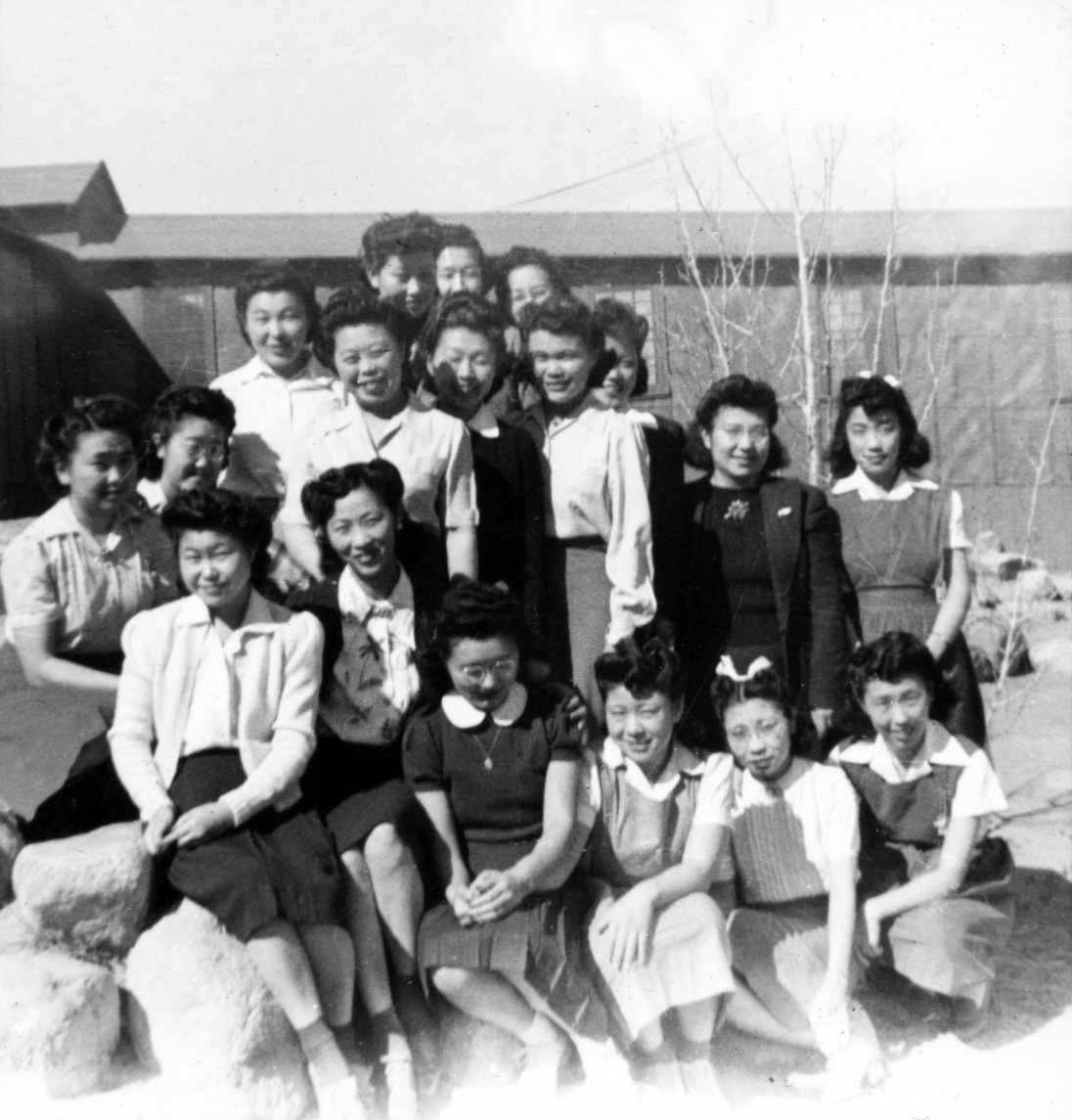 Group of women who worked at the Manzanar hospital (Photograph courtesy of Calisphere) |
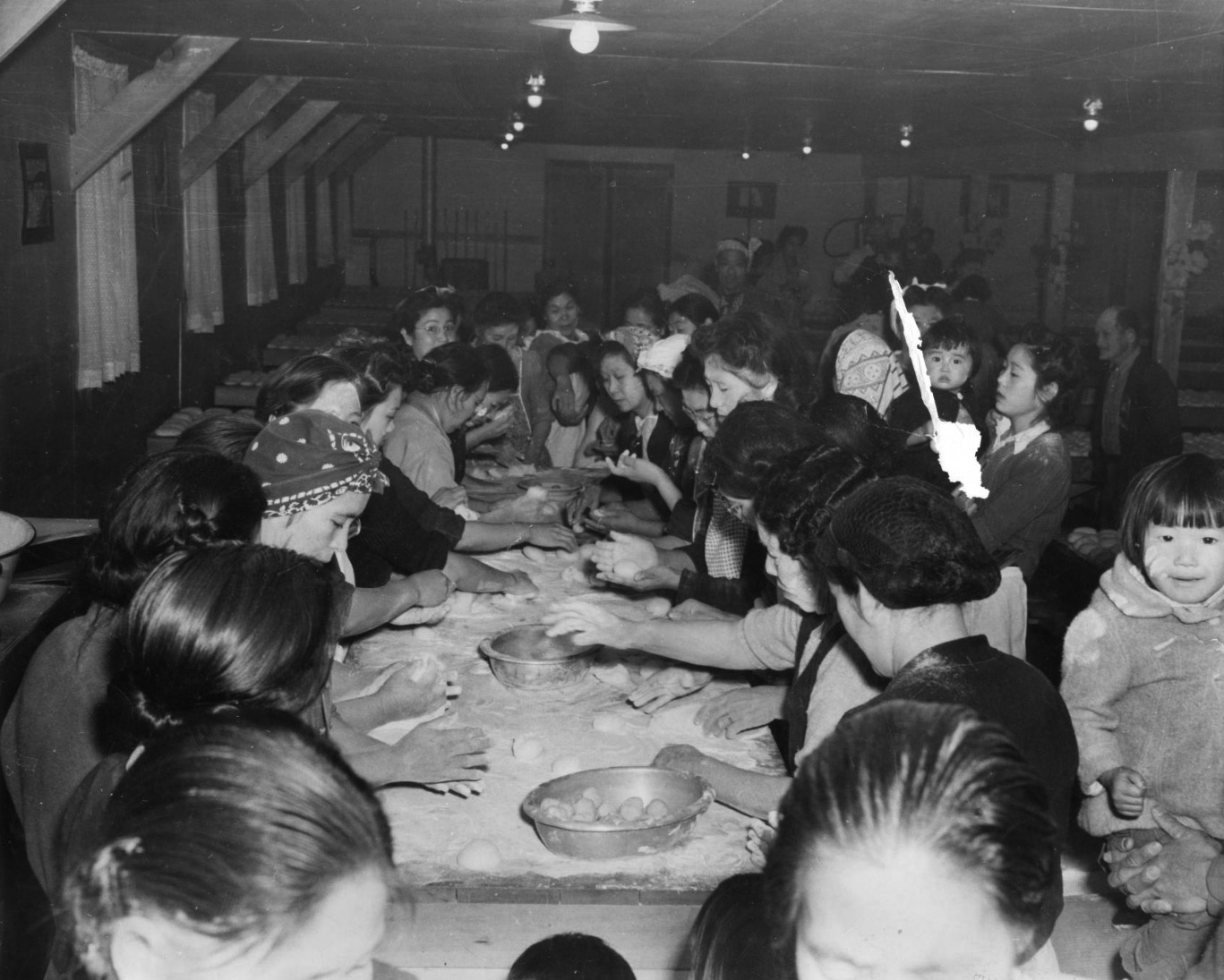 Women preparing mochi spheres in a mess hall at Manzanar. (Photograph courtesy of Calisphere) |
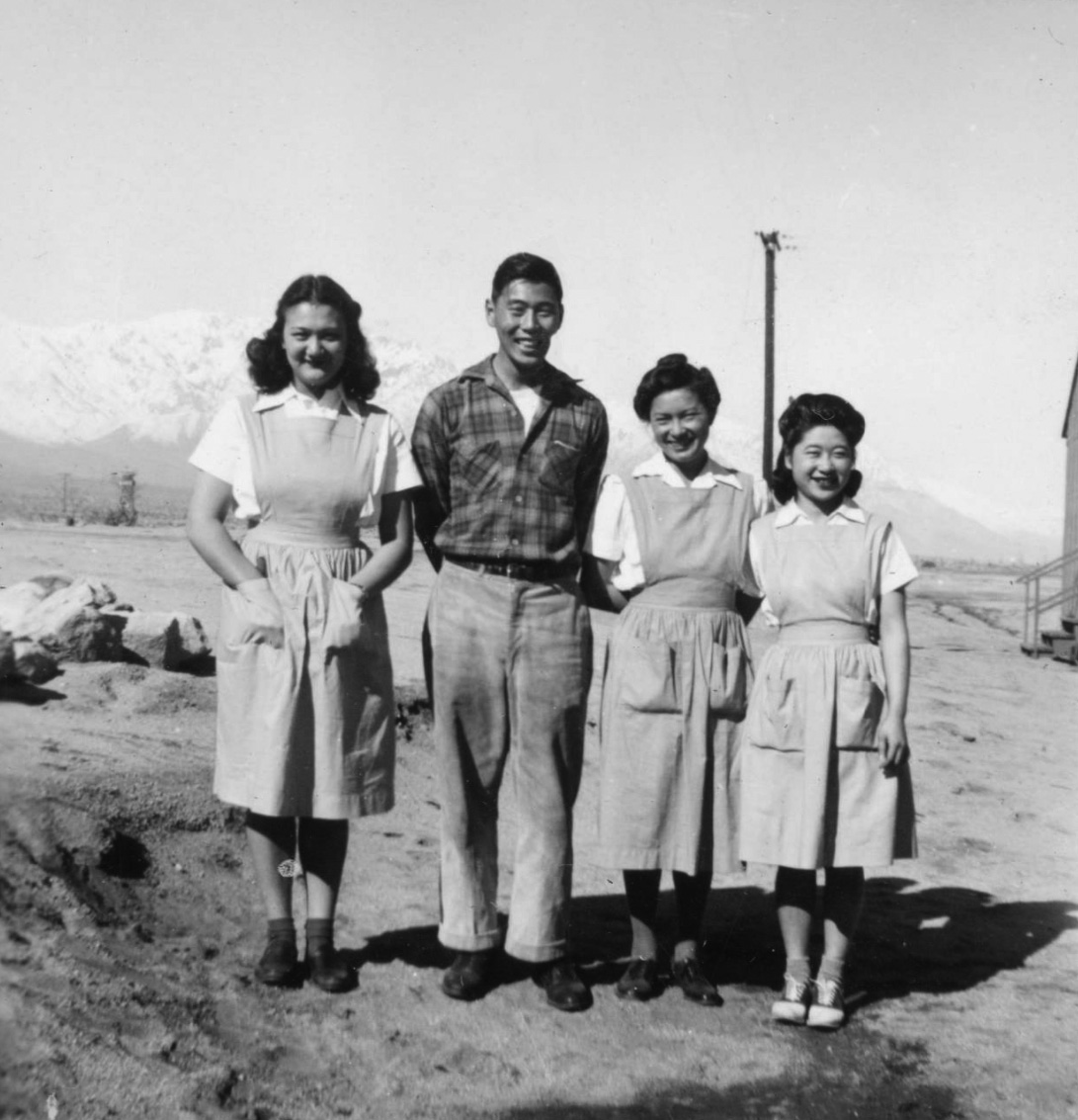 Manzanar hospital staff. (Photograph courtesy of Calisphere) |
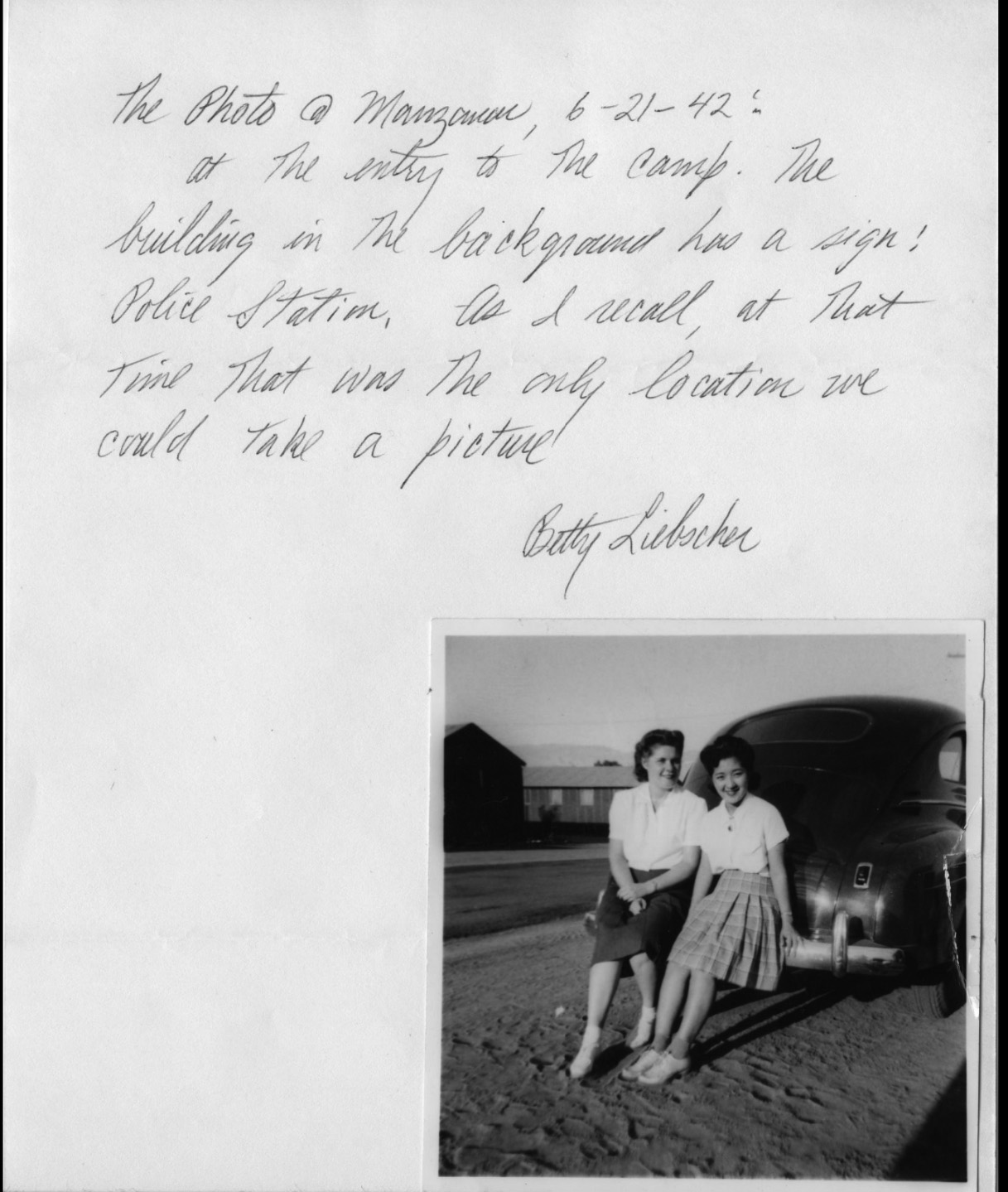 L/R: Wilda Johnson, Honey Toda - 1942 (Photograph courtesy of Calisphere) |
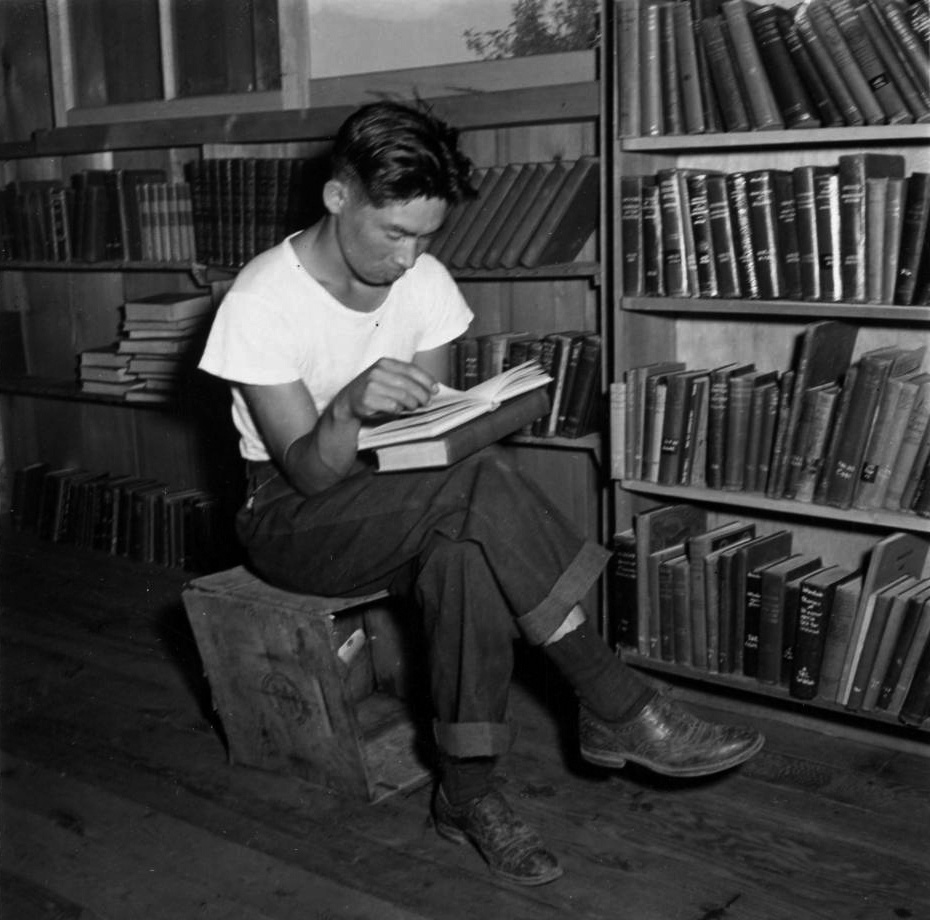 Barracks turned into a library - 1942 (Photograph courtesy of Calisphere) (Photographer - Dorothea Lange) |
| 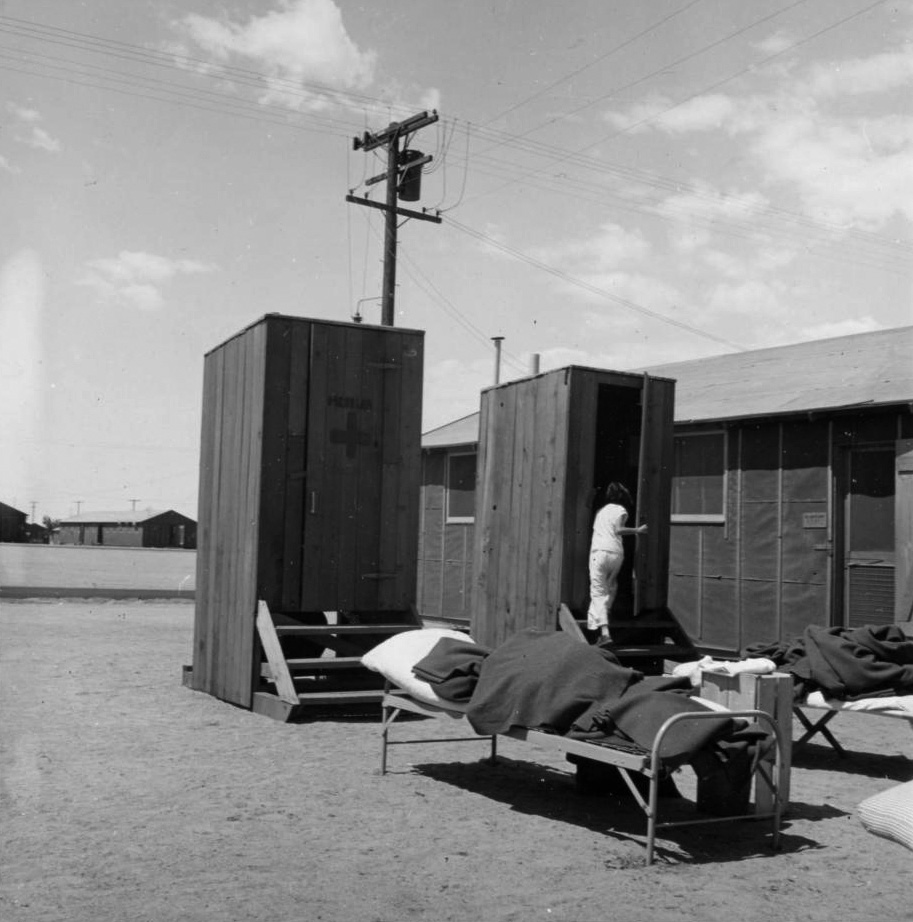 Hospital latrines (Photograph courtesy of Calisphere) (Photographer - Dorothea Lange) |
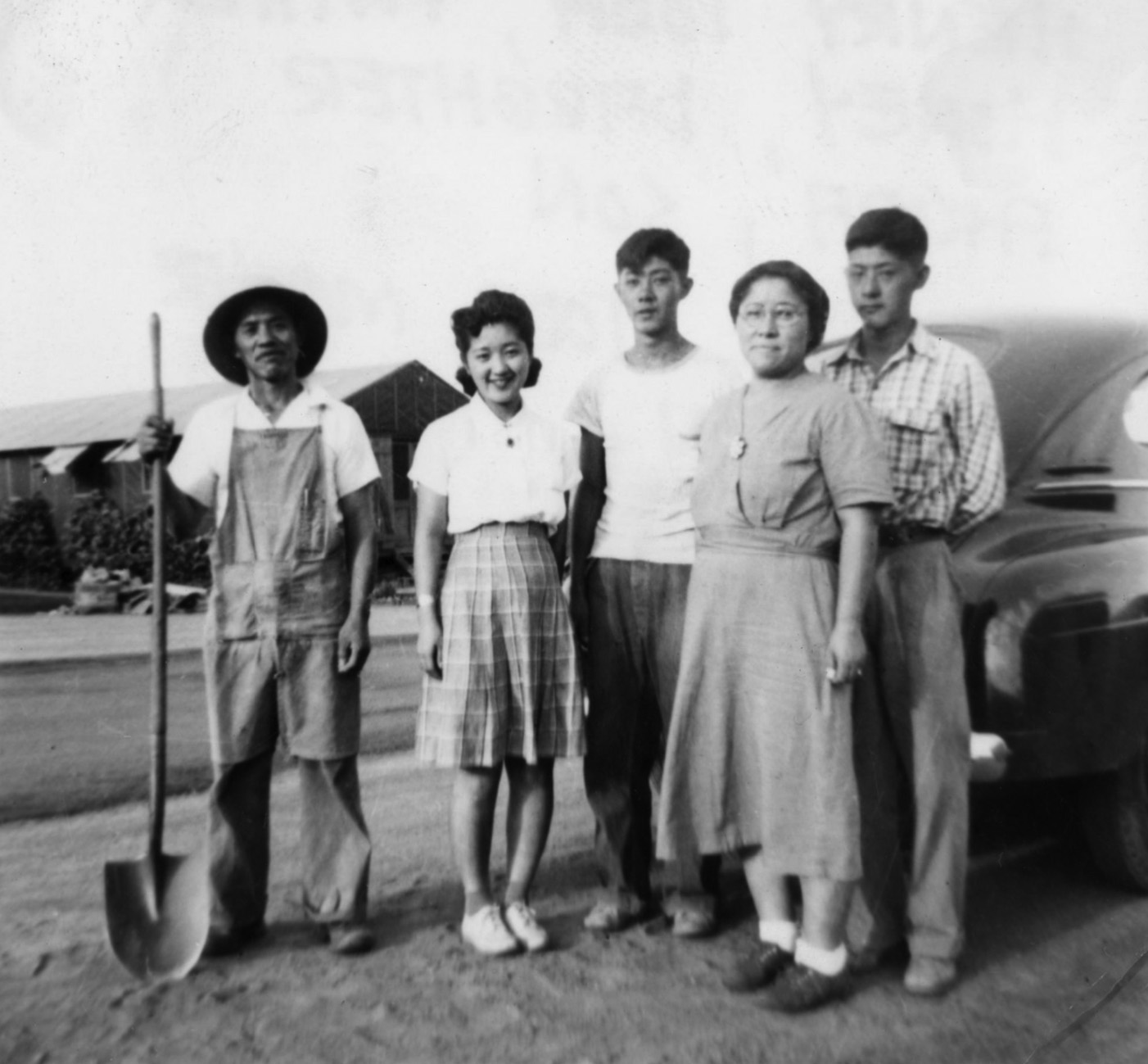 L/R: Henry Todo, Honey Todo, Akira Todo, Mother, Roy Todo - 1942 (Photograph courtesy of Calisphere) |
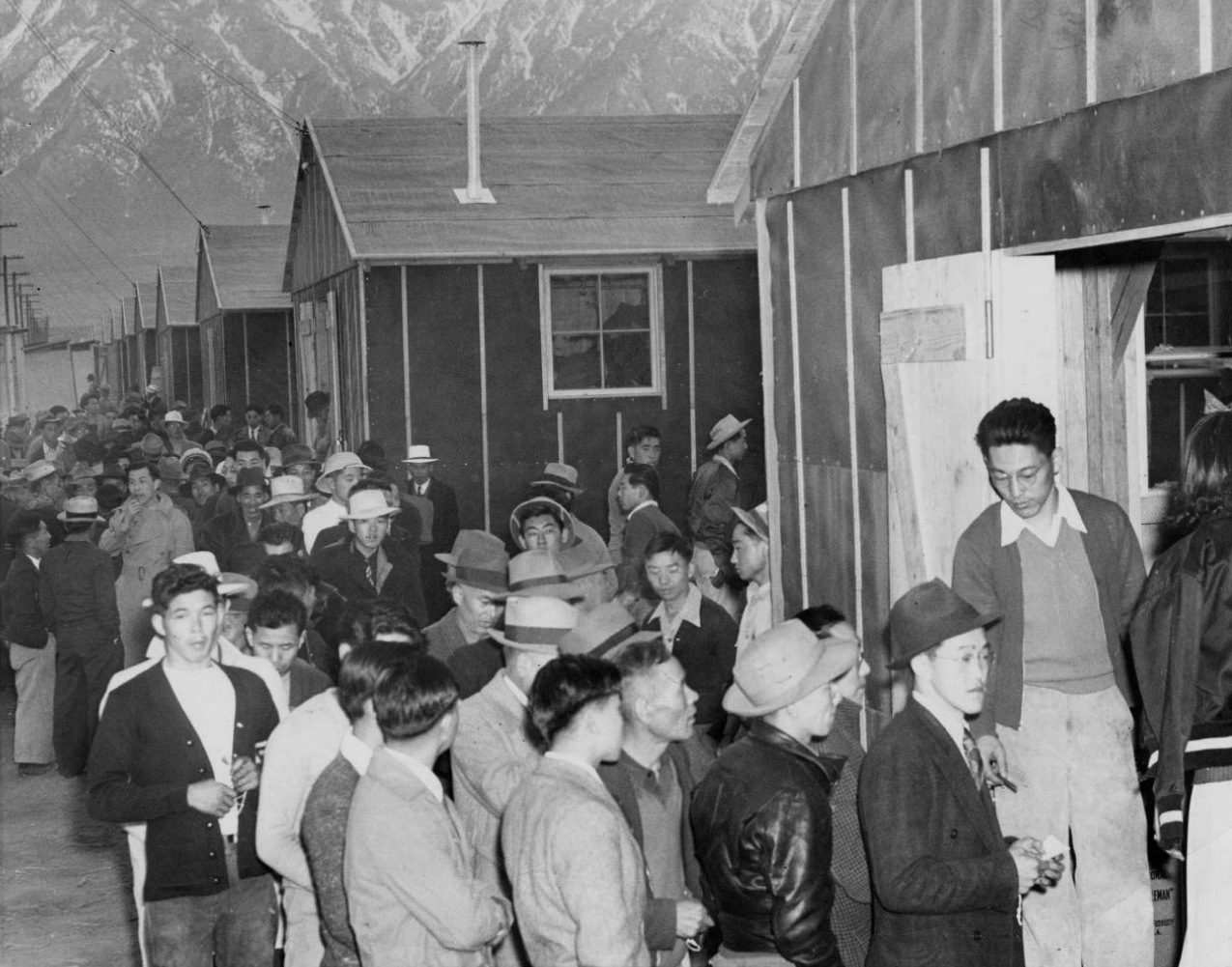 Nisei men gathered in front of barracks - 1942 (Photograph courtesy of Calisphere) |
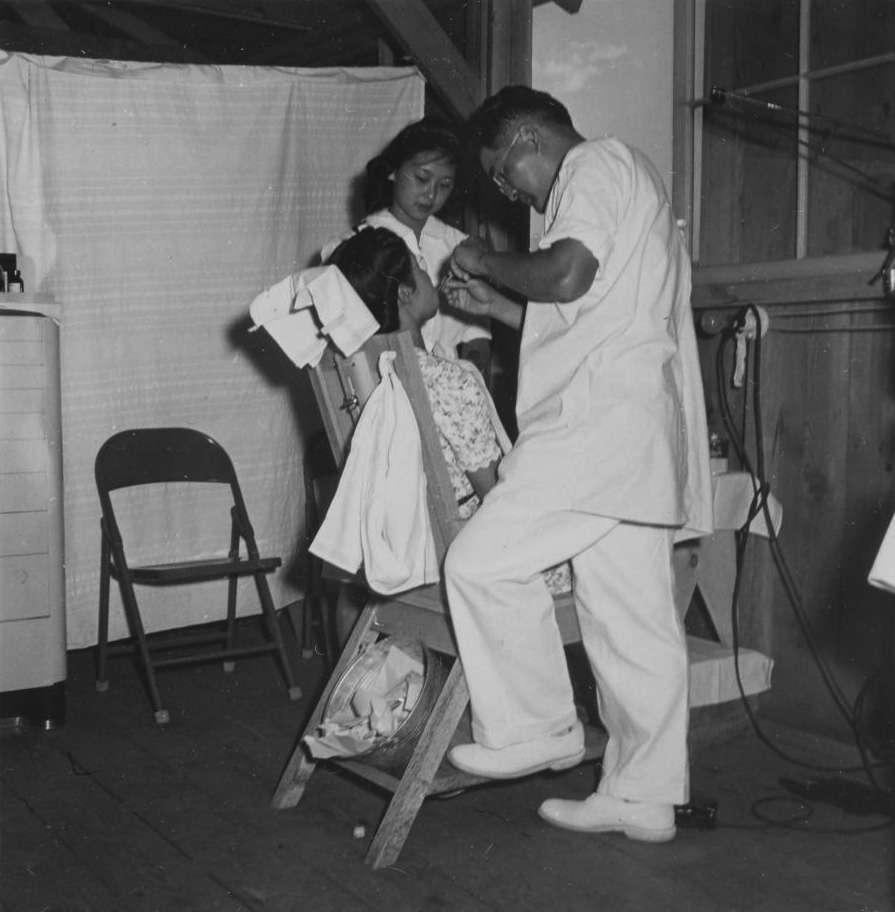
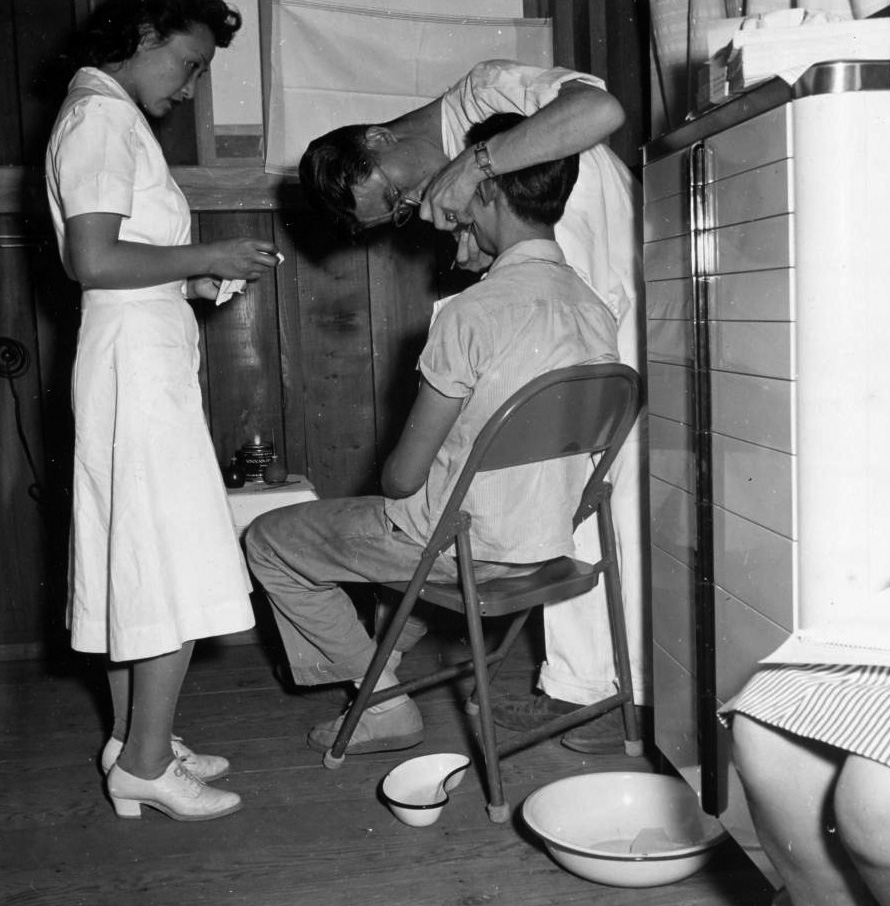 Dental clinic in temporary quarters (Photograph courtesy of Calisphere) (Photographer - Dorothea Lange ) |
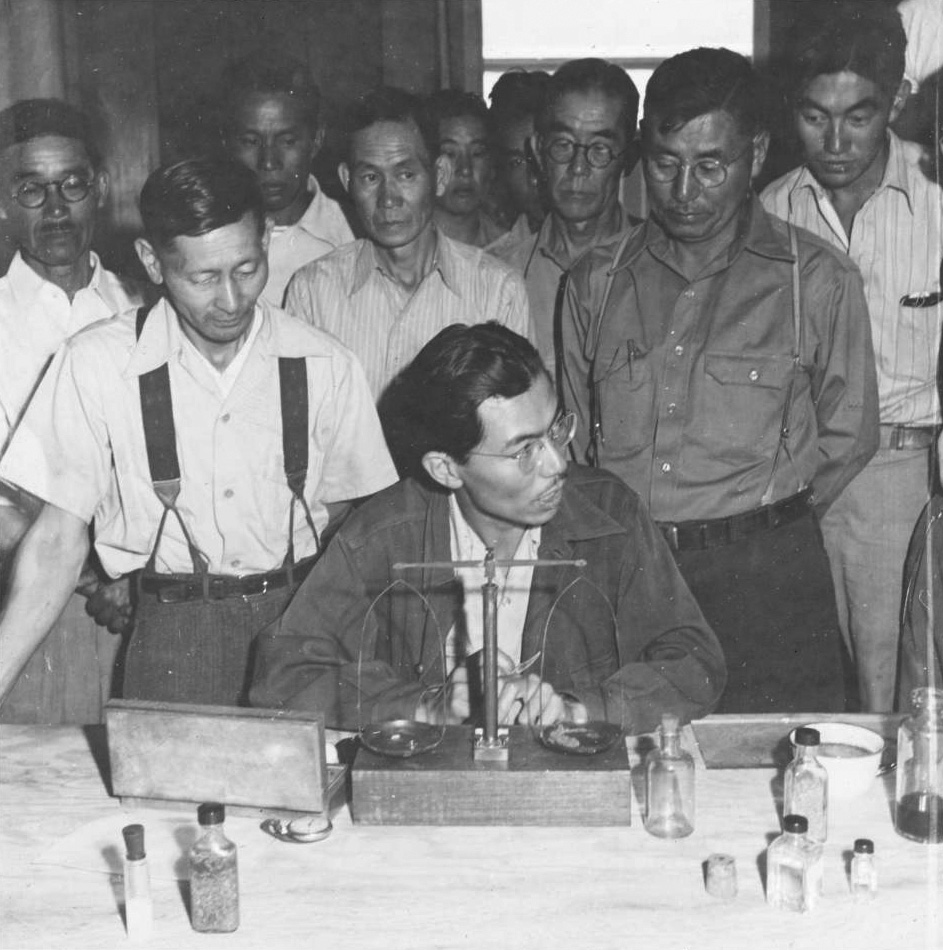 Frank Hirosawa with a group of chemists, nurserymen and plant propagators witnessing a new experiment on the guayule plant. (Photograph courtesy of Calisphere) (Photographer - Dorothea Lange) |
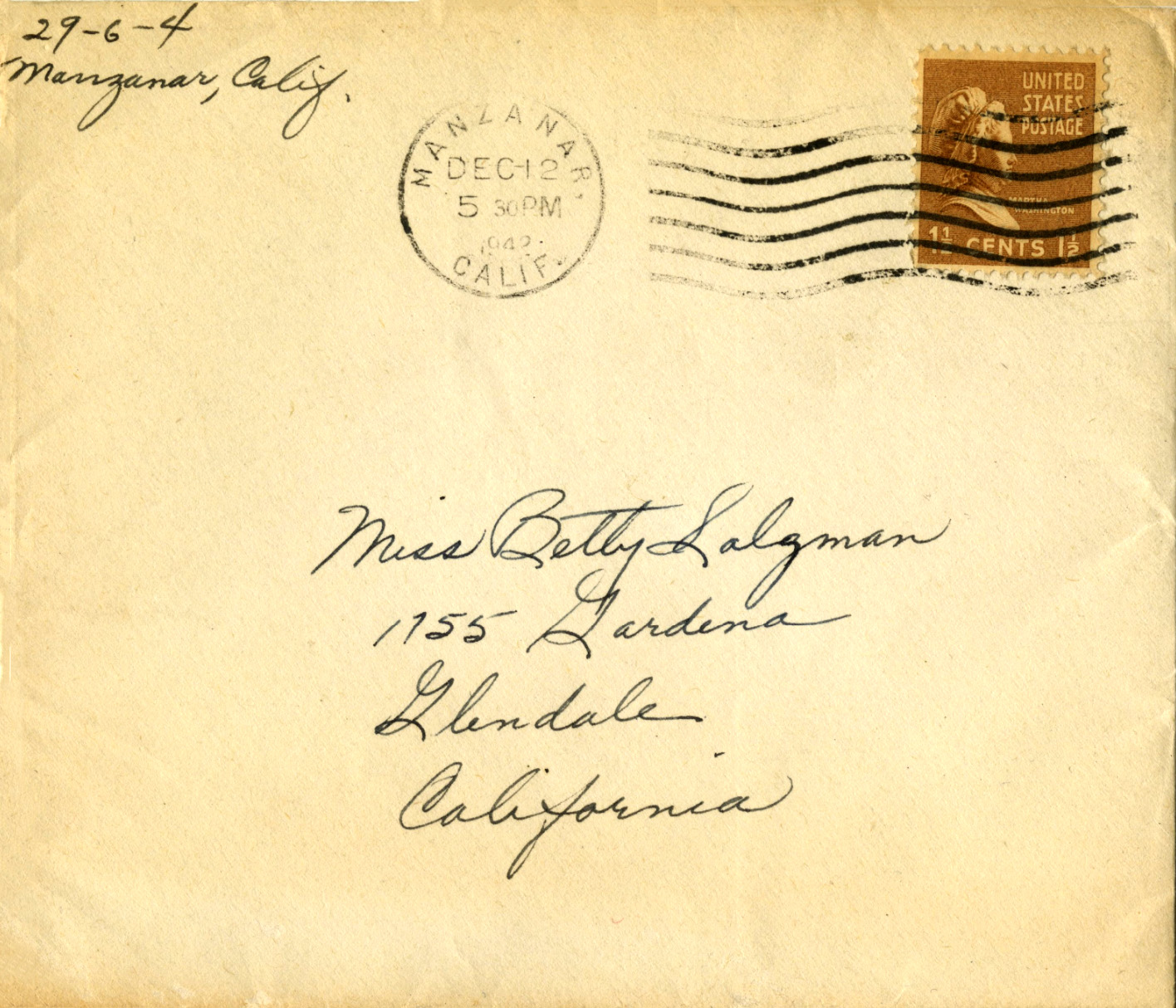 Christmas card from Miriko Nagahama to Betty Salzman - December 1942 |
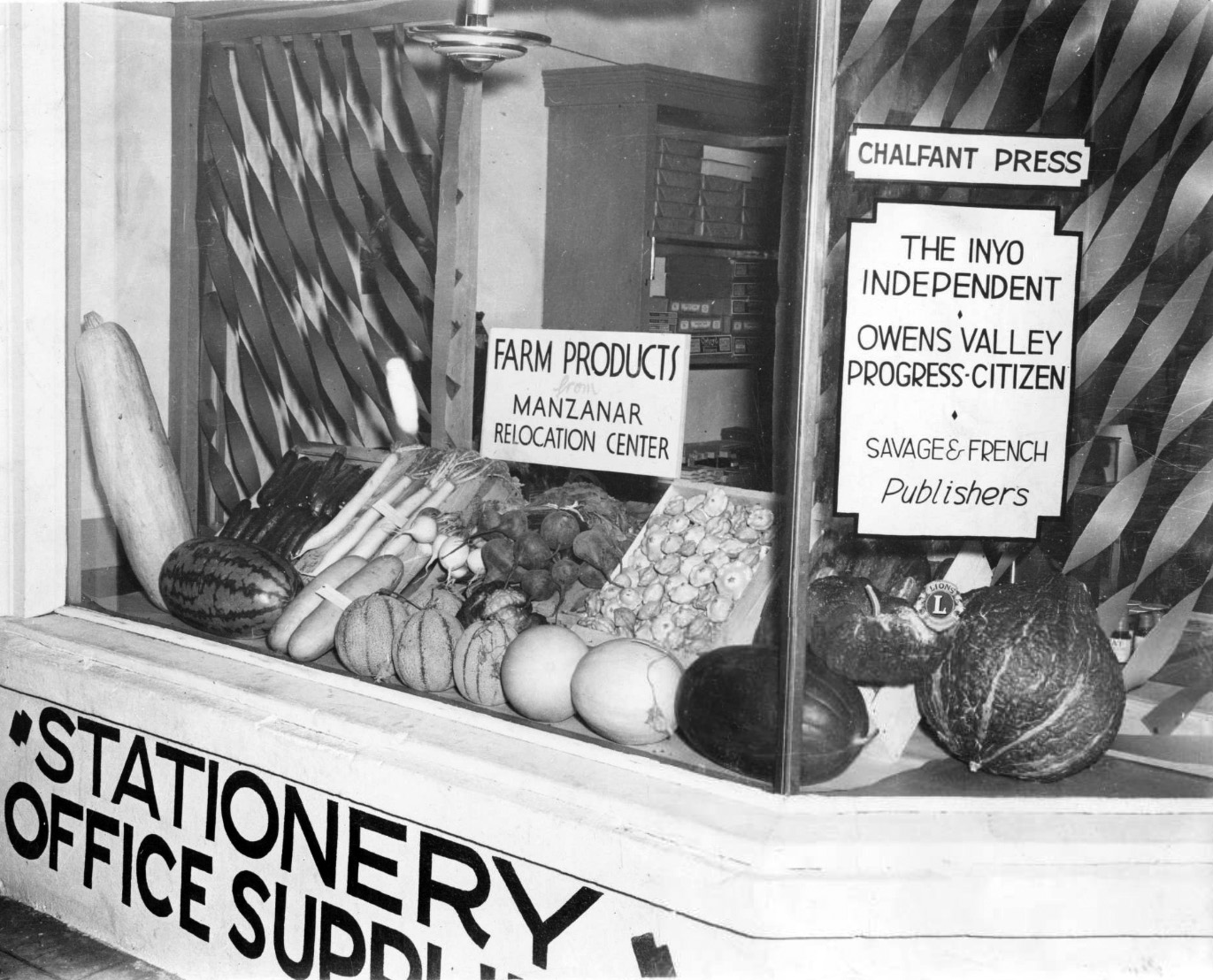 Produce from Manzanar on sale in Lone Pine (Photograph courtesy of Calisphere) |
 Manzanar Hospital Staff (Photograph courtesy of Calisphere) |
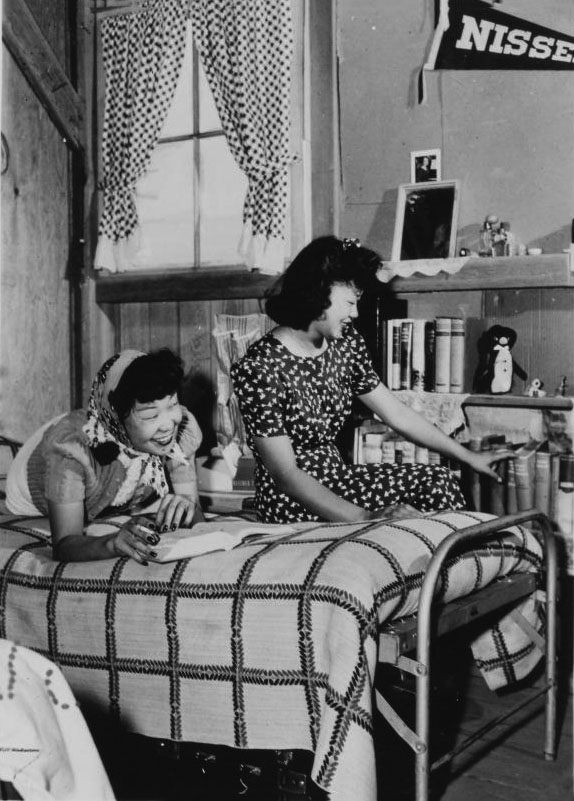
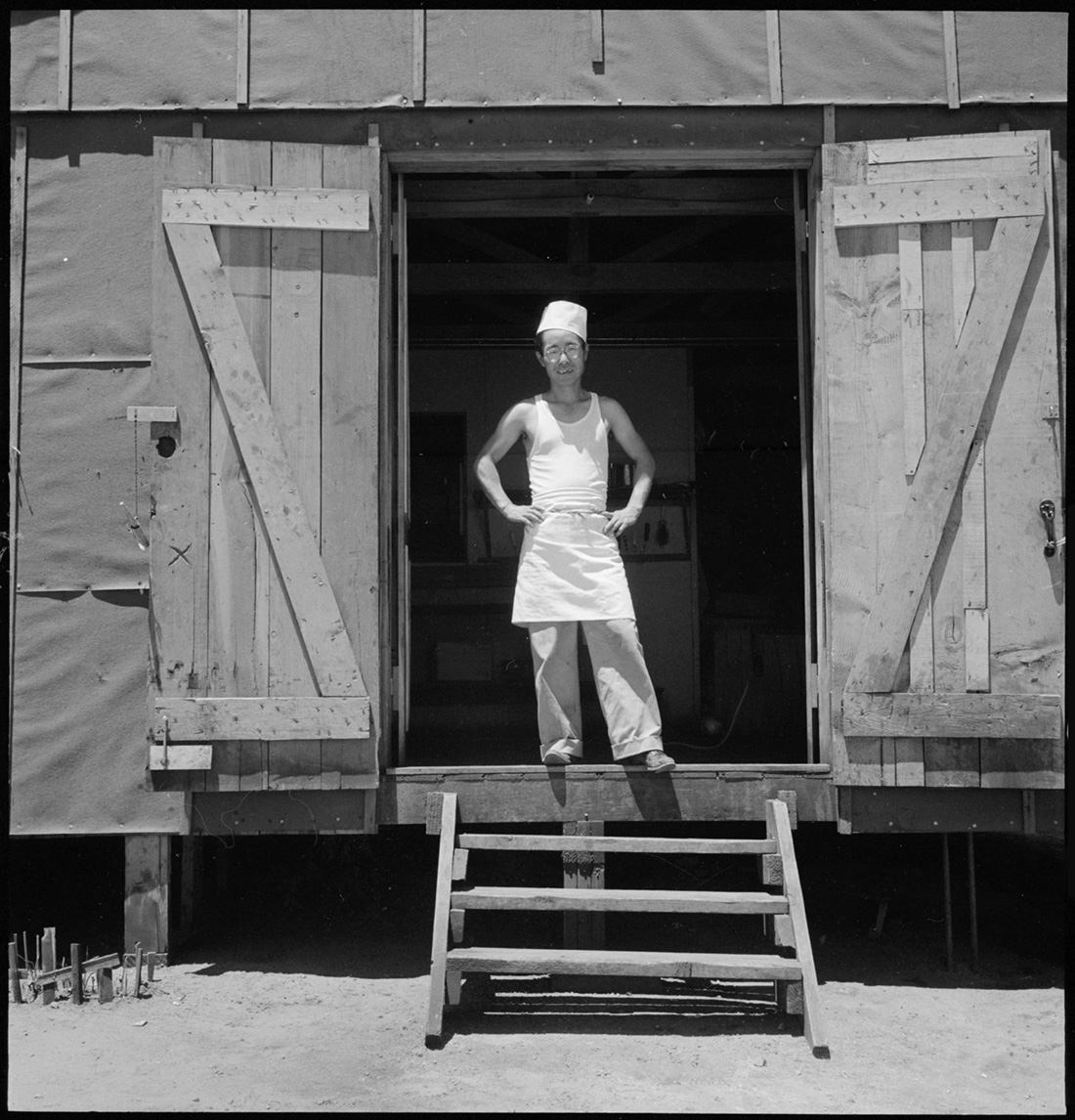
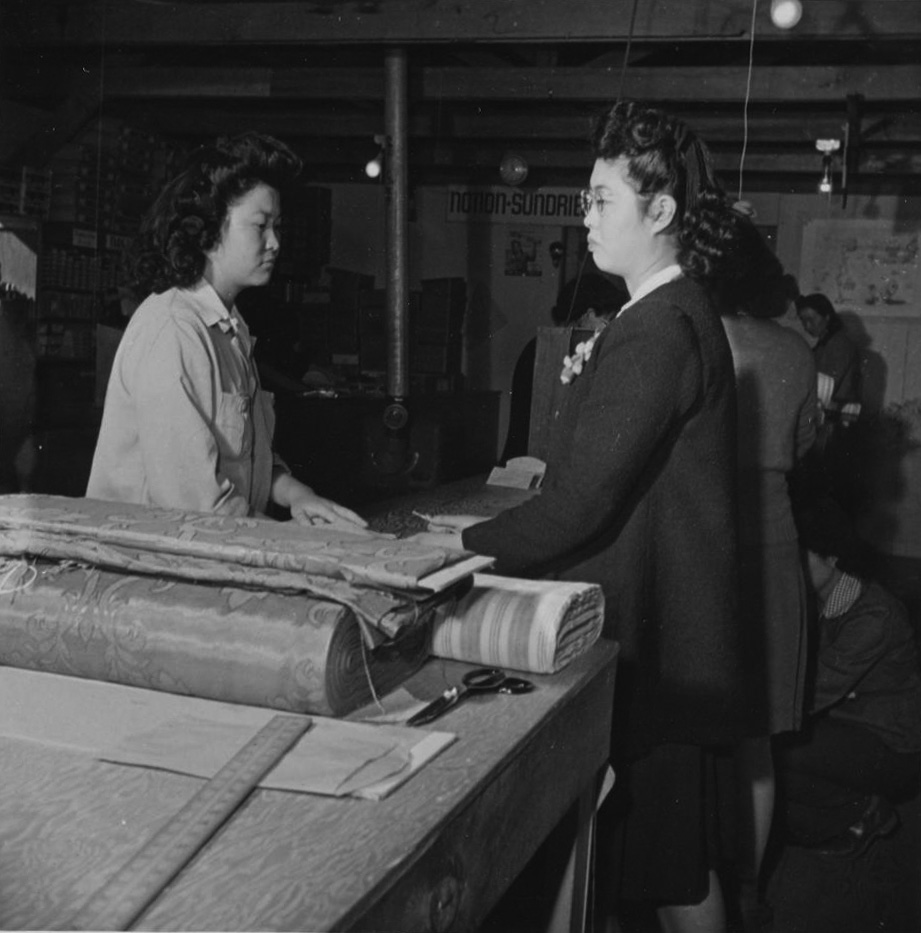
12/24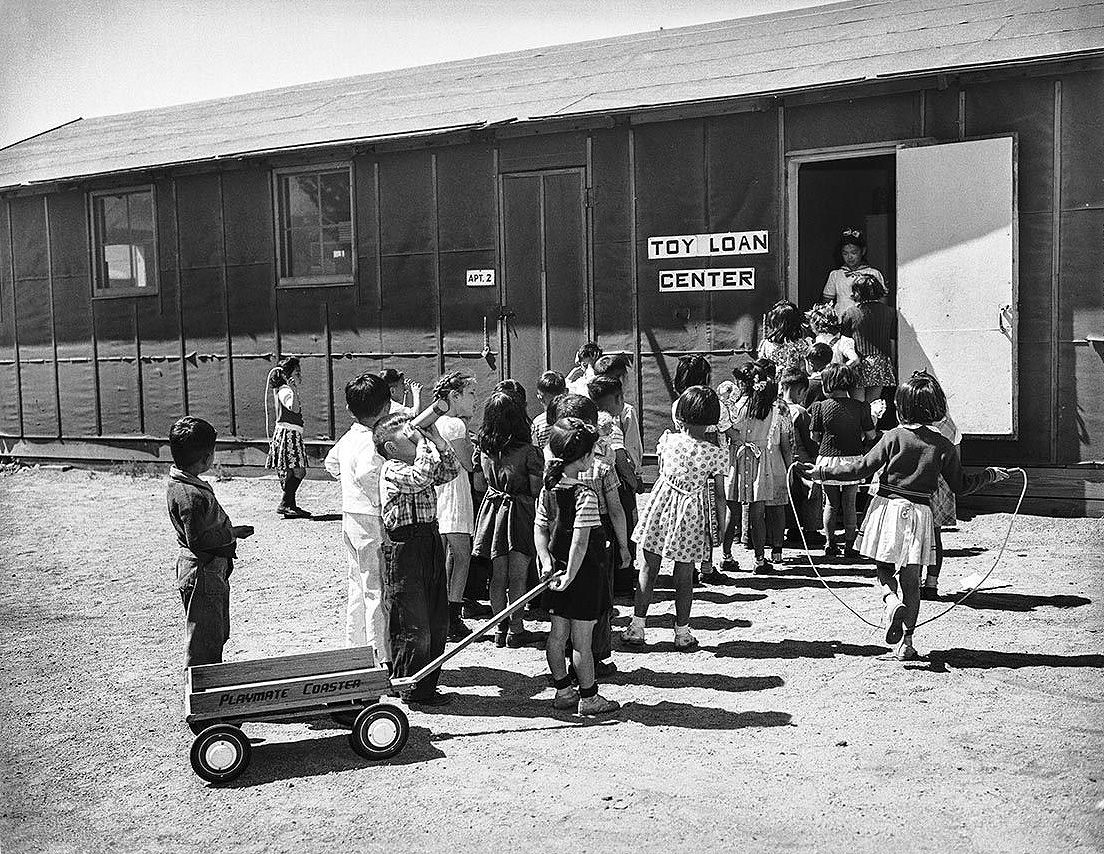 Toy Loan Center (Coordinated by the Quakers) - 1944 (Photo courtesy of the Japanese American Digitization Project) (Toyo Miyatake photo ) |
|
12/24 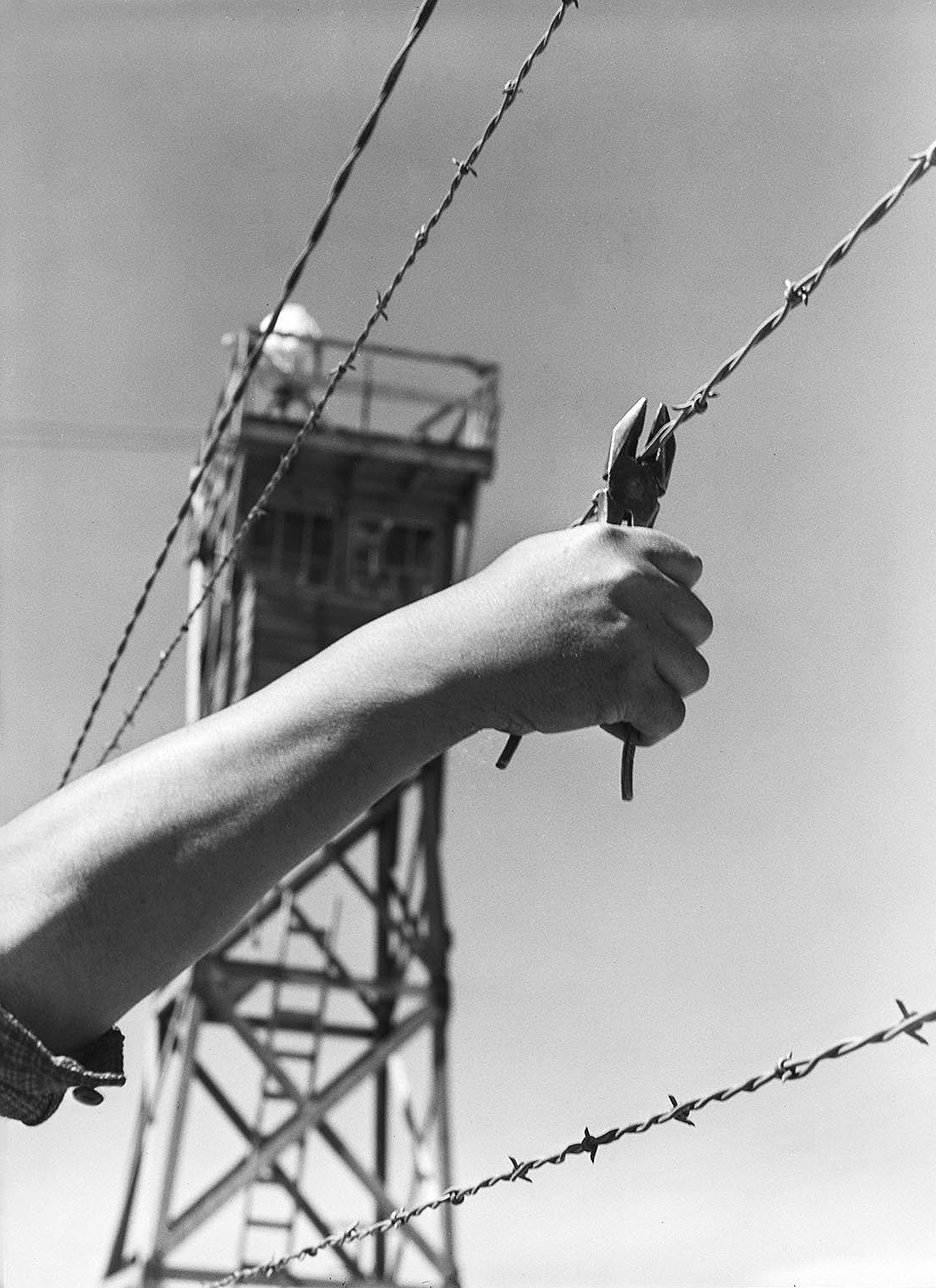 Hand and barbed wire - 1944 (Photo courtesy of the Japanese American Digitization Project) (Toyo Miyatake photo ) |
12/24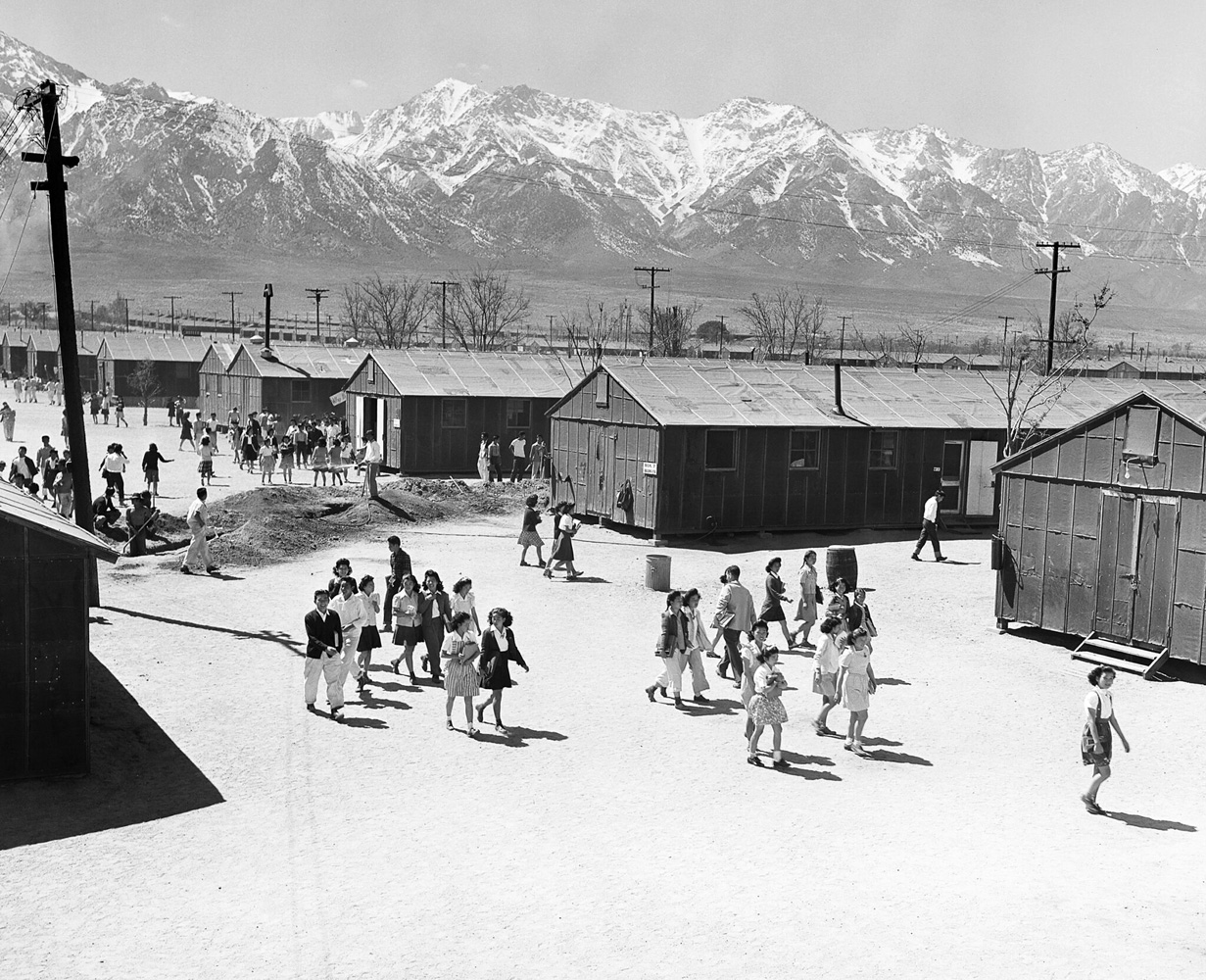 High School Students on school grounds - 1942 - 1945 (Photo courtesy of the Japanese American Digitization Project) (Toyo Miyatake photo ) |
12/24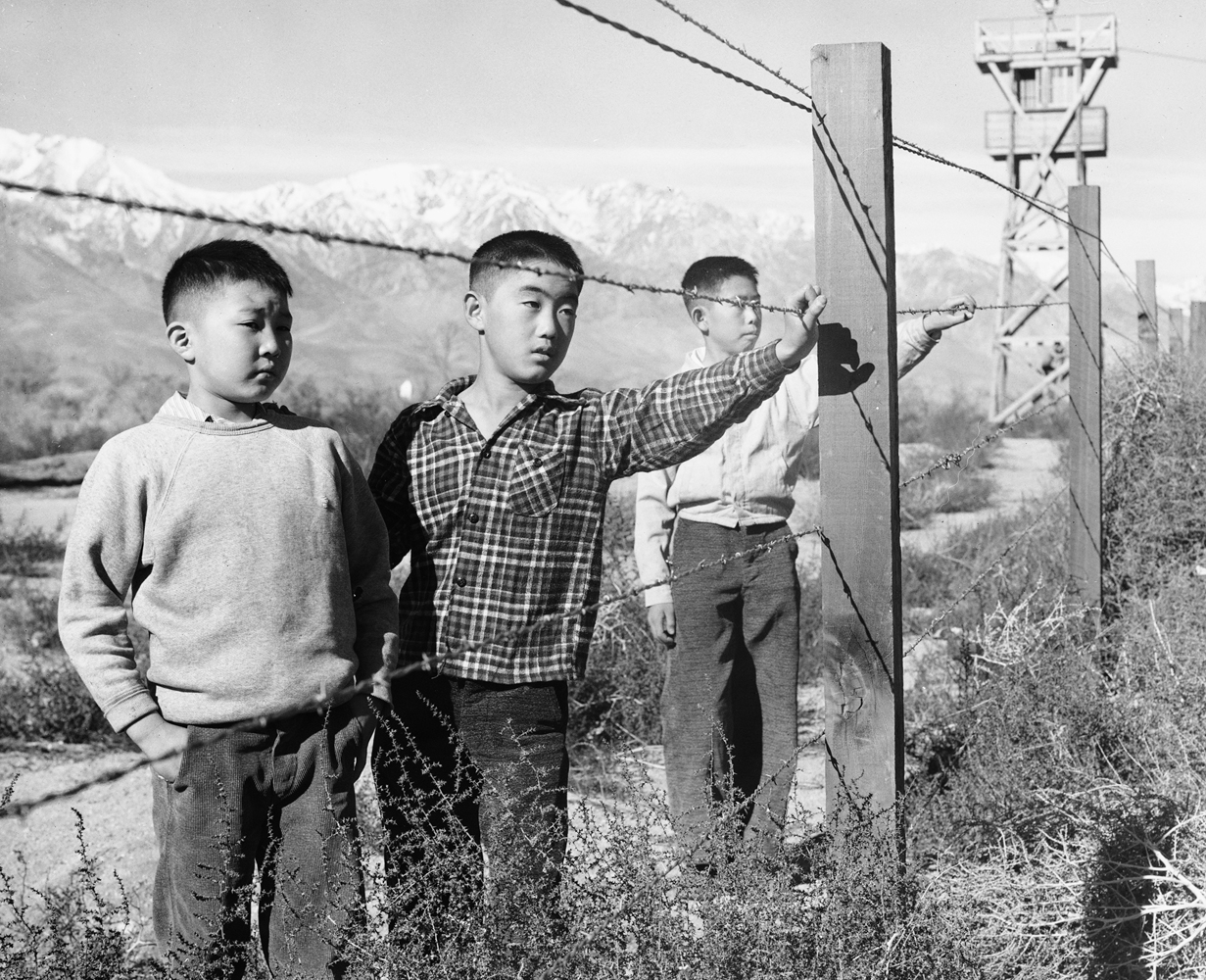 Three boys behind barbed wire - 1944 (Photo courtesy of the Japanese American Digitization Project) (Toyo Miyatake photo ) |
12/24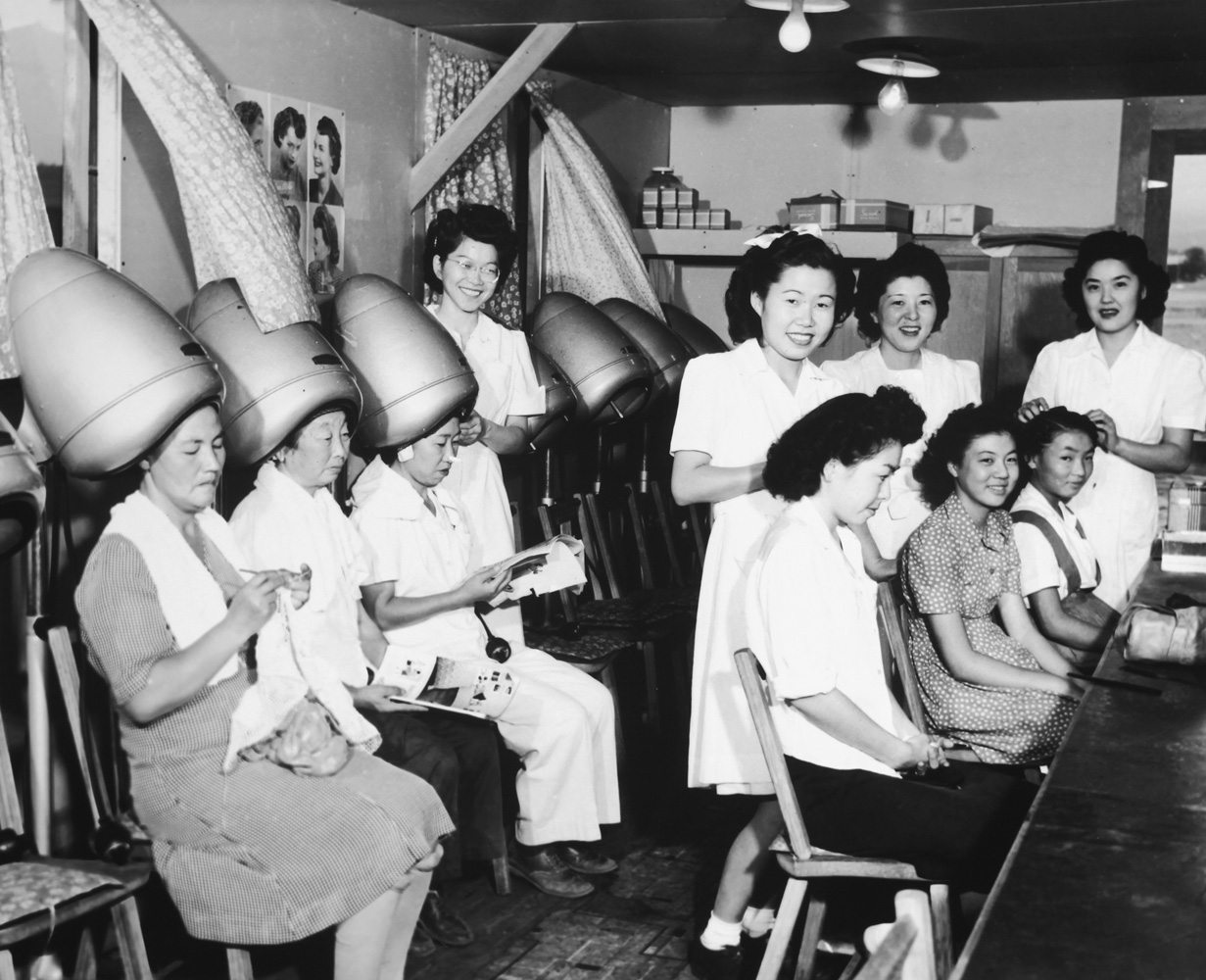 Internee-run beauty salon - 1942 - 1945 (Photo courtesy of the Japanese American Digitization Project) (Toyo Miyatake photo ) |
12/24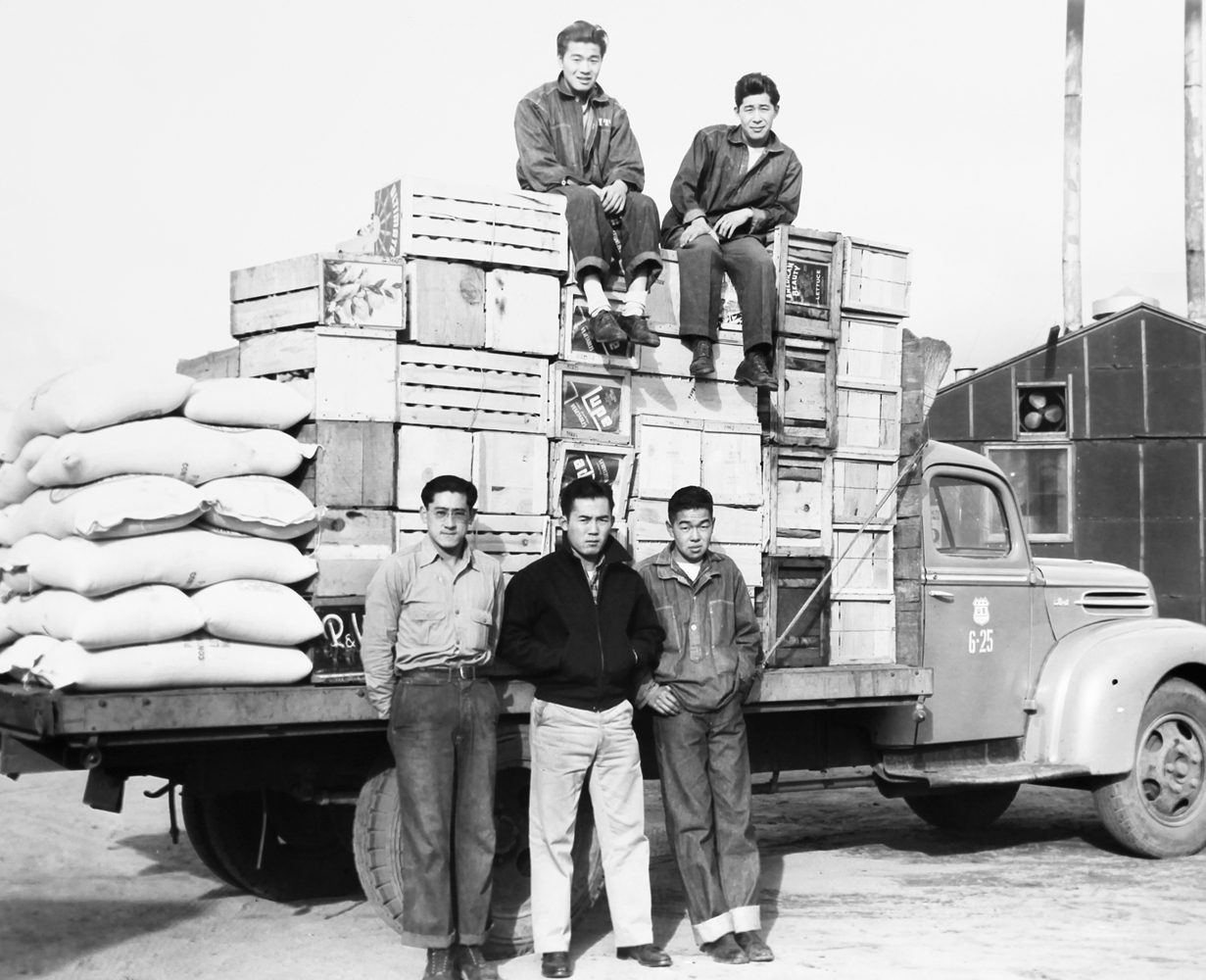 Manzanar food delivery crew - 1942 - 1945 (Photo courtesy of the Japanese American Digitization Project) (Toyo Miyatake photo ) |
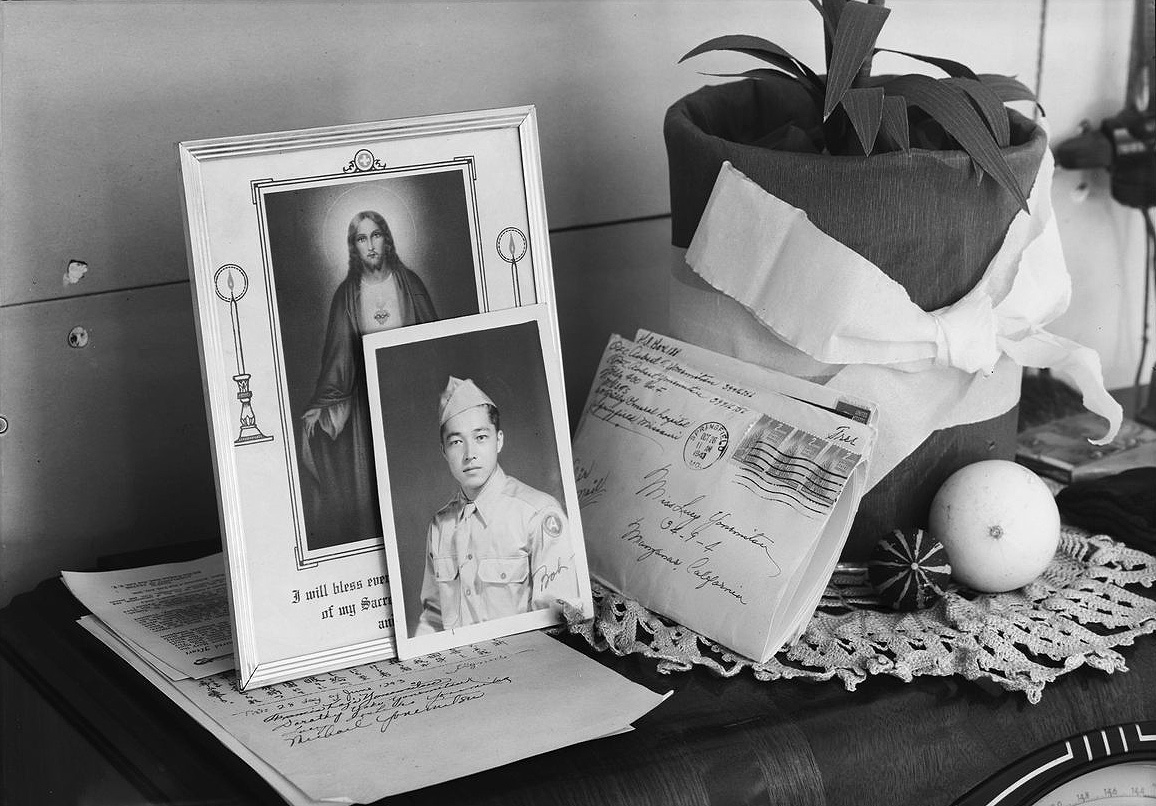
12/24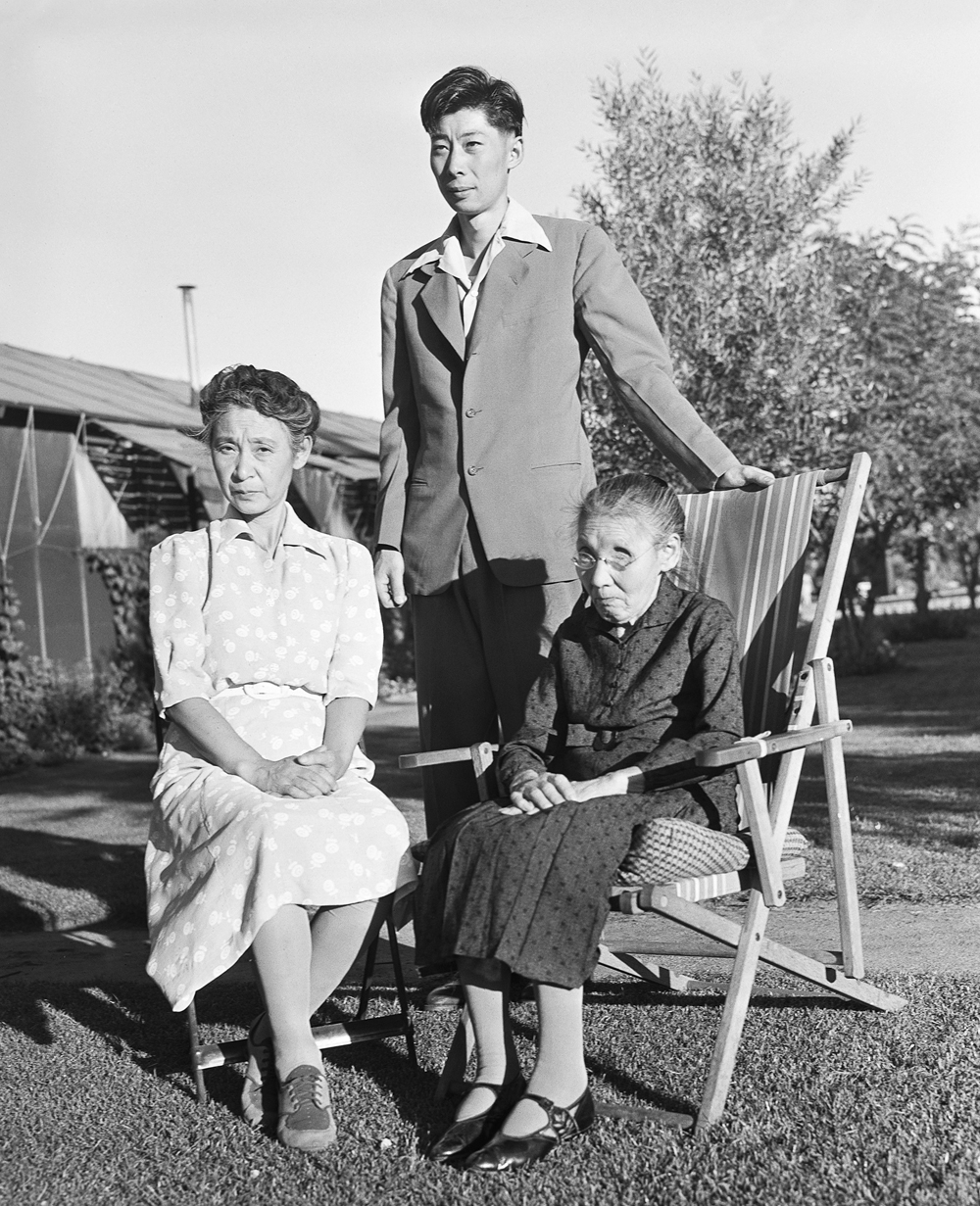 Three-generation family. The son enlisted in the U.S. Army - 1942 - 1945 (Photo courtesy of the Japanese American Digitization Project) (Toyo Miyatake photo ) |
 Christmas card from Miriko Nagahama to Betty Salzman - December 1942 (Photograph courtesy of Calisphere) |
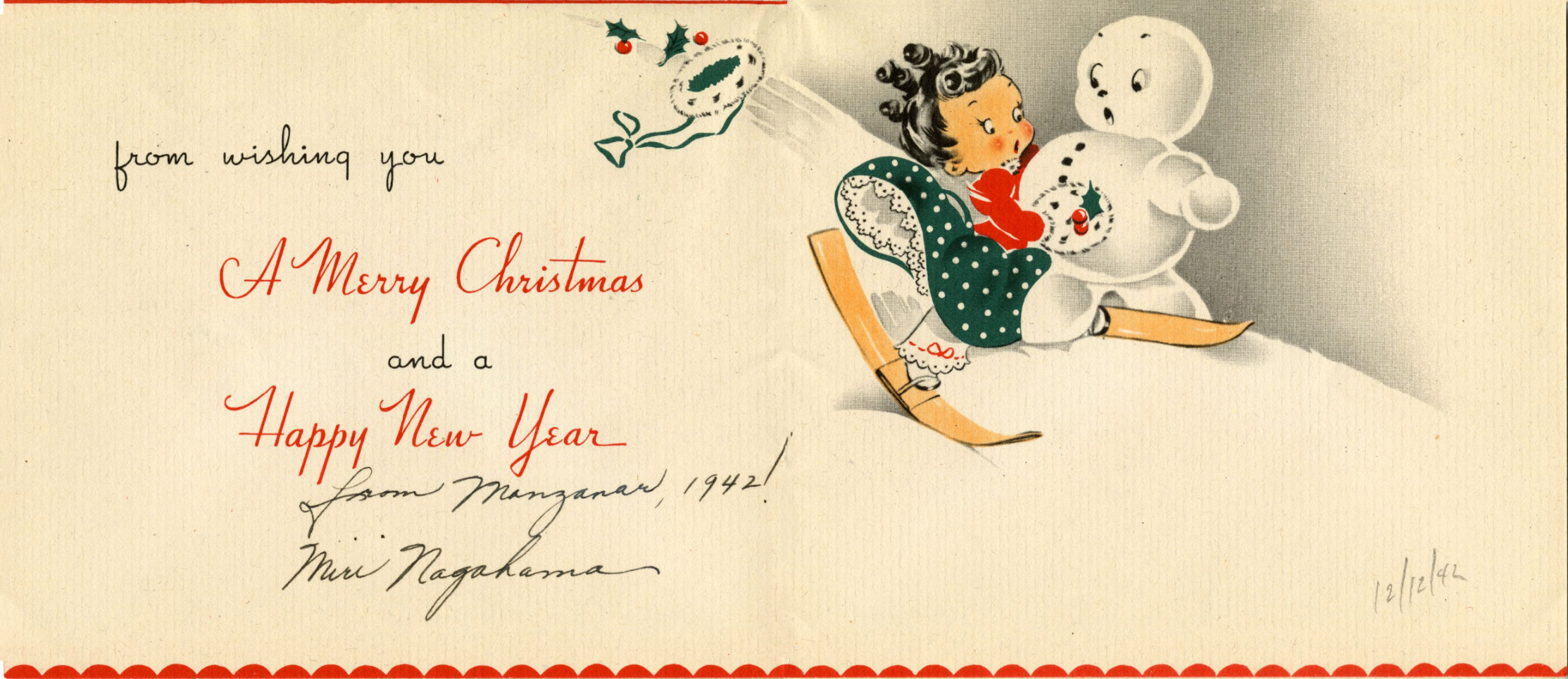 Christmas Card from Miriko Naghama to Betty Salzman - December 1942 |
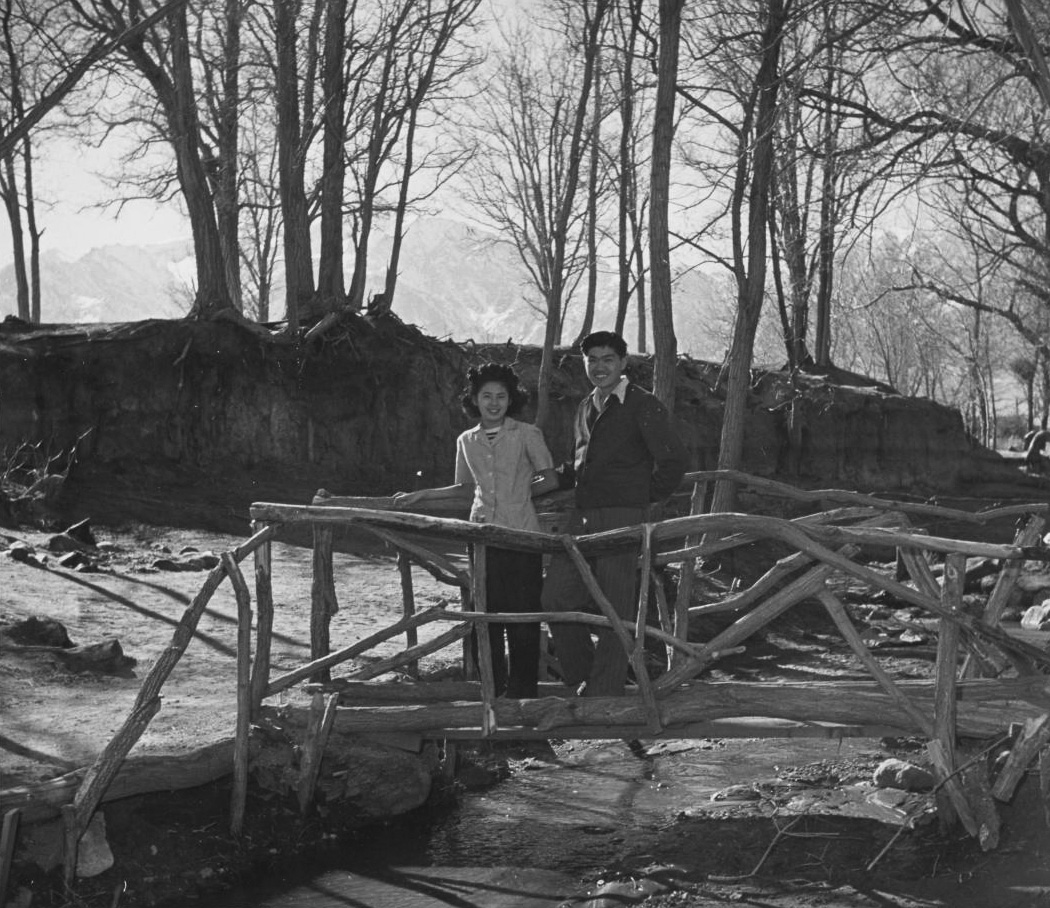 Takeshi Shido and his girl friend Toshiko Mikami |
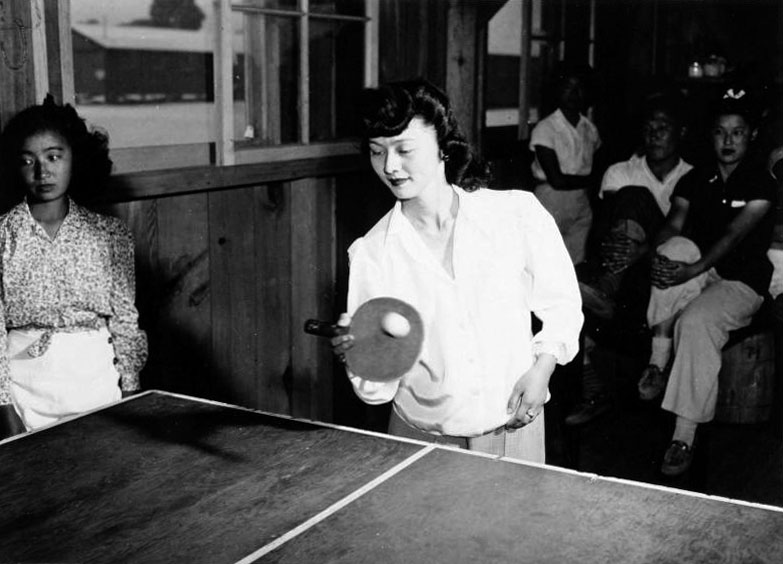 Chiyeko Nakashima, high school student, playing table tennis in the girl's recreation hall. (Photograph courtesy of Calisphere) (Photographer Francis Stewart) |
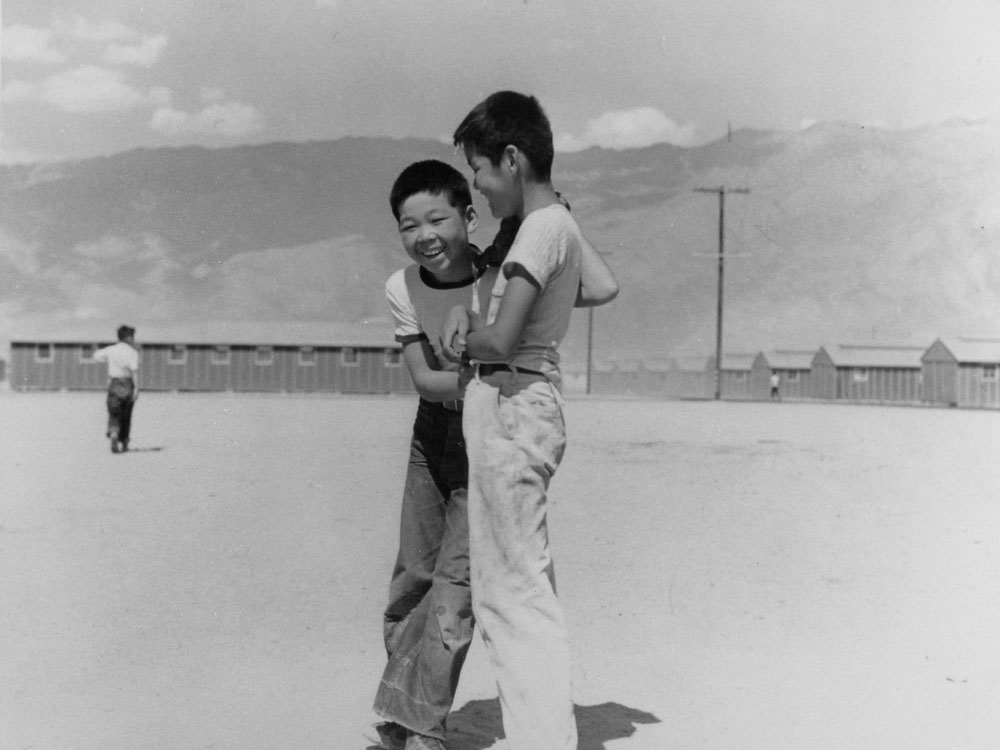 |
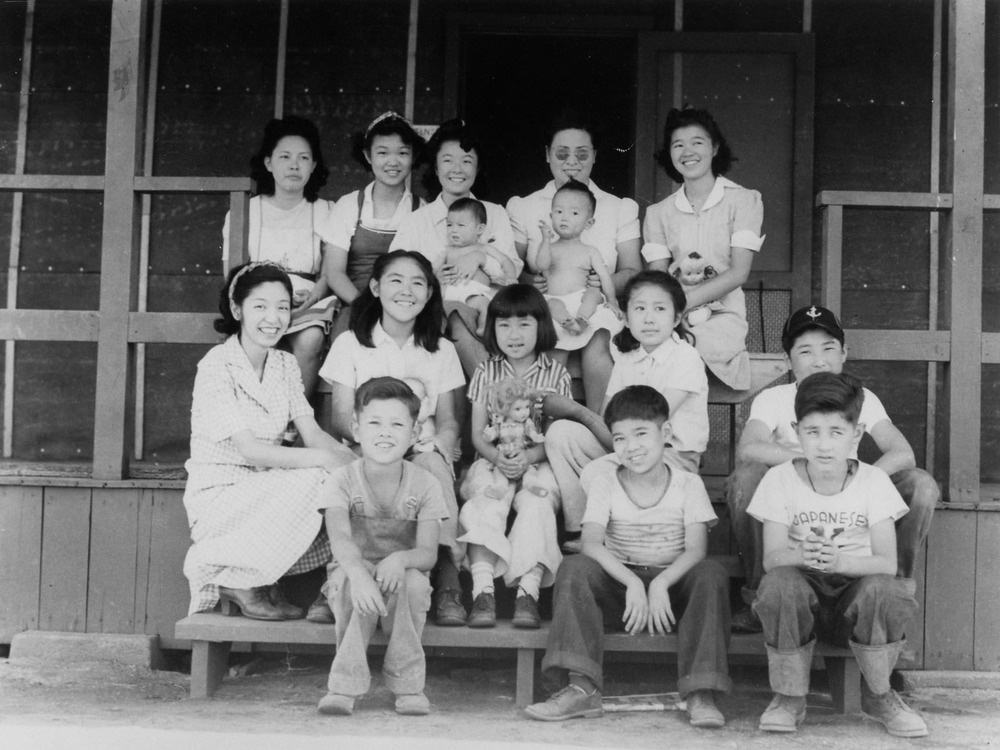 Mrs. Harry Matsumoto, a University of California graduate, and her husband were superintendents of the Children's Village where 65 orphans were housed and cared for - 1942. Dorothea Lange photo |
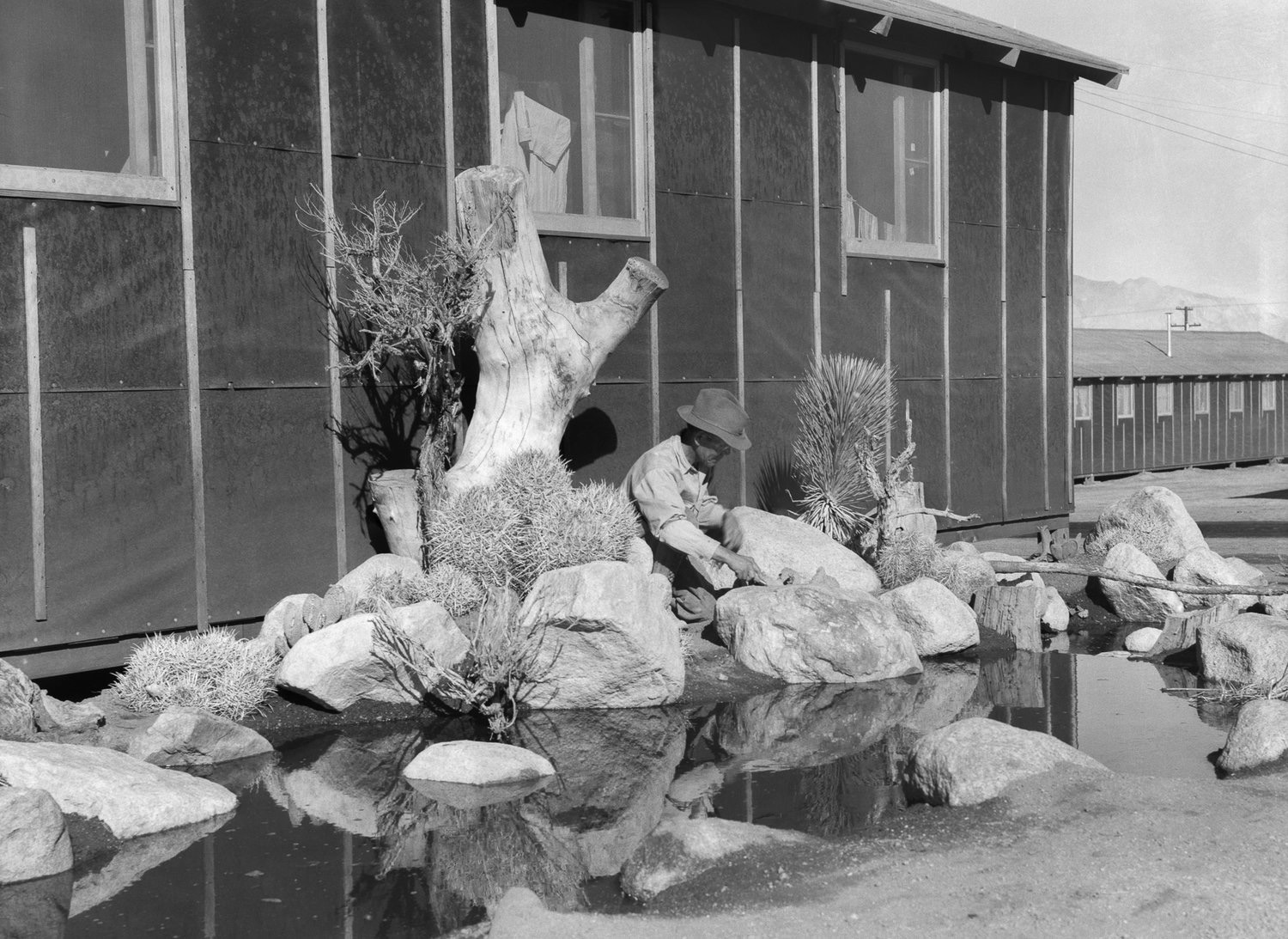 William Katsuki creates Desert Garden at Manzanar - 1942 (Photo by Dorothea Lange courtesy Online Archive of California) |
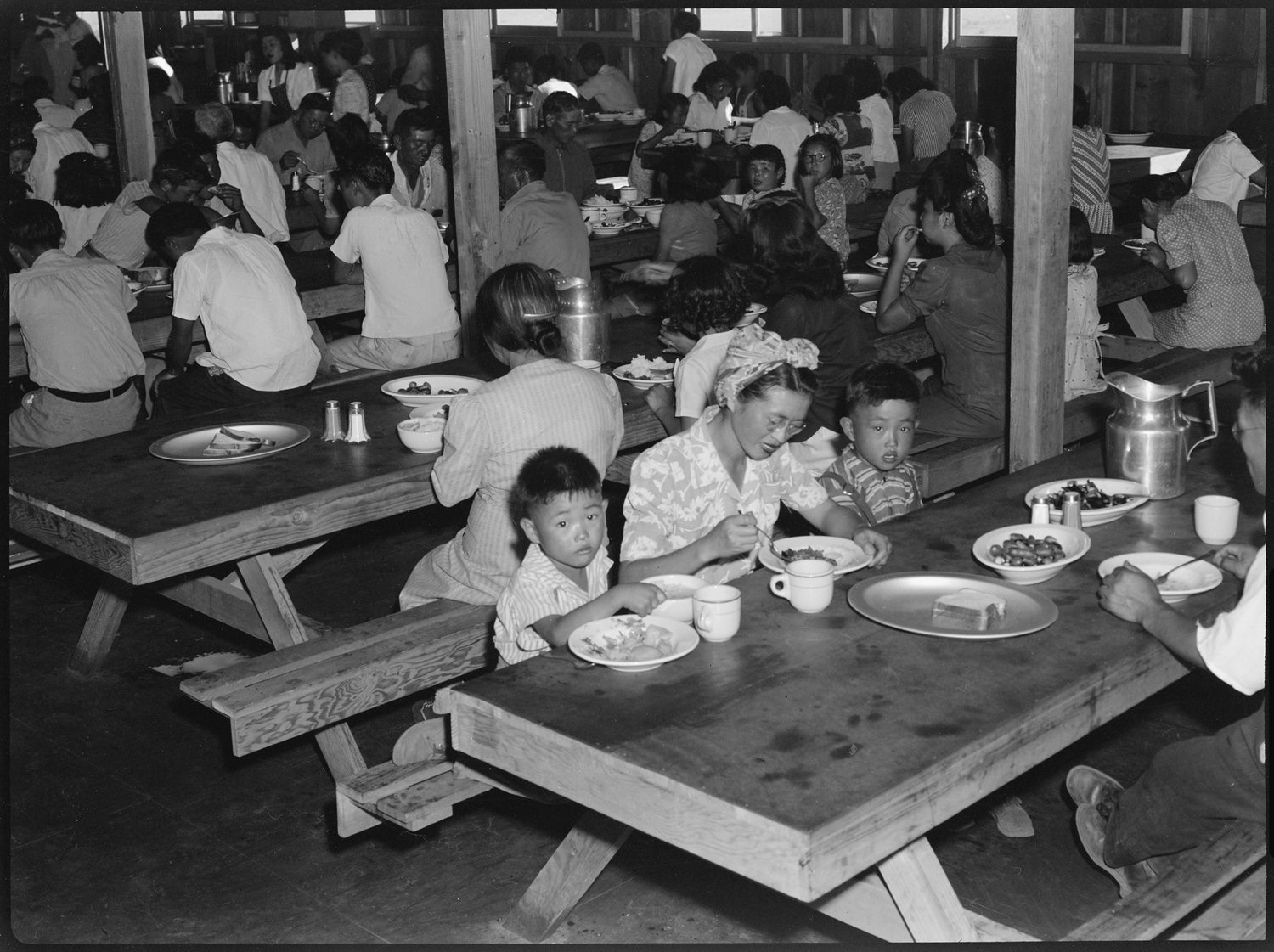 Eating at one of the Manzanar mess halls. |
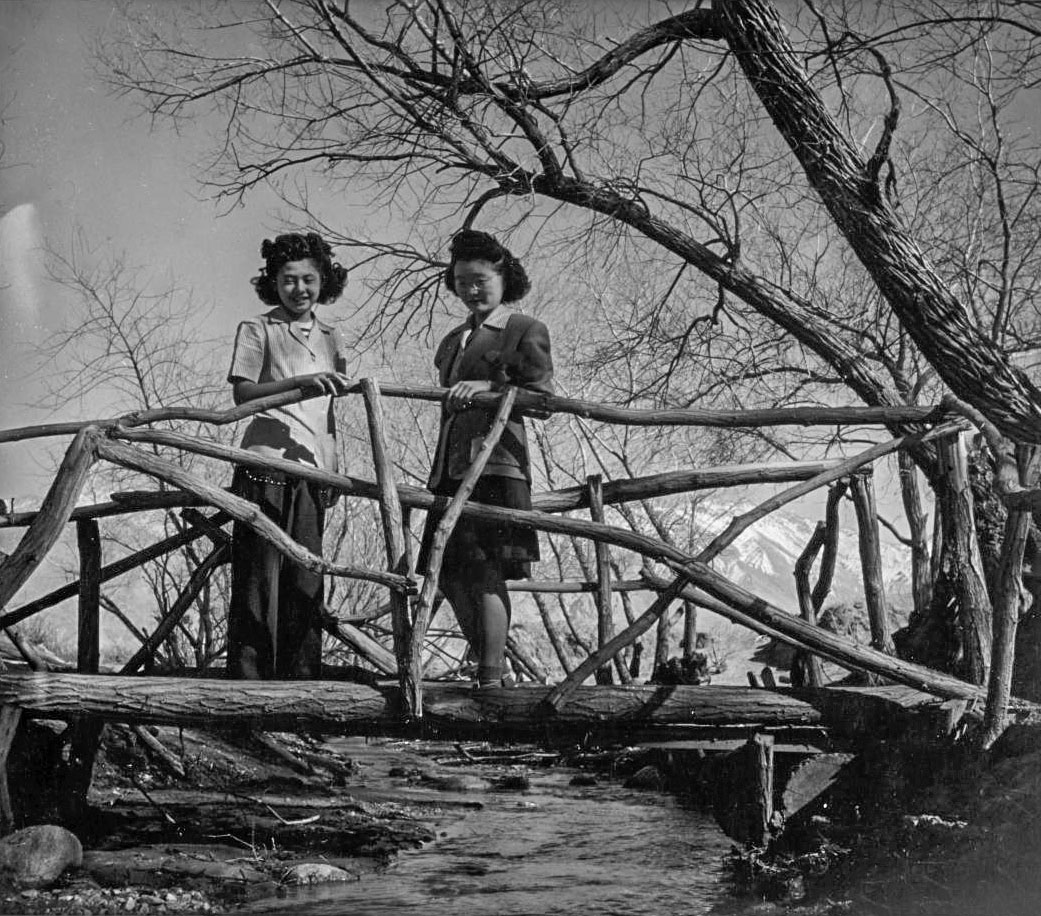
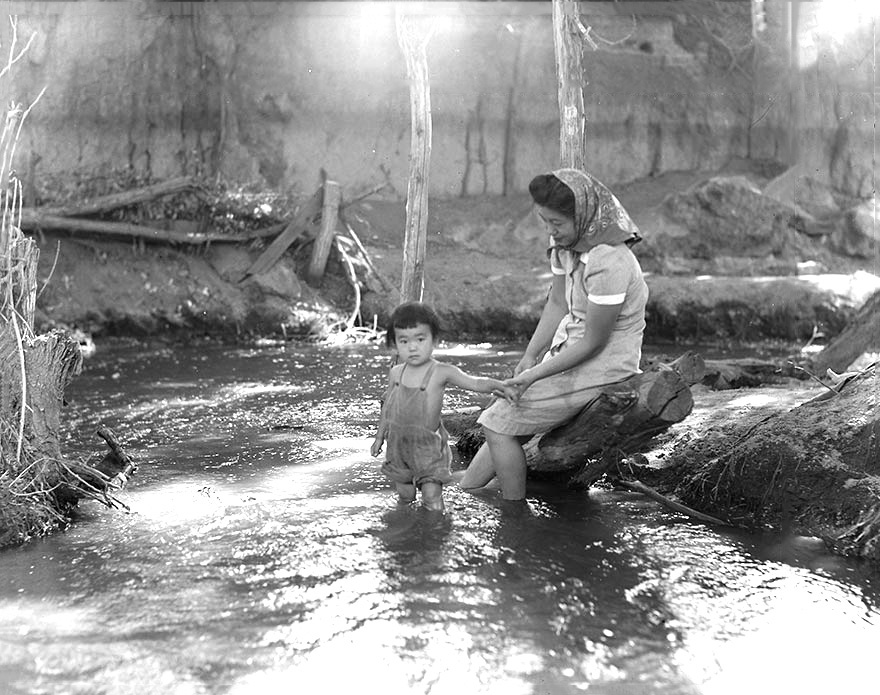 Swimming in the creek which flows by internment facility at Manzanar. - 1942 (Photograph courtesy of Calisphere) (Photographer Dorothea Lange) |
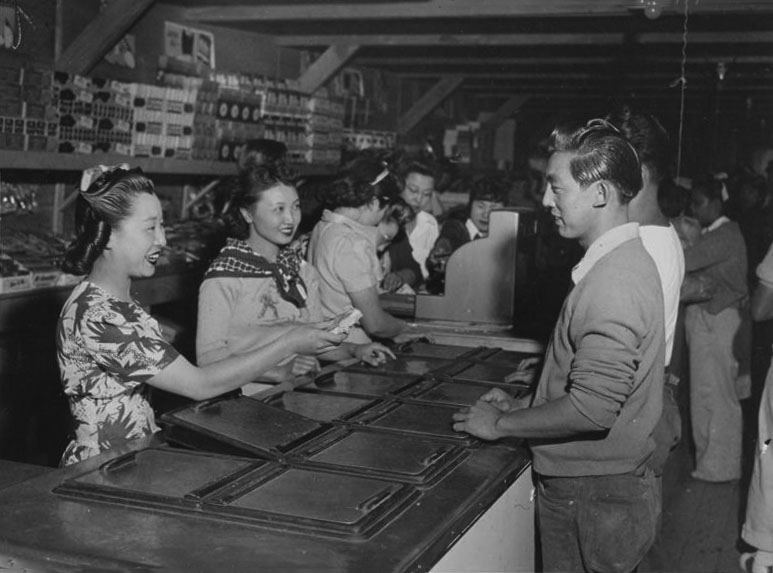 Manzanar icecream bar - 1942 L/R (foreground): Florence Yaaguchi, Nancy Kawashimi, Floyd Fujiu (Photo Francis Stewart courtesy Online Archive of California) |
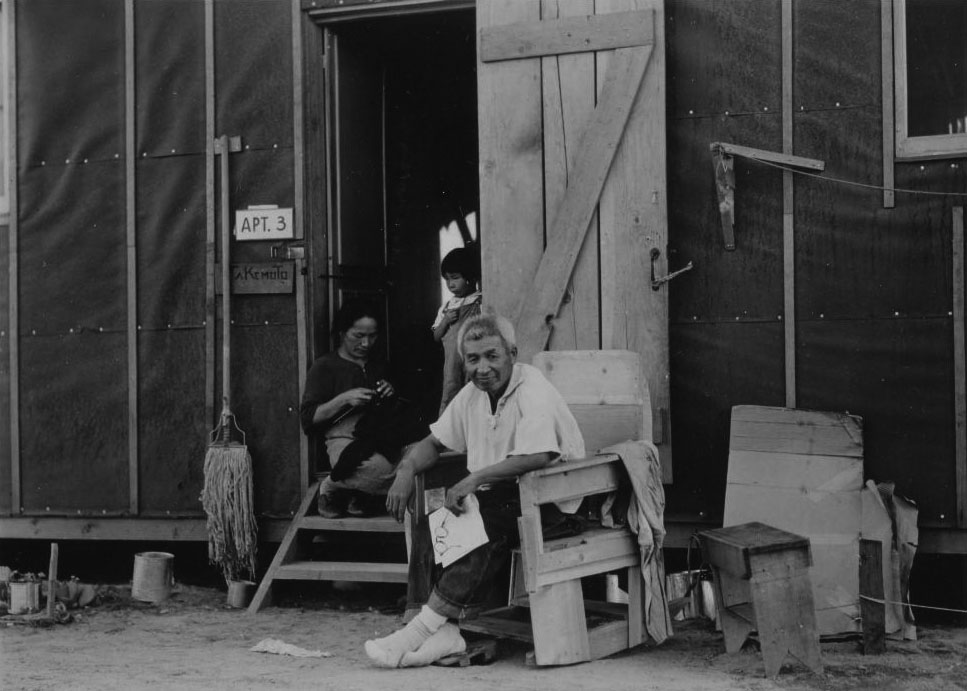 Relaxing in front of barracks - 1942 (Photograph courtesy of Calisphere) (Photographer Dorothea Lange) |
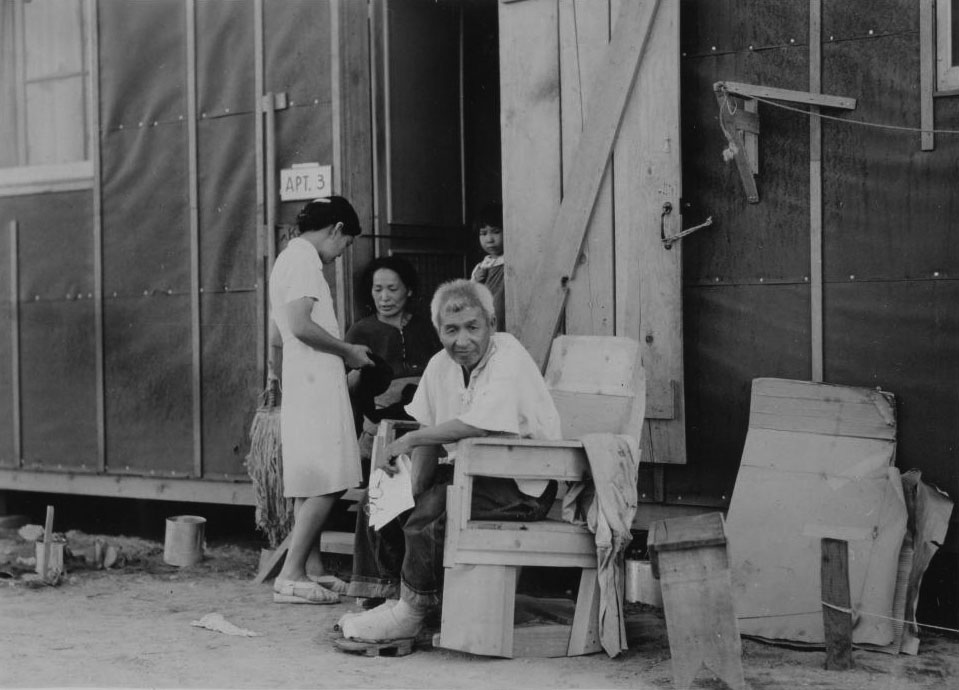 Relaxing in front of barracks - 1942 (Photograph courtesy of Calisphere) (Photographer Dorothea Lange) |
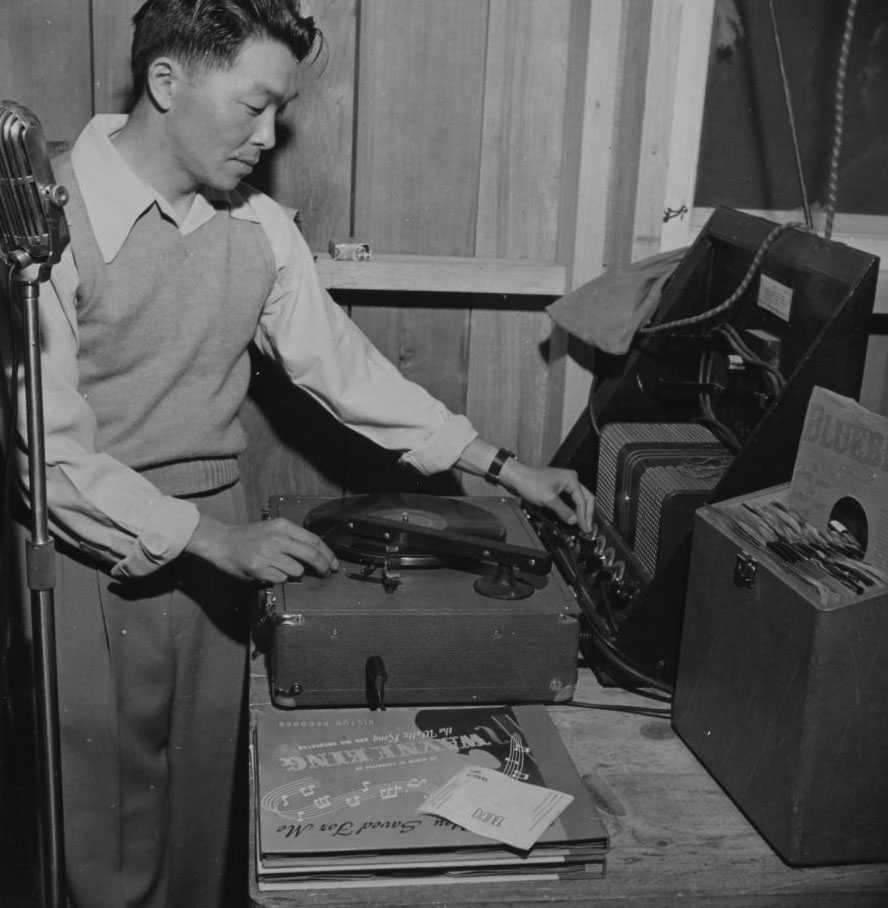 Henry Ushijima - 1942 Formerly a sound engineer in Hollywood, he is playing records at a dance given by the Girl's Recreation Committee using his own sound system (Photograph courtesy of Calisphere) (Photographer Francis Stewart) |
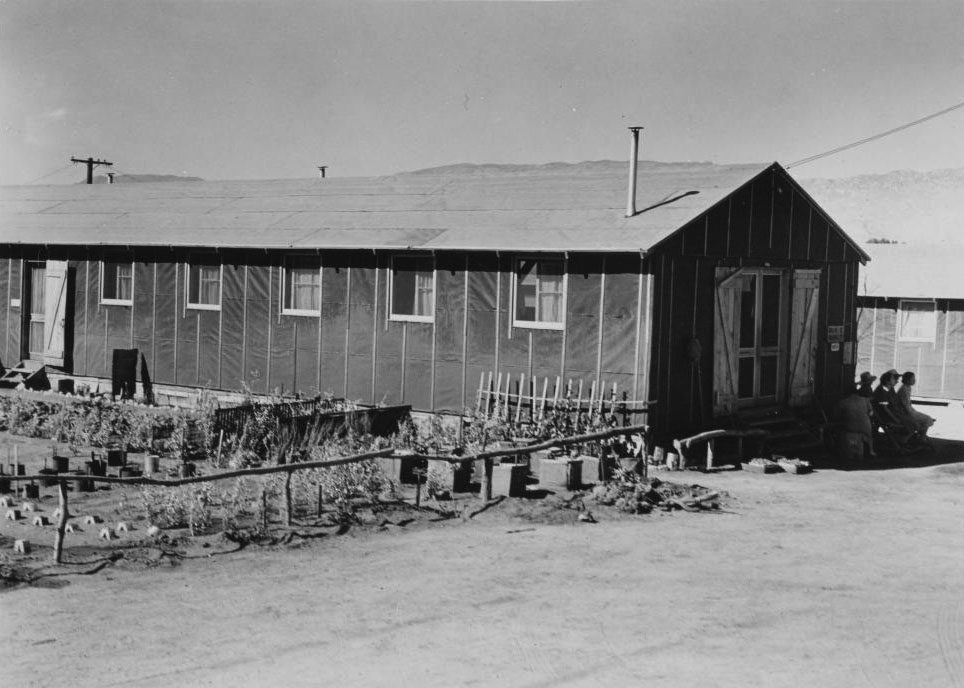 Flower garden under constructioin by one of the barracks - 1942 (Photograph courtesy of Calisphere) (Photographer Dorothea Lange) |
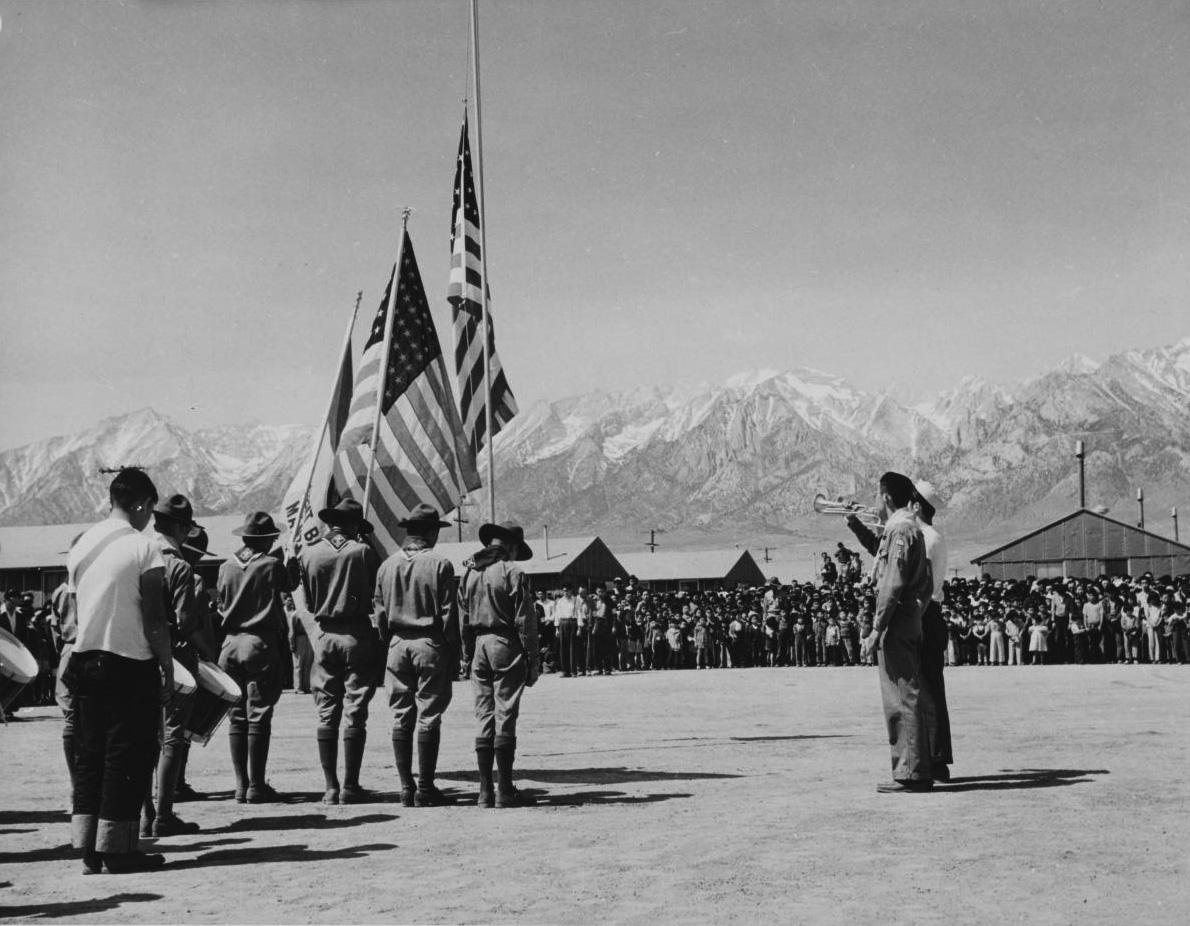 Memorial Day celebration at Manzanar - 1942 (Photograph courtesy of Calisphere) (Photographer Francis Stewart) |
 Manzanar Reception Center - 1942 (Photograph courtesy of Calisphere) (Photographer Clem Albers) |
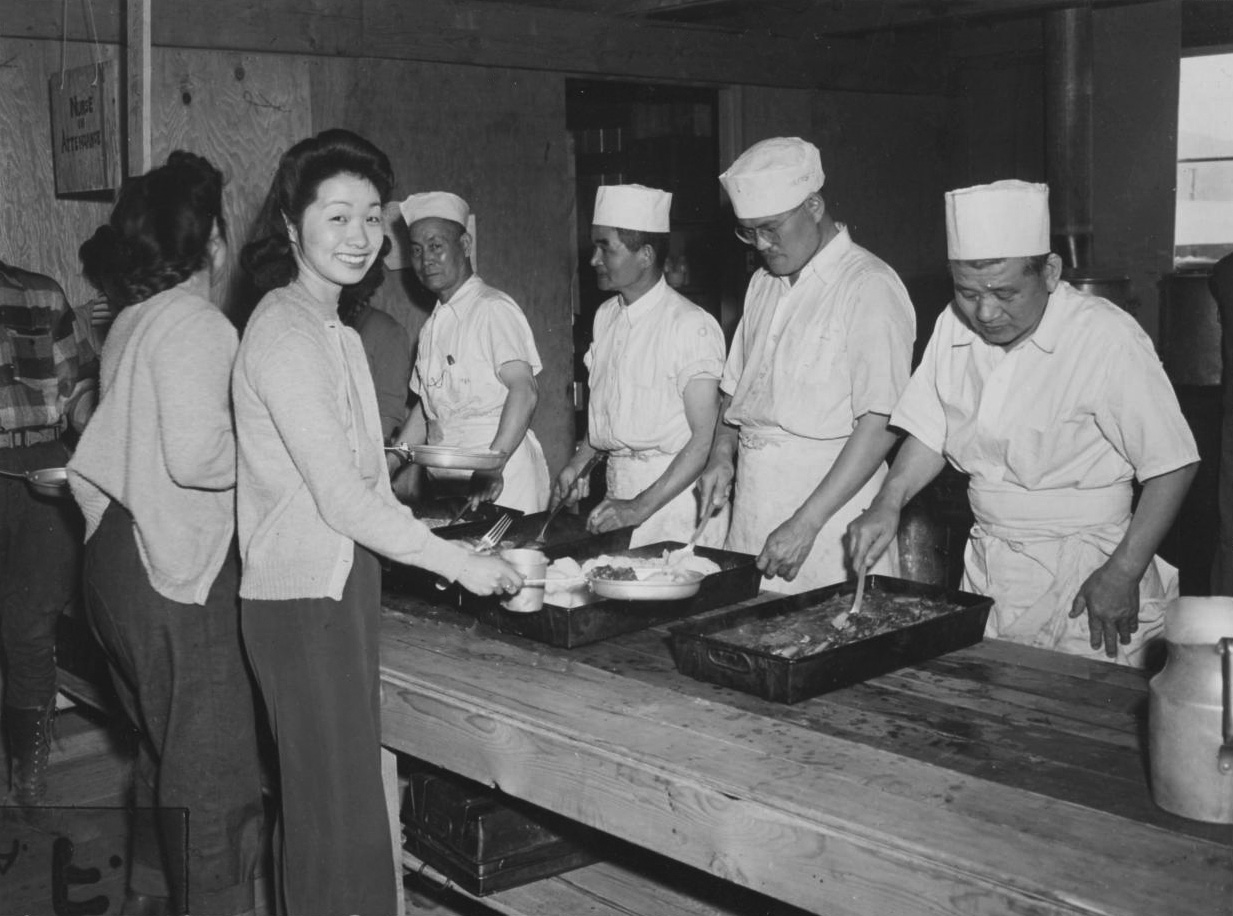 Meal time at Manzanar cafeteria- 1942 (Photograph courtesy of Calisphere) (Photographer Clem Albers) |
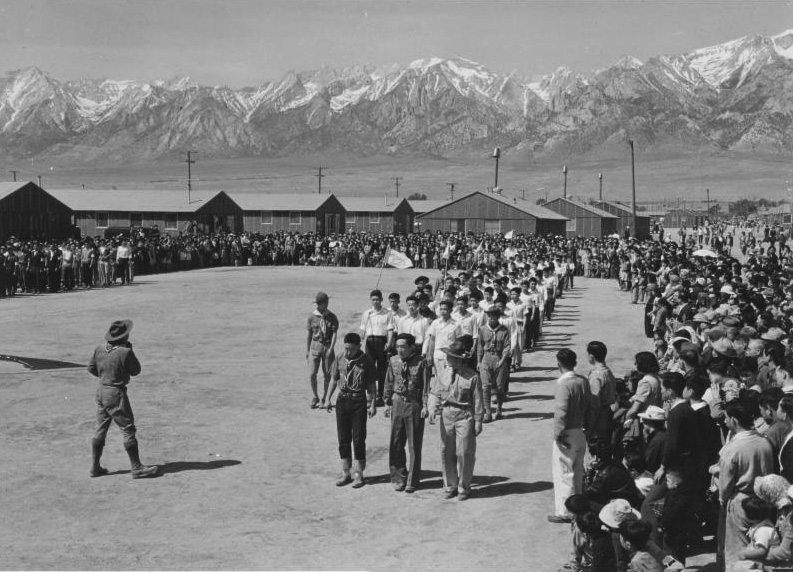 Memorial Day celebration at Manzanar - 1942 (Photograph courtesy of Calisphere) (Photographer Francis Stewart) |
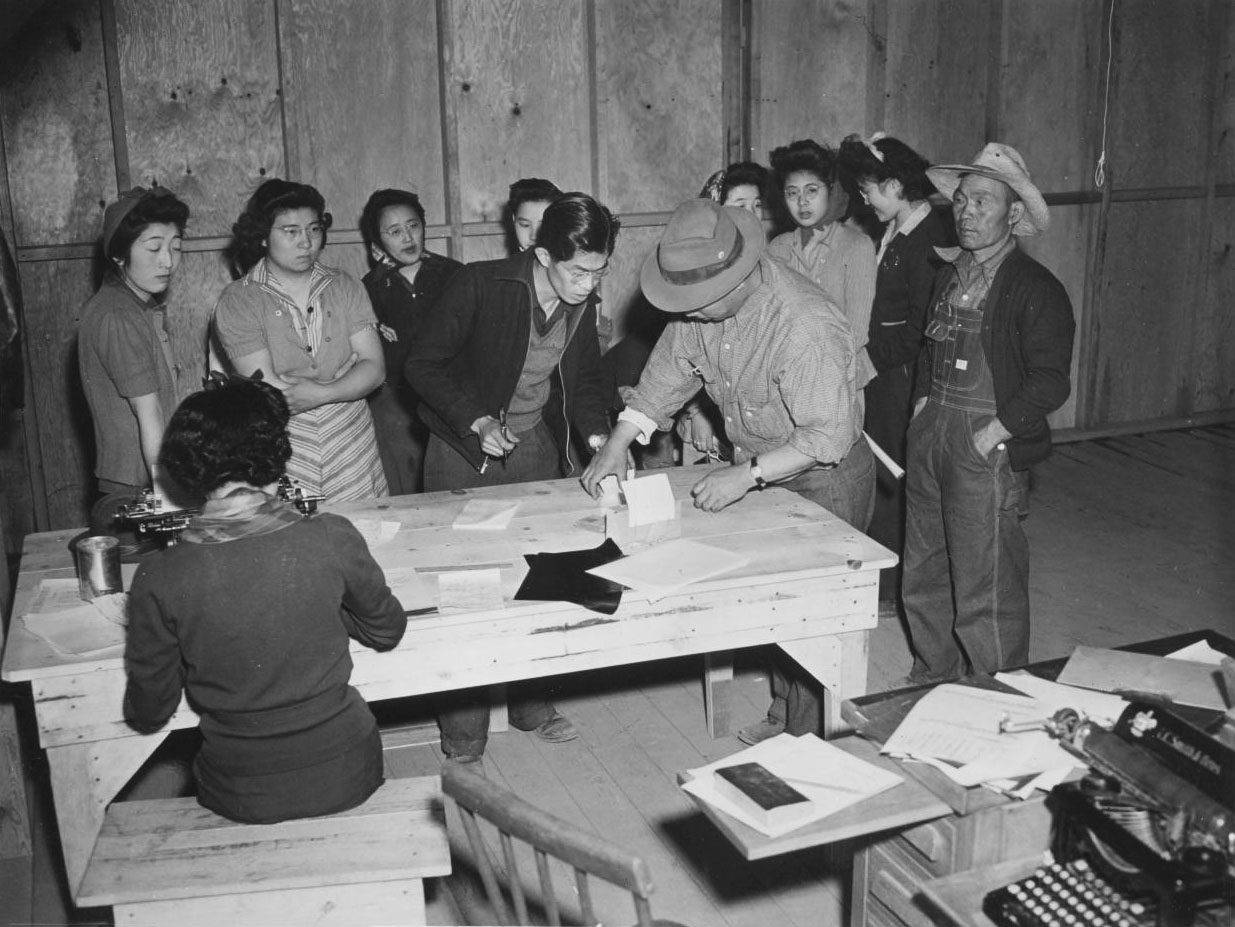 Registering for work under the Work Corps plan for evacuees - 1942 (Photograph courtesy of Calisphere) (Photographer Clem Albers) |
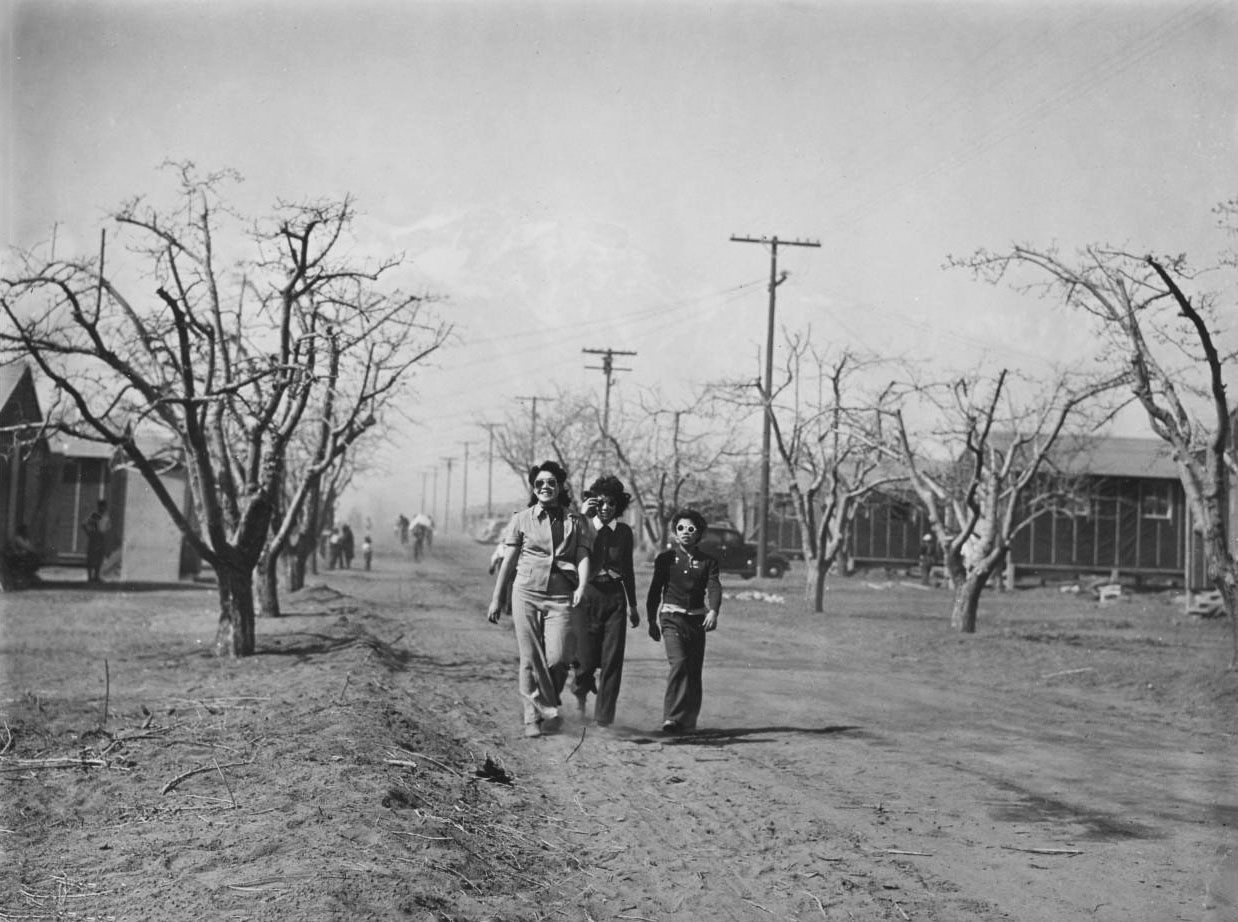 Afternoon stroll at Manzanar - 1942 (Photograph courtesy of Calisphere) (Photographer Clem Albers) |
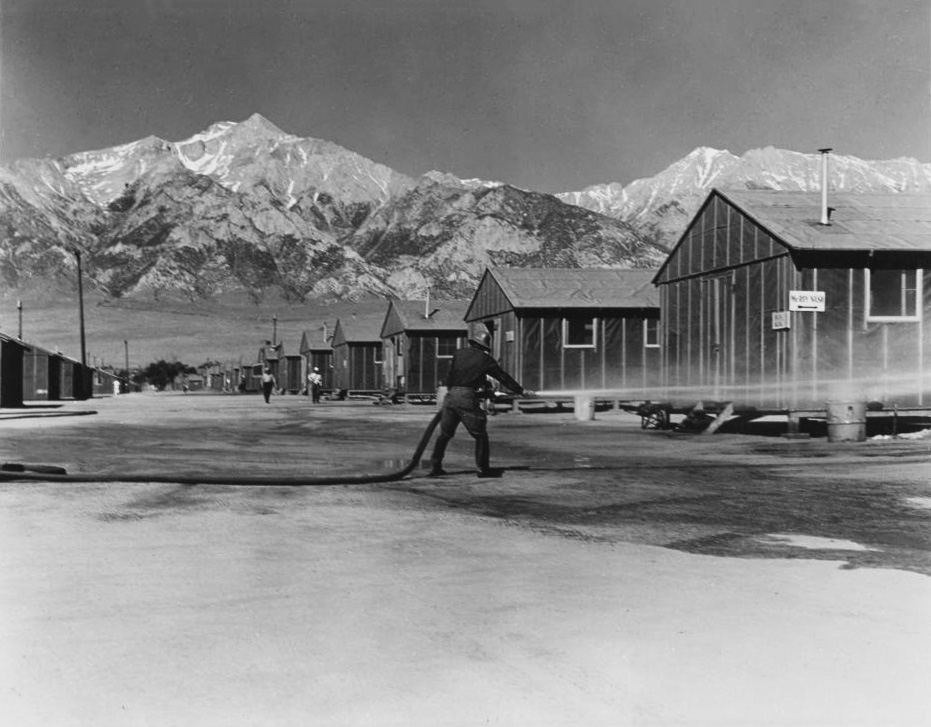 Member of the Manzanar Fire Department keeping the dust down - 1942 (Photograph courtesy of Calisphere) (Photographer Dorothea Lange) |
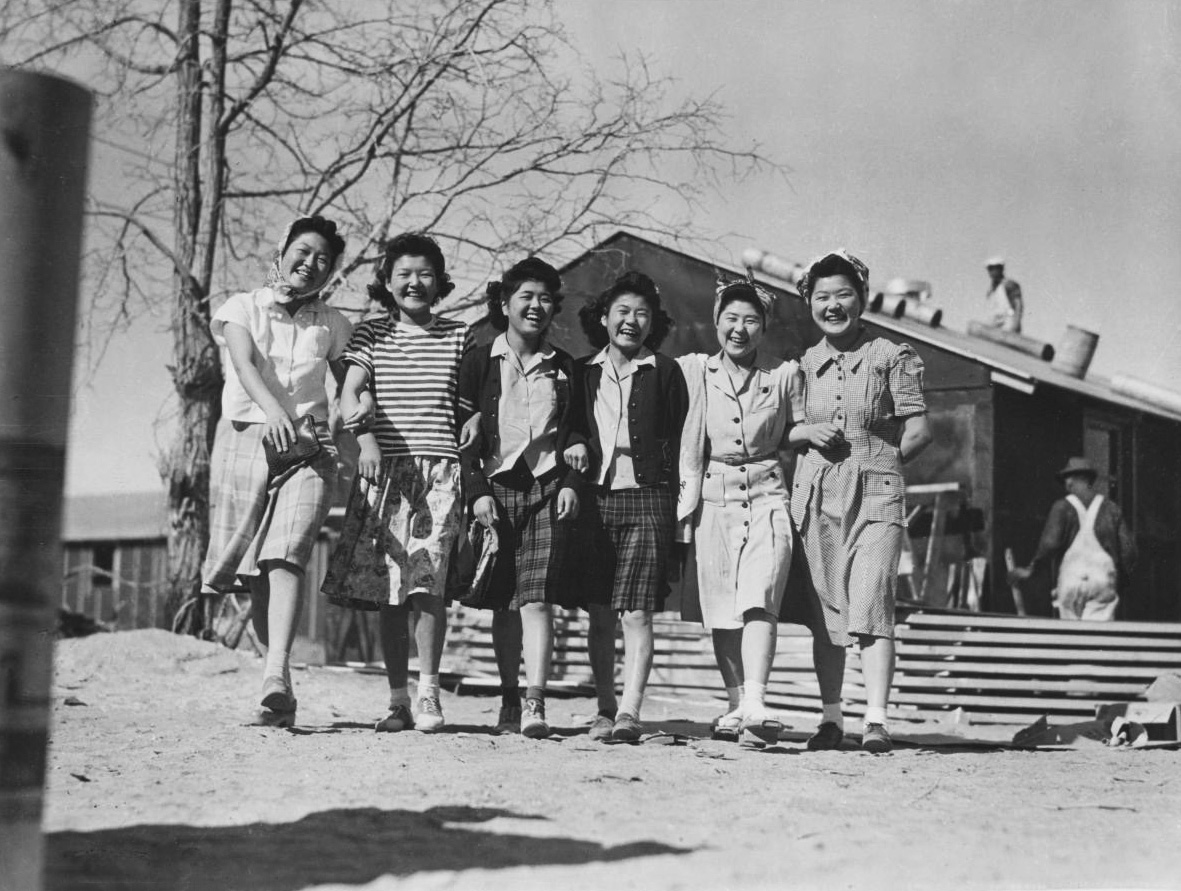 Afternoon stroll at Manzanar - 1942 (Photograph courtesy of Calisphere) (Photographer Clem Albers) |
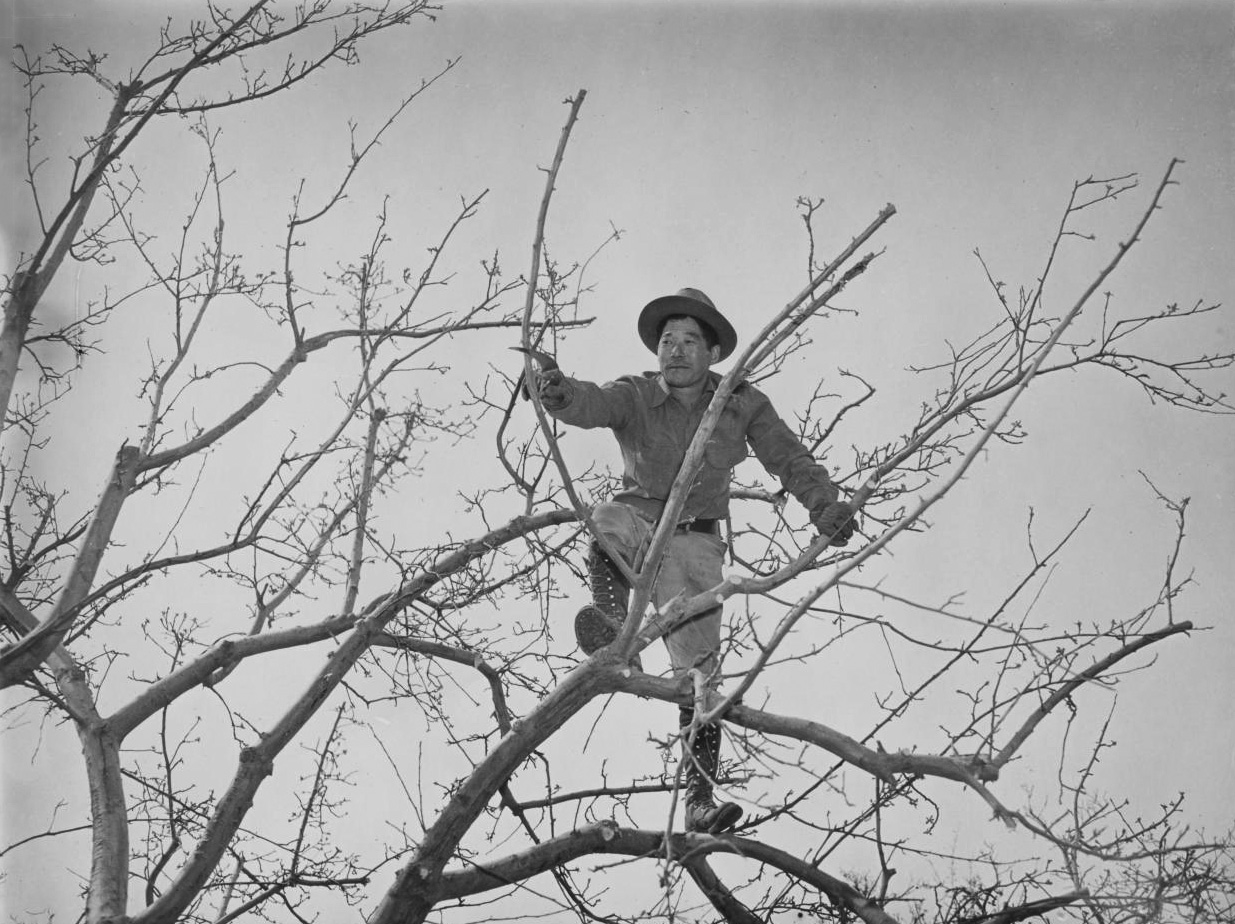 Pruning trees at Manzanar - 1942 (Photograph courtesy of Calisphere) (Photographer Clem Albers) |
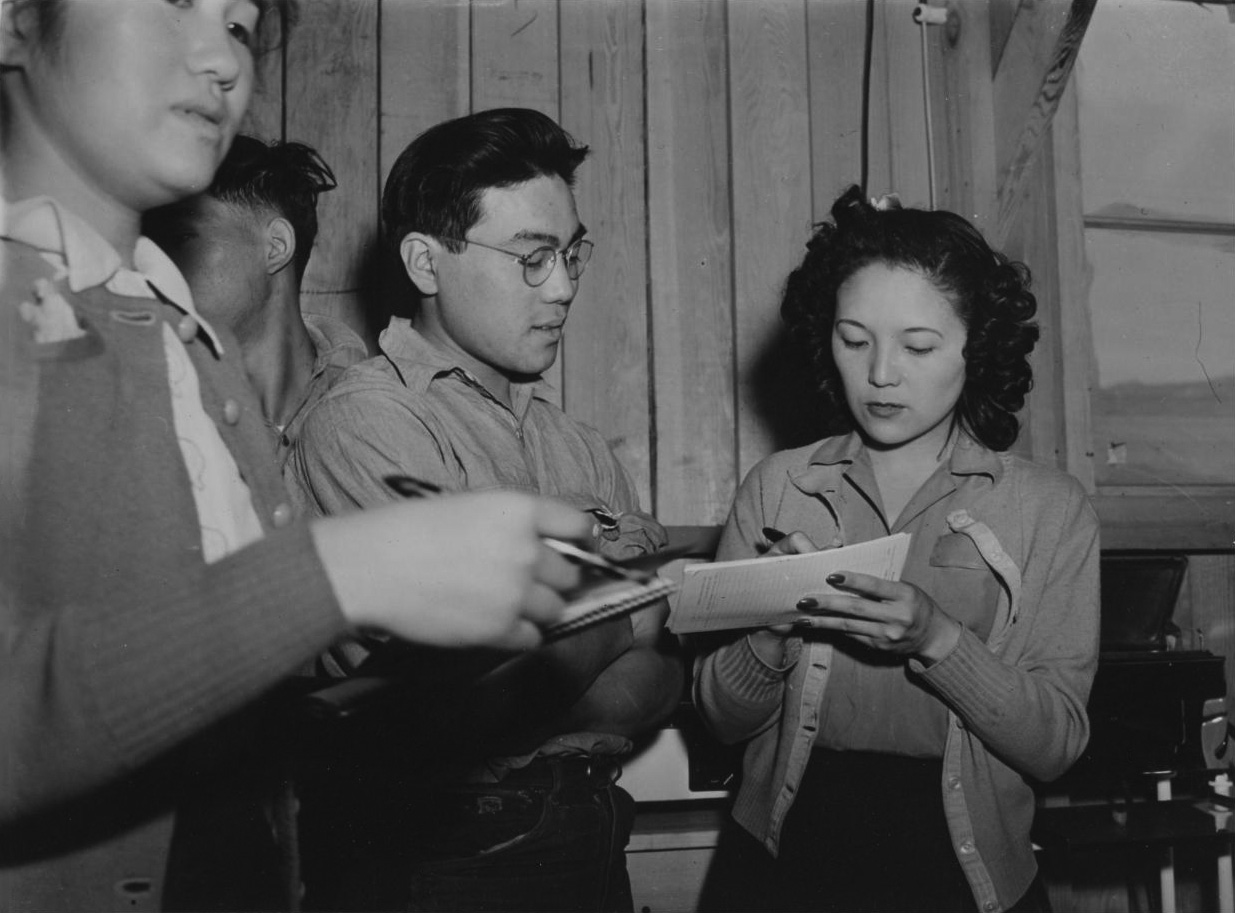 Obtaining personal data at Manzanar - 1942 (Photograph courtesy of Calisphere) (Photographer Clem Albers) |
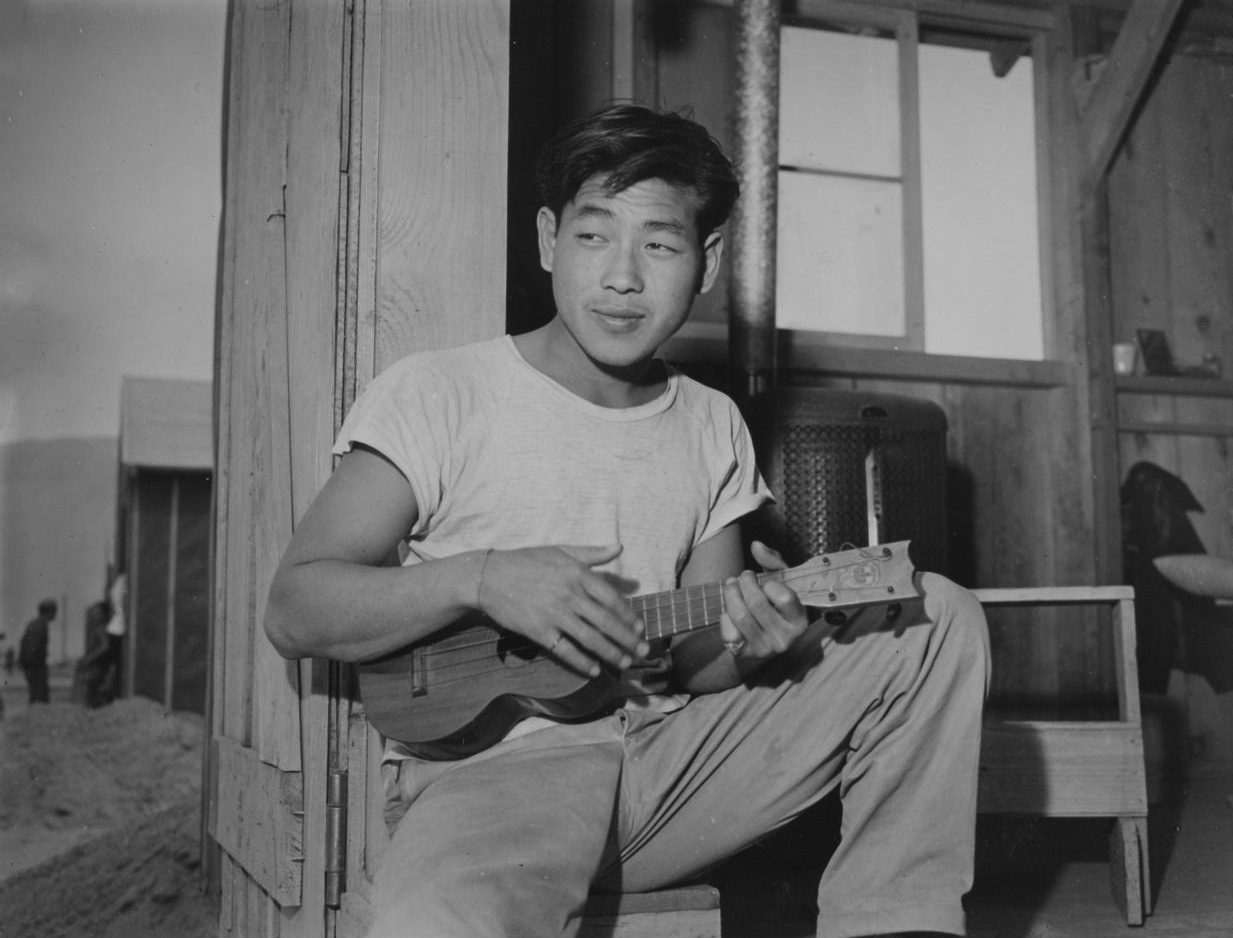 Internee amuses himself with a "Uku" - 1942 (Photograph courtesy of Calisphere) (Photographer Clem Albers) |
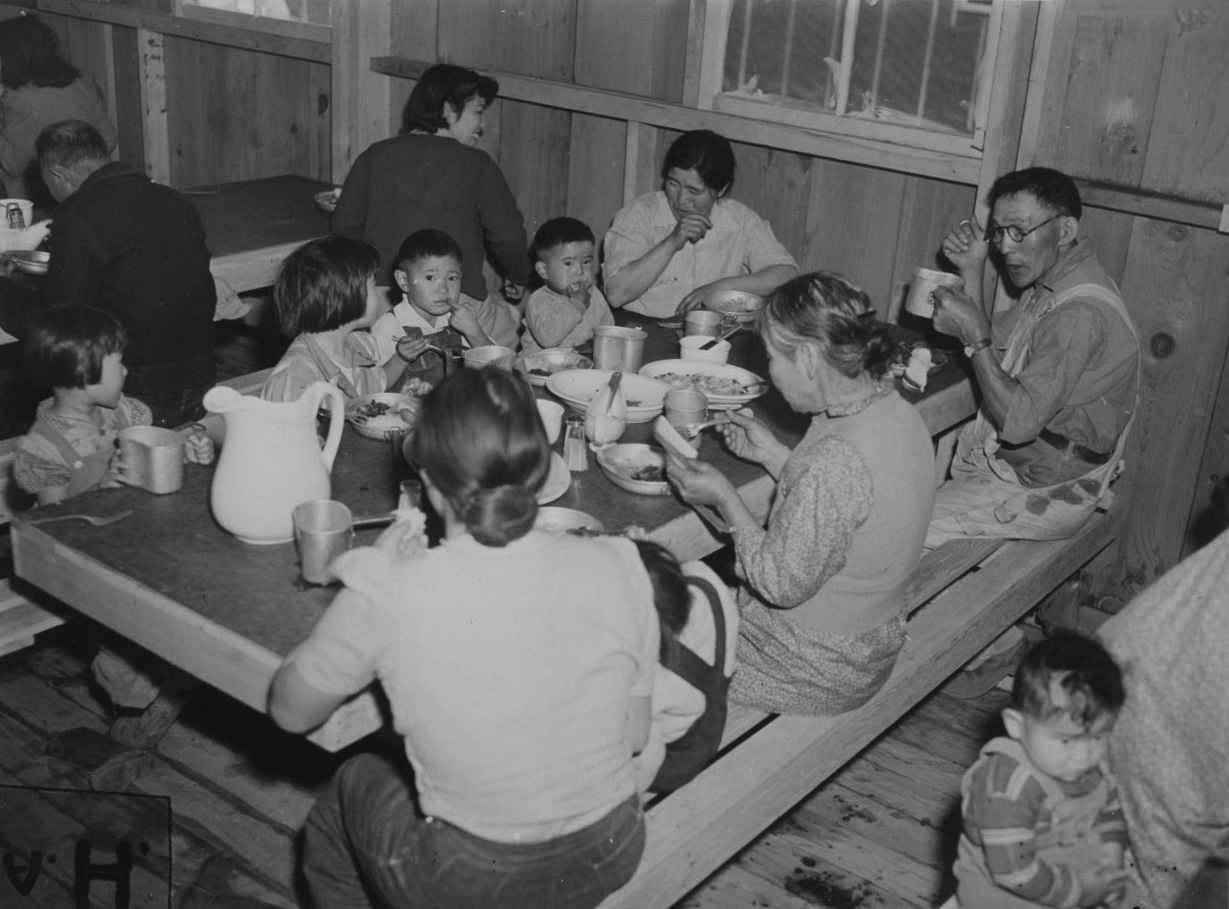 Mealtime at Manzanar - 1942 (Photograph courtesy of Calisphere) (Photographer Clem Albers) |
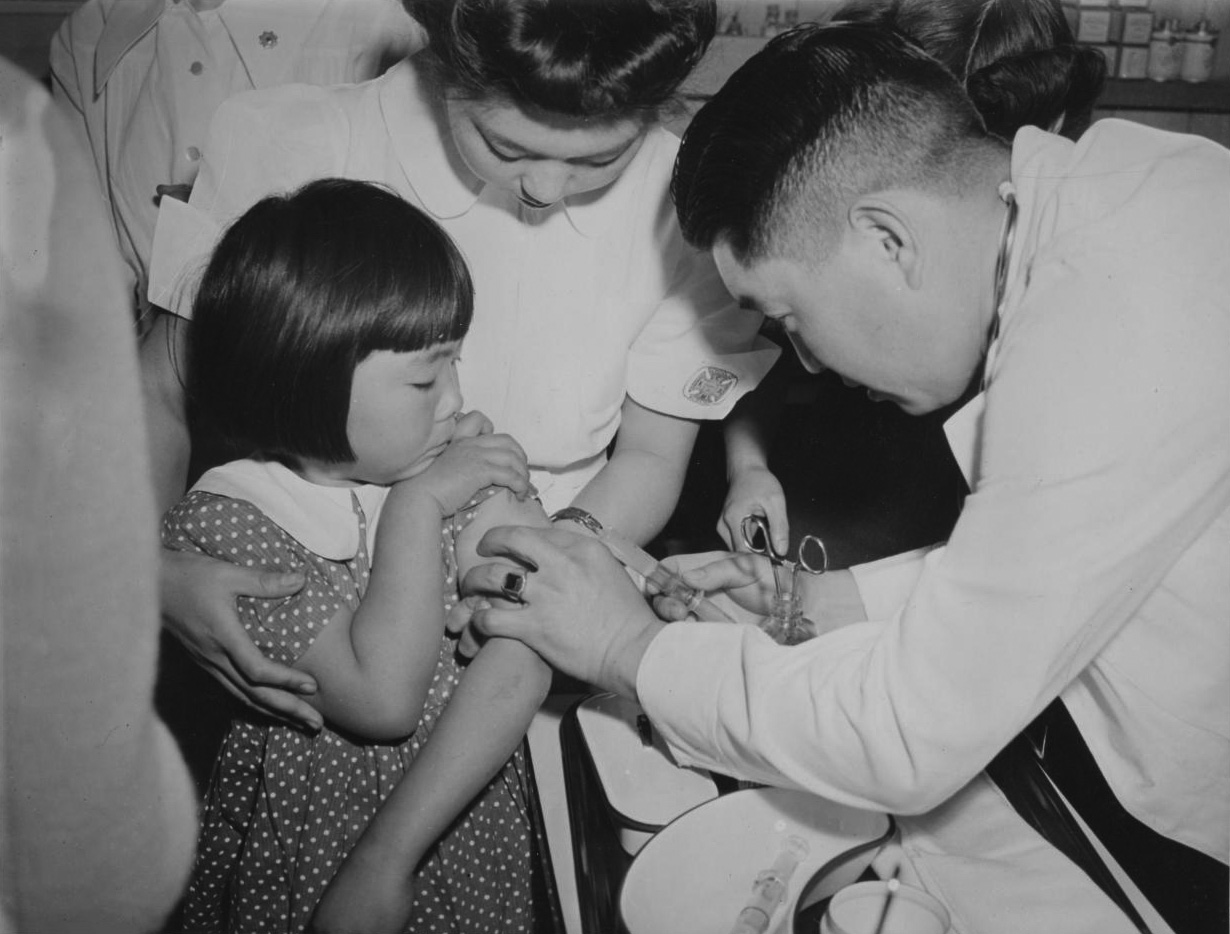 Newcomers getting vaccinated at Manzanar - 1942 (Photograph courtesy of Calisphere) (Photographer Clem Albers) |
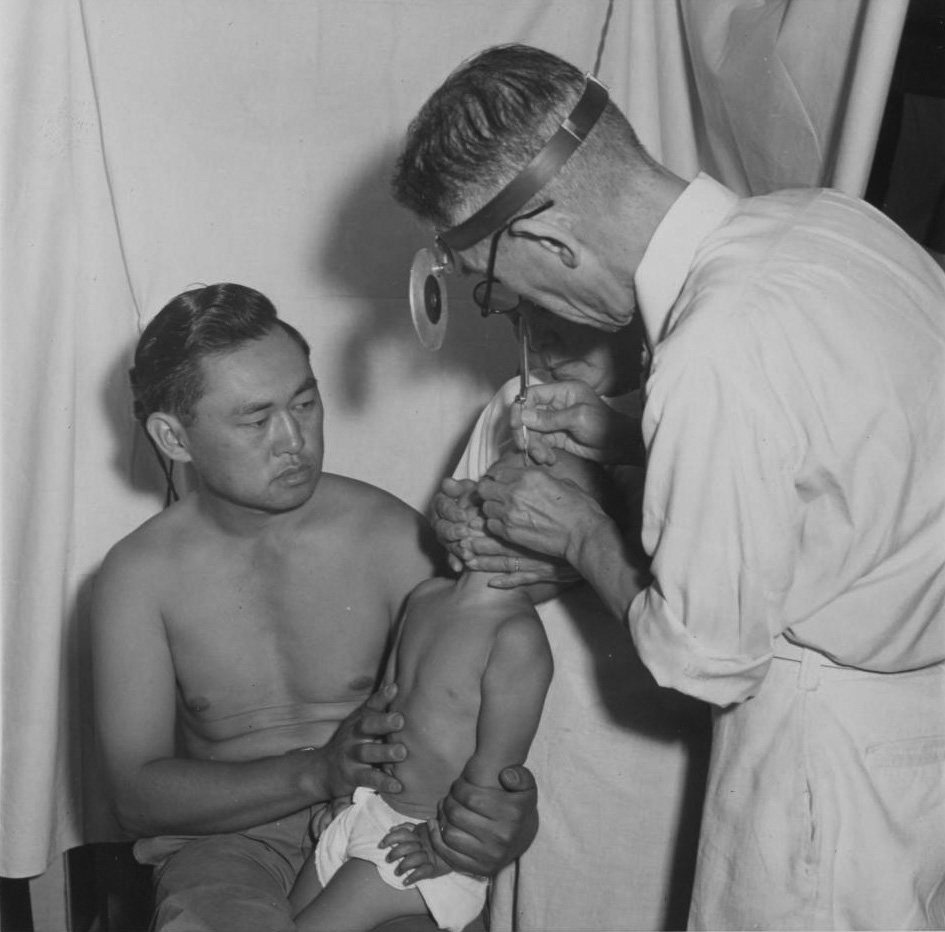
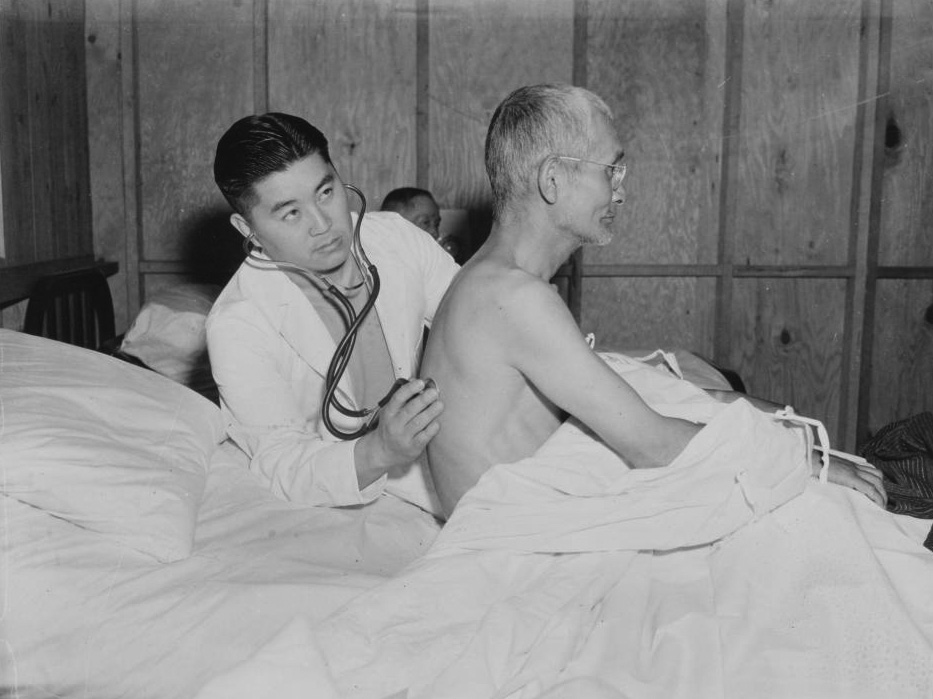 Dr. James Goto with patient at Manzanar - 1942 (Photograph courtesy of Calisphere) (Photographer Clem Albers) |
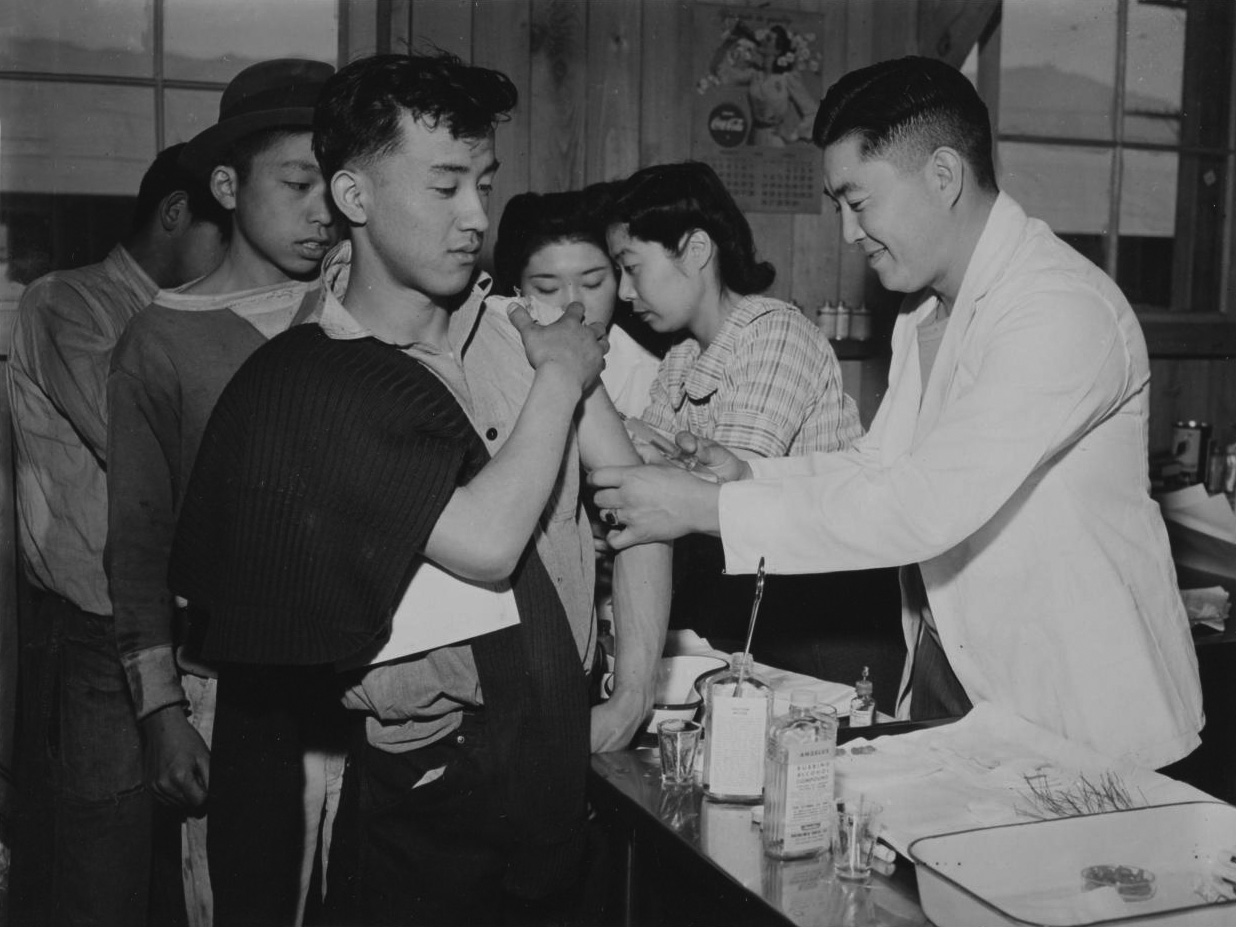 Newcomers getting vaccinated at Manzanar - 1942 (Photograph courtesy of Calisphere) (Photographer Clem Albers) |
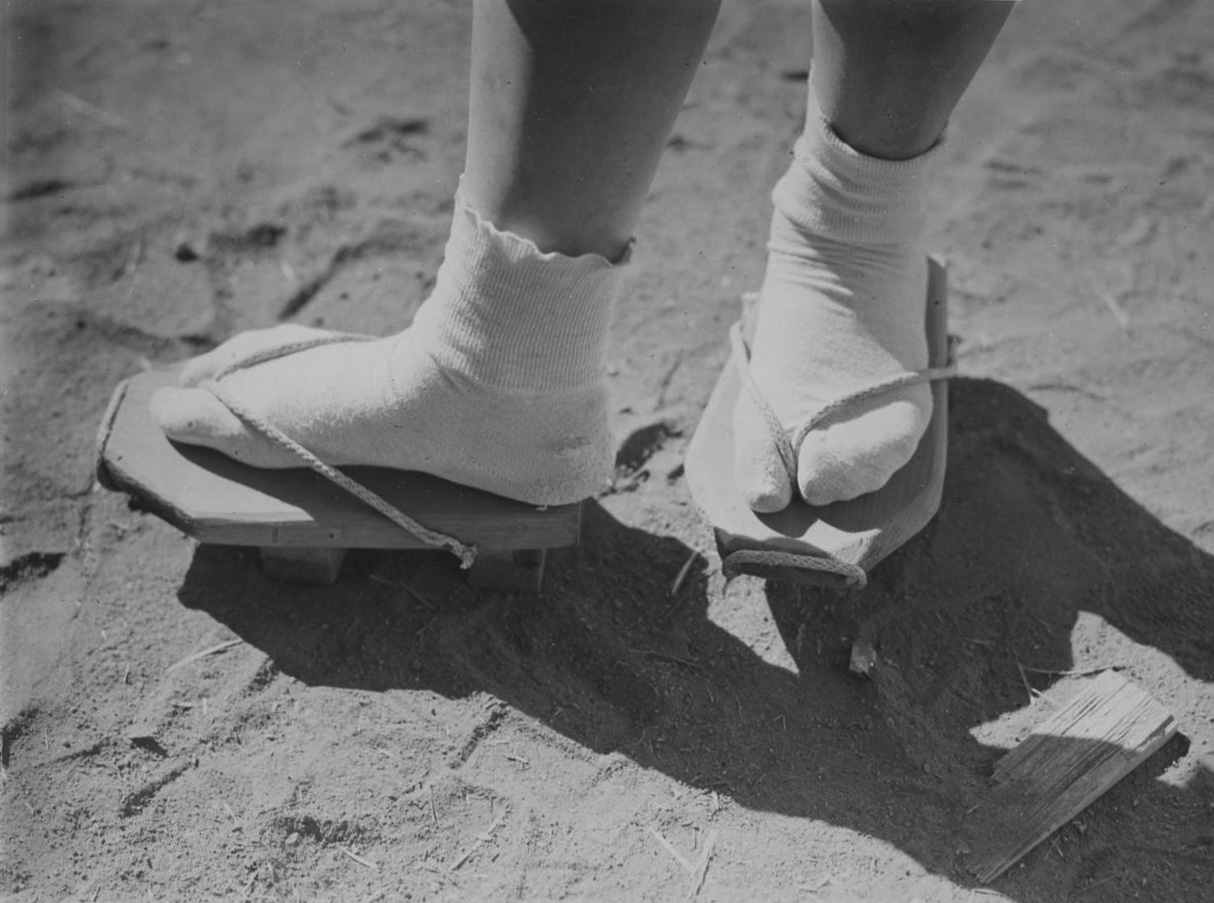 Geta (stilt-like sandals) - 1942 (Photograph courtesy of Calisphere) (Photographer Clem Albers) |
11/23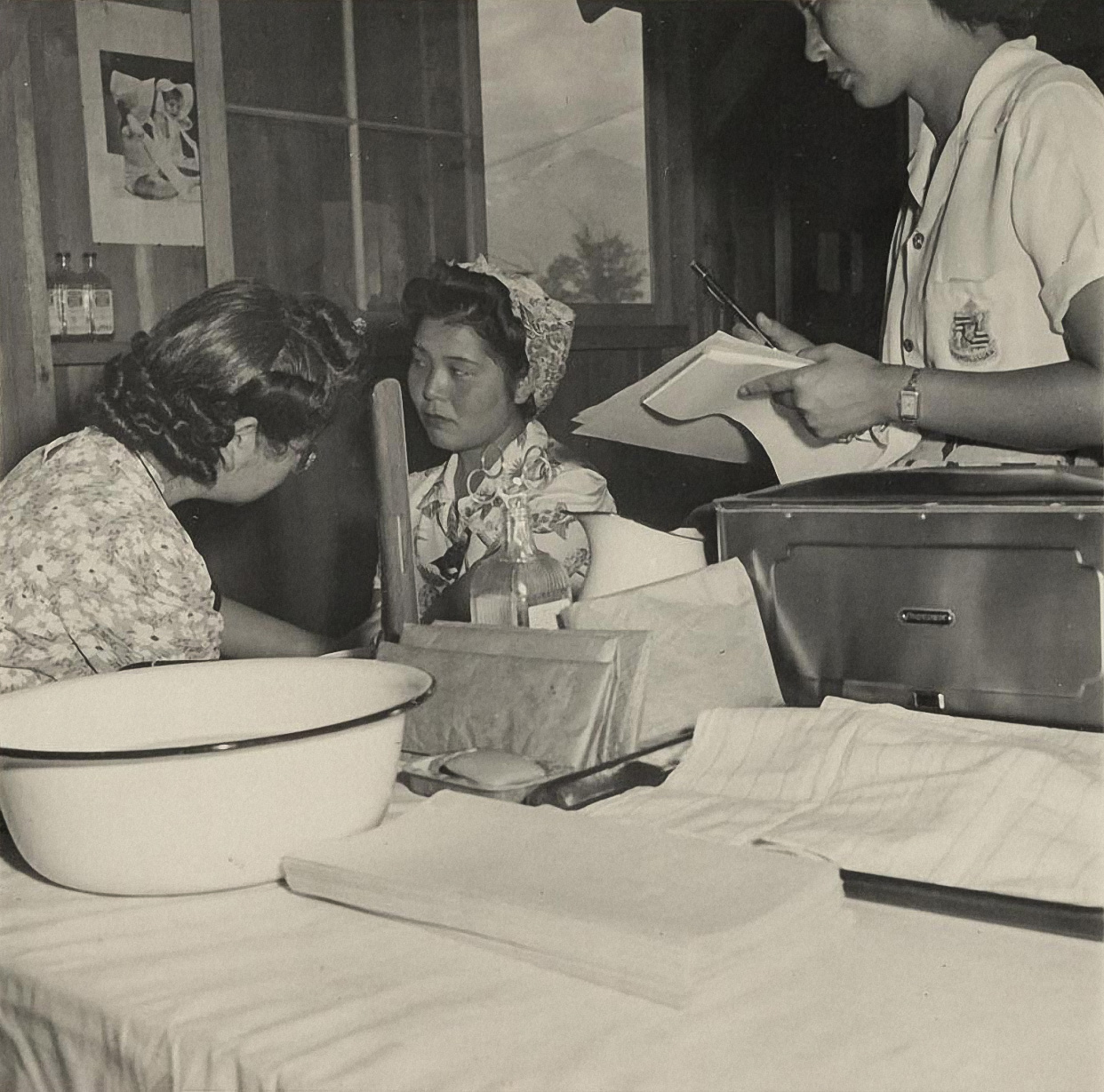 Young expectant mother receives check-up from her doctor in the midical clinic. (Dorthea Lange photo courtesy of Online Archive of California) |
11/23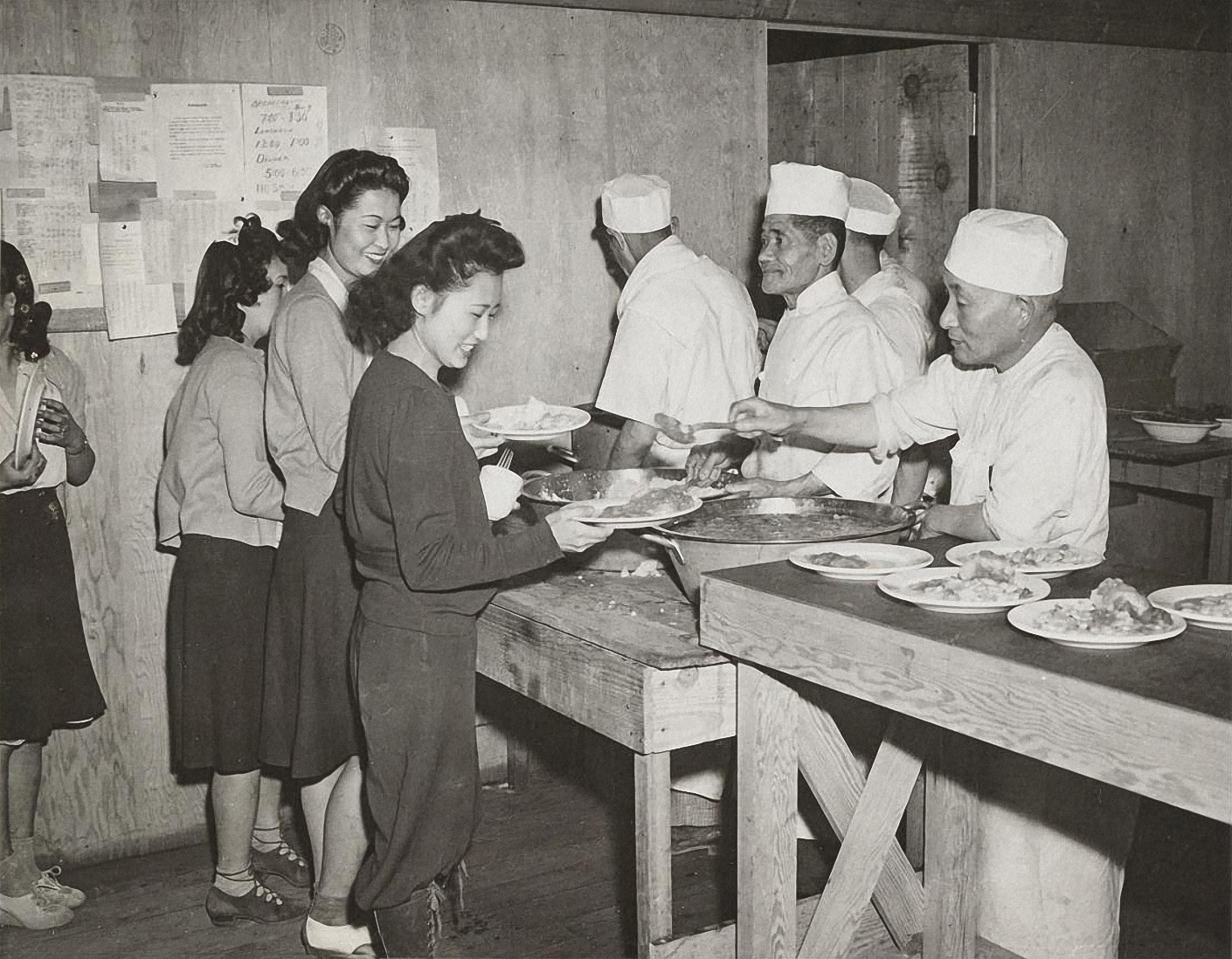 Mealtime shortly after arrival in April, 1942 (Clem Albers photo courtesy of Online Archive of California) |
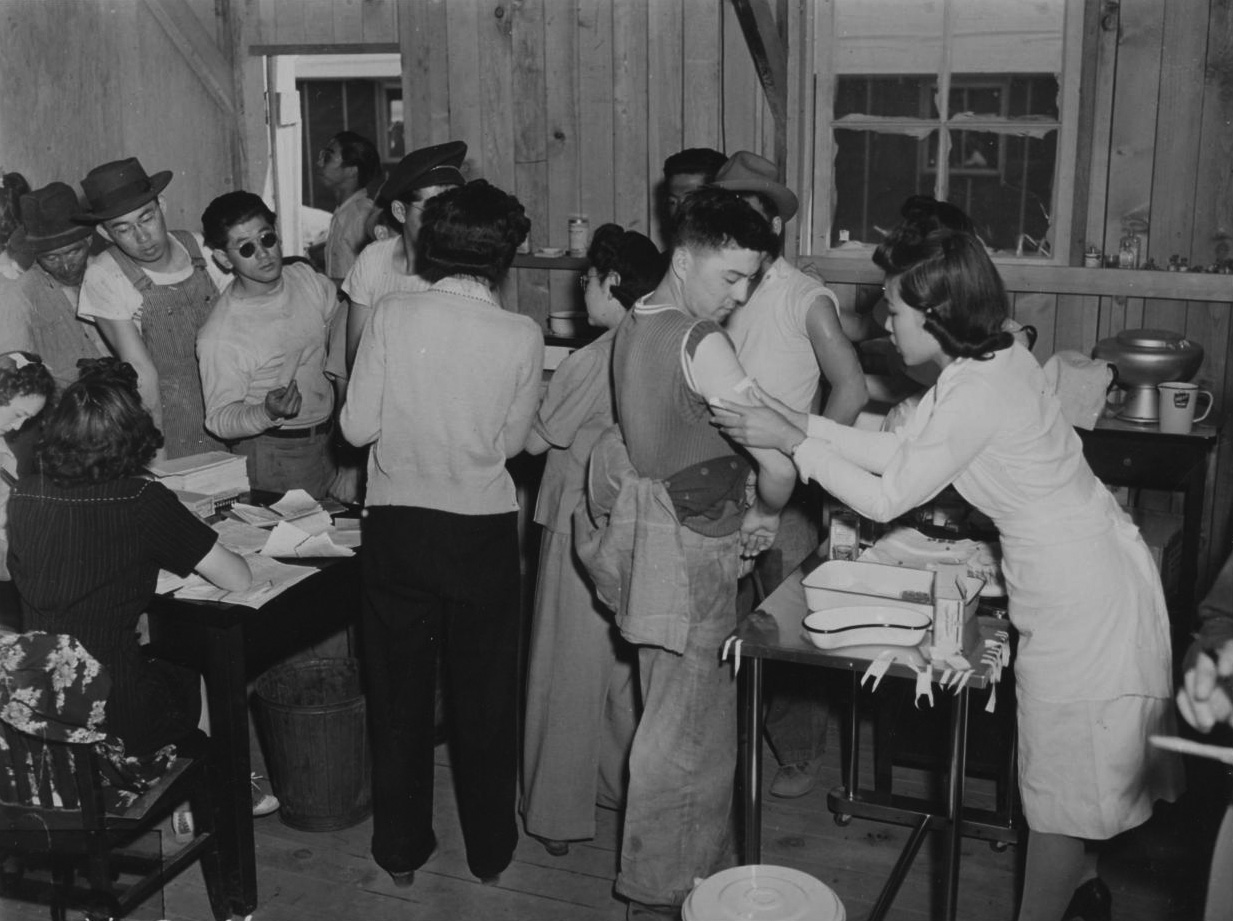 Newcomers getting vaccinated at Manzanar - 1942 (Photograph courtesy of Calisphere) (Photographer Clem Albers) |
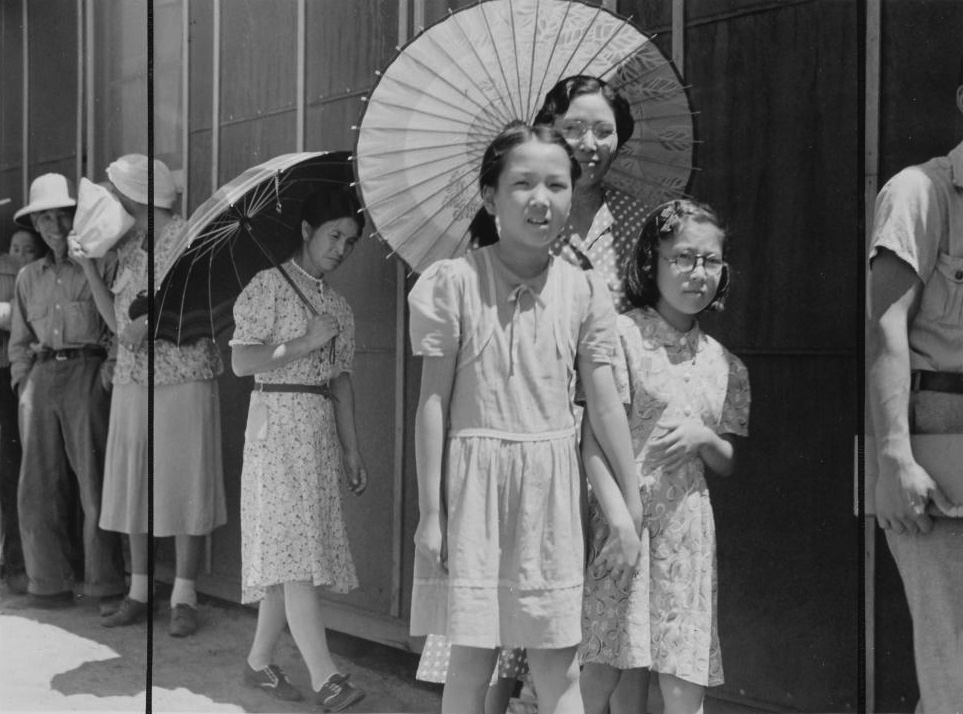 Lining up outside of the mess hall at Manzanar - 1942 (Photograph courtesy of Calisphere) (Photographer Dorothea Lange) |
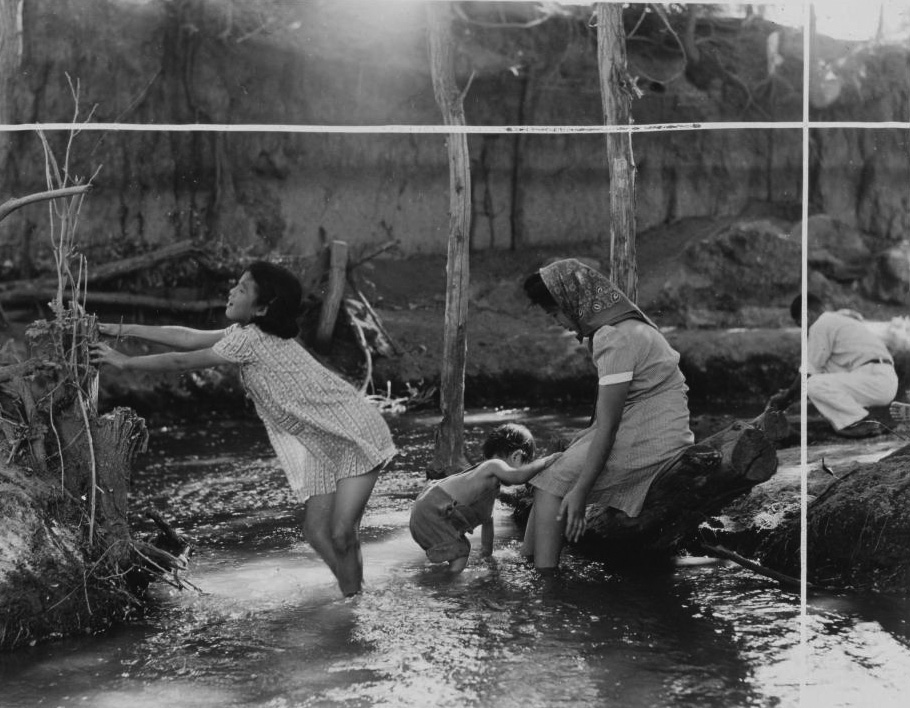 Swimming in the creek which flows by internment facility at Manzanar. - 1942 (Photograph courtesy of Calisphere) (Photographer Dorothea Lange) |
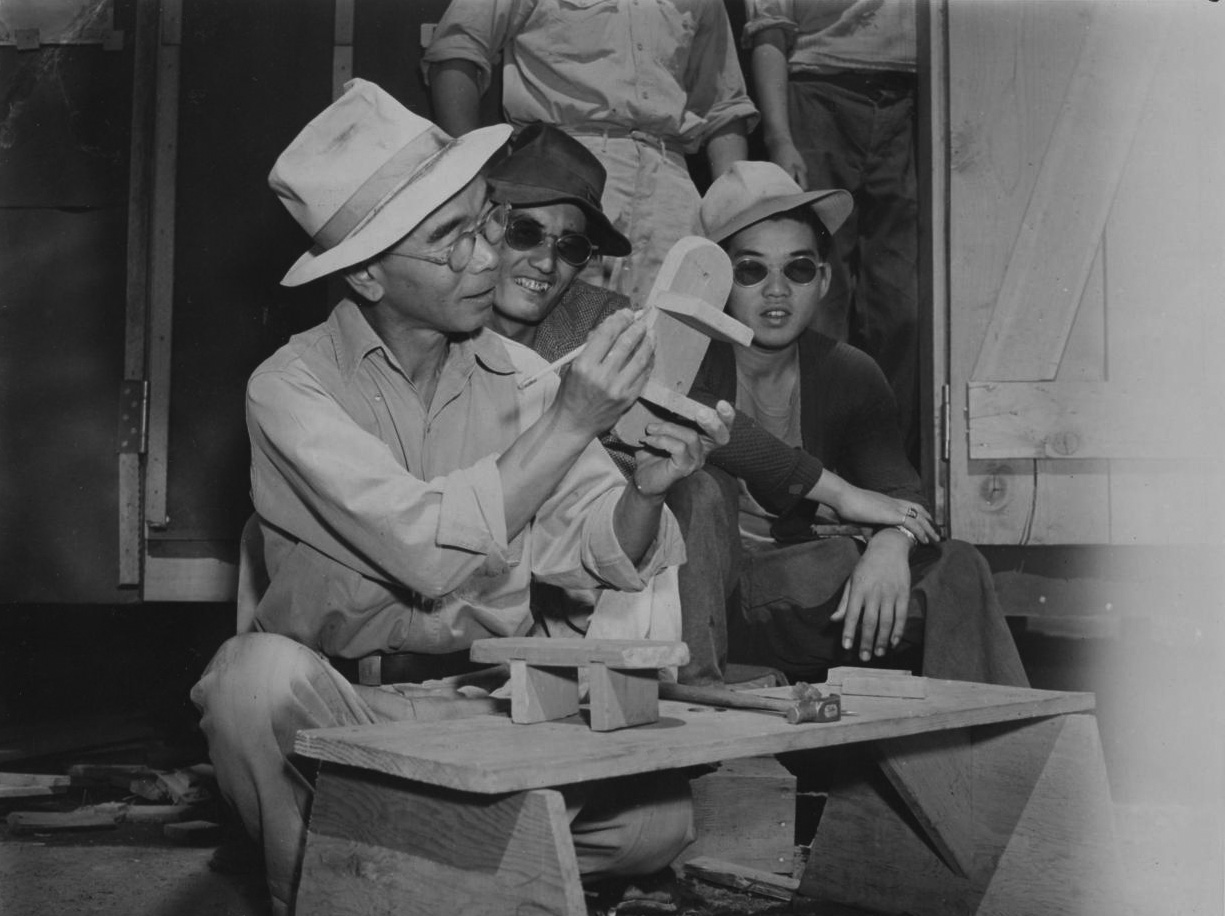 Making geta at Manzanar - 1942 (Photograph courtesy of Calisphere) (Photographer Clem Albers) |
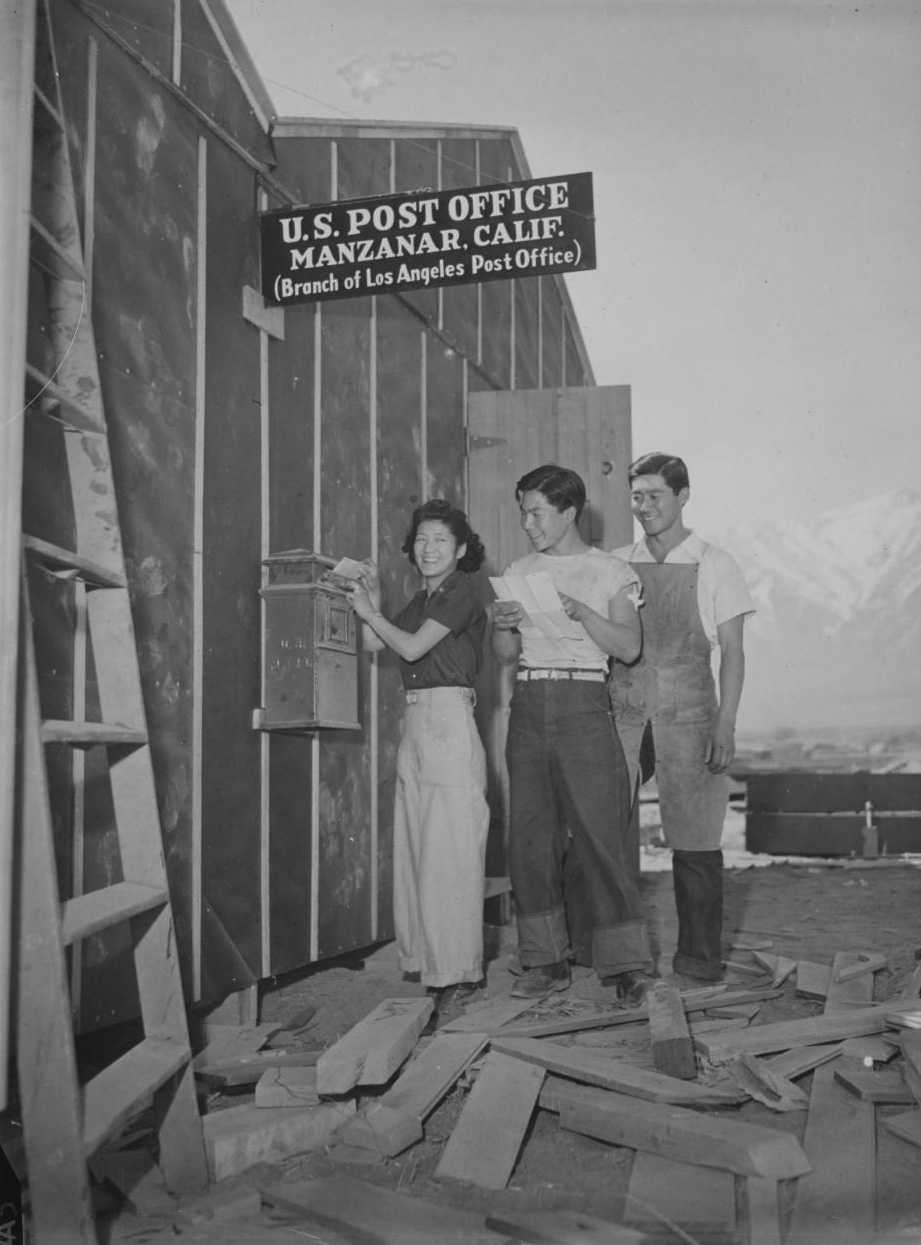 Depositing mail at the Manzanar post office - 1942 (Photograph courtesy of Calisphere) |
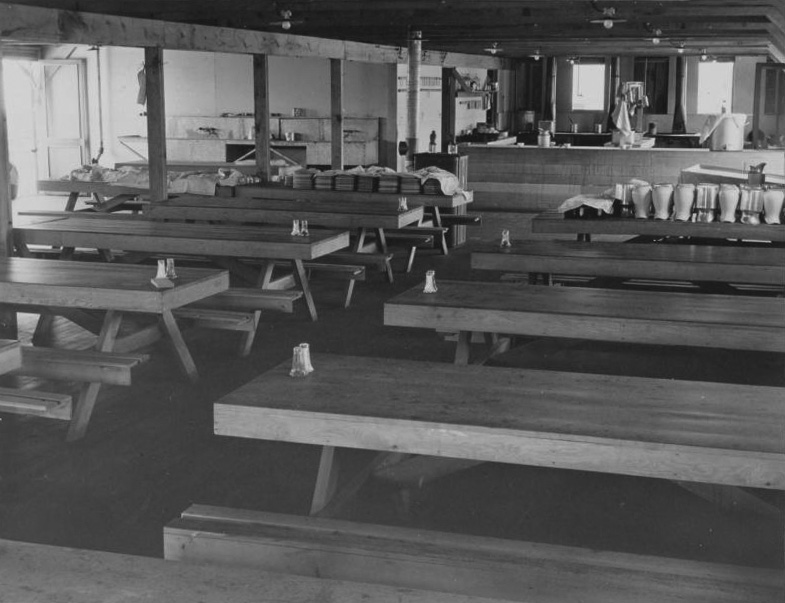 Manzanar Mess Hall - 1942 (Photograph courtesy of Calisphere) |
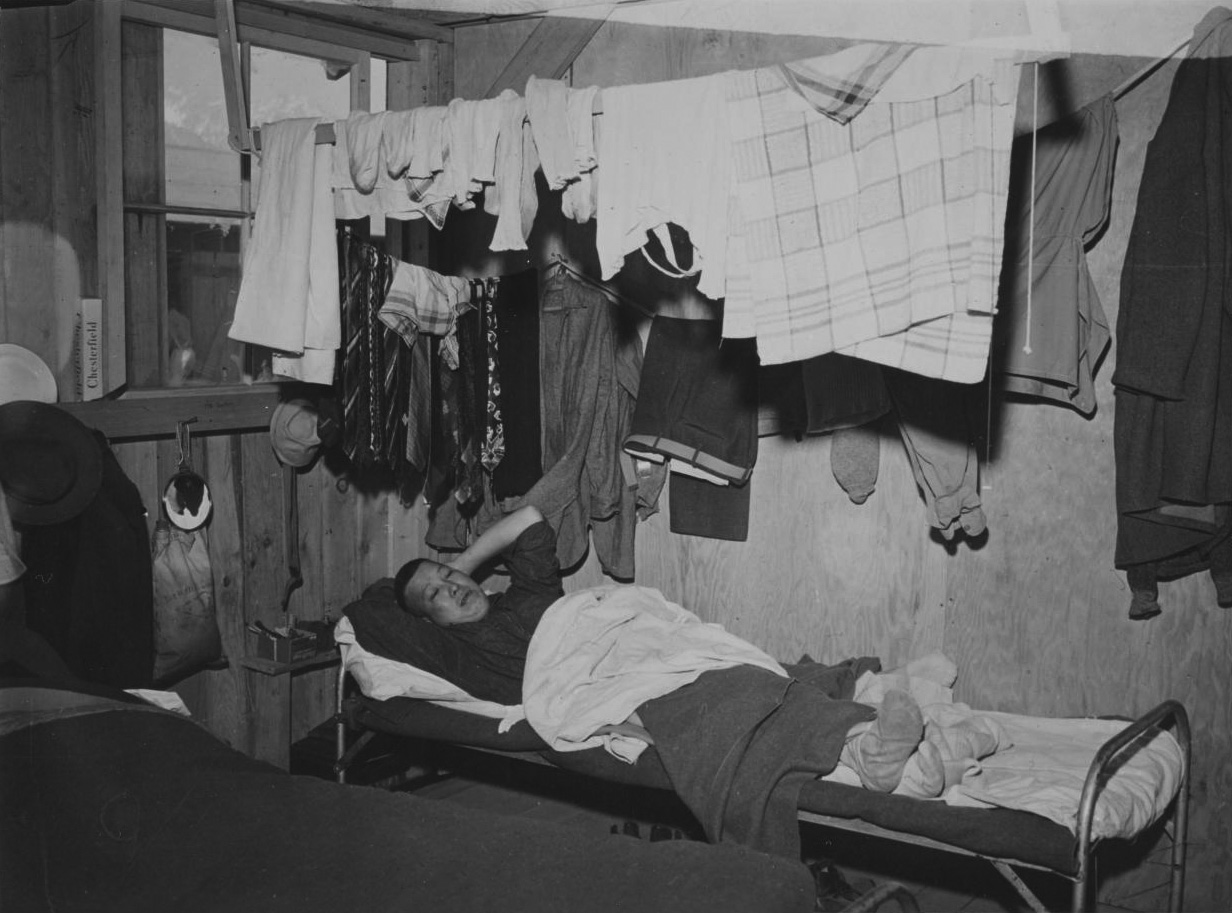 Evacuee resting on his cot in the barracks - 1942 (Photograph courtesy of Calisphere) (Photographer Clem Albers) |
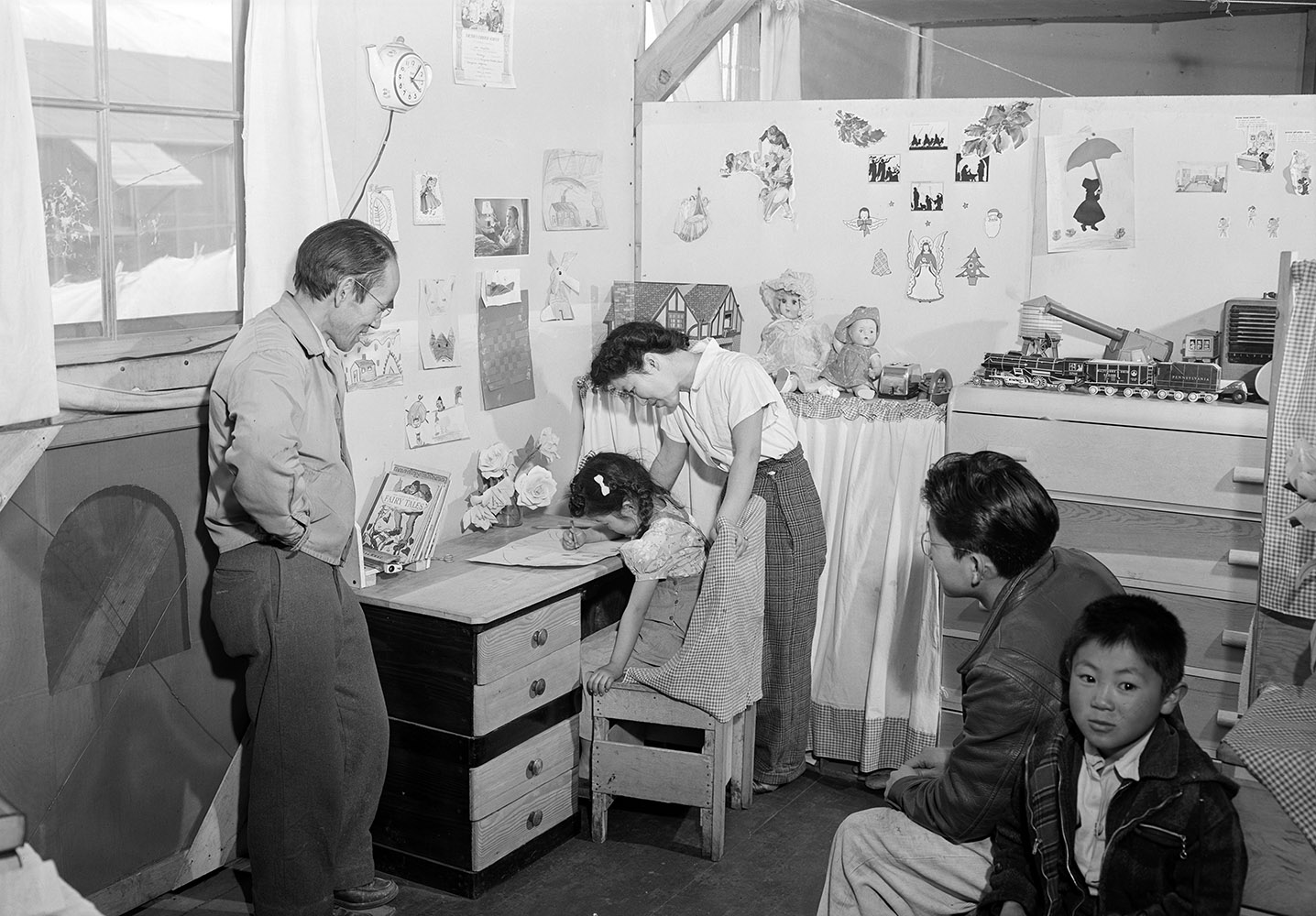 Tojo Miatake [i.e. T?y? Miyatake] Family (Photograph courtesy of Library of Congress) (Photographer Ansel Adams) |
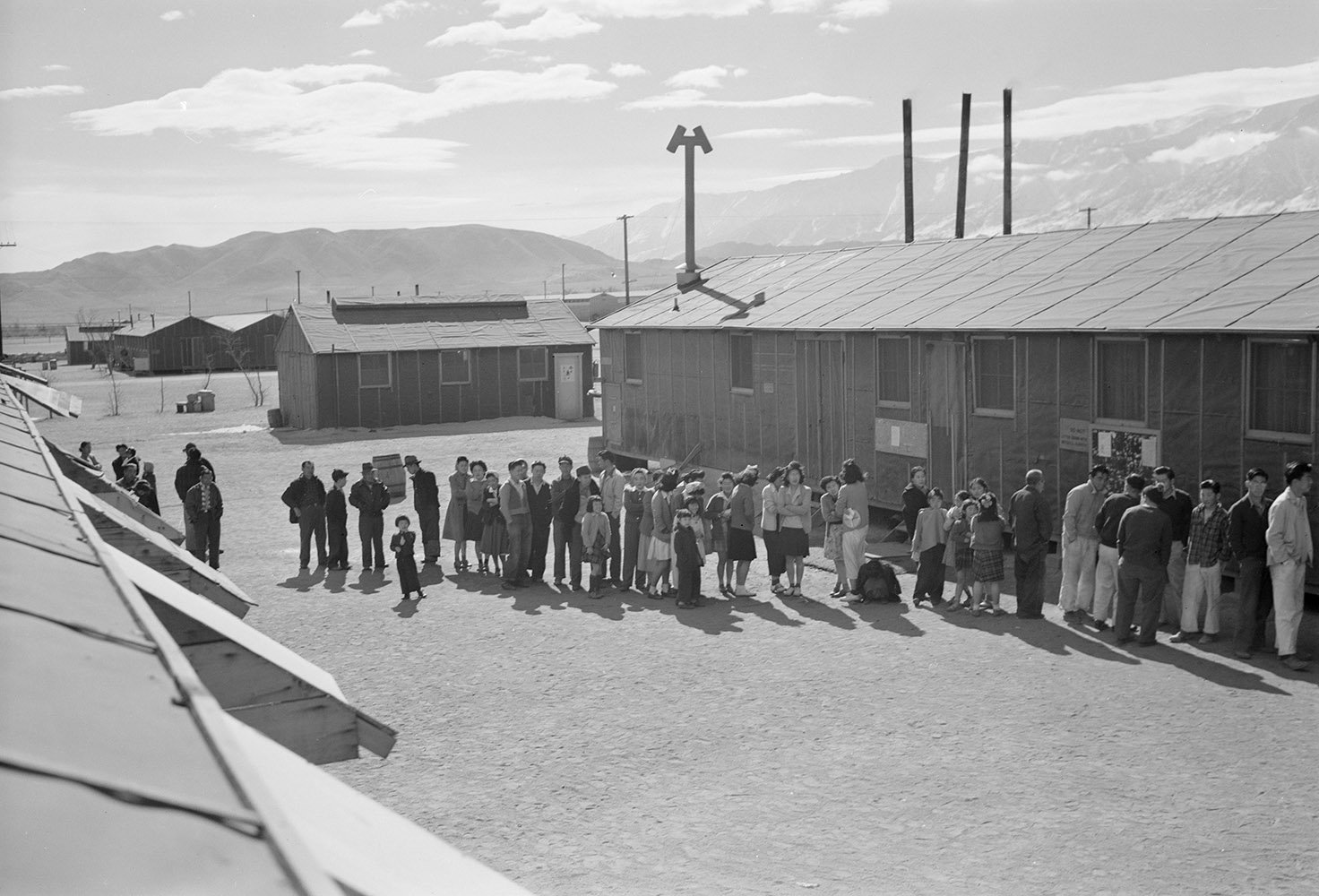 Mess Line: Noon at Manzanar (Photograph courtesy of Library of Congress) (Photographer Ansel Adams) |
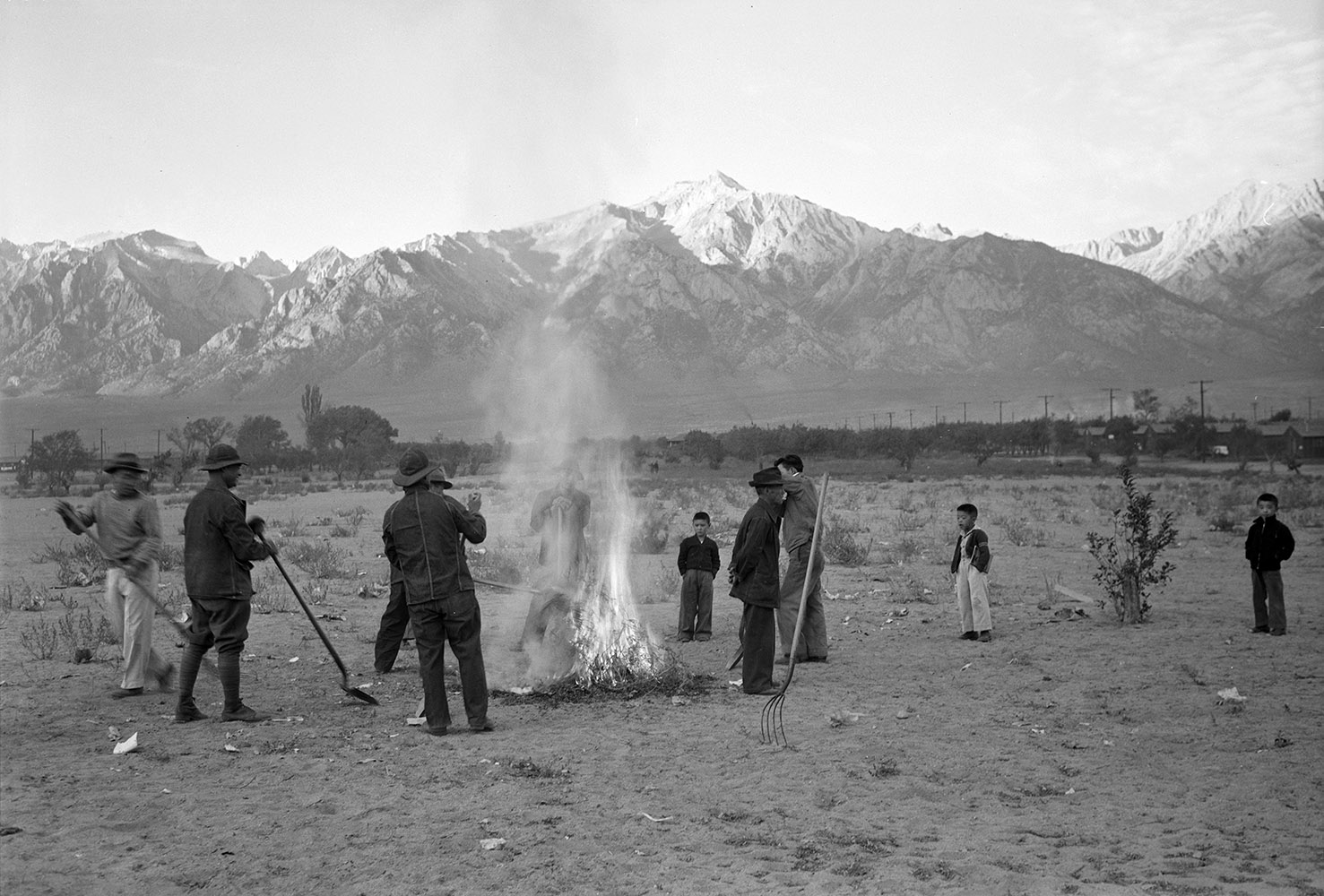 Burning leaves - Autumn dawn (Photograph courtesy of Library of Congress) (Photographer Ansel Adams) |
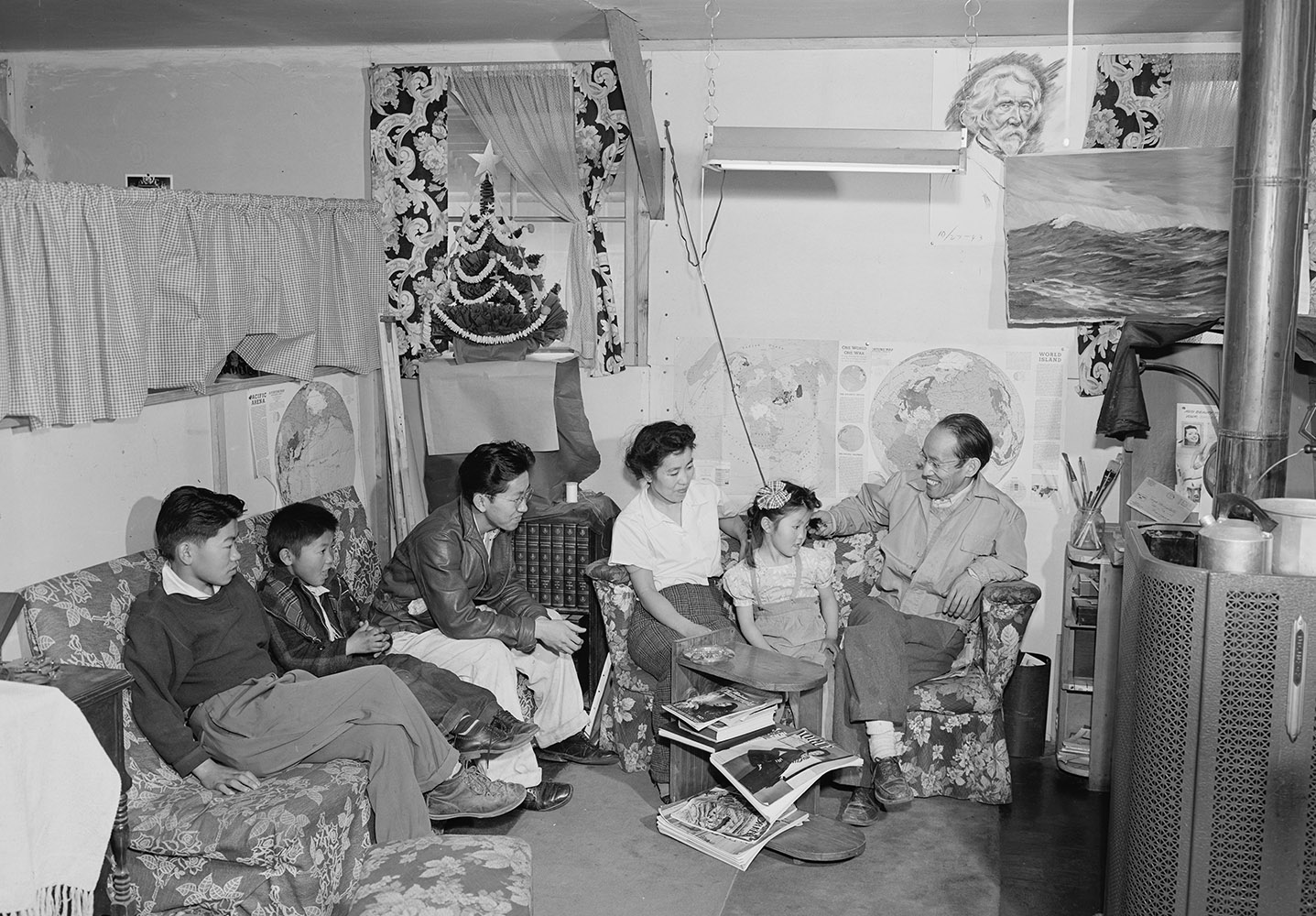 Toyo Miyatake Family (Photograph courtesy of Library of Congress) (Photographer Ansel Adams) |
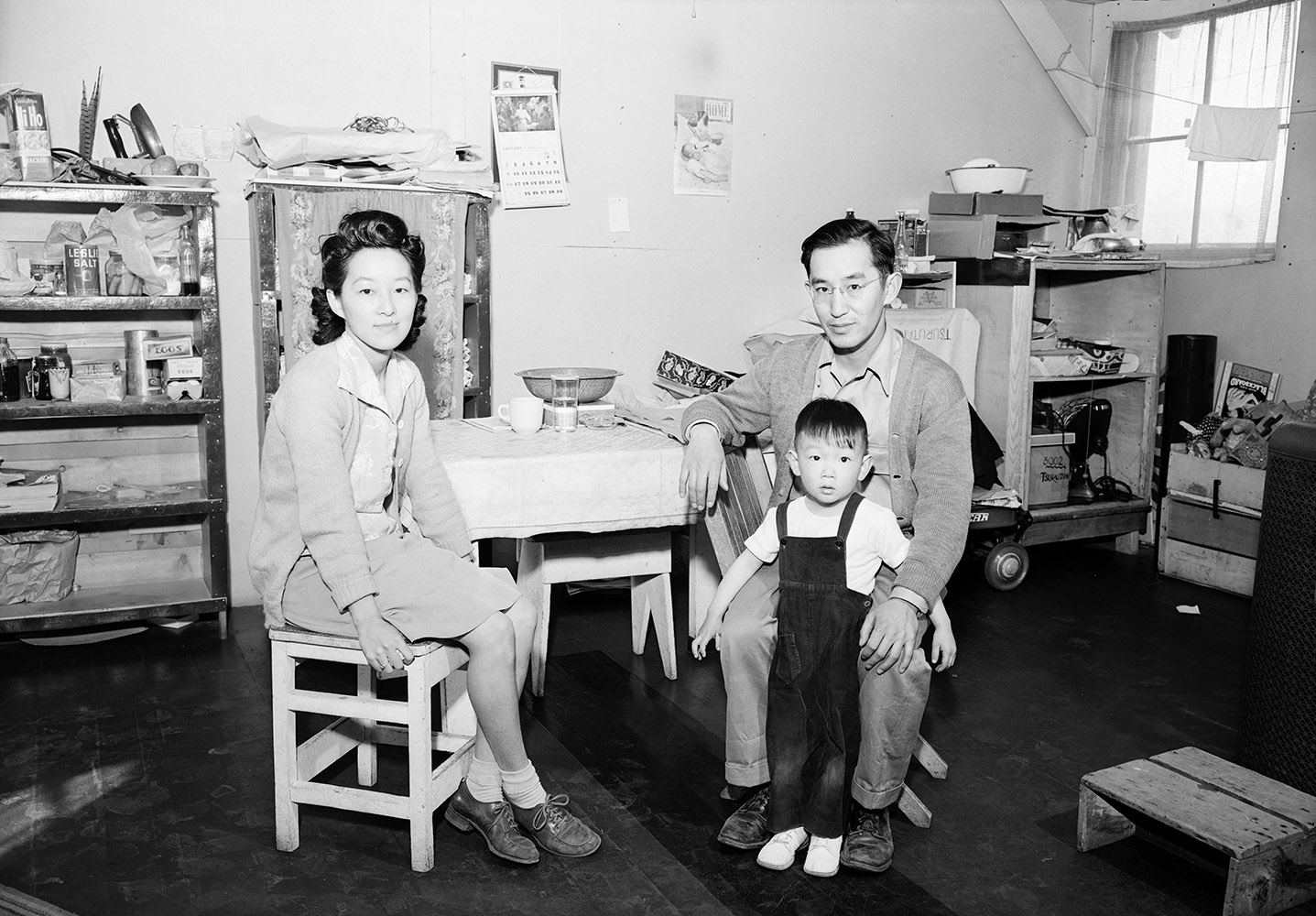 Mr. & Mrs. Henry J. Tsurutani and baby Bruce (Photograph courtesy of Library of Congress) (Photographer Ansel Adams) |
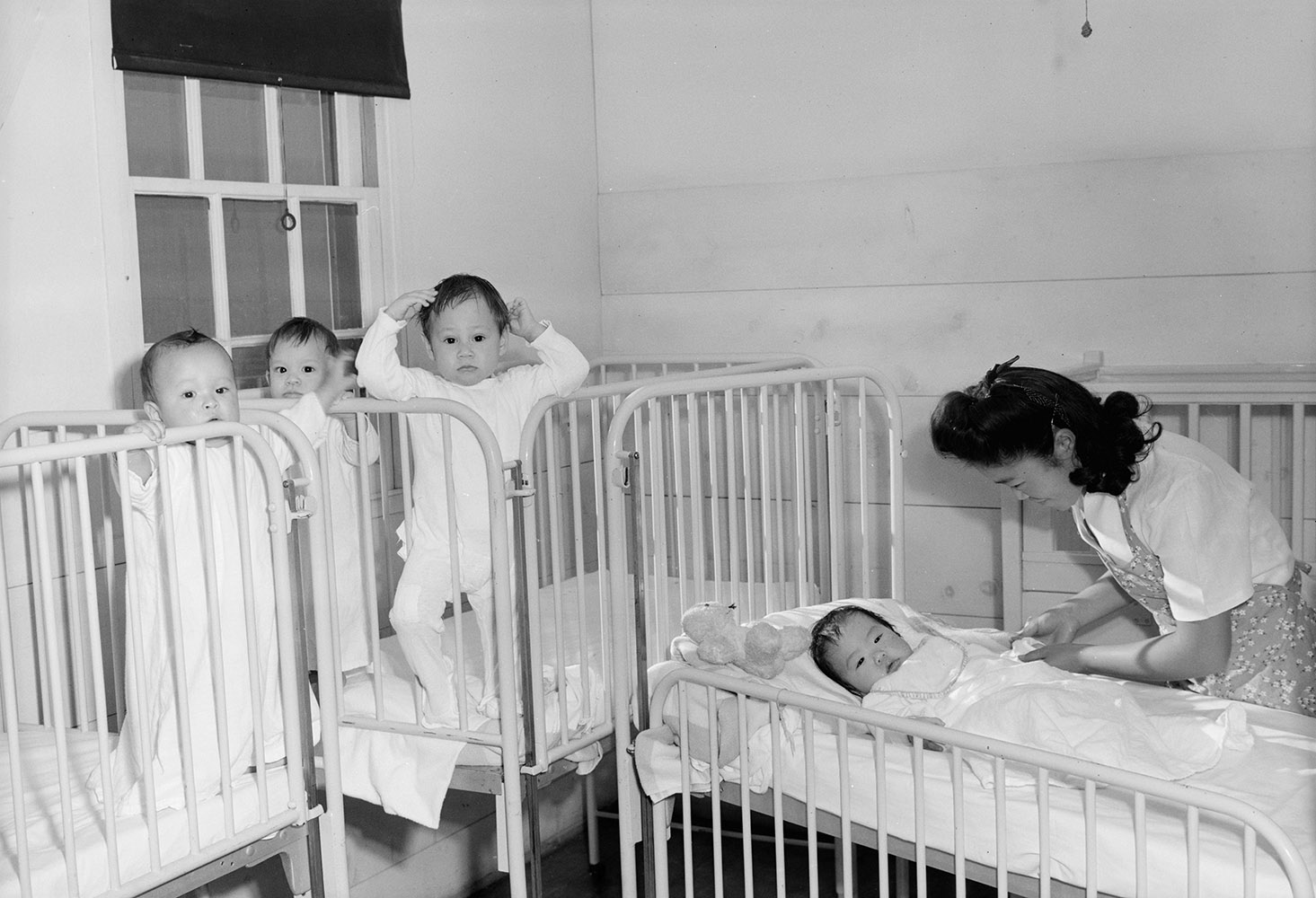 Nursery (Photograph courtesy of Library of Congress) (Photographer Ansel Adams) |
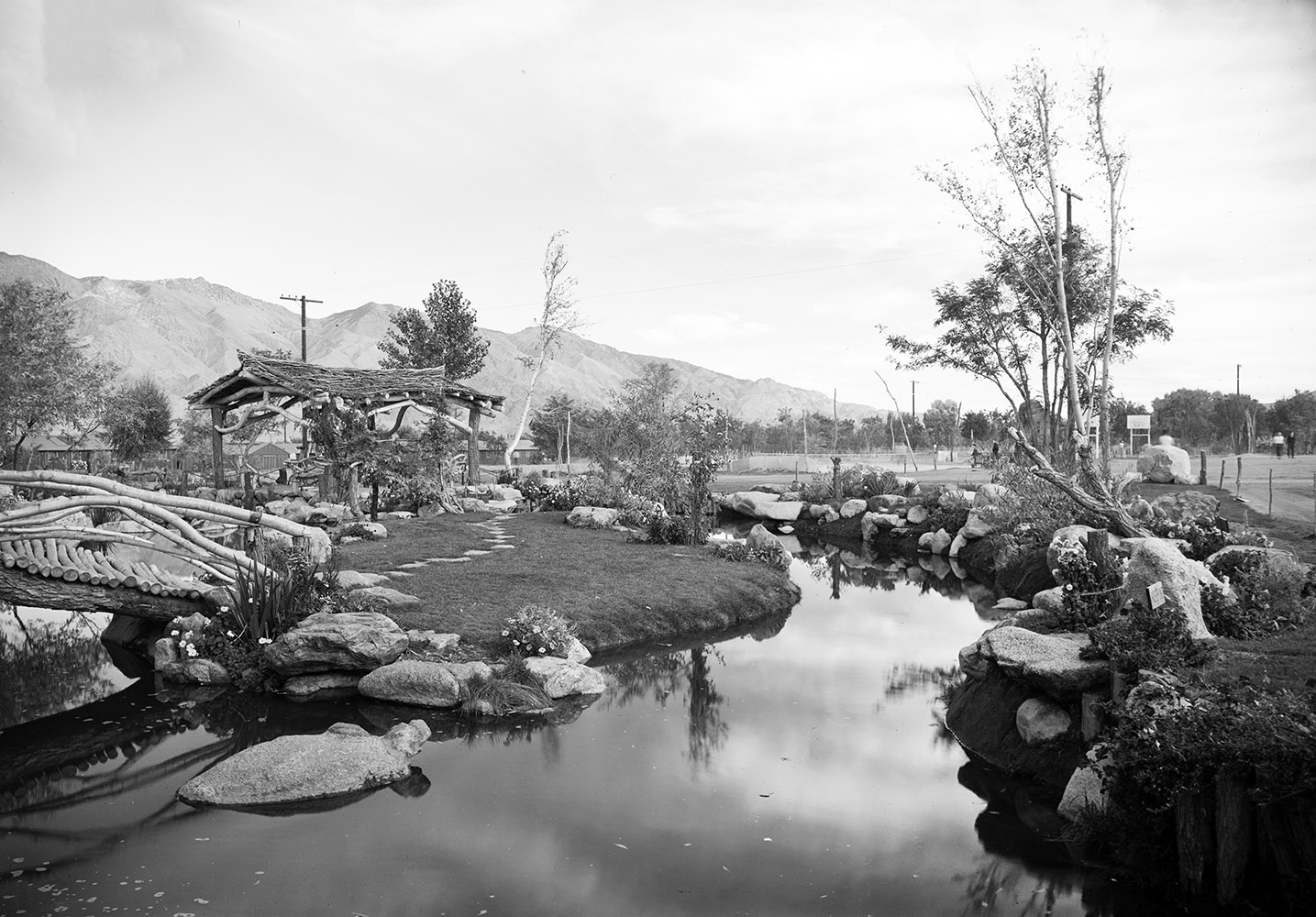 Pool in Pleasure Park (Photograph courtesy of Library of Congress) (Photographer Ansel Adams) |
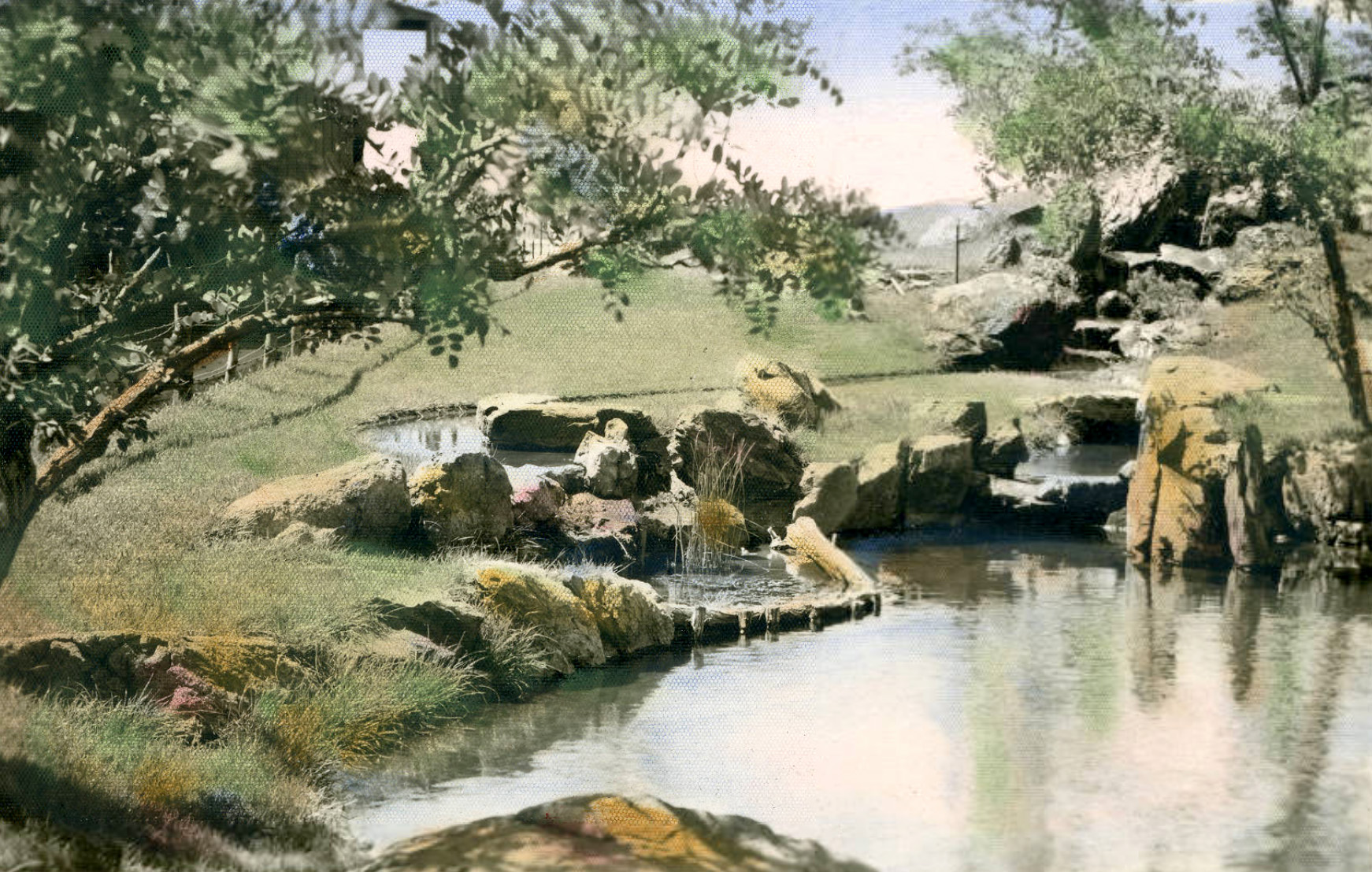 Manzanar's Merritt Park (Photograph courtesy of Calisphere) |
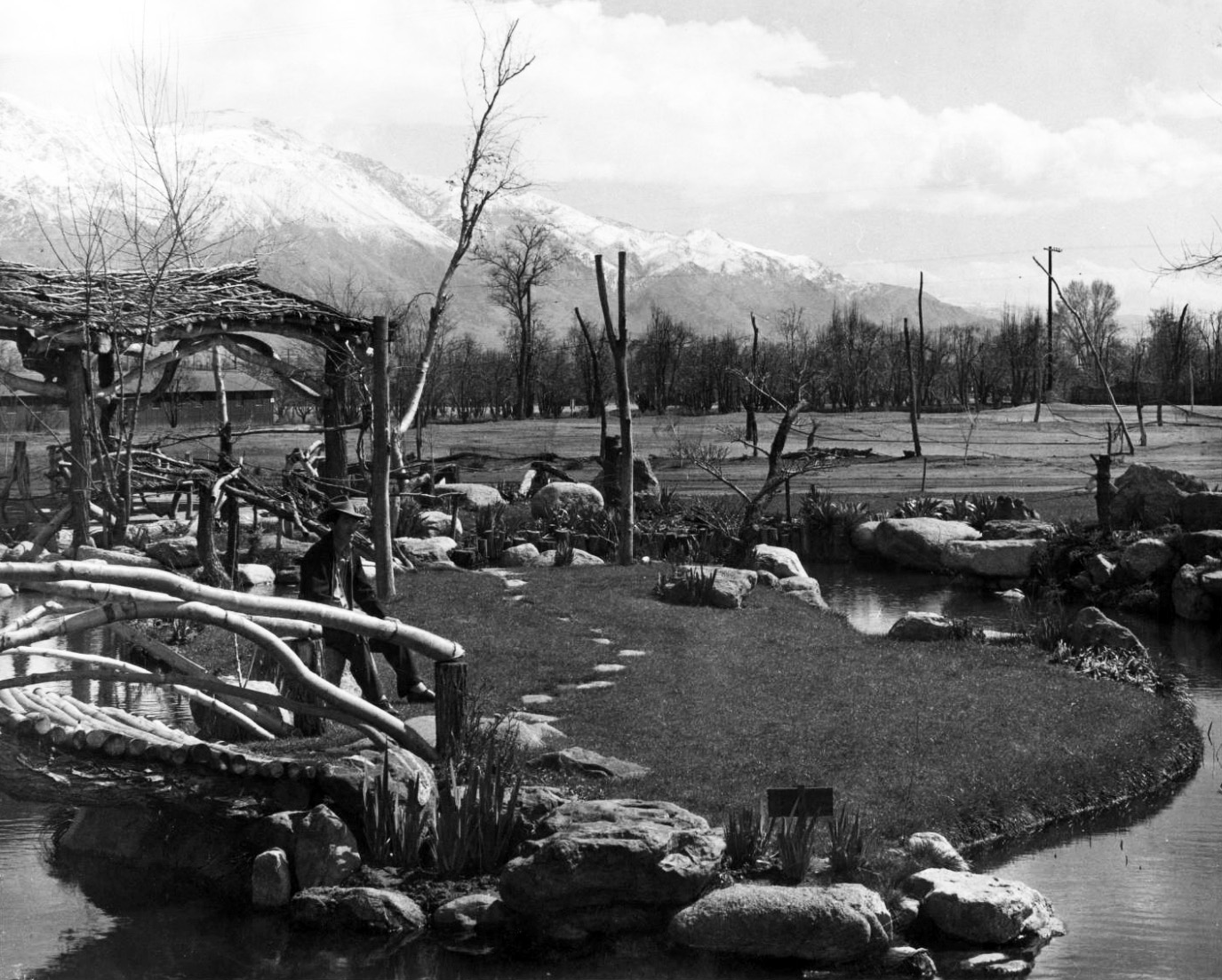 Manzanar's Merritt Park (Photograph courtesy of Calisphere) |
11/23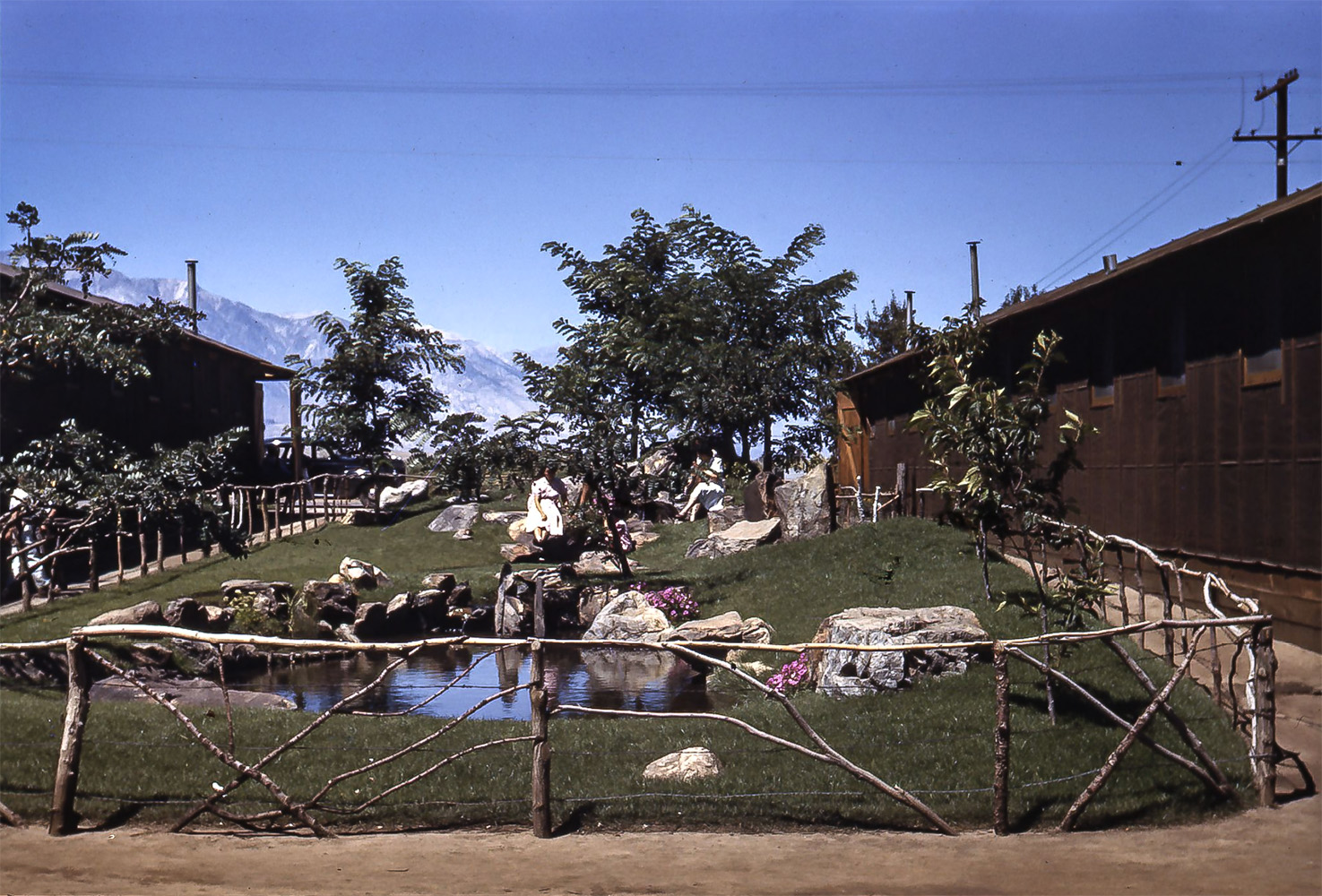 Garden at Manzanar internment camp - 1942 (Photograph courtesy of Presbyterian Historical Society) |
11/23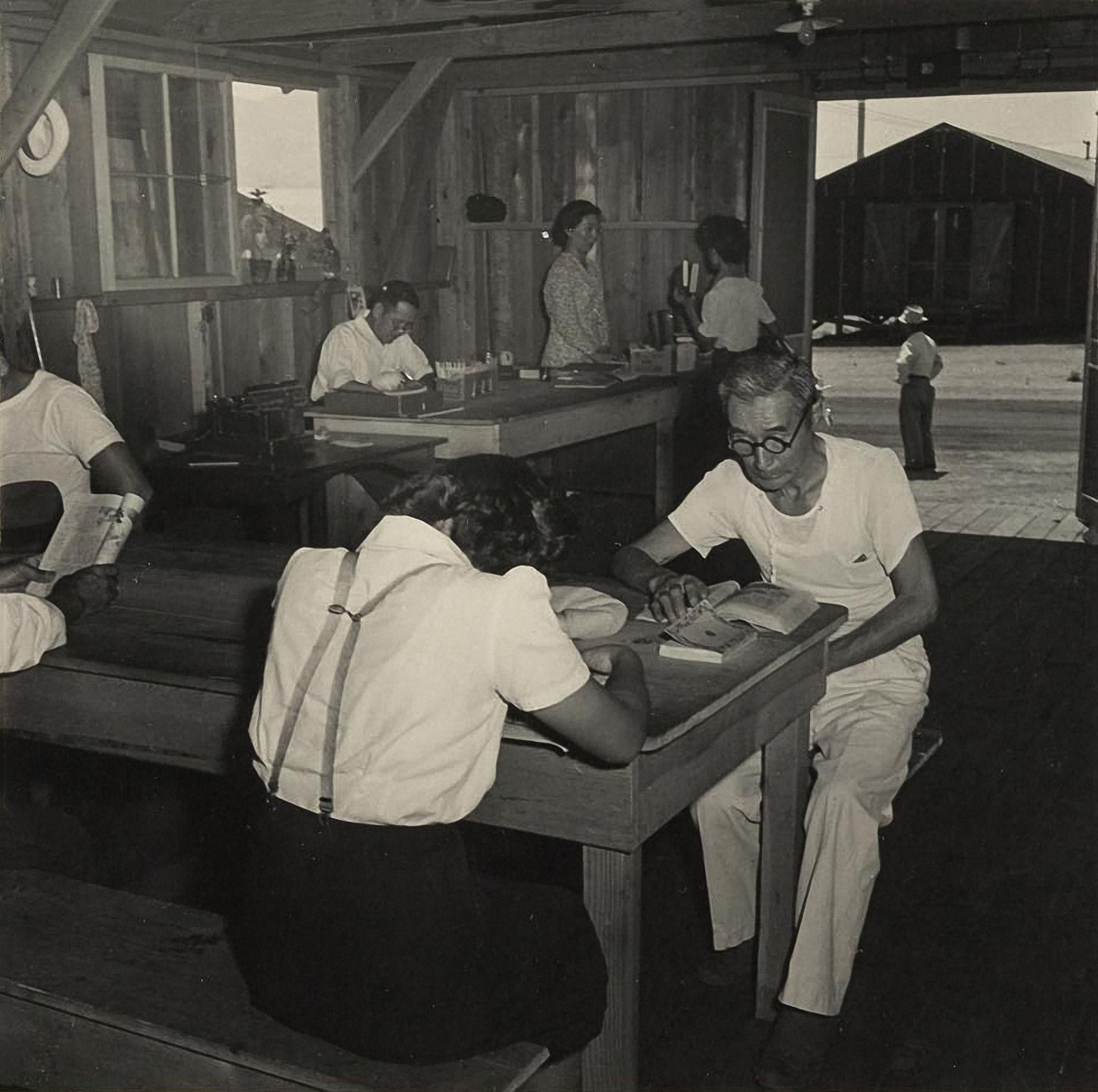 Library at Manzanar - 1942 (Dorthea Lange photograph courtesy of Online Archive of California) |
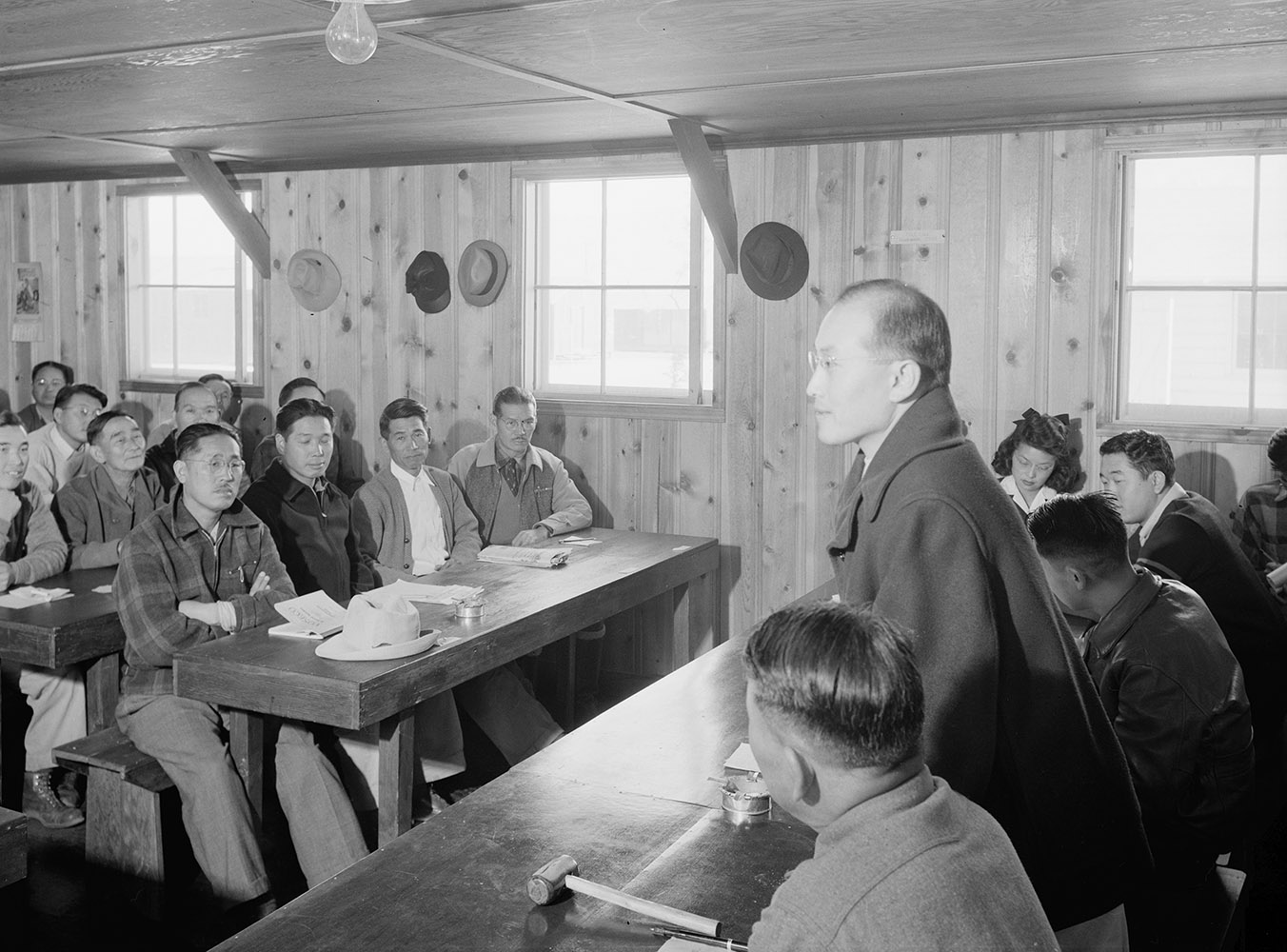 Roy Takeno conducting a Town Hall Meeting (Photograph courtesy of Library of Congress) (Photographer Ansel Adams) |
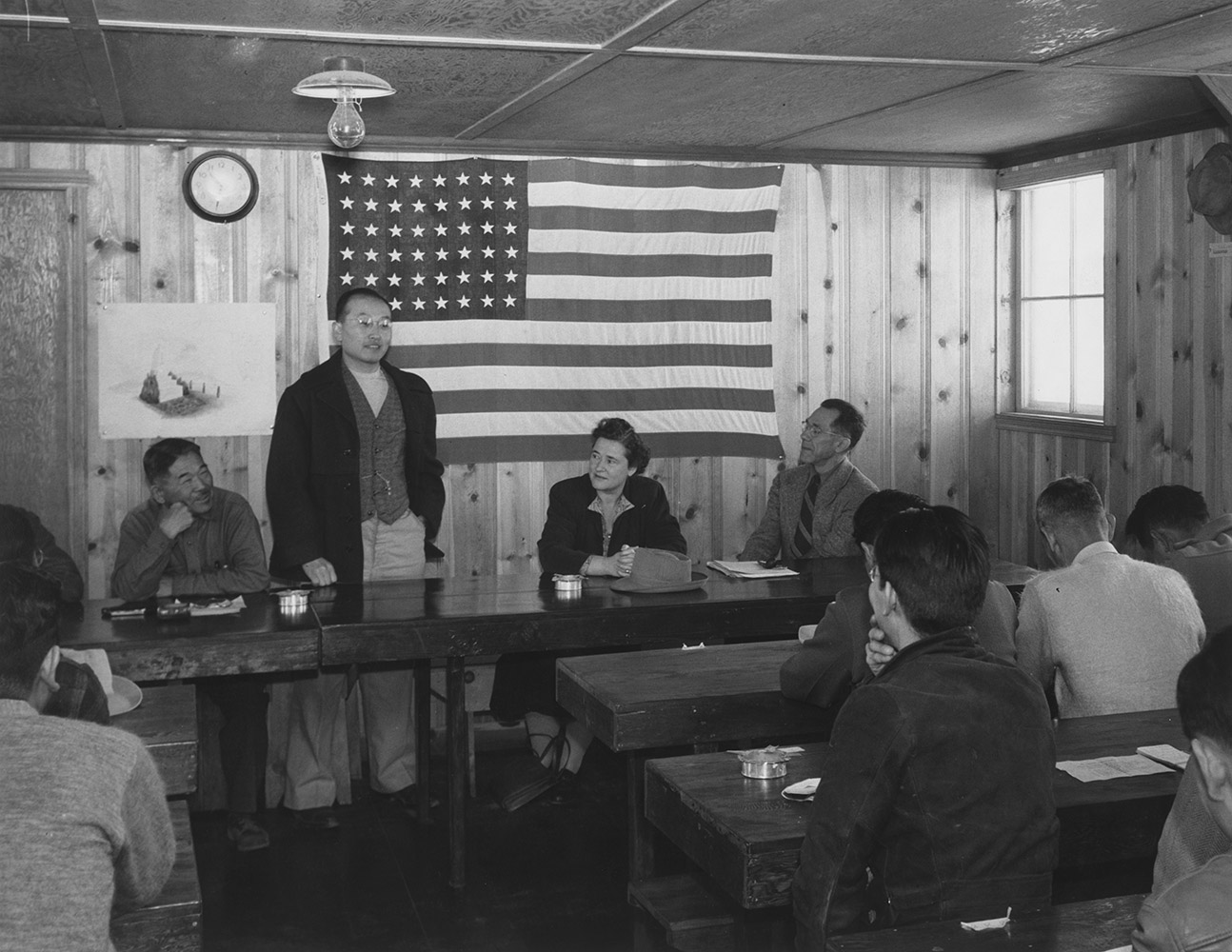 Roy Takeno conducting a Town Hall Meeting (Photograph courtesy of Library of Congress) (Photographer Ansel Adams) |
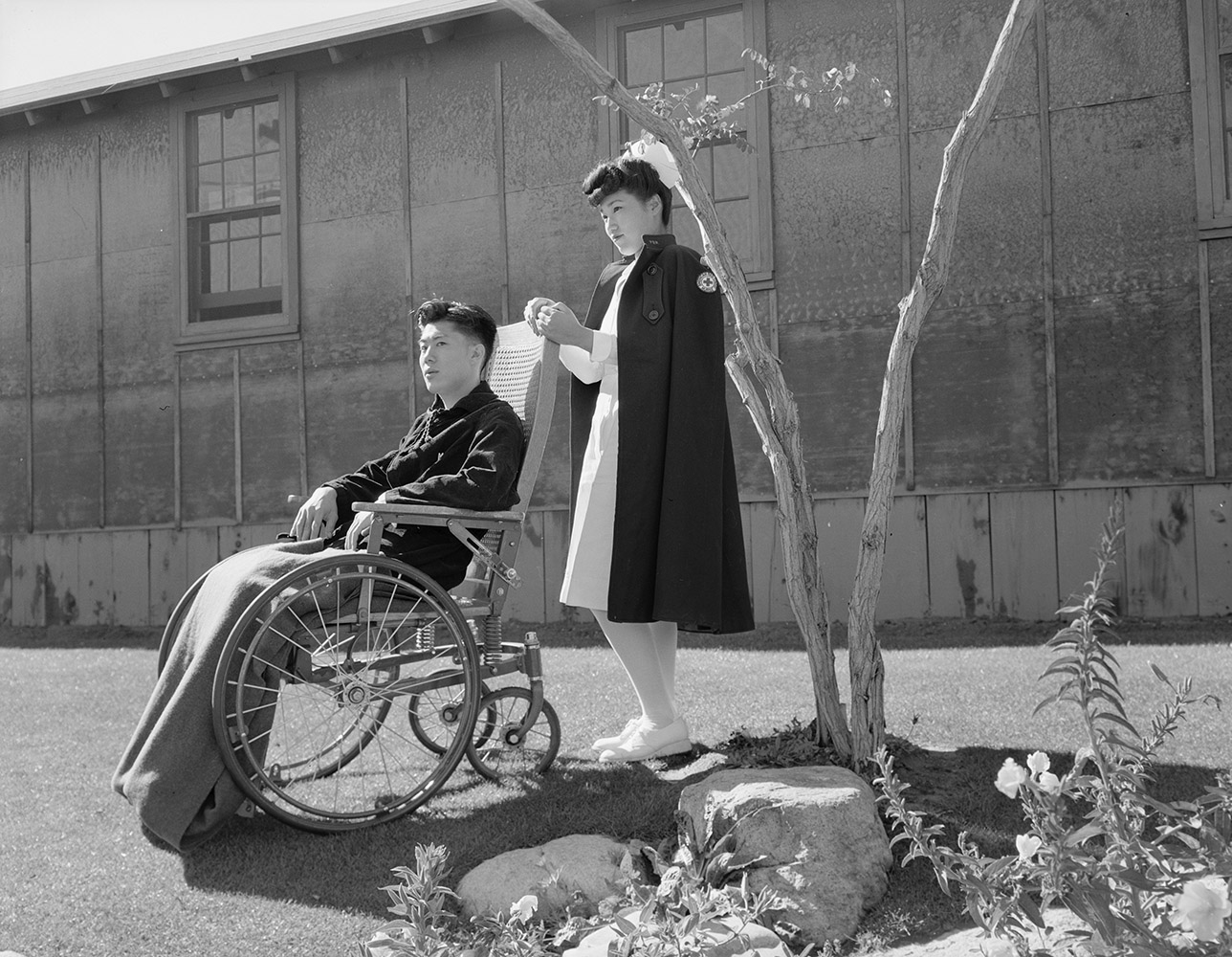 Nurse Aiko Hamaguchi and patient Tom Kano (Photograph courtesy of Library of Congress) (Photographer Ansel Adams) |
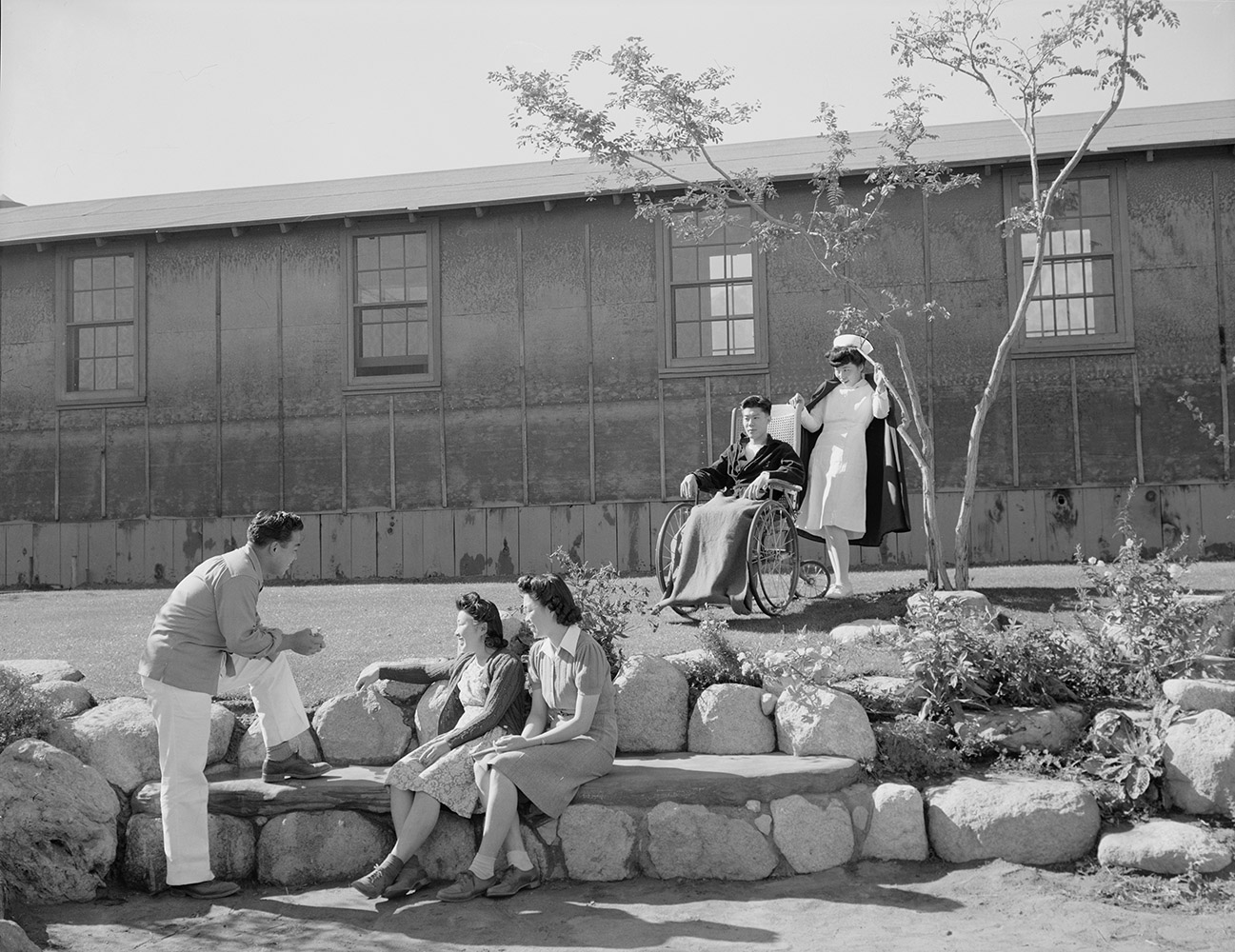 Nurse Aiko Hamaguchi and patient Tom Kano Others: George Nakano, Keiko Kamahara (Photograph courtesy of Library of Congress) (Photographer Ansel Adams) |
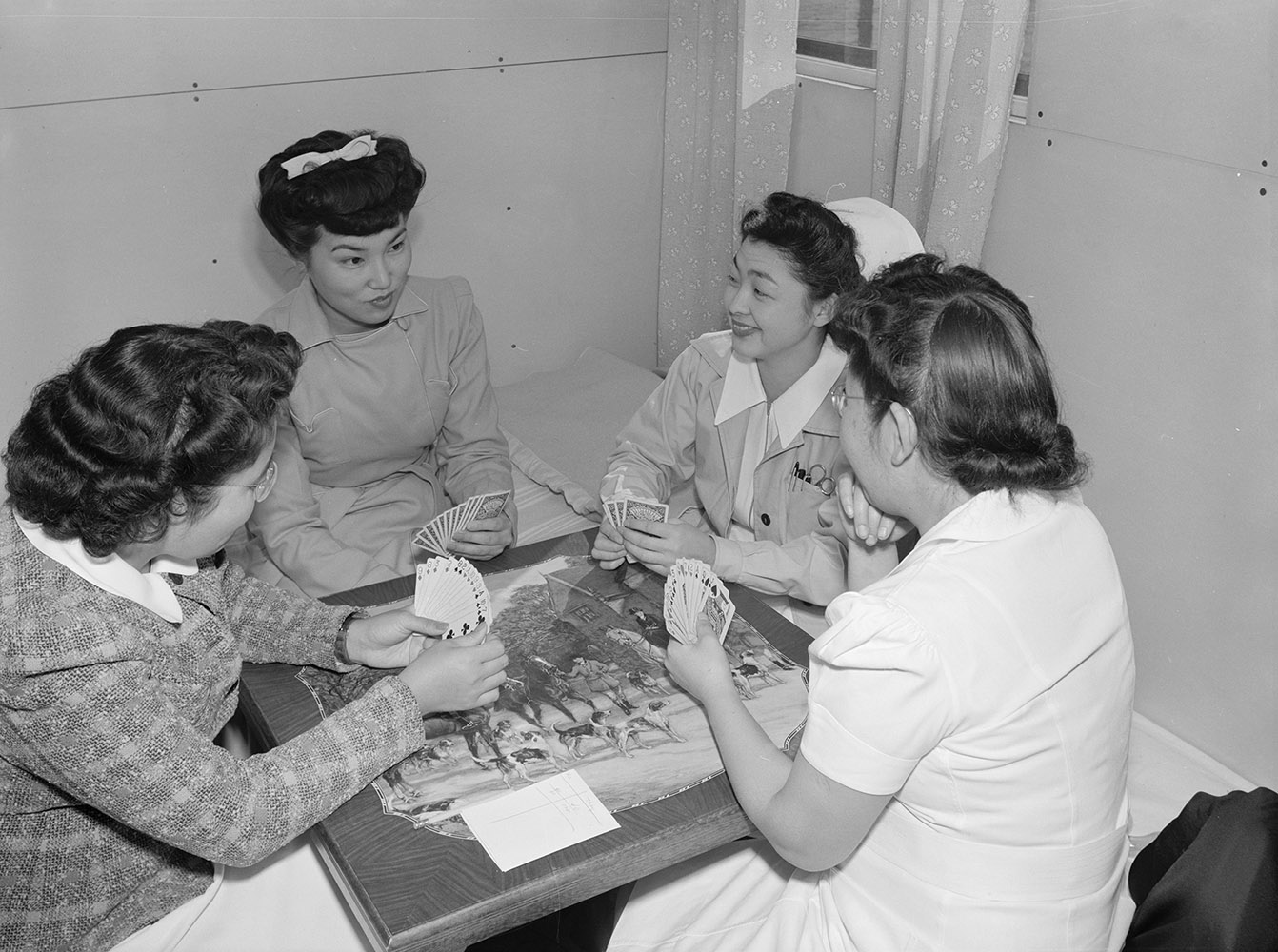 Bridge game,L/R: Miss Kazoko Nagahama, Nurse Aiko Hamaguchi, Nurse Chiye Yamanaki, Miss Catherine Yamaguchi (Photograph courtesy of Library of Congress) (Photographer Ansel Adams) |
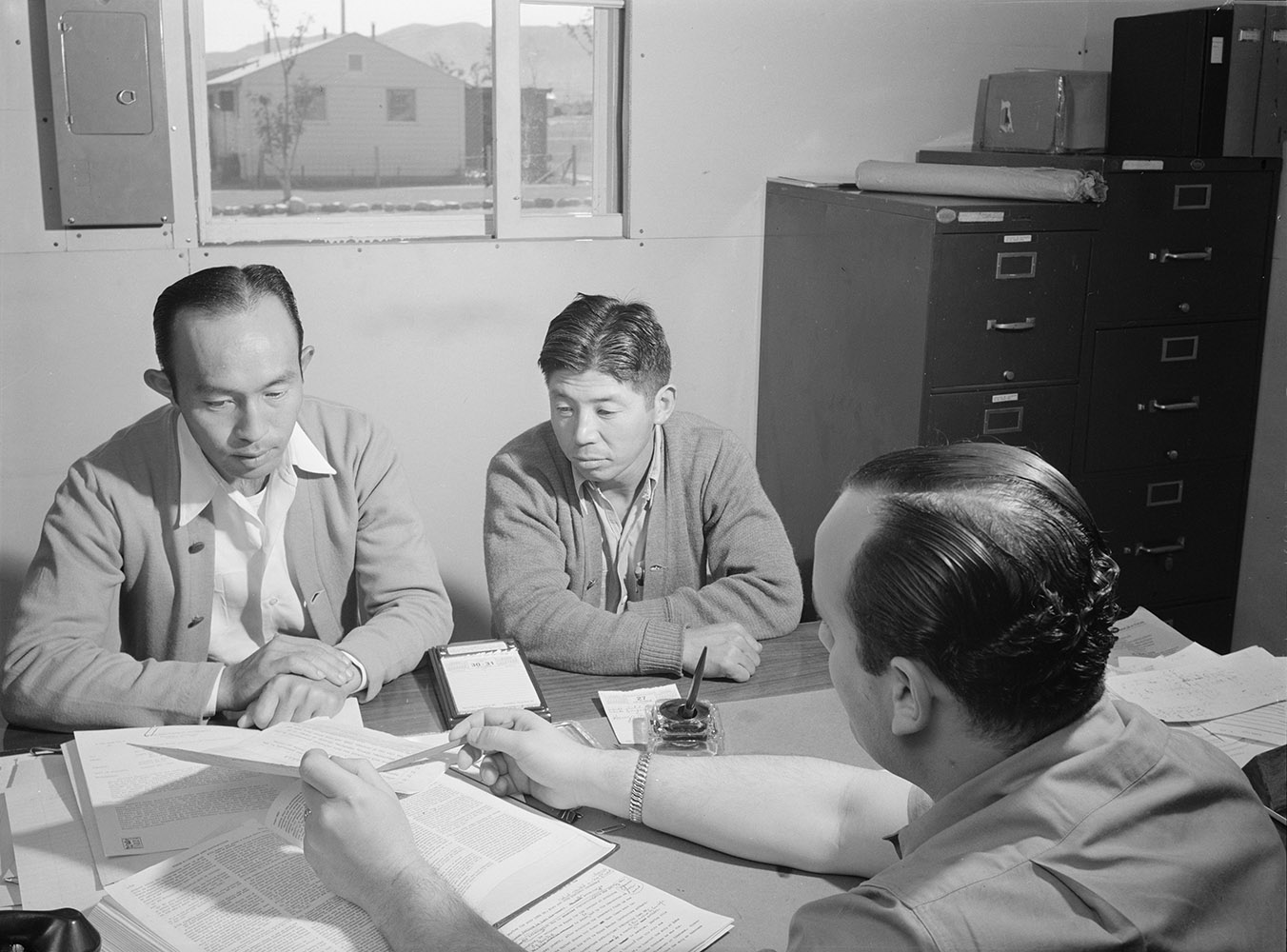 Project Attorney - Bunkichi Hayashi (center) (Photograph courtesy of Library of Congress) (Photographer Ansel Adams) |
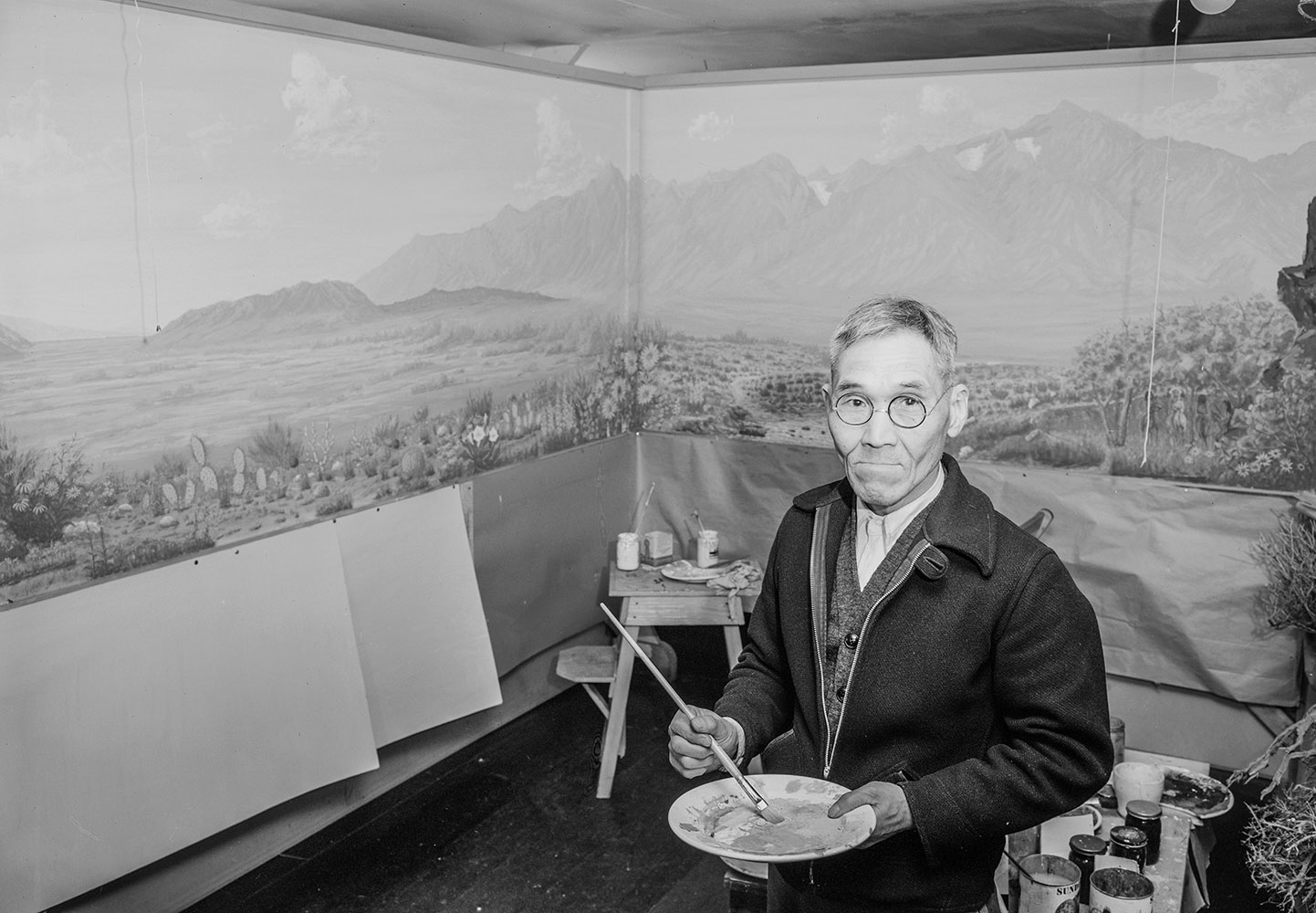 C.T. Hibino - artist (Photograph courtesy of Library of Congress) (Photographer Ansel Adams) |
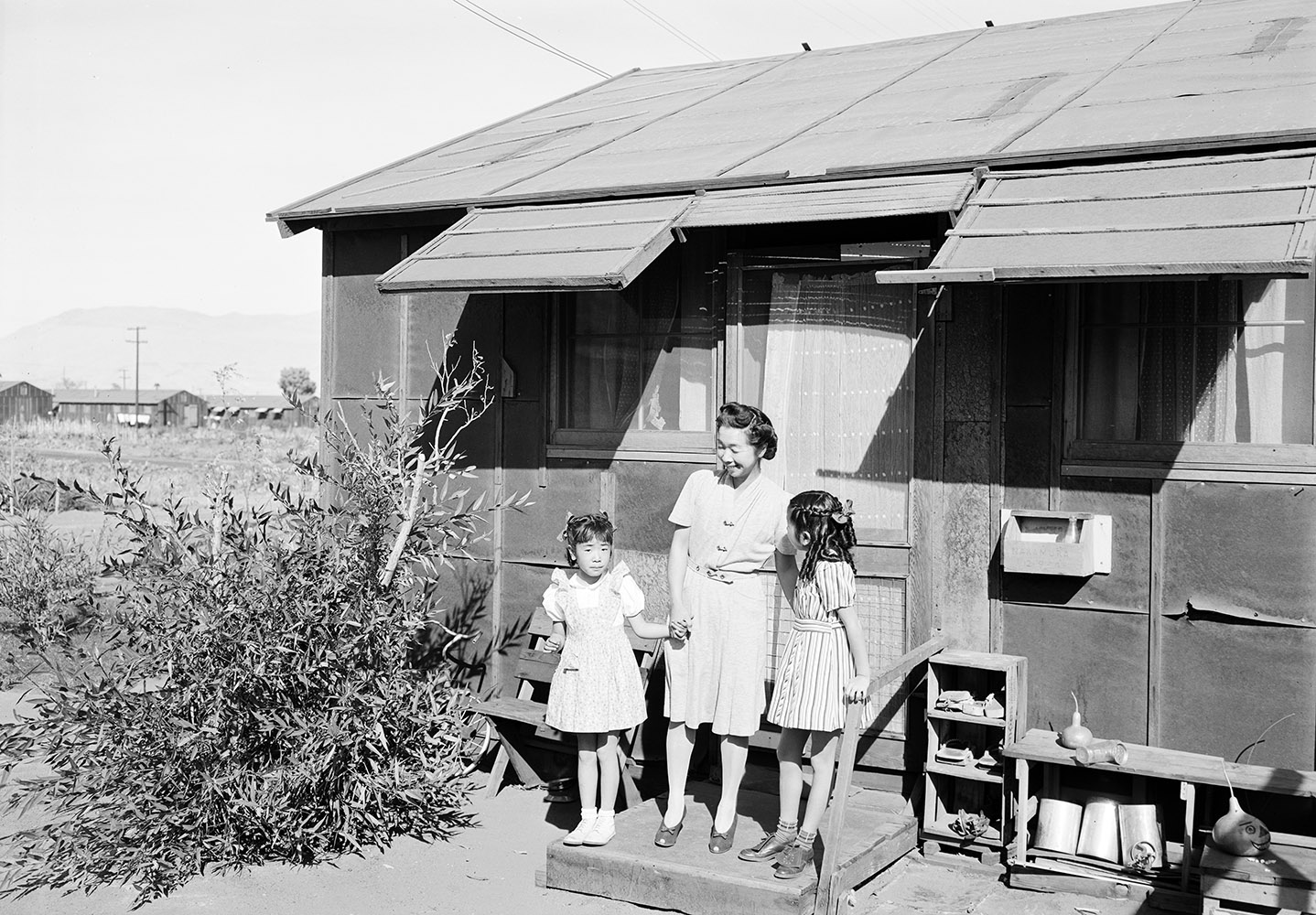 Mrs. Yaeko Nakamura and her two children, Joyce Yuki (right) and Louise Tami (left), standing on the step at the entrance of a dwelling (Photograph courtesy of Library of Congress) (Photographer Ansel Adams) |
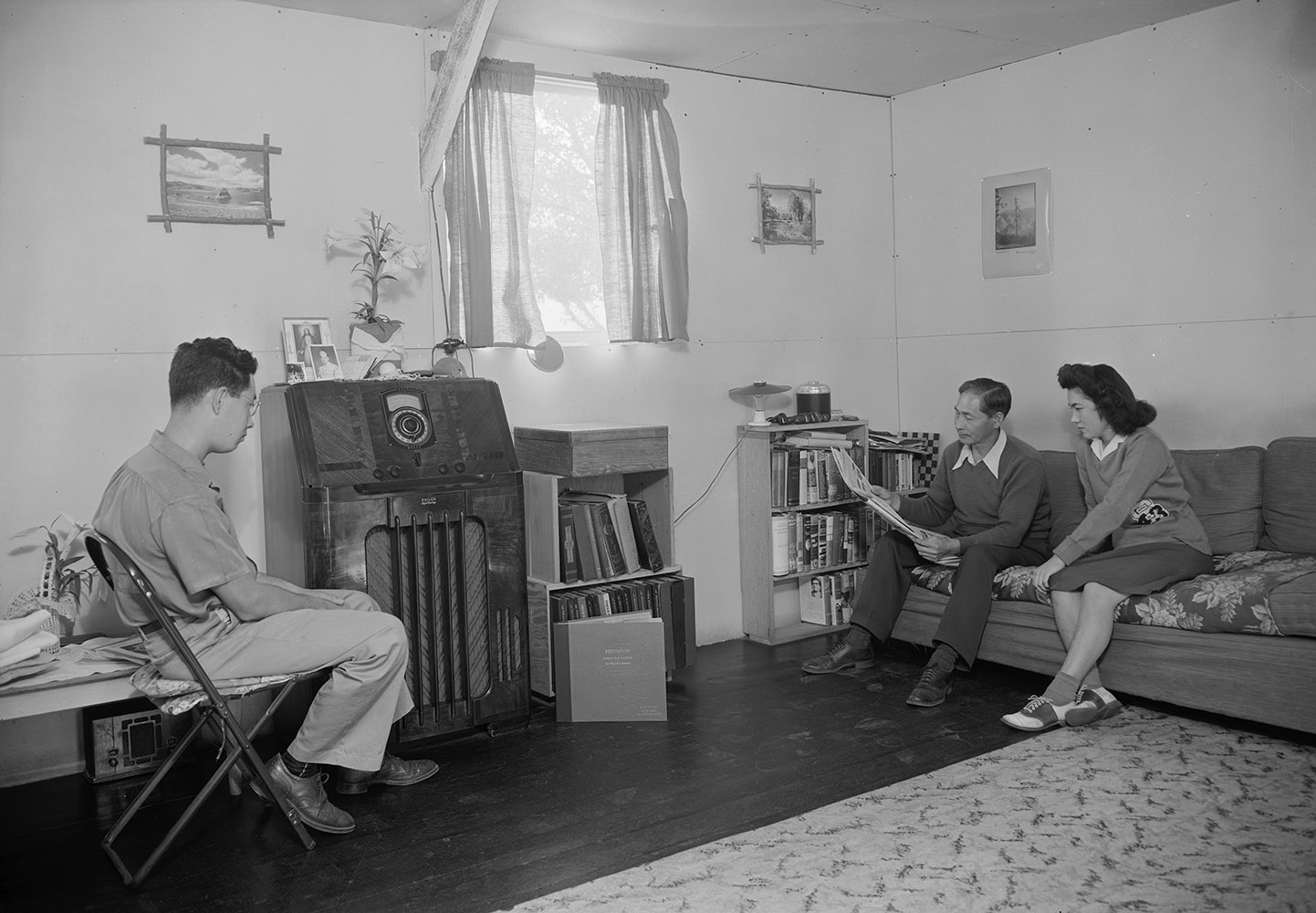 Yonemitsu Family, son - Michael, sister - Lucy Toshiko, father (Photograph courtesy of Library of Congress) (Photographer Ansel Adams) |
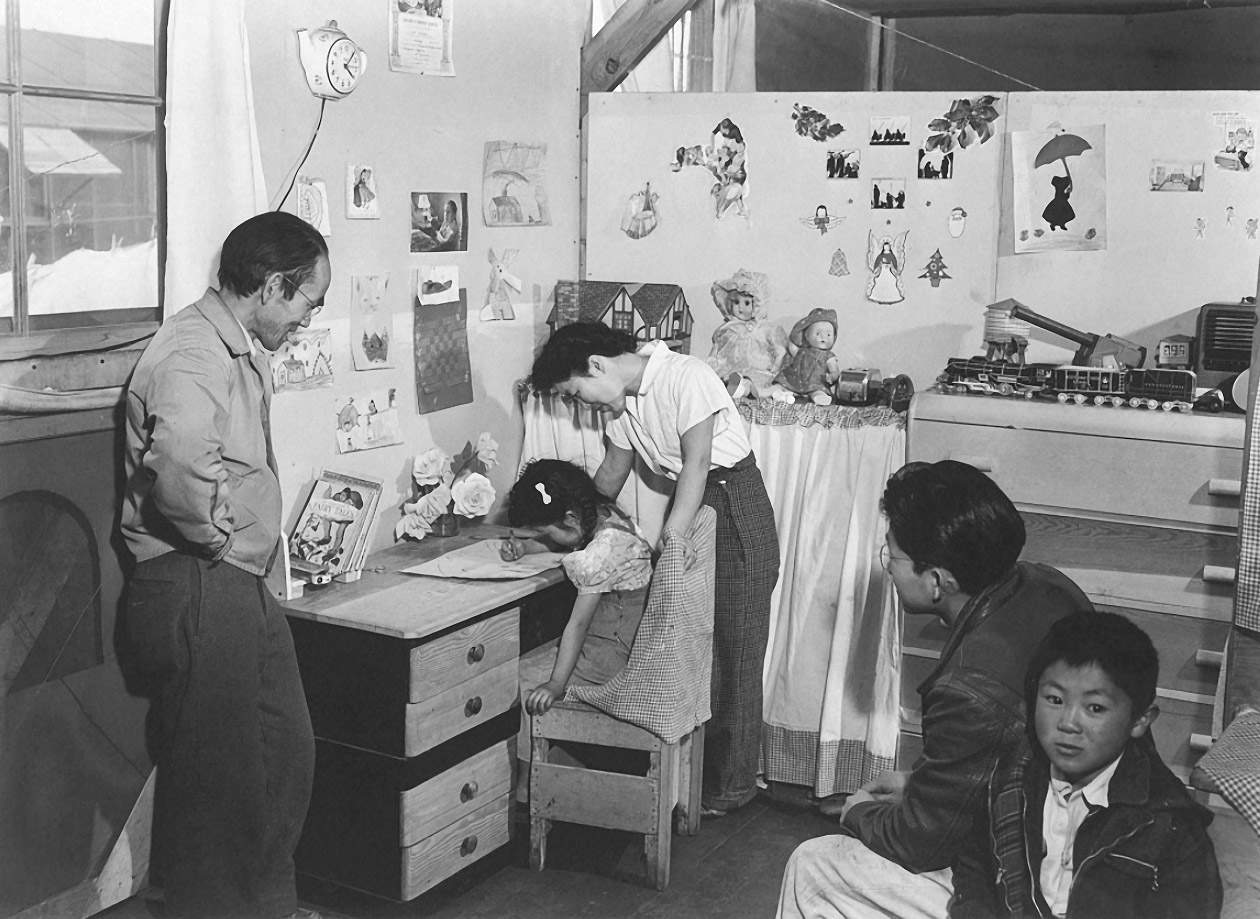 Tojo Miatake [i.e. T?y? Miyatake] Family (Photograph courtesy of Library of Congress) (Photographer Ansel Adams) |
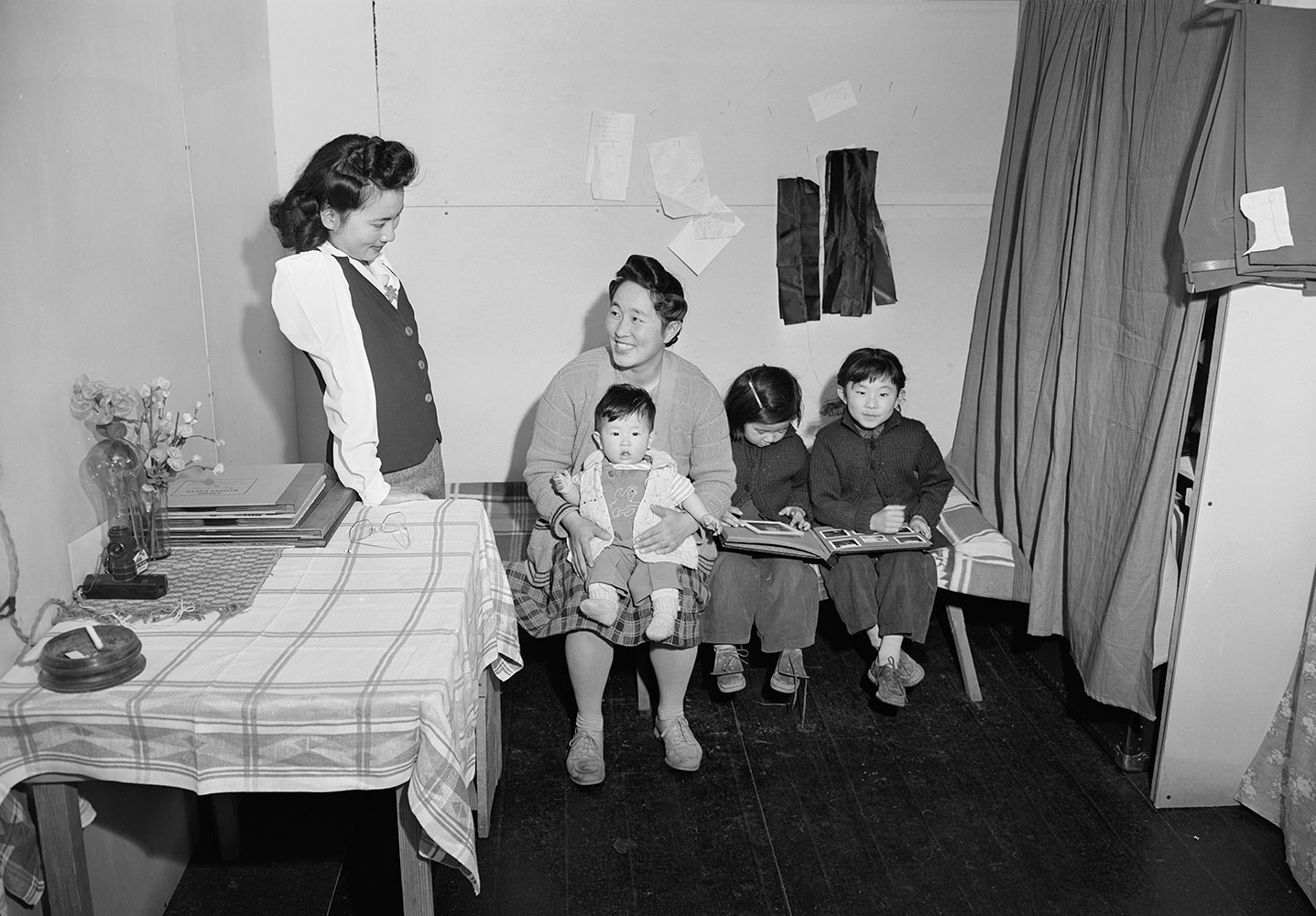 The Nakai family from L/R: Mitsu, half-length portrait, standing, and, seated on a cot, Margaret, with a baby on her lap, Jane, a young girl, looking at a photo album, and Roy, a young boy. (Photograph courtesy of Library of Congress) (Photographer Ansel Adams) |
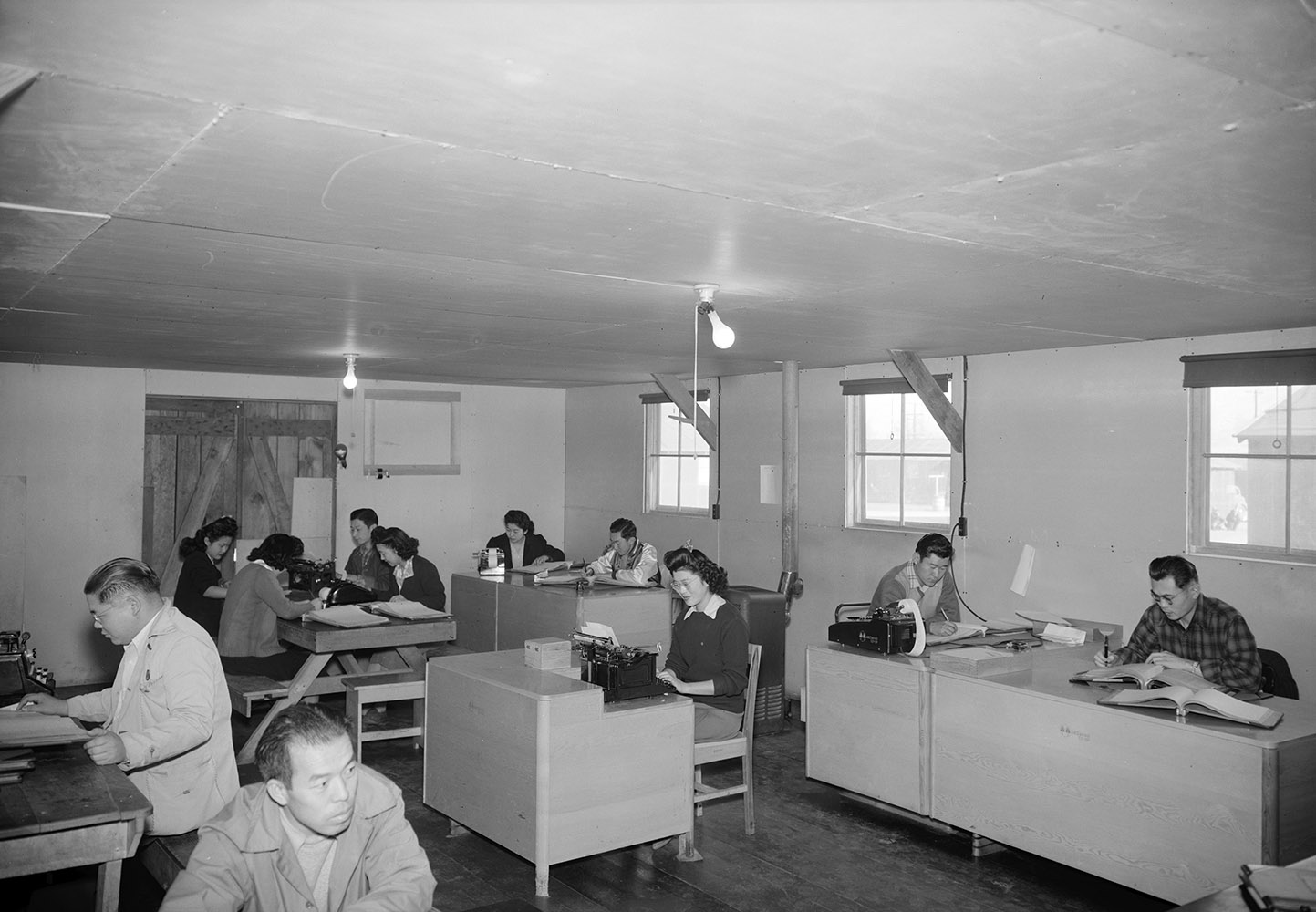 Co-op Enterprise Office (Photograph courtesy of Library of Congress) (Photographer Ansel Adams) |
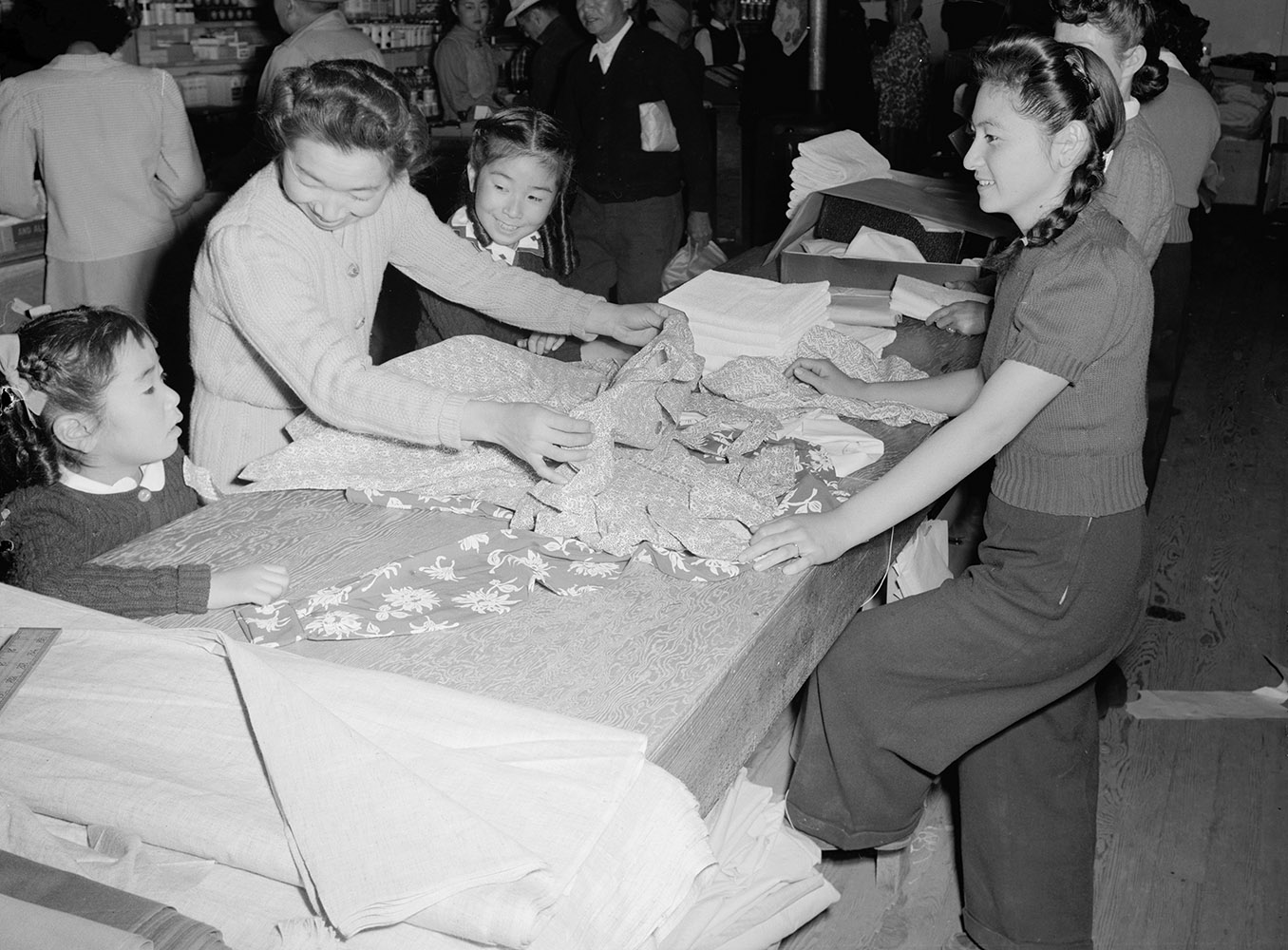 Mrs. Yaeko Nakamura looks at dresses with her daughters, Louise Tami Nakamura and Joyce Yuki Nakamura, in a store with assistance from clerk, Mrs. Mary Nagao. (Photograph courtesy of Library of Congress) (Photographer Ansel Adams) |
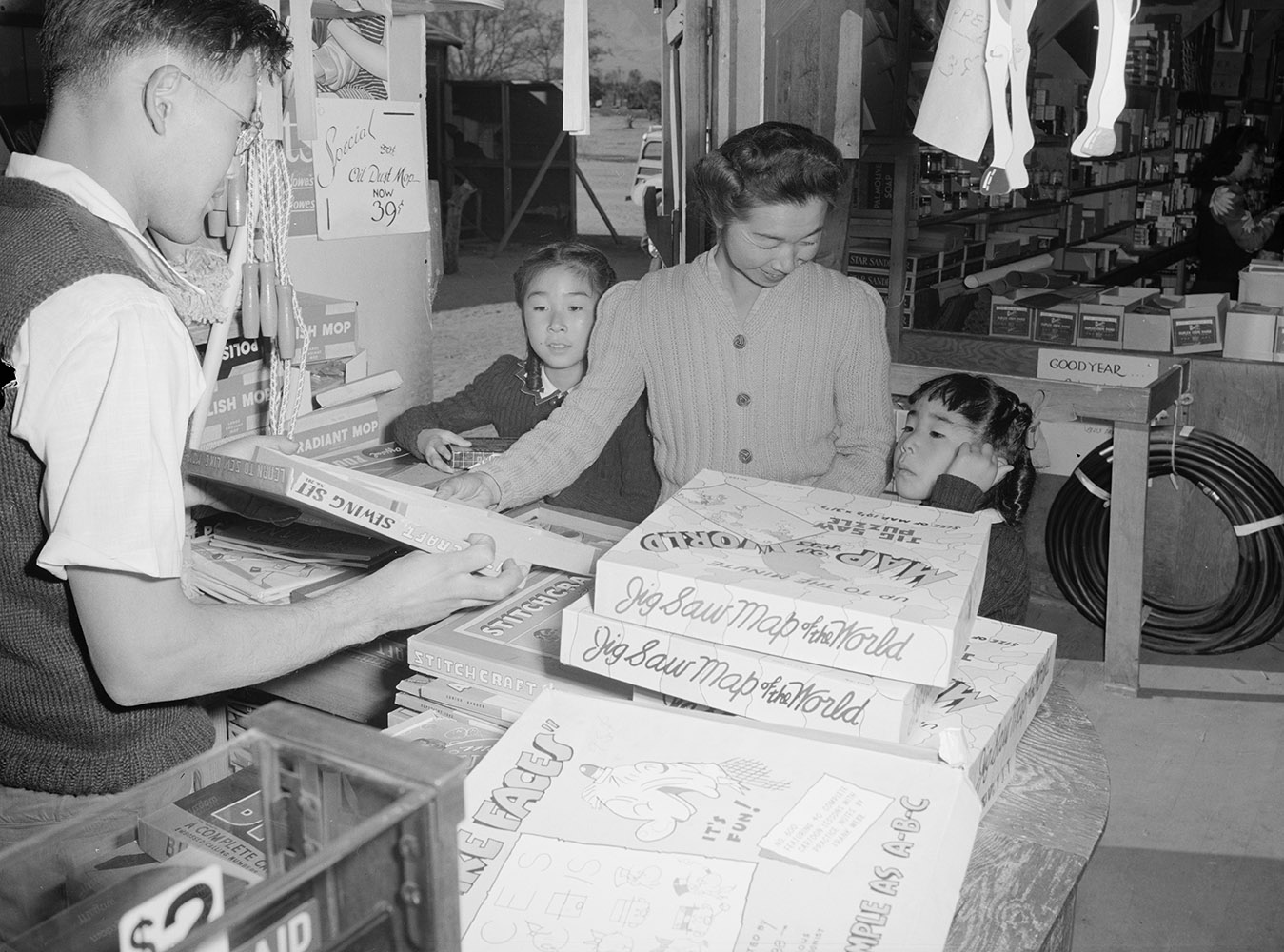 Mrs. Yaeko Nakamura and family buying toys with Fred Moriguchi (Photograph courtesy of Library of Congress) (Photographer Ansel Adams) |
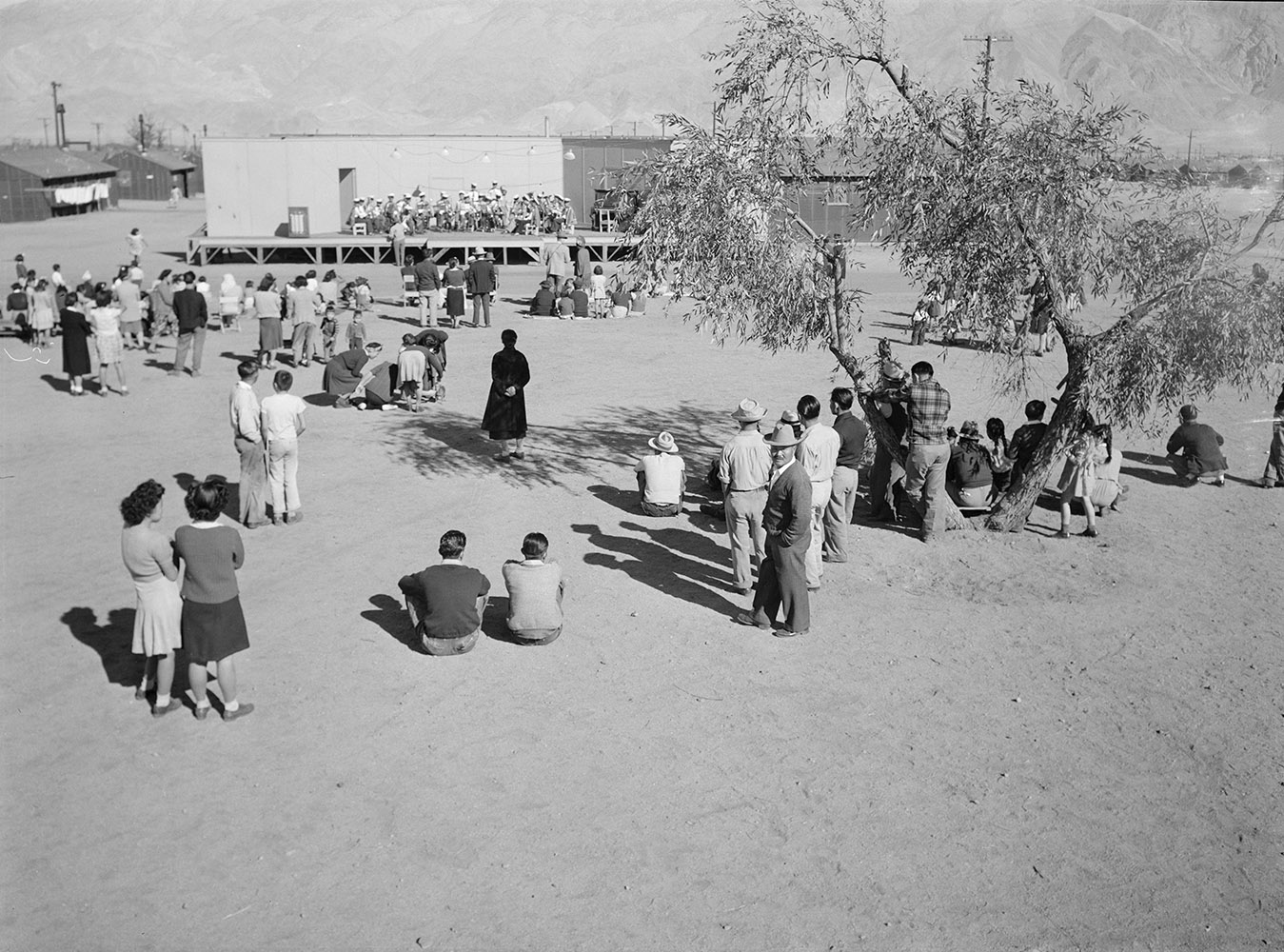 Band concert in Manzanar (Photograph courtesy of Library of Congress) (Photographer Ansel Adams) |
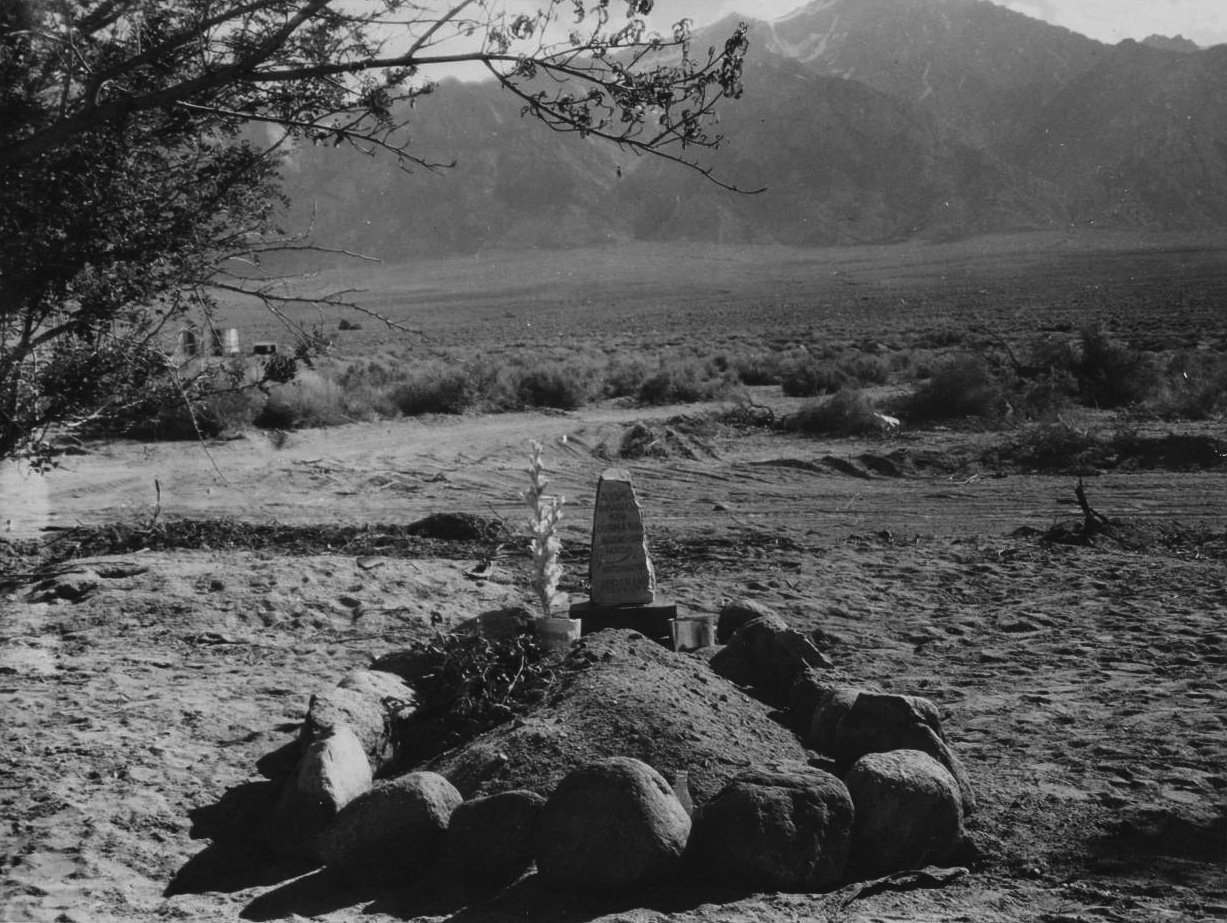 The first grave at the Manzanar Center's cemetery. Matsunosuke Murakami who died at age 62 (Photographer - Dorothea Lange) . |
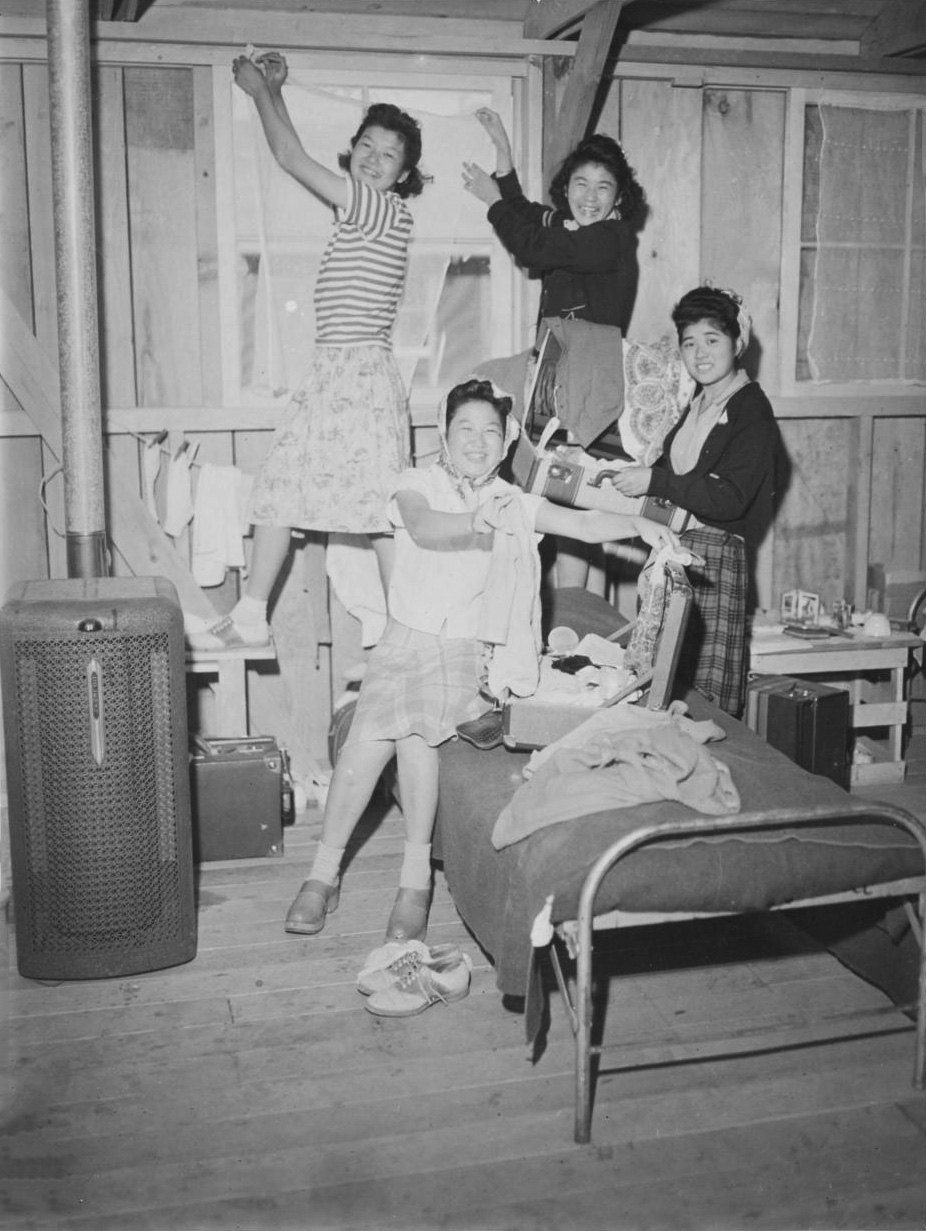
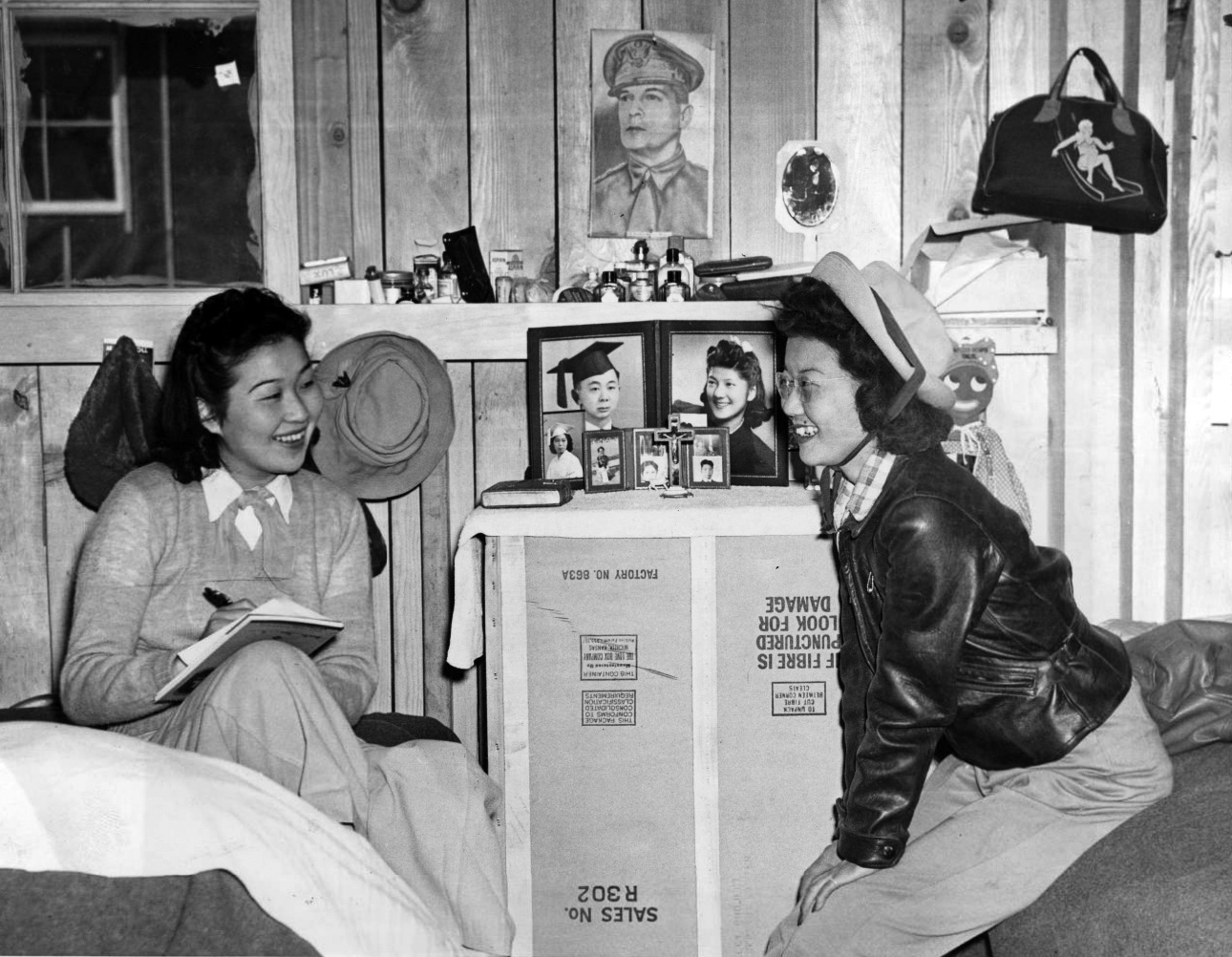 Two girls in the barracks at Manzanar - 1942 (Photograph courtesy of Calisphere) |
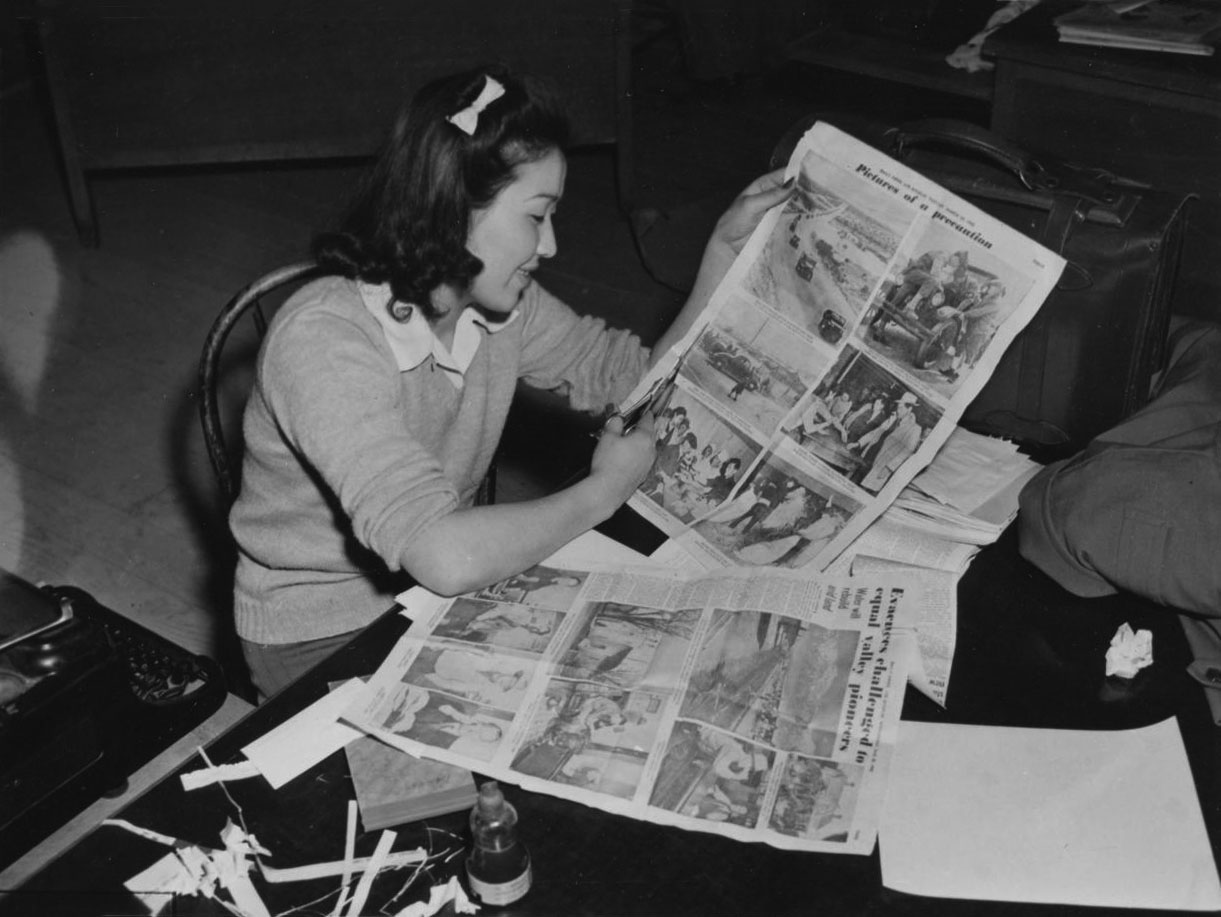 Clipping stories about her move to Manzanar - 1942 (Photograph courtesy of Calisphere) (Photographer - Clem Albers) |
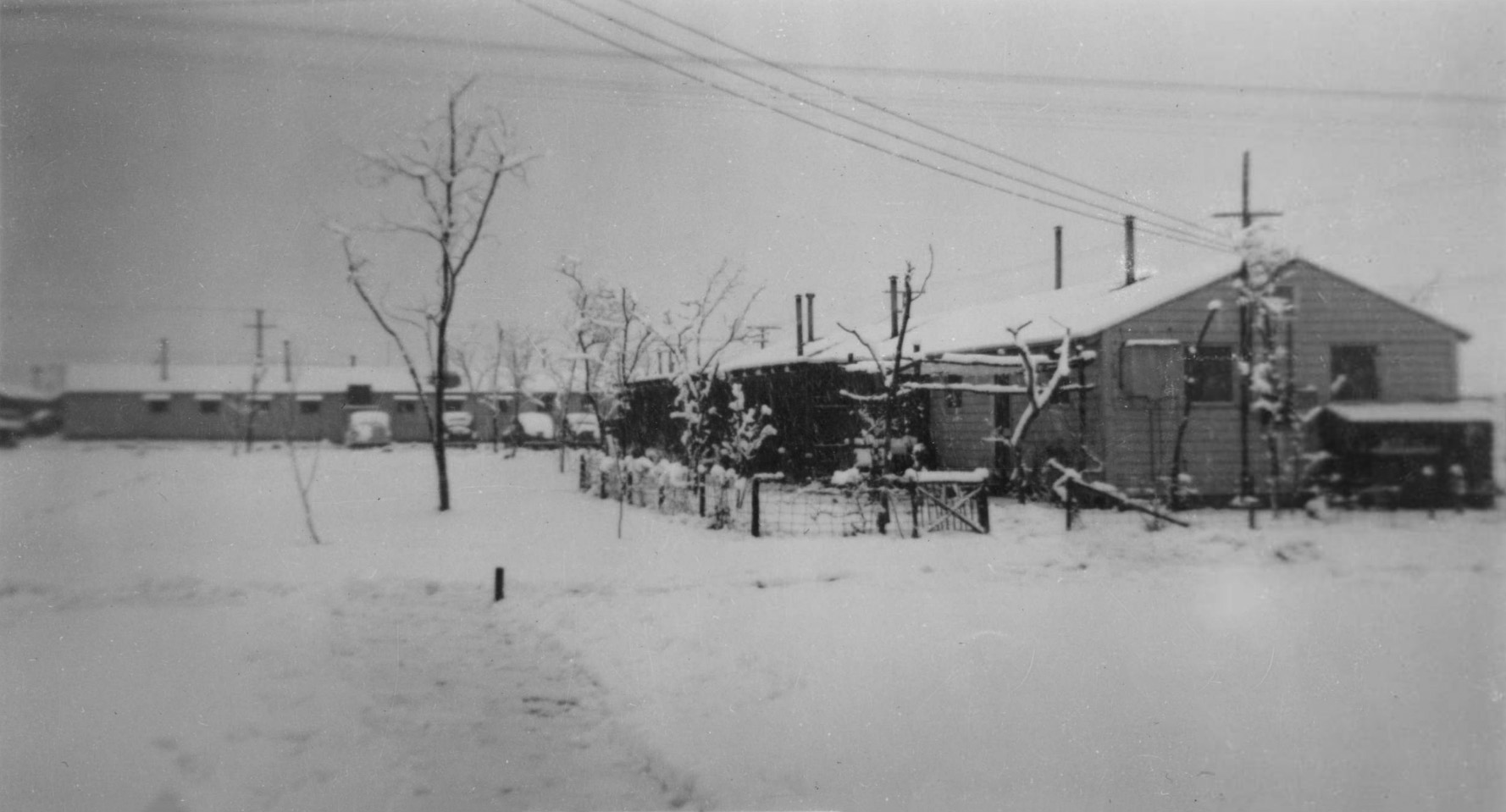 Manzanar snowed in - 1944 (Photograph courtesy of Calisphere) |
|
11/23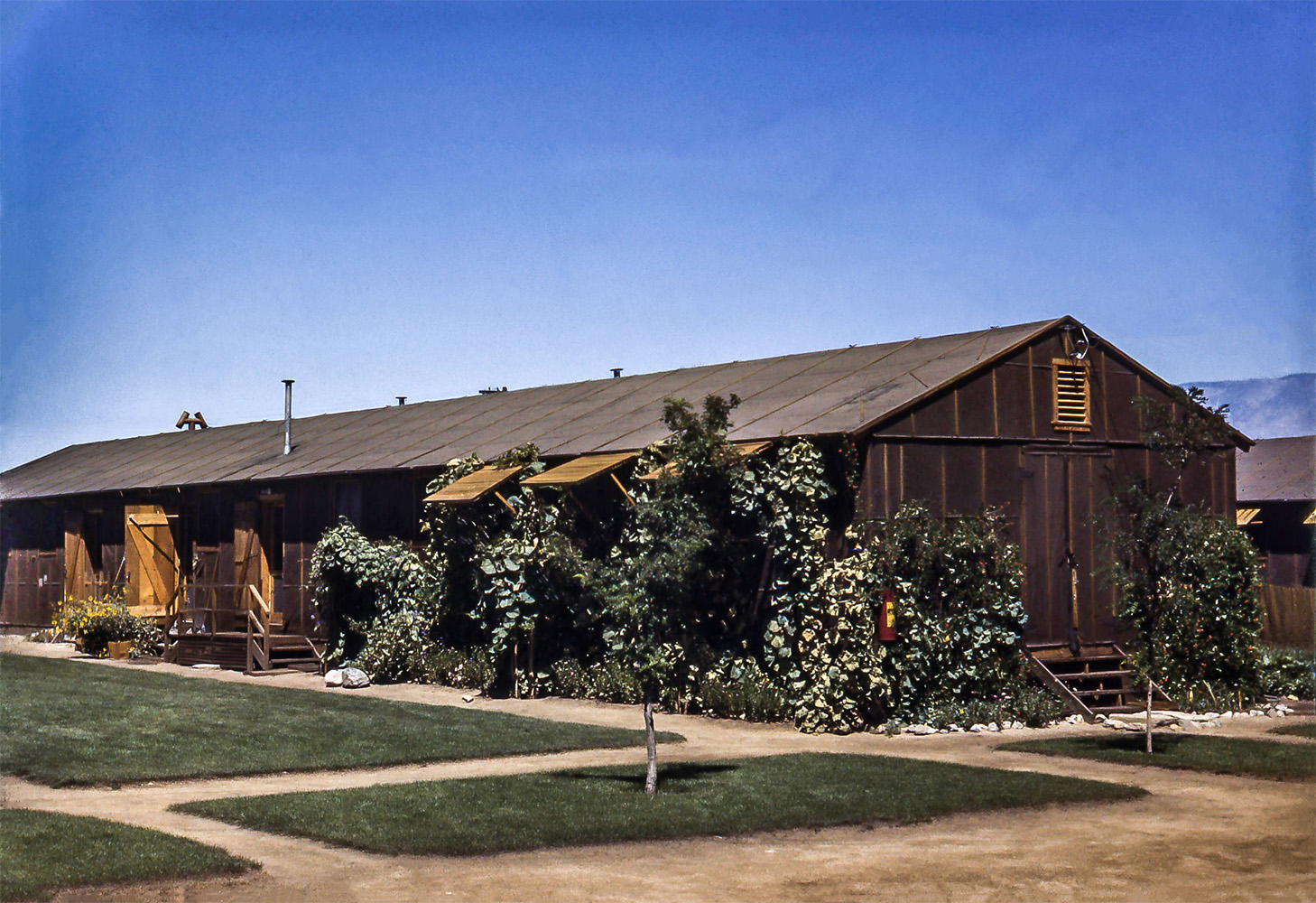 Barracks at Manzanar internment camp - 1942 (Photograph courtesy of Presbyterian Historical Society) |
|
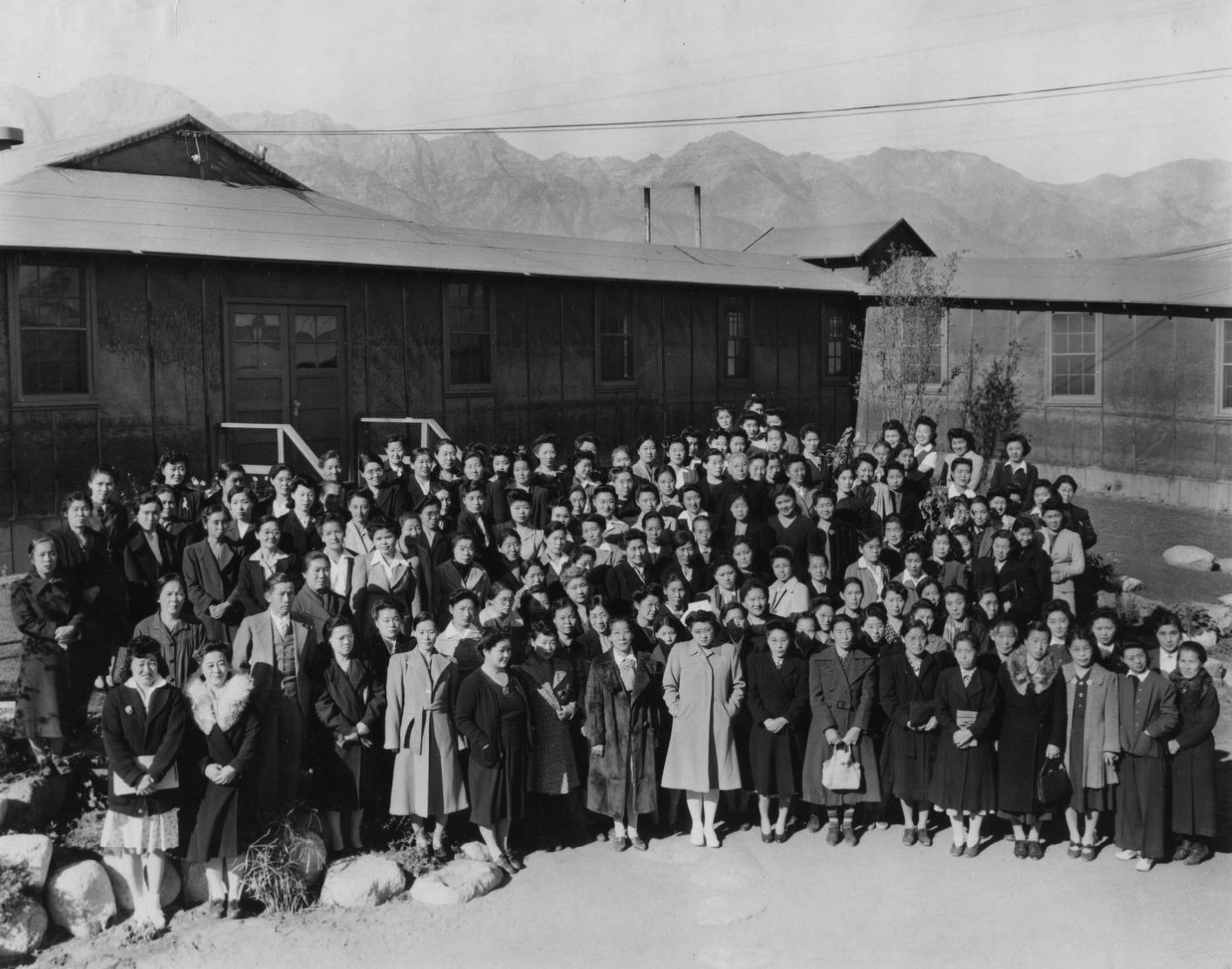 Group of women at Manzanar (Photograph courtesy of Calisphere) |
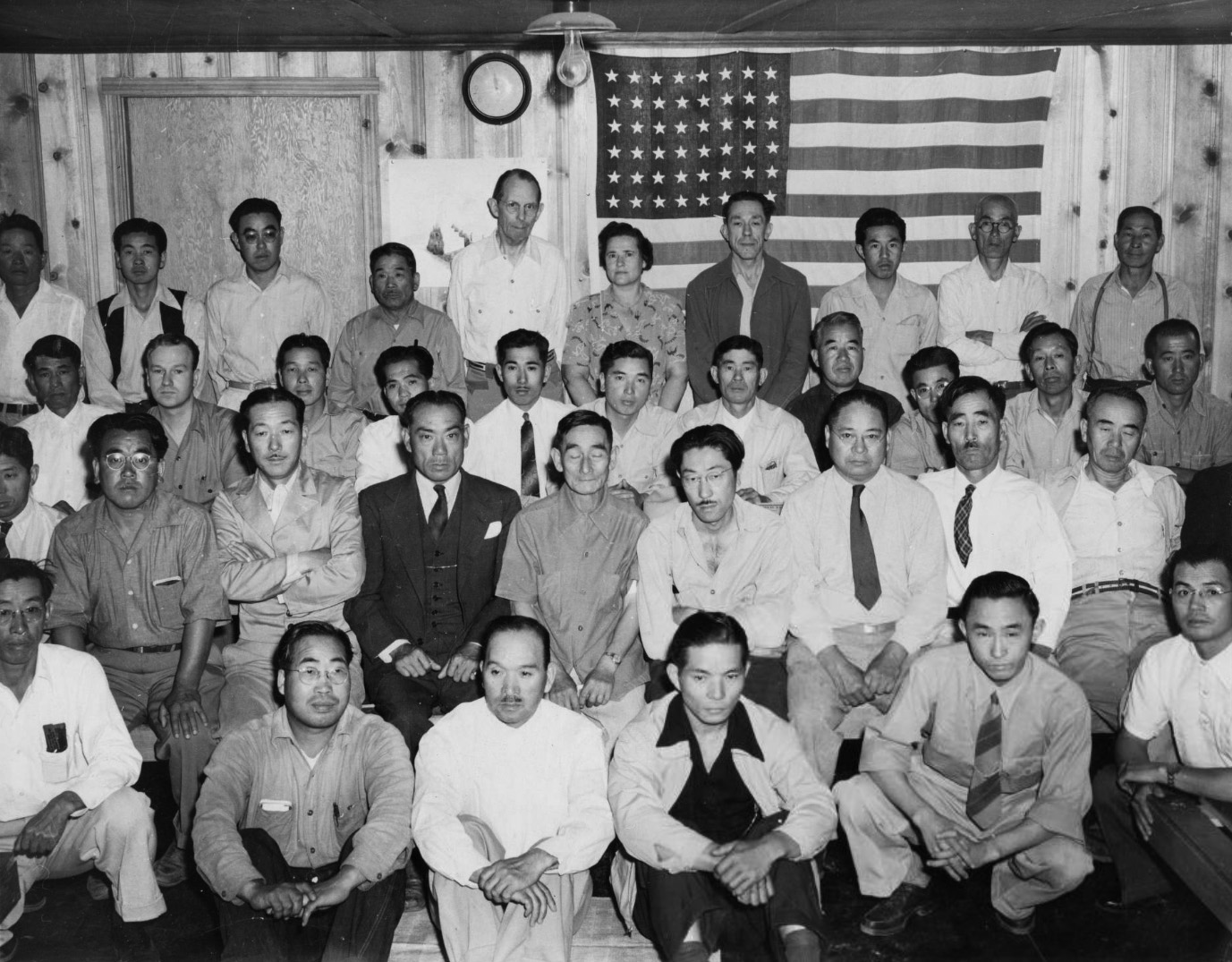 Photograph of the Block Managers meeting at the Manzanar Town Hall. Project Director, Ralph P. Merritt, is in the back row in the middle. (Photograph courtesy of Calisphere) |
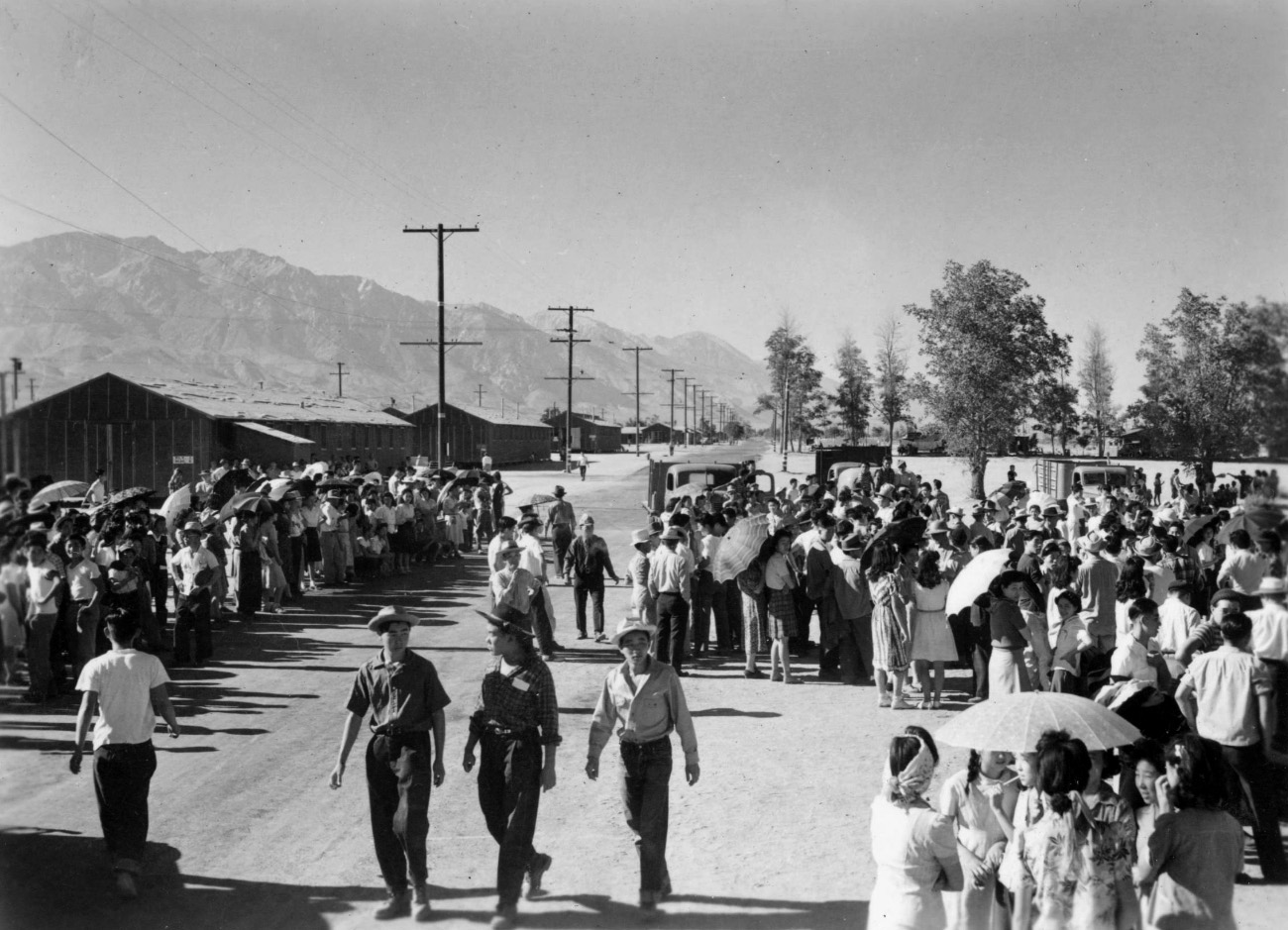 Photograph of a large group of people outside of Manzanar (Photograph courtesy of Calisphere) |
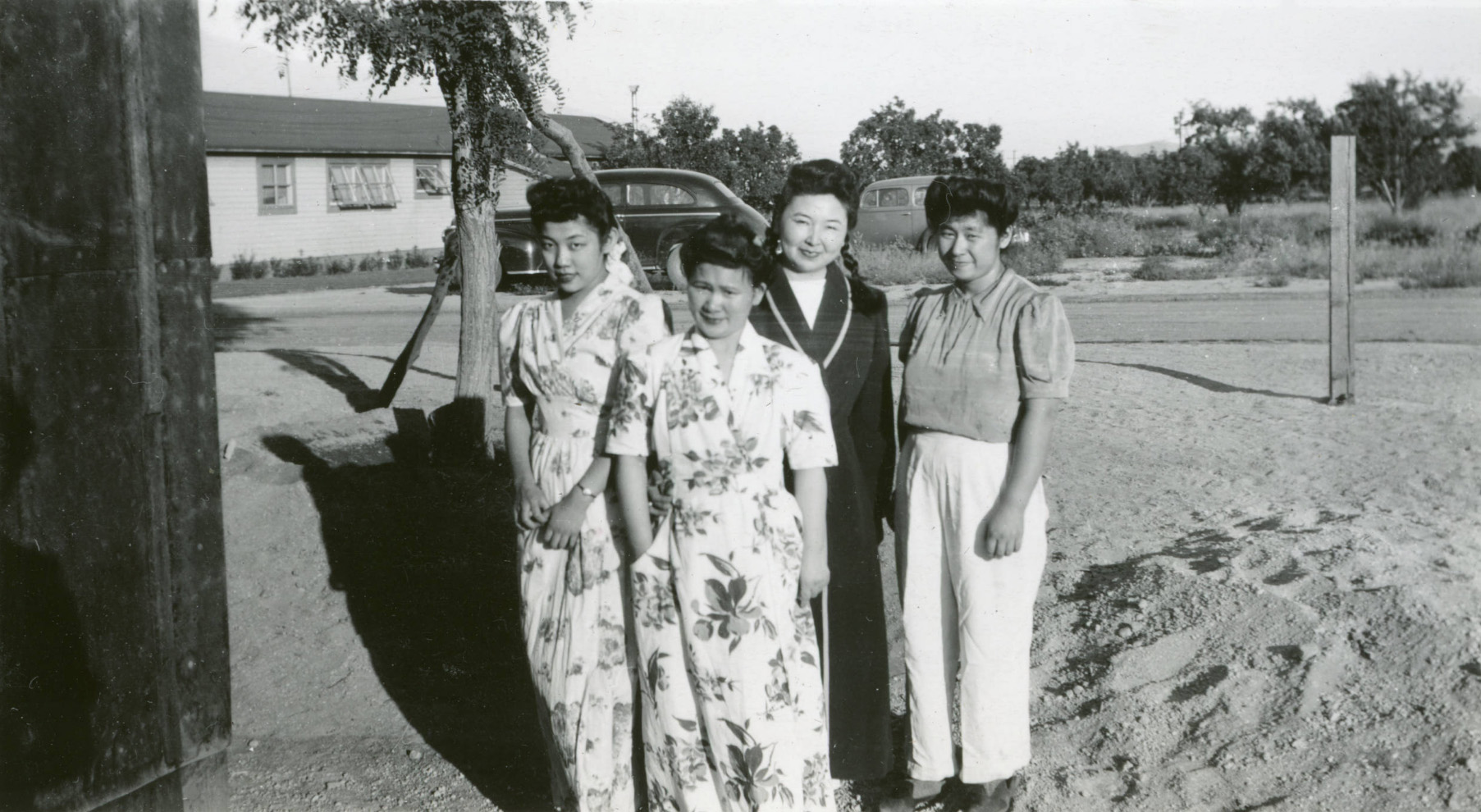 Four women posing at Manzanar (Photograph courtesy of Calisphere) |
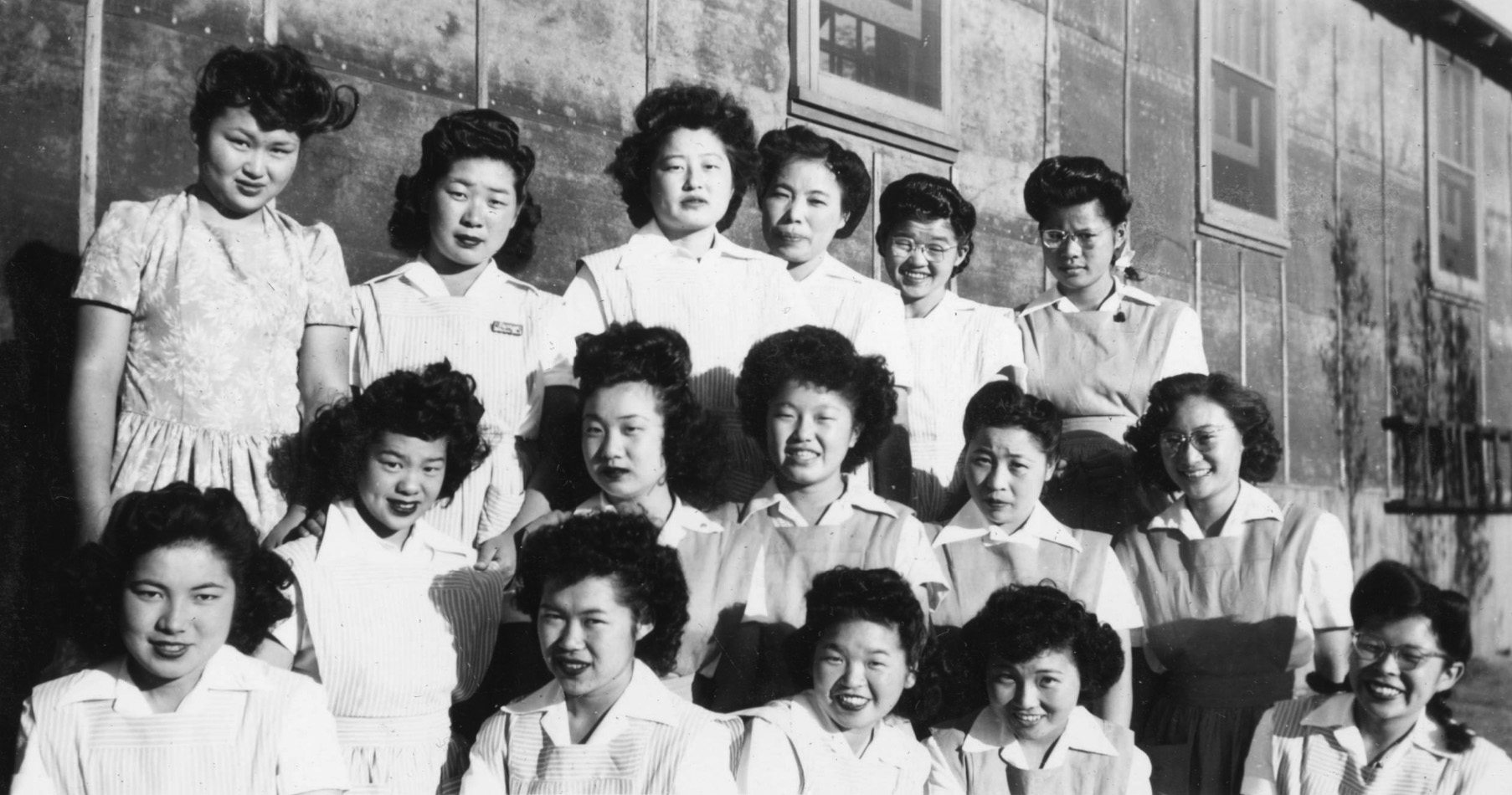 Photograph of the Manzanar Hospital Staff (Photograph courtesy of Calisphere) |
|
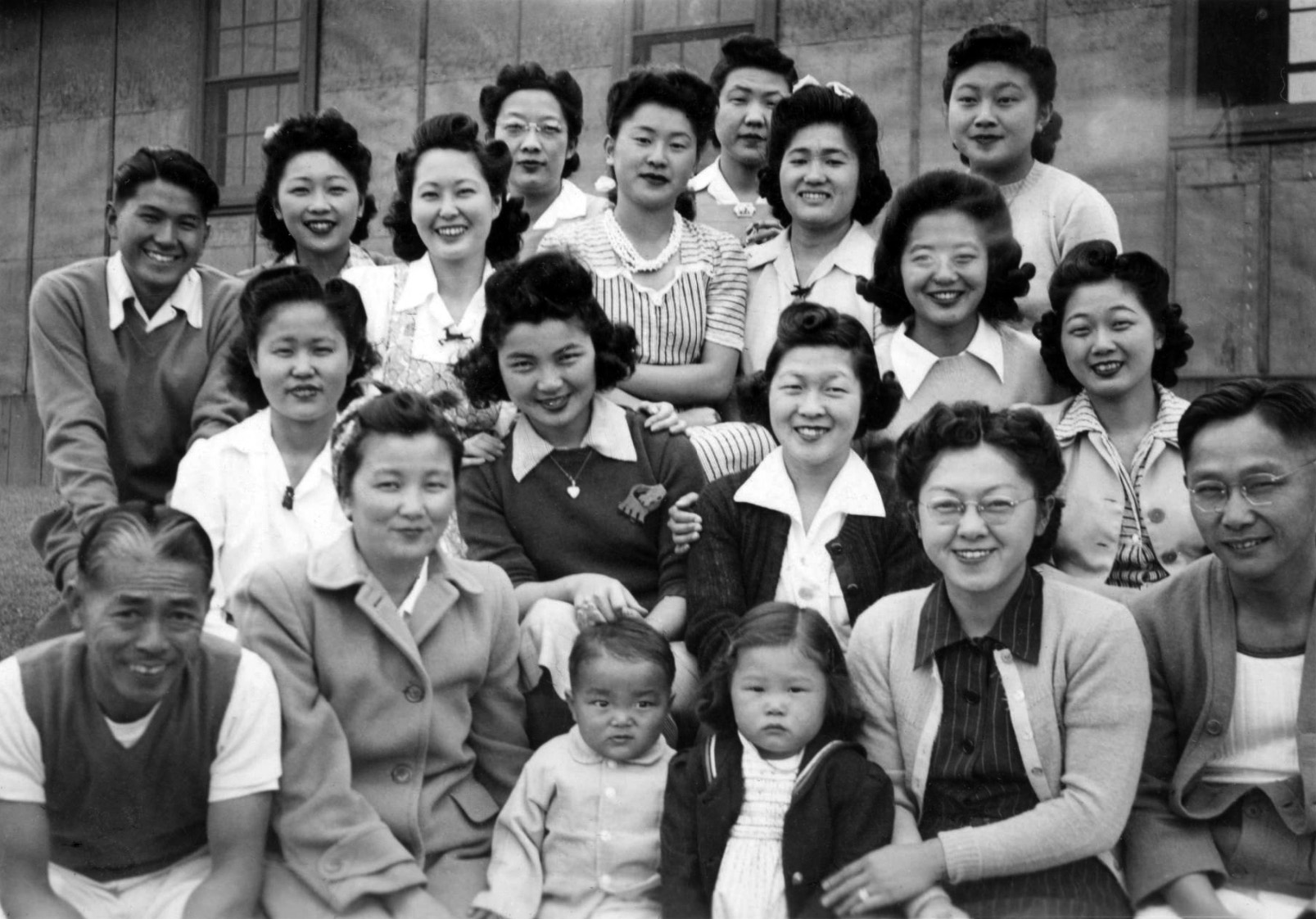 Group of men, women and two children at Manzanar (Photograph courtesy of Calisphere) |
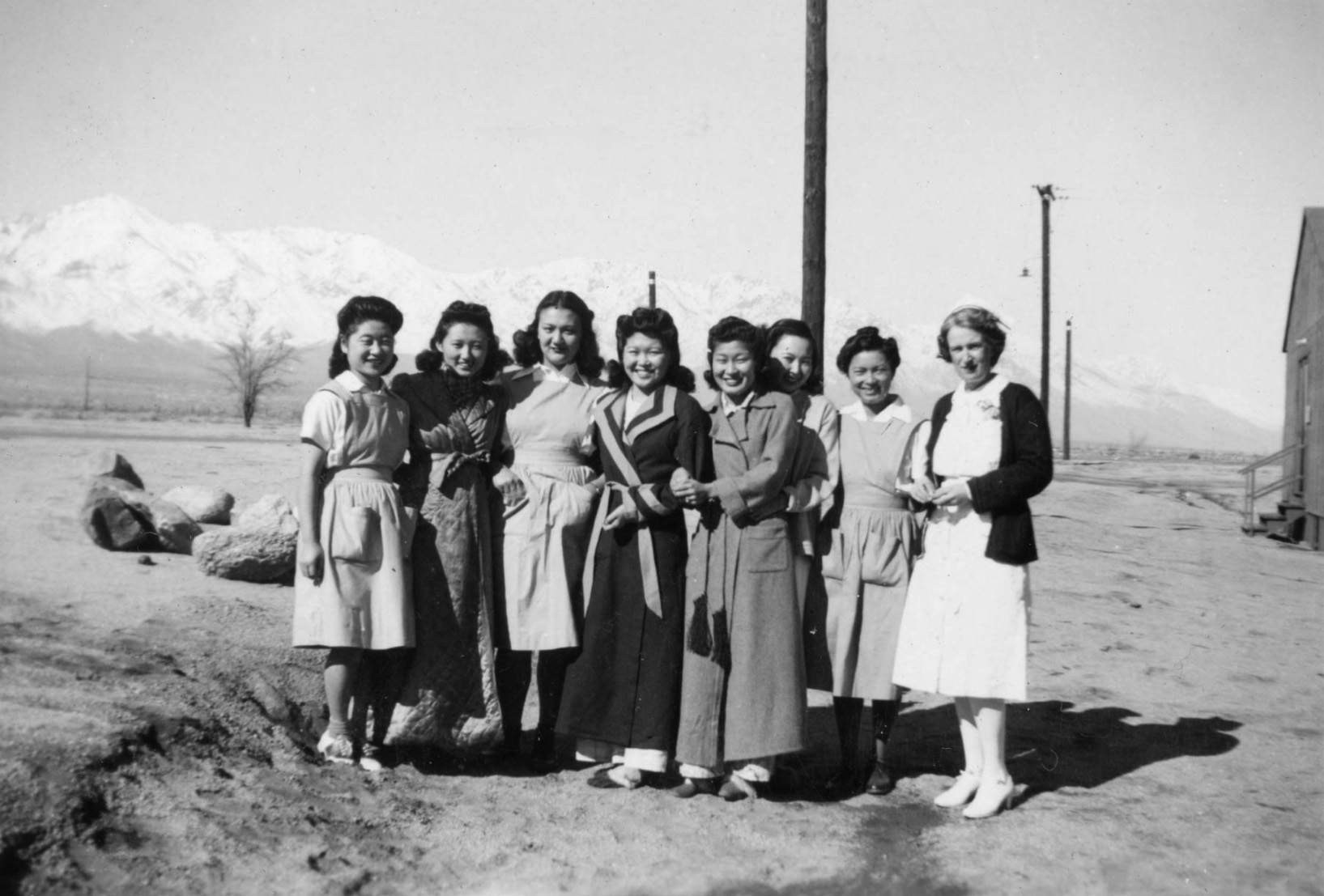 Women employees of the Manzanar Hospital (Photograph courtesy of Calisphere) |
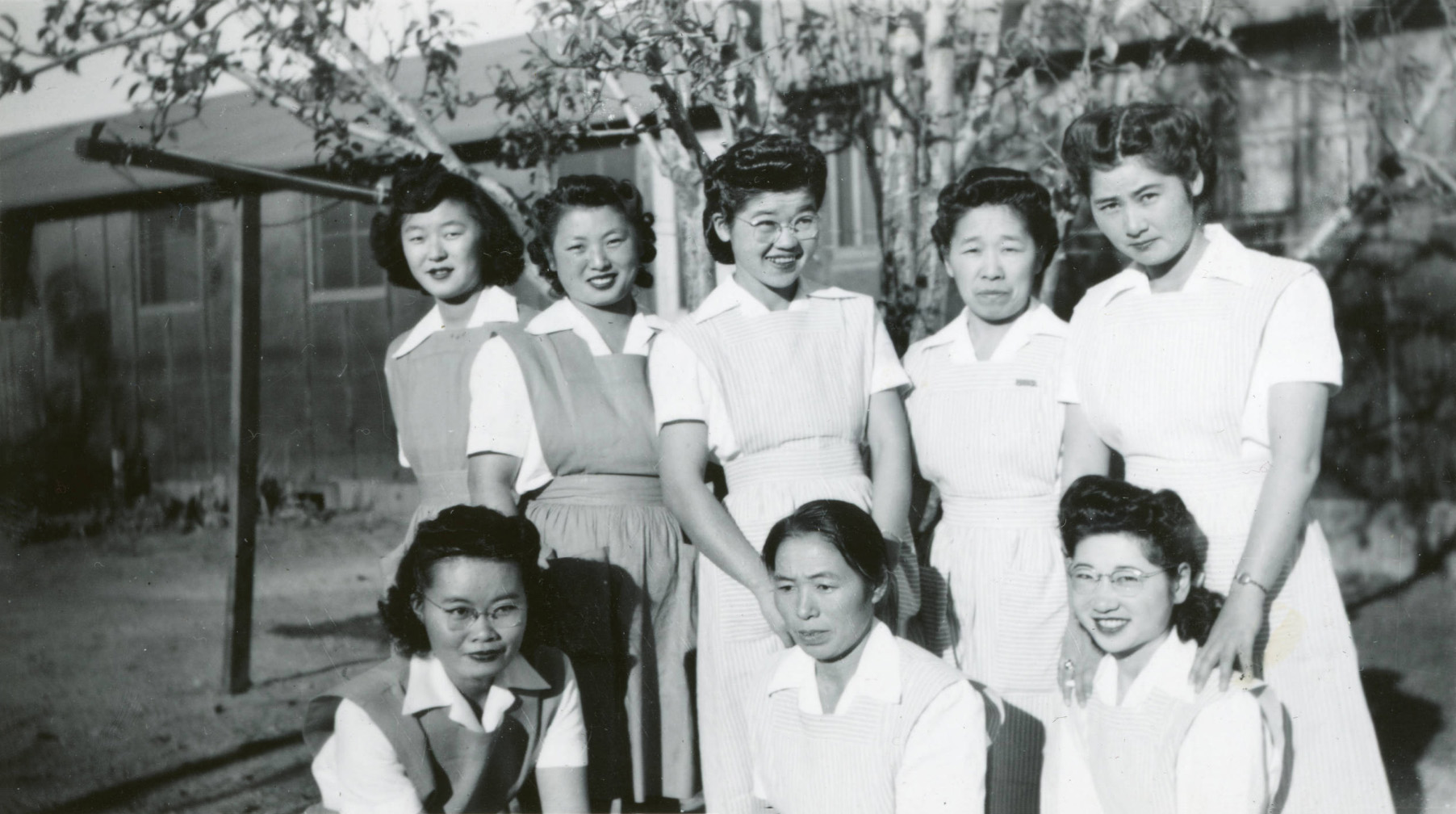 Eight Manzanar Hospital staff workers (Photograph courtesy of Calisphere) |
11/23 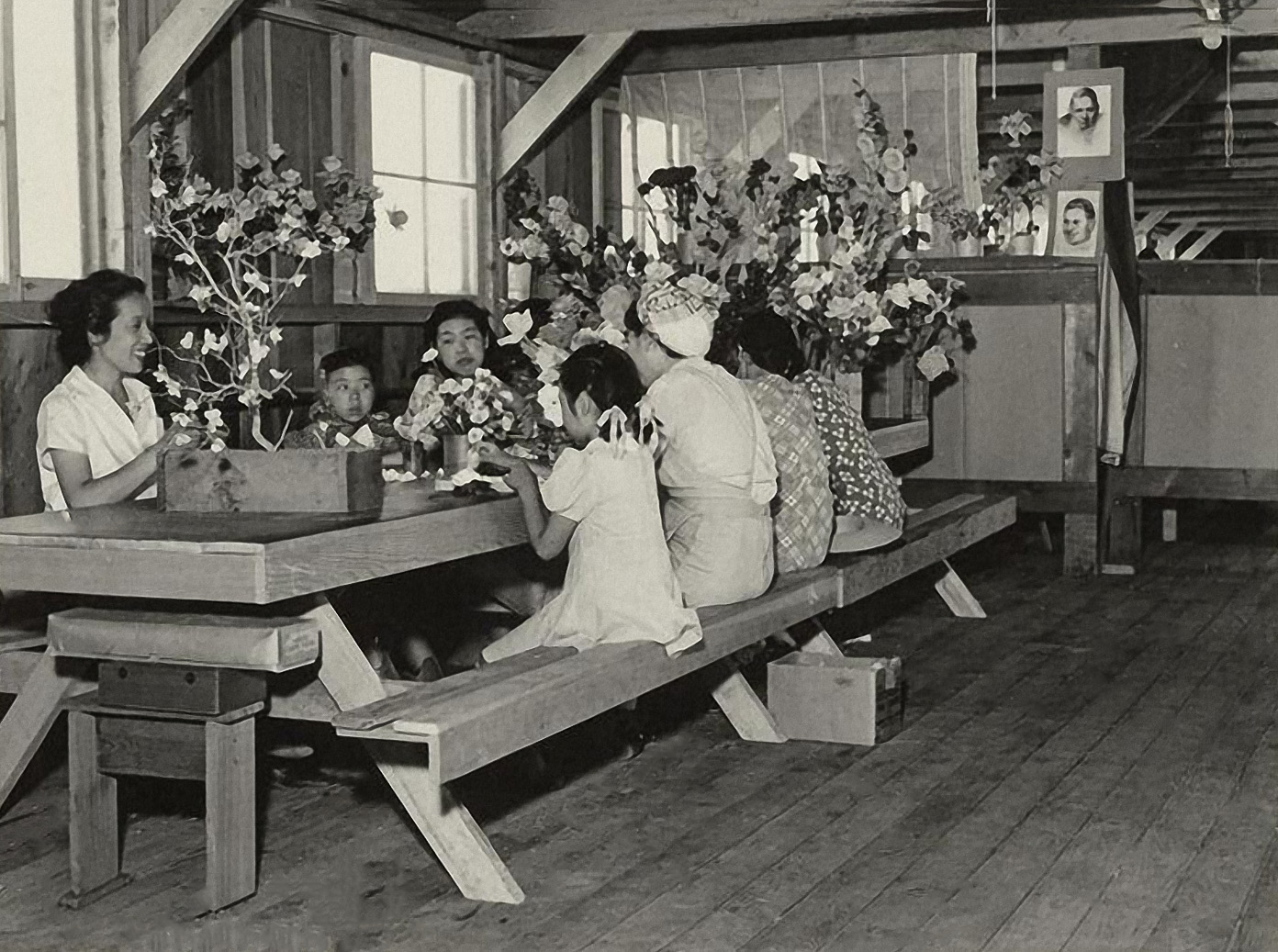 Making artificial flowers - 1942 (Photograph by Dorthea Lange courtesy of Online Archive of California) |
11/23 More Daily Life - In and Outside the Barracks
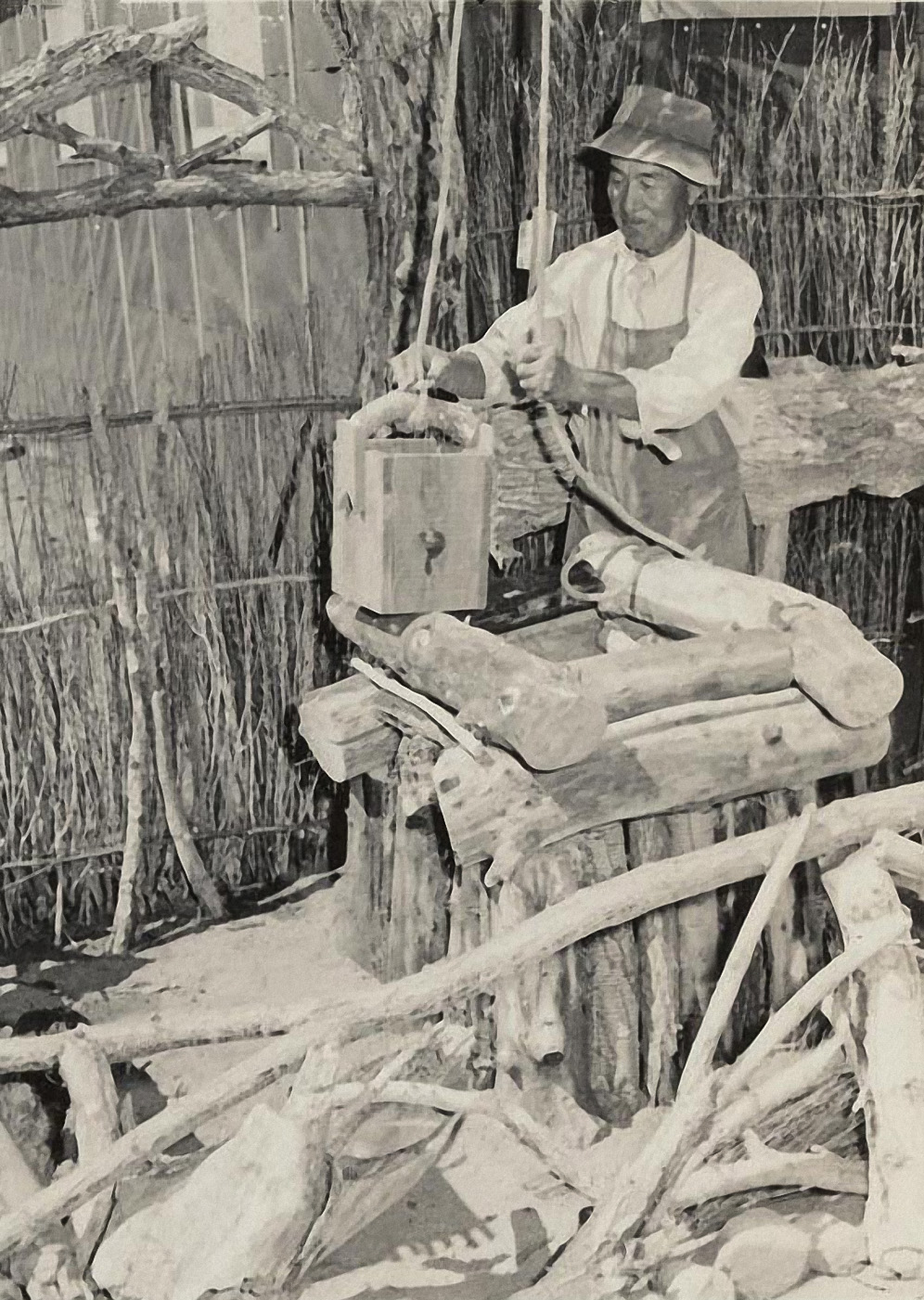 George S. Takemura, landscape artist from West Los Angeles builds a rustic wishing well at Manzanar - 1942 (Photo by Francis Stewart courtesy of Online Archive of California) |
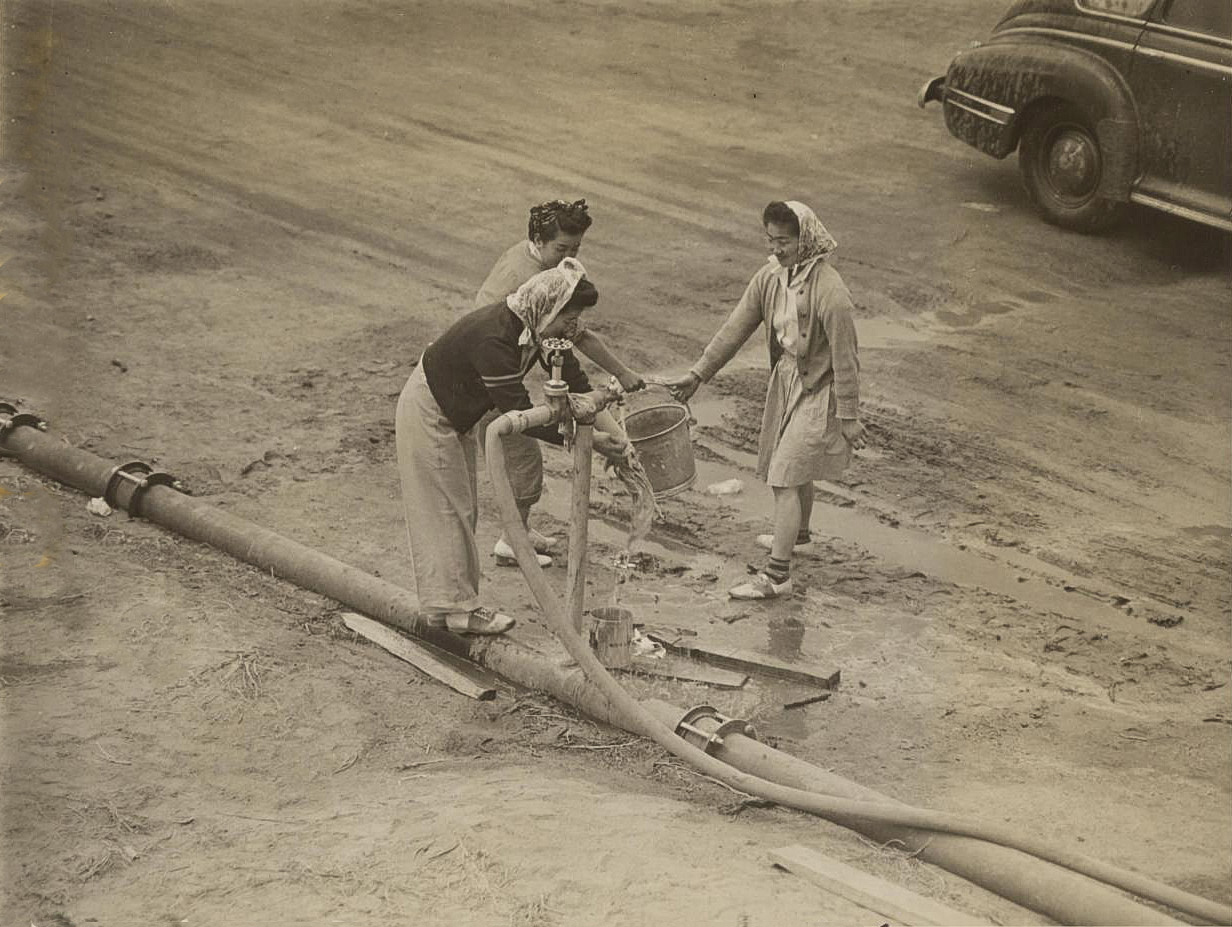 Nisei girls getting a bucket of water from one of the hydrants at the WRA - 1942 (Photo by Clem Albers courtesy of Online Archive of California) |
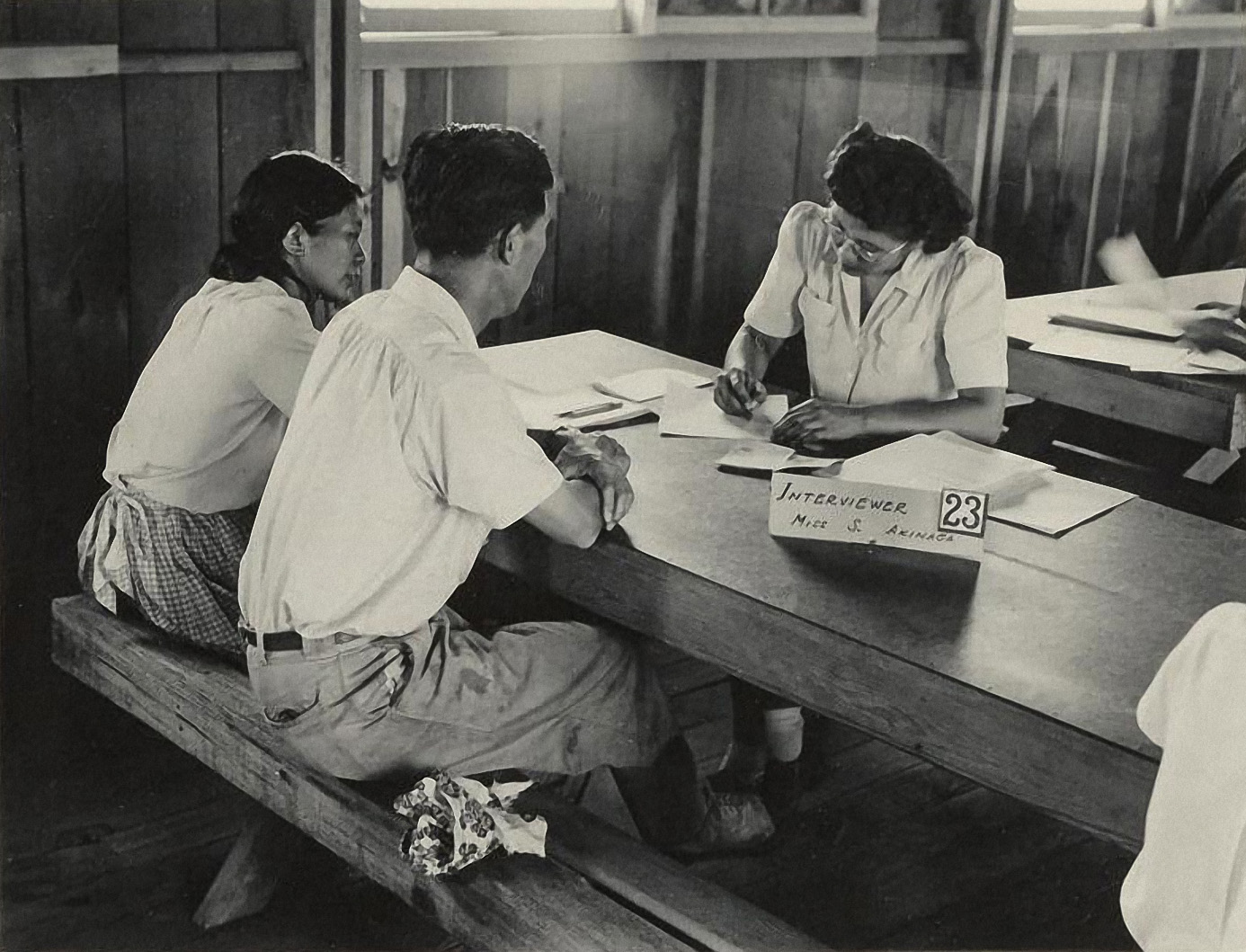 Miss S. Akinaga getting personal history of internee - 1942 (Photo by Dorthea Lange courtesy of Online Archive of California) |
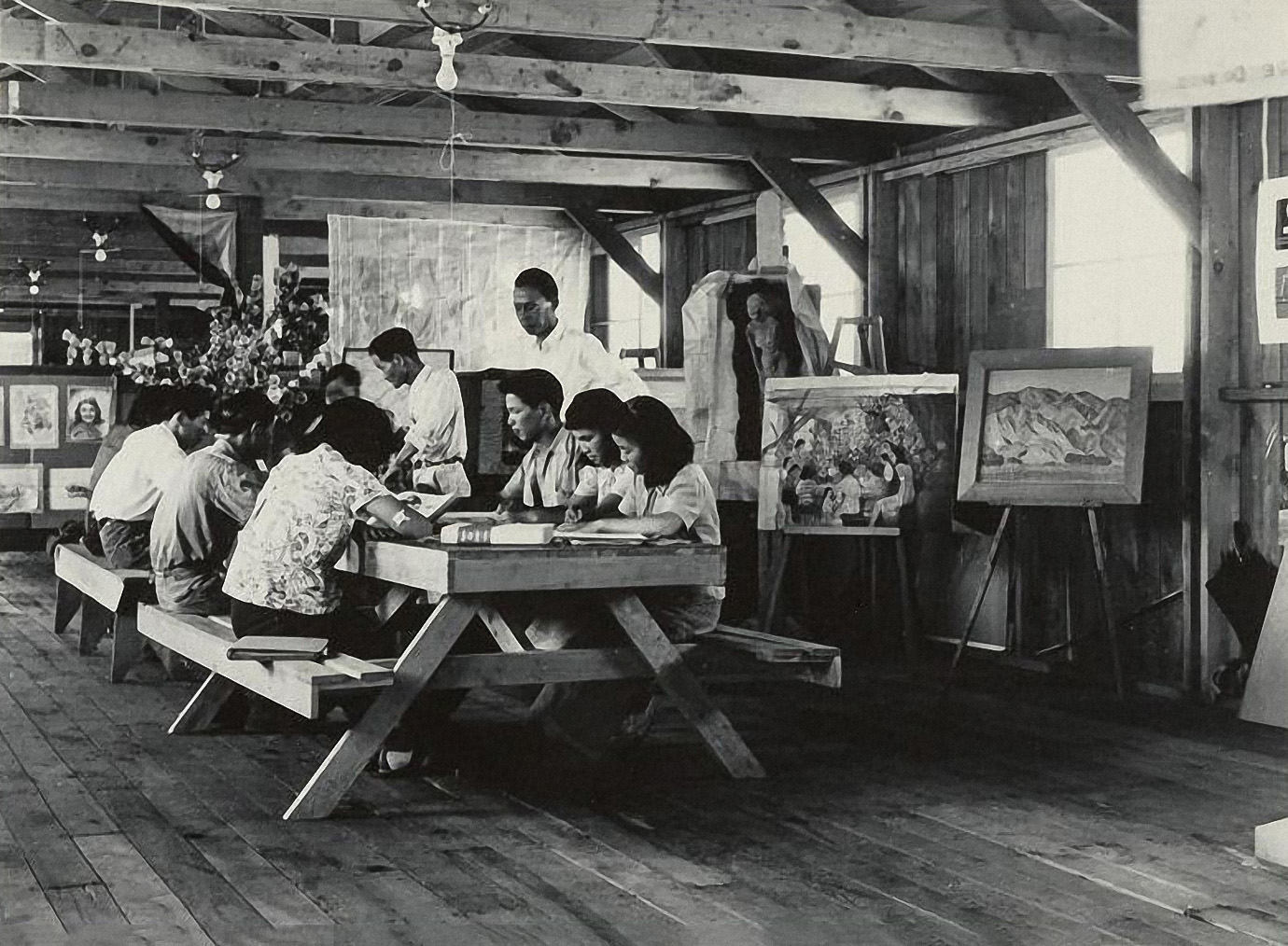 Class in the art school. Instruction is being given in oil and water color, life-drawing and sketching, lettering, poster-making and fashion drawing.- 1942 (Photo by Dorthea Lange courtesy of Online Archive of California) |
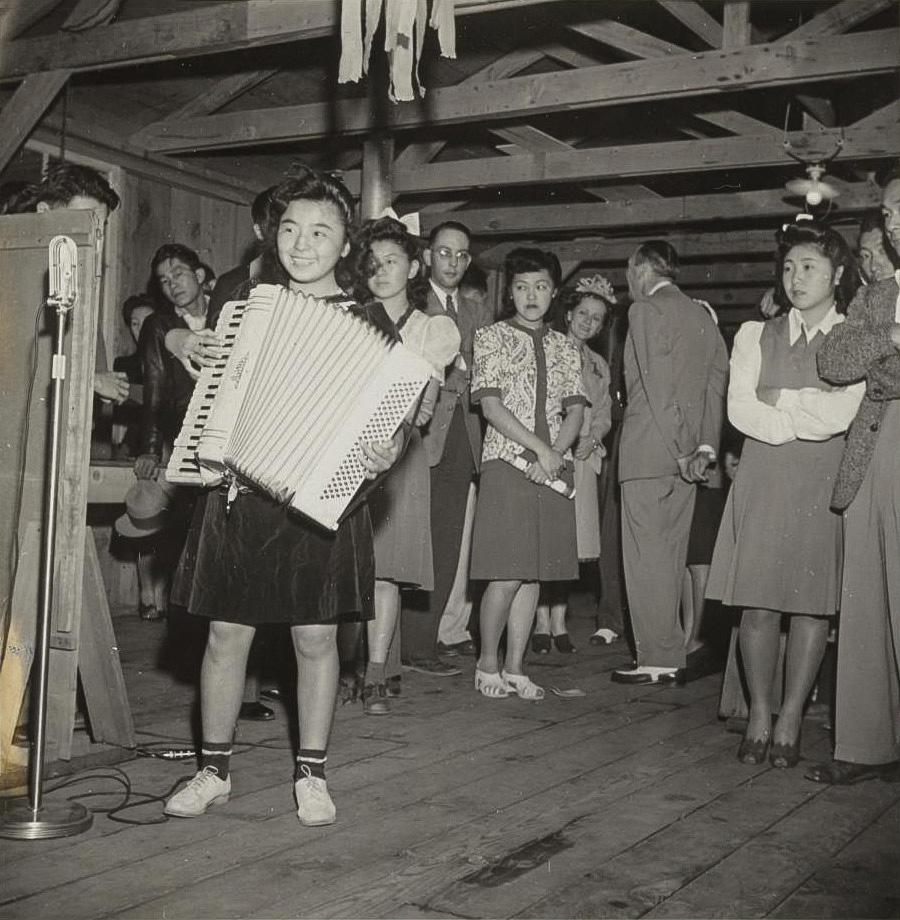 Young Japanese girl entertains on an accordion at at a dance given by the Girls' Recreation Committee - 1942 (Photo by Francis Stewart courtesy of Online Archive of California) |
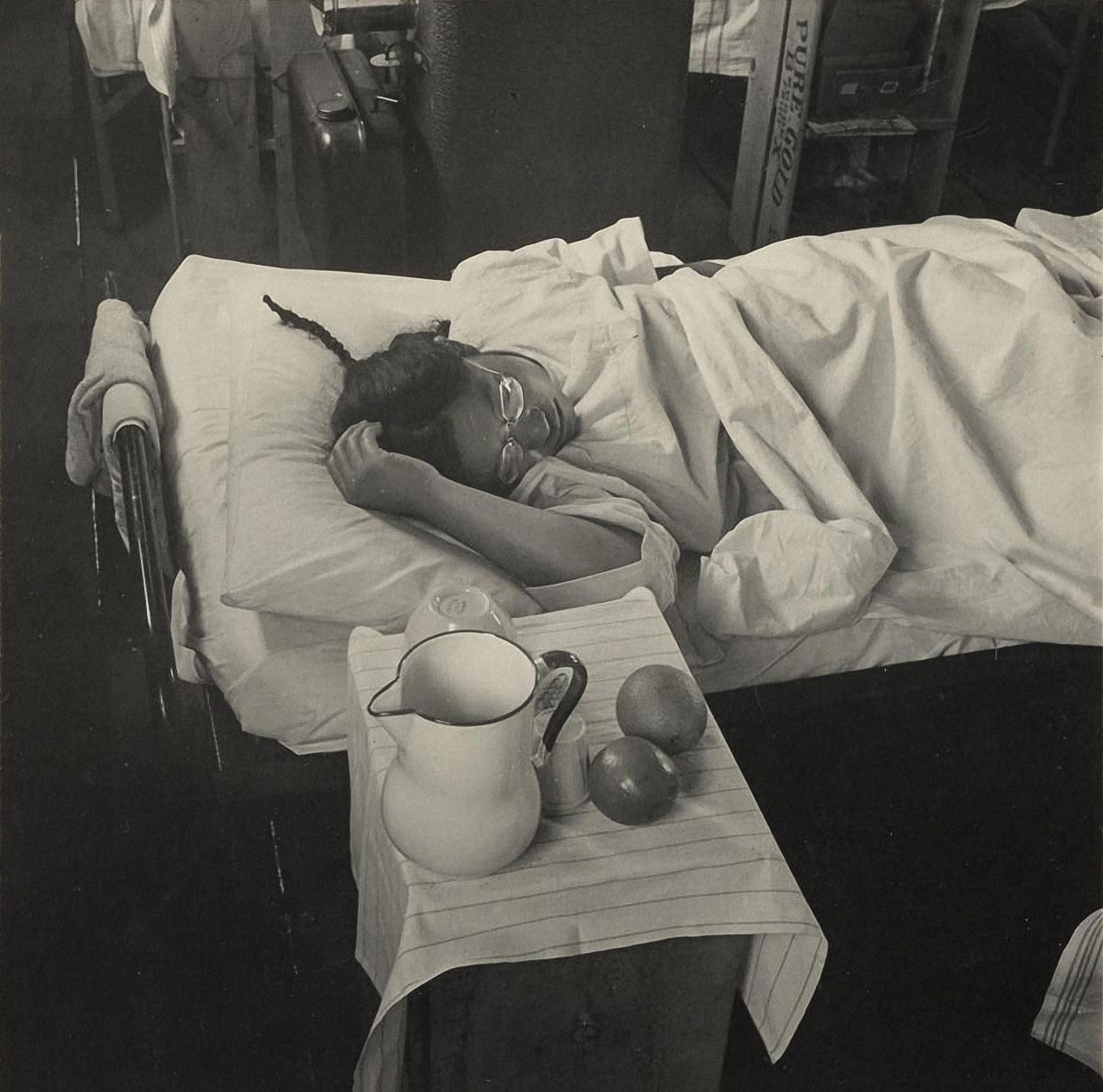 Women's ward in temporary barracks hospital at the WRA. The new hospital with accomodations for 250 beds is almost ready for occupancy. - 1942 (Photo by Dorthea Lange courtesy of Online Archive of California) |

|
Vintage Sierra Nevada Panoramas | |
|
Ghosts of the Past - Owens Valley Aqueduct & Cottonwood Sawmill | |
|
20-Mule-Team History |
|
|
More WW2
War Relocation Authority Center History |
 |
Manzanar High School |
|
|
Manzanar Journal - Berry Tamura |
|
|
Manzanar Town, Owens Valley |
|
  Sign Guestbook View Old Guest Book Entries Oct 1999 - Feb 2015 (MS Word) |
 CONTACT the Pigmy Packer |
 View Guestbook View Old Guest Book Entries Oct 1999 - Feb 2015 (PDF) |
 This page was last updated on 20 December 2024