See USE NOTICE on Home Page. |
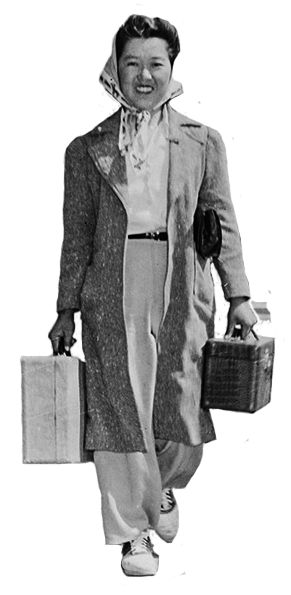
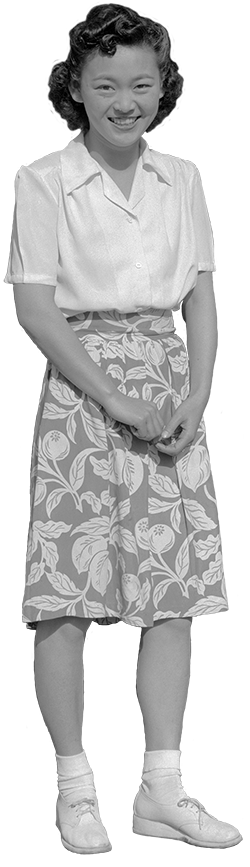
 These images are some of my favorite. There nearly 500 Manzanar internment images in the National Archives files. I encourage you to visit the archives and peruse the many photographs. Once you click on the icon above and are taken to the archives, type in "Manzanar" and then press "Display Results" and the images will be displayed in sets of nine. You might observe, as I did, that the internees appear rather unnaturally joyous in these pictures. I don't think that having been dislocated from their homes and businesses, forced to live in a harsh desert environment and confined to barracks with no insulation would have made them this happy. But as Jeanne Wakatsuki points out in her book, Farewell to Manzanar, Japanese Americans told each other very quietly to "Shikata ga nai" ("It must be done", or, as my Japanese friend says, "Suck it up [and get on with life]." Perhaps this is what encouraged them to put a smile on their face. |

Unless specified otherwise, individuals were all from the Manzanar WRA center. |
Manzanar Officially Closes
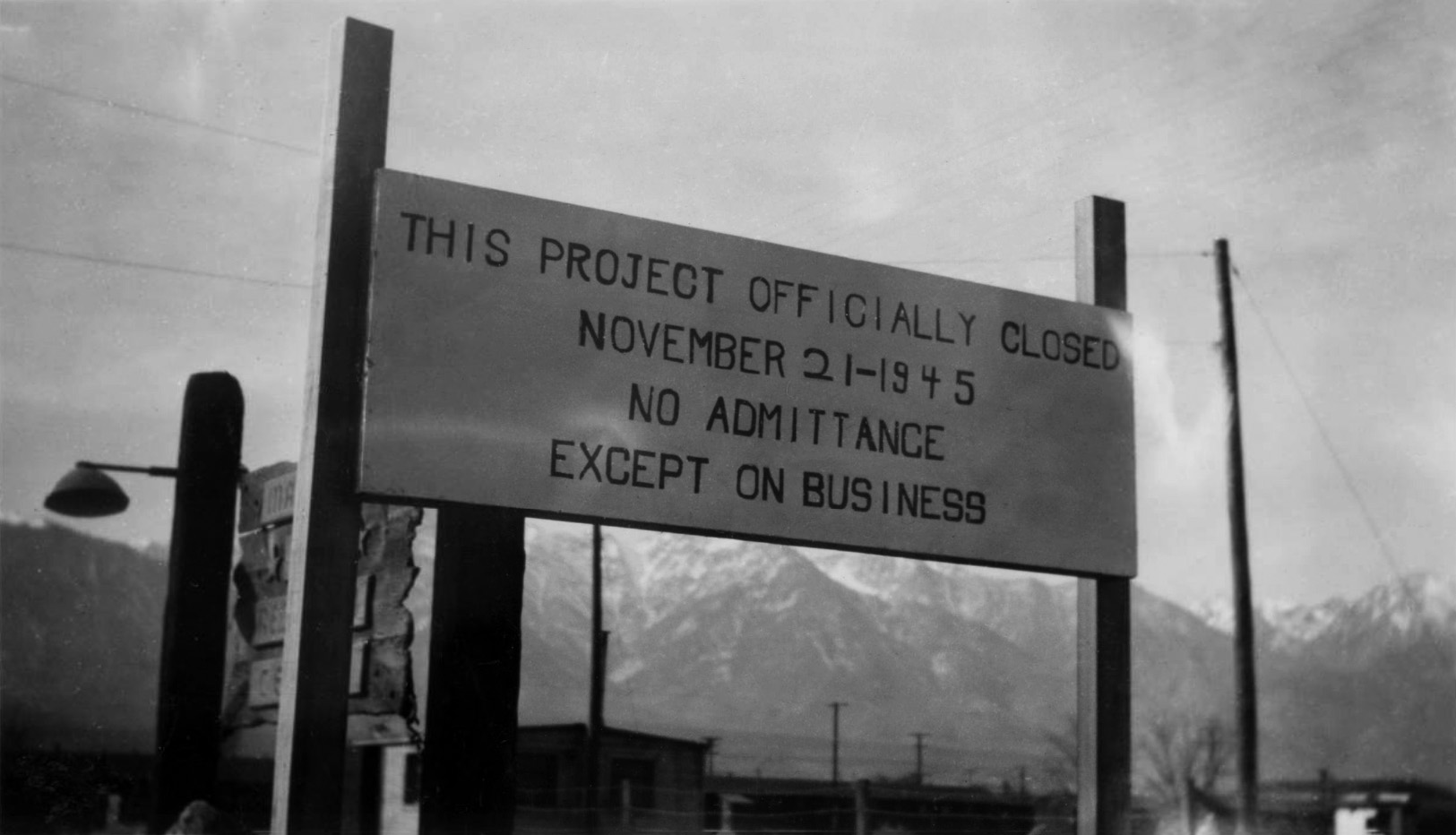 Official closing of the Manzanar War Authority Relocation Center - November 21, 1945 |
|
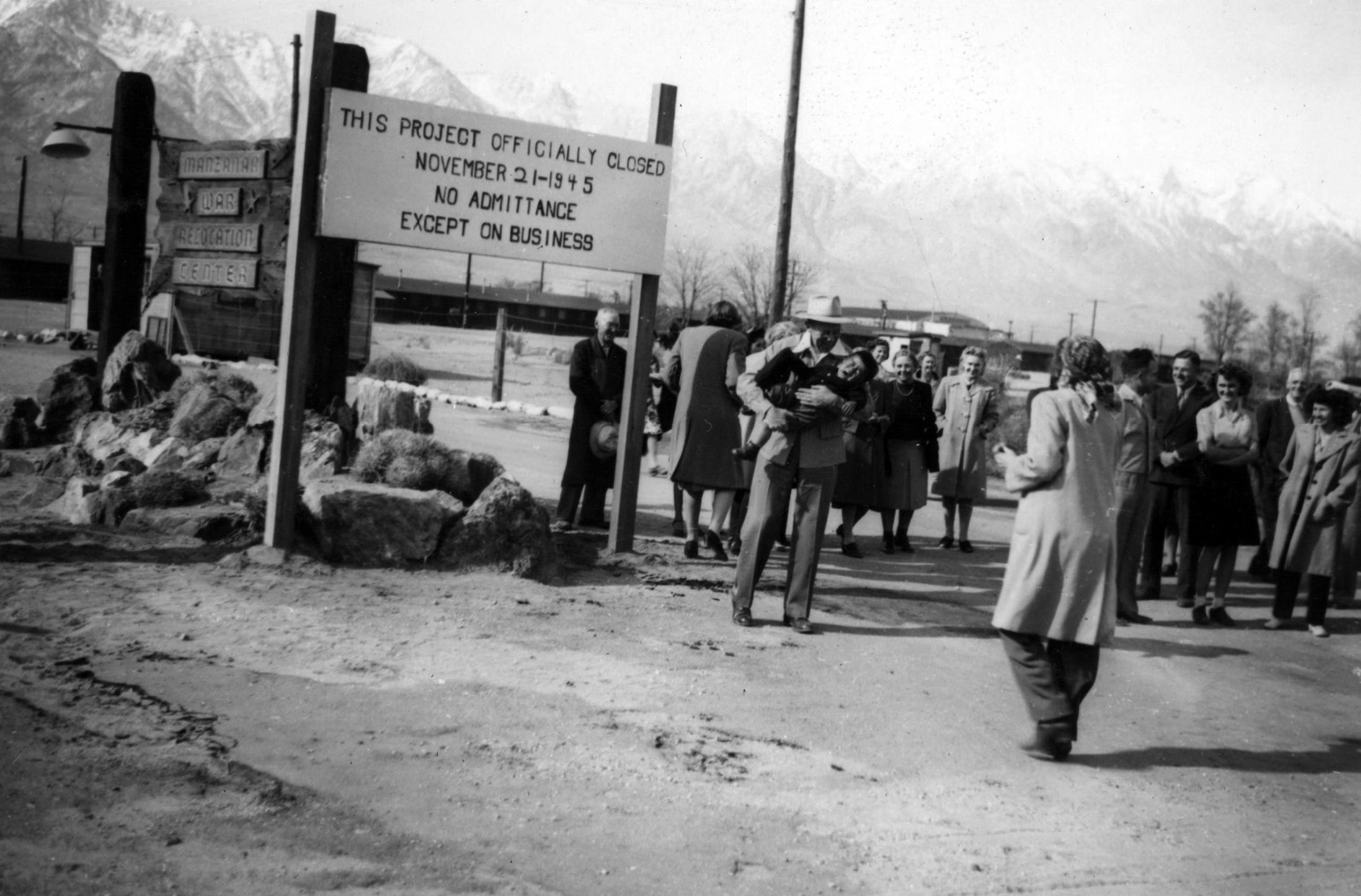 Closing of the Manzanar |
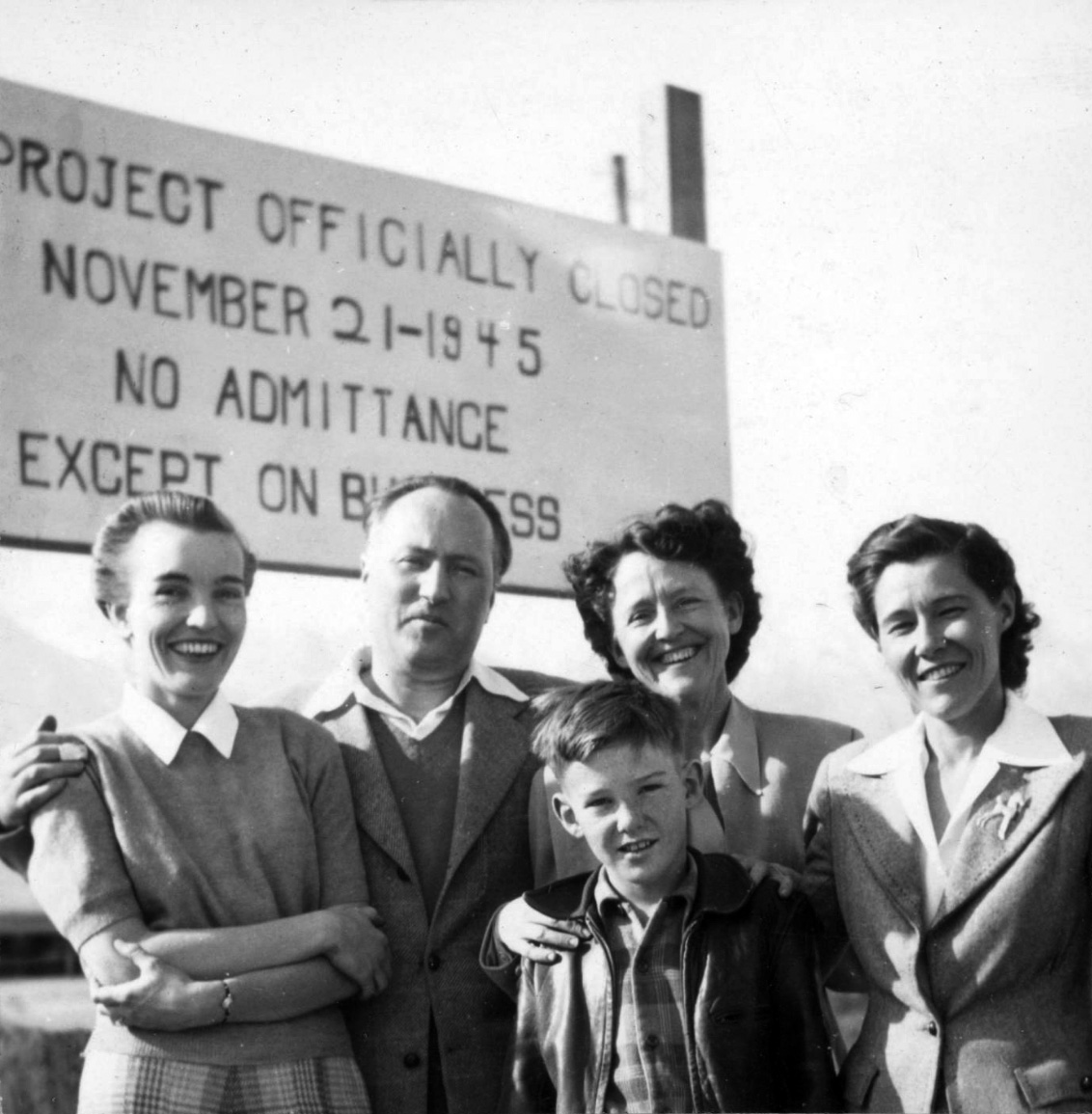 Bea White and son with Lucille Bouche and Elizabeth Moxley at the closing of Manzanar |
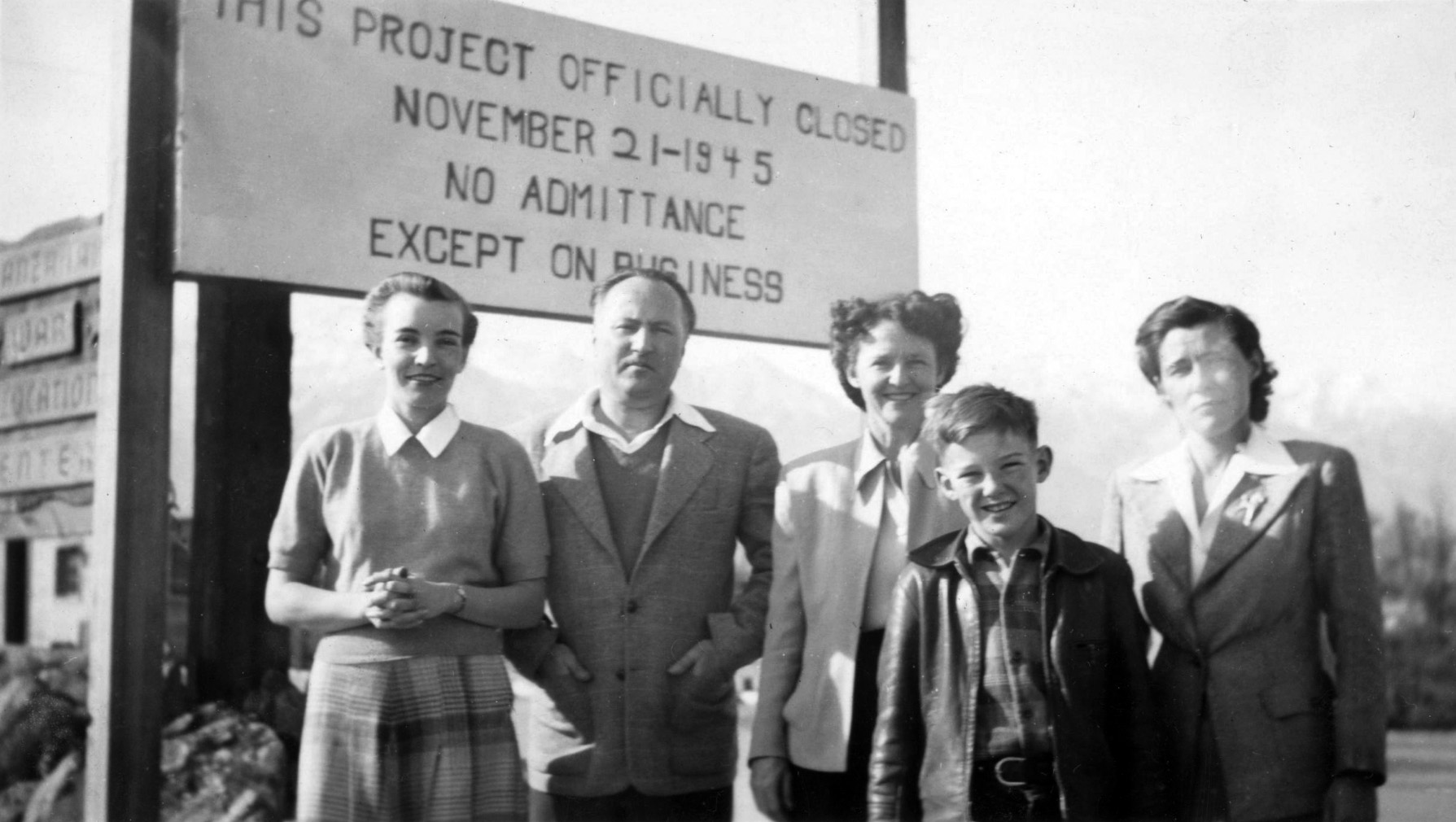 Bea White and son with Lucille Bouche and Elizabeth Moxley at the closing of Manzanar |
|
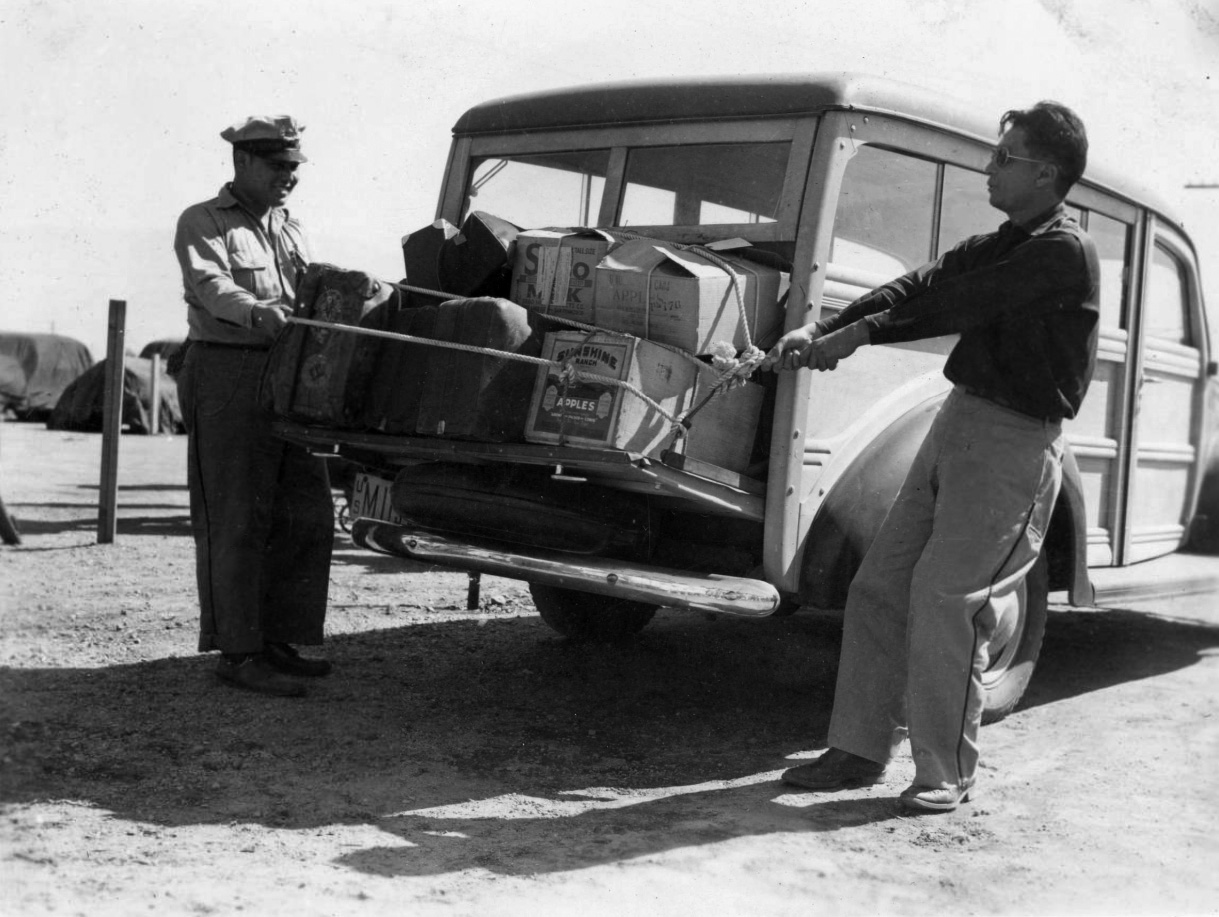 Patrolman Howard Kumagi and Assistant Chief Kiyoshi Higashi assisting in a routine departure from the Police Station at Manzanar |
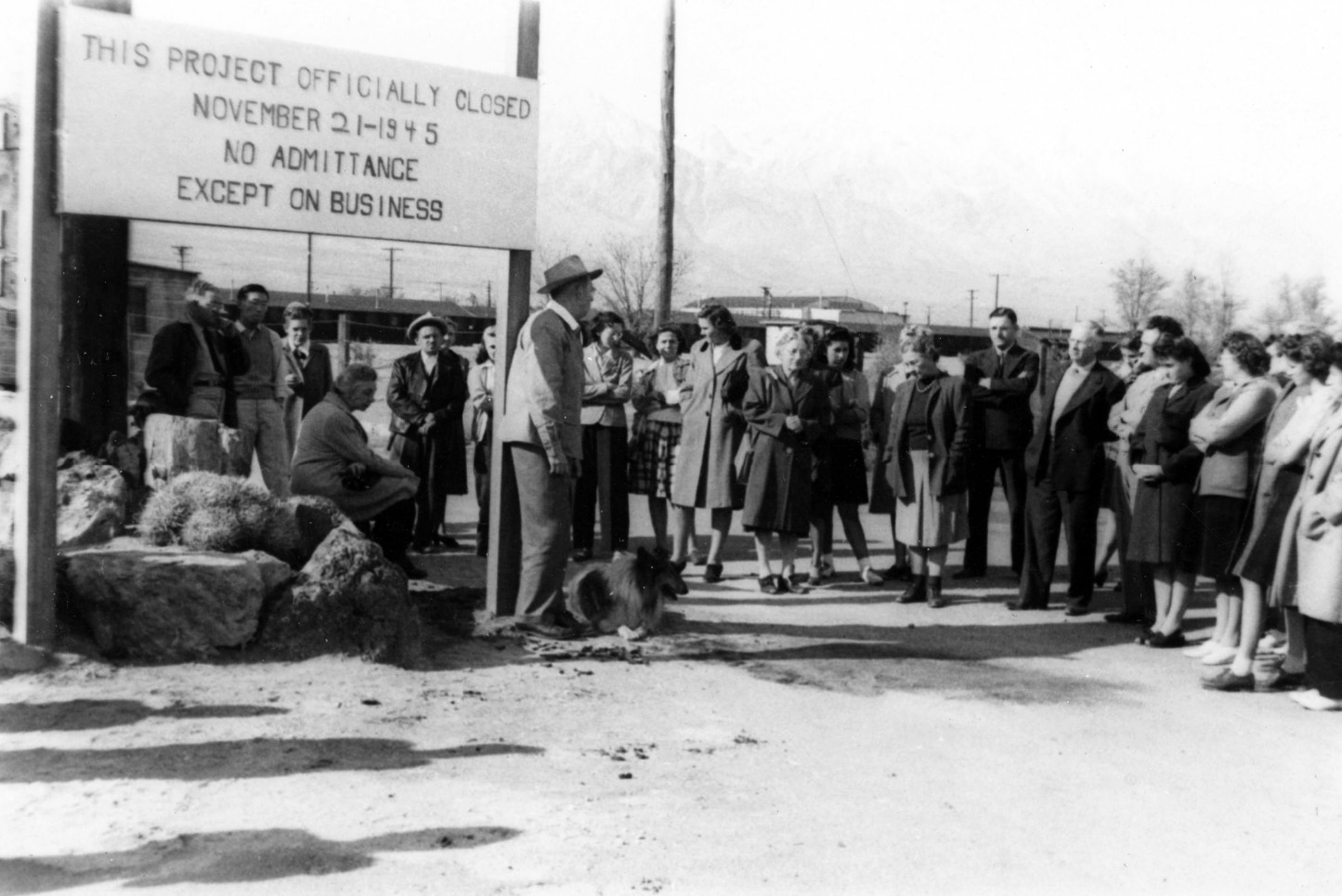 Closing of the Manzanar |
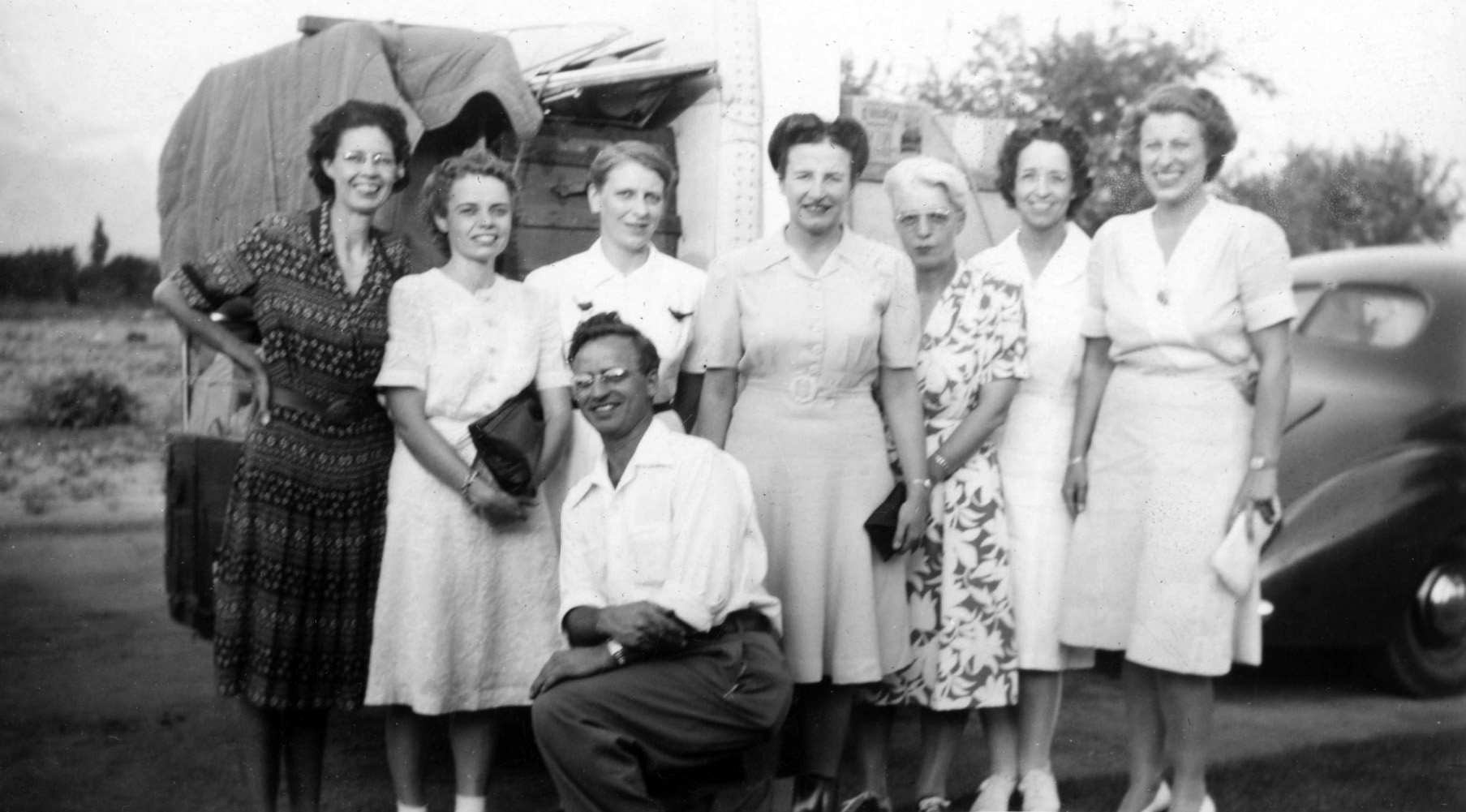 Dr. Morse and Christine Little (L) posing with other hospital nurses as the Little family gets ready to depart Manzanar. (Photograph courtesy of Calisphere) |
|
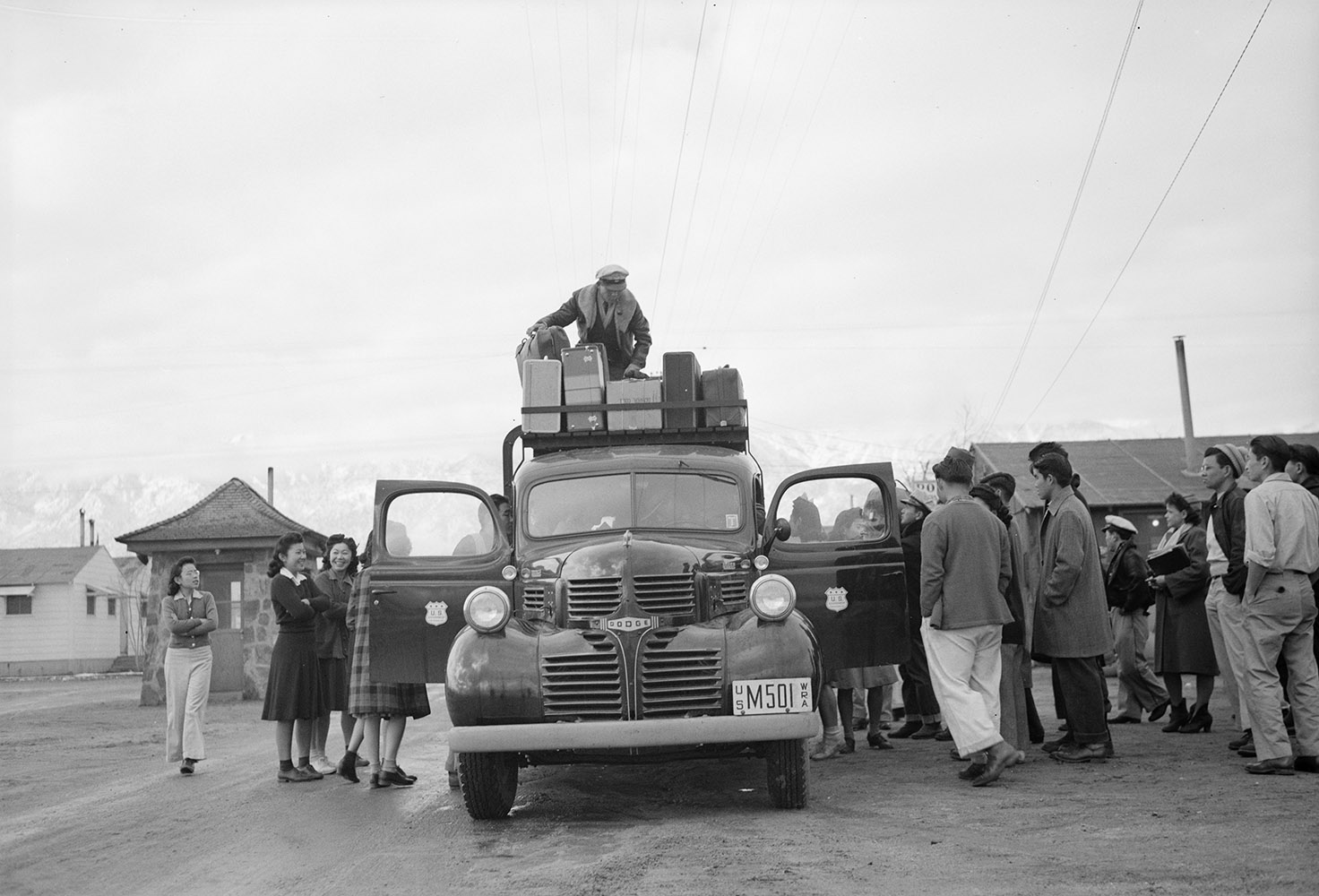 Packing up and leaving Manzanar. (Photographer - Ansel Adams) |
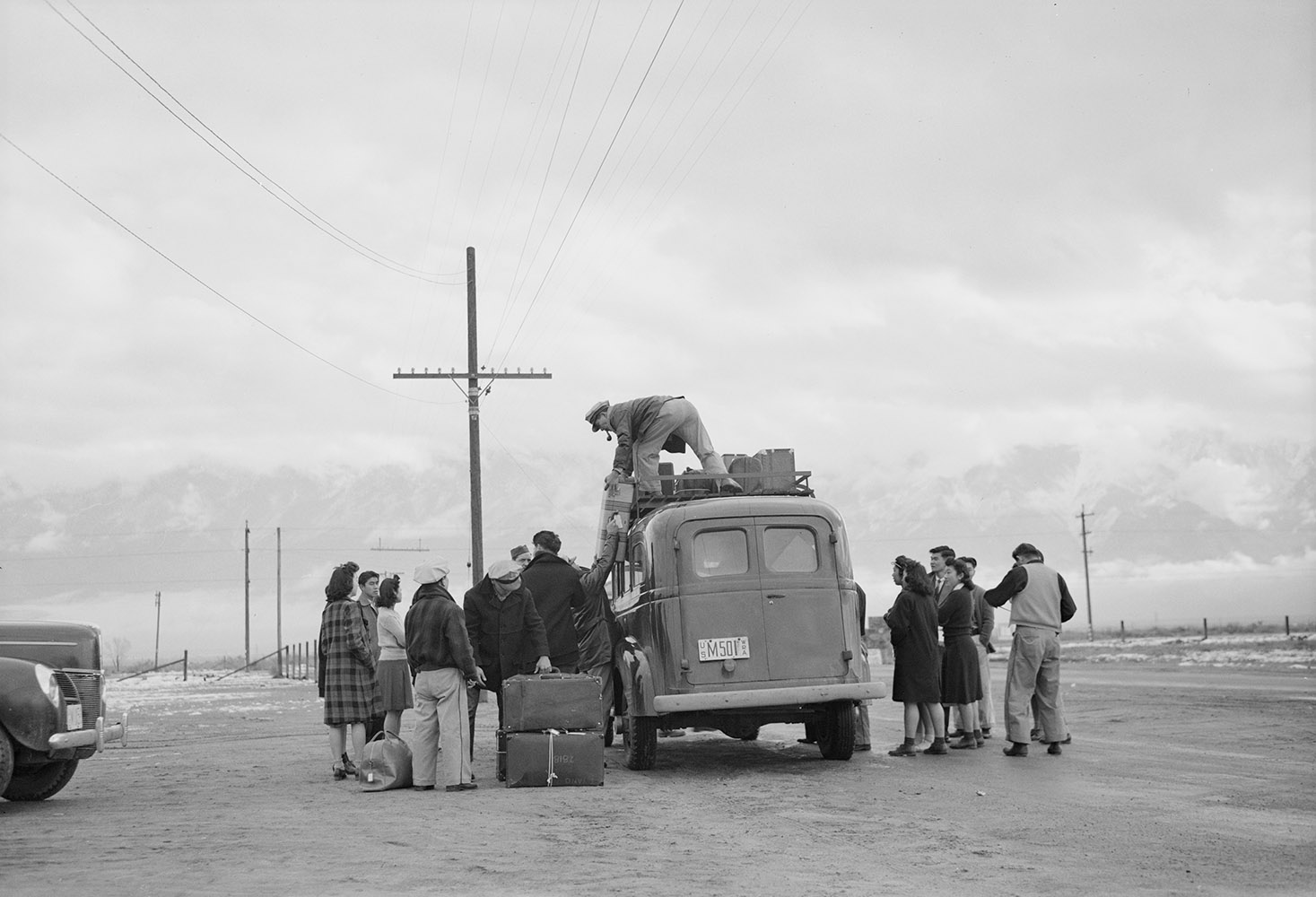 Packing up and leaving Manzanar. (Photographer - Ansel Adams) |
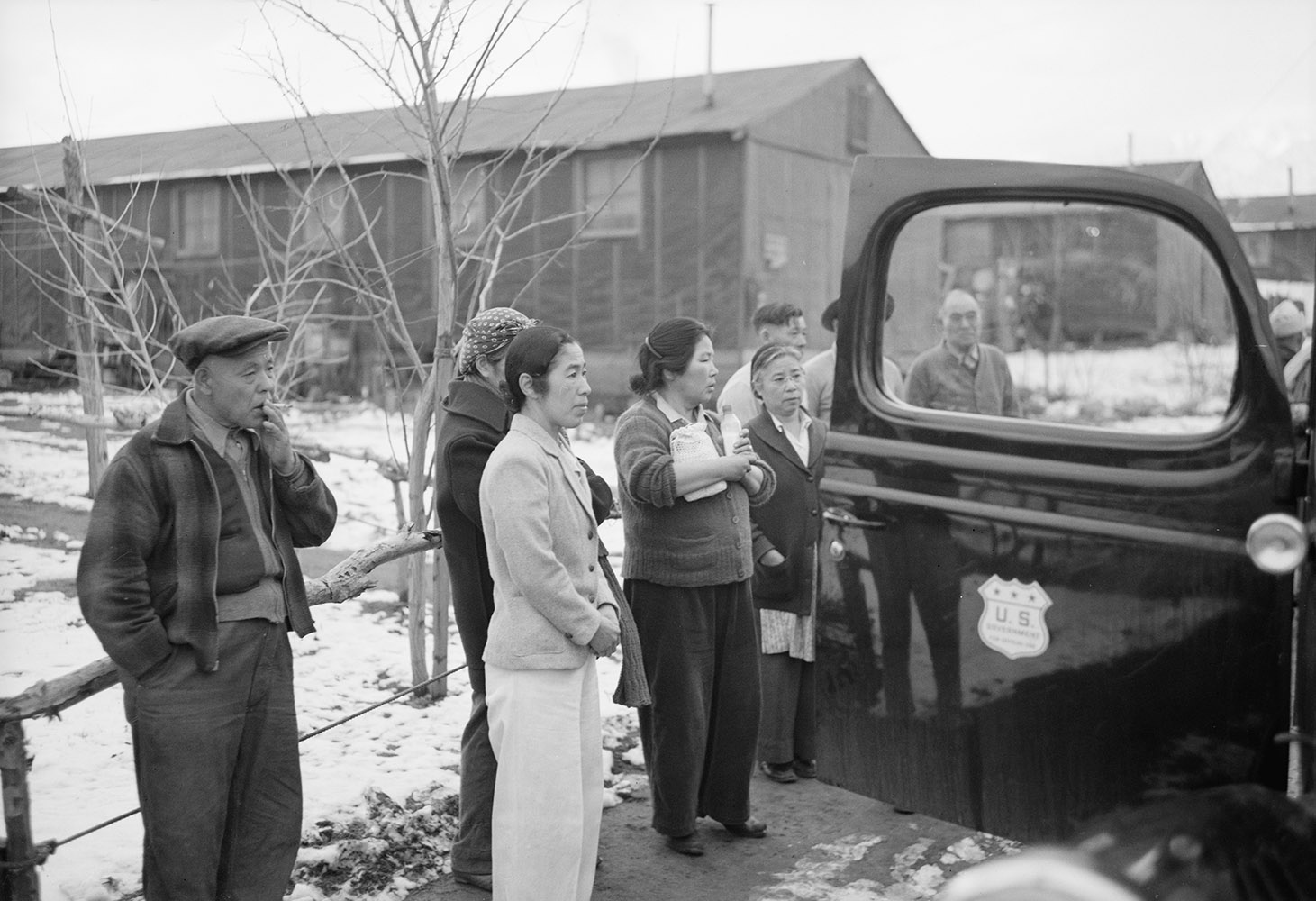 Packing up and leaving Manzanar. (Photographer - Ansel Adams) |
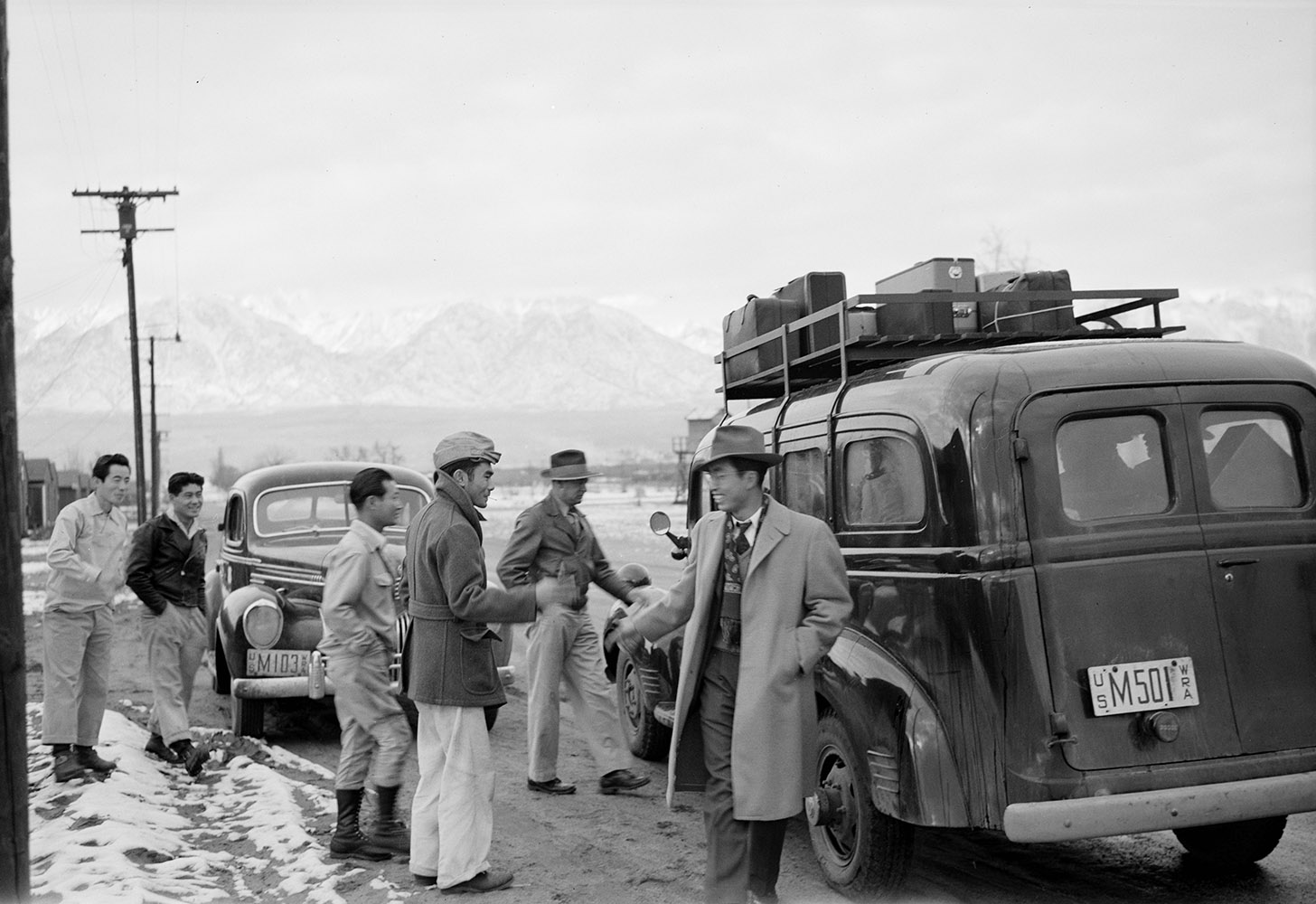 Packing up and leaving Manzanar. (Photographer - Ansel Adams) |
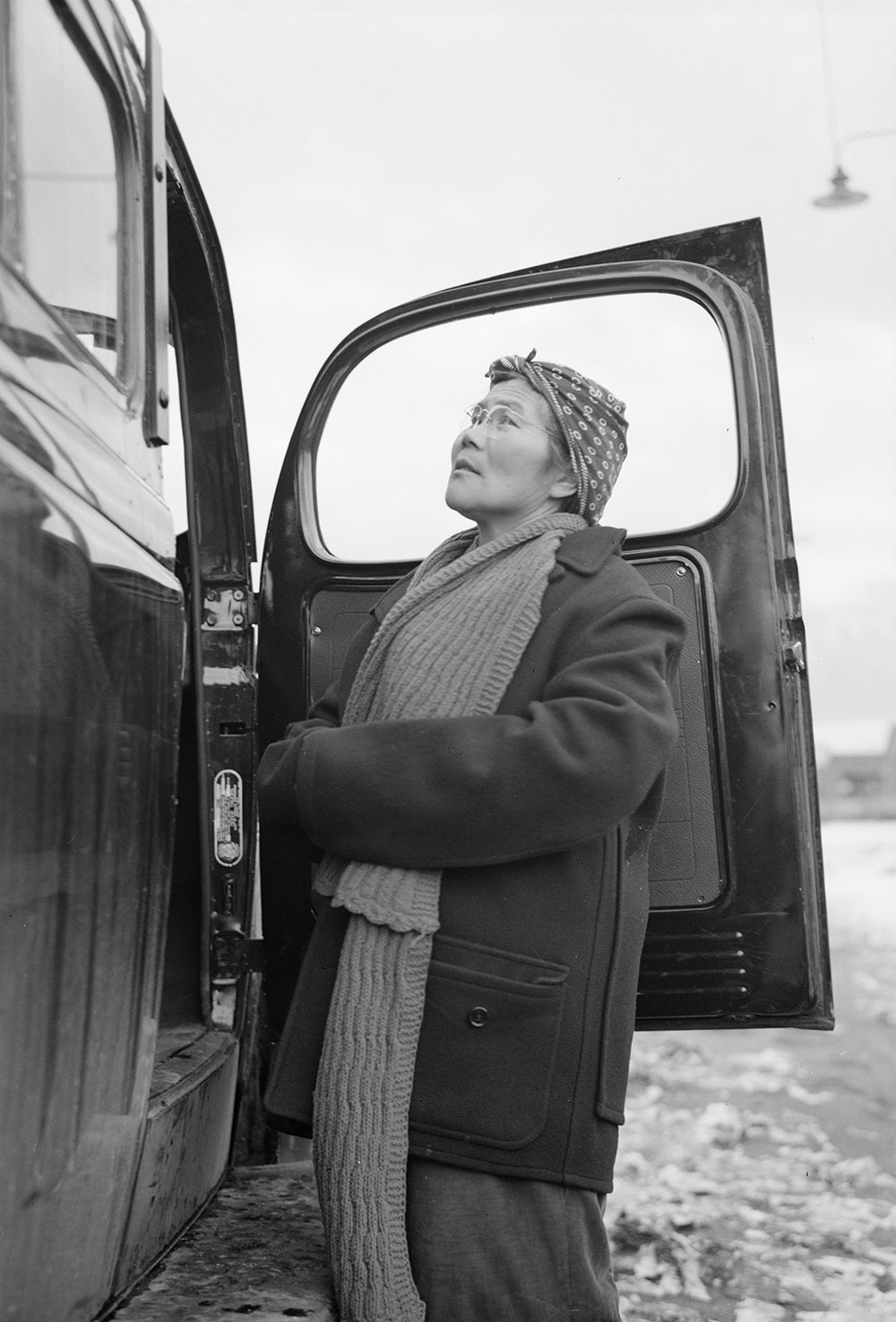 Packing up and leaving Manzanar. (Photographer - Ansel Adams) |
|
 11/24
11/24Manzanar photos courtesy of eBay |
|
 |
 |
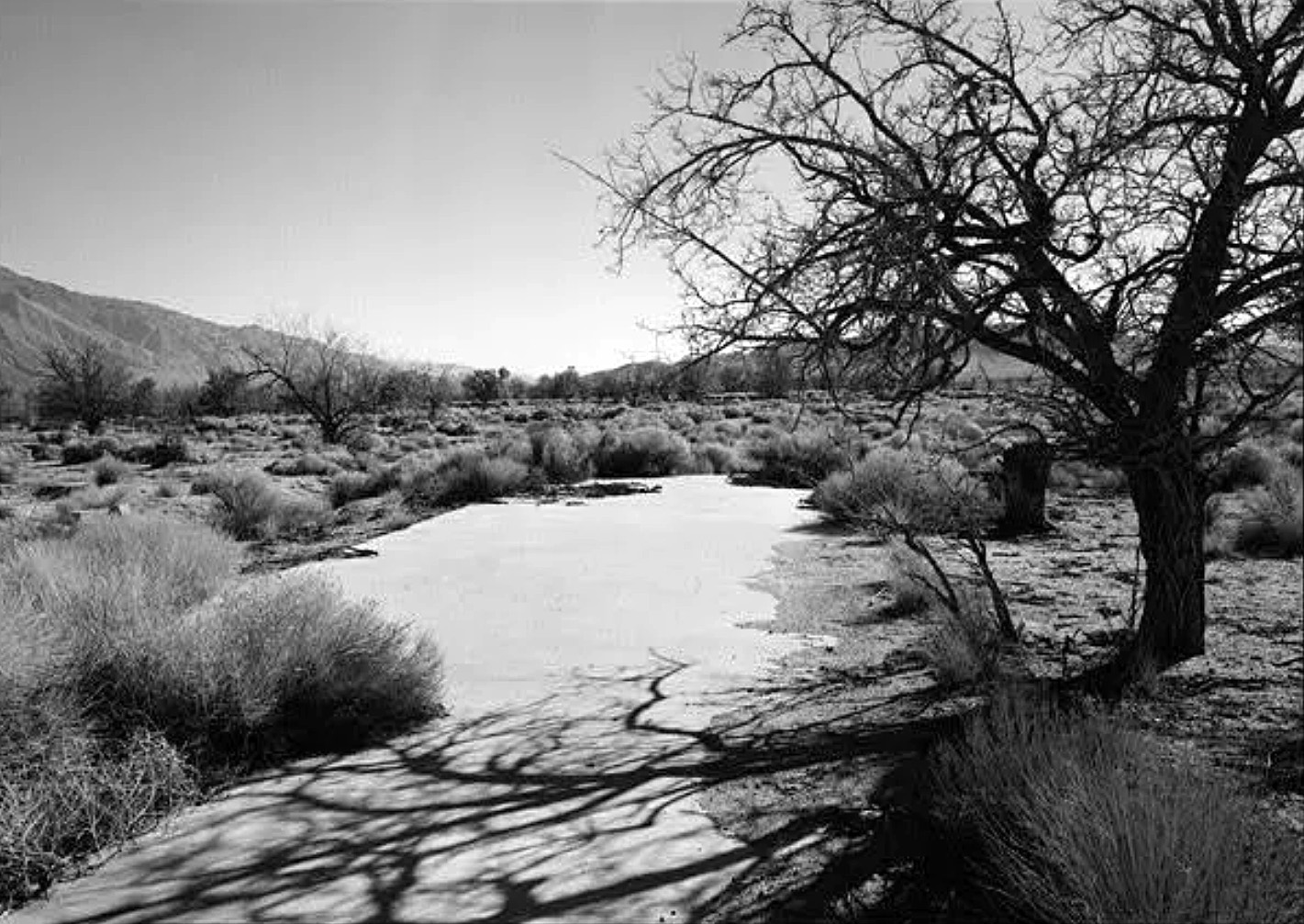 |
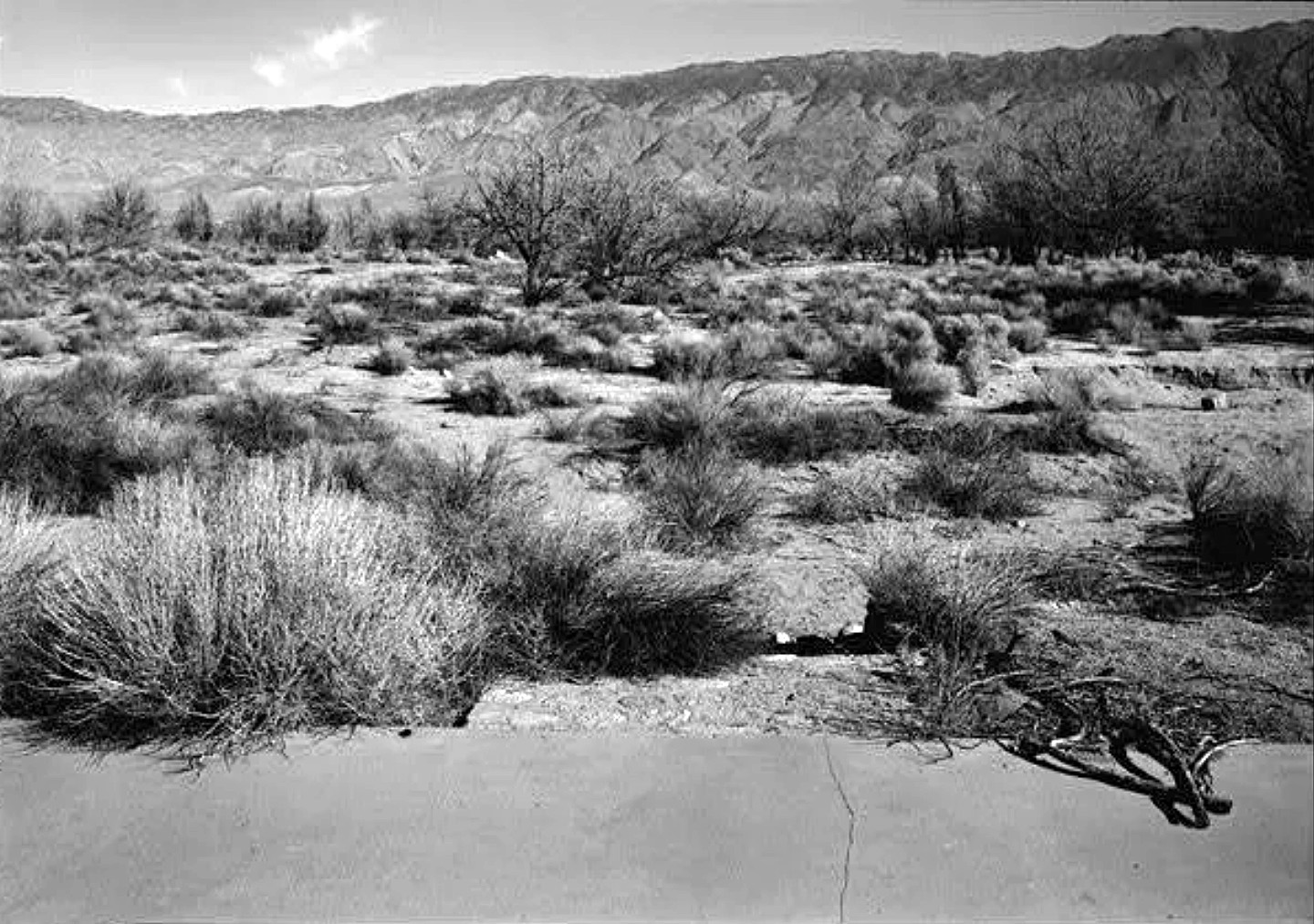 |
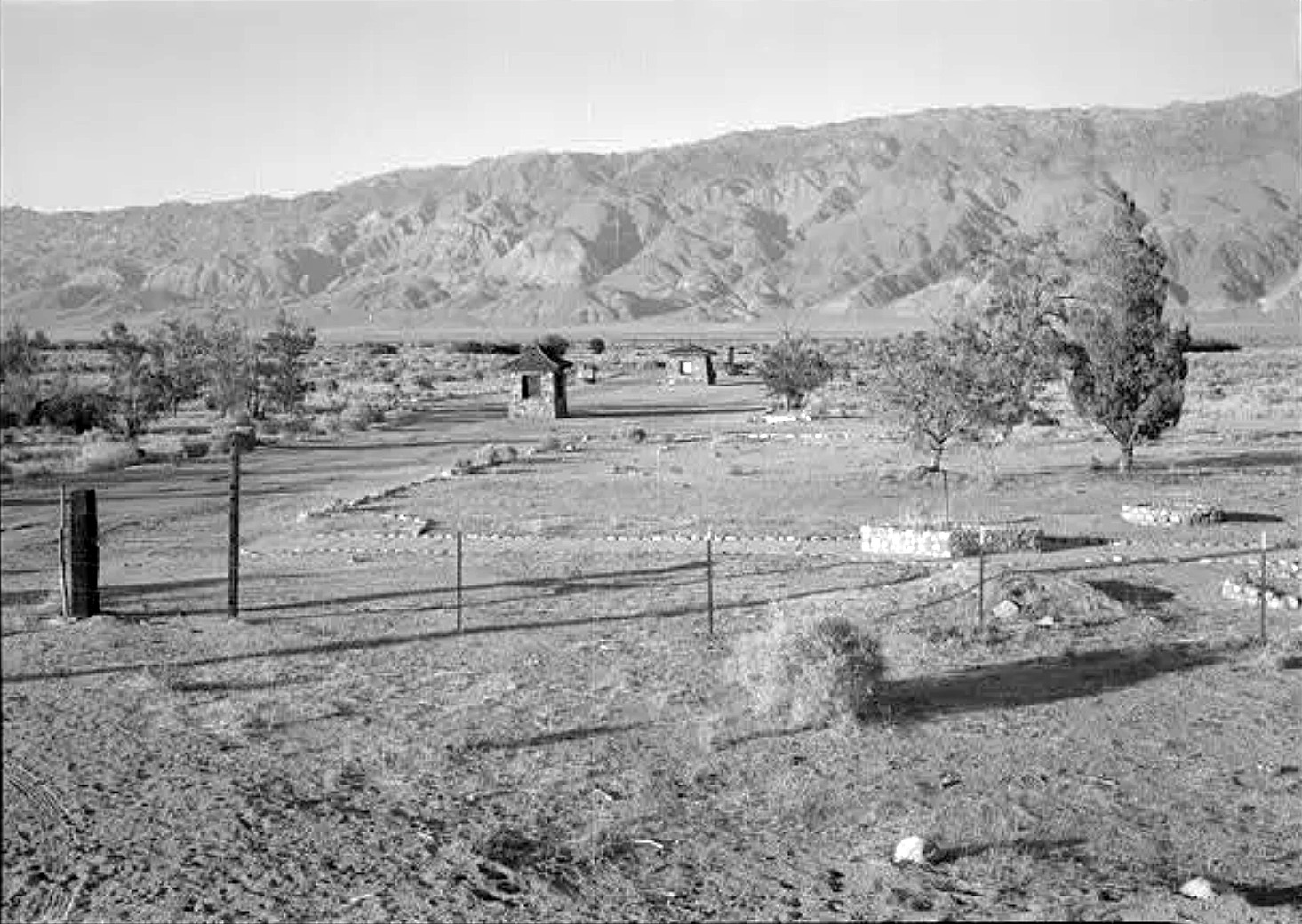 |
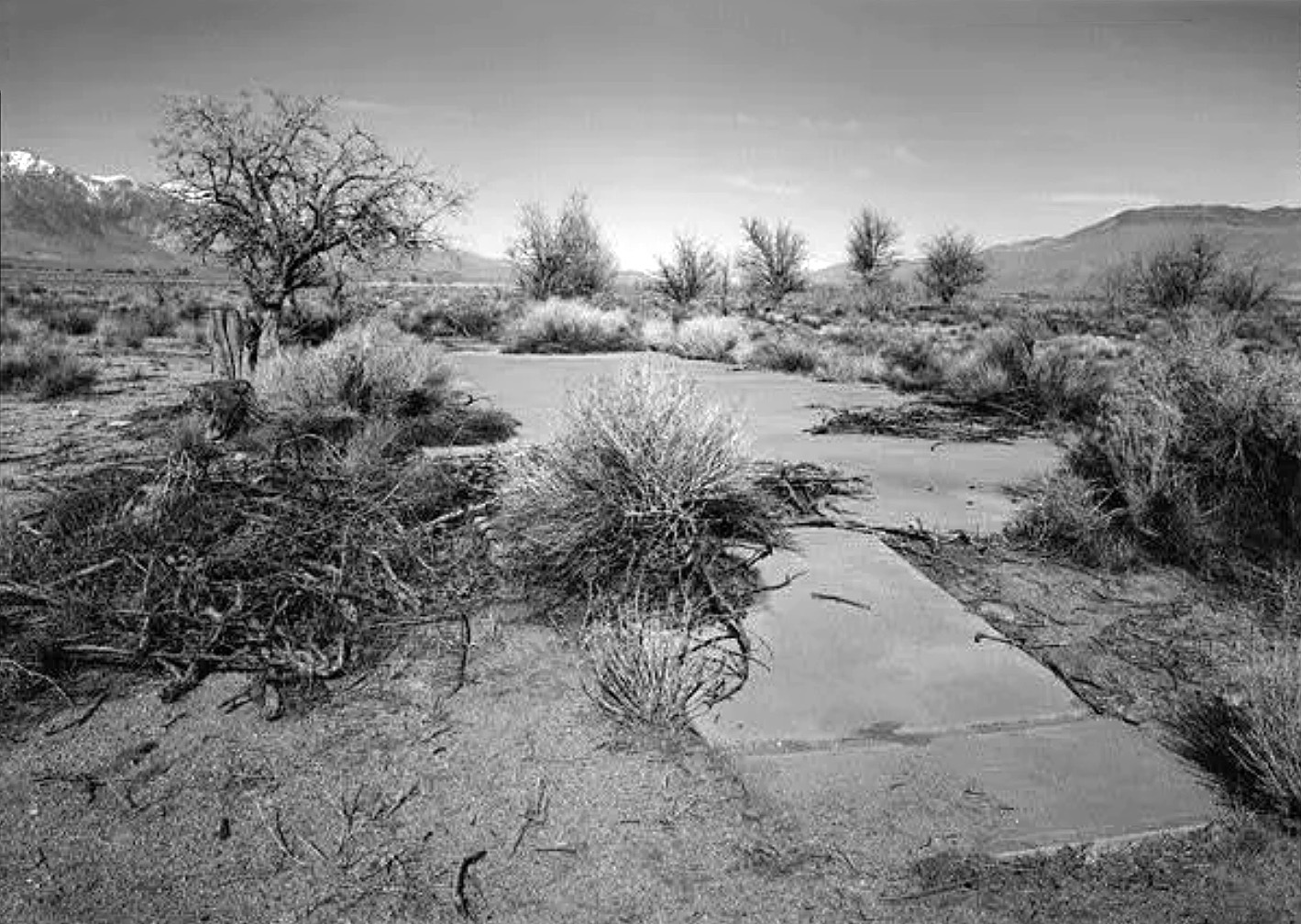 |
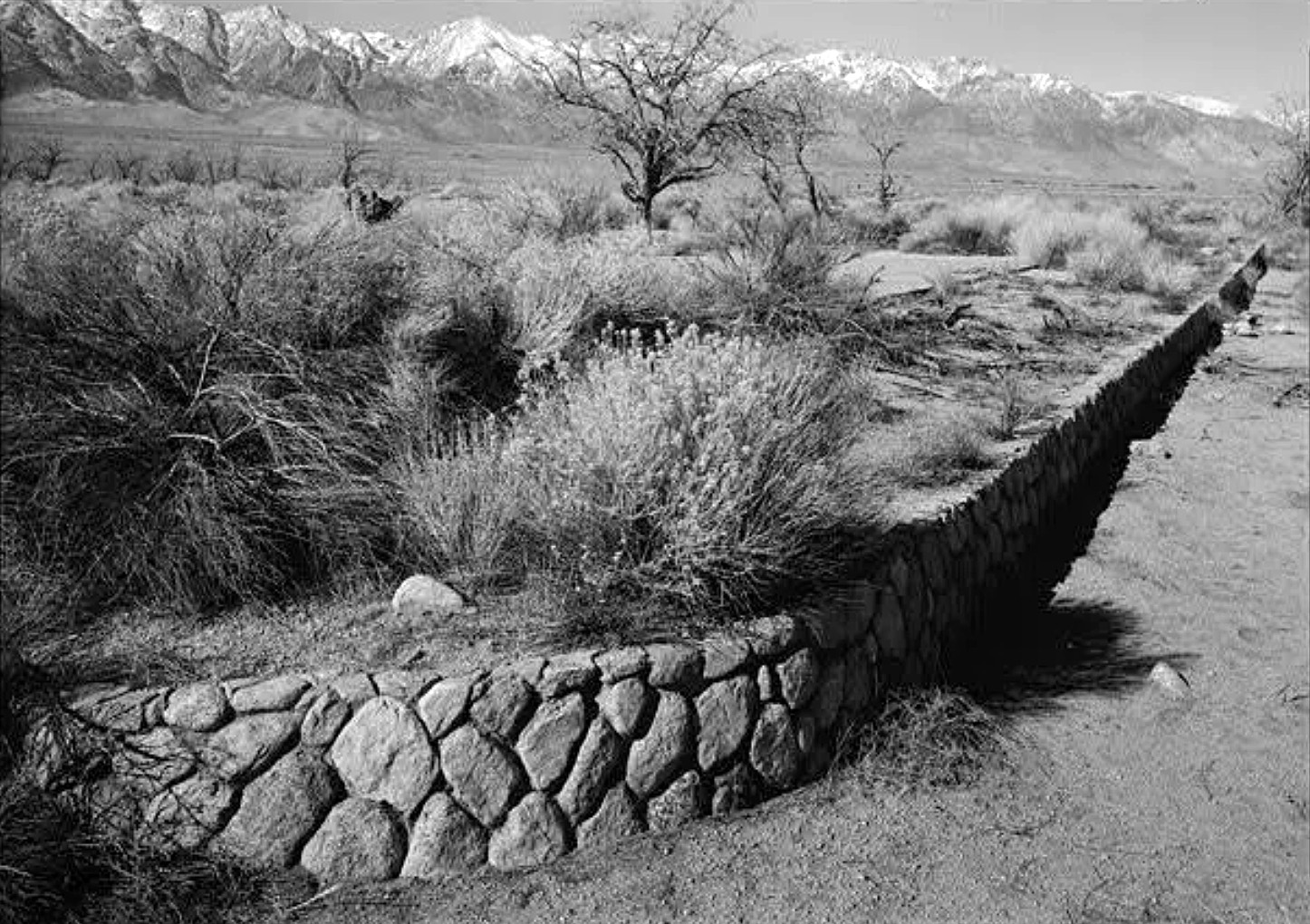 |
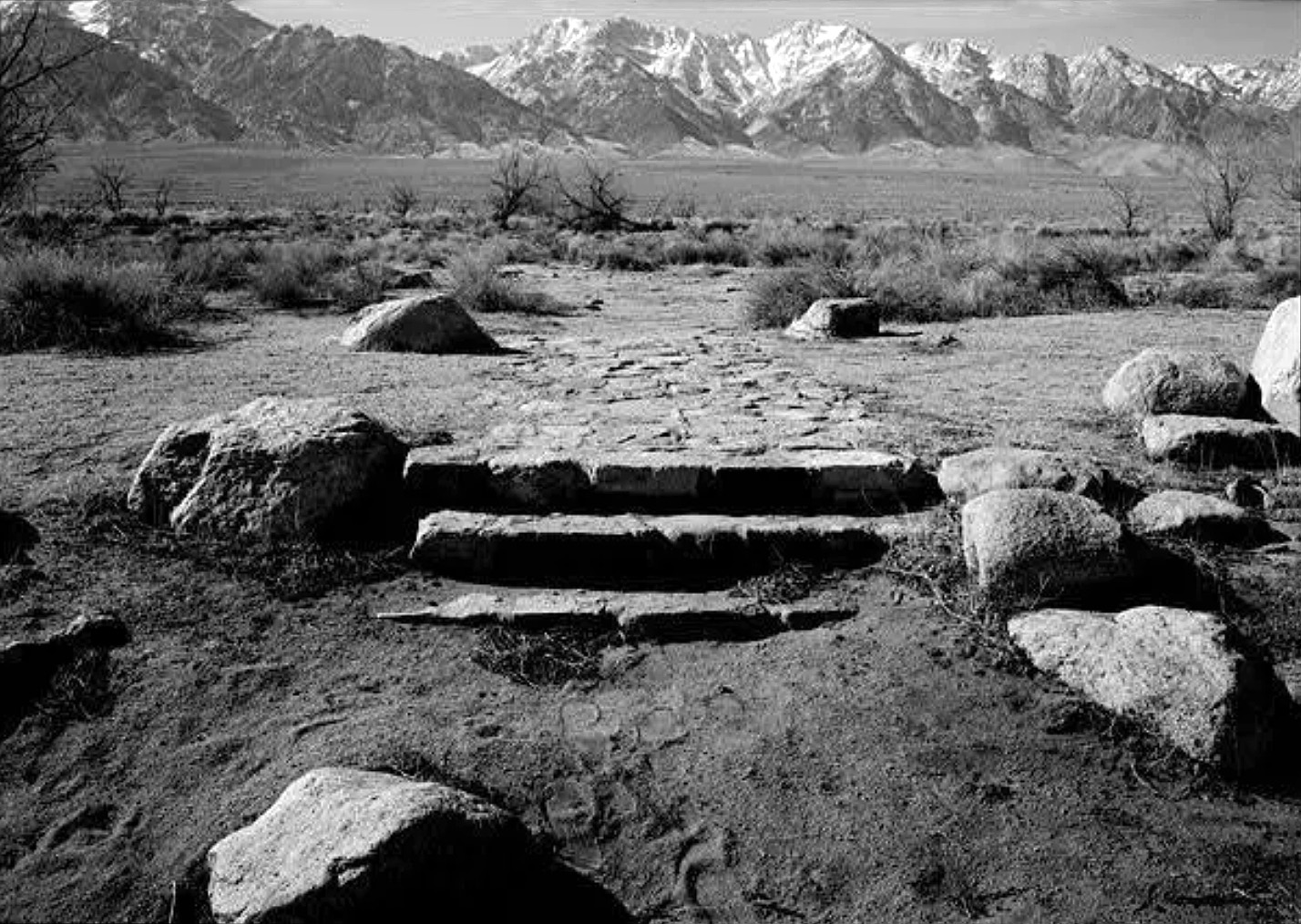 |
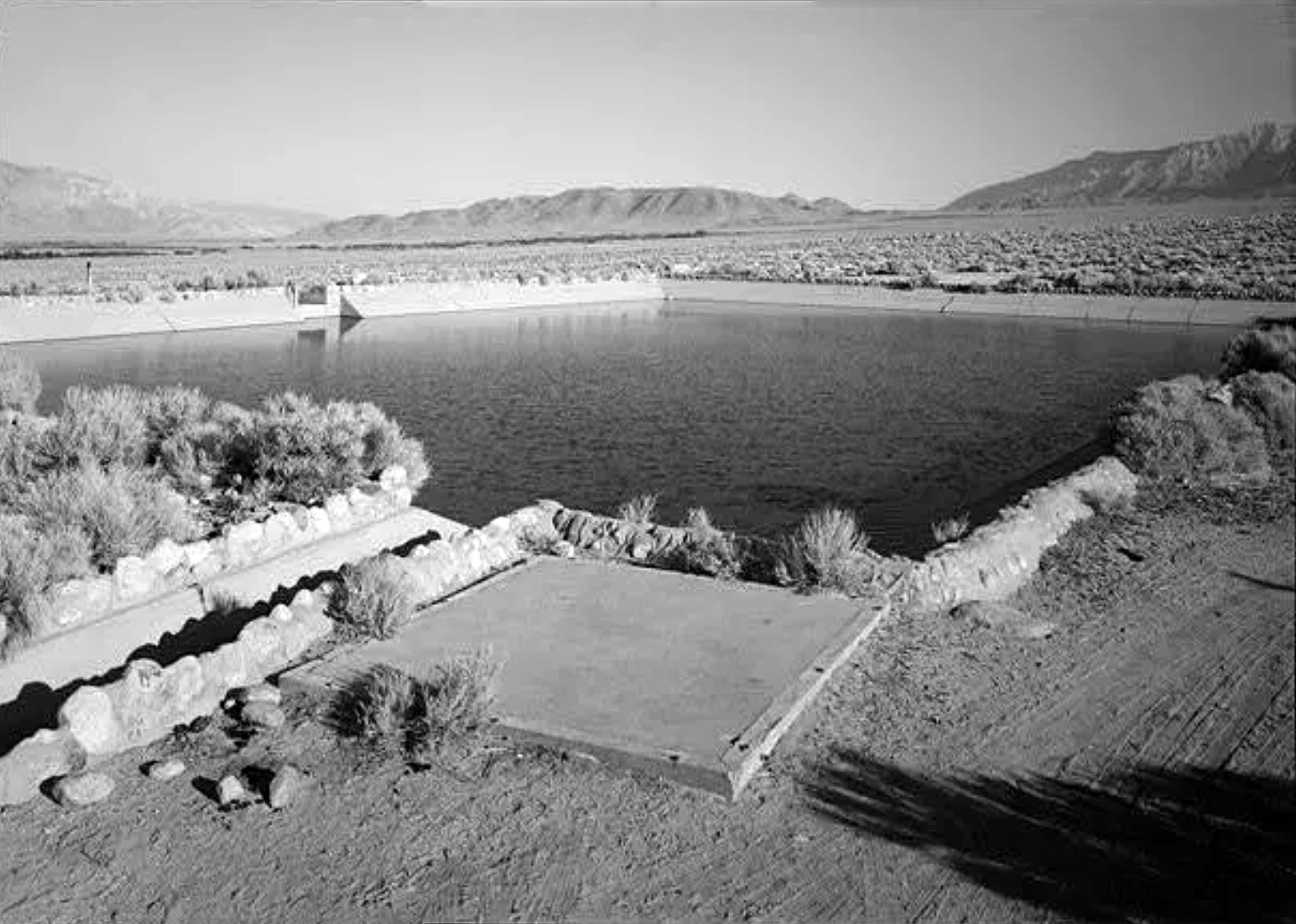 |
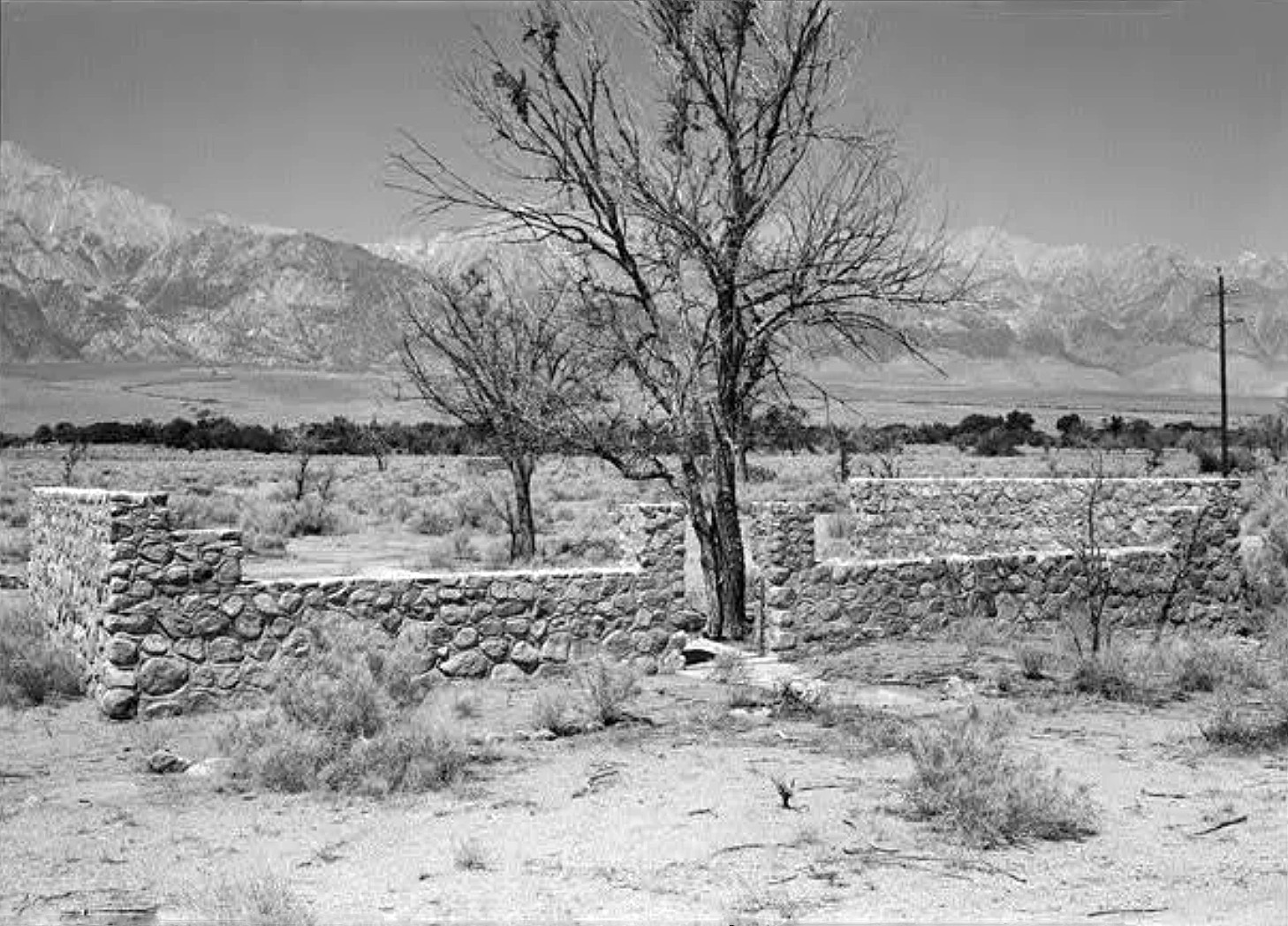 |
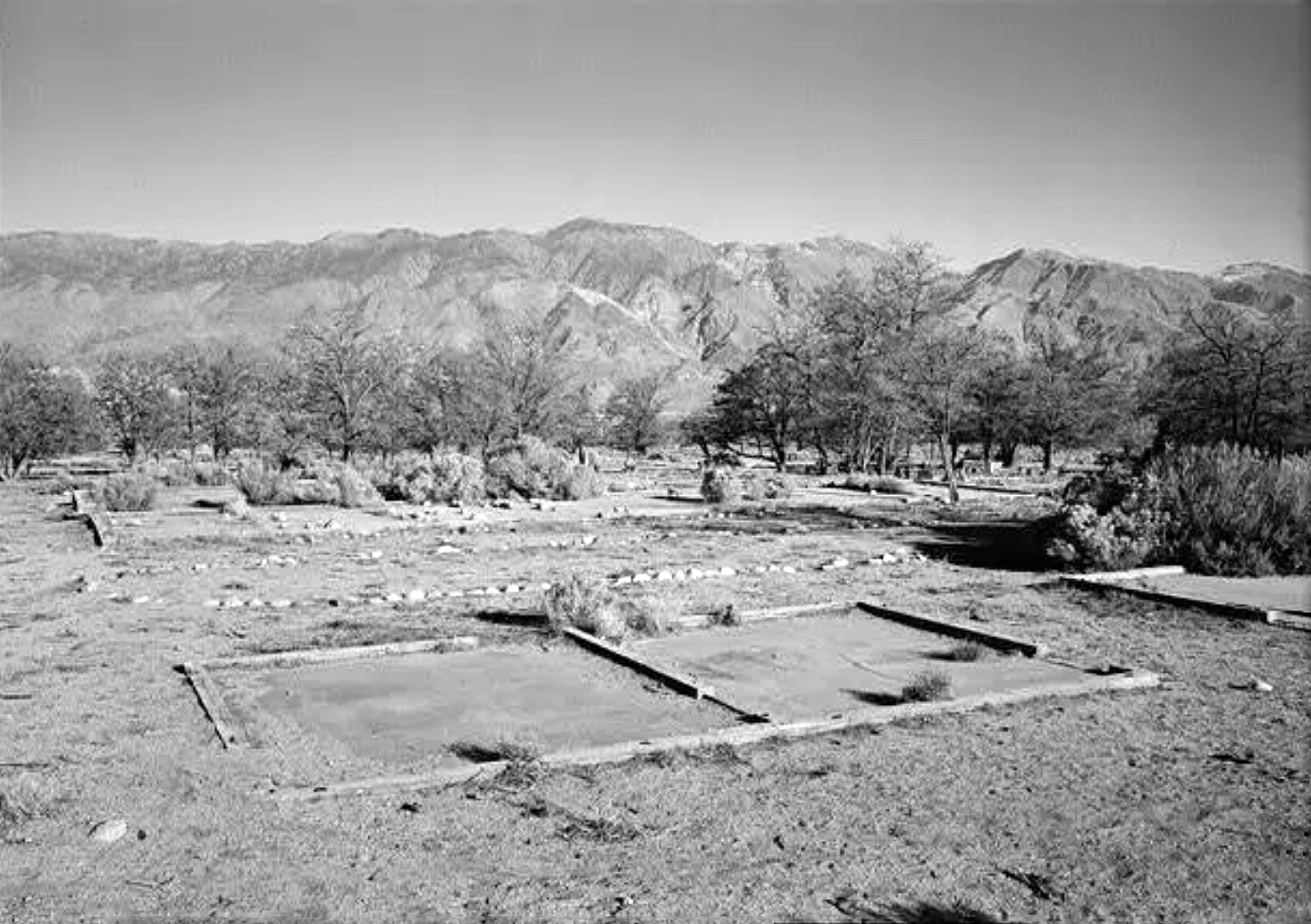 |
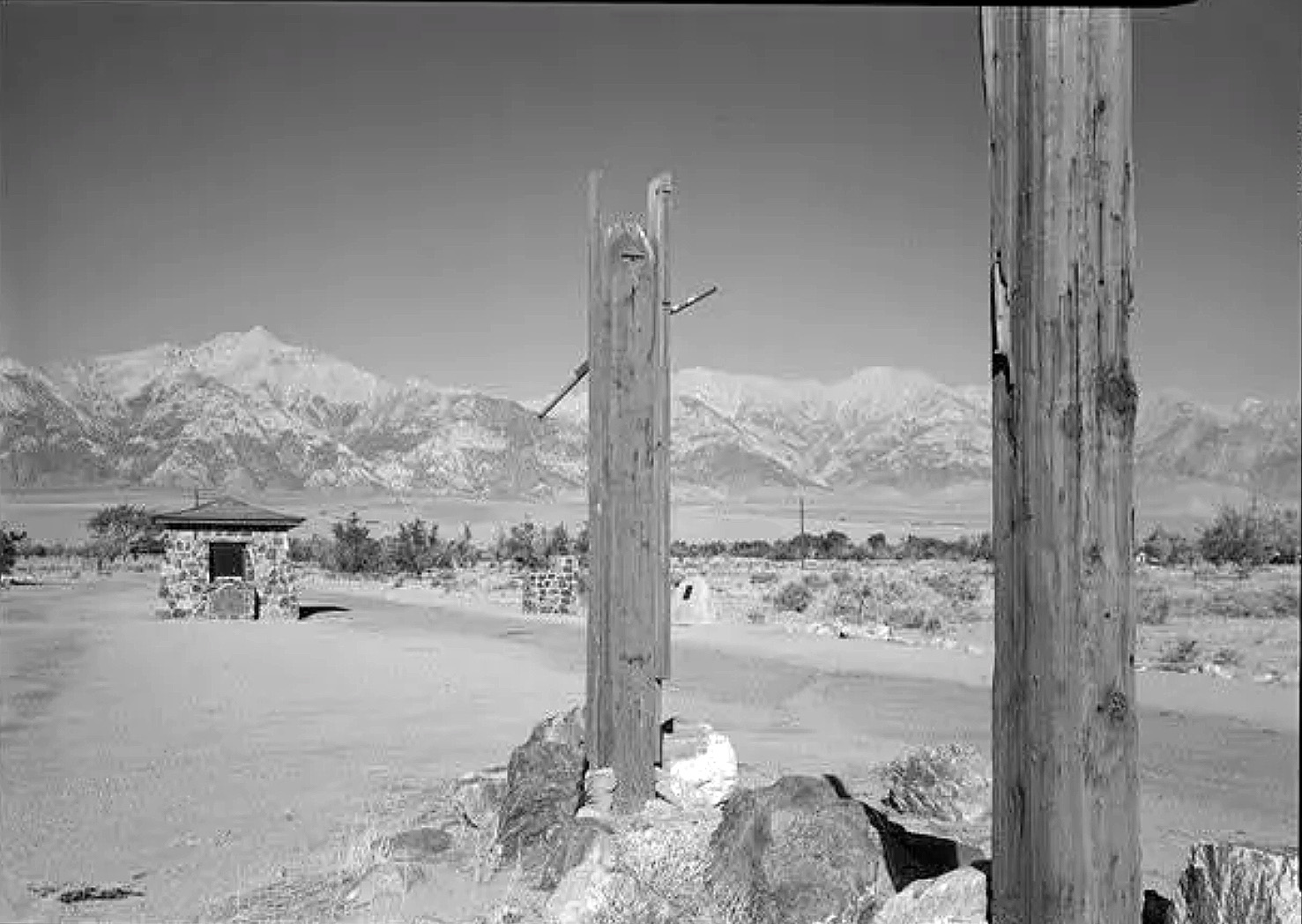 |
Manzanar's Merritt Park (Photos and text courtesy of Gerald Masahiro Sato) |
|
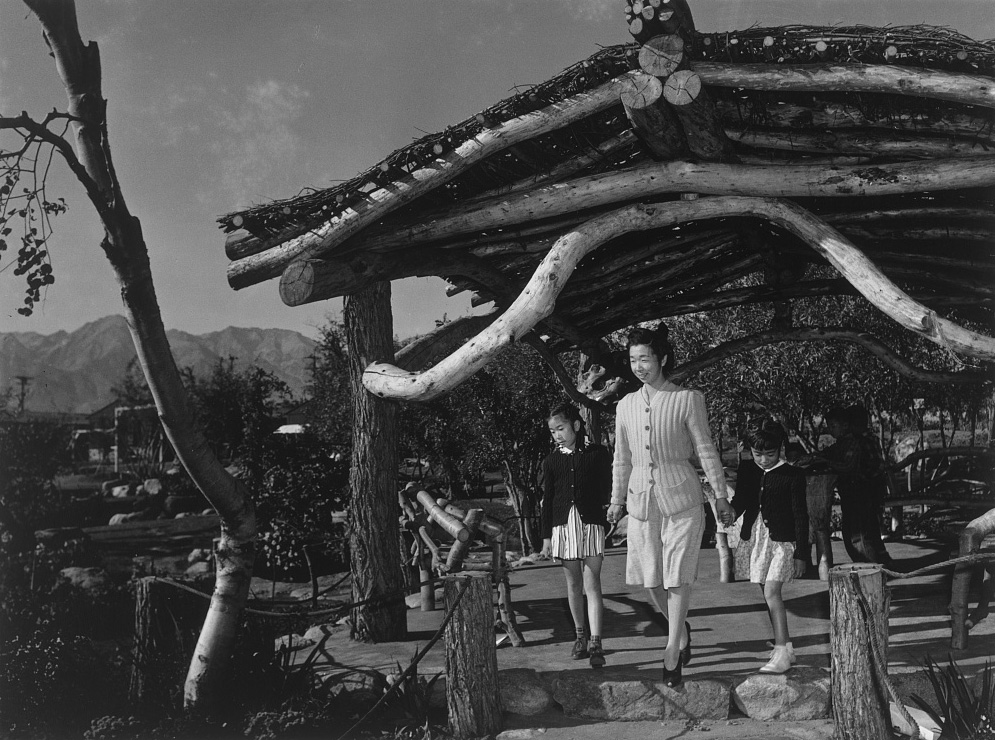 Merritt Park - in the 1940s |
This Thanksgiving, we givethanks to our Cultural Resources team and dedicated volunteers who have worked to restore Manzanar’s Merritt Park. Merritt Park first began as a rose garden, created in 1942 by Kuichiro and Akira Nishi who had operated a nursery in Los Angeles before the war. The Nishi brothers were soon joined by other men with similar professions and the group transformed Merritt Park into an elaborate Japanese-style garden with ponds and bridges. Japanese Americans built gardens in all ten incarceration camps, providing their communities with a beautiful space to help them forget—if just for a moment—the barbed-wire fences, guard towers, and military policemen that surrounded them. Image Descriptions 1: Yaeko Nakamura holds hands with her two young daughters under a pavilion in Merritt Park. Photo by Ansel Adams, 1943. 2: A reconstructed pavilion stands in a vibrant green Merritt Park after years of restoration work. Photo by Archeologist Jeff Burton, 2024. |
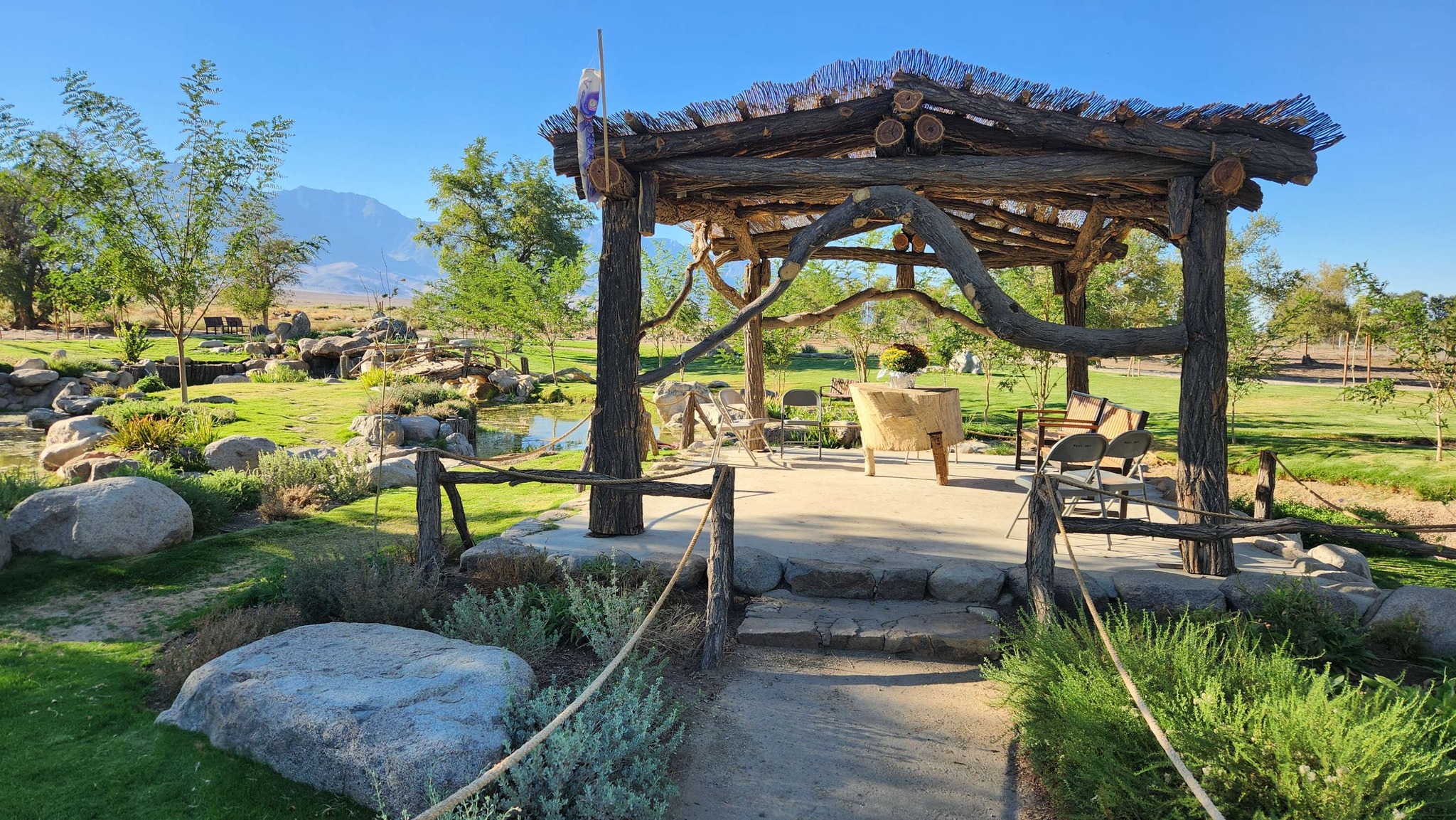 Merritt Park - 2024 |
|
08/24What Happened to the Property of Sacramento's Japanese American Community Interned During World War II?
By Emily Zentner
08/24California Man, Who Saved Japanese Farms During WWII, Turns 100
By Stephen Magagnini
Miscellaneous Photographs from Calisphere |
||
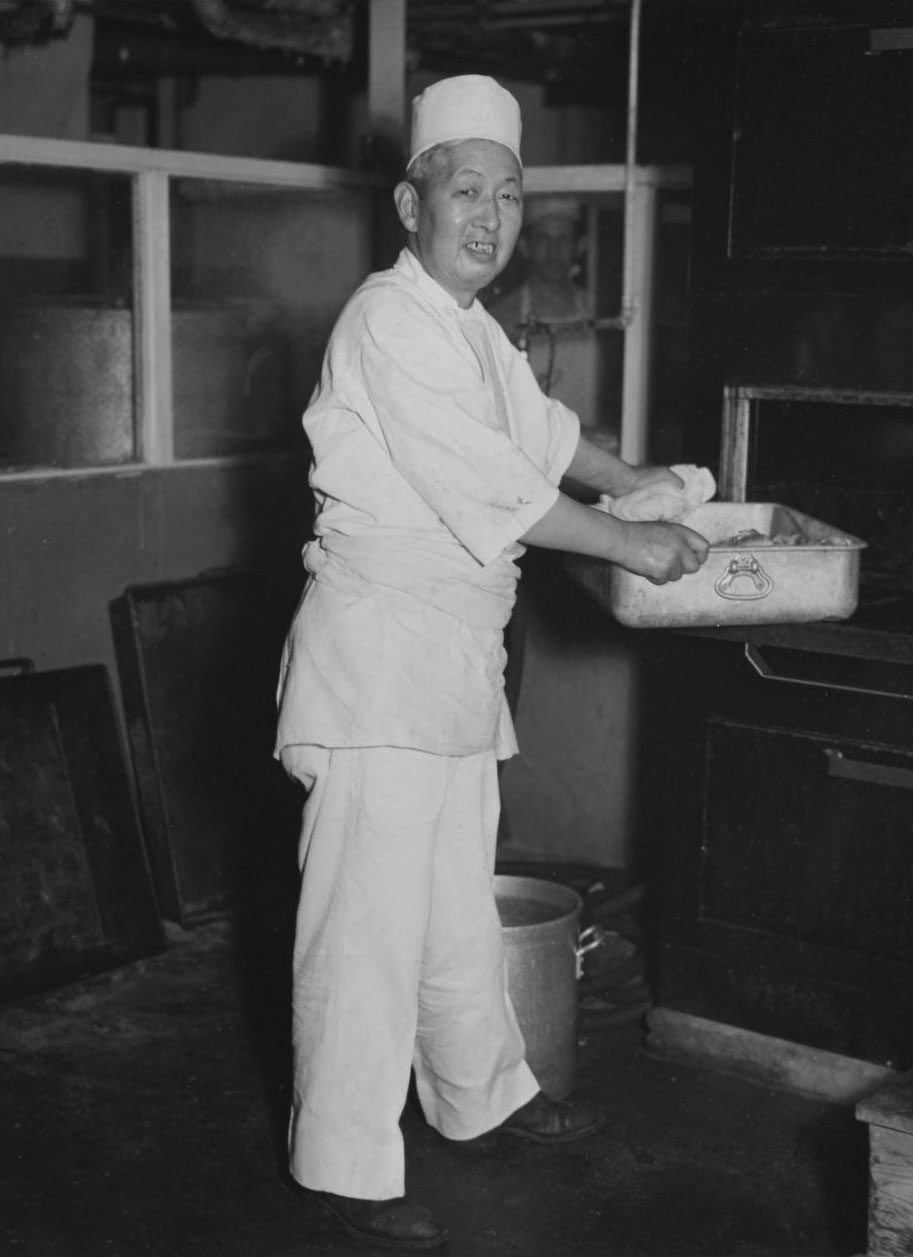 Shizuo (Jimmie) Mitsuhata - Chef at Clifton's Cafeteria in Los Angeles (Photographer Chas. E. Mace - 1945) |
|
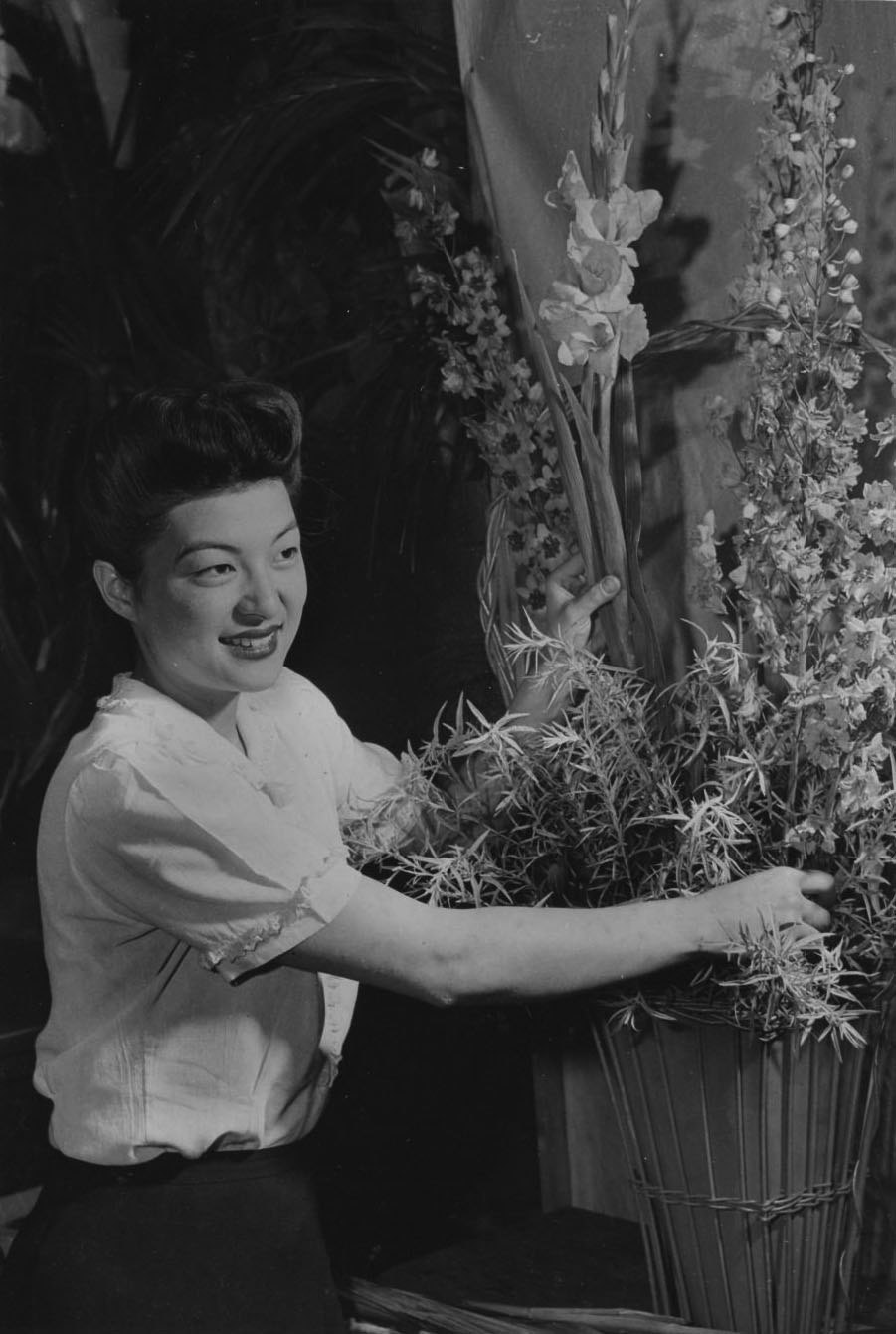 Mrs. Margaret Stanicci - Floral designer in New York City |
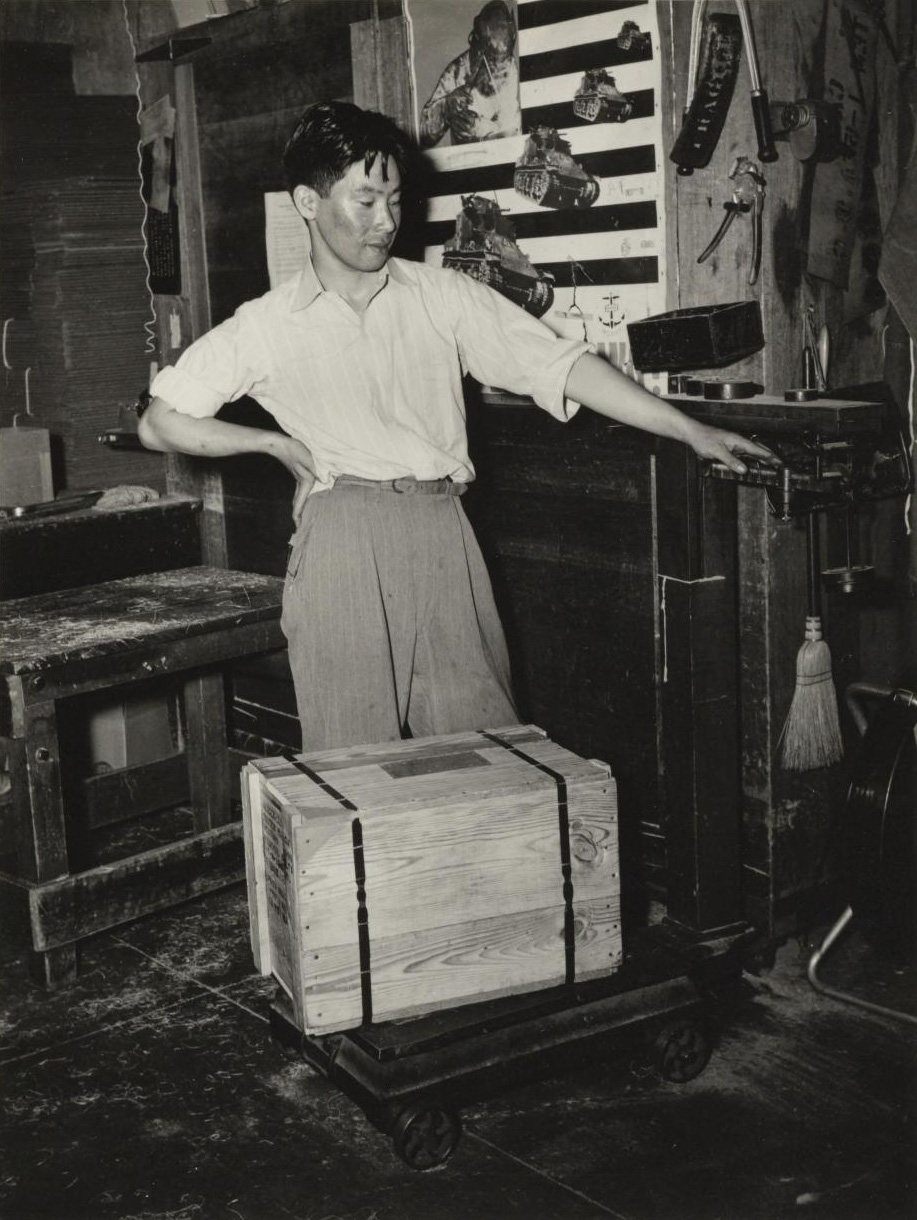 Percy Fukushima at work in the James G. Biddle Company in Philadelphia, PA (Photographer Chas. E. Mace - 1945) |
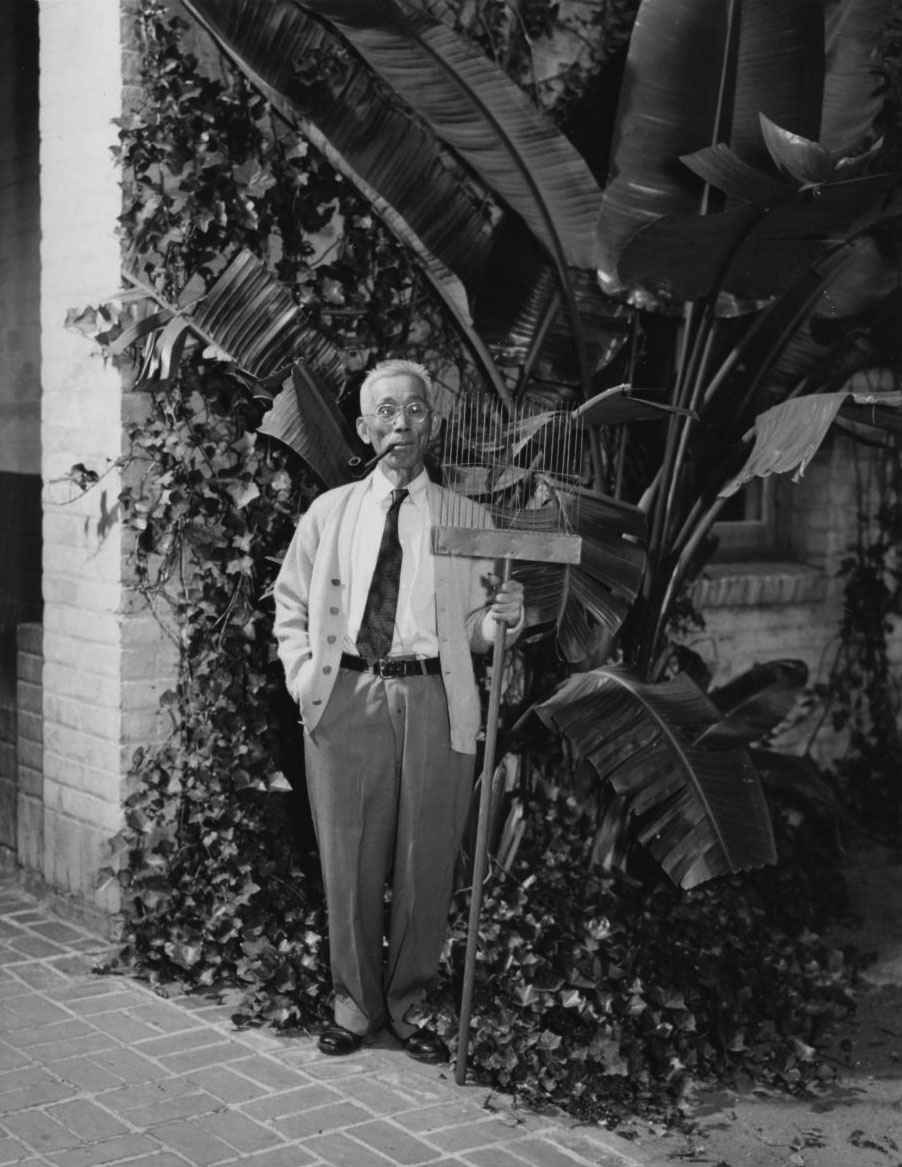 Yasutaro Naide back at his old job as a gardner at Maryknoll Home in Los Angeles (Photographer Chas. E. Mace - 1945) |
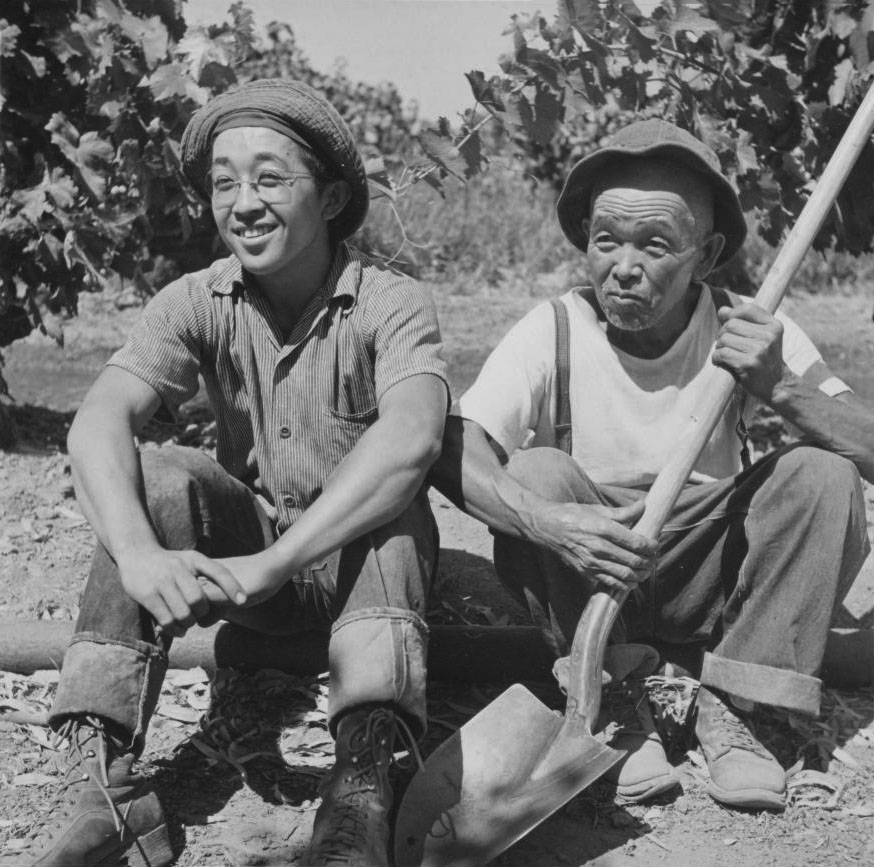 The Kobayashi family returned to their ranch at Florin in February from Manzanar. Two daughters of the family, Mildred and Midori are now working in Pasadena. The Kobayashis are busy operating their 20 acre vineyard. Mr. Kobayashi and son Richard are shown. (Photographer Hikaru Iwasaki - 1945) |
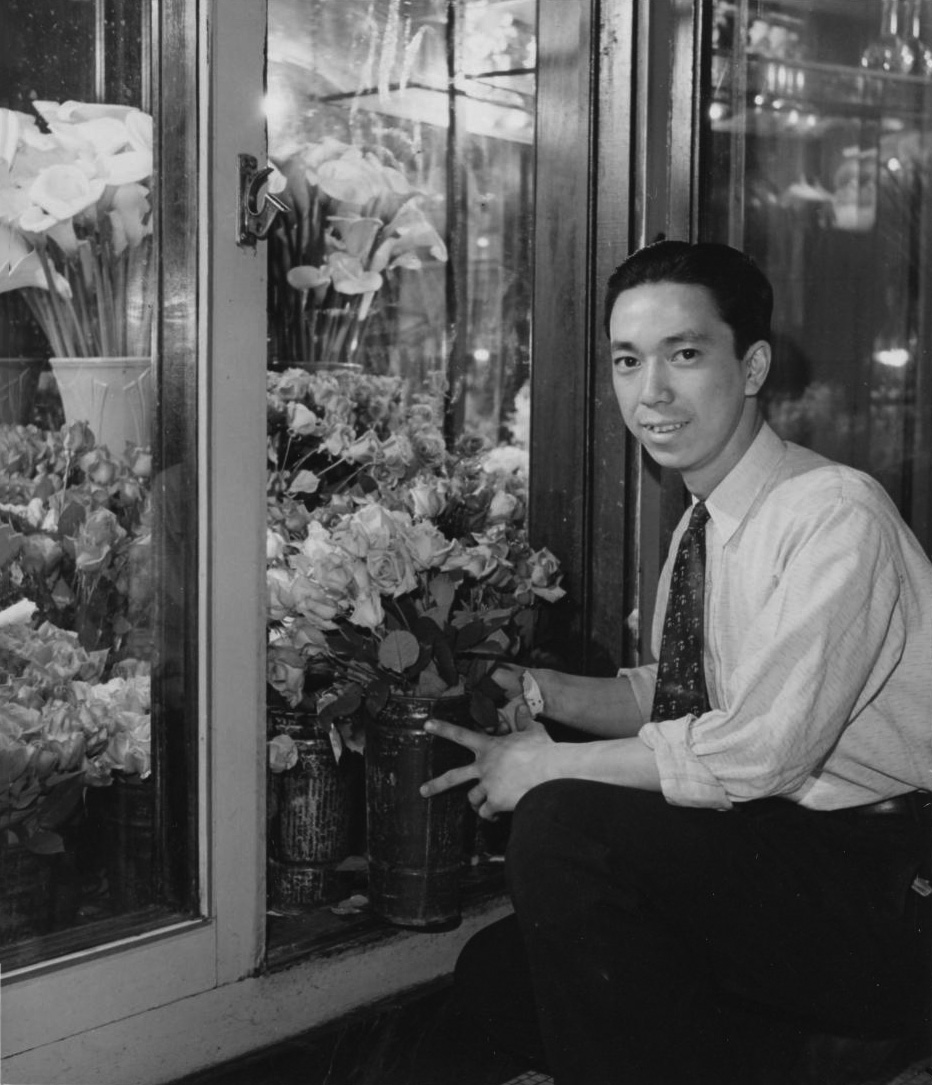 Hal Taknoka - Floral designer Hal and his wife and daughter live in Peoria, IL (Photographer Hikaru Iwasaki - 1945) |
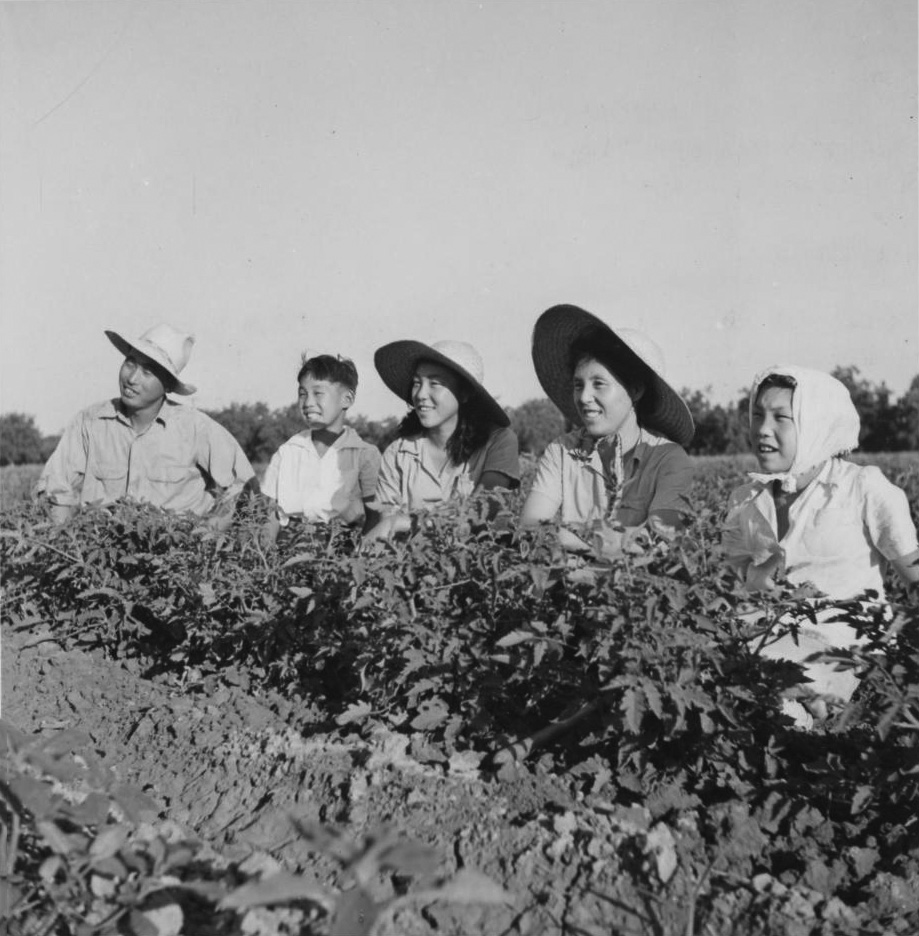 The Hirata family back at their farm in their tomato field in Linden, CA. In addition to 19 acres of tomatoes they are growing 3 acres of cherry trees and vegetables. L/R: Ko Hirata, Henry, Grace, Mrs. Hirata, Ruth (Photographer Hikaru Iwasaki - 1945) |
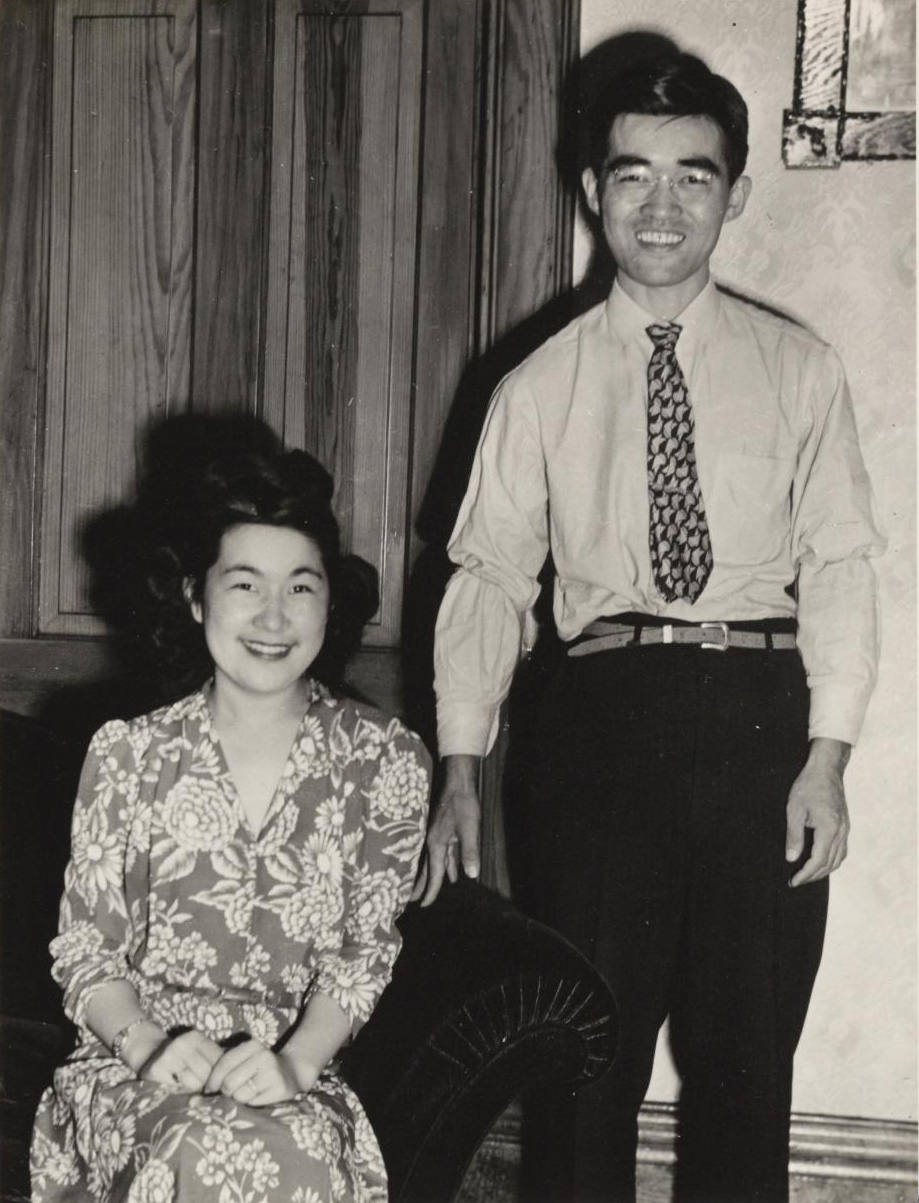 Jackson and Mary Takayanagi. Jackson is serving as a student minister in Granger, Iowa while attending Drake University |
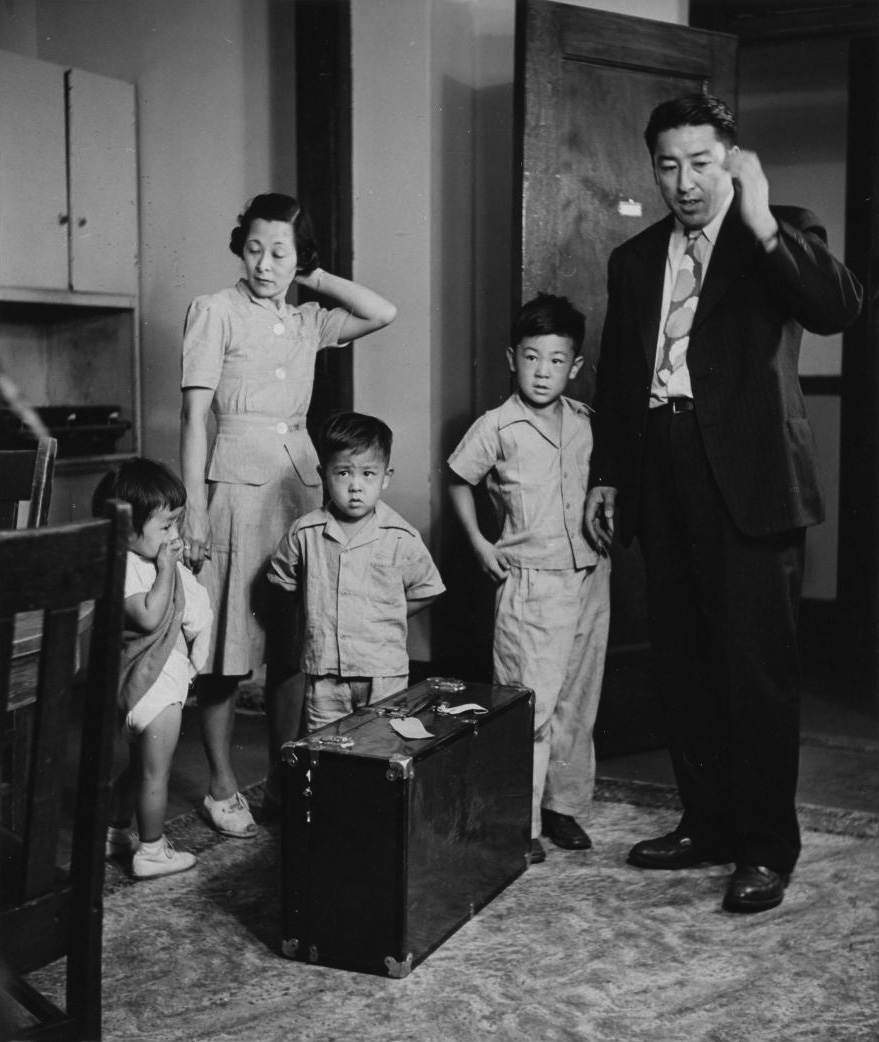 Mr. and Mrs. Oshima and their three children at the Brethern Hostel in Chicago (Photographer Chas. E. Mace - 1945) |
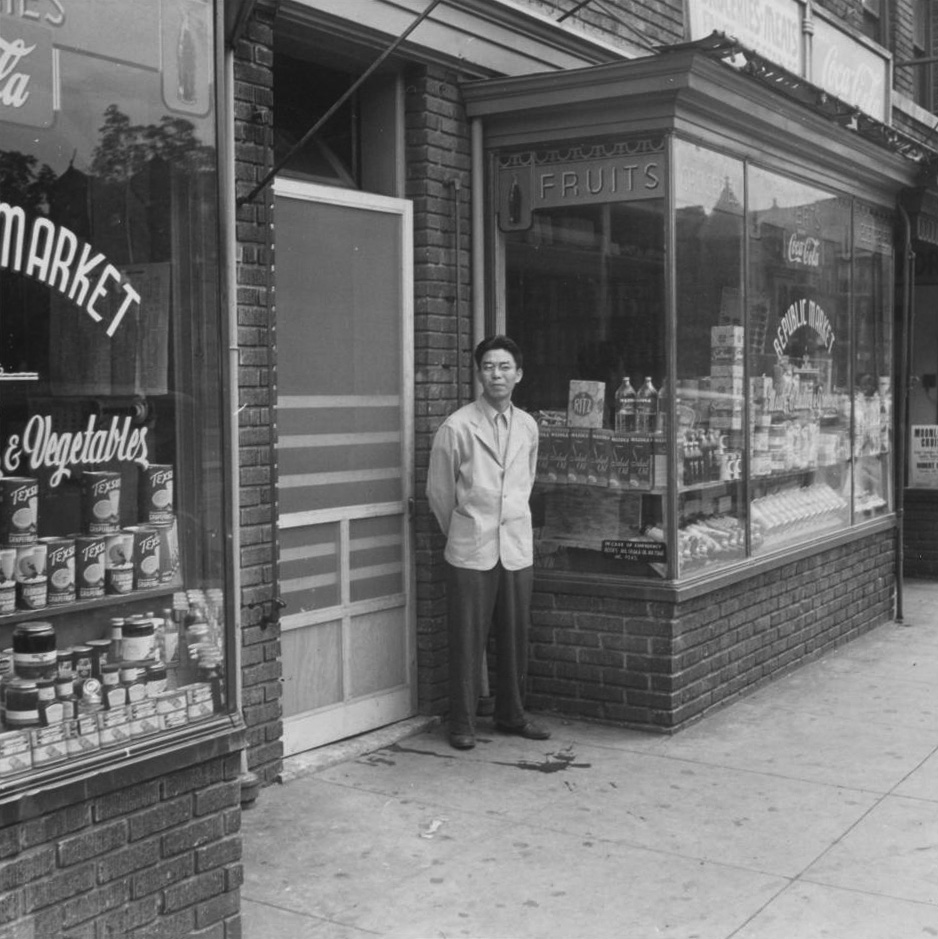 Ted Yuge, an Issei, formerly of Block 15-11-1, Manzanar at his new grocery store in Washington, DC with the financial help of Mr. Jesse Shima. (Photographer Gretchen Van T. Assel - 1945) |
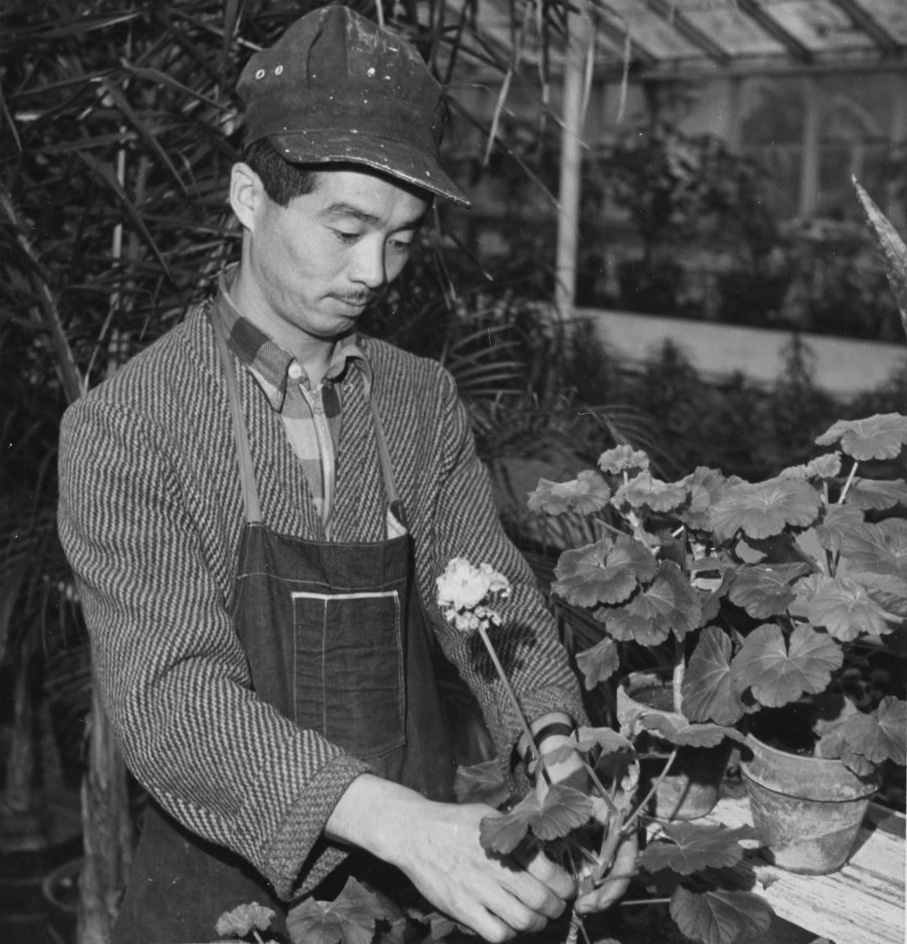 Mr. Suenaga - Greenhouse manager in Hattiesburg, Mississippi (Photographer Hikaru Iwasaki - 1945) |
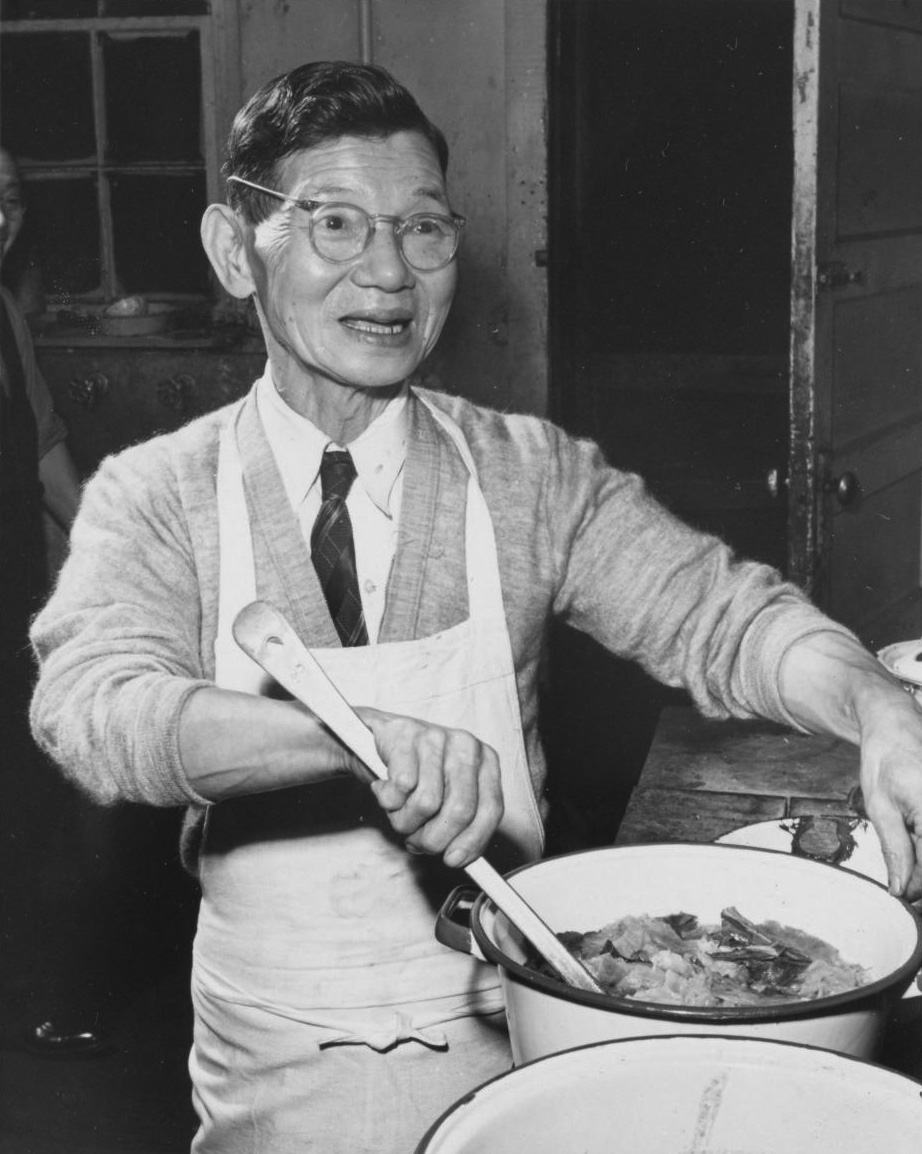 Sam Kuwahura at work in a St. Louis, MO restaurant owned by Mr. and Mrs. Haru Tanaka (Photographer Hikaru Iwasaki - 1945) |
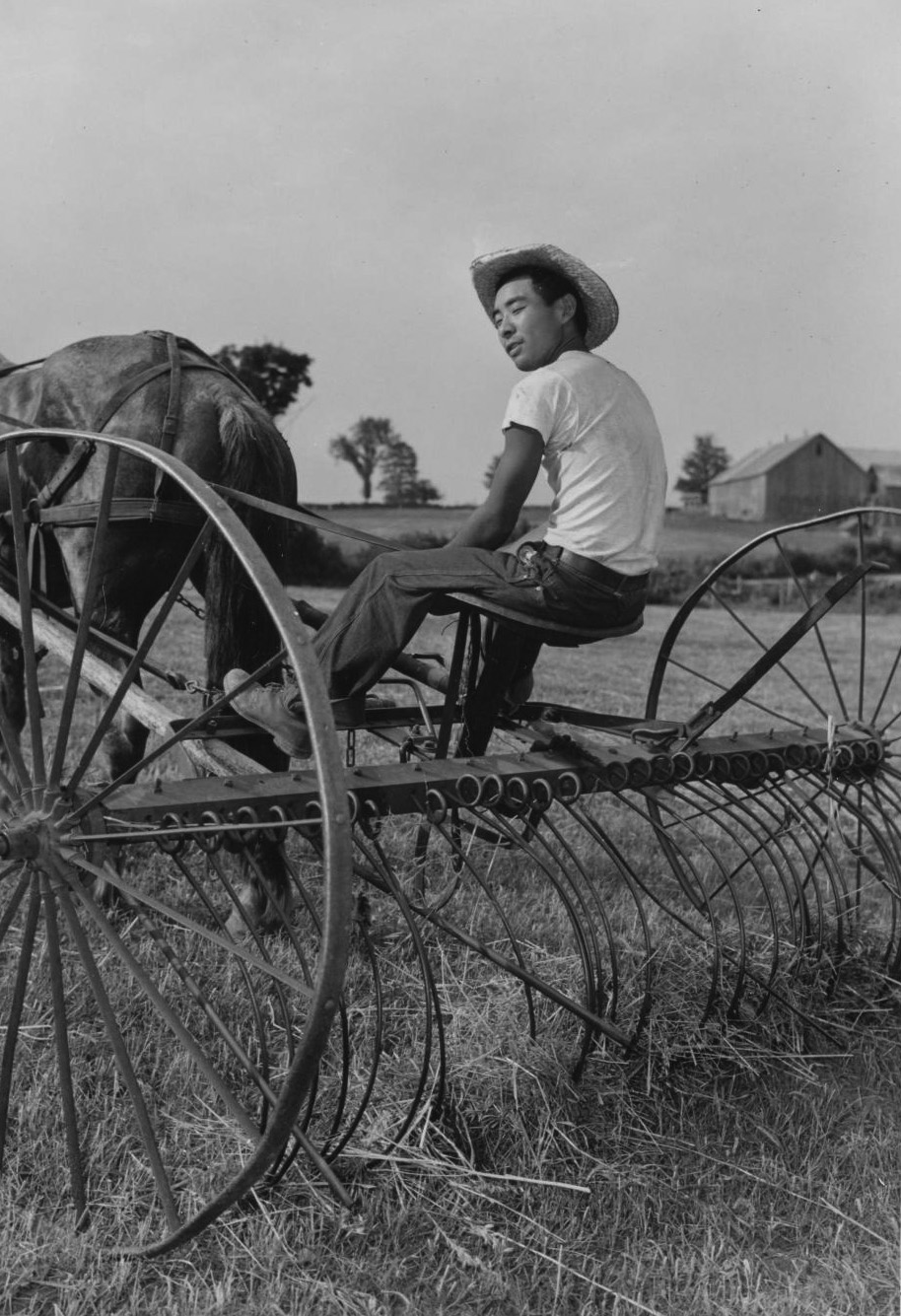 Richard Nishimura - at work on a dairy farm in Vermont (Photographer - Hikaru Iwasaki) |
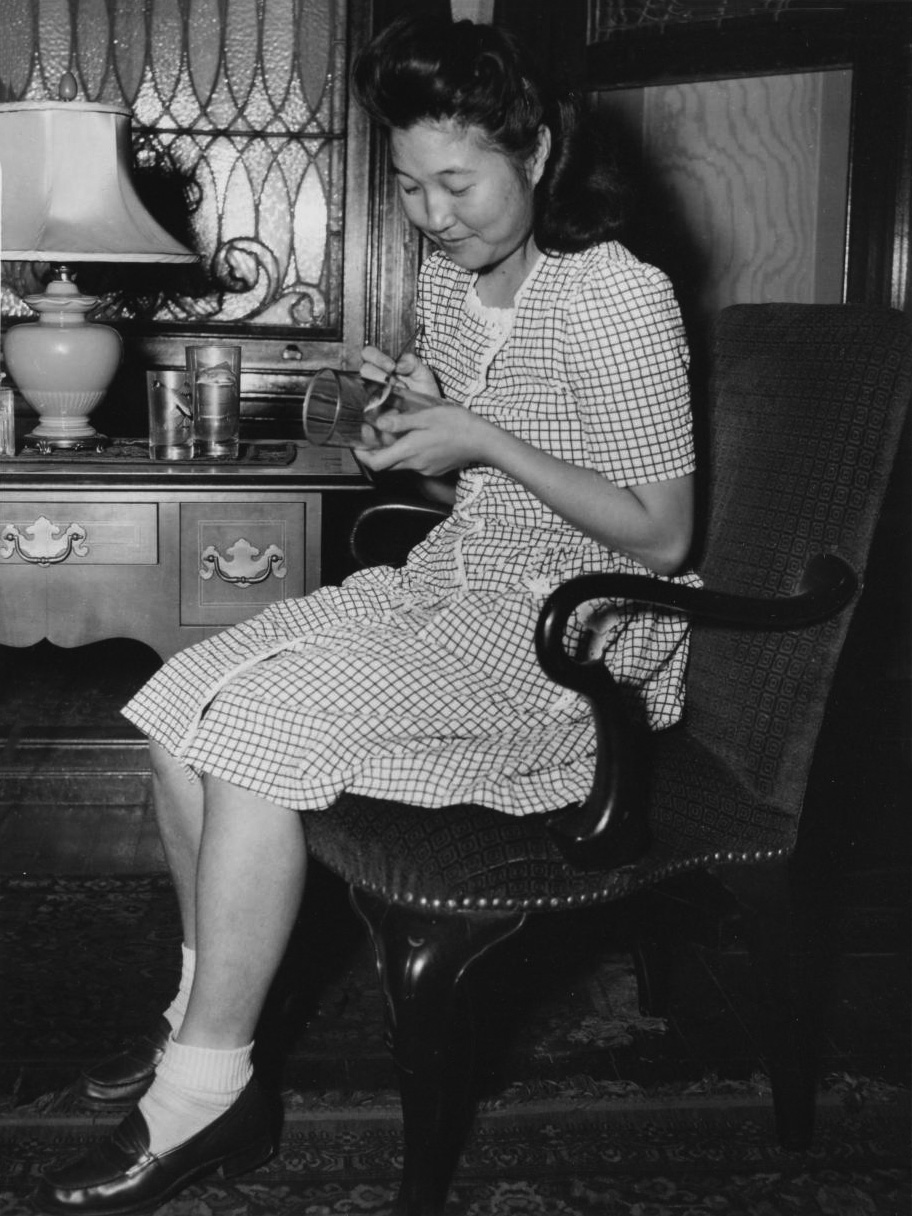 Emiko Ishisaki is a skillful assistant to the well-known American artist - Robert H. Ransley - in Philadelphia, PA. She decorates goblets with game birds, animals, and fish. |
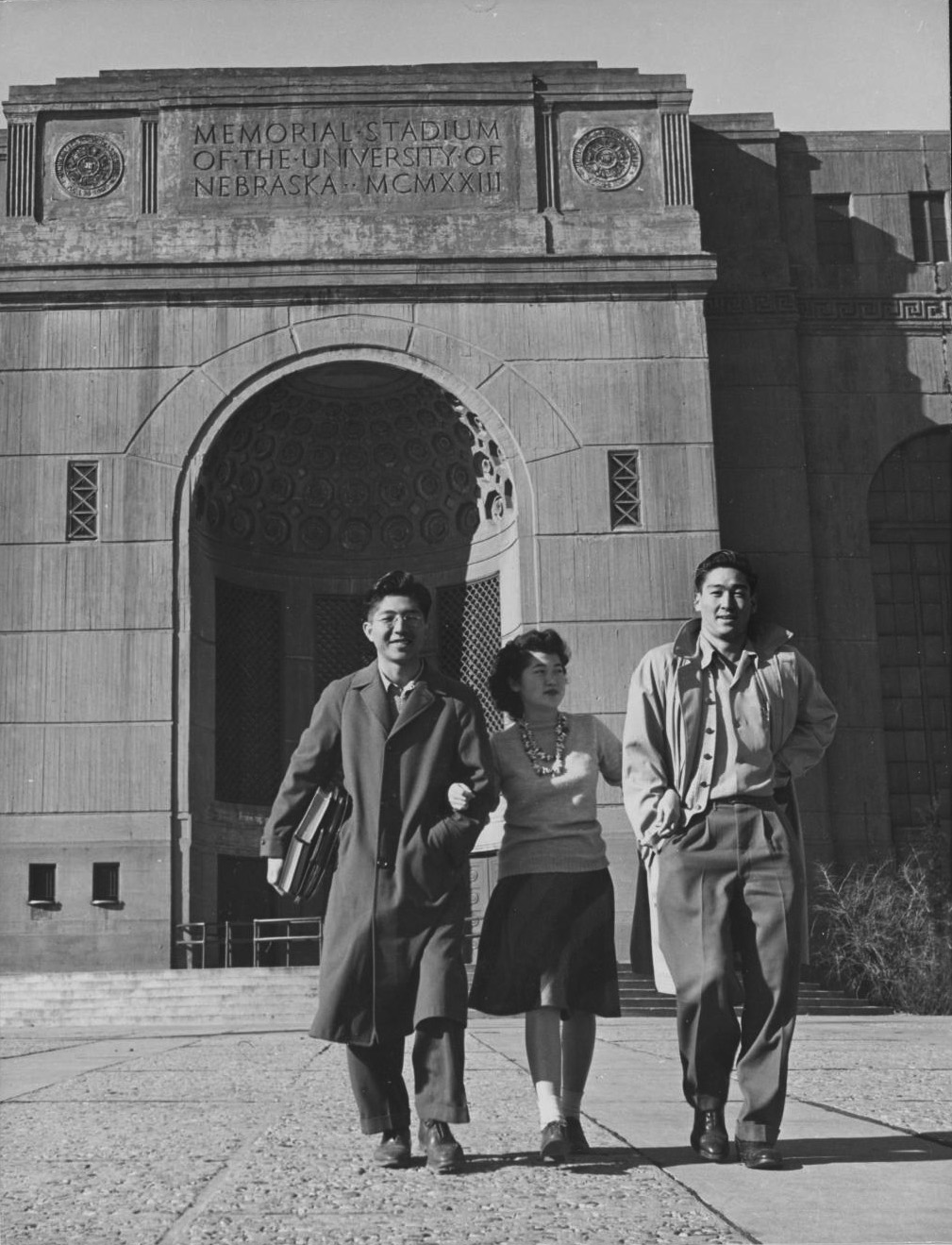 L/R: Cromwell Mukai (Topaz), Marie Yamashita (Heart Mountain), Joe NIshimura (Manzanar) leaving the stadium at the University of Nebraska in Lincoln, NB (Photographer - Tom Parker) |
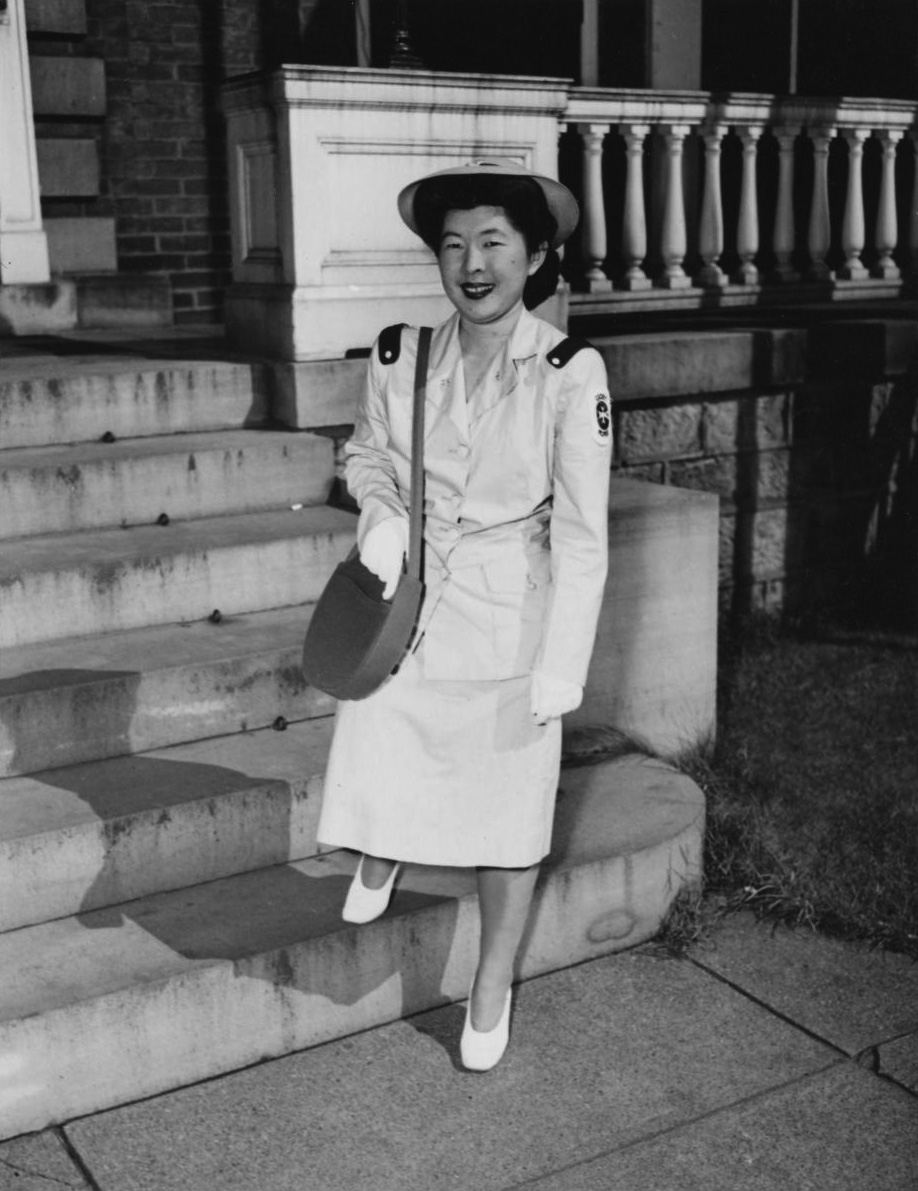 Tomiko Yasuda - Rochester, NY Tomiko is now training at the Genesee Hospital as a Cadet Nurse |
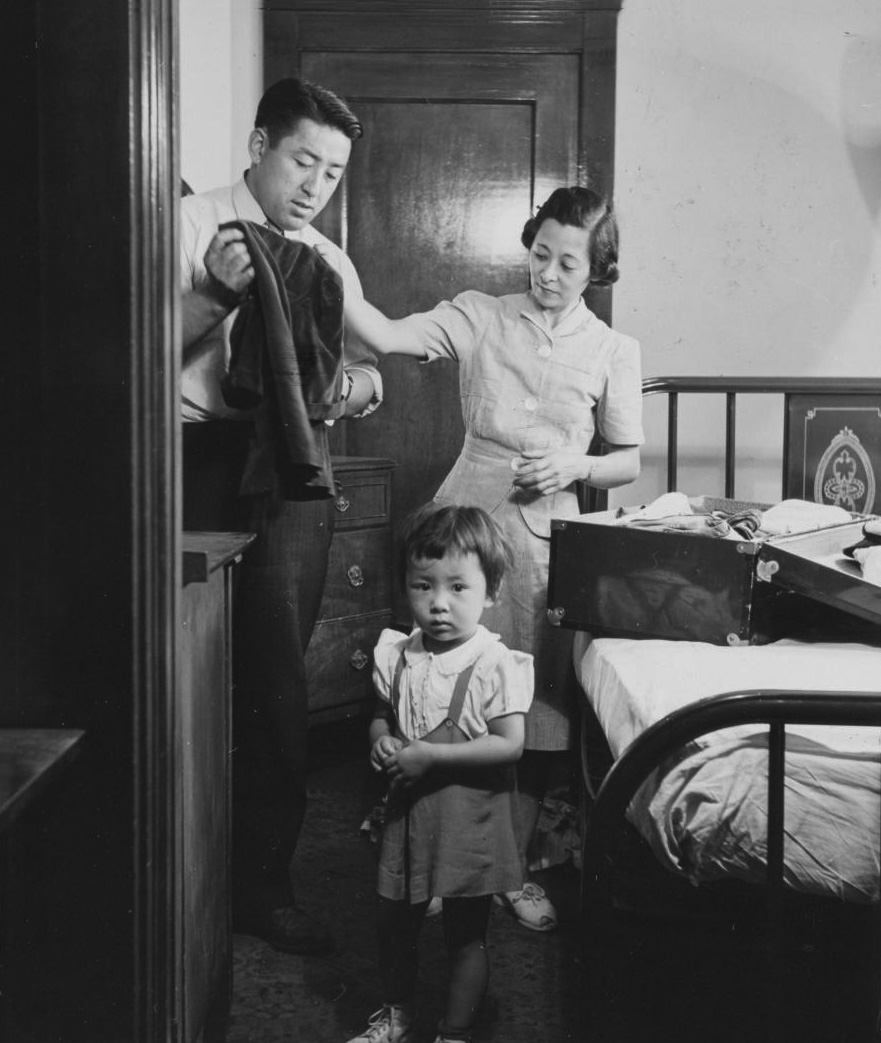 Mr. and Mrs. Oshima and one of their three small children, unpacking in their new home in Chicago, IL Mr. Oshima is working for a large hotel company in the windy city. (Photographer Chas. E. Mace - 1945) |
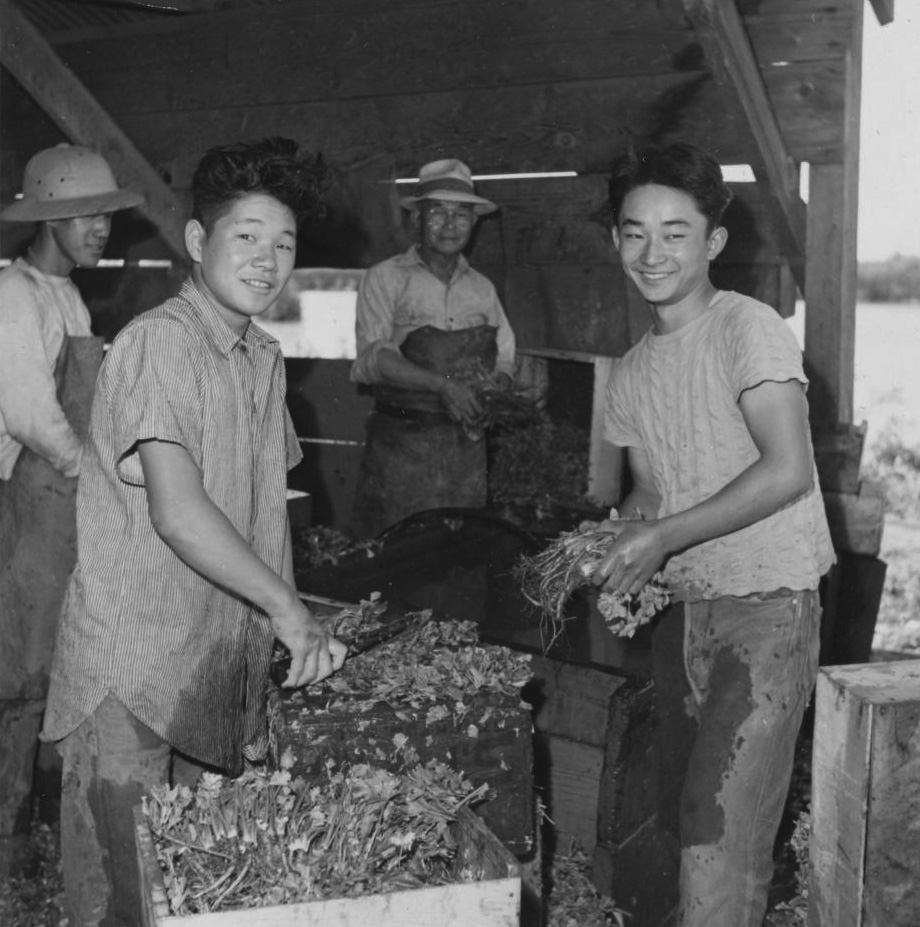 L/R: Raymond Motoike, Ben Motoike - 1945 Cutting celery plants at Camp #6, Bacon Island, Stockton, CA |
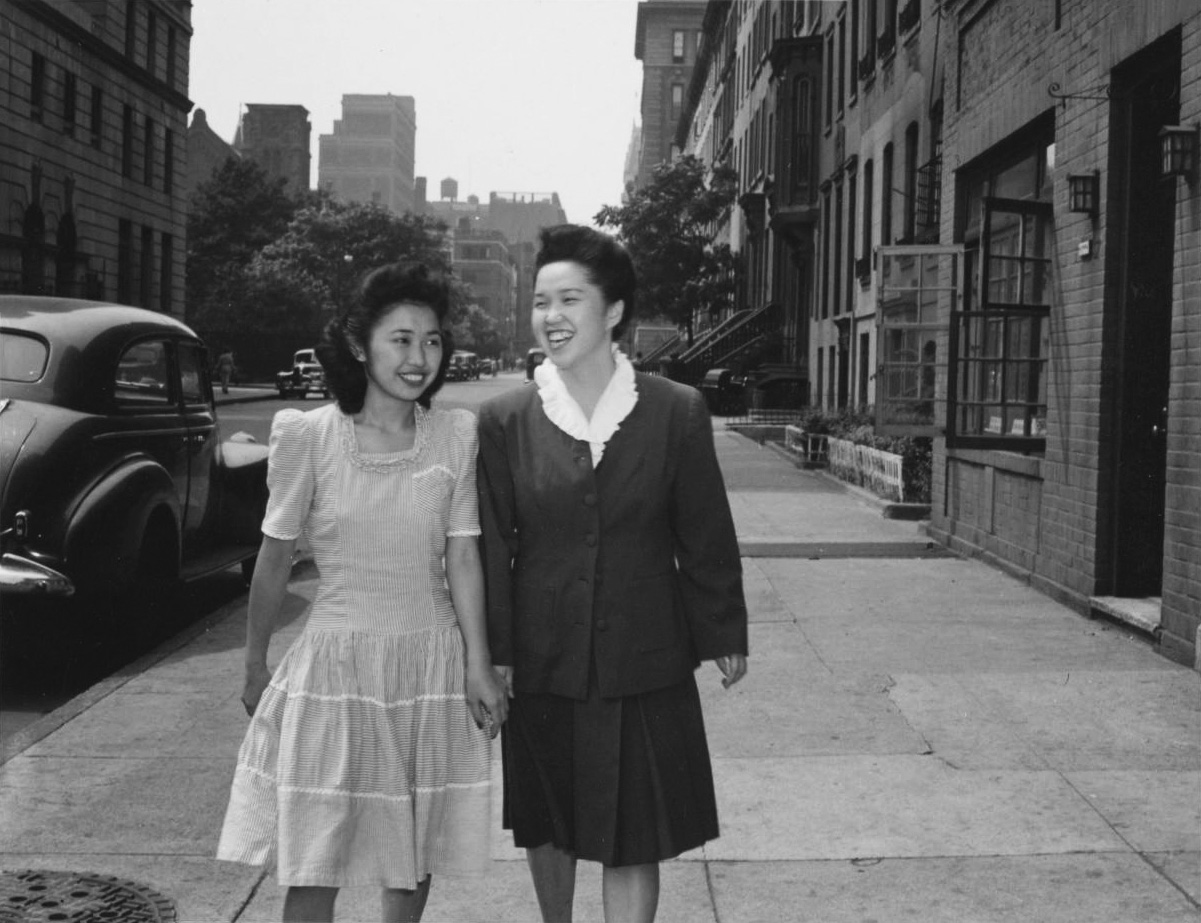 L/R: Takako Matsumoto (Minidoka), Ritsuko Nakaji (Manzanar) strolling the streets of New York City. Takako works in the circulation department of the Irrigator. Ritsuko works in an educational foundation and attends New York University. |
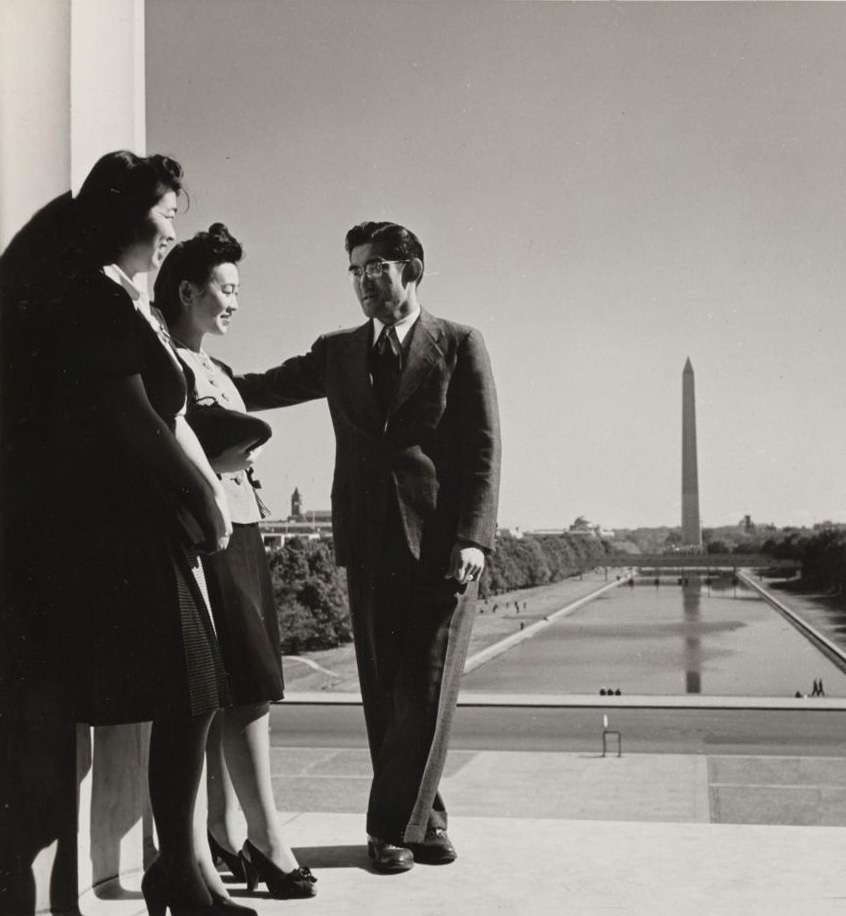 L/R: Jane Oi (Granada), Sally Fujimoto (Manzanar), Harrio Najima (Tule Lake) All three are working for the War Relocation Authority in Washington, DC. |
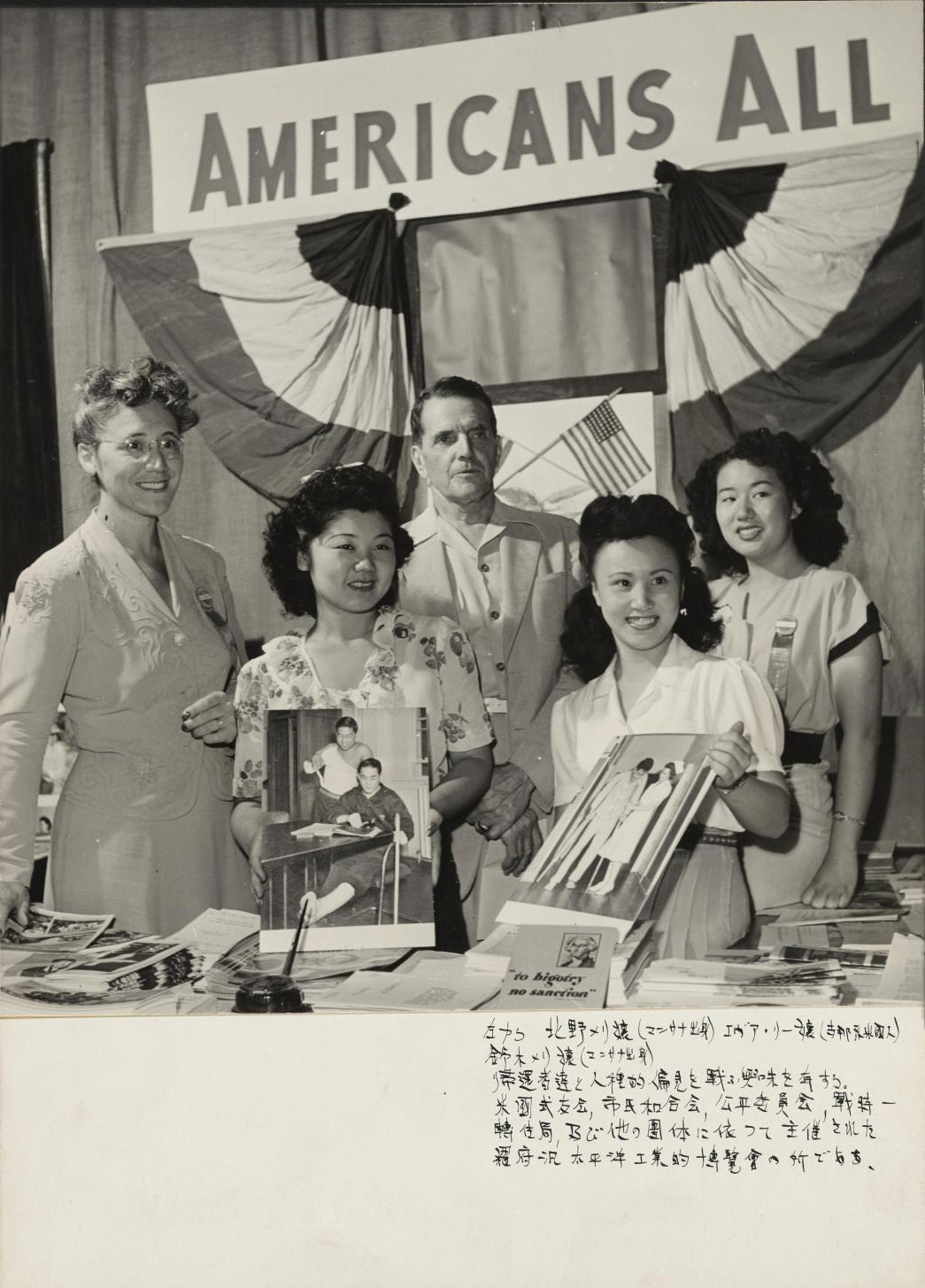 L/R: Mrs. Sylvia Leventhal (B'nai B'rith Women), Miss Mary Kitano (Manzanar), Col. H.A. Finch (U.S. Army), Miss Eva Lee (Chinese), Miss Mary Suzuki (Manzanar) Booth at the Pan-Pacific Industrial Exposition in Los Angeles, CA - 1945 (Photographer - Hikaru Iwasaki) |
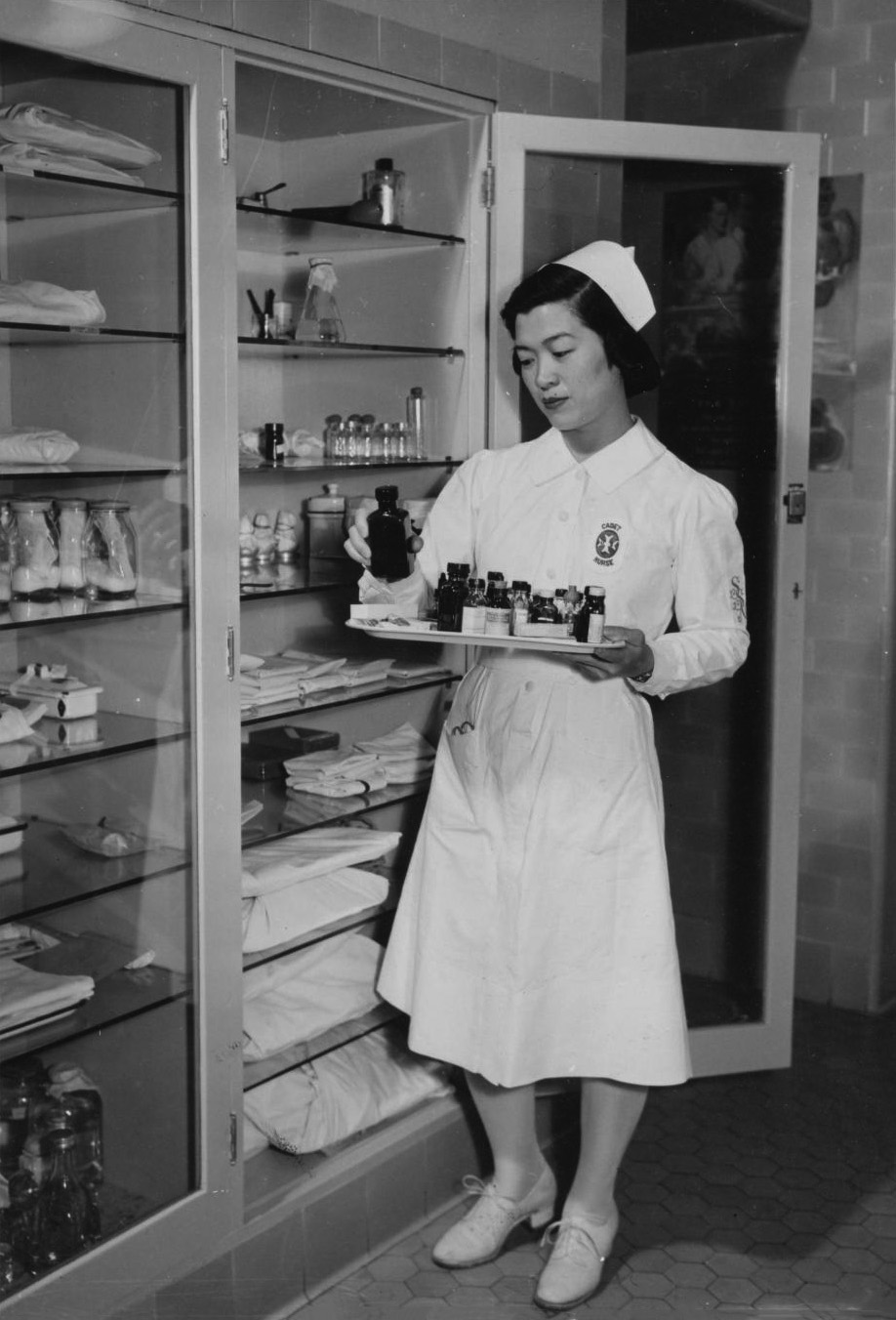 Miss Ruth Tanaka - a cadet nurse in the Seton Training School for nurses at Glockner Hospital in Colorado Springs, CO. - 1945 Four of Ruth's brothers served in the U.S. Army. Pfc. John Tanaka (a member of the 100th Infantry Battalion) was killed in action in France. |
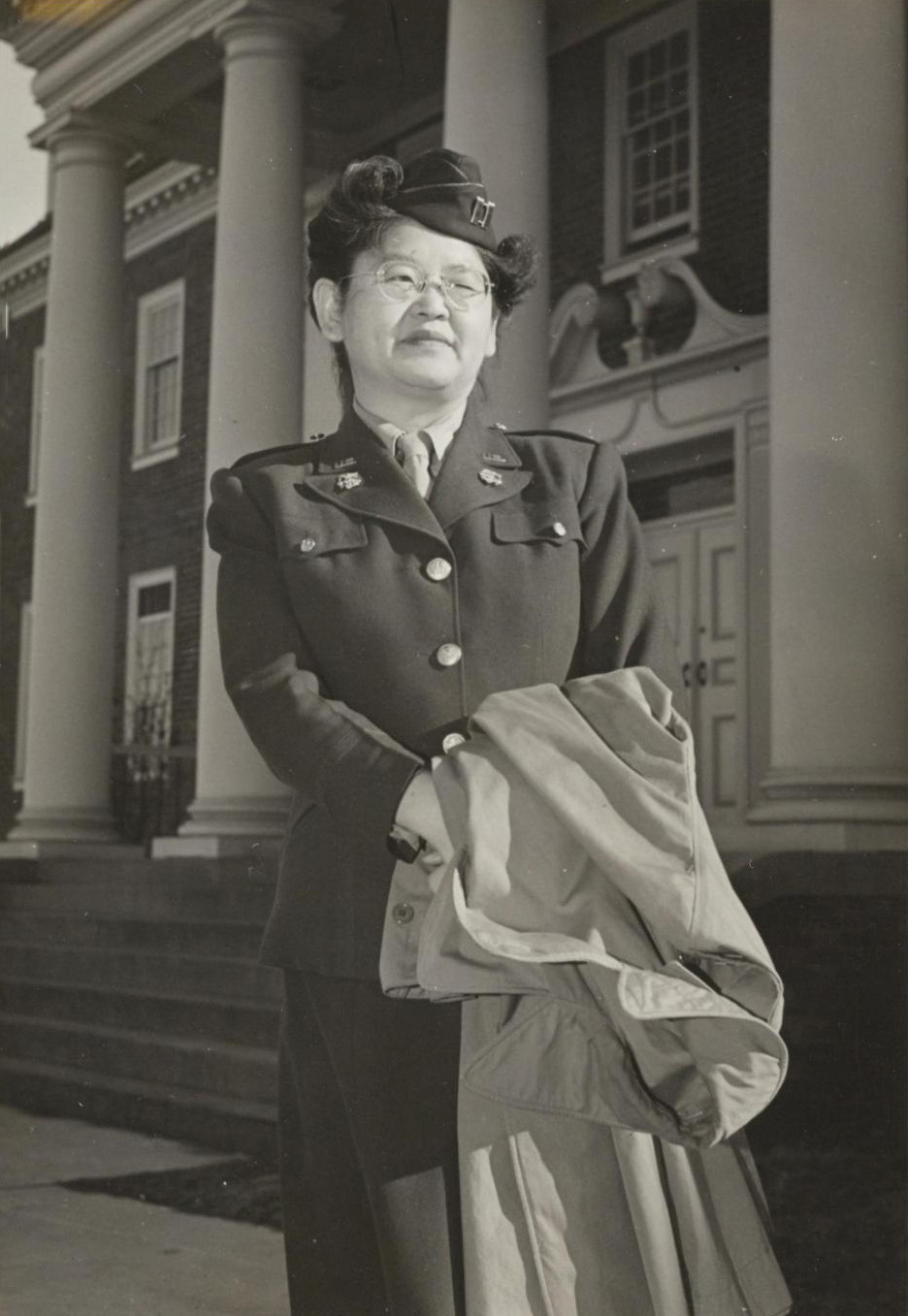 Captain Yoshiye Togasaki about to leave for Italy with UNRRA as a medical officer - 1945 (Photographer - Gretchen Van Tassel) |
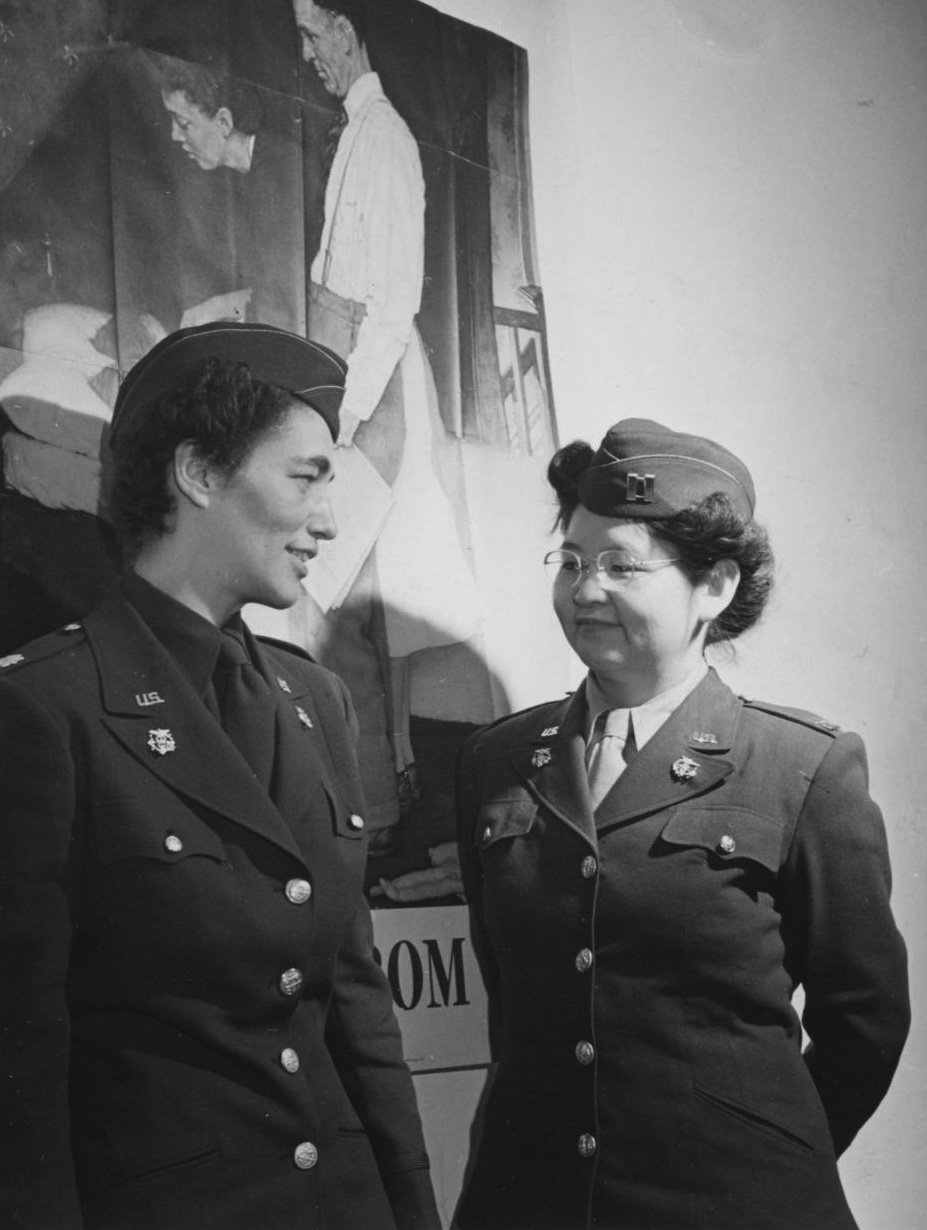 Captain Yoshiye Togosaki (R) talking to Major Eva Landaberg at the UNRRA Overseas Training Center at College Park, MD. - 1945 (Photographer - Gretchen Van Tassel) |
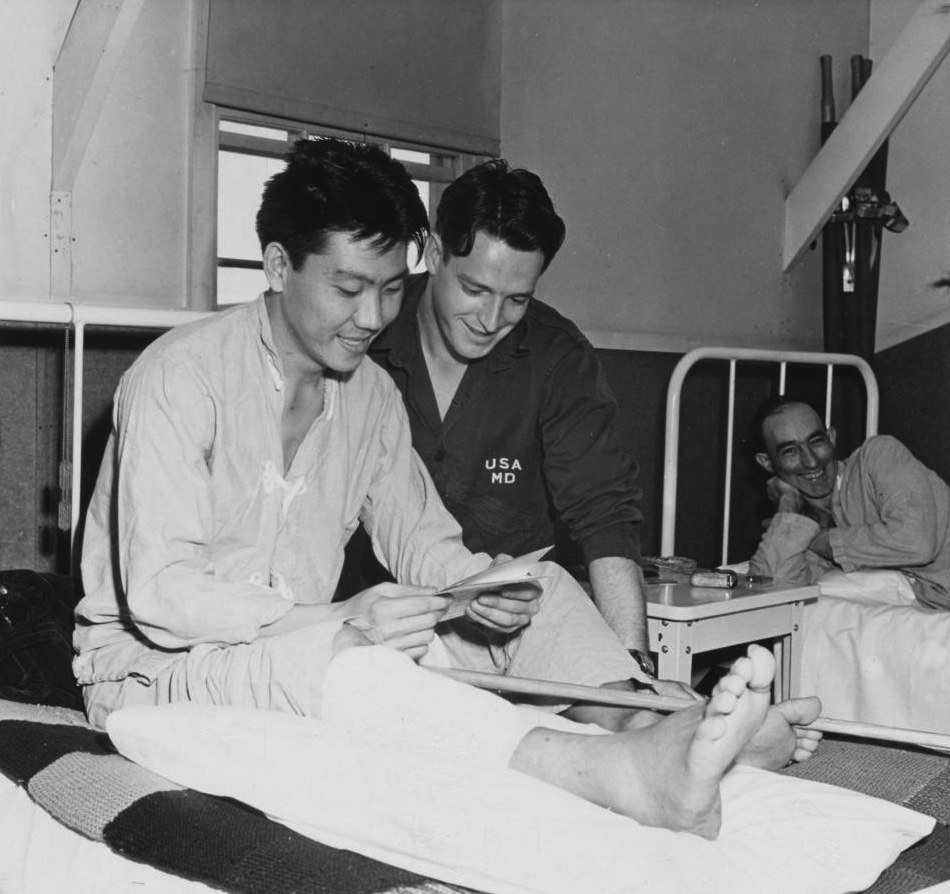 Pfc. Kiyashi Yonemori at the Moore General Hospital, Swannanoa, NC. reading a letter from home. Kiyashi was a member of the 100th Battalion in Italy. Kiyashi was hit by shrapnel. |
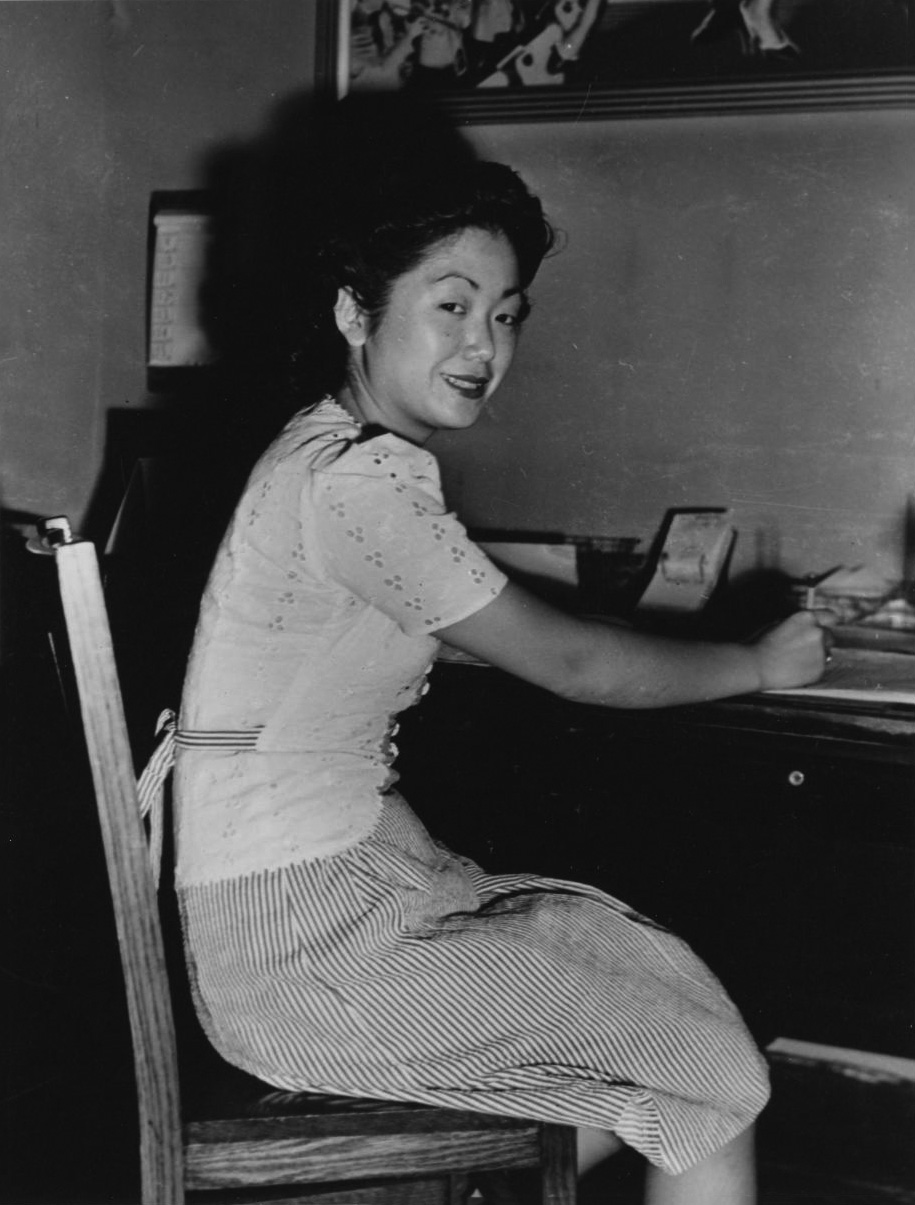 Miss Shizuka Furuto - working for the National Screen Corporation in Des Moines, Iowa. |
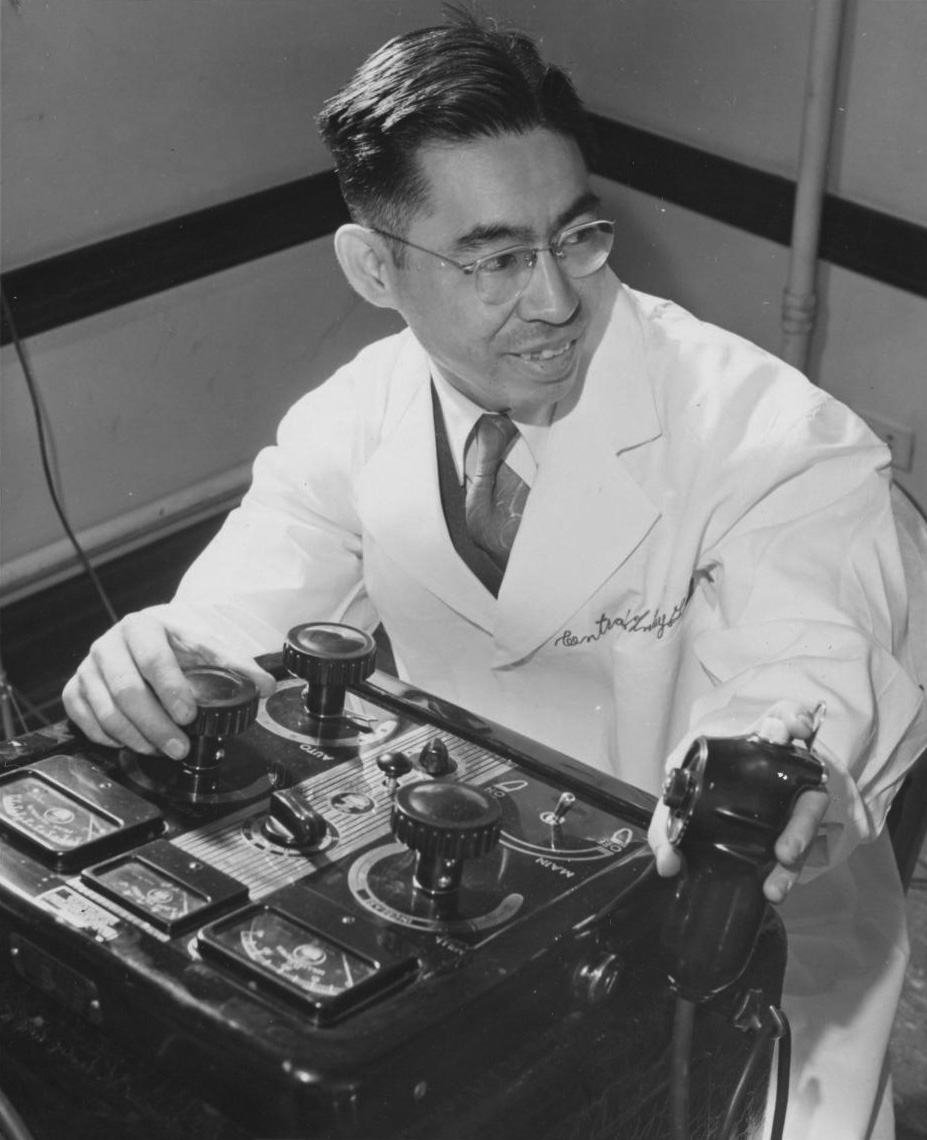 Dr. Tom T. Watanabe - Radiologist at the Central X-ray and Clinical Laboratory in Chicago, IL - 1945 (Photographer - Hikaru Iwasaki) |
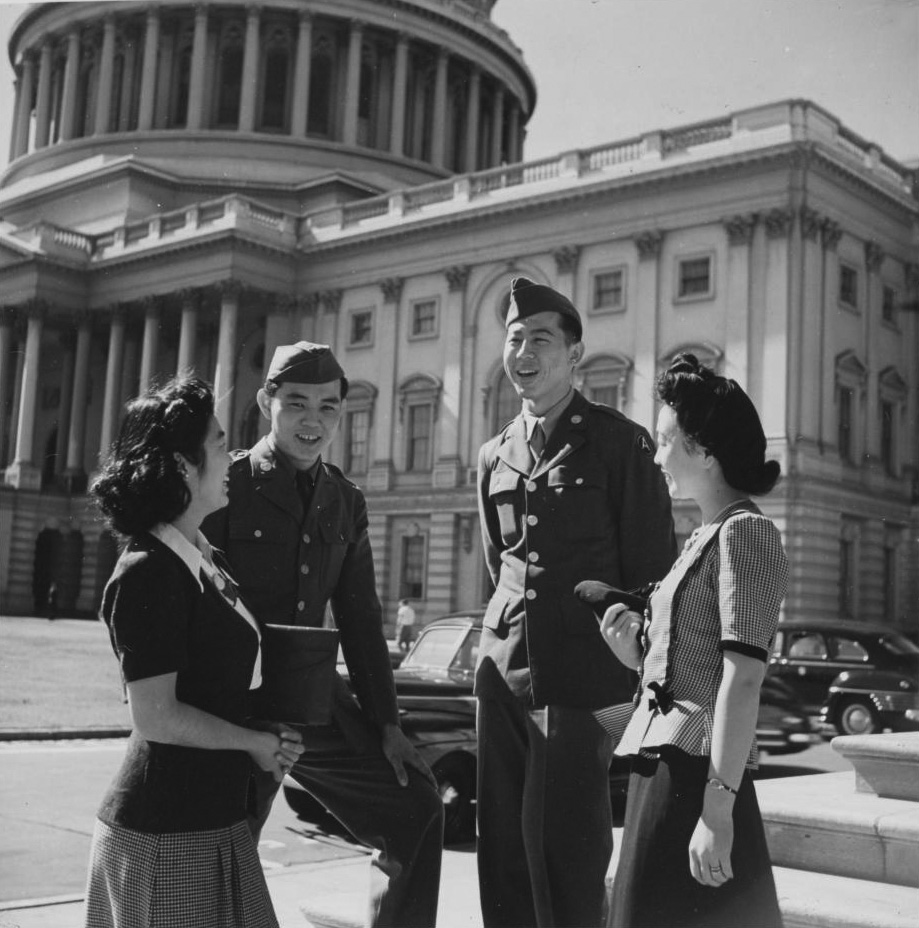 L/R: Jane Oi (Granada), Pfc. Katsujii Nakamoto, Pfc. Harold Matsumura, Sally Tsujimoto (Manzanar) Giving the privates a tour of Washington, DC Jane and Sally are working as secretaries for the WRA. Katsujii and Harold are training at Camp Shelby, Mississippi. (Photographer - Gretchen Van Tassell) |
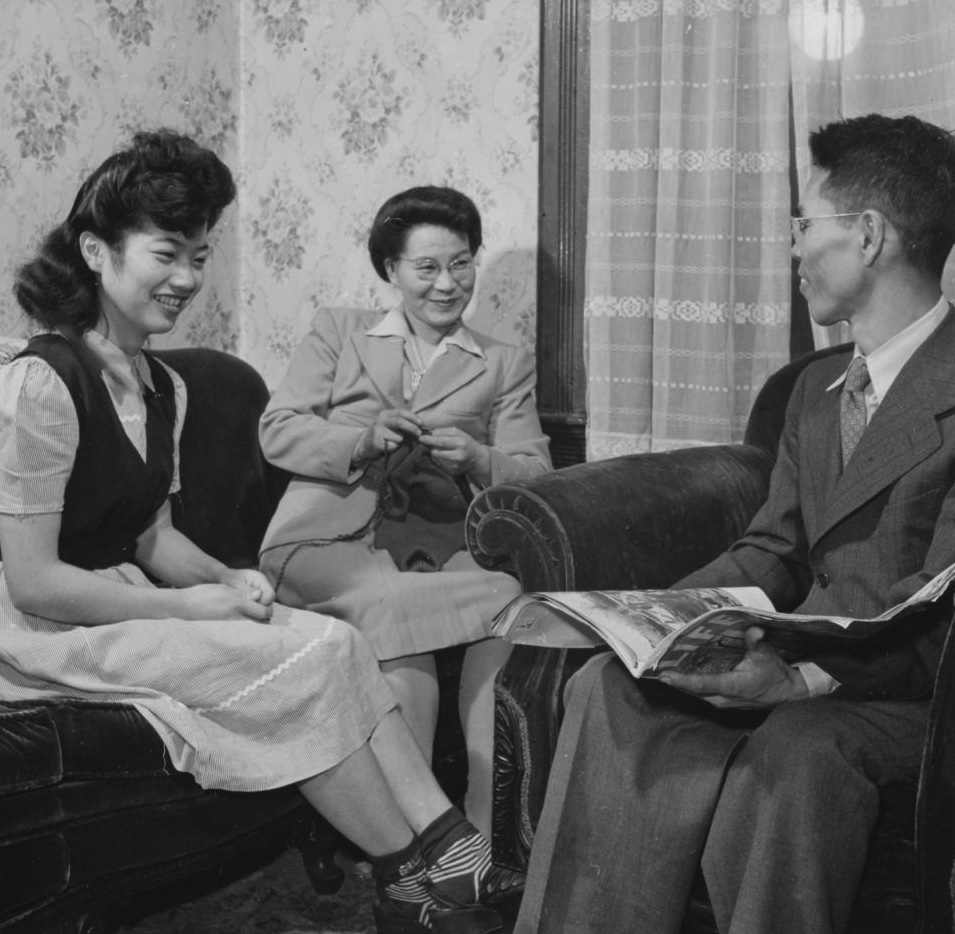 L/R: Lillian Funakubo (student), Mrs. Masuye Maeda (Manzanar), Mr. Maeda (Manazar) The Maeda's operate a boarding house in Chicago, IL (Photographer - Hikaru Iwasaki) |
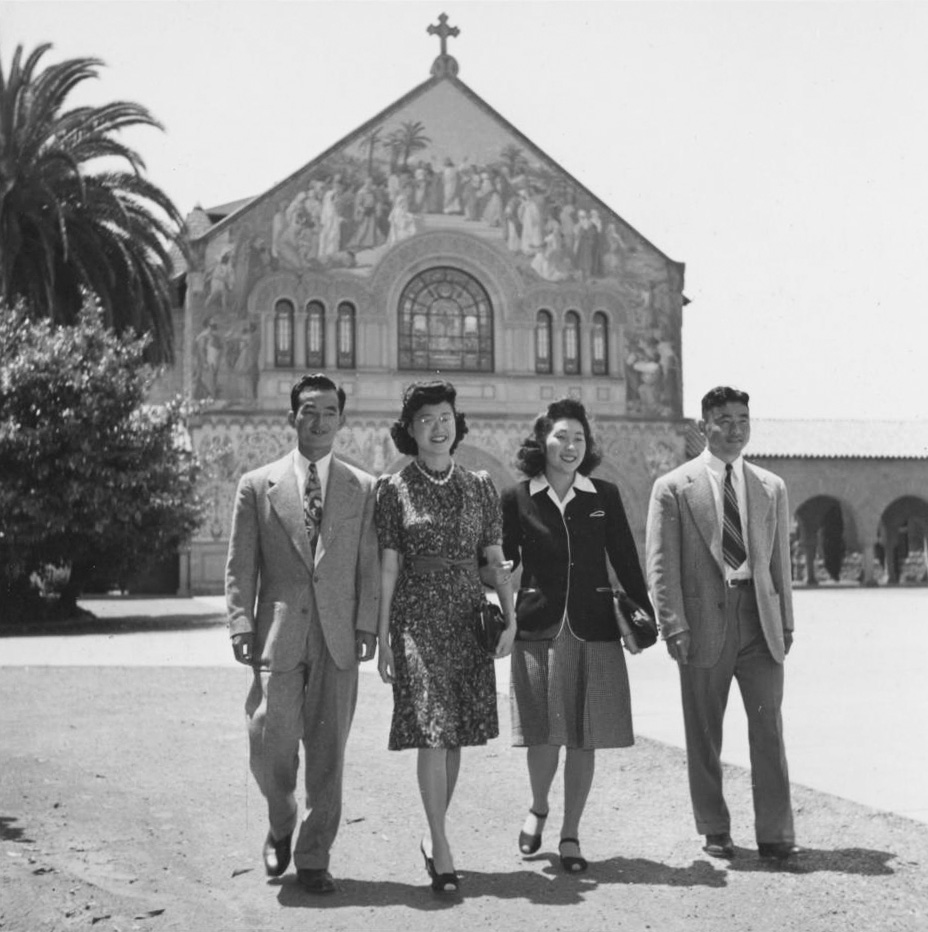 L/R: Genzo Soraoka (Gila), Julia Kitayama (Manzanar), Mary Jane Hamachi (Topaz), Keiji K. Kubo (Topaz) Teachers at Standord University - 1945 (Photograph - Hikaru Iwasaki) |
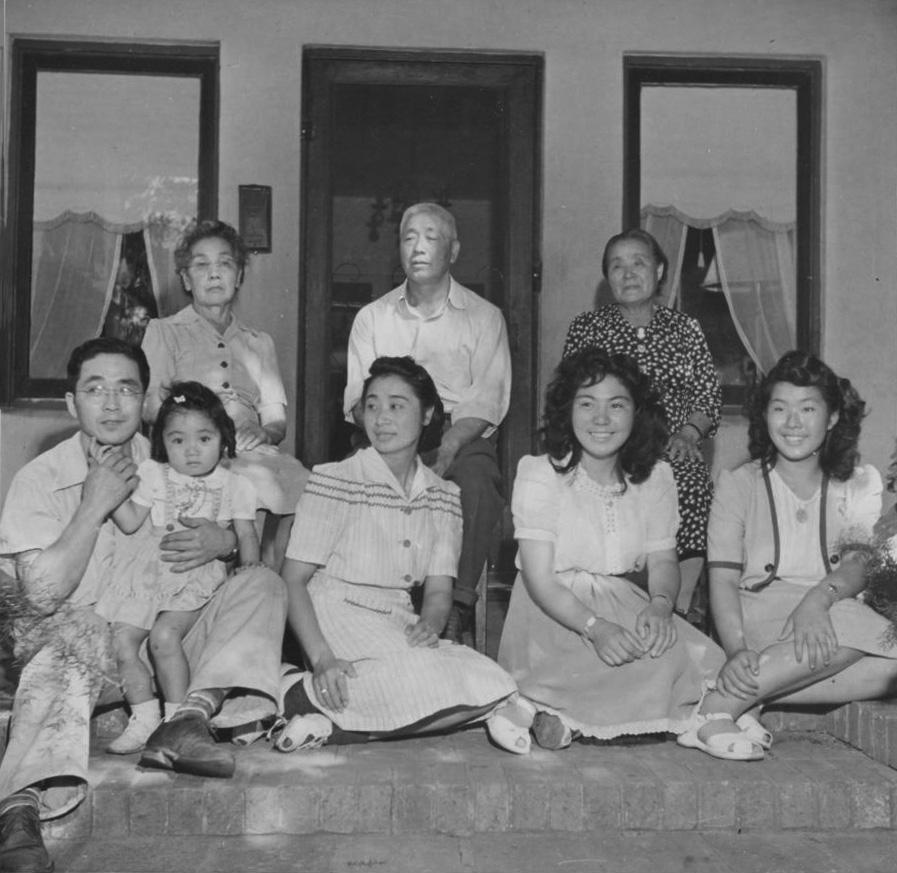 On the front porch of Harold Ouye's home in Sacramento, CA. L/R (front): Harold Ouye, Sandra Ouye, Grace Ouye (all of Heart Mountain), Amy Hayashi (Manzanar), Jane Hayashi (Tule Lake) L/R (back): Mrs. S. Ouye (Heart Mountain), Mr. K. Ouye (Heart Mountain), Mrs. M. Kawano (Minidoka) (Photographer - Hikaru Iwasaki) |
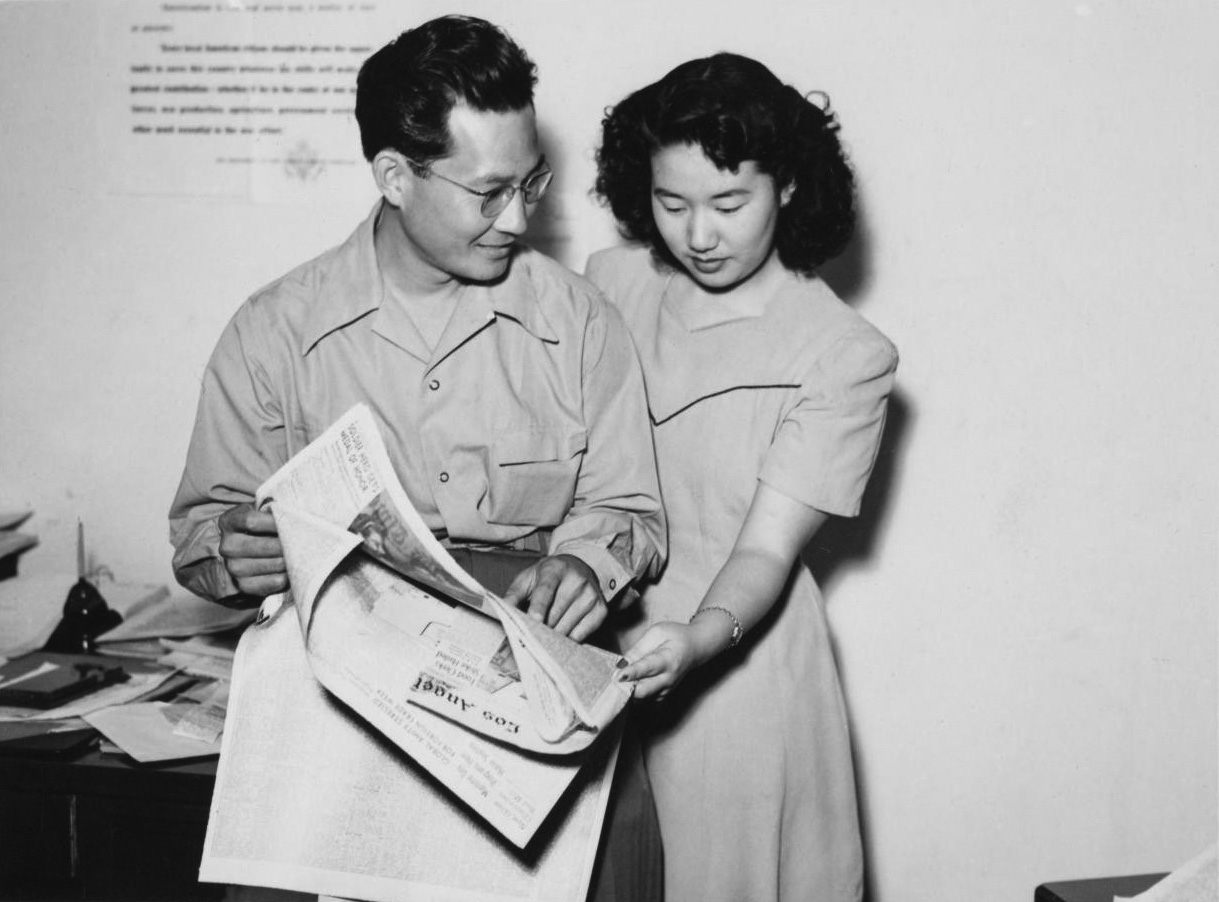 Tech. Sgt. Mineru Masukane scanning the want ads in Los Angeles. At his side is Miss Mary Suzuki (Manzanar) - 1945 Mineru was awarded three bronze stars for his action in New Guinea and one bronze star for his action in the Philippine Invasion. (Photographer - Chas. E. Mace) |
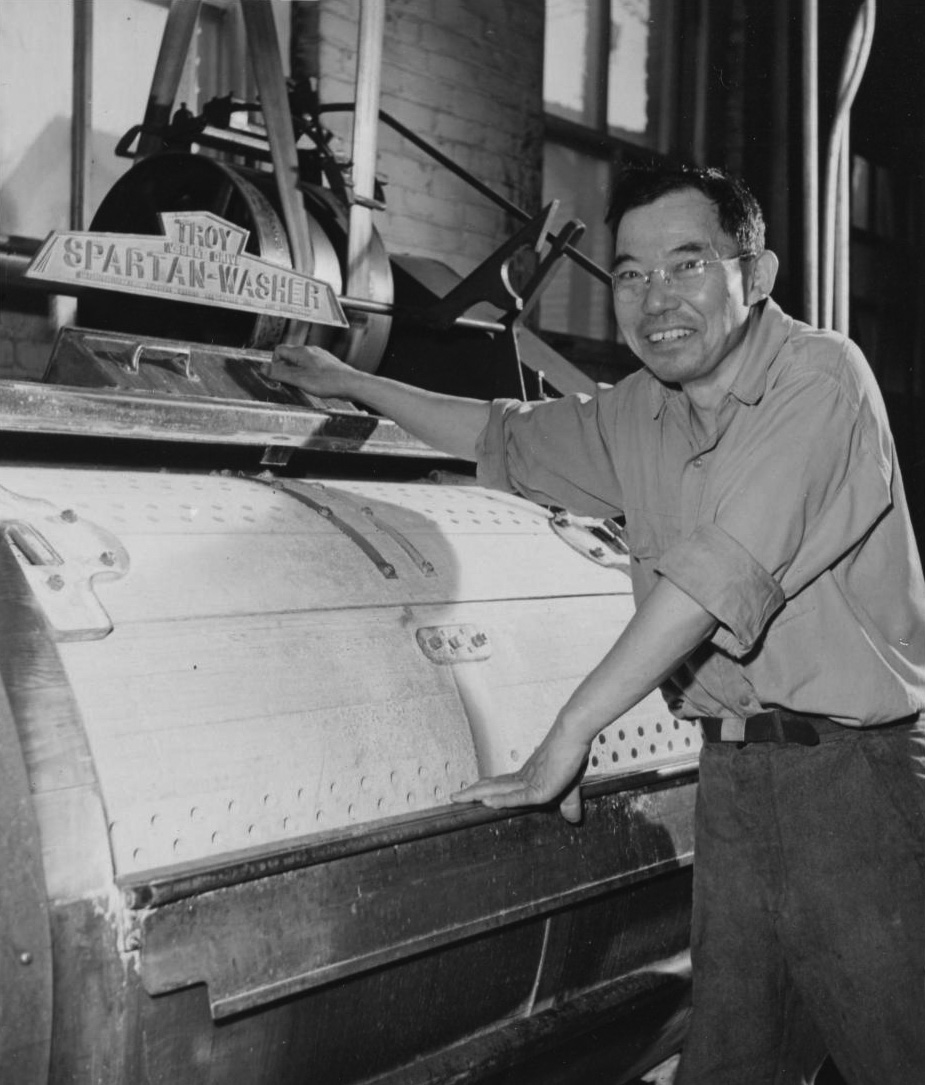 Paul N. Nakamoto - Maintenance man at the St. Joseph Home, Peoria, IL - 1945 (Photographer - Hikaru Iwasaki) |
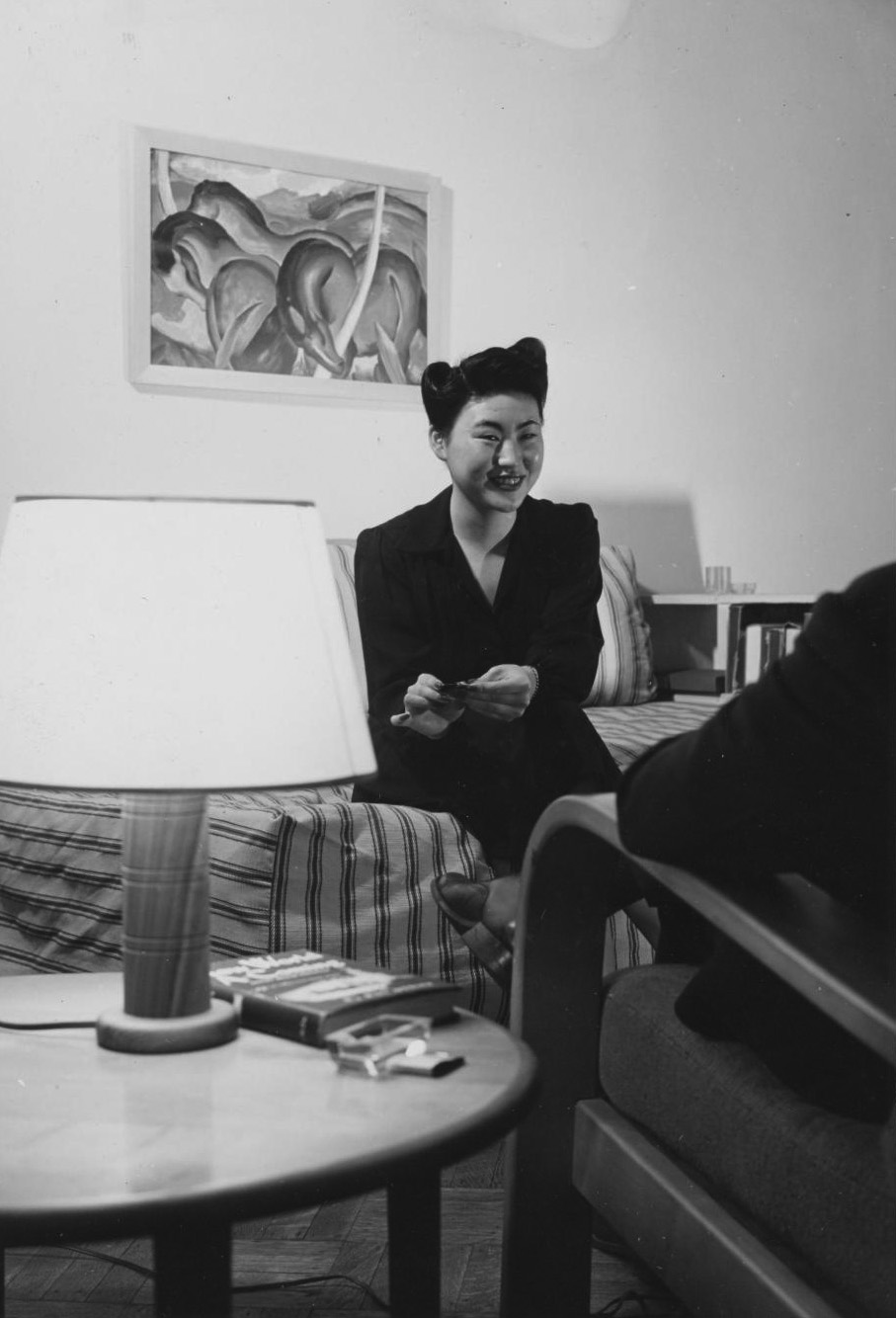 Kay Odahara in her new apartment across the street from Radio City in New York. Kay designs fabrics for a famous New York fabric house. |
|
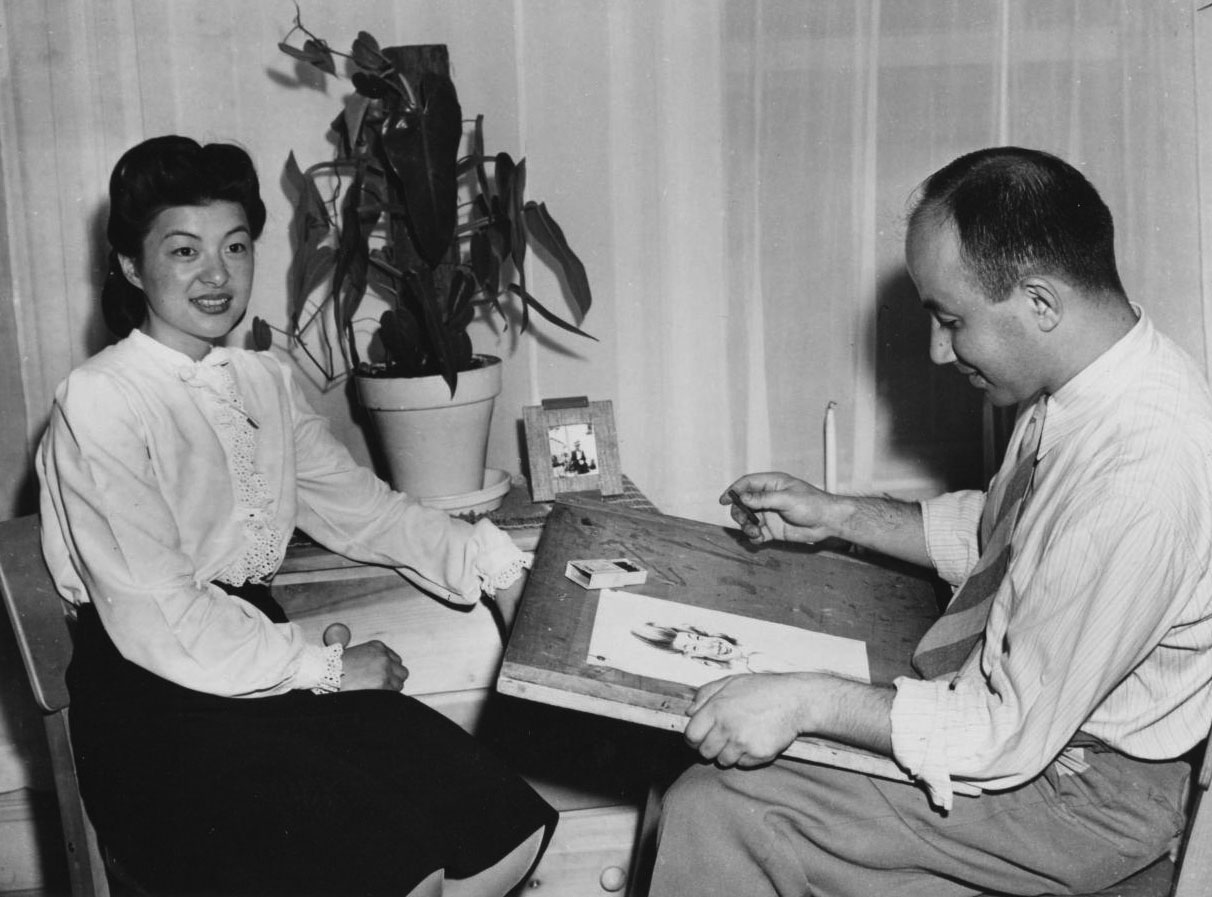 George Stanicci, formerly of Manzanar, is sketching his wife, the former Miss Margaret Ichino also of Manzanar, in the living room of their New York City apartment. George is now employed as a a designer-draftsman by a New York architectural firm. Margaret is a floral designer for a retail florist on New York City's fashionable Madison Avenue. |
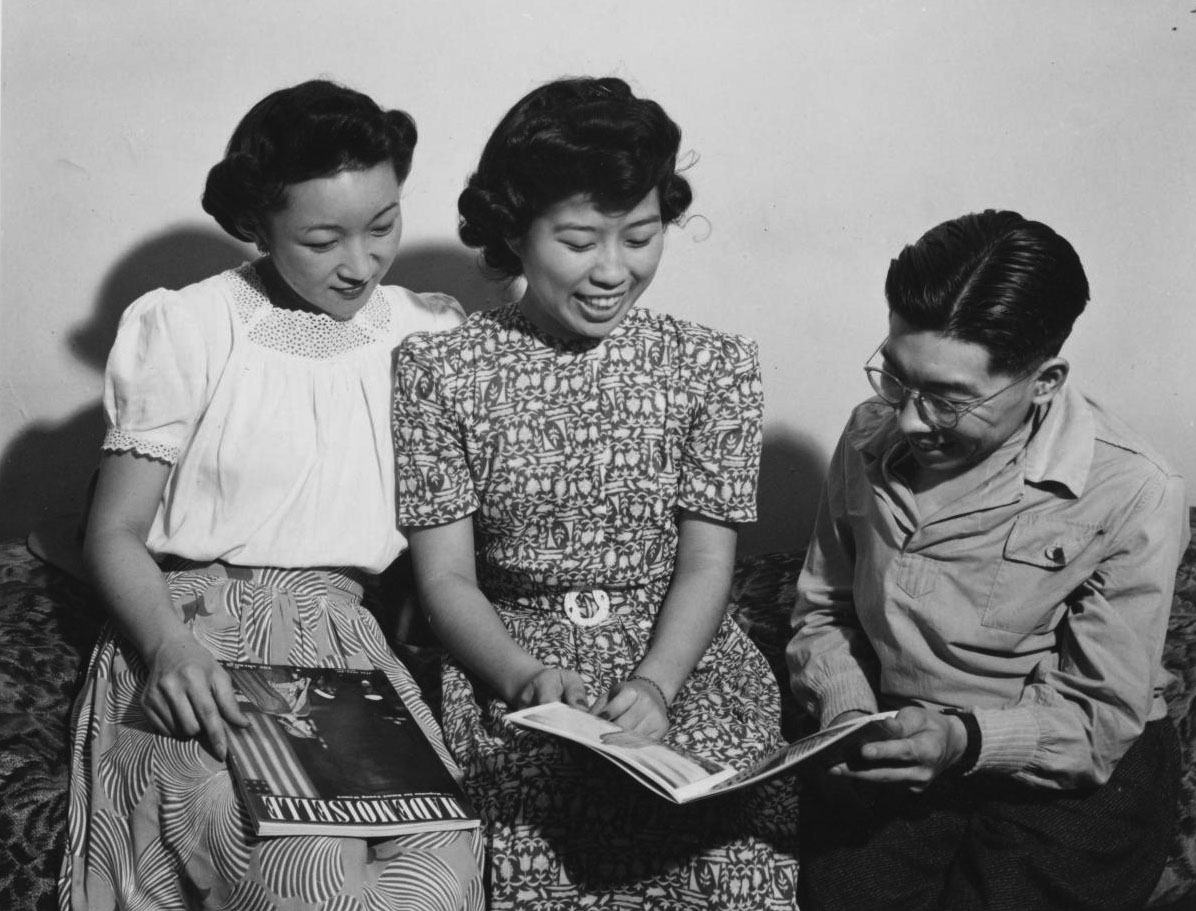 L/R: Akio Nomiyama (Granada), Sada Akazawa (Manzanar), Carl Kondo (Manzanar) going over a guide book of New York City. Akio is working as a dressmaker in a custom dress shop. Sada is currently working in a custom tailoring shop. Carl is a free lance writer in New York City. |
|||
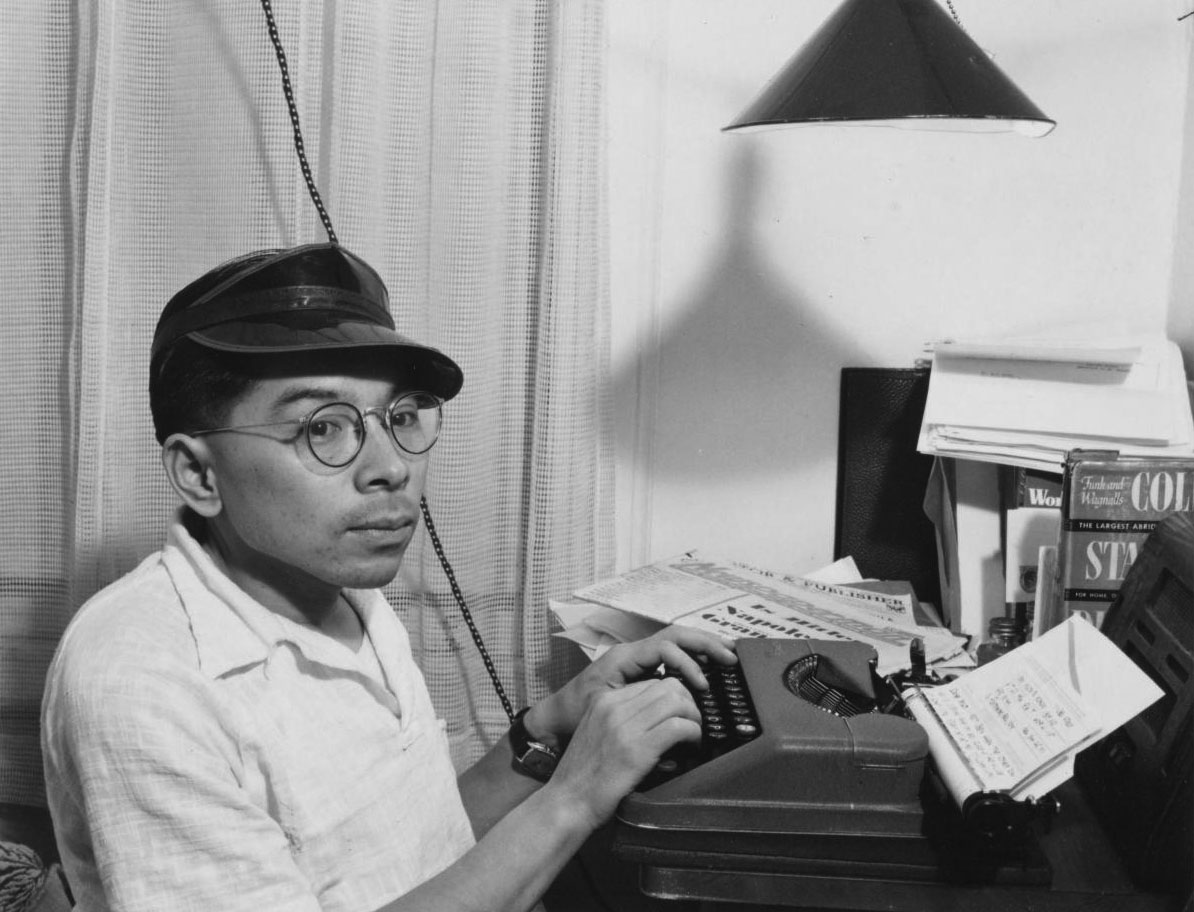 Carl Kondo - Free lance writer in New York City |
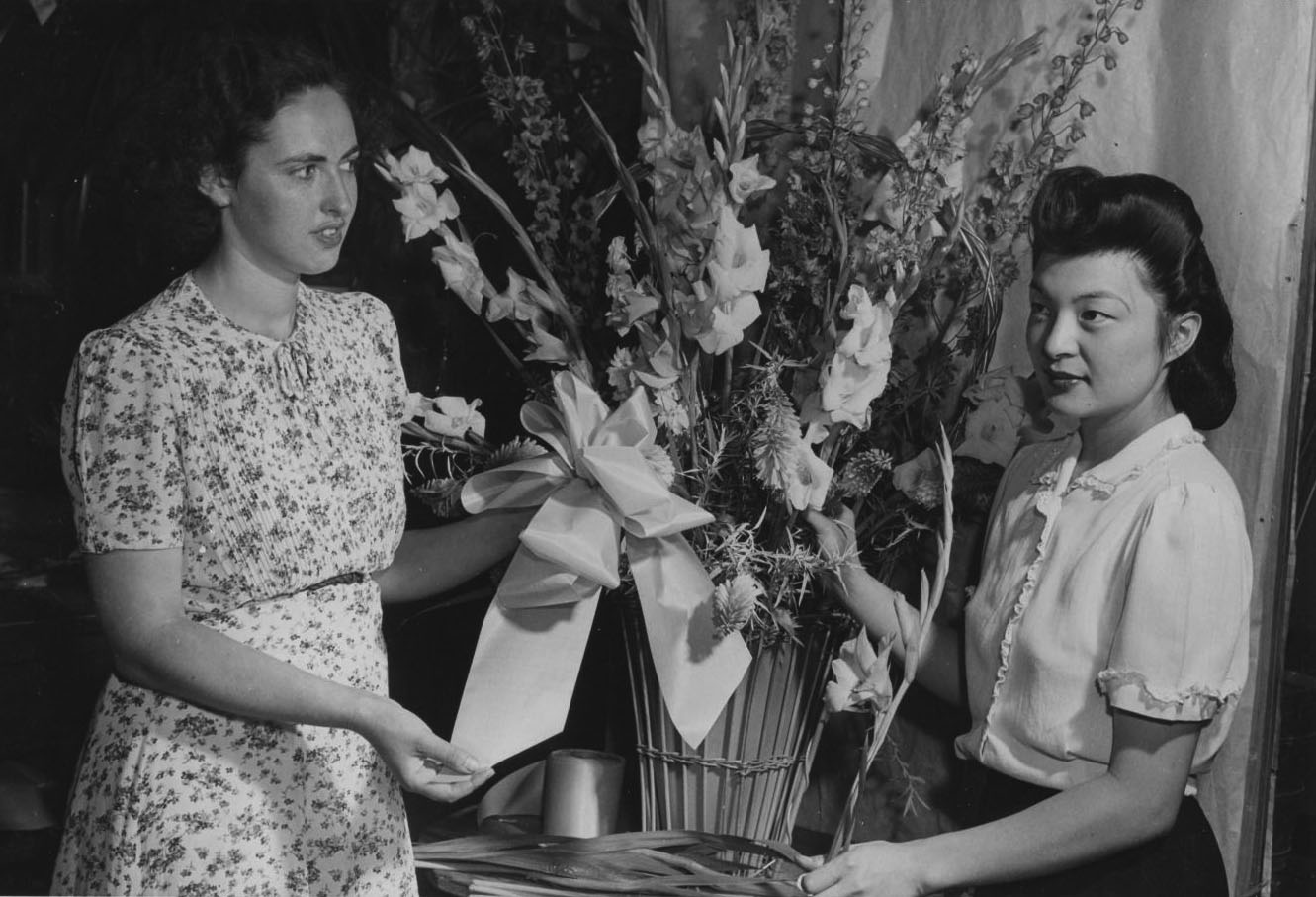 Mrs. Margaret Stanicci - Floral designer in New York City |
|||
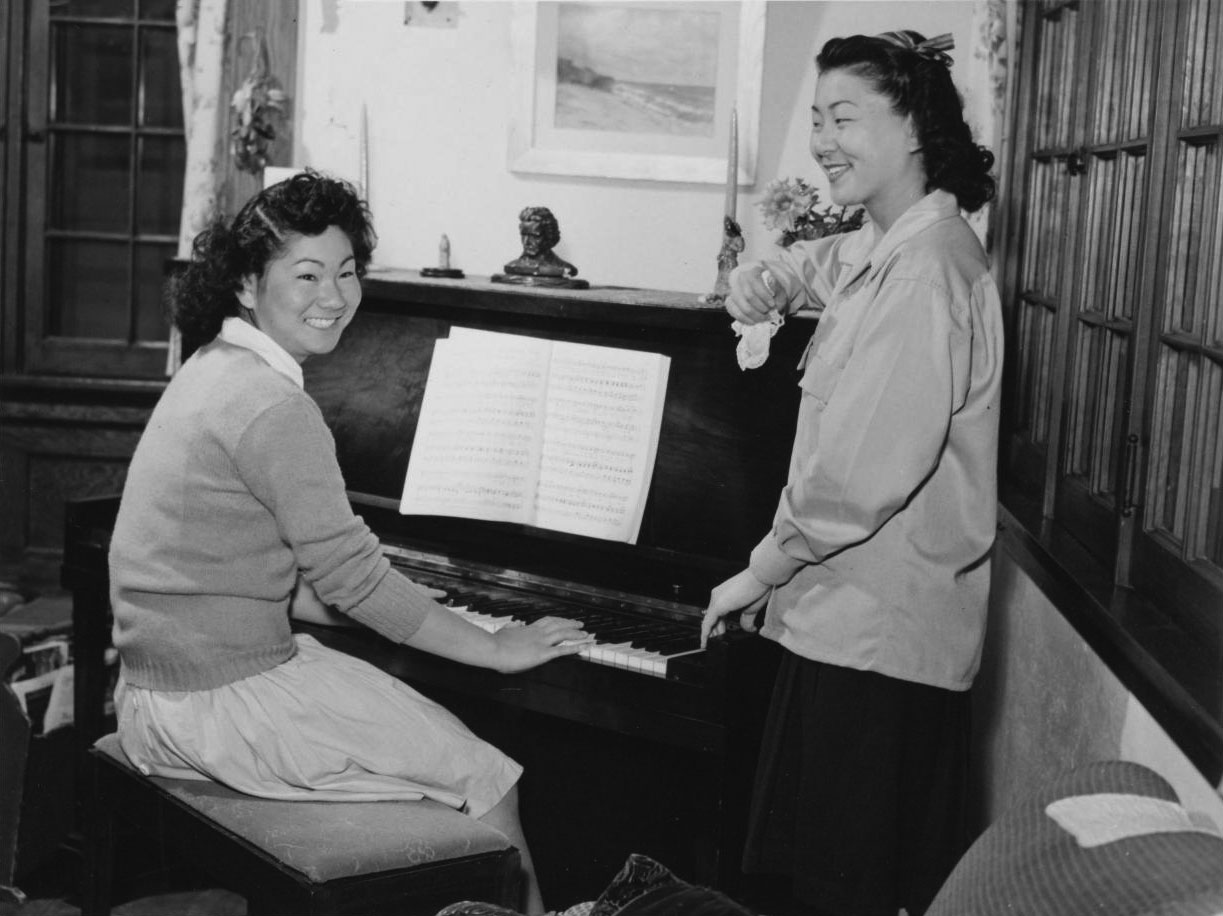 Mary Kageyama (18) the "Song Bird of Manzanar" and her younger sister, Tillie (15), at the piano in their Pasadena home. Mary is engaged to Shiro Nomura who she at Manzanar. (Photographer Chas. E. Mace - 1945) |
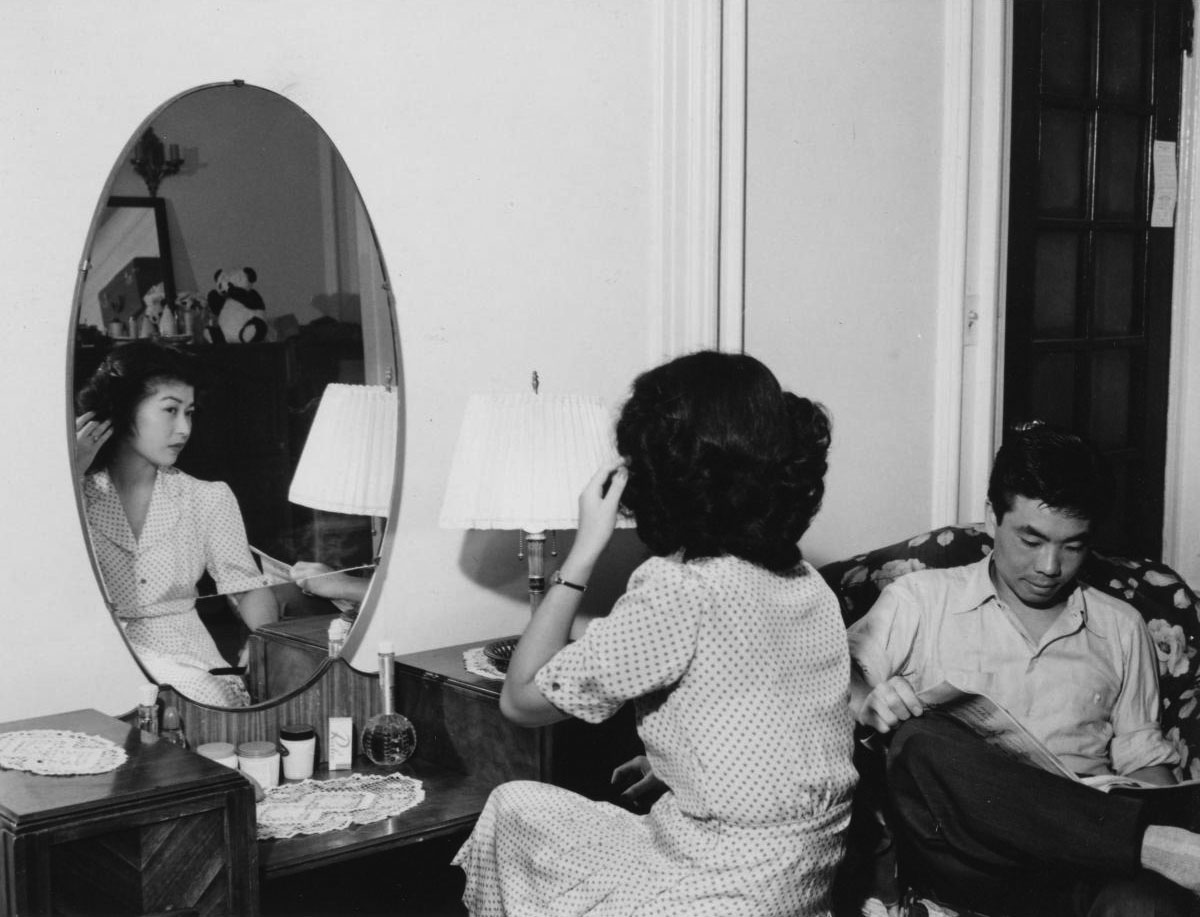 Mr. and Mrs. Ray Komai in their New York apartment. Ray is a layout artist with a leading advertising agency. Mr. Komai works in a cosmetic shop. |
|||
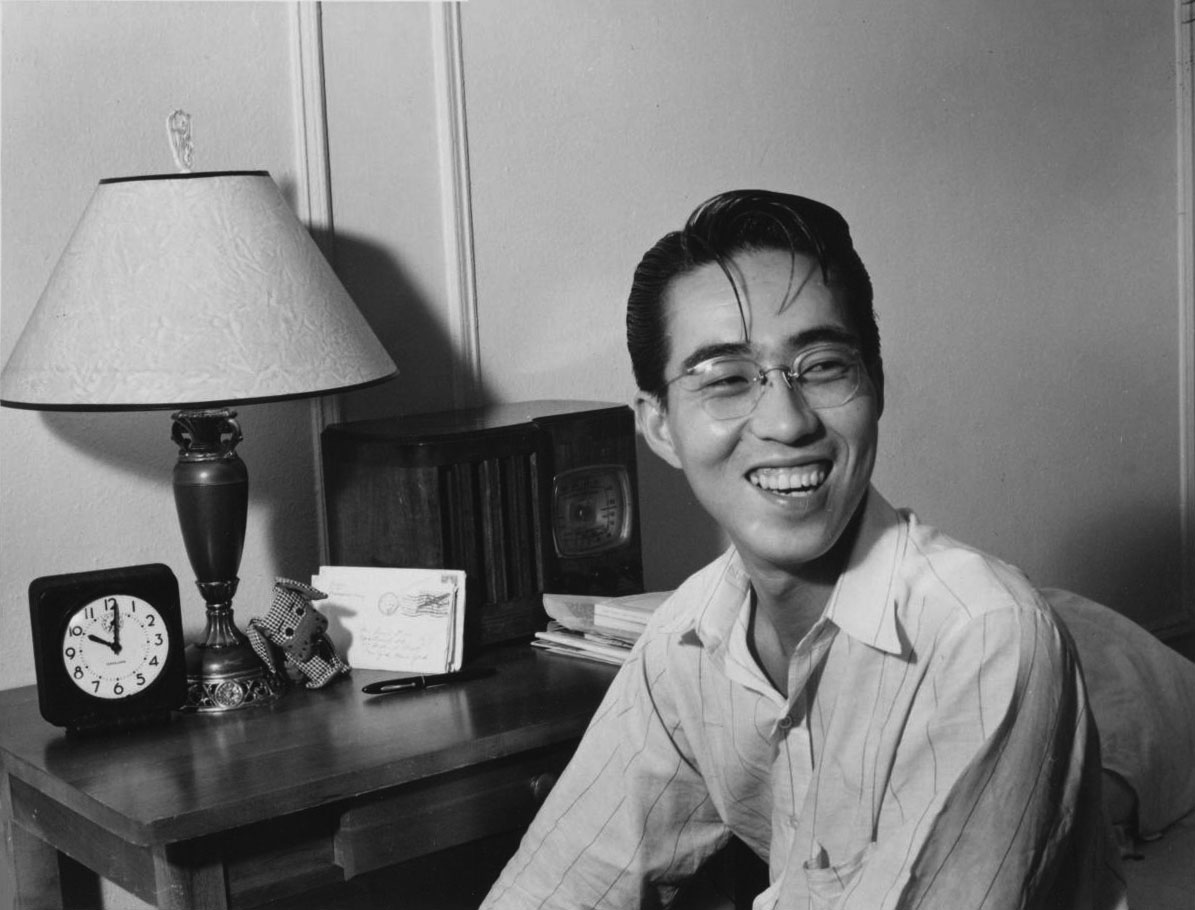 Lani Kai, Hawaiian born Nisei, in his New York City apartment. Lani is working as a shipping clerk in a New York dress firm. |
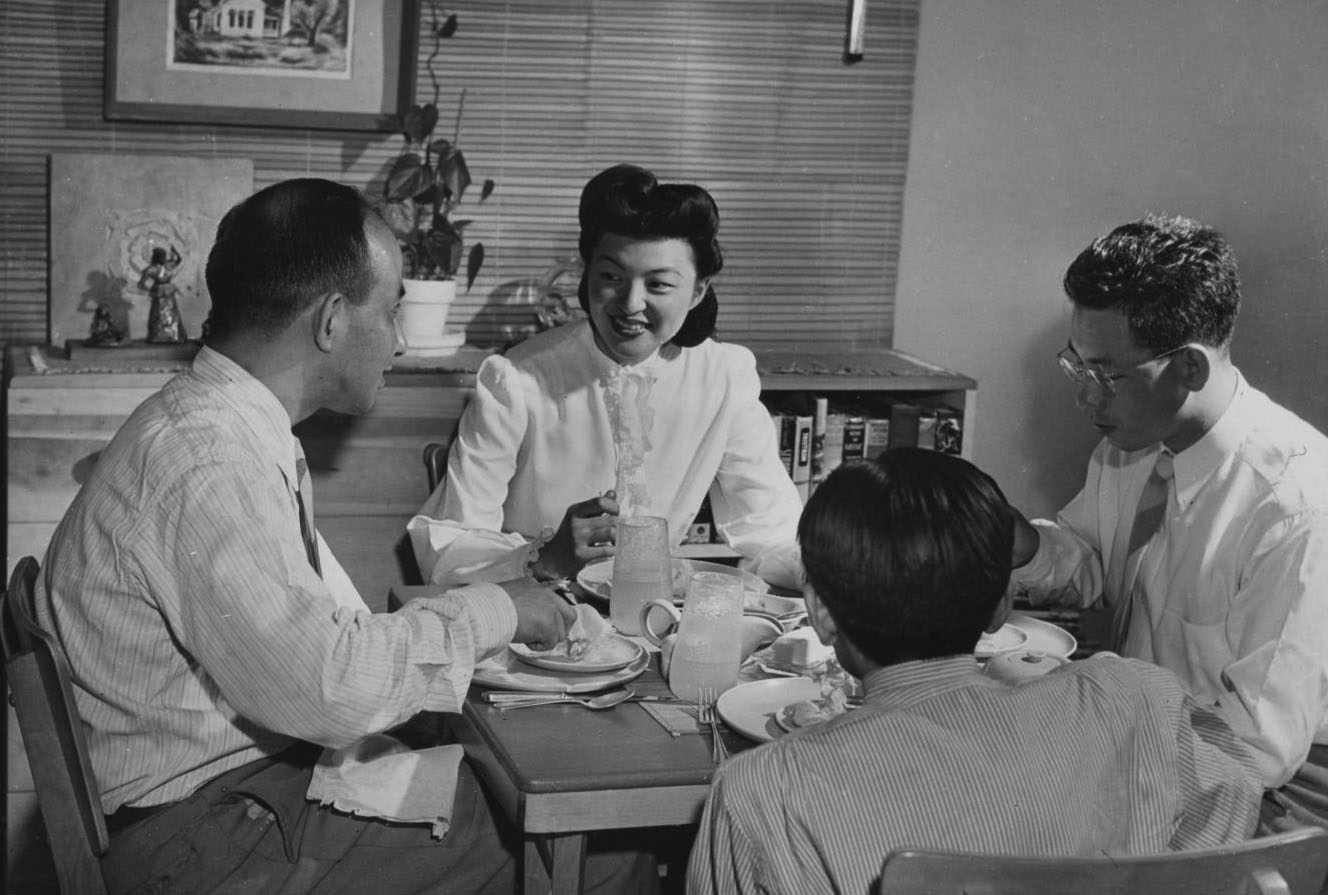 Four former residents of Manzanar in their New York City apartment. Mr. & Mrs. George Stanicci (left), Michael Yonen (right) - now an X-Ray technician in a New York City hospital. Carl Kondo has his back to the camera. |
|||
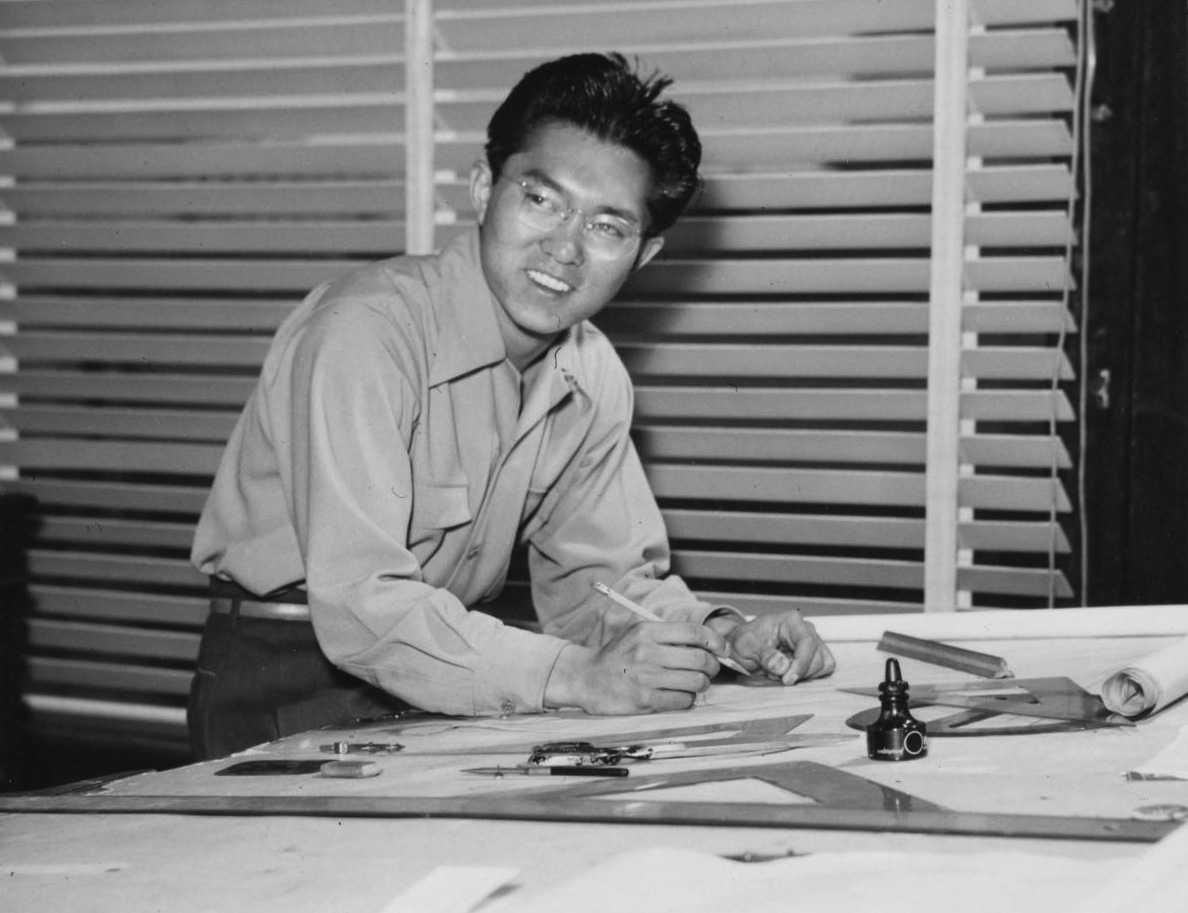 Mr. Iwao Takamoto starting work as an animator at Walt Disney Studios in Hollywood. (Photographer Chas. E. Mace - 1945) |
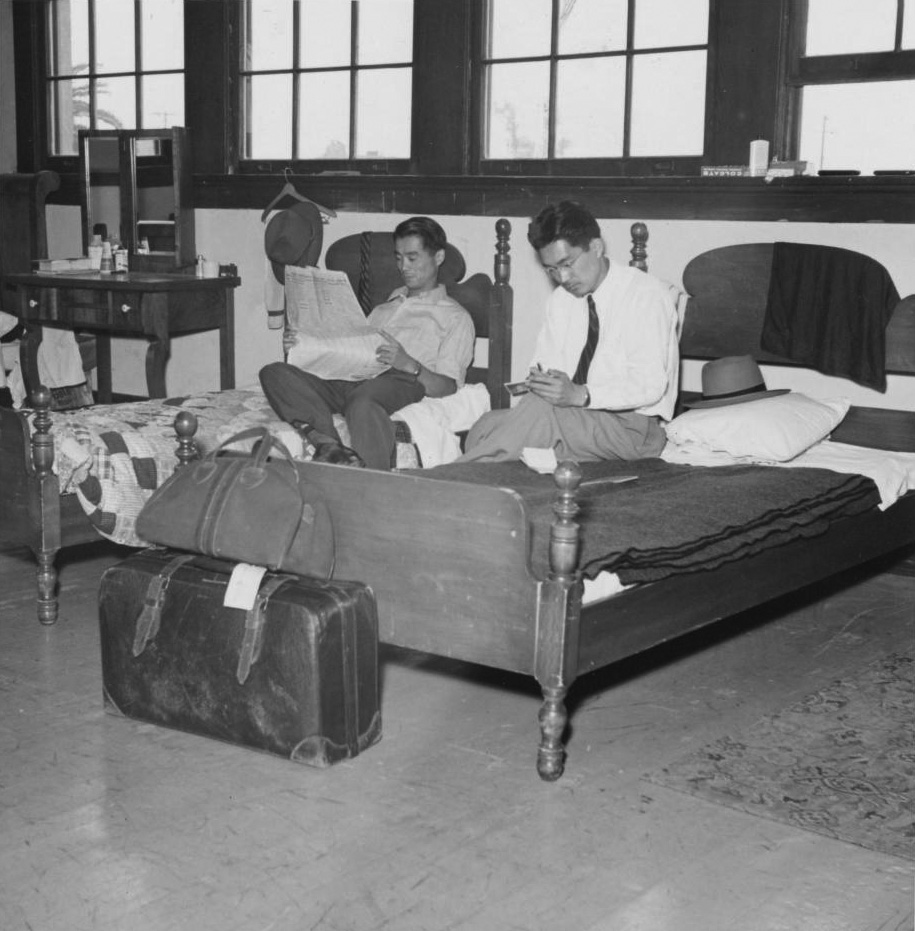 L/R: Henry Suenaga (Manzanar), Ben Nishiyama (Poston) at the Evergreen Hostel in Los Angeles - job and home hunting. (Photographer Chas. E. Mace - 1945) |
|||
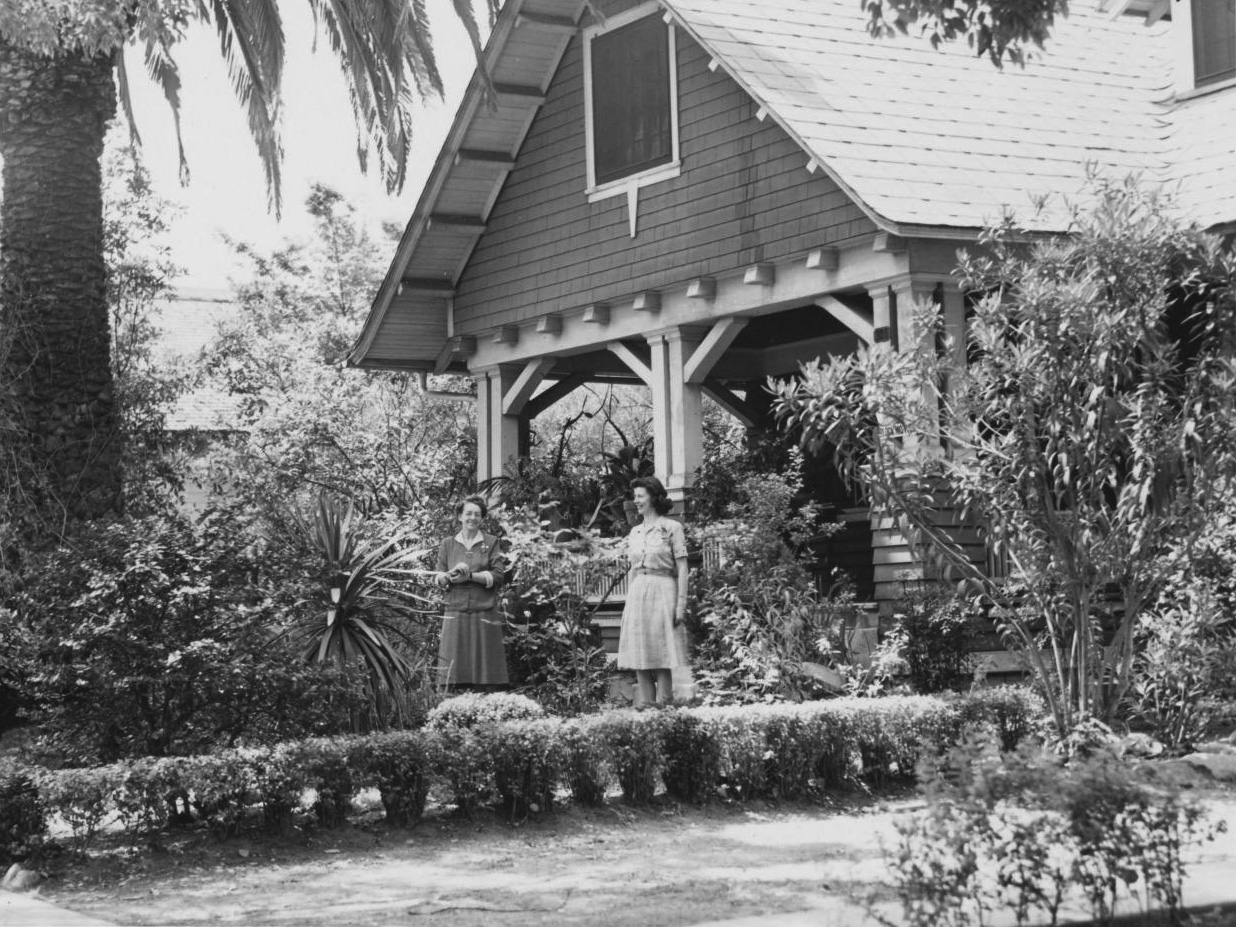 Exterior of the Pasadena Hostel where returnees from Gila River, Colorado River and Manzanar are temporarily housed. Seen in the garden are Miss Katherine Fanning (L) and Miss Marjorie Noble (R). (Photographer Chas. E. Mace - 1945) |
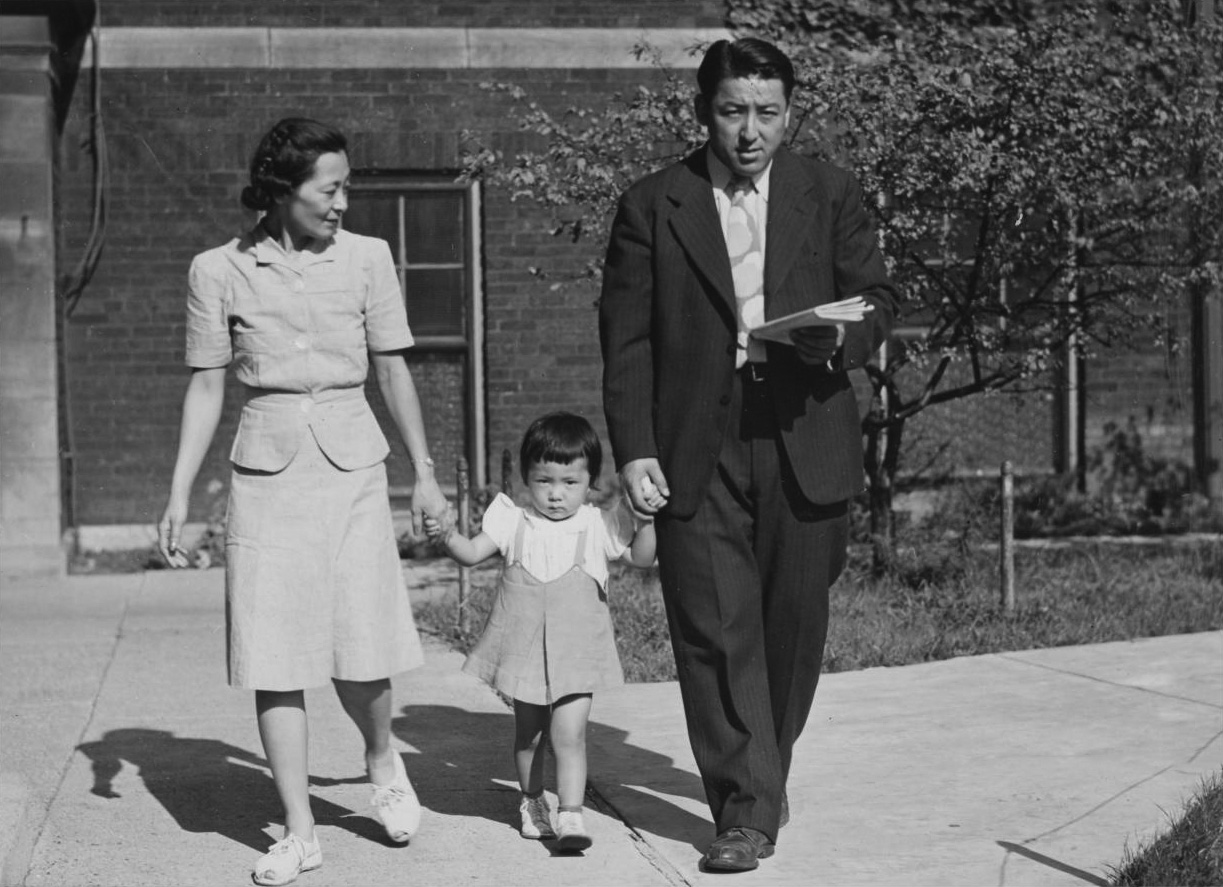 Mr. and Mrs. Hoshiro Oshima with one of their three children searching Chicago for suitable housing. Hoshiro is employed by a large Hotel Company in Chicago. (Photographer Chas. E. Mace - 1945) |
|||
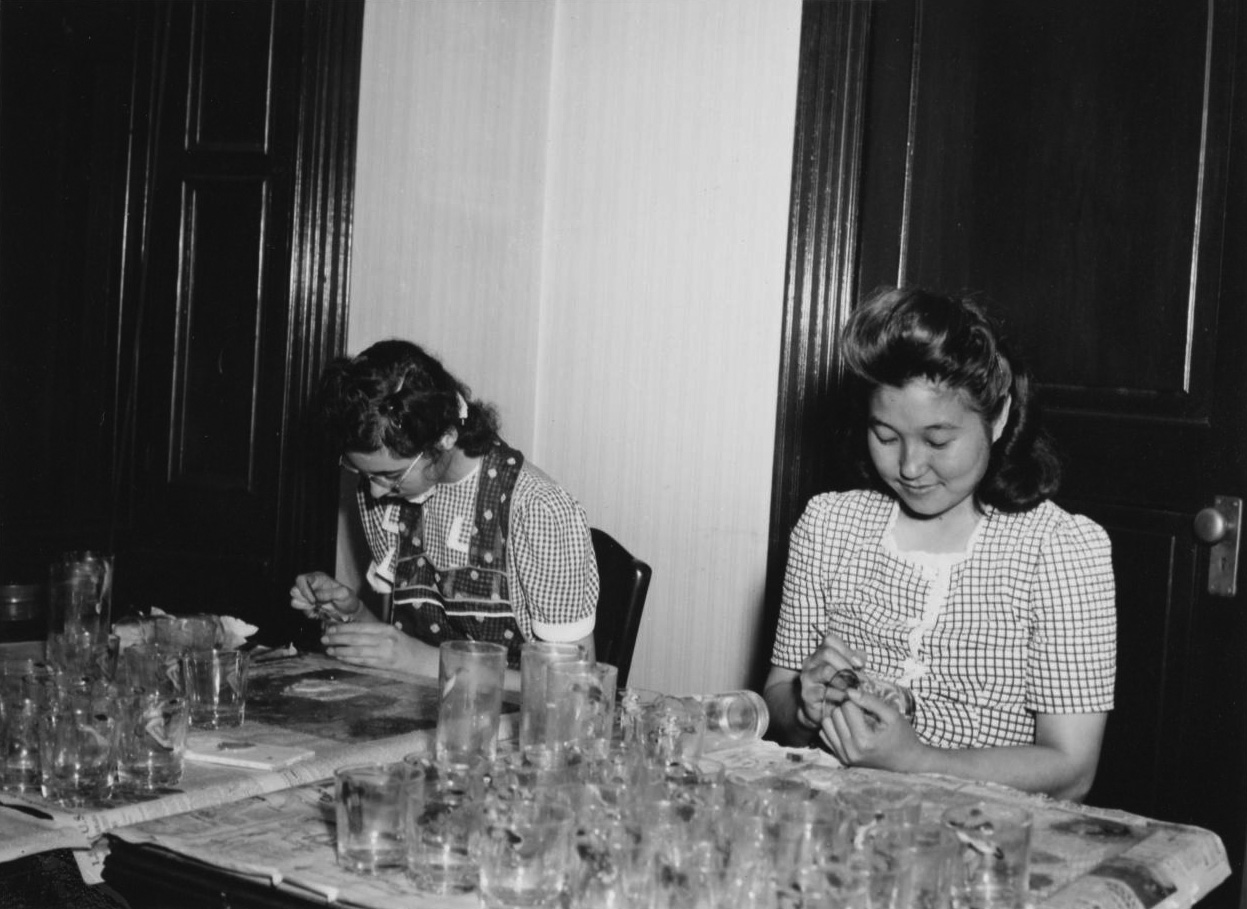 Emiko Ishisaki (R) assistant t the Robert H. Ransley glass decorating shop |
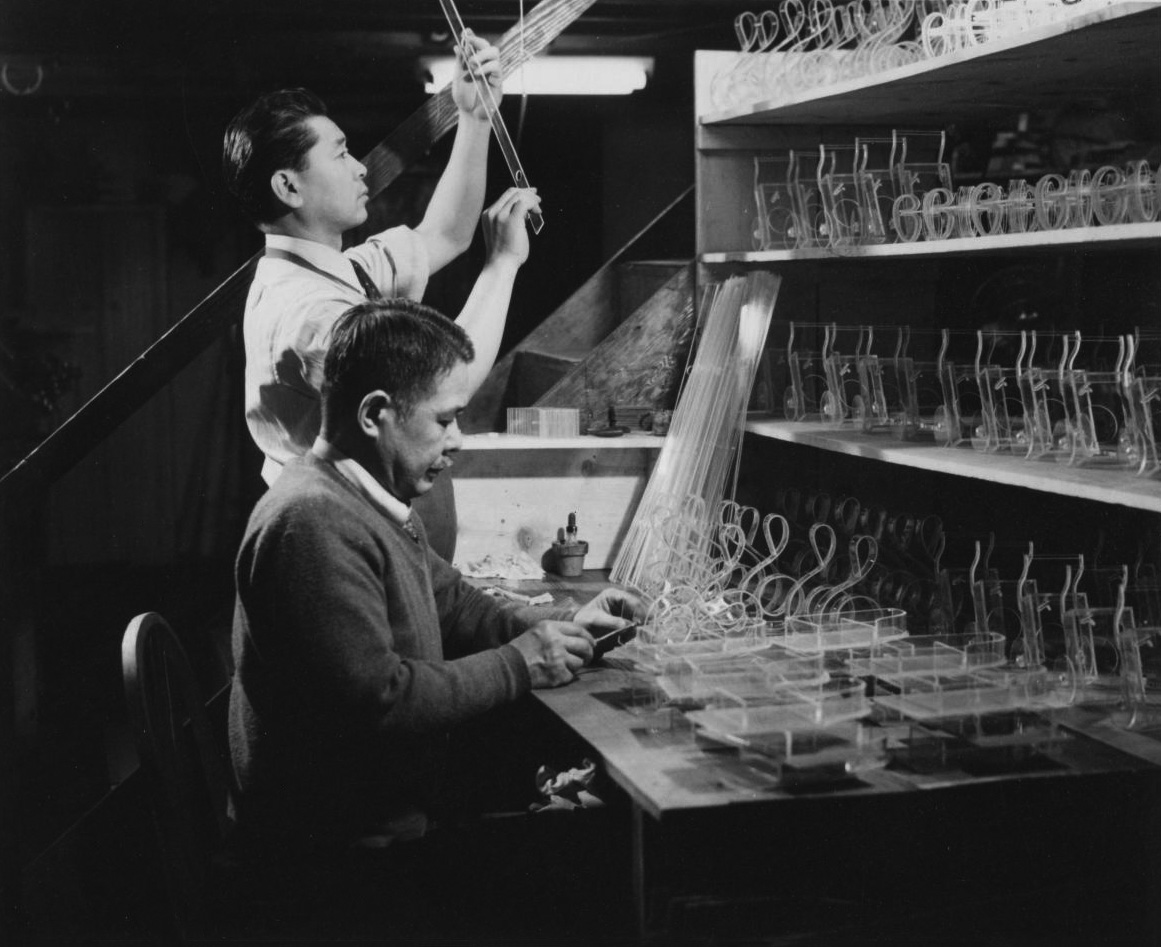 Kay Kageyama (standing) and Masayoshi Shibata assembling plastic novelties in the shop of Mr. Kageyama's new business - the New York Plastic Company - 1945) |
|||
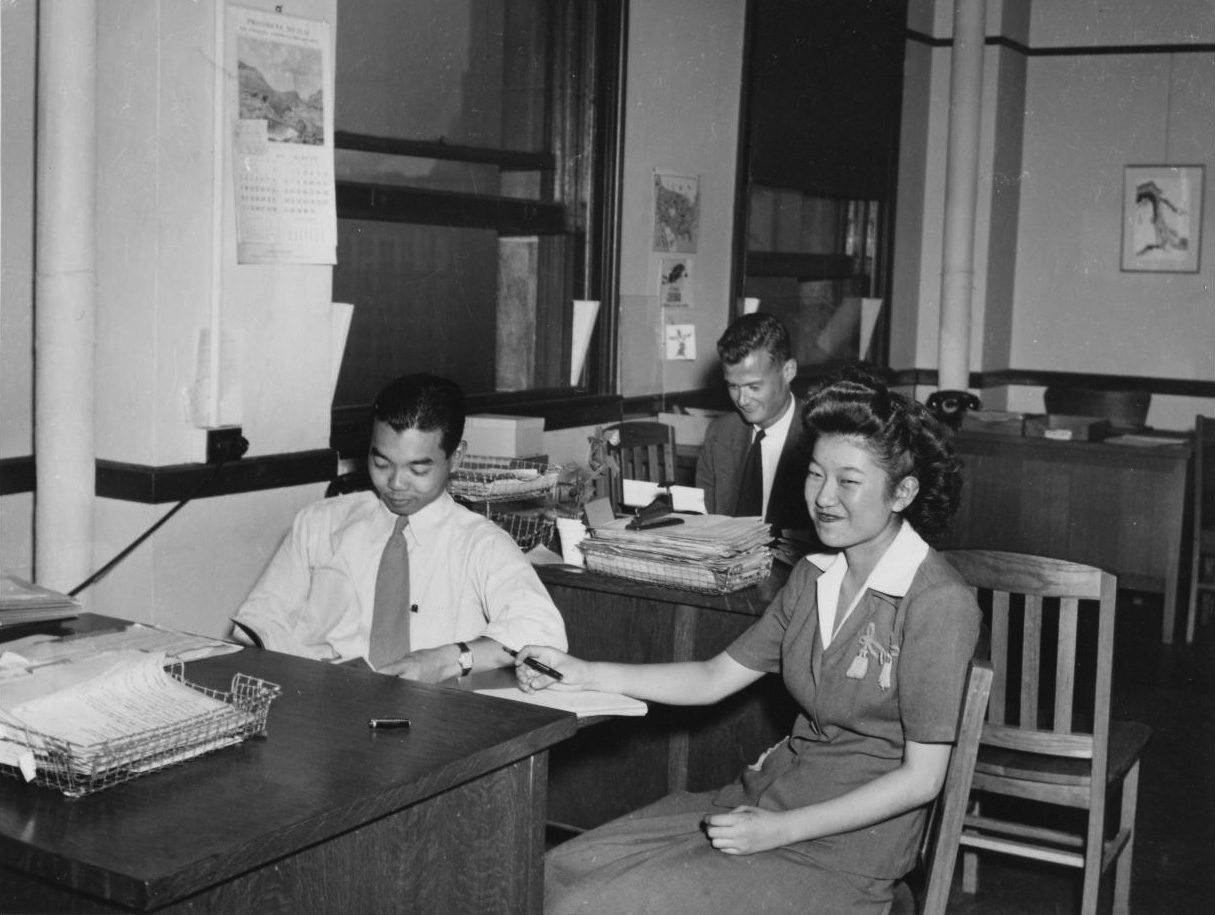 Setsuko Mary Yano - Stenographer at the National Japanese American Student Relocation Council in Philadelphia, PA She taking dictation from Kenneth Yamamoto (formerly of Poston). In the background is Tom Bodine. |
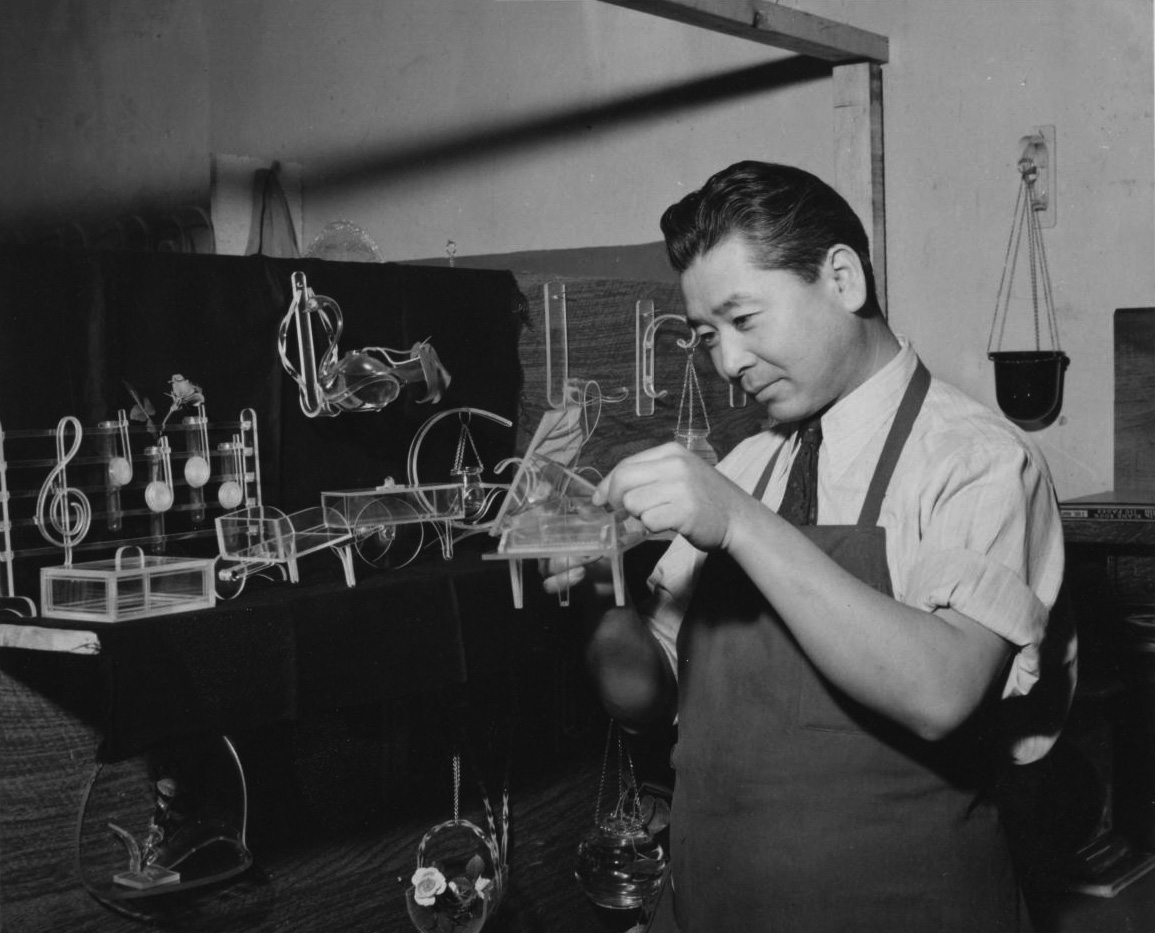 Kay Kageyama assembling plastic novelties in the shop of his new business - the New York Plastic Company - 1945) |
|||
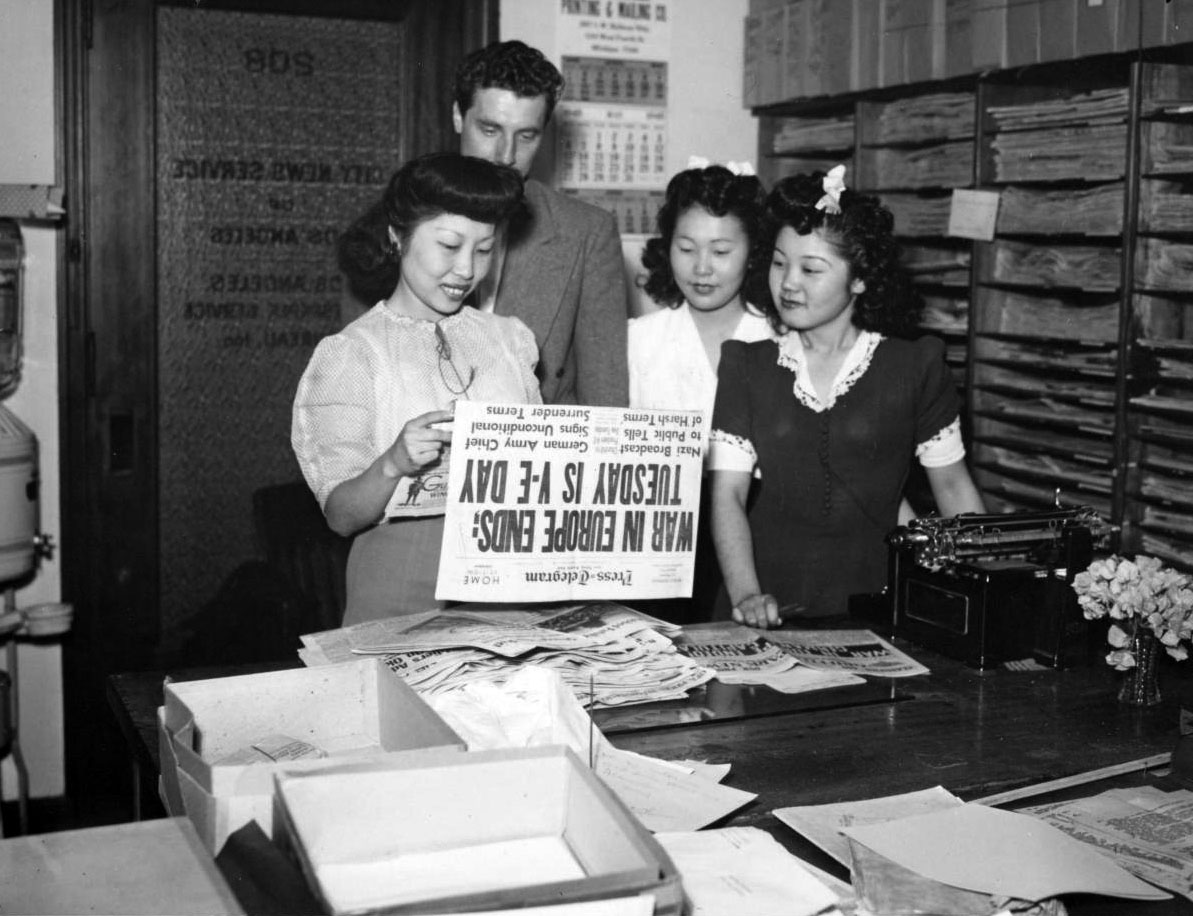 Mary Kitano works for City News Service in Los Angeles. Betty Lyou (holding paper, Rodney Voig, Miss Fusako Takemoto, Miss Mary Kitano (Photographer Chas. E. Mace - 1945) |
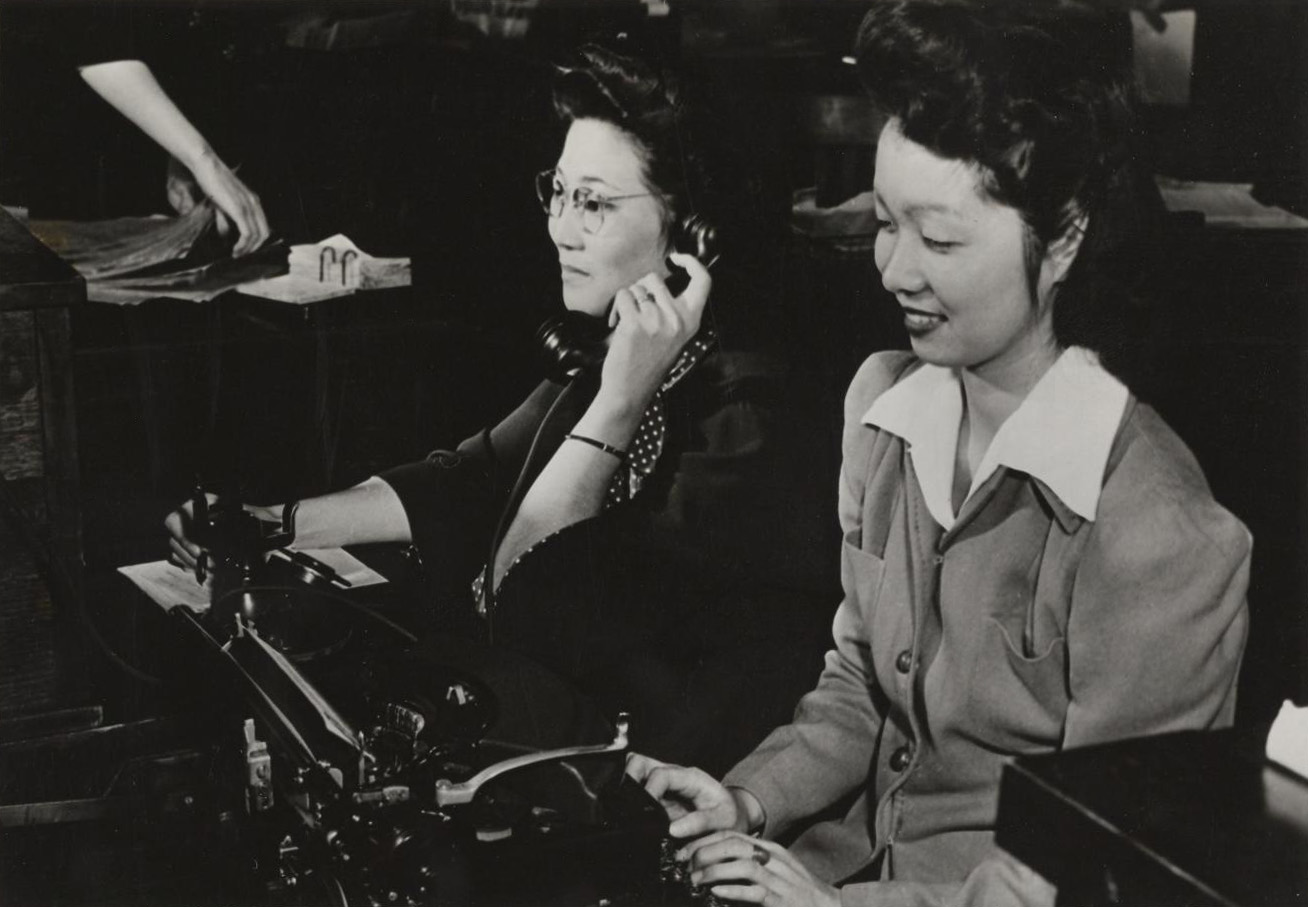 L/R: Mrs. Sachi Furuto,, Sally Kusayanagi at work with the National Screen Corporation of Des Moines, Iowa. Sachi operates the switchboard and Sally is employed as a stenographer |
|||
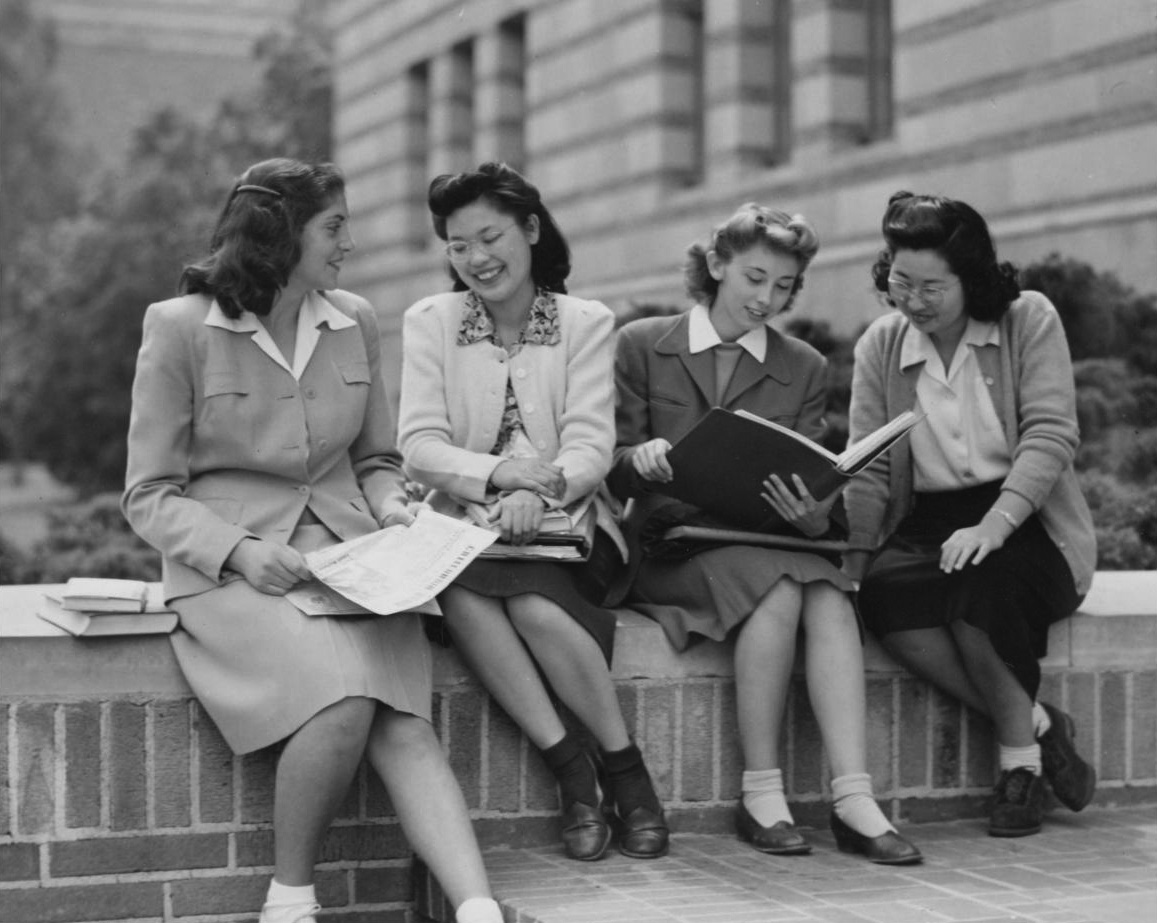 L/R: Michiko Kataoka, Meriko Hoshiyama, ?, ? Students at the University of California at Los Angeles with fellow students at the entrance to the campus library. |
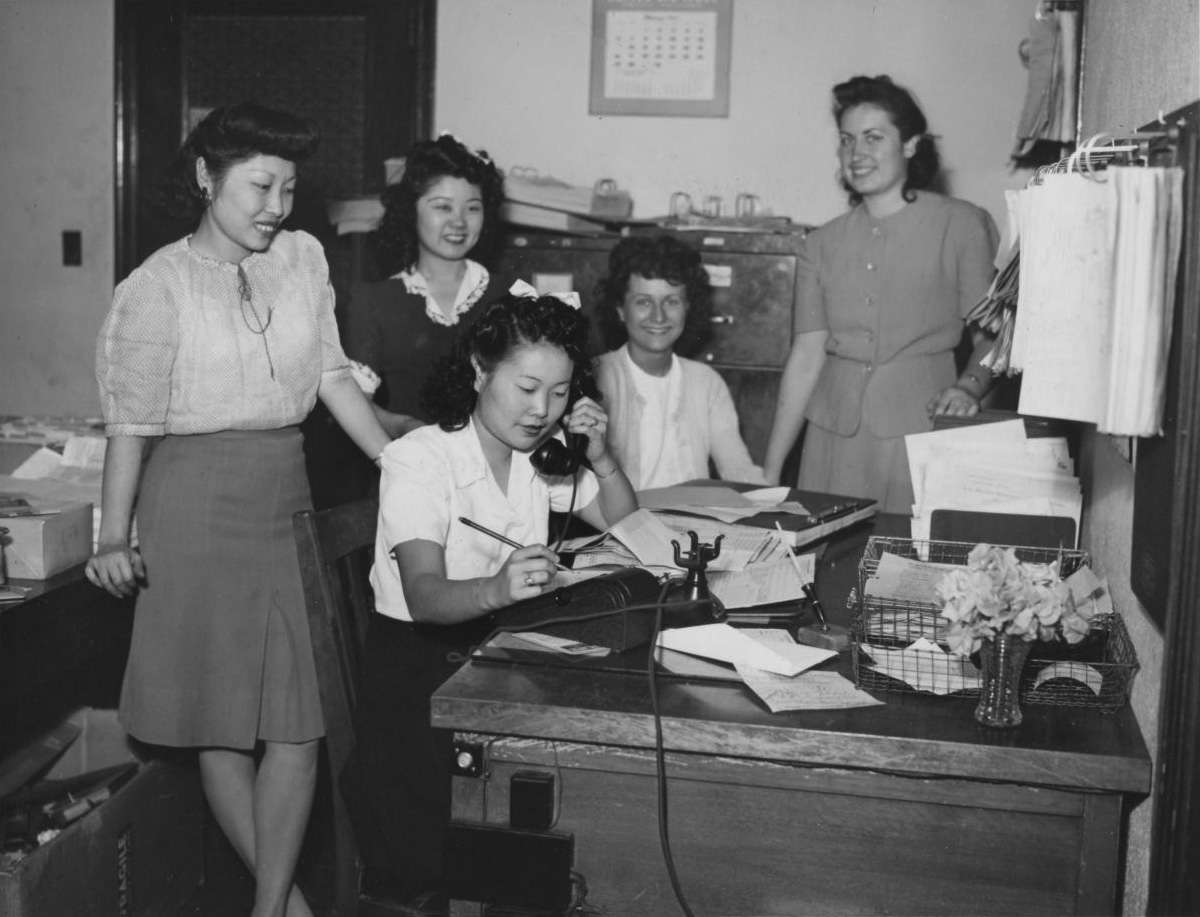 L/R: Betty Lyou (Korean), Fusako Takemoto, Mary Planin (Russian) Seated: Mary Kitano (Manzanar), Vera Haprov (Russian) Mary and fellow co-workers on the staff of City News Service in Los Angeles, CA. Mary reads and finds news items in over 100 papers |
|||
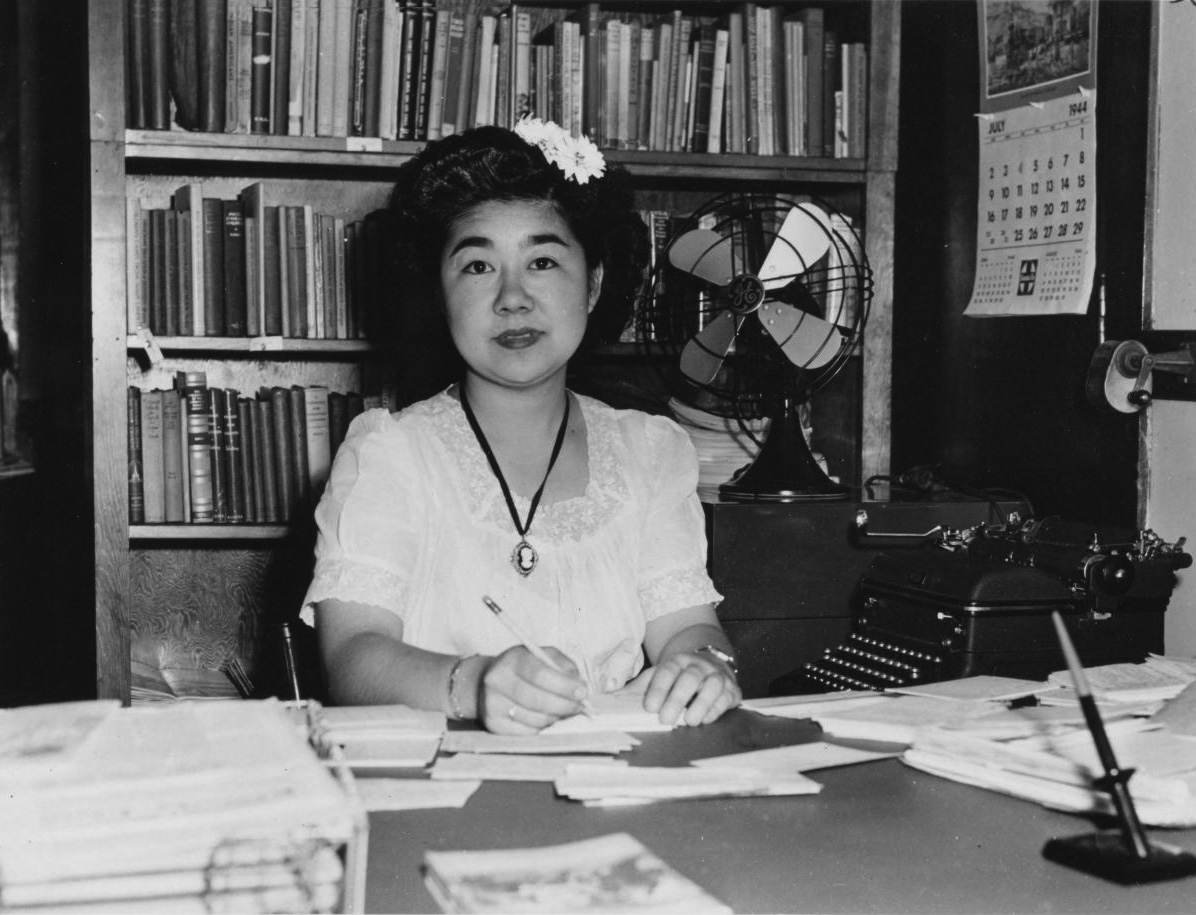 Miss Florence Takemura - At work for the Iowa Christian Women's Missionary Society as a clerk and receptionist while attending Drake University. |
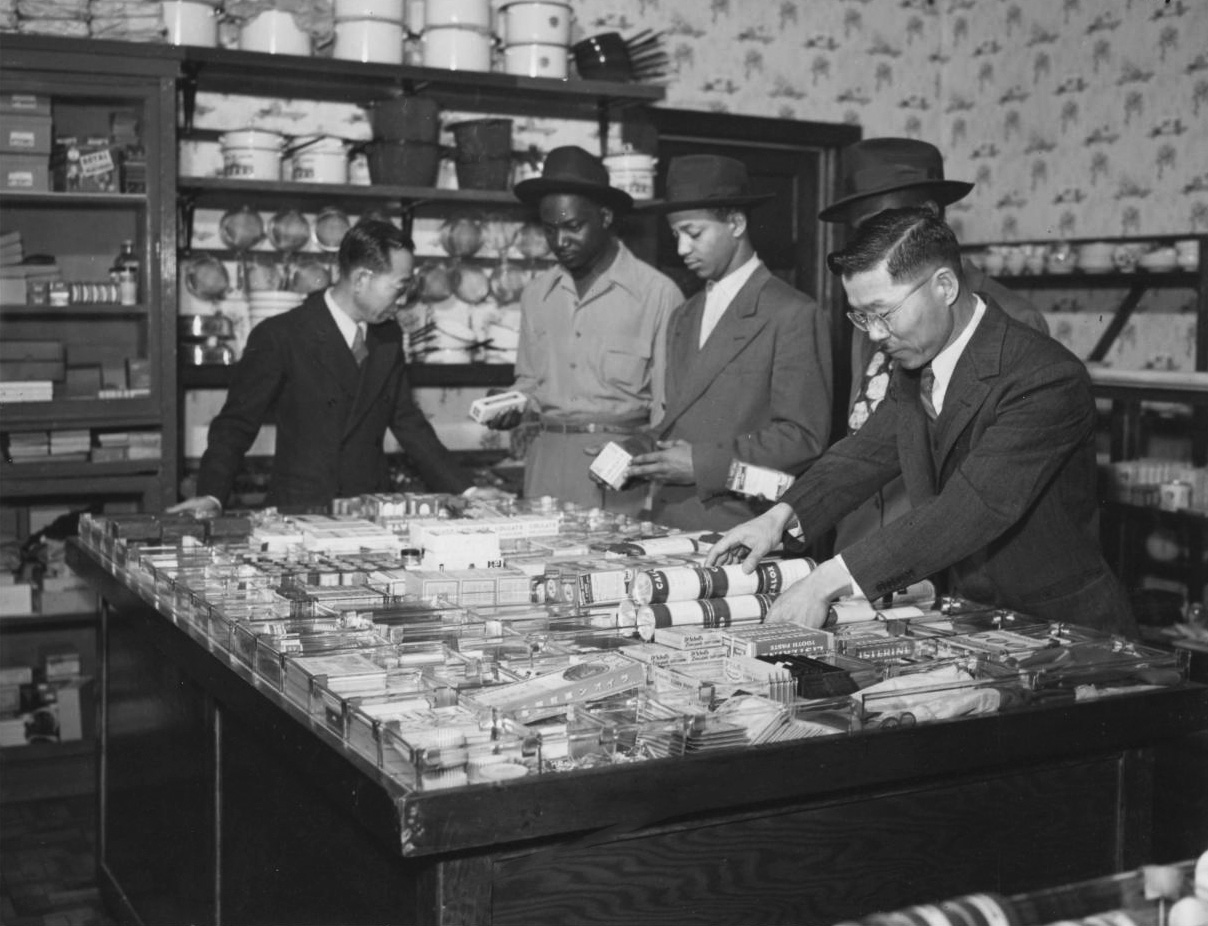 Kiichi Uheda (front)- the first returnee to "Little Tokyo," now "Bronzeville" Los Angeles. Kiichi has opened the "Bronzeville 5-10-25¢ Store. Kiichi is assisted by his friend Matsuo Yoshida (Colorado River) in the back. What used to be Little Tokyo is now an entirely black community. Kiichi and Matsuo are the only Japanese in the community. |
|||
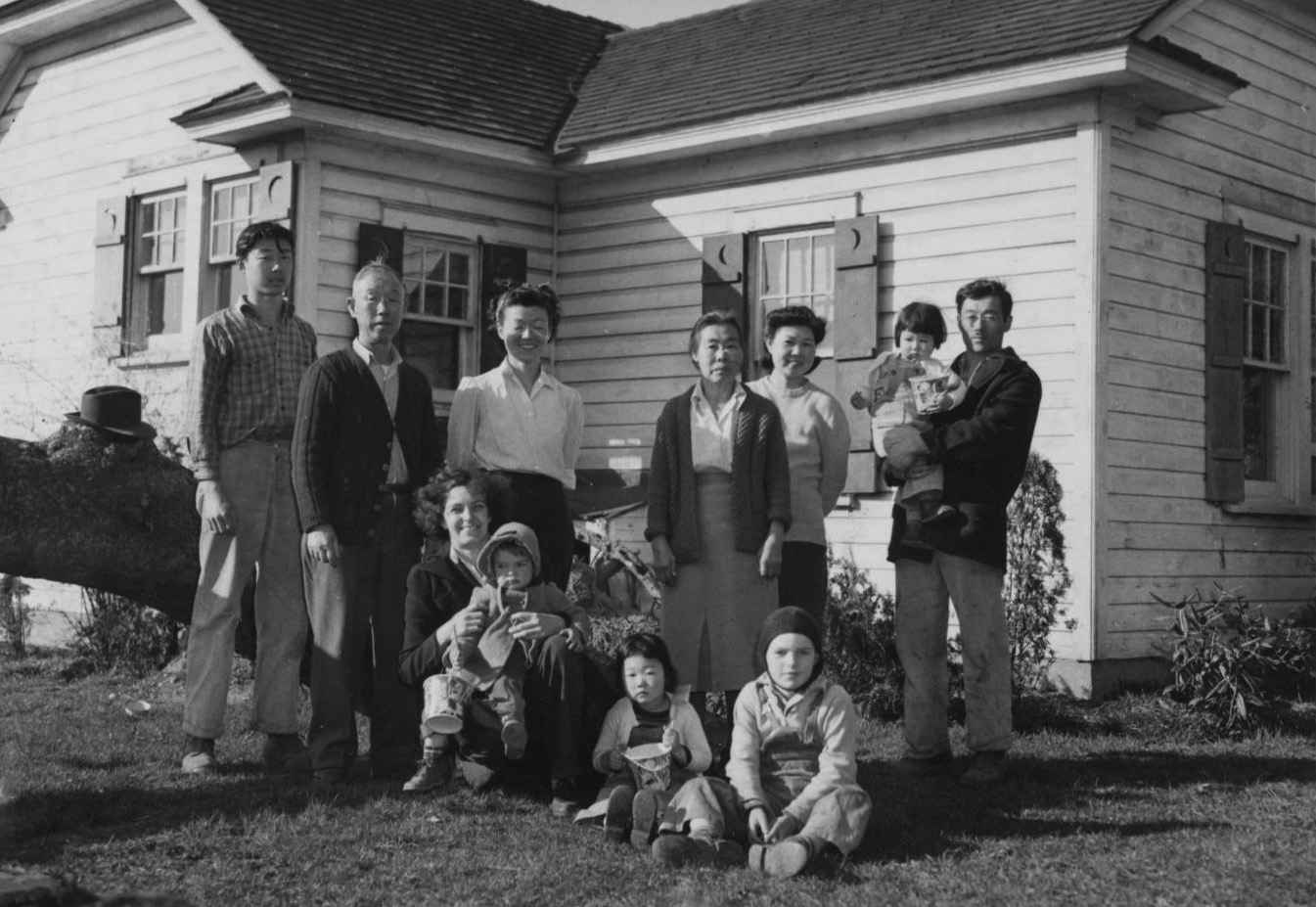 L/R (standing): Willy Fukuhara, Mr. Fukuhara, Tomiko Fukuhara, Mrs. Fukuhara, Mrs. Henry Fukuhara (daughter-in-law), Henry Fukkuhara, Yoshino Fukuhara (young daughter) L/R (seated): ?, ?, Shizuko Fukuhara, ? Mr. and Mrs. Ichisuke Fukuhara are shown with other members of their family outside of their house on the grounds of the Calderone Greenhouse in Farmingdale, Long Island, NY. |
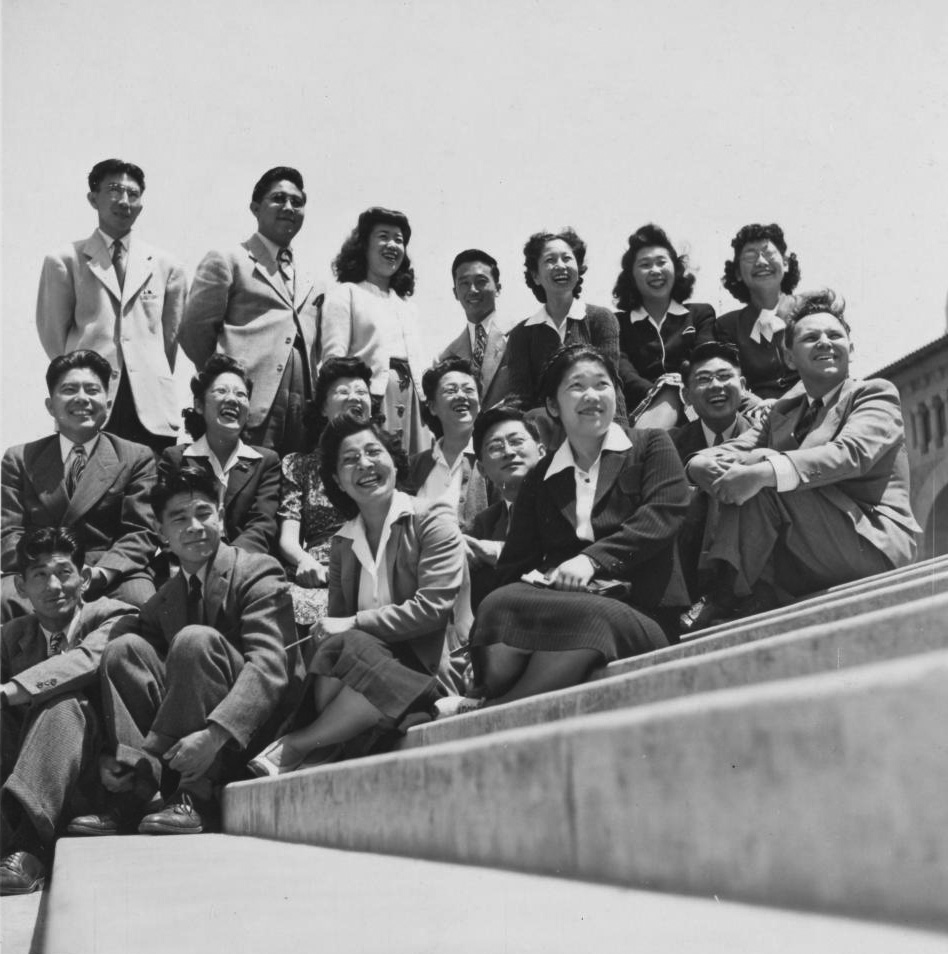 L/R (front row): Richard Arimoto (Granada), Ryuji Adachi (Topaz), Sumi Sugimoto (Topaz), Kenneth Fujiyoshi (Manzanar), Masato W. Kato (Gila), Masaye Masuyama (Manzanar), Professor A. E. Sokol of Stanford L/R (middle row): Hirosuke Inouye (topaz), Alice Hanasaki (Gila), Margaret Nakagawa (Topaz), Helen Ban (Manzanar) L/R (back row): Keiji K. Kubo (Topaz), Clark Saito (Gila), Hiroshi Waki (Gila), Helen Takahashi (Topaz), Henry Handa (Manzanar), Mary Jane Hamachi (Topaz), Irene Hirose (Topaz) (Photographer - Iwasaki Hikaru) |
|||
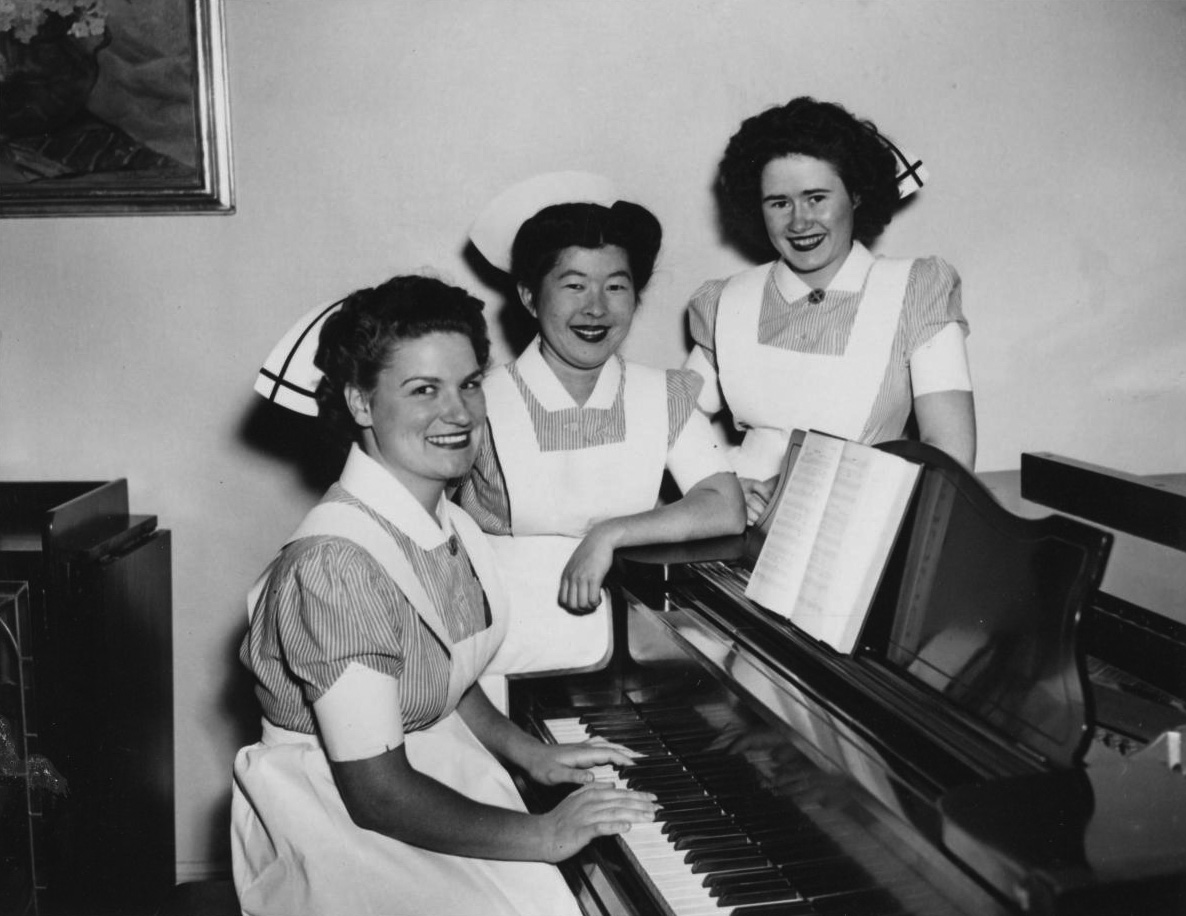 Miss Tomiko Yasuda (middle) and two other nurses relaxing in the Genesee Hospital recreation room in Rochester, NY. |
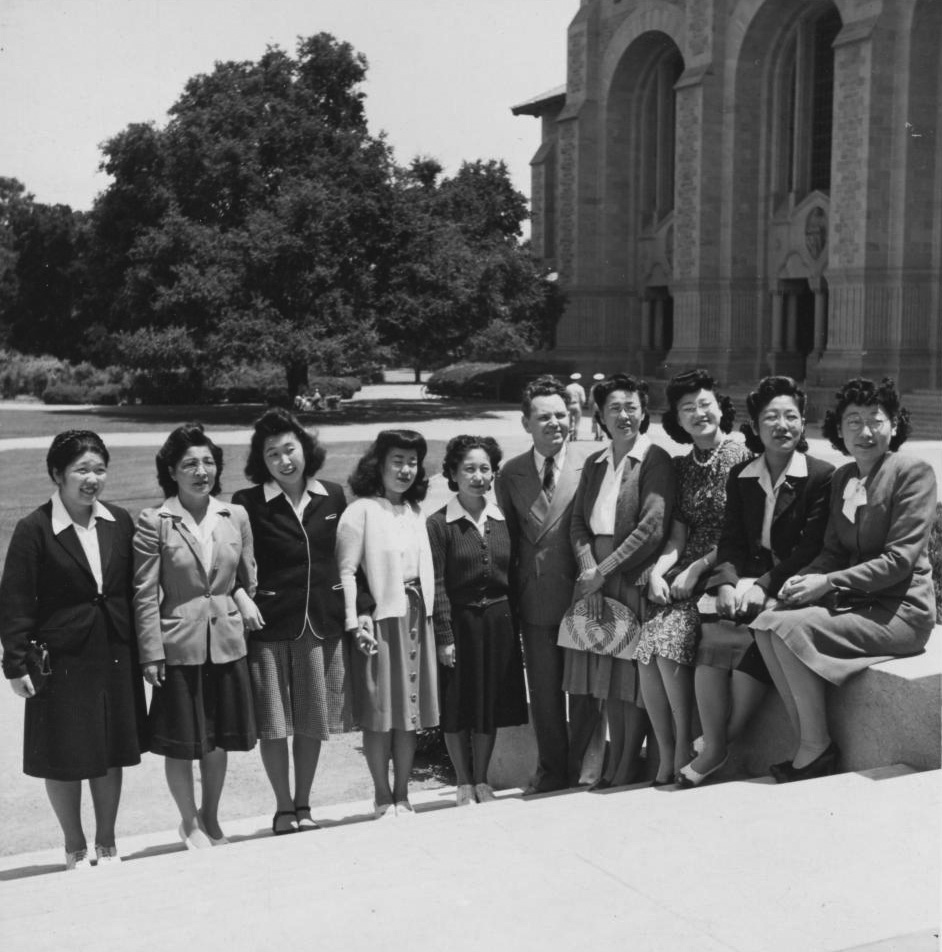 L/R: Masaye Masuyama (Manzanar), Sumigimoto (Topaz), Mary Jane Hamachi (Topaz), Helen Takahashi (Topaz), Helen Ban (Manzanar), Professor A. E. Sokol of Stanford, Margaret Nakagawa (Topaz), Julia Kitayama (Manzanar), Alice Hamasaki (Gila), Irene Hirose (Topaz) Teachers of the Japanese language to Army Officers in the Civil Affairs School of Stanford University - 1945. (Photographer - Hikaru Iwasaki) |
|||
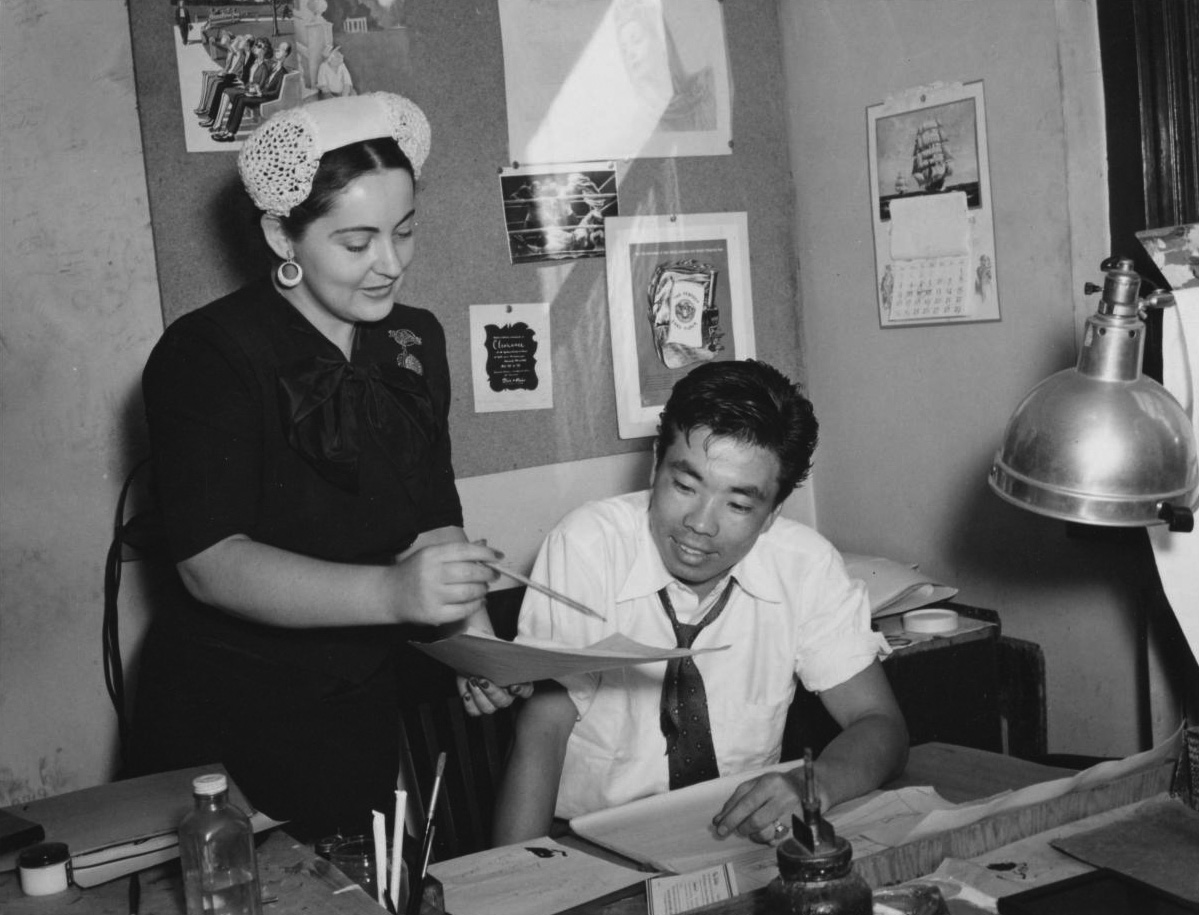 Dorothy L. Scher (L) instructs Ray Komai (commercial artist) at an advertising agency in Washington, DC. Mrs. Komai works in a cosmetic shop in Washington, DC - 1944 |
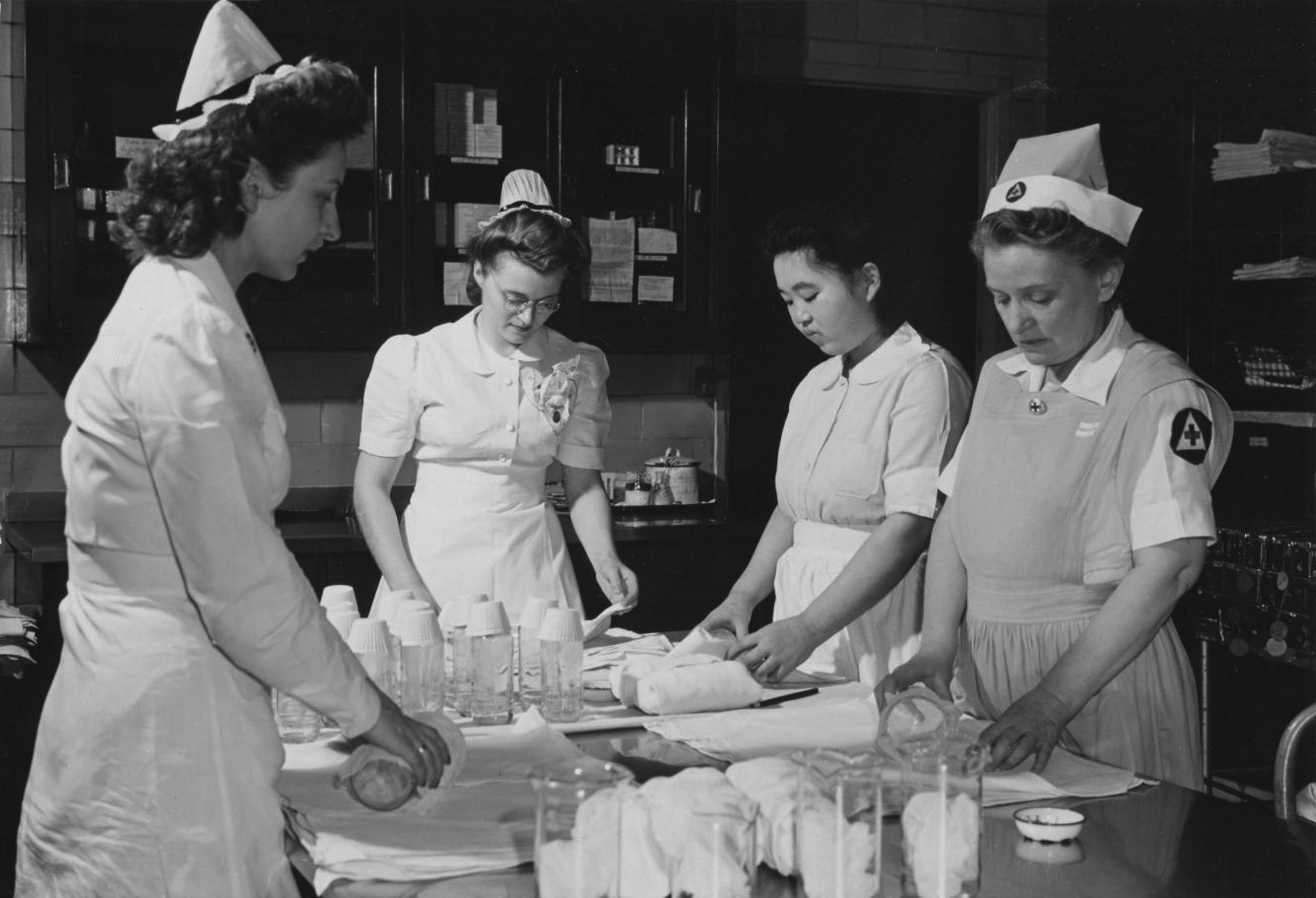 L/R: ?, ?, Ella Ito, ? Preparing plasma containers for the blood bank at Mount Sinai Hospital in New York |
|||
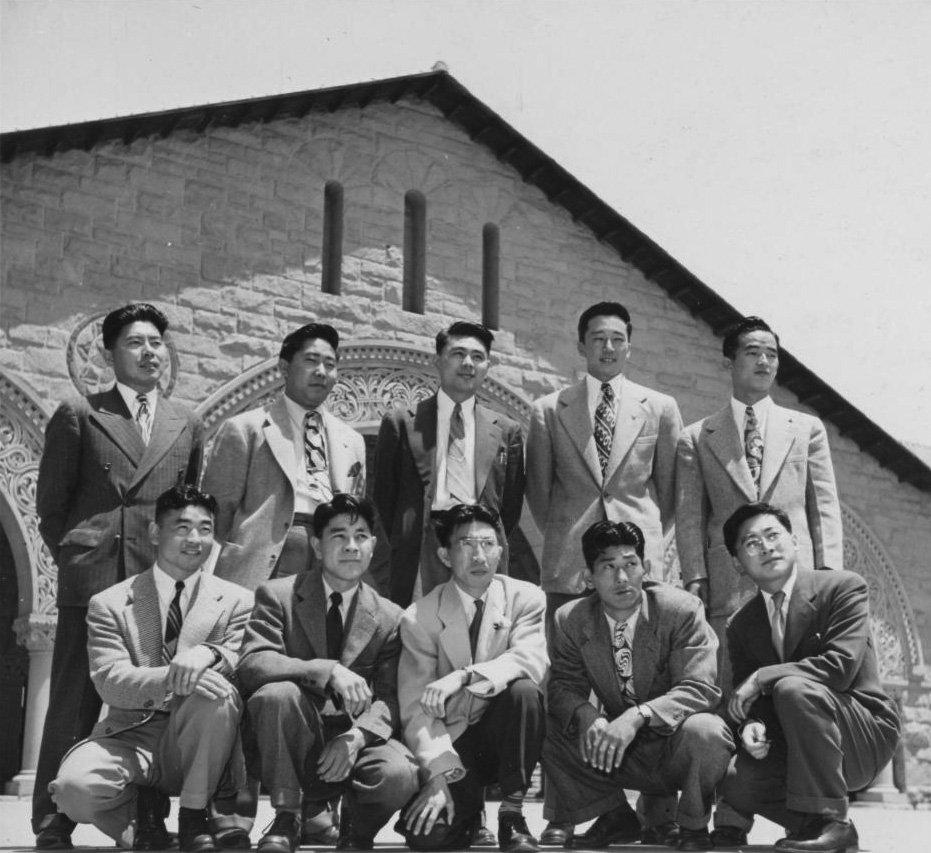 L/R (front): Keiji Kubo(Topaz), Ryuji Adachi (Topaz), Clark Saito (Gila), Richard Arimoto (Granada), Kenneth Fujiyoshi (Manzanar) L/R (back): Hirosuke Inouye (Topaz), Hiroshi Waki (Gila), Masato Kato (Gila), Henry Handa (Manzanar), Genzo Soraoka (Gila) Teachers at the Japanese language to officers and men in the Civil Affairs Training School of the army at Stanford University - 1945 (Photographer - Hikaru Iwasaki) |
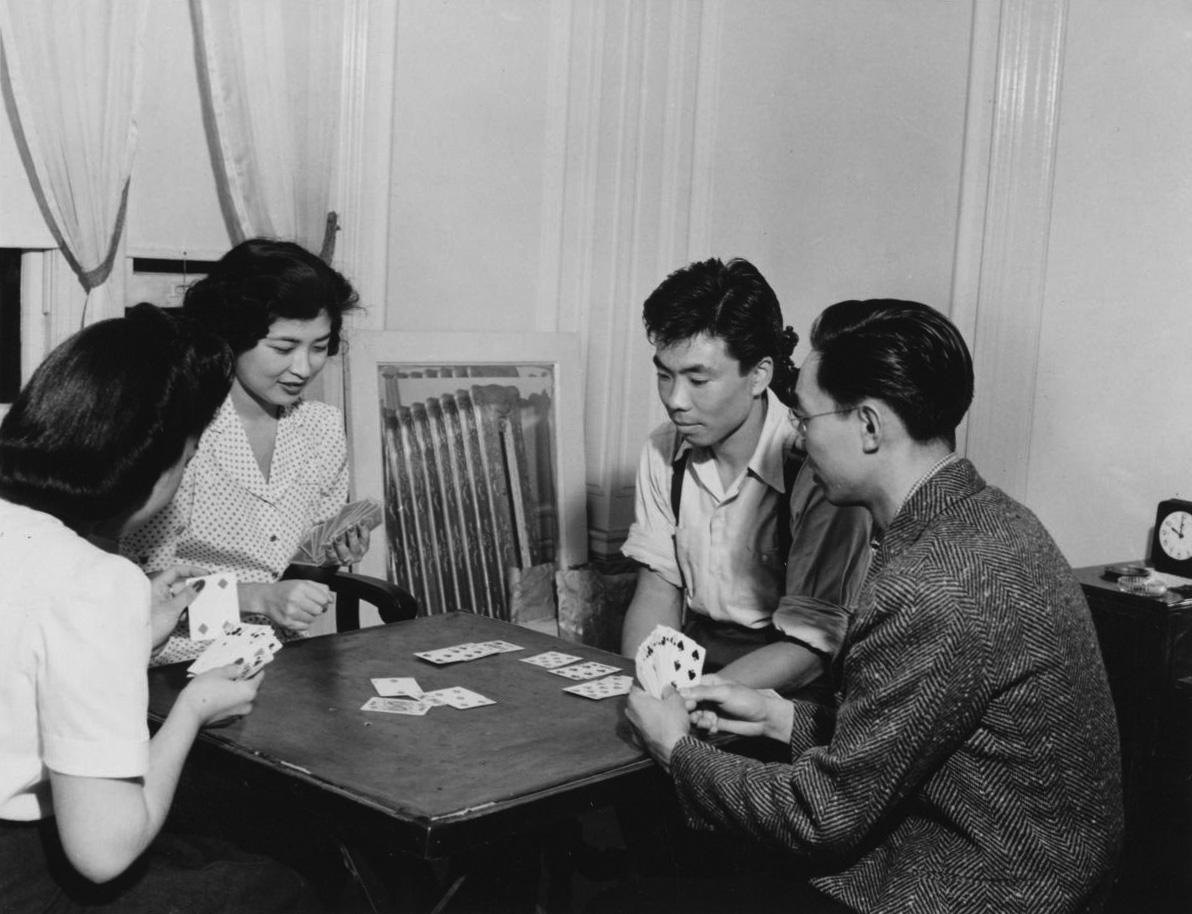 L/R: Kikuyo Masuda (Granada), Mrs. Komai (Manzanar), Joe Imai (Tule Lake), Mr. Ray Komai (Manzanar) Playing bridge in their New York apartment. Ray is a commercial artist and Mrs. Komai works in a cosmetic shop. |
|||
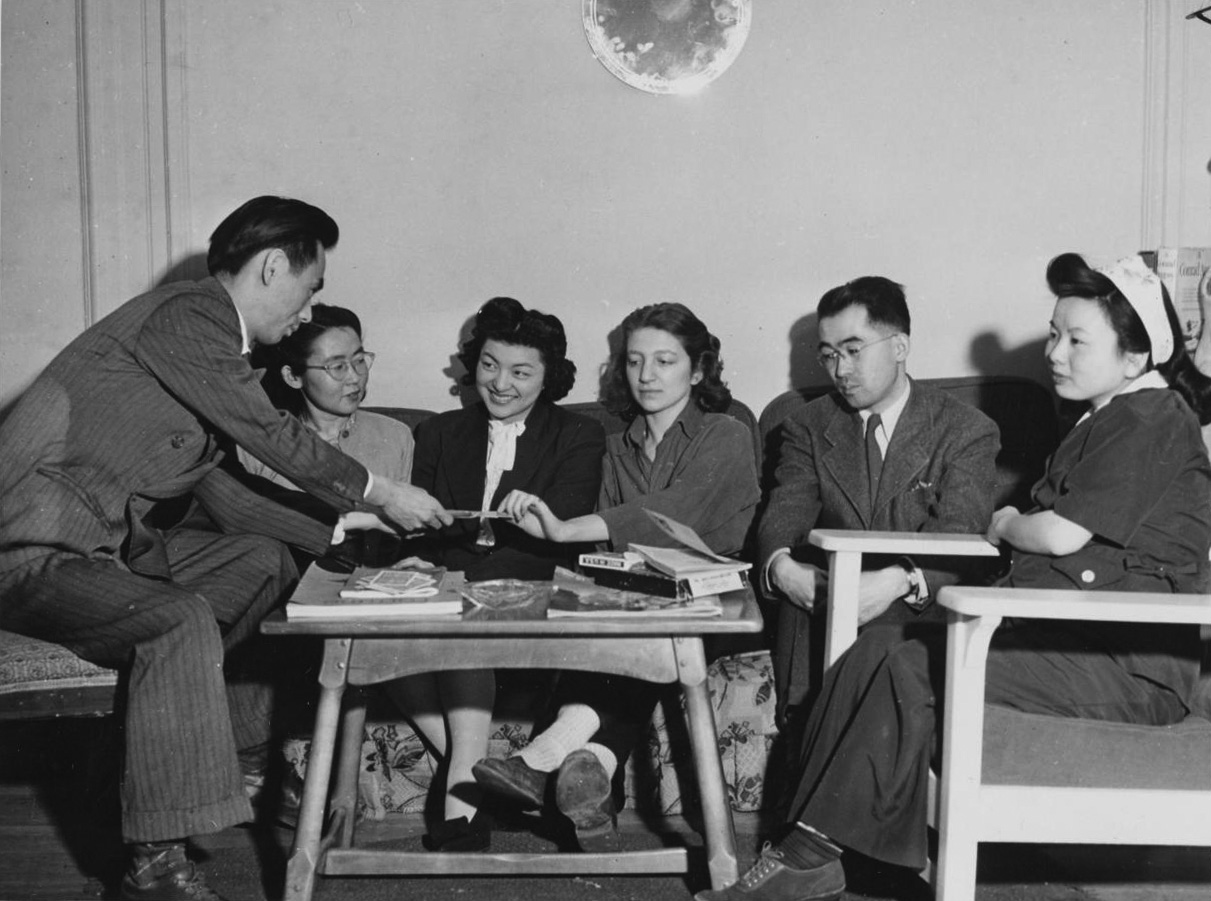 L/R: Joe Oyama (Jerome), Miss Chico Sakaguchi (Manzanar), Mrs. George Stanicci (Manzanar), Miss Carol Levy (friend), Kenny Murase (Colorado River), Mrs. Oyama (Jerome) Joe performs a card trick in the Oyama's apartment in New York. |
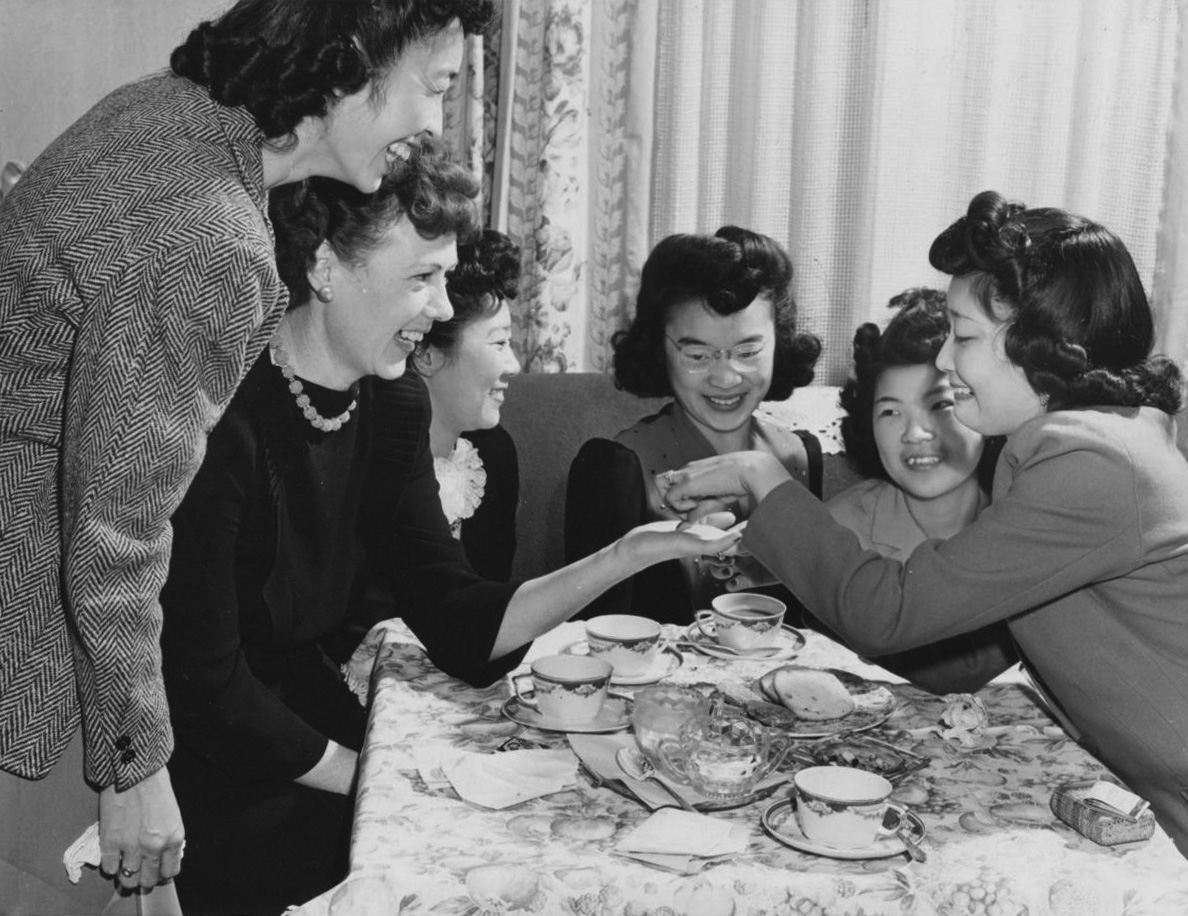 L/R: Mrs. Mary Ikebasu (Manzanar), Mrs. William K. Holland, Alice Yoshida (Heart Mountain), Lucy Kawaffune (Minidoka), Miss Elly Yoshida (Madison College, TN, Mrs. Patrick Okura (Santa Anita Assembly Center) - 1944 At the home of Mr. William K. Holland - Relocation Officer (Photographer - Hikaru Iwasaki) |
|||
|
||||
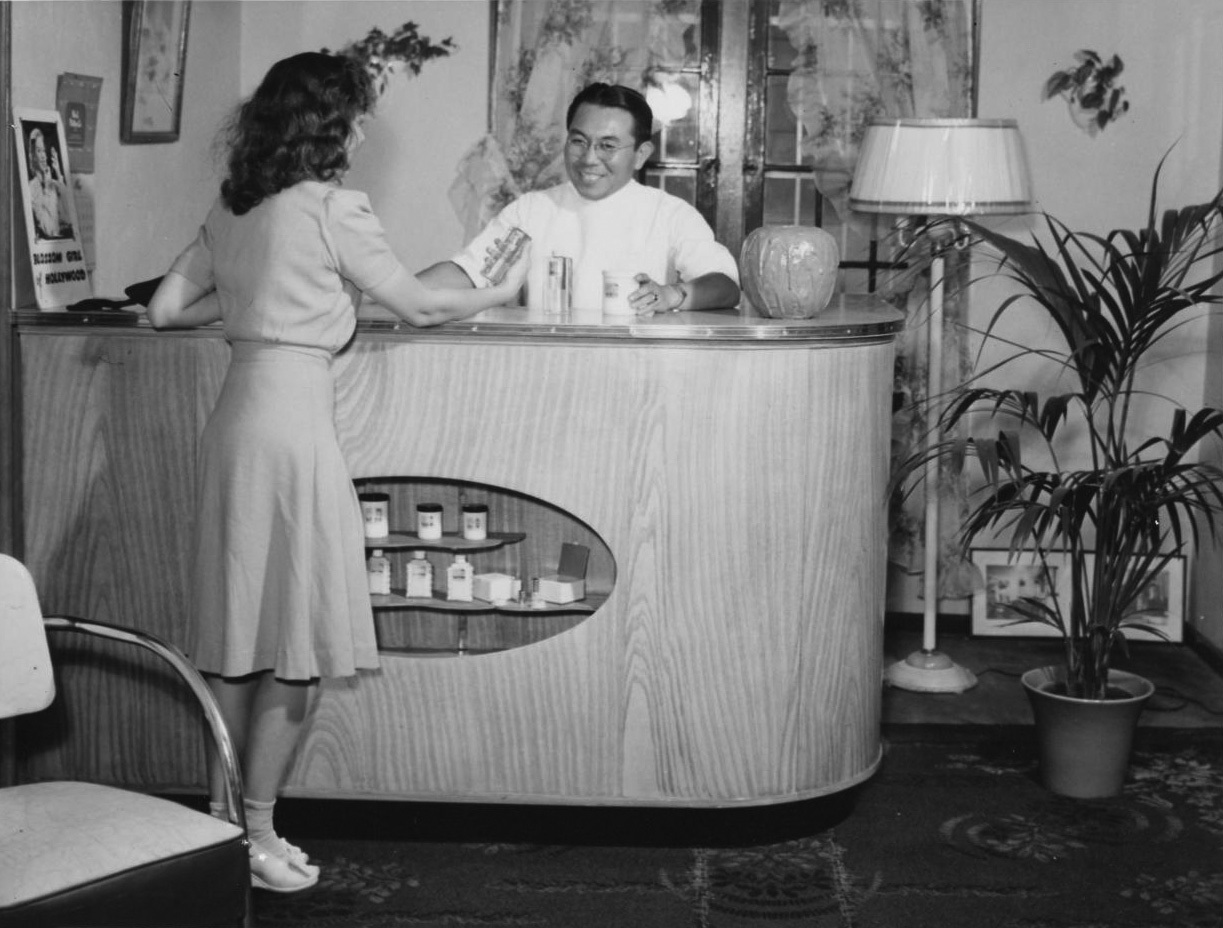 Frank S. Hata - owner and manager of the Blossom Girl Cosmetic Company, Los Angeles, CA. - 1945 (Photographer - Chas. E. Mace) |
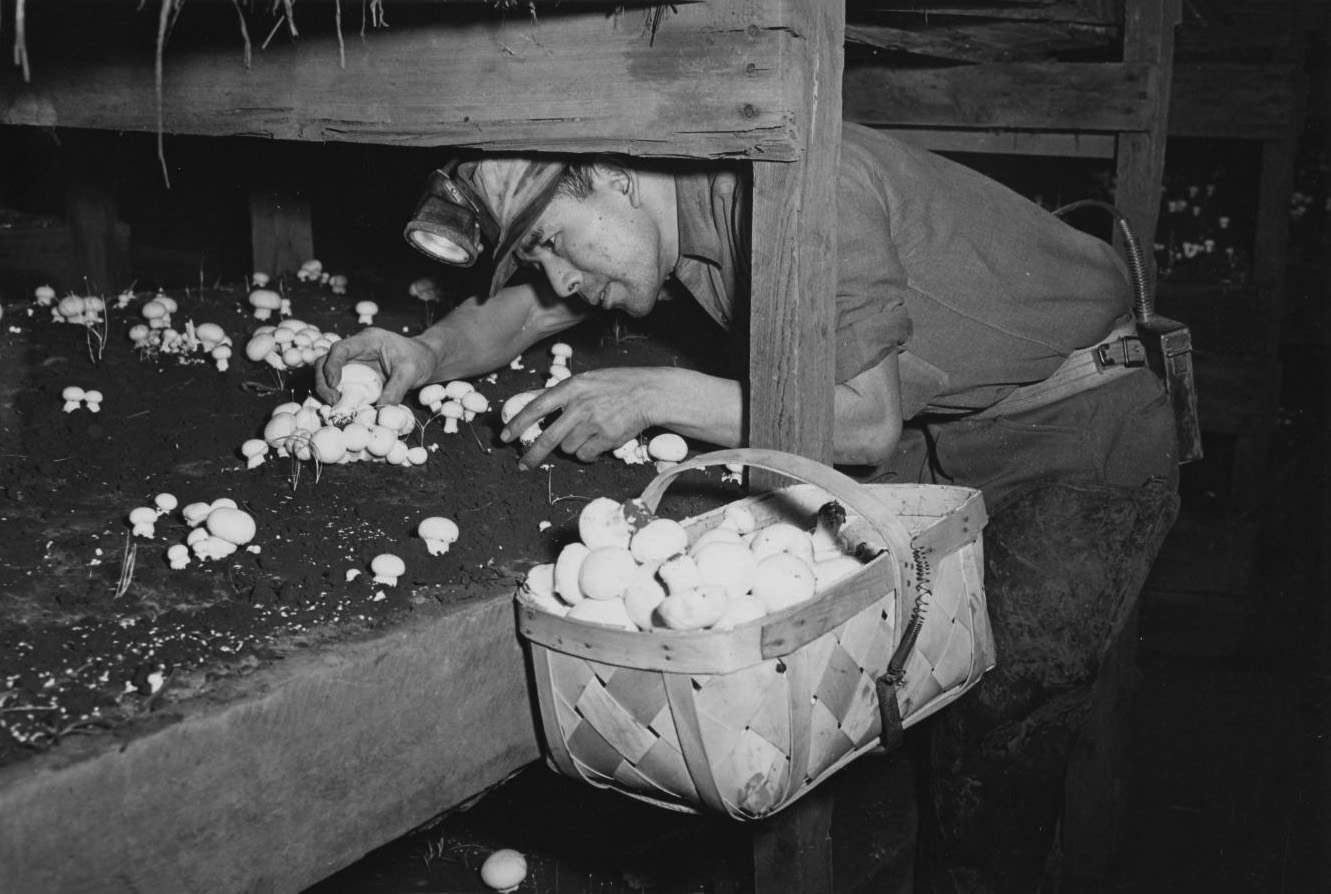 Yasaburo Akinaga - Mushroom grower and picker at the Illinois Mushroom Company, Naperville, IL |
|||
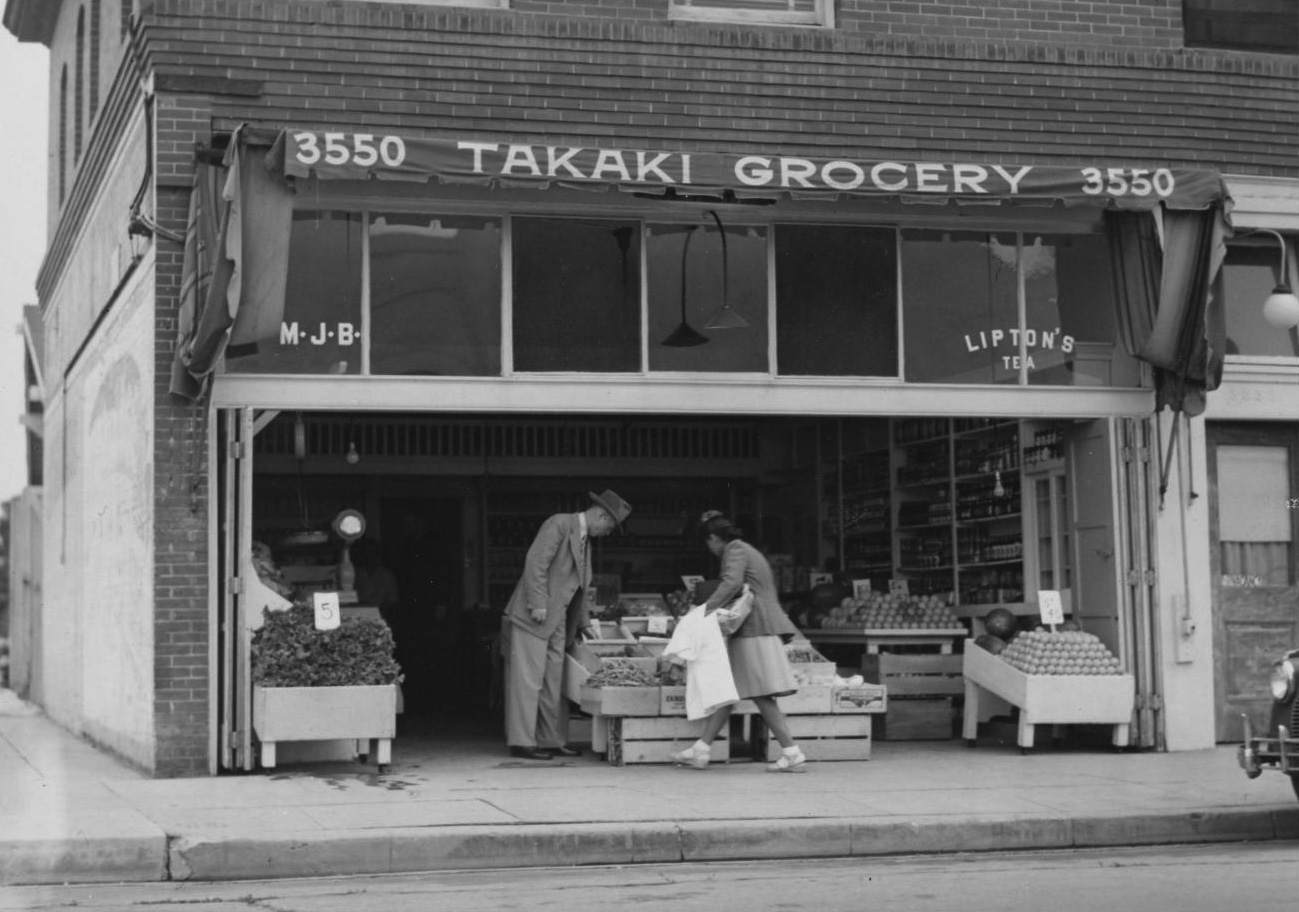 George Takaki - The new Takaki Grocery store on Normandie Avenue in Los Angeles, CA - 1945 (Photographer - Chas. E. Mace) |
L/R: Toshiko Nagamori (Heart Mountain), Miriko Nagahama (Manzanar), Yuri Shimokoshi (Heart Mountain) At the National Training School for Christian girls in Kansas City, MO (Photographer - Hikaru Iwasaki) |
|||
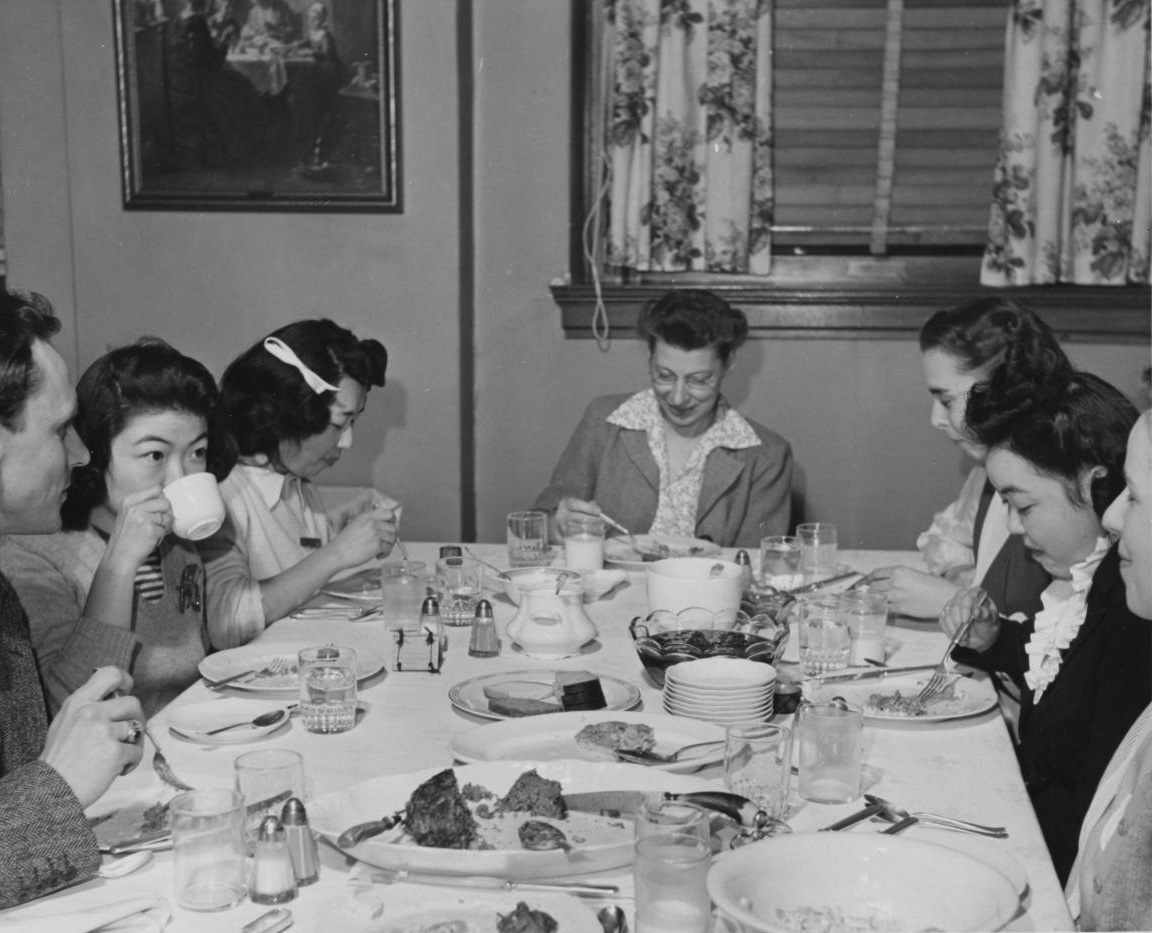 At the National Training School for Christian girls - 1945 L/R: Rev. Cloyd V. Gustavson, Toshiko Nagamori (Heart Mountain), Yuriko Shimakoshi (Heart Mountain), ?, ?, Miriko Nagahama (Manzanar), ? (Photographer - Hikaru Iwasaki) |
||||
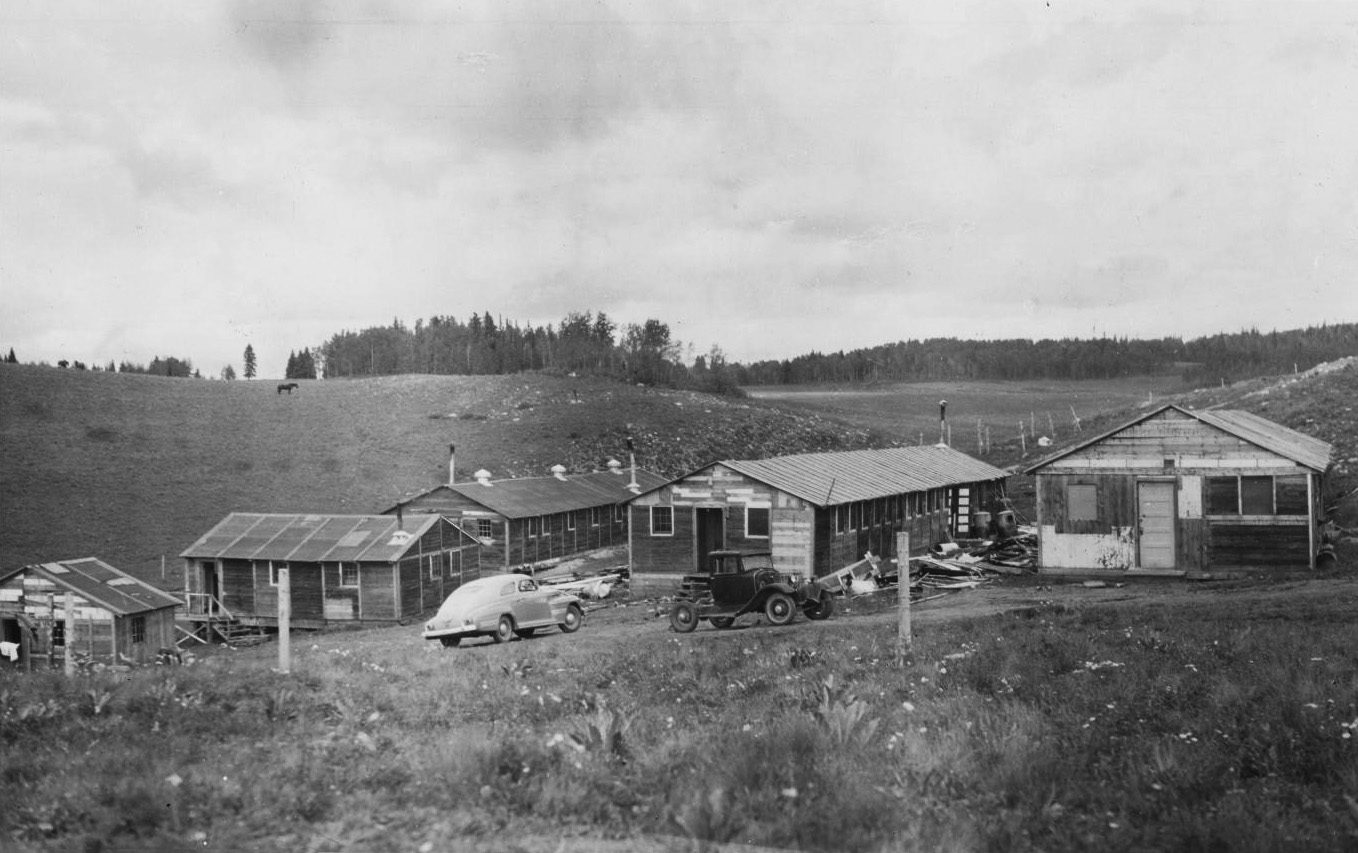
Photo and text courtesy Kathy Larsen |
|
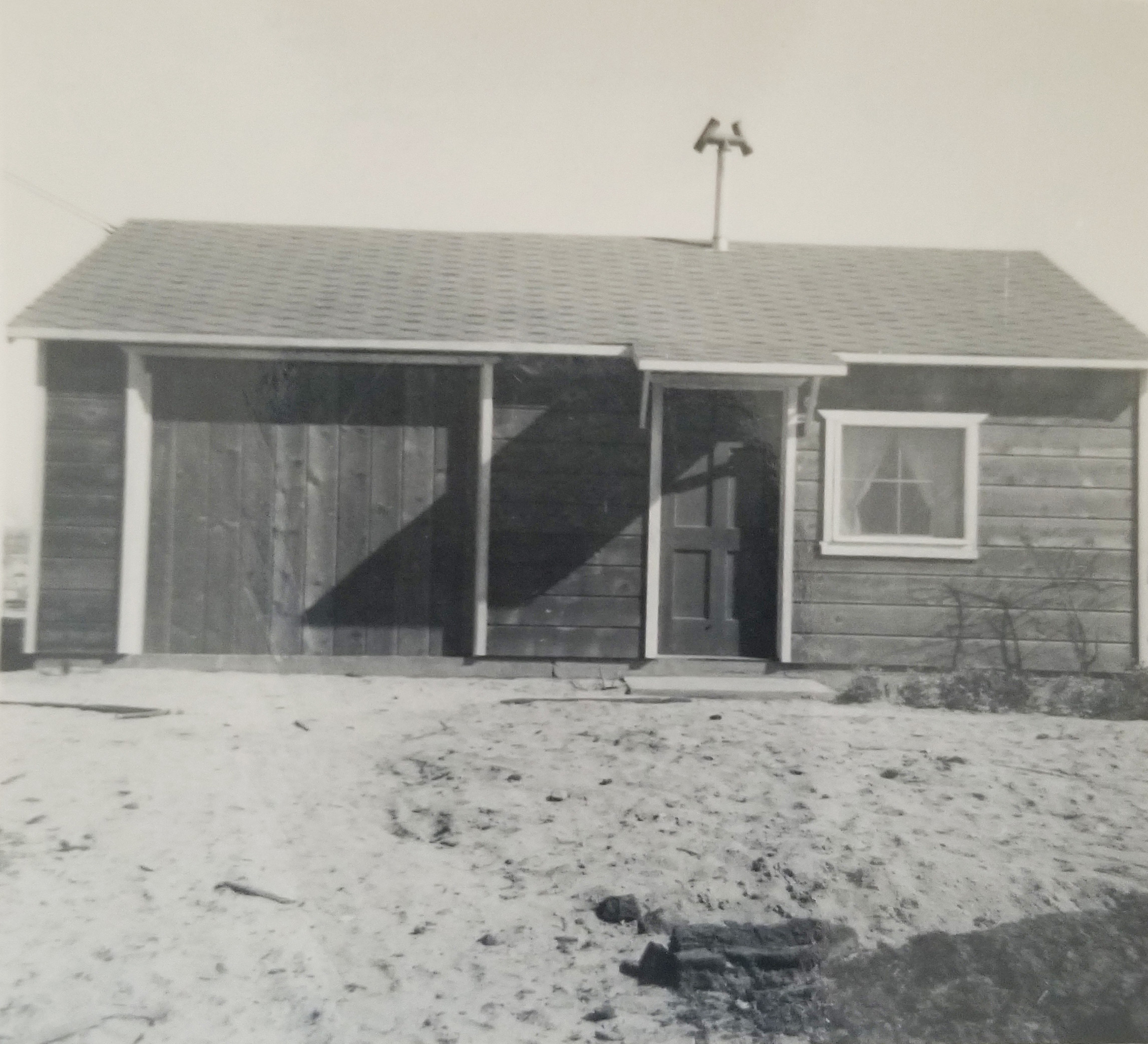
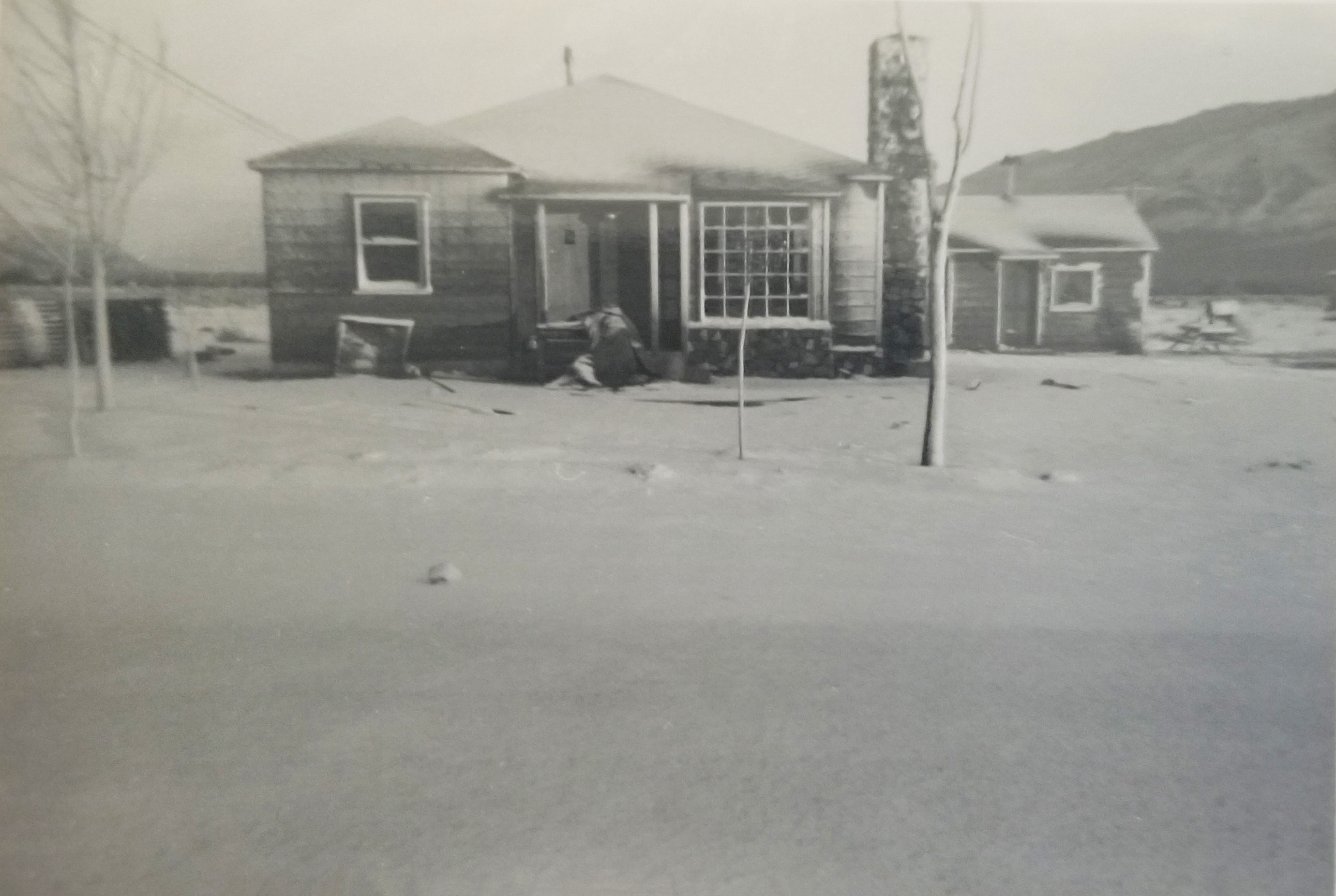 Kathy Larsen's parents (Mr. & Mrs. Bob Gillis) house at 203 Kellogg Street in Lone Pine, CA. The house was constructed from former Manzanar Interment Camp buildings and designed by the pastor of the Nazarene church in Lone Pine - circa 1946. |
|
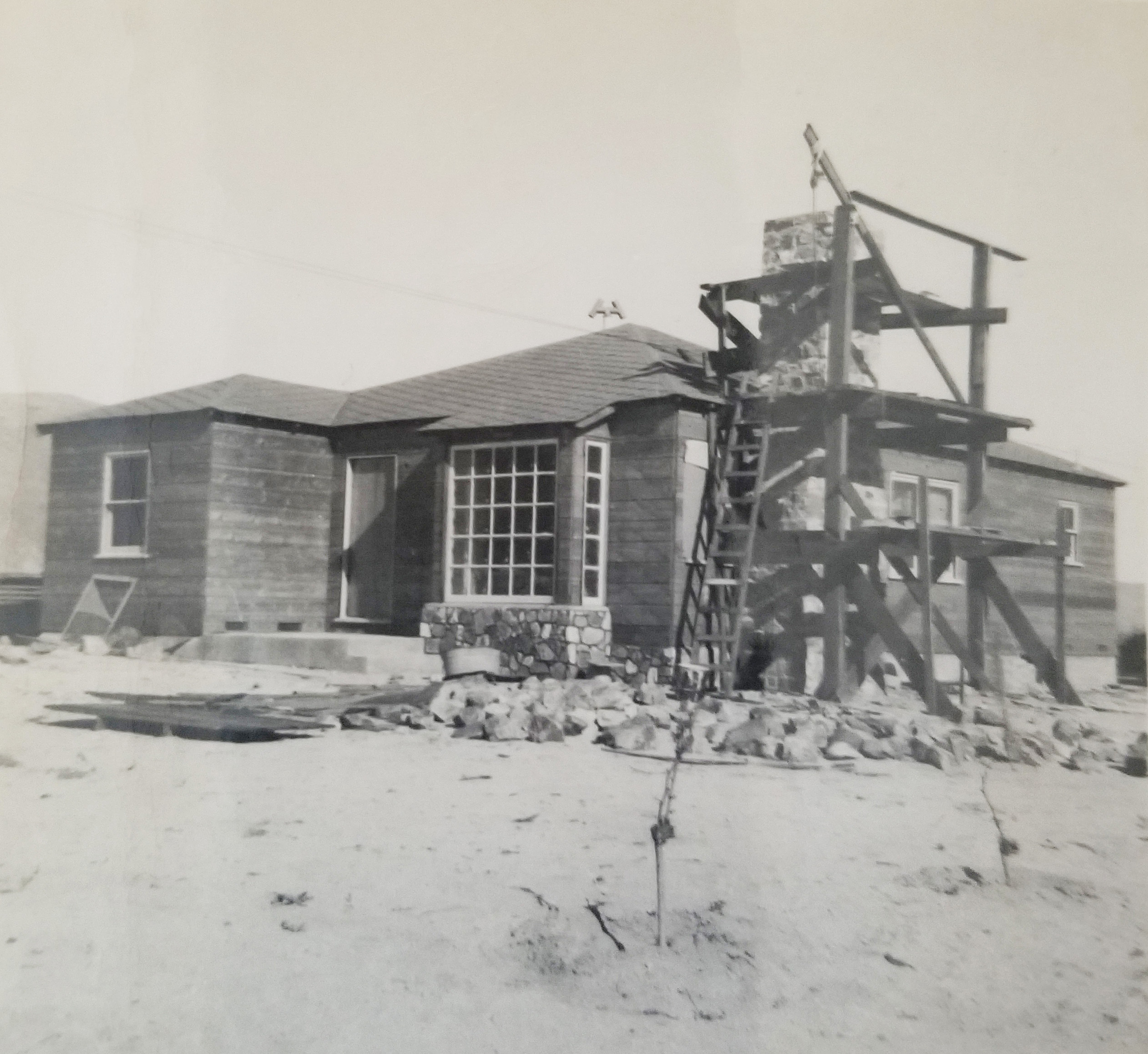 Kathy Larsen's parents house at 203 Kellogg Street in Lone Pine, CA. The house was constructed from former Manzanar Interment Camp buildings and designed by the pastor of the Nazarene church in Lone Pine - circa 1946. |
|
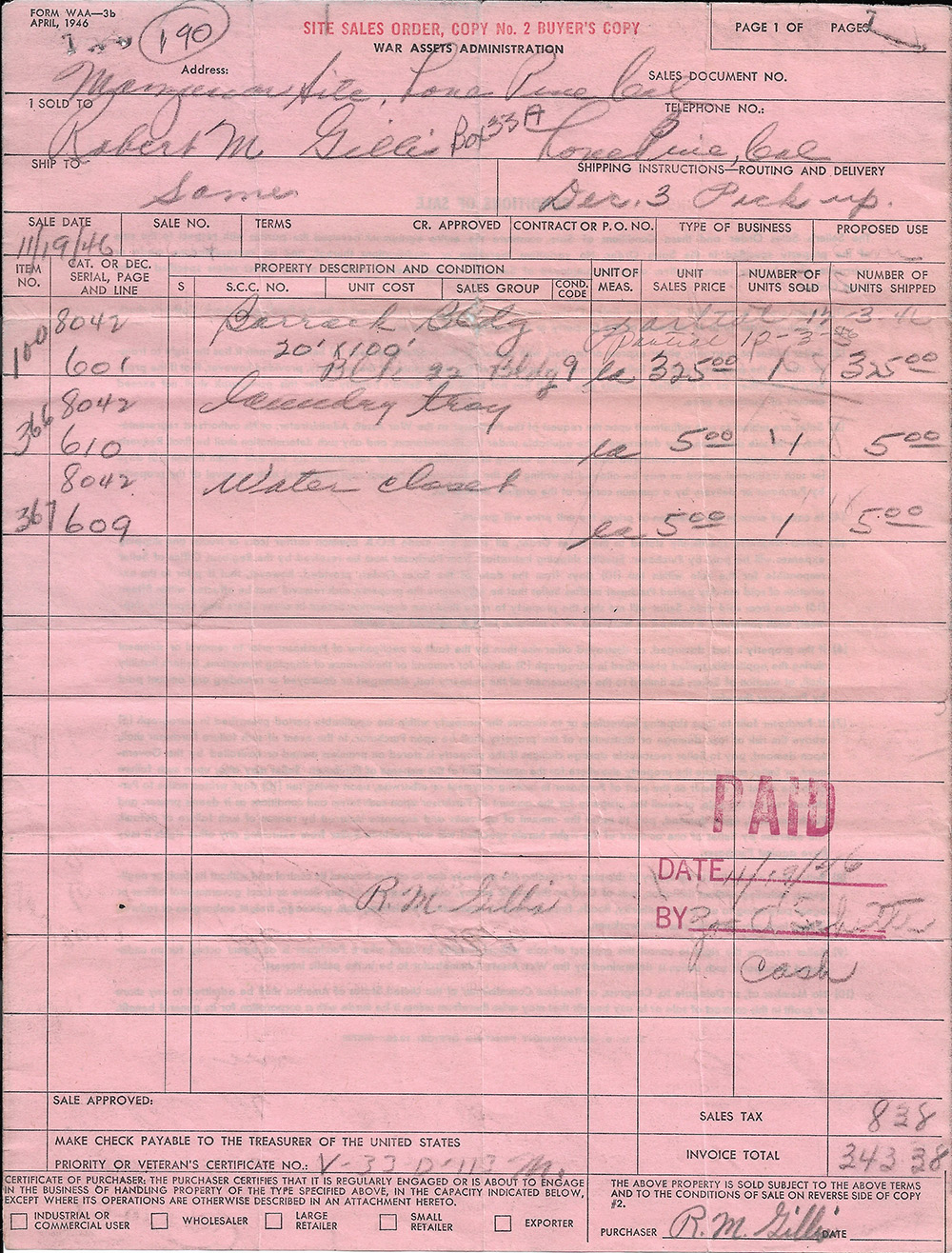 Receipt for the purchase of one of the Manzanar barrack buildings. |
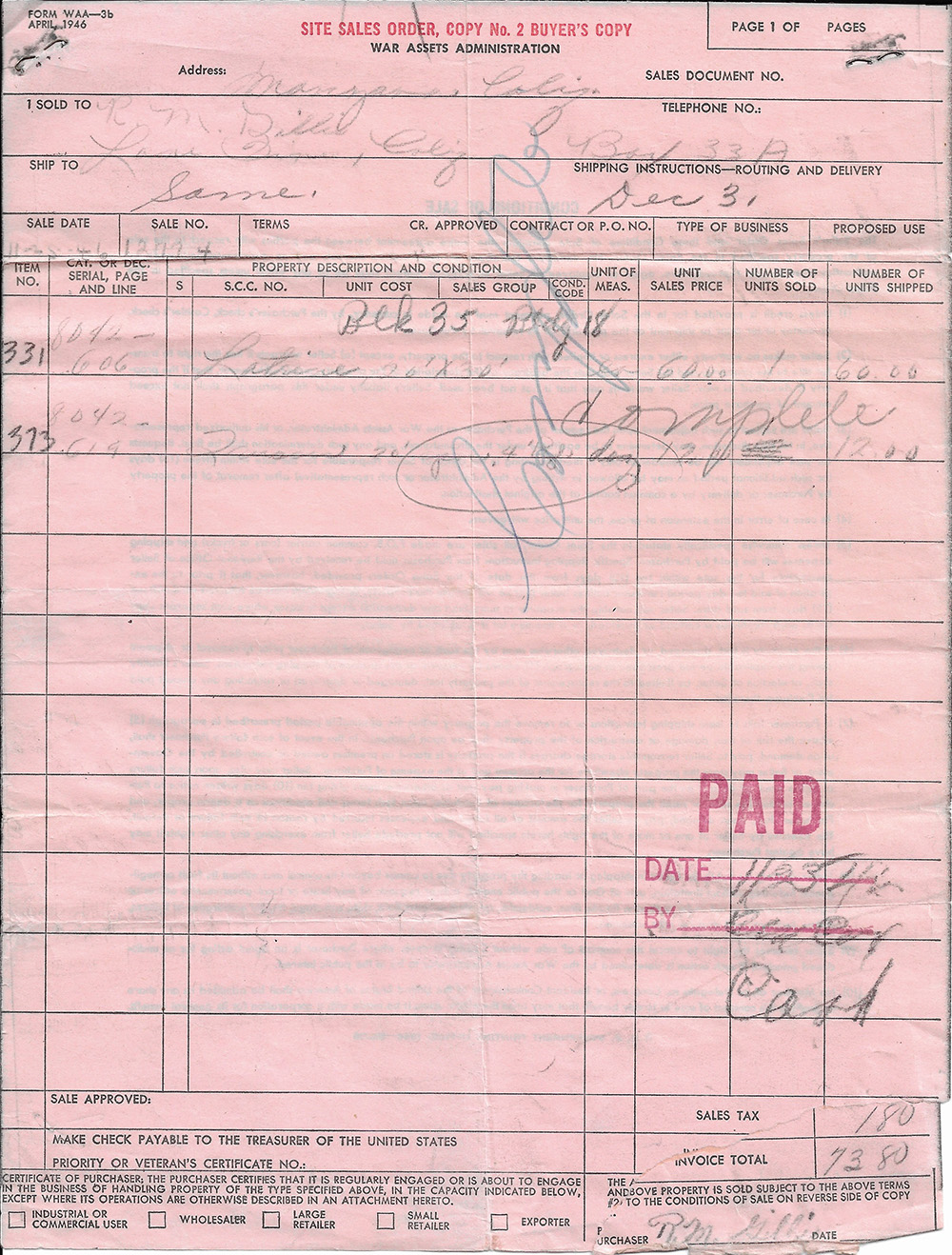 Receipt for the purchase of one of the Manzanar latrines. |
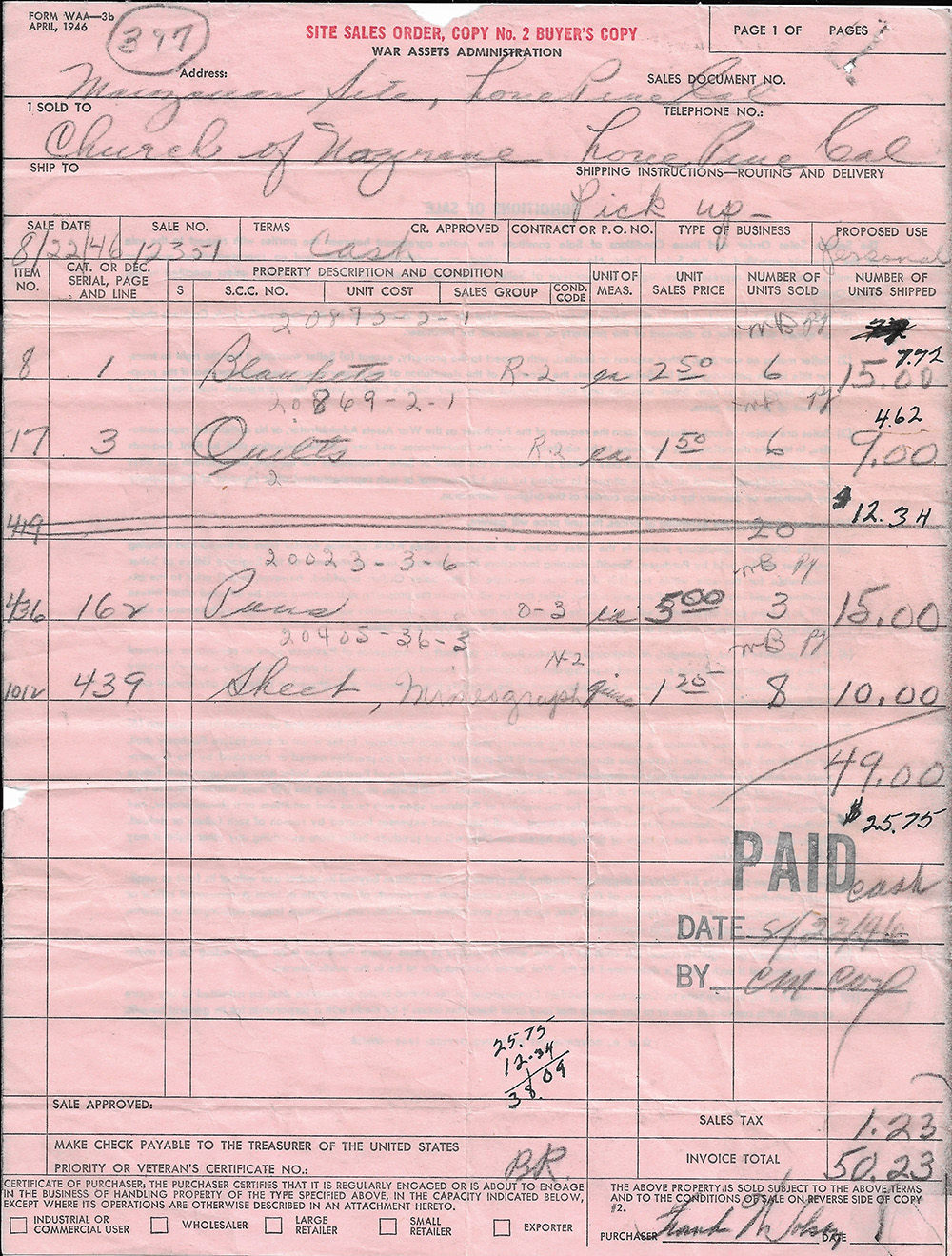 Receipt for the purchase of bedding materials from the Church of the Nazarene in Lone Pine, CA |
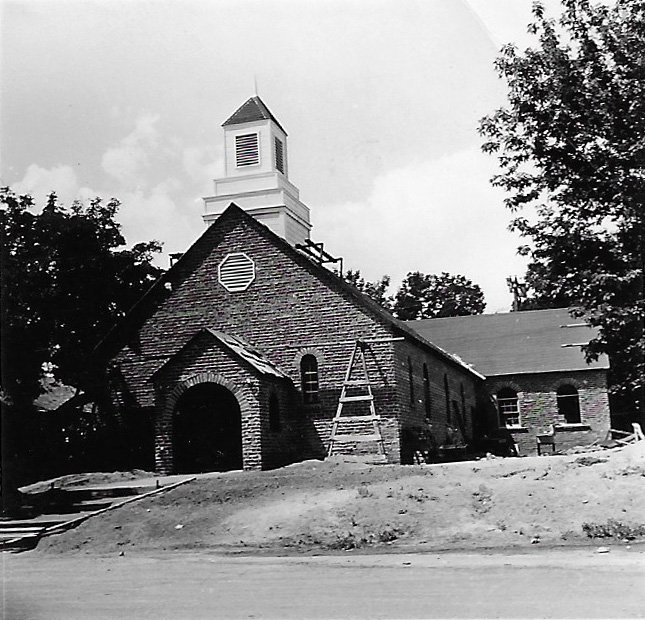 The Church of the Nazarene in Lone Pine, CA |
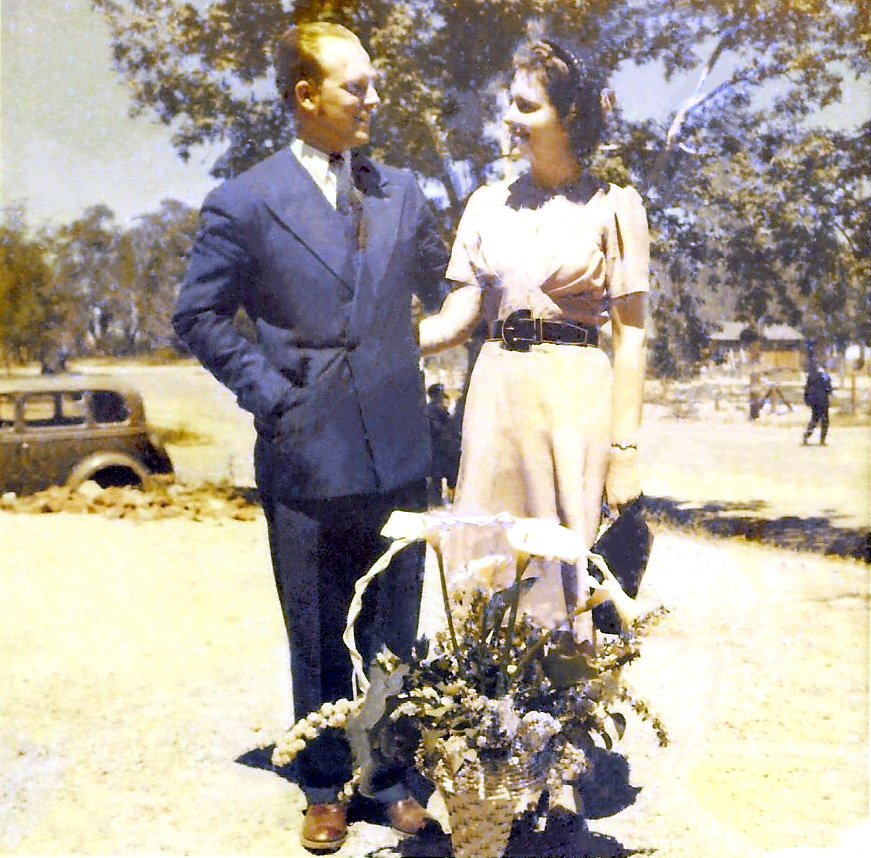 Church of the Nazarene Pastor Frank Tolson and his wife, Bette - circa 1946. |
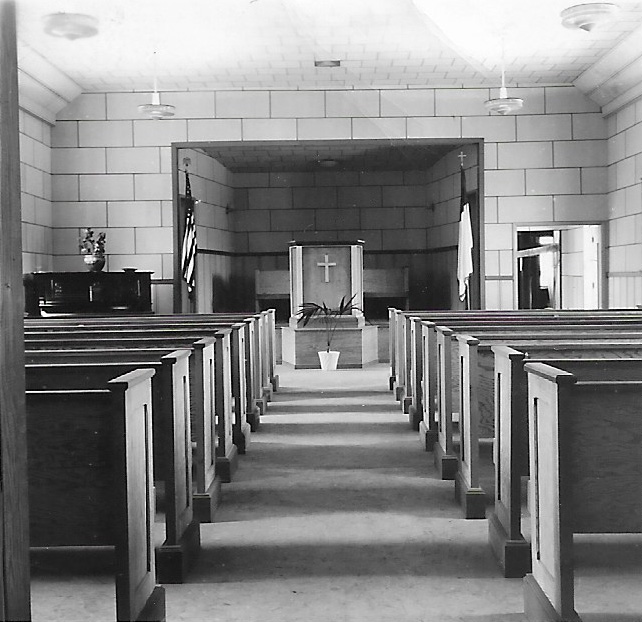 Inside the Church of the Nazarene in Lone Pine, CA. |
 01/23
01/23Janet Tolson Lord writes: |
| Ray My name is Janet Tolson Lord. My father was Rev. Frank Tolson and he was a pastor back in the 1940’s at Lone Pine Nazarene Church (before I was born). On a trip to Reno this past week we stopped in at Manzanar. My husband was interested in it’s history. Later I googled Manzanar and to my surprise I see my parents on your owensvalleyhistory.com website. The photo is just captioned Pastor and wife but it’s my folks. I’m pretty excited to learn more about their connection to Manzanar. I think my father, a young man in his 20’s may have provided pastoral services to the interned. He was also an architect so it doesn’t surprise me he designed houses with refurbished wood etc. Frank was studying to be an architect before he went to seminary and became a Nazarene minister. Although he dedicated his life to the ministry he still did some architectural work, mostly for the church, on the side. He designed Lone Pine Nazarene Church. So I’m not surprised he helped repurpose buildings as your other photo shows. I’m curious if my dad was a visiting pastor at Manzanar (for counseling and spiritual guidance) and am trying to research that. Later in life, after I was born, I know he participated in community service and was a volunteer visiting pastor at hospitals etc. (in addition to his full time church assignment). Any clue how I can further research any connections he may have had with Manzanar? Regards, Jan Lord July 3, 2022 |
Bones Found Near Mt. Williamson May Be Those of Giichi Matsumura
Down From the Mountain
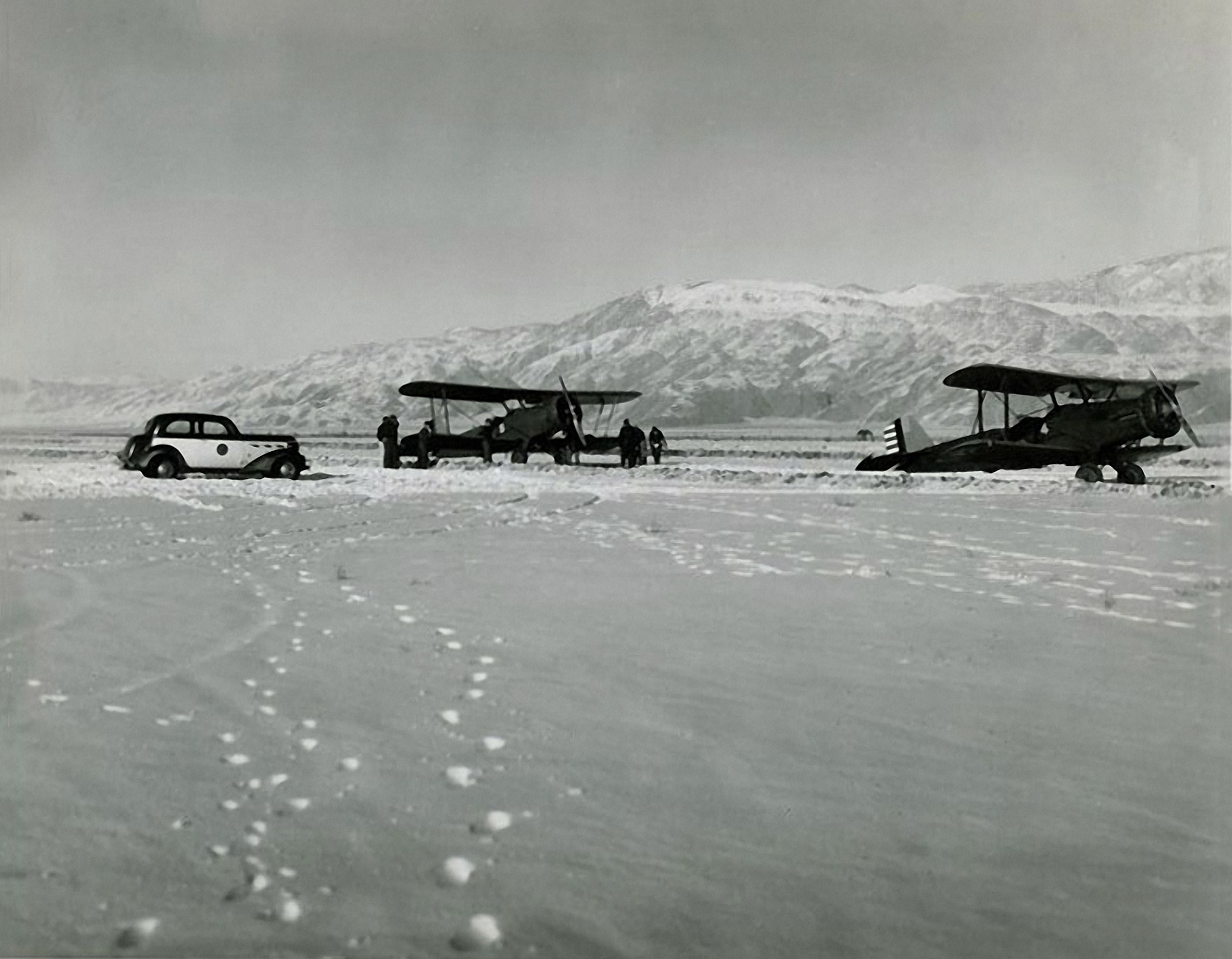 Manzanar airfield (Photo courtesy Tales Along El Camino Sierra) |
12/24 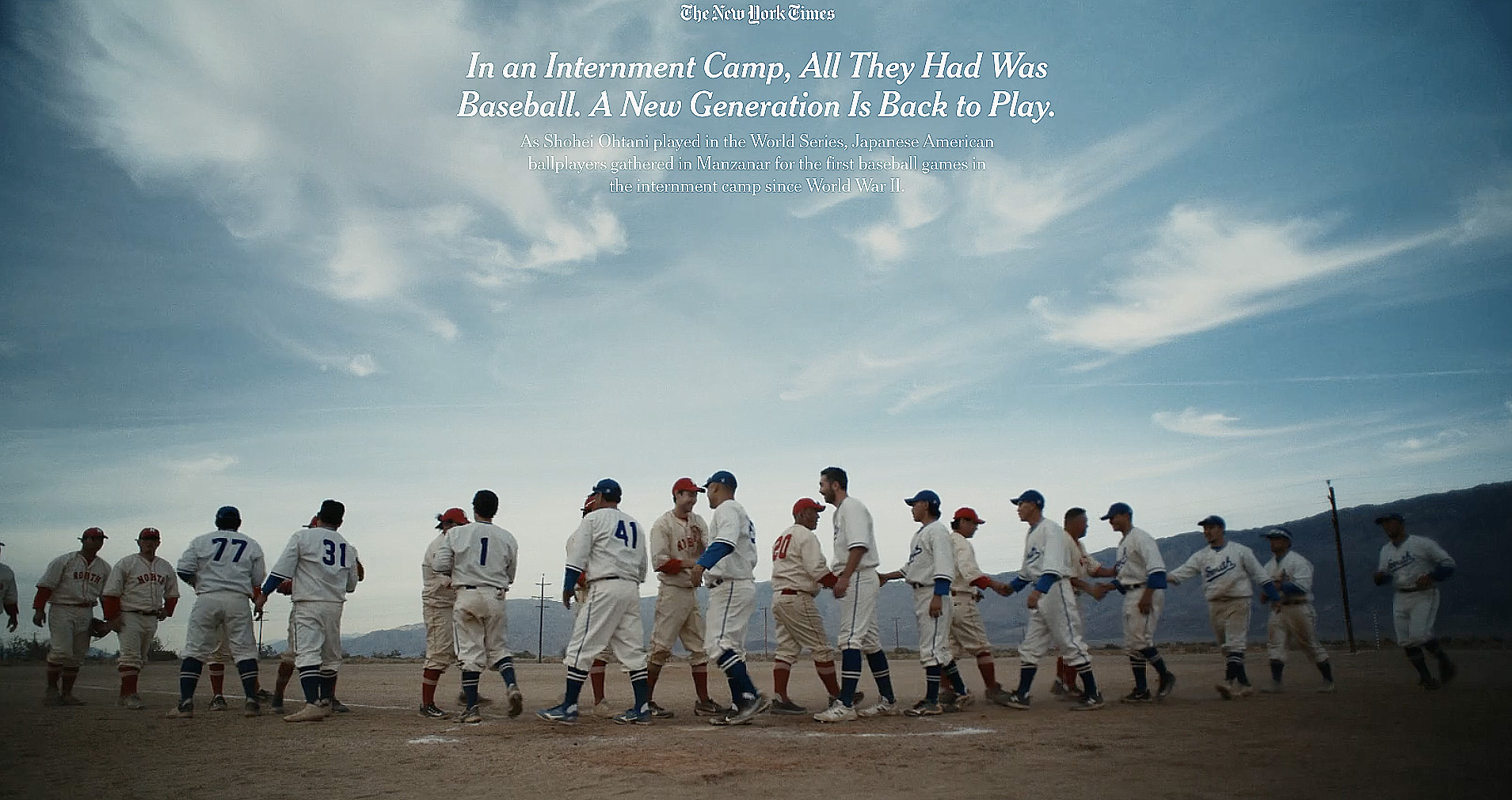 |
||||||||||||||||||||
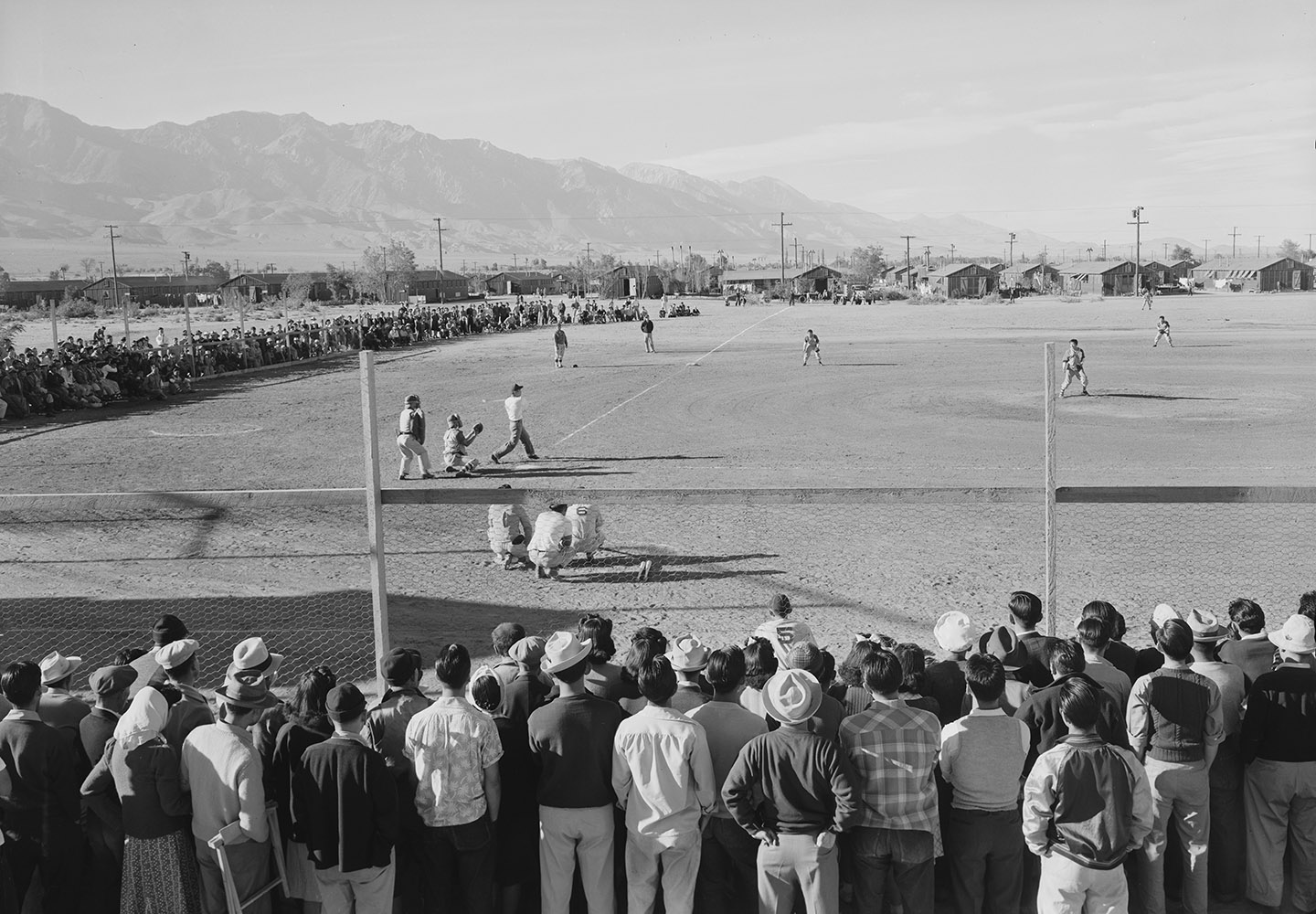 Baseball at Manzanar - 1943 (Photo courtesy of Library of Congress) (Photographer - Ansel Adams) |
THEN - 1942-1944 |
|||||||||||||||||||
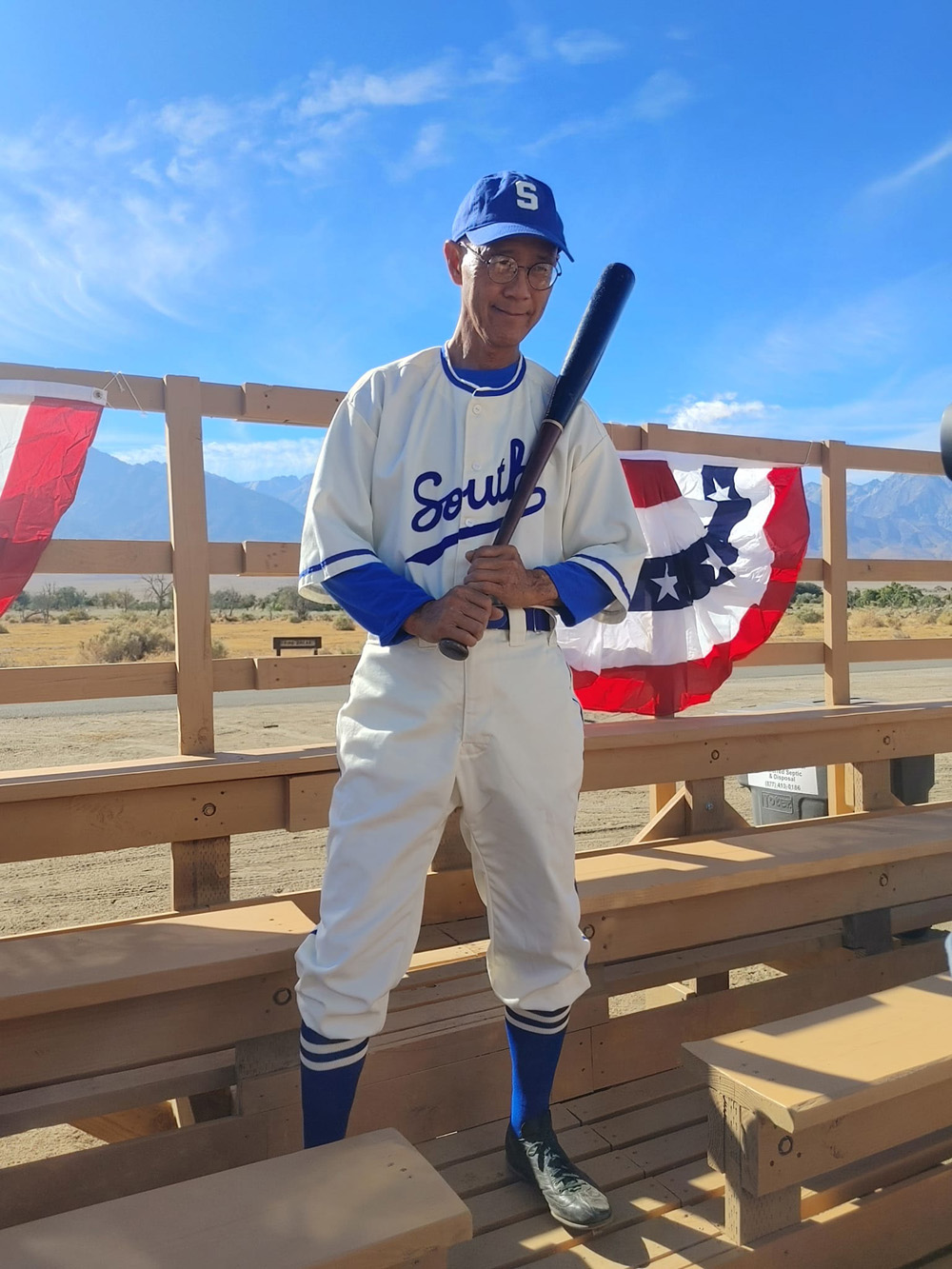
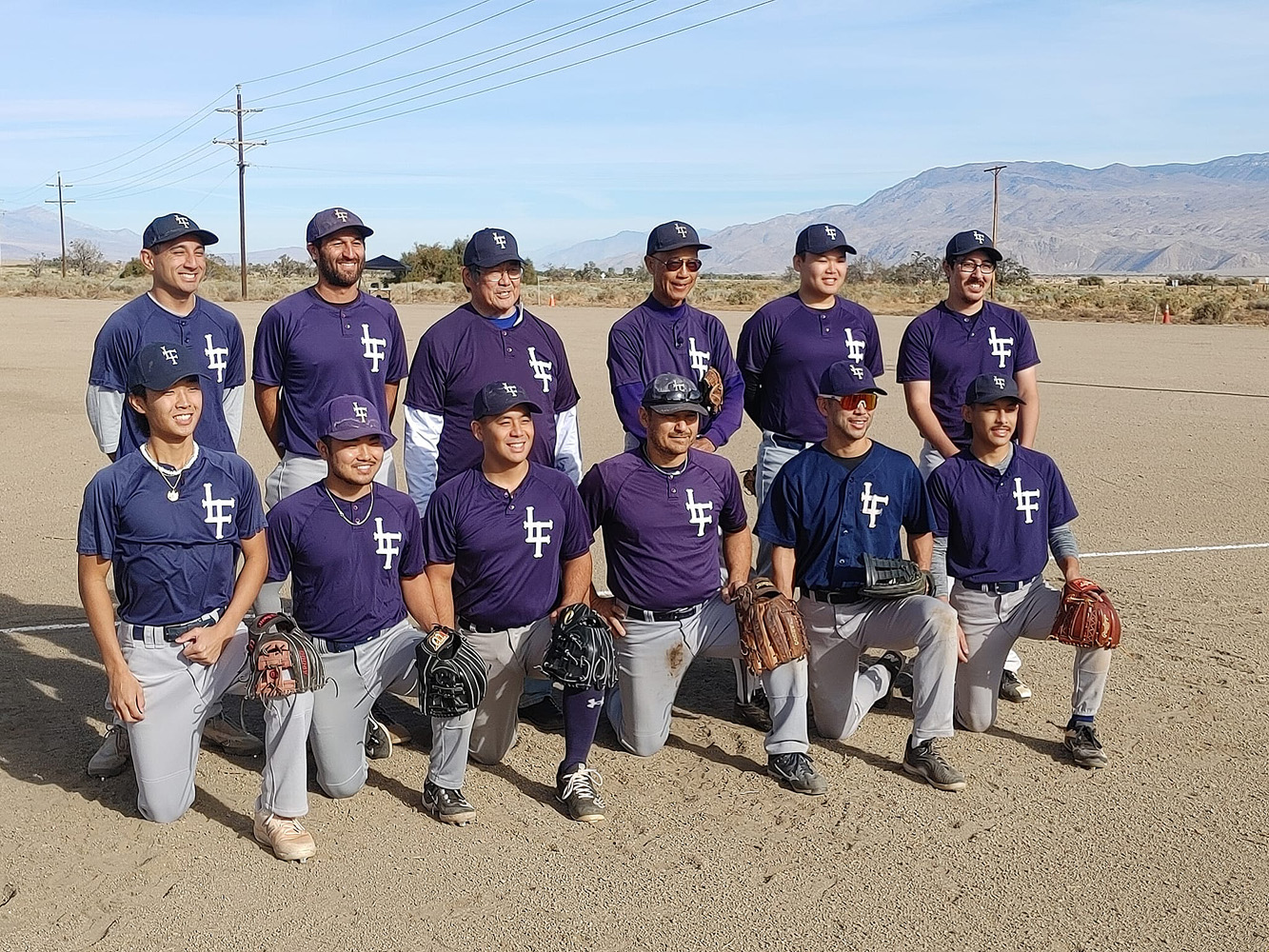
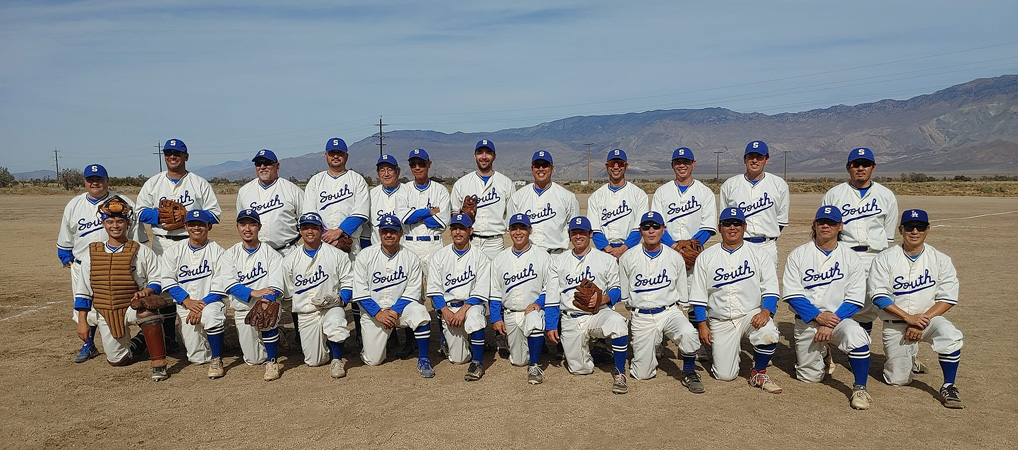
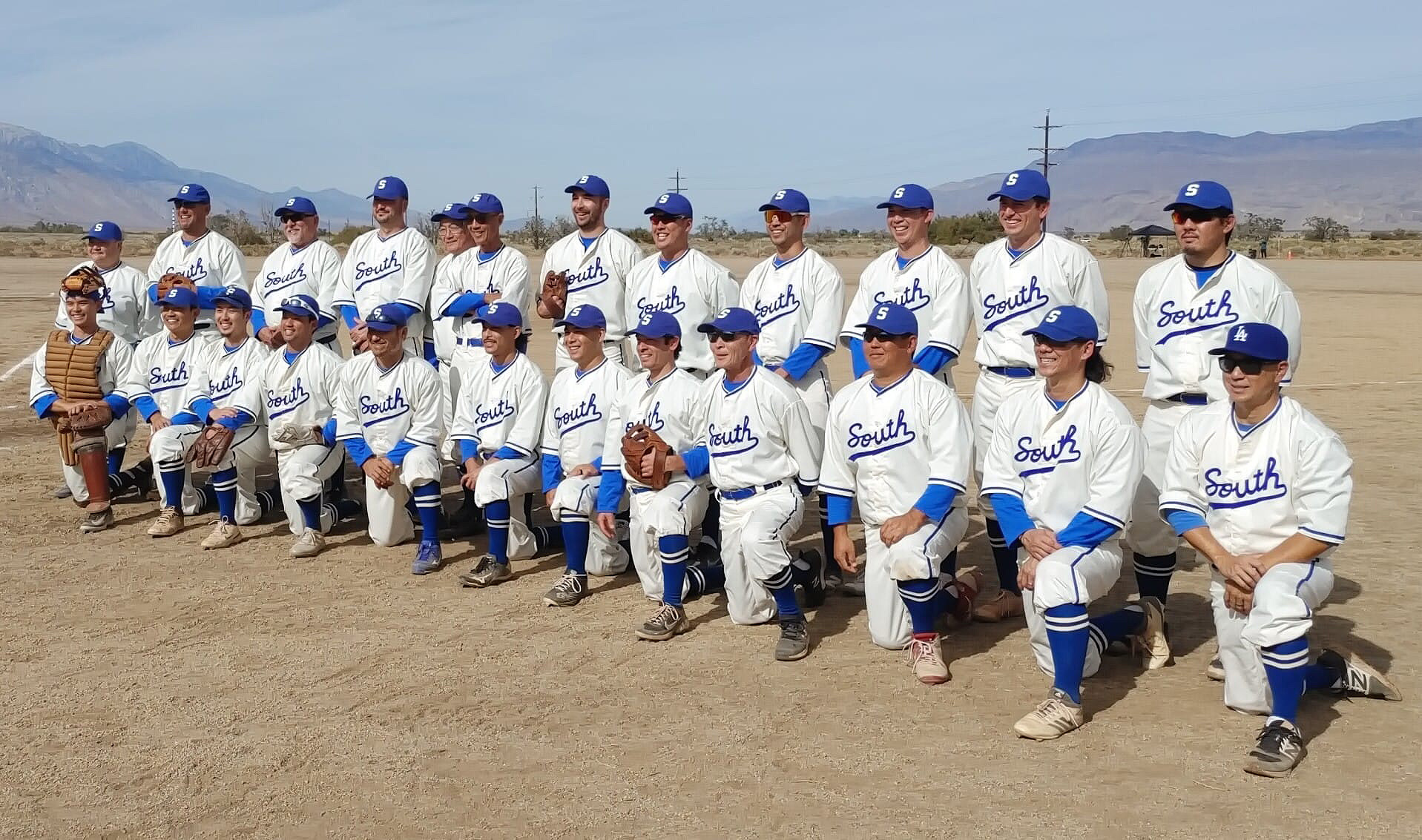
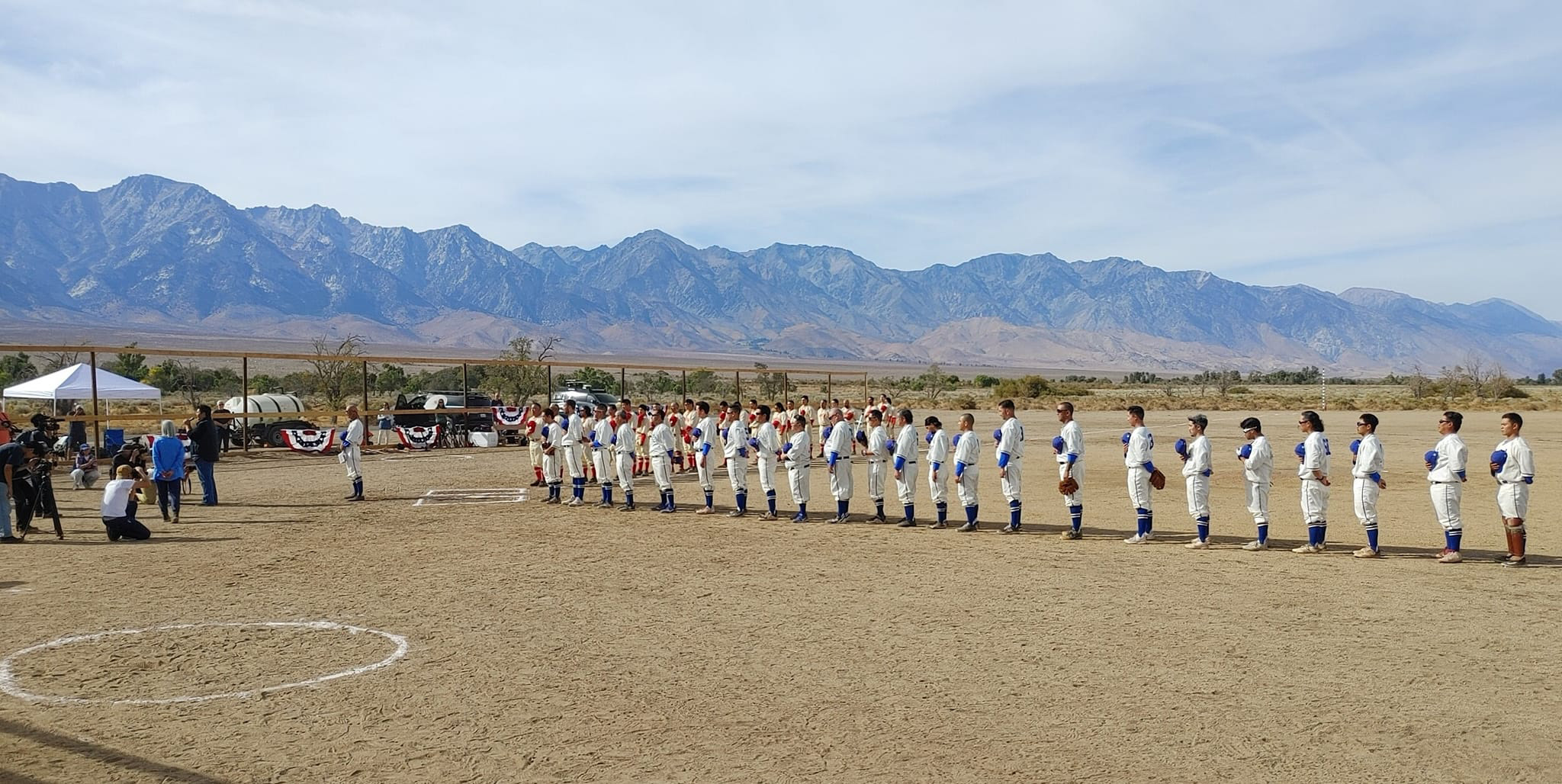
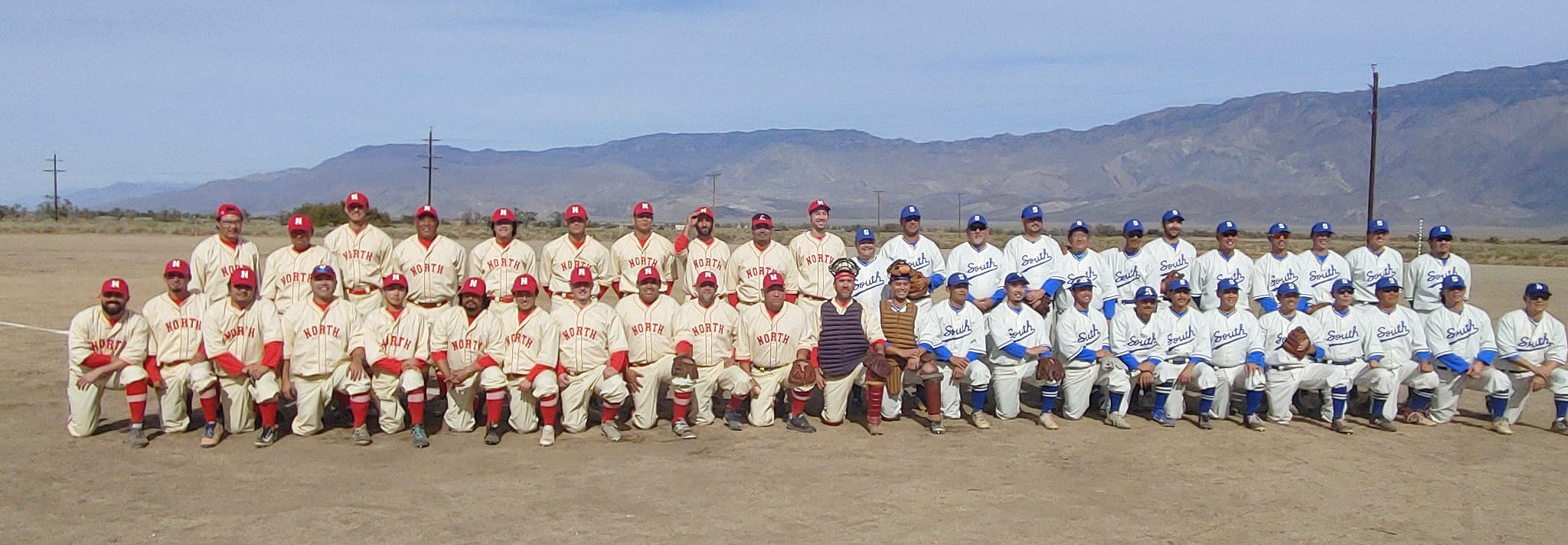
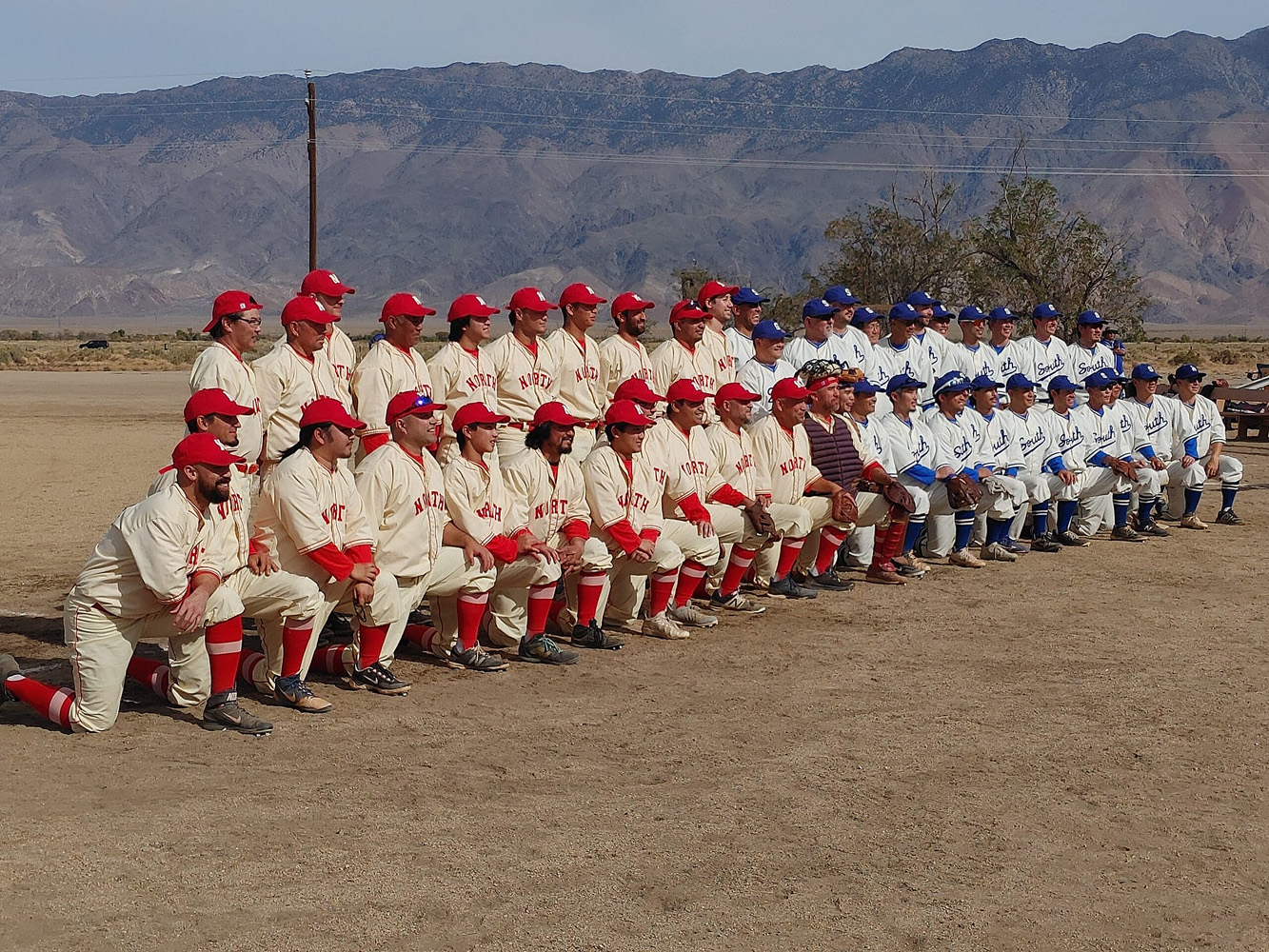
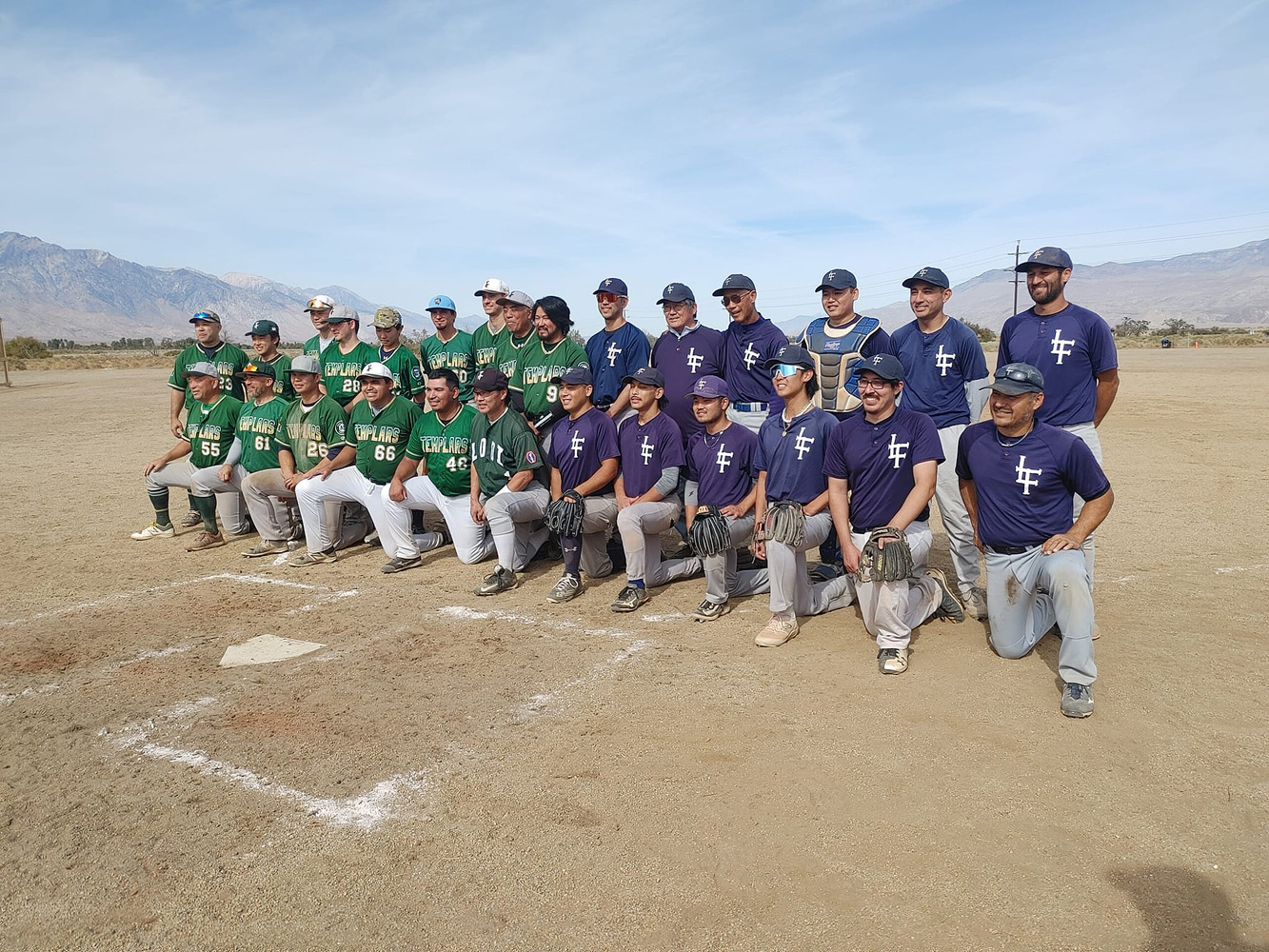
NOW - 2024 (Photos courtesy of Gerald Sato) |
||||||||||||||||||||
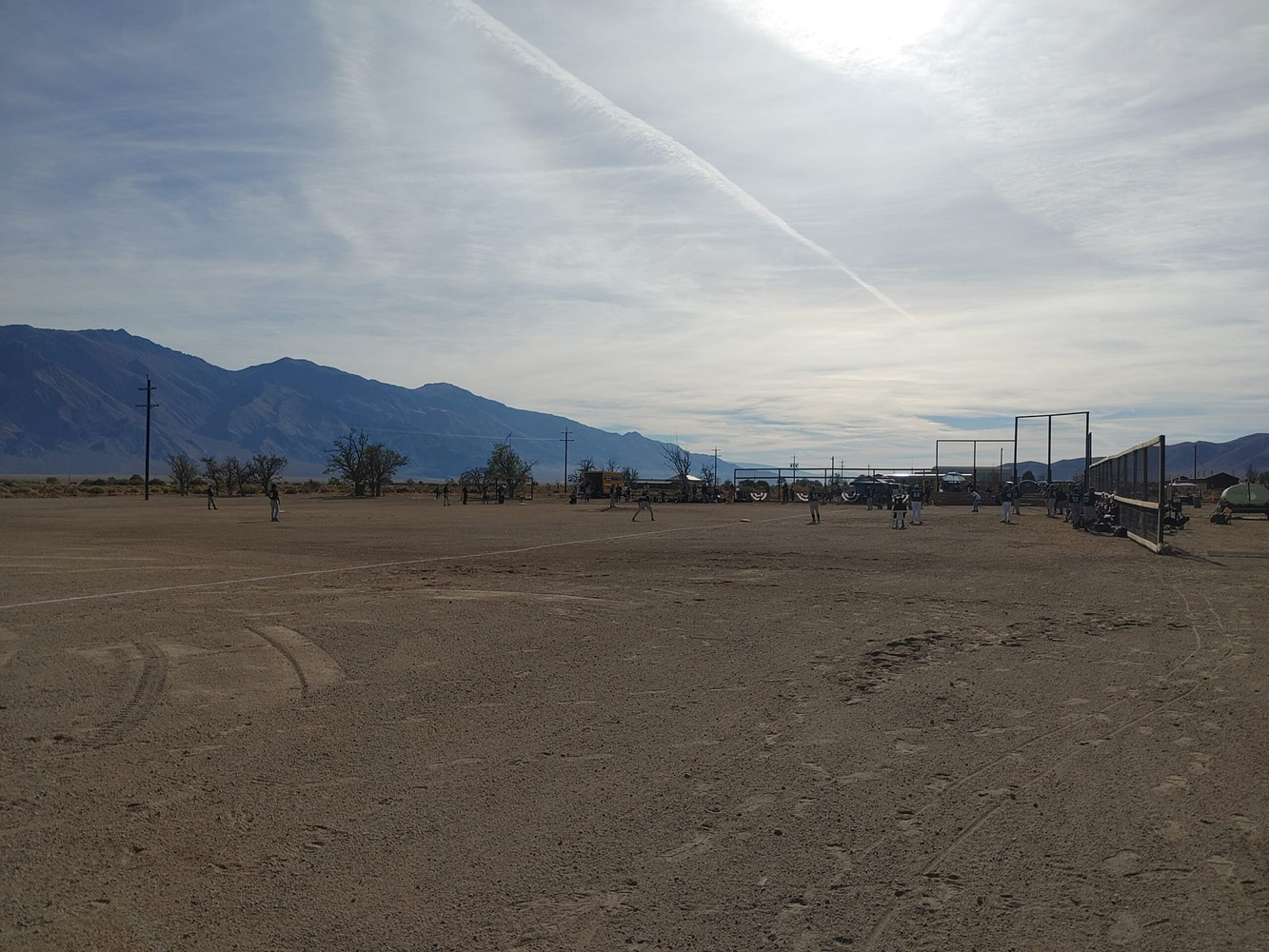 Partially restored Manzanar baseball field |
|
|||||||||||||||||||
 |
||||||||||||||||||||
 |
||||||||||||||||||||
 |
||||||||||||||||||||
 |
||||||||||||||||||||
 |
||||||||||||||||||||
 |
||||||||||||||||||||
 |
 |
|||||||||||||||||||


|
Vintage Sierra Nevada Panoramas | |
|
Ghosts of the Past - Owens Valley Aqueduct & Cottonwood Sawmill | |
|
20-Mule-Team History |
|
|
More WW2 War Relocation Authority Center History |
|
Manzanar High School |

|
|
Manzanar Journal - Berry Tamura |
|
|
Manzanar Town, Owens Valley |
|
  Sign Guestbook View Old Guest Book Entries Oct 1999 - Feb 2015 (MS Word) |
 CONTACT the Pigmy Packer |
 View Guestbook View Old Guest Book Entries Oct 1999 - Feb 2015 (PDF) |
 This page was last updated on 20 December 2024